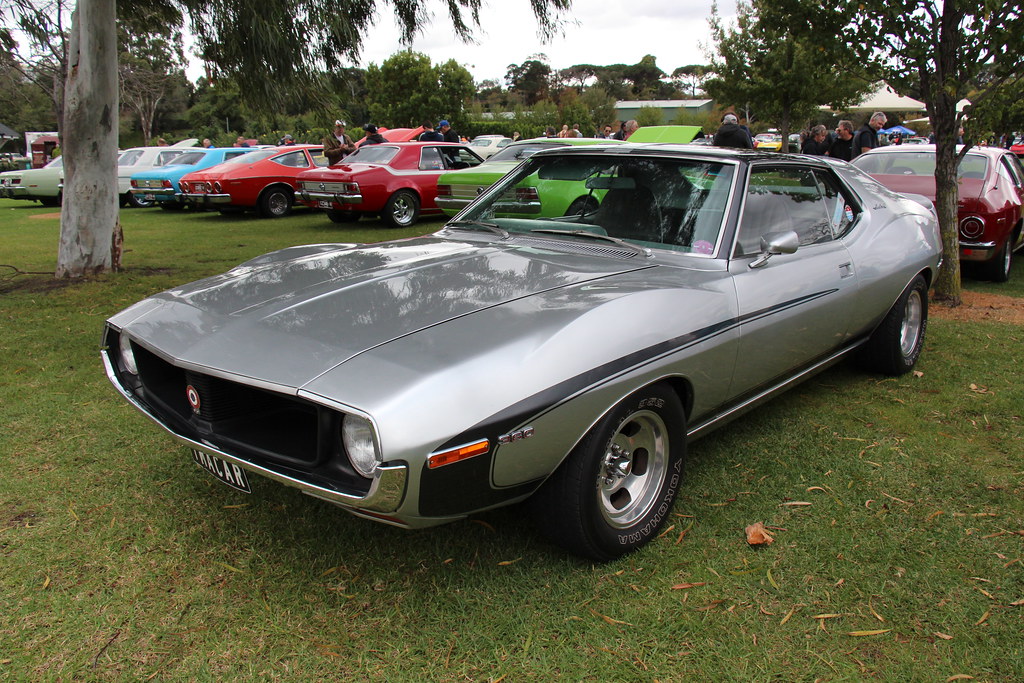
Alright, gearheads, let’s talk about a car that often gets overlooked in the hallowed halls of American muscle: the AMC Javelin. Back in the heyday of big-blocks and Tang, while the big three were duking it out, American Motors Corporation, or AMC, was doing things a little differently. Born from the largest corporate merger in U.S. history between Hudson and Nash-Kelvinator, AMC initially staked its claim on smaller, more affordable, and admittedly, often underpowered transportation. But when the rumble of muscle cars started sweeping the nation, AMC wasn’t about to be left in the dust.
The demand for higher-horsepower cars skyrocketed, and AMC knew they needed a contender. They set out to design a car that could offer the best of all worlds: a powerful, stylish, and attainable machine capable of going wheel-to-wheel with the likes of the Ford Mustang. This wasn’t just about selling cars; it was about shifting an entire company’s perception from economy to performance. The result was the AMC Javelin, which roared onto the scene in 1968, right at the peak of the muscle car era.
Over its relatively short six-year run, this eclectic and, let’s be honest, often polarizing AMC Javelin carved out its own niche, becoming one of the most underrated and underappreciated performance cars in American history. It’s a car with stories, quirks, and engineering choices that truly set it apart. So, buckle up, because we’re about to delve deep, offering you the chapter and verse on AMC’s memorable Javelin, starting with its ambitious birth and the secrets under its hood.

1. **The Javelin’s Genesis: AMC’s Entry into the Pony Car Wars**
The genesis of the AMC Javelin wasn’t just a simple design brief; it was a strategic pivot for American Motors. They needed to shed their “economy car” image and appeal to a younger, more performance-oriented market. The concept began with two prototype cars, both named AMX, showcased in AMC’s “Project IV” auto show circuit in 1966. One was a fiberglass two-seat “AMX,” and the other, a four-seat “AMX II,” laying the groundwork for what would become the Javelin.
Enter Dick Teague, AMC’s top stylist, who was tasked with penning a design that could take on the behemoth Ford Mustang. Sales of convertibles were declining, and AMC lacked the resources to develop separate fastback and notchback hardtops, as seen on the Mustang and second-generation Plymouth Barracuda. So, Teague’s team delivered a single, cohesive body style: a “smooth semi-fastback roofline that helped set Javelin apart from other pony cars.” This clever approach allowed AMC to compete efficiently without overextending its resources.
Despite management’s practical insistence on “things like good trunk space and rear-seat room,” Teague managed to imbue the Javelin with what he famously termed the “wet T-shirt look” – a car of “voluptuous curves with nary a hint of fat.” The Javelin debuted on August 22, 1967, for the 1968 model year, with models available for sale from September 26, 1967, starting at $2,743. It entered the “pony car” market, positioned as a “hip,” dashing, and affordable option that also had muscle car performance versions ready to flex.
2. **First-Generation Javelin: Engines of a Split Personality**
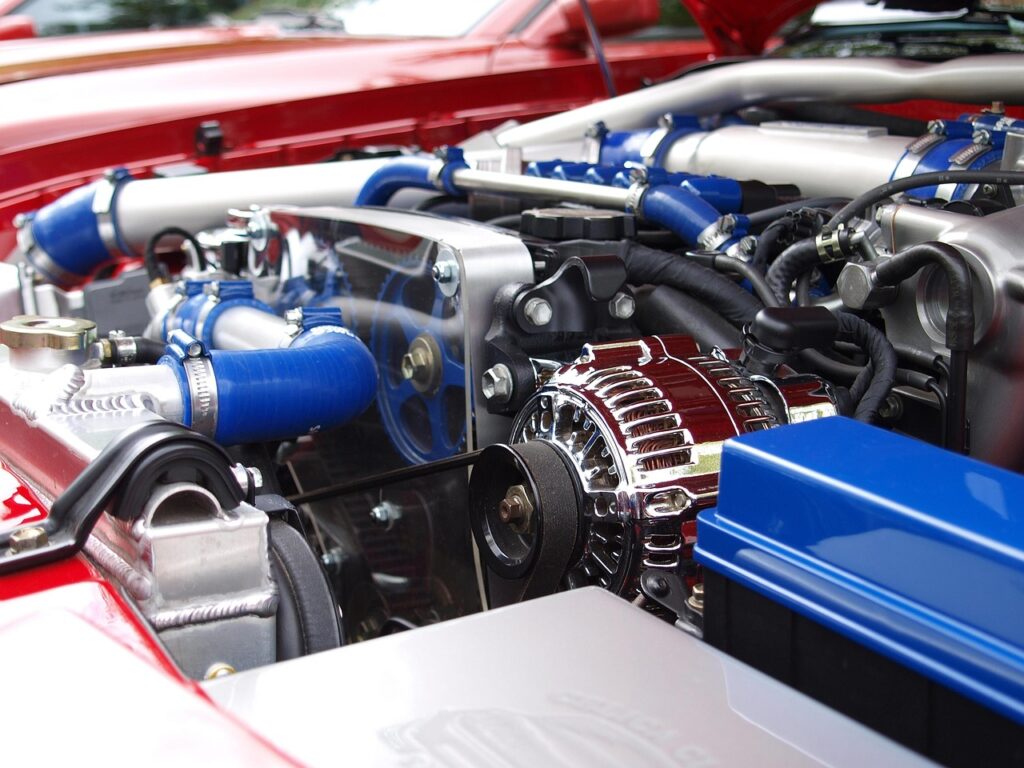
When the first-generation AMC Javelin rolled out, it presented something of a split personality under the hood, catering to both the economy-minded and the burgeoning speed demon. At the entry-level, you had the base 3.8-liter (232-cubic-inch) straight-six engine, a unit that produced a rather modest 145 horsepower. However, it boasted an impressive silver lining for the era, capable of achieving up to 25 mpg on the highway – a fact often forgotten when talking about muscle-era machines.
For those craving a bit more grunt, AMC offered a step up to V-8 power. The smaller of these was a 4.8-liter (290-cubic-inch) V-8, which offered a more respectable 225 hp. But if you wanted to truly crank things up, the 5.6-liter (343-cubic-inch) V-8 was available, producing either 235 hp with a two-barrel carburetor or a more potent 280 hp if you opted for the four-barrel setup. This variety allowed buyers to tailor their Javelin’s performance to their wallet and their need for speed.
Then, mid-way through 1968, AMC decided to unleash the beast. They unveiled a snarling 6.4-liter (390-cubic-inch) V-8, which immediately cemented its place at the top of the Javelin food chain. This big block punched out an impressive 315 hp, ensuring that the Javelin could truly stand its ground against the competition. This initial lineup demonstrated AMC’s commitment to offering a broad spectrum of performance, from fuel-sipping cruisers to tire-shredding muscle.
3. **Second-Generation Javelin: Power Shifts and SAE Realities**
The second-generation Javelin, spanning the 1971-1974 model years, brought with it not only a new, more aggressive look but also a rather bewildering change in its powertrain landscape. While AMC introduced bigger engine options beginning in 1970 (which would be available in the second-gen car), a new mandate profoundly impacted how their power was advertised. The U.S. adoption of the SAE horsepower rating method, which ultimately proved more accurate by measuring net horsepower with accessories, meant that the advertised numbers were considerably less impressive than the gross figures that had predated them.
This shift led to what, on paper, looked like a significant power drop, even if the engines themselves hadn’t drastically changed. The base 3.8-liter (232-cubic-inch) I-6 now made just 100 hp, while a slightly larger 4.2-liter (258-cubic-inch) I-6 produced a mere 110 hp. The V-8 offerings also took a hit: the 5.0-liter (304-cubic-inch) engine now claimed 150 hp, and a larger 5.9-liter (360-cubic-inch) V-8 pumped out 195 hp with a two-barrel carburetor or 225 hp with a four-barrel carb.
Despite the lower advertised numbers, AMC didn’t shy away from offering serious muscle. The pinnacle of the second-gen Javelin’s power came in the form of a massive 6.6-liter (401-cubic-inch) V-8. Even under the more stringent SAE rating, this bad boy was still cranking out an impressive 255 hp, earning it the title of the biggest block available in the Javelin world. It’s a classic example of how regulatory changes can redefine the narrative around a car’s performance, even when the underlying hardware remains largely the same.
4. **Mastering the Drive: Javelin’s Transmission Arsenal**
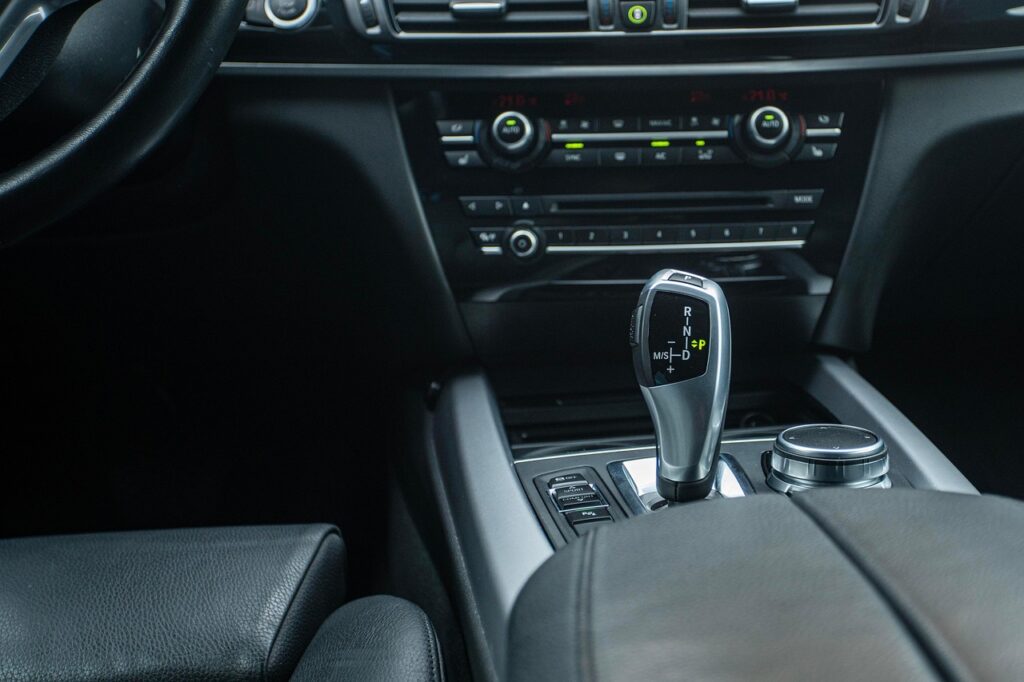
Beyond the impressive engine options, the AMC Javelin also offered a rather compelling array of transmissions, ensuring that drivers could pick their poison, whether they preferred to row their own gears or let the car do the thinking. Depending on which engine was chosen, enthusiasts could spec their Javelin with either a three- or four-speed floor-mounted manual transmission. For the purists and those who loved to feel connected to the machine, these manuals provided direct control and engagement, a hallmark of the muscle car era.
However, AMC wasn’t content to simply offer standard automatics. They brought something innovative to the table with what they dubbed their “Shift-Command Automatic.” This wasn’t your grandma’s slushbox; it was available as either column- or console-mounted and was one of the earlier iterations of the “man-u-matic” transmission. It allowed drivers a unique blend of convenience and control, letting them have some fun even without a clutch pedal in sight.
The genius of the Shift-Command lay in its dual functionality. Selecting “D” gave you a fully automatic shifting experience, just like any ordinary auto. But here’s where it got interesting: by selecting “1,” the car would begin in first gear with no upshift, allowing the driver to hold that gear as long as they pleased. Similarly, “2” allowed for a second-gear start, also without automatic upshifting. Much like today’s high-tech, paddle-shifting video-game-style DCTs and PDKs, the Shift-Command permitted drivers to manually shift from first gear, then second gear, and finally drive, all without the need for that pesky third pedal. It was a clever way to blend the best of both worlds, giving drivers a taste of manual control with automatic convenience.
5. **Unleash the Beast: Demystifying the “Go Package”**
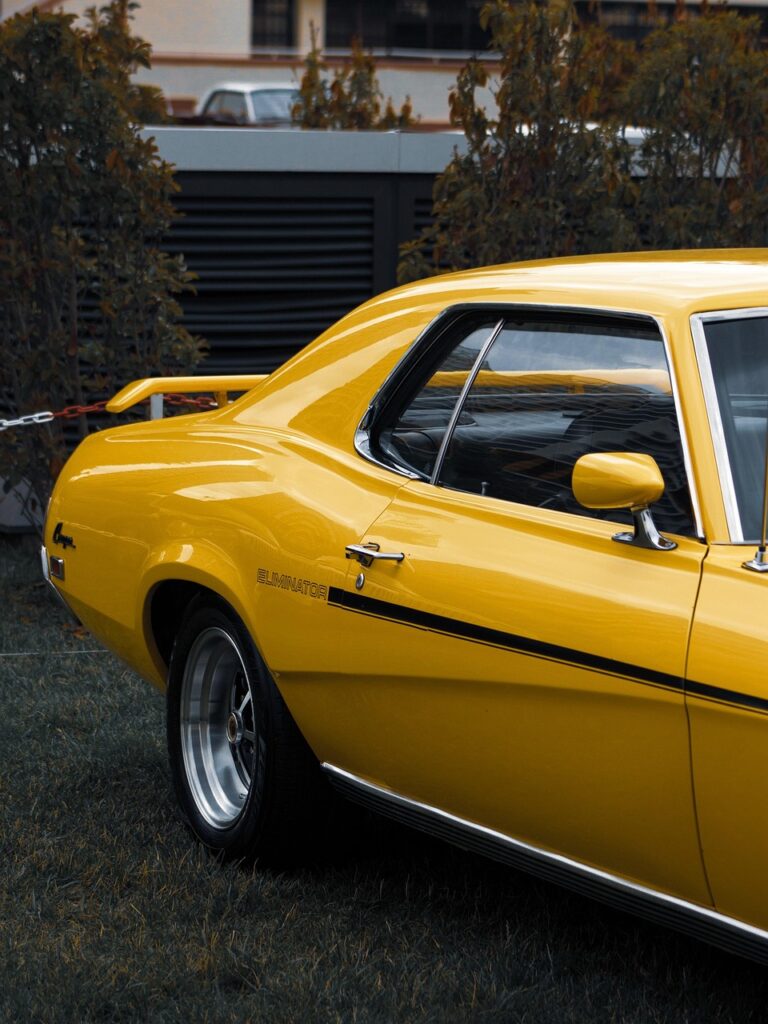
For those who truly wanted to uncork the AMC Javelin’s performance potential, there was one option that stood head and shoulders above the rest: the legendary “Go Package.” Affectionately known as the “Go Pack” for short, or internally to dealers as “The Performance Package,” this option wasn’t just a handful of bolt-ons; it was a comprehensive suite of upgrades designed to transform the Javelin into a street-brawling, corner-carving machine. It’s important to note, however, that the Go Pack varied slightly from year to year and wasn’t available with any six-cylinder Javelin or one equipped with the 304-cubic-inch V-8, preserving its high-performance bona fides.
This package was loaded with features that screamed performance. Among its highlights were dual exhausts, ensuring both a throaty roar and improved flow, along with power disc brakes to rein in all that newfound power. The suspension received a serious upgrade, boasting stiffer springs and heavy-duty anti-roll bars to keep the Javelin glued to the pavement. Wider tires provided crucial grip, while a heavy-duty cooling fan (with shroud) prevented overheating during spirited driving. Quick-ratio steering made the car more responsive, and a “Twin Grip” limited-slip differential ensured power got to both rear wheels, maximizing traction.
But the Go Pack wasn’t just about raw performance; it also enhanced the Javelin’s visual aggression. A distinctive roof spoiler, a large-faced 140-mph speedometer, and an 8,000-rpm tachometer for precision driving were all part of the deal. Crucially, it included Ram Air carburetion, often paired with an AMX “power blister” hood, and of course, the obligatory racing stripes. A Javelin equipped with the 343 Go Pack could sprint from 0 to 60 mph in a mere 8 seconds and hit a top speed approaching 120 mph, covering the quarter-mile in a respectable 15.4 seconds. This was truly the ultimate performance upgrade for the discerning Javelin enthusiast.

6. **The Lap of Luxury: Decoding the Javelin SST**
While the Javelin was certainly capable of aggressive performance, AMC also understood that some buyers desired a touch more refinement and comfort without sacrificing its sporty demeanor. This is where the AMC Javelin SST came into play. An acronym for “Super Sports Touring,” the SST represented the top trim level available for the Javelin from its debut in 1968 through the 1970 model year. It was AMC’s answer to those who wanted a pony car that could cruise in style as much as it could sprint.
This premium package skillfully blended both luxury and “go-fast” goodies, elevating every facet of the Javelin’s driving experience. Interior enhancements were particularly notable, with features like reclining front seats that offered increased comfort on longer journeys. The cabin was further distinguished by elegant wood-grain interior trim, adding a touch of sophistication that contrasted with its muscle car roots.
On the exterior, the SST proudly displayed rally stripes and a sport steering wheel, reminding onlookers and drivers alike that this was still a performance-oriented machine, albeit one with a more polished edge. However, the SST’s reign at the very top was eventually challenged. When the AMX transitioned from being its own distinct two-seat model to an optional trim package on the Javelin for the 1971 and ’72 model years, the SST was relegated to second best. Despite this, the SST continued to offer a distinctly more luxurious layout than the more performance-oriented AMX, maintaining its appeal to a different segment of the Javelin buying public.
7. **From Economy to Performance: The Genesis of the Stand-Alone AMX**
With an undeniable goal of shifting the company’s perception from economical commuter cars to genuine performance machines, AMC made a bold move: they decided to unveil a sportier, more focused version of its Javelin and called it the AMX, which stood for “American Motors Experimental.” This wasn’t just another trim level initially; it was launched as its own distinct model, a two-seat hot rod, from 1968 until 1970, signaling AMC’s serious intent to carve out a slice of the pure sports car market.
The AMX was built on the same Rambler American platform as the Javelin, but here’s the kicker: because it only needed room for two occupants, its wheelbase was dramatically shortened to a mere 97 inches. This made it a particularly agile machine, and an interesting tidbit for hardcore fans is that this was 1 inch shorter than America’s *other* two-seat sports car, the legendary Chevy Corvette, putting the AMX in truly rarefied air.
When it debuted in 1968, the AMX was exclusively offered as a two-door hardtop, emphasizing its performance-first philosophy. Unlike the more versatile Javelin, the AMX could only be had with a V-8 engine, further solidifying its high-performance identity. Transmission choices were equally focused, limited to either a four-speed manual or a three-speed automatic transmission. To ensure it delivered a genuine sports car experience, heavy-duty shocks and springs worked in conjunction with traction bars and a front anti-roll bar, making the AMX a formidable handler regardless of the road conditions. In 1971, the AMX merged with the Javelin, becoming a high-performance trim option instead of a separate vehicle, but its initial stand-alone run solidified its place as a true American performance icon.
8. **The AMX Engine Lineup: Unleashing Pure V-8 Fury**
While the Javelin offered a spectrum of engines, from thrifty six-cylinders to formidable V-8s, the AMX was a different beast entirely. Designed from the get-go as a purebred performance machine, its engine choices were decidedly less compromising. From its debut in 1968, the AMX came exclusively with AMC’s Gen-2 small-block V-8s, meaning no inline-sixes sullied its performance pedigree. This was AMC making a clear statement: the AMX was all about horsepower and torque.
Those initial AMX models packed serious punch, with three distinct V-8 options for eager drivers. The entry point was a 290-cubic-inch V-8, which still delivered a respectable 225 hp. Step up to the 343-cubic-inch V-8, and you were looking at 290 hp. But for the true adrenaline junkies, the big 390-cubic-inch V-8 was the one to have, pumping out a thrilling 315 hp. This ensured the AMX could go toe-to-toe with its two-seat rival, the Corvette, in terms of raw power.
Things evolved a bit in 1970 with the introduction of AMC’s Gen-3 “tall-block” engines, which, as the name suggests, boasted taller deck heights. The 290 V-8 was phased out, making the 360-cubic-inch V-8 the new base engine for the AMX. For those craving more, the 390 V-8 got a nice 10-pony bump, reaching 325 hp. A year later, AMC brought out the big guns with an even larger 401-cubic-inch V-8, cranking out a stout 330 hp. It was a golden age of displacement for the AMX.
However, this power party was somewhat dampened by the unfortunate but necessary adoption of the SAE horsepower rating method. This new standard, which measured net horsepower with accessories attached, meant that the advertised numbers suddenly looked less impressive, even if the underlying engines remained unchanged. So, the mighty 401 V-8, which had once proudly claimed 330 hp, was now officially rated at 255 hp. Don’t let the numbers fool you though, it was still a monster under the hood.
9. **How Fast Was the AMC Javelin? Putting Pedal to the Metal**
When you talk about muscle cars, the first question on everyone’s lips (after a polite nod to styling, of course) is, “How fast is it?” And for the AMC Javelin, a car often overshadowed by the big three, its speed figures are genuinely impressive and certainly worthy of a hardcore fan’s attention. This wasn’t just a pretty face; it could seriously hustle.
Take, for instance, a first-generation Javelin optioned with the 343-cubic-inch V-8 and a four-speed manual. This setup, churning out a very healthy 280 hp, could launch its 3,461-pound chassis from 0 to 60 mph in a swift 7.6 seconds. Not too shabby, right? It would then blast through the quarter-mile in a respectable 15.1 seconds at 93 mph. These numbers put it squarely in the performance conversation with its more established rivals, proving that AMC meant business.
But if you wanted to truly uncork the Javelin’s potential, you aimed for the bigger engines. A 1969 Javelin, for example, equipped with the glorious 390-cubic-inch V-8, packing 325 hp and a hefty 425 lb-ft of torque, was an absolute rocket. Funneling that power through a four-speed manual and a set of 3.54:1 rear gears, our testing revealed a blistering 0-60 mph time of just 5.7 seconds.
And for the quarter-mile junkies, this setup would chew up the asphalt in a scalding 14.6 seconds. Let that sink in for a moment. In an era where a low 14-second quarter-mile was the stuff of legends, an AMC Javelin could deliver it. This wasn’t just holding its own; it was legitimately a fast car that could surprise many a mainstream muscle car driver at the dragstrip.
10. **The Heart of the Beast: Understanding AMC’s Largest Javelin Engine**
While the Javelin offered a range of capable engines throughout its production run, there was one that stood head and shoulders above the rest in terms of sheer displacement and raw power: the colossal 6.6-liter (401-cubic-inch) V-8. This behemoth of an engine represented the pinnacle of AMC’s muscle car aspirations for the Javelin, available during the 1971 and 1972 model years.
In its glorious 1971 iteration, this big block was truly a force to be reckoned with. It cranked out an impressive 330 hp and a pavement-shredding 425 lb-ft of torque. Those are numbers that, even today, command respect and speak volumes about the brute strength this engine brought to the Javelin. It was the kind of power that could snap your neck back and put a permanent grin on your face.
However, a rather significant, and somewhat disheartening, change occurred for the 1972 model year. Like all engines from that point forward, the mighty 401 V-8 fell victim to the new SAE net horsepower rating system. This wasn’t about the engine suddenly becoming weaker; it was about a more realistic, albeit less flattering, measurement method. Manufacturers were no longer allowed to advertise power ratings obtained from engines stripped of power-sucking accessories like alternators, radiator fans, or water pumps, and often tested with long-tube headers rather than the factory exhaust manifolds.
The result of this regulatory decree was a dramatic drop in advertised numbers. So, the same virtually unchanged 401 V-8 that had proudly claimed 330 hp just a year prior now carried a seemingly paltry rating of 255 hp and 345 lb-ft of torque. While these numbers looked diminished on paper, the engine’s real-world performance capability remained largely the same, still making it the largest and most potent offering on the Javelin option sheet. It just goes to show, sometimes the specs don’t tell the whole story.

11. **The Racetrack Warrior: Celebrating the SST Trans Am Edition**
AMC wasn’t content just building street machines; they wanted respect on the racetrack too, and they earned it by diving headfirst into the SCCA Trans Am Series. The Javelin, under the skilled hands of AMC’s contracted teams, started making waves in 1968, consistently securing top-five finishes over the next two years. This wasn’t just about selling cars; it was about validating the Javelin’s performance credibility against the established Goliaths of American muscle.
To immortalize these early racing victories and, let’s be honest, to rub it in the faces of their competitors, AMC rolled out a truly special machine: the 1970 Javelin SST Trans Am Edition. This was no ordinary trim package. Based on the then-top SST trim, only 100 examples were ever created, making it an incredibly rare bird from day one. Each one sported a dazzling, patriotic paint scheme of Matador Red, Frost White, and Commodore Blue – earning it the affectionate nickname, the ‘Bomb Pop’ clone.
Beneath that eye-catching exterior was a serious performance setup. The Trans Am Edition was equipped with a potent 325-hp 390-cubic-inch V-8, ensuring it had the grunt to match its racing looks. Power was funneled through a robust four-speed Borg Warner transmission, topped off with a precise Hurst shifter, making gear changes a joy. And, of course, the popular Go Package was standard issue, bringing with it all the heavy-duty suspension, disc brakes, and other performance goodies we discussed earlier.
While the Mark Donohue Special Edition later fulfilled the crucial SCCA homologation requirements for the race car’s aerodynamic enhancements, the SST Trans Am Edition holds a special place in collectors’ hearts. Its extreme scarcity and distinctively American paint job make it arguably the ‘top prize’ for Javelin enthusiasts worldwide. It’s a vivid reminder of AMC’s bold entry into the high-stakes world of Trans Am racing.
12. **The Homologation Hero: Unpacking the Mark Donohue Special Edition**
In a move that sent shockwaves through the racing world, legendary driver Mark Donohue and the formidable Penske Racing team left Chevrolet to throw their considerable talent behind AMC for the 1970 Trans-Am season. Donohue, being an engineer as much as a racer, quickly identified a crucial need: the Javelin required a larger, more effective ducktail spoiler to generate the necessary rear downforce for success on high-speed tracks. The problem? SCCA homologation rules demanded that 2,500 production units with this feature be sold to the public for it to be considered a “factory” car.
And just like that, the Mark Donohue Special (MDS) was born. Built specifically to meet these homologation requirements, production commenced in January 1970 and conveniently wrapped up in April of the same year, just before the Trans-Am season kicked off. The numbers are precise: 2,501 units were made, just enough to satisfy the SCCA. This wasn’t just a marketing ploy; it was a crucial strategic move to gain a competitive edge on the track.
Owners paid an $1,100 upcharge for the MDS Edition, and it came packed with performance and luxury. The package included the robust 360 Go Package, ensuring it had serious street cred, along with a functional Ram Air hood. Inside, buyers got the upscale SST interior and exterior door package, complete with elegant wood-grain trim. For those who wanted even more muscle, the potent 390-cubic-inch V-8 was available as an upgrade for an additional $325. Transmission choices catered to all, offering either a floor-mounted Shift-Command three-speed automatic or a Borg Warner T-10 four-speed manual.
Perhaps the most iconic element, the racy ducktail spoiler itself, along with the distinctive “Mark Donohue” rear decal badge, could actually be ordered separately from the parts counter at AMC dealerships. This allowed existing Javelin owners to add a touch of racing pedigree to their cars, long after the limited-run MDS production had concluded. It’s a fascinating glimpse into how race-focused development translated directly to what you could buy off the showroom floor.
13. **Fashion Meets Muscle: The Exquisite Pierre Cardin Edition Javelin**
While AMC was busy proving its mettle on the track and dragstrip, it also sought to elevate its image in an entirely different arena: high fashion. In what can only be described as a genuinely visionary and audacious move for an American automaker, AMC embarked on unique collaborations with famous fashion designers. Alongside the chic Oleg Cassini-edition Matador and the Gucci-edition Hornet, the most prestigious and memorable of these partnerships was undoubtedly the AMC Javelin Pierre Cardin Edition, produced for the 1972 and 1973 model years.
This wasn’t just about a designer logo slapped onto a car; the Pierre Cardin Edition Javelin was an interior masterpiece. Its highlight was the flamboyantly psychedelic yet meticulously tailored pleated upholstery, featuring a striking striped pattern of silver, orange, plum, and white, all set against a sophisticated black background. It was a bold, unexpected fusion of runway couture and muscle car swagger, creating an interior unlike anything else on the road at the time, truly a secret oasis within a performance machine.
Crucially, the Pierre Cardin package was almost entirely an interior-only upgrade. Apart from some subtle exterior badging that hinted at the automotive haute couture within, the Javelin’s exterior remained true to its sporty roots. The cost for this dose of luxury and high-fashion exclusivity? A mere $84.95 in 1968, which, for a bit of context, translates to about $750 in today’s money. A small price to pay for such a unique statement.
In total, 4,152 Javelin Pierre Cardin Editions graced the streets, making it a distinctive sight. Even more intriguing, 1,200 of these also carried the AMX trim, creating one of the rarest and most eclectic combinations in Javelin history. Imagine pulling up to the drive-in in a performance-oriented AMX with a haute couture interior – that’s the kind of daring individuality AMC embodied.

14. **Decoding the Duo: Javelin vs. AMX – A Tricky Family Tree**
Alright, gearheads, let’s clear up a point of contention that often sparks heated debates in enthusiast circles: the precise relationship between the AMC Javelin and the AMX. This one can get a little tricky because their identities evolved over time, starting as distinct models and later merging. Think of it as a family saga with twists and turns.
From 1968 until 1971, the AMX existed as its own separate, stand-alone model, despite sharing a clear family resemblance with the Javelin. But that “almost identical” caveat is crucial. The AMX was exclusively built as a two-seat sports car, setting it apart from the roomier, four-seat Javelin. This two-seat configuration made it a rarity, standing as America’s *only* other two-seat car aside from the venerable Chevy Corvette. Due to not needing a back seat, the AMX boasted a substantially shorter wheelbase and overall length than its larger sibling, contributing to its nimble handling. Furthermore, the AMX could only be had with a V-8 engine, and it skipped the cheaper three-speed manual transmission option, reinforcing its pure performance ethos.
Then, for the 1972 through 1974 model years, the AMX as a stand-alone car was absorbed into the Javelin lineup. It transitioned from being a separate entity to becoming a high-performance trim package offered on the Javelin. This move was part of a broader consolidation, but it certainly didn’t diminish the AMX’s performance spirit. The Javelin AMX, as it was now known, continued to benefit from the same 1971 makeover that gave the base Javelin its aggressive, new look.
To ensure the Javelin AMX maintained its status as the brand’s performance flag-bearer, it received several Trans Am-inspired upgrades. A functional Ram Air cowl induction fiberglass hood and effective front and rear spoilers helped visually and functionally differentiate it. These enhancements continued to mark the AMX as the ultimate performance badge within the Javelin family, offering race-bred styling and capability for the street. It’s a testament to AMC’s commitment to keeping the AMX spirit alive, even as its market position shifted.
15. **The Unfortunate Farewell: Why the Javelin Drove Off Into the Sunset**
Every great story has an ending, and for the beloved AMC Javelin, its discontinuation was a poignant reflection of incredibly challenging times for both the car and American Motors Corporation as a whole. It’s an ironic twist of fate that by the time AMC had fully committed to shaking off its economy car image and truly embracing the muscle car ethos, the automotive landscape was already undergoing a monumental, irreversible shift.
Several converging forces conspired against the Javelin. The roar of high-performance engines began to be muffled by a growing societal emphasis on fuel economy, a trend that accelerated dramatically with the devastating Arab oil embargo. This global crisis sent gas prices skyrocketing, effectively putting a stranglehold on the demand for thirsty, big-block muscle cars. Suddenly, the very attribute that made the Javelin exciting became its greatest liability in the eyes of many consumers.
Adding insult to injury were the ever-tightening regulatory pressures. New federal safety mandates, particularly those calling for significant changes to bumpers to meet stringent 1975 standards, presented an enormous financial burden. AMC estimated that updating the Javelin’s bumpers alone would have cost around $12 million – a staggering sum for a smaller automaker already battling economic headwinds. This kind of investment for a niche model, in a declining segment, simply couldn’t be justified.
Ultimately, the combination of unfortunate timing, the seismic shift towards fuel efficiency, and the crippling costs associated with new safety regulations proved to be insurmountable hurdles. AMC, facing immense pressure, reluctantly made the difficult decision to pull the plug on its prized muscle car. The Javelin, a car that defied expectations and carved its own path, became another casualty of an era defined by rapid change, leaving behind a legacy of innovation and underappreciated performance that hardcore fans cherish to this day.
And there you have it, folks – the full chapter and verse on the AMC Javelin, from its ambitious birth to its bittersweet end. It’s a testament to American Motors’ audacity and engineering savvy, a car that, despite its relatively short run, left an indelible mark on automotive history. Here’s to the eclectic, the polarizing, and the utterly unforgettable AMC Javelin – a true American icon that deserves every bit of the spotlight we’ve given it.