
The life and career of Tina Turner, born Anna Mae Bullock, spanned decades of musical innovation, personal resilience, and groundbreaking achievements, solidifying her status as a global icon. From her humble beginnings in rural Tennessee to becoming the undisputed “Queen of Rock ‘n’ Roll,” Turner’s journey is a testament to an extraordinary talent that transcended genre, race, and personal adversity. Her powerful vocal prowess, raspy voice, and electrifying stage presence not only captivated audiences worldwide but also played a pivotal role in breaking racial barriers within rock music.
Turner’s narrative is one of remarkable endurance, marked by significant challenges and spectacular triumphs. She is remembered as one of the best-selling recording artists of all time, with estimated sales of 100 million records, and her influence continues to resonate deeply within the music industry and popular culture. This in-depth look at her multifaceted career and personal evolution aims to provide a comprehensive understanding of the forces that shaped a legend, charting her path from a nascent talent to a towering figure in entertainment.
Her story is far more than a collection of hit songs and sold-out tours; it is a compelling account of courage, reinvention, and an unwavering commitment to her art. Her impact on music, particularly as an African American woman defining rock ‘n’ roll, redefined possibilities for countless artists. As we delve into the various chapters of her life, it becomes evident that Tina Turner’s legacy is built on a foundation of both immense talent and an indomitable spirit that consistently defied expectations.
1. Early Life and Nutbush Roots: Her Formative Years in Rural Tennessee
Anna Mae Bullock was born on November 26, 1939, in Brownsville, Tennessee, into a world vastly different from the global stages she would later command. Her early childhood was spent in the rural, unincorporated community of Nutbush, Tennessee, a place she would immortalize in her later hit, “Nutbush City Limits.” Here, her father, Floyd Richard Bullock, worked as an overseer of sharecroppers at Poindexter Farm on Highway 180, and she recalled picking cotton with her family at an early age.
Her family life in Nutbush was complex and marked by separations. She was the youngest daughter of Floyd Richard Bullock and Zelma Priscilla (née Currie), with two older sisters, Evelyn Juanita Currie and Ruby Alline Bullock, a songwriter. During World War II, the sisters were temporarily separated when their parents moved to Knoxville, Tennessee, for defense work. Anna Mae stayed with her strict, religious paternal grandparents, Alex and Roxanna Bullock, who were deacon and deaconess at the Woodlawn Missionary Baptist Church.
After the war, the family reunited in Knoxville before returning to the Flagg Grove community in Nutbush, where Anna Mae attended Flagg Grove Elementary School. Her musical inclination emerged early, singing in the church choir at Nutbush’s Spring Hill Baptist Church and performing in the streets for change to attend movies.
A significant turning point occurred in 1950 when her mother, Zelma, left the family without warning, seeking freedom from an abusive relationship with Floyd by relocating to St. Louis. Two years later, her father married again and moved to Detroit, leading Anna Mae and her sisters to live with their maternal grandmother, Georgeanna Currie, in Brownsville. In *I, Tina*, she reflected on feeling unloved by her parents, a sentiment rooted in her mother’s revelation that she stayed with Floyd only because of her pregnancy.
As a teenager, Bullock worked as a domestic helper and was a “tomboy,” excelling in cheerleading and basketball at Carver High School. Following her grandmother’s death at 16, Anna Mae moved to St. Louis to live with her mother, graduating from Sumner High School in 1958. Before her musical career, she briefly worked as a nurse’s aide at Barnes-Jewish Hospital.
2. Discovery and the Genesis of Ike & Tina Turner: A Pivotal Encounter
The vibrant nightlife of St. Louis and East St. Louis became the backdrop for Anna Mae Bullock’s fateful introduction to the music world. She and her sister Alline frequently attended nightclubs, where Anna Mae first encountered Ike Turner and his band, the Kings of Rhythm, at the Club Manhattan. She was profoundly impressed, recalling she “almost went into a trance” watching him play.
Driven by a strong desire to sing, Bullock repeatedly asked Ike Turner for an opportunity to join his band. One night in 1956, during an intermission, she seized the microphone and delivered an impromptu rendition of B.B. King’s “You Know I Love You.” Her powerful voice immediately captured Ike’s attention.
Ike Turner invited her to sing more songs and integrated her as a featured vocalist. During this period, he became her mentor, teaching her crucial aspects of vocal control and stage performance. Her first recorded appearance was in 1958 under the name Little Ann on the single “Boxtop.”
The pivotal moment for her breakthrough came in 1960. Ike had written “A Fool in Love” for Art Lassiter, with Bullock as a background vocalist. When Lassiter failed to appear, Bullock sang lead on the demo. Local disc jockey Dave Dixon persuaded Turner to send the tape to Juggy Murray, president of Sue Records.
Murray was captivated by Bullock’s voice, describing how “Tina sounded like screaming dirt. It was a funky sound.” He bought the track, offering a $25,000 advance. Murray then convinced Ike to make Bullock “the star of the show.” Ike renamed her “Tina,” inspired by “Sheena, Queen of the Jungle,” and trademarked the name “Tina Turner” for protection, though family and friends still called her Ann.
3. The Meteoric Rise of Ike & Tina Turner: Chart Success and Iconic Performances
The public introduction of Tina Turner with “A Fool in Love” in July 1960 marked a significant chapter in music history. The single rapidly ascended, reaching No. 2 on the Hot R&B Sides chart and No. 27 on the Billboard Hot 100. Journalist Kurt Loder highlighted its impact as “the blackest record to ever creep into the white pop charts since Ray Charles’s gospel-styled ‘What’d I Say’ that previous summer,” underscoring its groundbreaking cross-over appeal.
This success was followed by “It’s Gonna Work Out Fine,” hitting No. 14 on the Hot 100 and No. 2 on the R&B chart in 1961, earning a Grammy nomination. Between 1960 and 1962, they released other R&B hits like “I Idolize You” and “Poor Fool,” solidifying their presence.
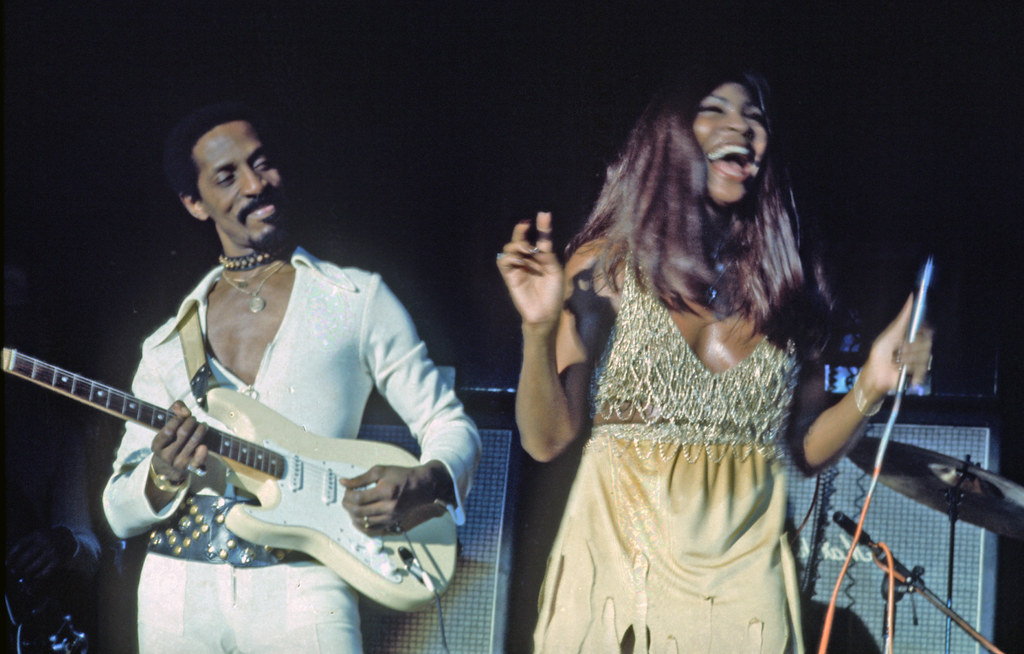
Ike Turner then formed the Ike & Tina Turner Revue, featuring the Kings of Rhythm and the Ikettes. Ike remained the bandleader, allowing Tina’s electrifying stage presence to shine. The revue embarked on a grueling tour schedule across the United States, often performing for 90 consecutive days.
The Revue gained a formidable reputation on the Chitlin’ Circuit as “one of the hottest, most durable, and potentially most explosive of all R&B ensembles,” comparable to the James Brown Revue. Their profitable performances even allowed them to play for desegregated audiences in Southern clubs, a notable achievement in that era.
A major turning point came in 1965 when producer Phil Spector was impressed by their performance. He sought to produce Tina, securing creative control and releasing them from Loma Records. Their collaboration yielded “River Deep – Mountain High” in May 1966. Spector considered it his best work, with Tina’s “maximum energy” over his “Wall of Sound.” It was successful overseas, reaching No. 3 in the UK and No. 1 in Spain, though less so in the US. Its impact secured them an opening spot on the Rolling Stones’ UK tour in late 1966. In November 1967, Tina Turner made history as the first female artist and first black artist on the cover of *Rolling Stone* magazine.
4. The Abusive Marriage and Courageous Split: A Path to Liberation
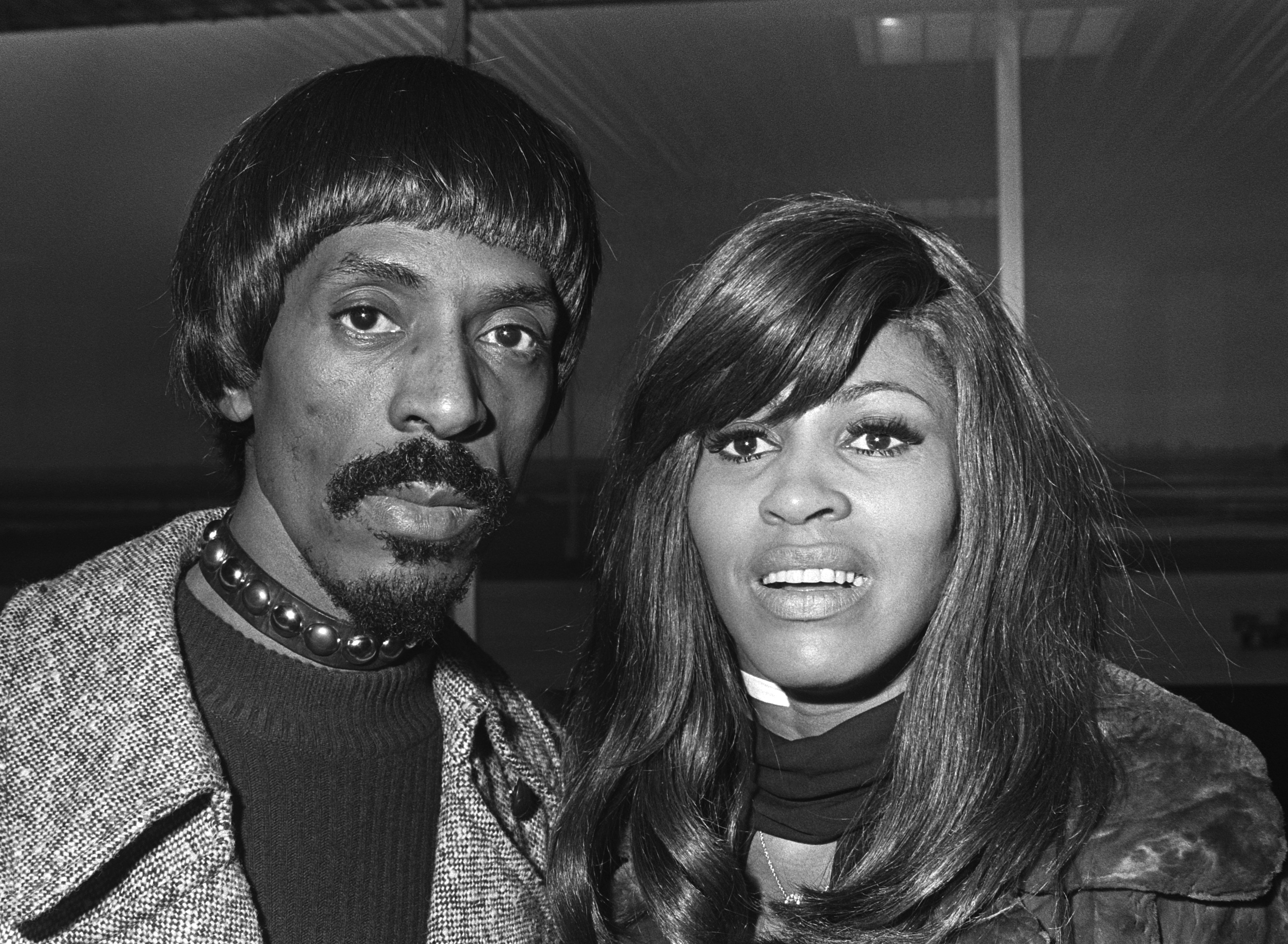
Beneath the dazzling lights of the Ike & Tina Turner Revue, Tina Turner’s personal life was consumed by deep turmoil. Her marriage to Ike Turner, formalized in Tijuana in 1962, was characterized by pervasive violence and emotional torment, contrasting sharply with her vibrant public persona. In her autobiography, *I, Tina*, she revealed Ike was “violent and promiscuous” throughout their marriage, a pattern that began early and escalated.
The first physical altercation, which she described as the moment Ike “instilled fear” in her, occurred in 1960 after she expressed a desire to end their relationship while pregnant. He struck her with a wooden shoe stretcher. Despite this, she remained, stating she “really did care about him.” The abuse continued, profoundly affecting her well-being. In 1968, overwhelmed, she attempted suicide by overdosing on Valium pills. She articulated her profound unhappiness, noting, “It was my relationship with Ike that made me most unhappy. At first, I had really been in love with him. Look what he’d done for me. But he was totally unpredictable.” Ike was later diagnosed with bipolar disorder in his old age.
By the mid-1970s, Ike’s severe cocaine addiction intensified the volatility. The breaking point arrived on July 1, 1976. During a flight from Los Angeles to Dallas for a gig, a severe physical altercation ensued. Tina bravely fought back. Upon arrival at the Statler Hilton, in an act of extraordinary courage, she fled.
With only 36 cents and a Mobil credit card, she escaped to a nearby Ramada Inn. This decisive act ended her entanglement with Ike. On July 27, she filed for divorce on grounds of irreconcilable differences, seeking alimony, child support, and custody. The divorce was finalized on March 29, 1978.
The settlement brought severe financial ramifications. Turner assumed responsibility for missed concert dates and an IRS lien, retaining only songwriter royalties for her compositions. Ike kept publishing royalties for both their songs, along with their studio and real estate. Tina kept her cars, furs, jewelry, and, crucially, her stage name. For nearly two years, she faced significant hardship, relying on food stamps and performing in small clubs to pay off mounting debts, a testament to the immense personal cost of her liberation.
5. Navigating the Early Solo Wilderness: Rebuilding a Career from Scratch
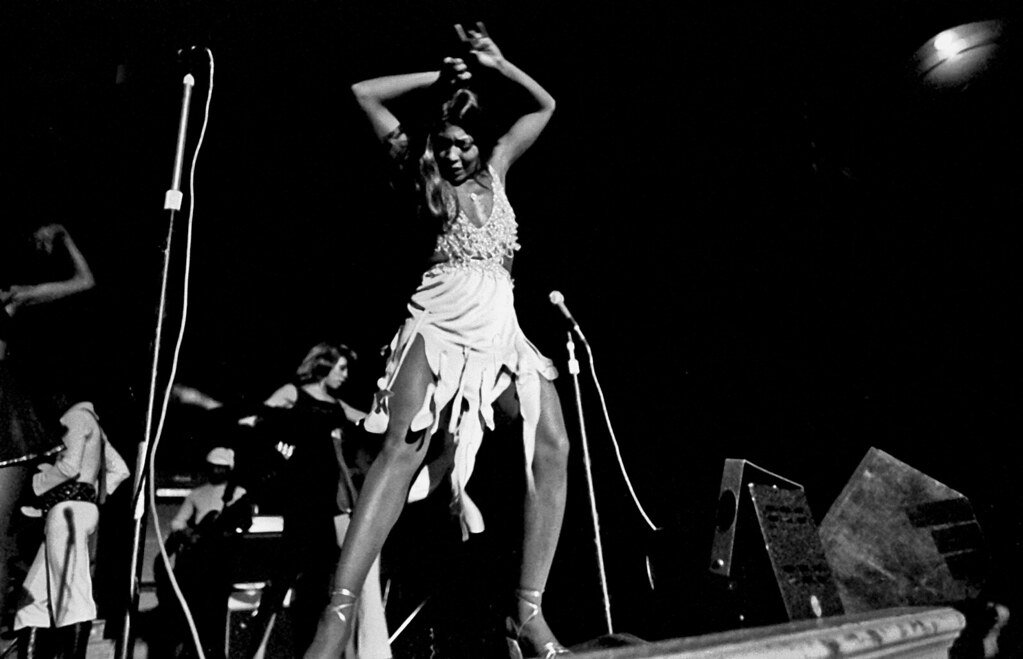
Following her separation and divorce from Ike Turner, Tina Turner faced a precarious professional and personal landscape. The disbandment of the Ike & Tina Turner Revue triggered lawsuits over canceled gigs, leaving her burdened with substantial financial debt. This period, her “early solo wilderness,” demanded immense resilience as she sought to establish an independent identity and rebuild her career.
To generate income and manage debts, Turner strategically appeared on various television shows, including *The Hollywood Squares*, *Donny & Marie*, *The Sonny & Cher Show*, and *The Brady Bunch Hour*. These appearances provided essential visibility and earnings. With crucial funding from Mike Stewart of United Artists Records, she gradually resumed performing to address her financial obligations and reassert her artistic autonomy.
In 1977, a reinvented Tina Turner formed a new band and debuted new costumes by Bob Mackie. She performed in smaller venues, notably headlining cabaret shows at Caesars Palace in Las Vegas. Later that year, she embarked on her first solo concert tour in Australia, testing her independent appeal internationally.
Her third solo album, *Rough* (1978), and *Love Explosion* (1979), which briefly ventured into disco, both failed to chart, leading to her departure from United Artists. Despite this setback, her determination remained unwavering, and she continued touring through sheer willpower and a strong connection with her audience.
A pivotal development occurred in 1979 when Australian manager Roger Davies, impressed by her talent at the Fairmont Hotel, agreed to manage her. This partnership would prove instrumental in her eventual comeback. During this time, she also appeared on the Italian TV series *Luna Park* and undertook a controversial tour of South Africa during apartheid, a decision she later regretted due to her “naivete about the politics.” A significant indicator of her burgeoning solo potential came in 1982 with her recording of “Ball of Confusion” for the UK production team B.E.F., a hit in European dance clubs. The music video for “Ball of Confusion” aired on MTV, making her one of the first black American artists to gain airtime, foreshadowing the global recognition that lay ahead.

6. A Triumphant Solo Comeback: The Private Dancer Era
Following the arduous period of rebuilding her career, Tina Turner’s fortunes began to shift dramatically in the early 1980s. Until 1983, she had largely been perceived as a “nostalgia act,” performing in more intimate settings such as hotel ballrooms and clubs across the United States. However, a pivotal moment arrived during her second engagement at the Ritz, leading to her signing with Capitol Records in 1983, a decision that would usher in one of the most remarkable comebacks in music history.
That same year, in November 1983, Turner released her cover of Al Green’s “Let’s Stay Together,” a track produced by the UK production team B.E.F. This single proved to be an unexpected triumph, charting successfully across Europe, including a peak at No. 6 in the United Kingdom. In the United States, its impact was equally significant, reaching No. 26 on the Billboard Hot 100, ascending to No. 1 on the Hot Dance Club Songs chart, and securing a No. 3 position on Hot Black Singles. The single’s unexpected success prompted Capitol Records to greenlight a full studio album, which Turner recorded in a tight two-week timeframe.
The resulting album, *Private Dancer*, released in May 1984, became a global phenomenon. It soared to No. 3 on the Billboard 200 and No. 2 in the United Kingdom. The album’s commercial success was immense, earning 5× Platinum certification in the United States and selling 10 million copies worldwide, marking it as her most successful album. Coinciding with the album’s release, Capitol also issued its second single, “What’s Love Got to Do with It,” a song previously recorded by the pop group Bucks Fizz, which would become an anthem for Turner’s resurgence.
On September 1, 1984, “What’s Love Got to Do with It” achieved a significant milestone, becoming Turner’s first and only No. 1 hit on the Billboard Hot 100. This was followed by further top 10 successes in the U.S. with “Better Be Good to Me” and the album’s title track, “Private Dancer.” That same year, Turner further expanded her reach through a duet with David Bowie on a cover of Iggy Pop’s “Tonight,” which peaked at No. 53 in both the UK and the US, and she joined Lionel Richie as an opening act on his tour. Her triumphant comeback was officially cemented at the 27th Annual Grammy Awards, where she garnered three Grammy Awards, including the prestigious Record of the Year for “What’s Love Got to Do with It.” The momentum carried into February 1985, as she embarked on her second world tour to support *Private Dancer*, with two nights filmed at Birmingham, England’s NEC Arena later released as a home video. During this period, she also lent her powerful vocals to the USA for Africa benefit song “We Are the World,” further solidifying her global presence.
7. Expanding Horizons: Acting Roles and Record-Breaking Tours
Tina Turner’s burgeoning superstardom in the mid-1980s extended beyond music, as she ventured into acting and embarked on a series of record-breaking tours that cemented her status as a global entertainment icon. A significant step in her acting career came in 1985 when she traveled to Australia to star alongside Mel Gibson in the post-apocalyptic film *Mad Max Beyond Thunderdome*. This marked her first acting role in a decade, where she delivered a critically acclaimed performance as the glamorous Aunty Entity, the formidable ruler of Bartertown. The film was a global success, grossing over $36 million in the United States, and earned Turner an NAACP Image Award for Outstanding Actress.
Her contribution to the film’s soundtrack further amplified her musical reach, with two songs, “We Don’t Need Another Hero (Thunderdome)” and “One of the Living,” becoming significant hits. The latter earned her a Grammy Award for Best Female Rock Vocal Performance, showcasing her continued vocal power and rock prowess. In July 1985, Turner delivered a memorable performance at Live Aid alongside Mick Jagger, a dynamic collaboration that garnered widespread attention. Later that year, she released “It’s Only Love,” a powerful duet with Bryan Adams, which earned a Grammy nomination and whose music video was recognized with an MTV Video Music Award for Best Stage Performance.
In 1986, Turner released her sixth solo album, *Break Every Rule*, which quickly ascended to No. 1 in four countries and sold over five million copies worldwide within its first year. The album achieved platinum status in both the United States and Germany, with hit singles such as “Typical Male,” “Two People,” “What You Get Is What You See,” and the Grammy-winning “Back Where You Started.” This period of prolific output was accompanied by the publication of her autobiography, *I, Tina*, which became a bestseller, offering intimate insights into her remarkable life.
The *Break Every Rule World Tour*, commencing in March 1987 in Munich, Germany, was a monumental undertaking, becoming the third highest-grossing tour by a female artist in North America that year. A highlight of this tour occurred in January 1988, when Turner performed for an astonishing audience of approximately 180,000 at Maracanã Stadium in Rio de Janeiro, Brazil, setting a Guinness World Record at the time for the largest paying concert attendance by a solo artist. The tour’s success was further immortalized with the release of the *Tina Live in Europe* album in April 1988, which earned her another Grammy Award for Best Female Rock Vocal Performance. After a brief hiatus, Turner returned in 1989 with the *Foreign Affair* album, which soared to No. 1 in eight countries, including the UK, where it achieved 5× Platinum status and became her first number-one album there. Selling over six million copies globally, the album featured the international hit single “The Best.” Her subsequent *Foreign Affair European Tour* in 1990 attracted nearly four million spectators, surpassing the record previously held by the Rolling Stones for a European tour, reaffirming her immense international appeal.
8. The Narrative Unfolds: Life Story on Screen and Stage
Tina Turner’s profound life story, marked by both extraordinary talent and immense personal adversity, became a powerful narrative translated across various media, allowing her journey to resonate with an even wider audience. Her compelling autobiography, *I, Tina*, published in 1986, provided an unvarnished account of her experiences, quickly becoming a bestseller and laying the groundwork for future adaptations. This personal narrative became central to understanding the depth of her resilience.
In 1991, an important recognition of her musical legacy occurred when Ike & Tina Turner were inducted into the Rock and Roll Hall of Fame. Notably, Tina Turner did not attend the ceremony, stating through her publicist that she was taking a leave of absence following her tour and felt “emotionally unequipped to return to the U.S. and respond to the night of celebration in the manner she would want,” while Ike Turner was incarcerated. Phil Spector accepted the award on their behalf, a moment that underscored the complex history of their collaboration.
Her life was further immortalized with the release of the semi-autobiographical film *What’s Love Got to Do with It* in 1993. The film starred Angela Bassett as Tina Turner and Laurence Fishburne as Ike Turner, both of whom received Oscar nominations for their compelling portrayals. Although Turner was not extensively involved in the film’s production, she played a crucial role in its accompanying soundtrack, re-recording many of her classic songs and contributing several new ones. The single “I Don’t Wanna Fight” from the soundtrack became a top 10 hit in both the U.S. and the UK, demonstrating the enduring appeal of her music. Following the film’s success, Turner embarked on her *What’s Love? Tour*, which primarily toured North America, with additional dates in Australasia and Europe.
Years later, her story found a new medium on stage with *Tina*, a musical based on her life. Turner announced her involvement in the project in December 2016, collaborating with Phyllida Lloyd and Stage Entertainment. The show premiered at the Aldwych Theatre in London in April 2018, with Adrienne Warren in the lead role, who later reprised her critically acclaimed performance on Broadway in the fall of 2019. The narrative arc of her life continued to captivate, leading to the 2021 documentary film *Tina*, directed by Dan Lindsay and T. J. Martin, which offered an in-depth look at her journey and profound impact.
Read more about: Don’t Miss Out! Unlock Your Netflix Potential With These 9 Incredible, Must-See Movies You’ll Wish You’d Watched Sooner!
9. Later Career, Retirement, and Spiritual Endeavors
As the new millennium approached, Tina Turner’s career transitioned into a phase marked by strategic compilations, impactful collaborations, and a gradual move towards retirement, while also embracing a deeply personal spiritual journey. In October 1991, she released her first greatest hits compilation, *Simply the Best*, which sold seven million copies worldwide. The album proved to be her biggest seller in the UK, achieving 8× Platinum certification with over two million copies sold, a testament to her enduring popularity across the continent.
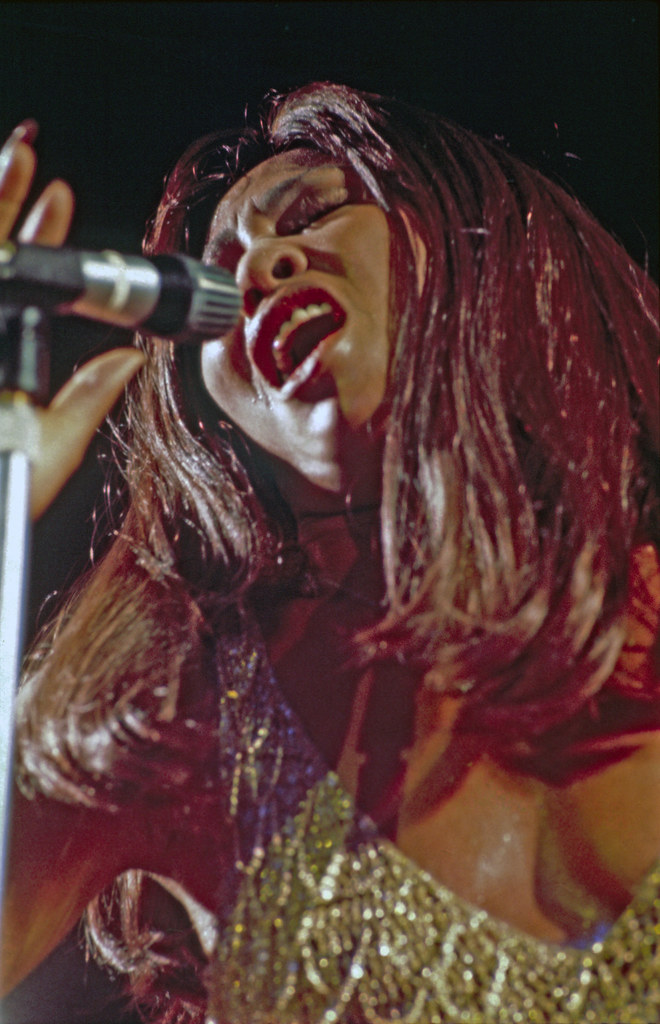
Her artistic output continued with the release of “GoldenEye” in 1995, the theme song for the James Bond film, penned by Bono and the Edge of U2, showcasing her ability to deliver powerful cinematic anthems. This was followed by the *Wildest Dreams* album in 1996 and its accompanying *Wildest Dreams Tour*. In September 1999, just before her 60th birthday, Turner released “When the Heartache Is Over,” the lead single from her tenth and final solo album, *Twenty Four Seven*. This dance-infused track and the subsequent *Twenty Four Seven Tour* were highly successful, helping the album achieve Gold certification by the RIAA. The tour itself was the highest-grossing tour of 2000, bringing in over $120 million, with two concerts at Wembley Stadium recorded and released as the DVD *One Last Time Live in Concert*. At a July 2000 concert in Zurich, Switzerland, Turner announced her intention to retire at the conclusion of the tour.
Despite her announced retirement from extensive touring, Turner continued to release material and receive accolades. In November 2004, *All the Best*, another compilation, debuted at No. 2 on the Billboard 200 in 2005, marking her highest-charting album in the United States. It quickly achieved platinum status in the U.S. within three months and in seven other countries, including the UK, reaffirming her global appeal. In December 2005, she was honored by the Kennedy Center Honors at the John F. Kennedy Center for the Performing Arts in Washington, D.C., joining an elite group of entertainers recognized for their lifetime contributions to American culture.
In February 2006, Turner released “Teach Me Again,” a duet with Italian singer-songwriter Elisa for the anthology film *All the Invisible Children*, with all proceeds donated to charity projects for children by the World Food Programme and UNICEF. She made a notable public comeback in February 2008 at the Grammy Awards, performing alongside Beyoncé, and also won a Grammy as a featured artist on *River: The Joni Letters*. That October, she embarked on her first tour in nearly a decade, the *Tina!: 50th Anniversary Tour*, supported by a new greatest hits compilation. The tour was a massive success, becoming one of the best-selling tours in history, and in 2009, Turner officially retired from performing.
Post-retirement, Turner co-founded the Beyond Foundation in 2009 with Swiss Christian musician Regula Curti and Swiss Tibetan Buddhist Dechen Shak-Dagsay, focusing on spiritual music. This collaboration resulted in four albums of uplifting music: *Buddhist and Christian Prayers* (2009), *Children* (2011), *Love Within* (2014), and *Awakening* (2017). The Swiss Beyond Foundation remains active in 2023, fostering collaboration among diverse musical artists. In April 2013, at 73, Turner graced the cover of the German issue of *Vogue* magazine, becoming the oldest person to do so, symbolizing her enduring impact on culture and style. A new compilation, *Love Songs*, was released by Parlophone Records in February 2014.
Read more about: Maxine Clair: The Acclaimed Writer Who Found Her Literary Voice in Middle Age, Dies at 86
10. An Undeniable, Lasting Global Legacy
Tina Turner’s journey from humble beginnings to global superstardom is underscored by an undeniable and lasting legacy that transcends her musical achievements, marking her as a titan of entertainment whose influence continues to resonate. Her career demonstrated an unparalleled ability to reinvent herself, defying expectations and setting new benchmarks for artistry and endurance, particularly for women and Black artists in rock music.
Her enduring musical impact was evidenced in April 2010 when, driven by an online campaign from fans of Rangers Football Club, her 1989 hit, “The Best,” re-entered the UK singles chart, peaking at No. 9. This achievement made Turner the first female recording artist in UK chart history to score top 40 hits in six consecutive decades, from the 1960s to the 2010s. A decade later, in 2020, she briefly emerged from retirement to collaborate with Norwegian producer Kygo on a remix of “What’s Love Got to Do with It,” further extending her chart presence and making her the first artist to achieve a top 40 hit across seven consecutive decades in the UK, an unprecedented feat.
Beyond her musical prowess, Turner’s intellectual and spiritual contributions also gained prominence. In 2020, she released her third book, *Happiness Becomes You: A Guide to Changing Your Life for Good*, co-authored with American author Taro Gold and Swiss singer Regula Curti. This insightful work was recognized by Amazon’s editors as a Best Nonfiction book of 2020, offering guidance rooted in her experiences and spiritual practices. Her life story was further explored in the 2021 documentary film *Tina*, which delved into the complexities of her journey.
In a significant business move in October 2021, Turner sold her music rights to BMG Rights Management for an estimated $50 million, while Warner Music continued to manage the distribution of her music, securing the future of her extensive catalog. Later that month, she received her second induction into the Rock and Roll Hall of Fame, this time as a solo artist, accepting the prestigious award via satellite from her home near Zurich, Switzerland, marking a full circle moment for her independent career.
Read more about: When Vision Meets Reality: The Star Who Moved a Continent and Other Cinematic Location Legends
Tina Turner’s legacy is further adorned with numerous accolades: twelve Grammy Awards, including a Grammy Lifetime Achievement Award and three Grammy Hall of Fame inductions. *Rolling Stone* magazine consistently ranked her among the greatest artists and greatest singers of all time. She achieved several ‘firsts’ in the industry, including being the first Black artist and first woman on the cover of *Rolling Stone*, the first female Black artist to win an MTV Award, and the first solo artist with UK top 40 singles across seven decades. Her contributions are permanently recognized with stars on both the Hollywood Walk of Fame and the St. Louis Walk of Fame. A 2005 recipient of the Kennedy Center Honors and the Women of the Year award, Tina Turner’s life exemplifies resilience, reinvention, and an unparalleled artistic spirit that irrevocably shaped the landscape of global music and culture, inspiring generations with her powerful voice and indomitable spirit. Her story is a testament to the profound impact one individual can have, leaving an indelible mark on the world.