Automotive design is a crucible where innovation meets public opinion, often igniting passionate debate. From sleek lines to radical departures, every curve, every material choice, and every functional element in a vehicle is a statement—a statement that can either resonate deeply with drivers or spark widespread contention. When designers push boundaries, the results are rarely neutral; they tend to either redefine an era or become case studies in what *not* to do. The pursuit of distinctiveness invariably leads to some polarizing outcomes.
While our focus here orbits around “The Controversial Design Feature in New Cars That Is Blamed for Glare,” the broader narrative of automotive design is rife with instances where aesthetic choices or engineering decisions have led to unexpected, and often highly public, consequences. Indeed, the very concept of design-induced glare, as vividly illustrated by London’s “Walkie-Talkie” skyscraper reflecting intense sunlight onto nearby cars and causing physical damage, serves as a stark reminder that design choices—even external to a vehicle—can create unforeseen environmental interactions that impact daily life and perception. This principle extends directly to the vehicles themselves: sometimes, it’s not just about how a car looks, but how its inherent design interacts with its surroundings, both functionally and culturally.
The automotive landscape is littered with vehicles whose designs became lightning rods for criticism, transcending mere aesthetic preferences to become symbols of broader industry trends, safety concerns, or misjudged market instincts. These are the cars that didn’t just roll off assembly lines; they rolled into history, challenging expectations and carving out lasting, often debated, legacies. Join us as we critically analyze some of the most prominent controversial car designs that have divided public opinion and shaped the ongoing conversation about automotive innovation. We’ll explore how these designs pushed limits, provoked outrage, and ultimately redefined what we expect from our vehicles.

1. **Ford Pinto (1971-1980)**
The Ford Pinto, launched in 1971, was intended as a simple, affordable compact car, as noted by MotorTrend. This model initially seemed perfectly timed for the market, with the carmaker introducing sedan and hatchback body styles first, followed by a two-door wagon. Its sales surged dramatically after the 1973 OPEC oil embargo, which targeted the United States and triggered soaring gas prices. Ford successfully capitalized on this demand, selling over half a million of these small, fuel-sipping Pintos in 1974.
However, the Pinto’s plain, boxy shape was not what drew controversy; the real issue arose from a severe rear-end design flaw that rendered it exceptionally prone to deadly fires in collisions. The critical design oversight involved the gas tank’s unfortunate placement just aft of the rear axle, which made it highly susceptible to rupturing upon impact with the differential during a rear-end collision. Reports of fiery fatal crashes began to circulate, sparking immense public uproar and leading to one of the largest recalls in automotive history.
The fallout intensified with rumors that Ford had knowingly bypassed possible preventive safety measures during the Pinto’s rushed development, prioritizing cost-cutting and speed to market. This sparked serious questions about corporate responsibility and safety standards, forcing the company to pay out millions in lawsuit settlements. Although a study by the National Highway Traffic Safety Administration (NHTSA) later found the Pinto’s overall fatality rate comparable to other compact cars of its era, its legacy remains forever tarnished. The “Pinto name will never be resurrected by Ford,” and it endures as a cautionary tale about the perilous intersection of design decisions, expediency, and public safety.
Car Model Information: 1978 Ford Pinto RUNABOUT HATCHBACK
Name: Ford Pinto
Caption: Ford Pinto
Manufacturer: Ford Motor Company
Aka: Mercury Bobcat
Production: September 1970 – July 1980
ModelYears: 1971–1980 (Pinto),1974–1980 (Bobcat)
Assembly: Edison, New Jersey,Milpitas, California
Designer: Robert Eidschun (1968)
Class: Subcompact car
BodyStyle: Sedan (automobile),sedan delivery,station wagon,hatchback
Related: #Mercury Bobcat (1974–1980),Ford Mustang (second generation)
Layout: Front-engine, rear-wheel-drive layout
Chassis: Unibody
Engine: unbulleted list
Abbr: on
Disp: Ford Cologne engine
Transmission: unbulleted list
Wheelbase: 94.0 in
Length: 163 in
Width: 69.4 in
Height: 50 in
Weight: convert
Predecessor: Ford Cortina#Mark II (1966–1970)
Successor: Ford Escort (North America)
Categories: 1980s cars, Articles with short description, Cars discontinued in 1980, Cars introduced in 1970, Commons category link from Wikidata
Summary: The Ford Pinto is a subcompact car that was manufactured and marketed by Ford Motor Company in North America from 1970 until 1980. The Pinto was the first subcompact vehicle produced by Ford in North America.
The Pinto was marketed in three body styles throughout its production: a two-door fastback sedan with a trunk, a three-door hatchback, and a two-door station wagon. Mercury offered rebadged versions of the Pinto as the Mercury Bobcat from 1975 until 1980 (1974–1980 in Canada). Over three million Pintos were produced over its ten-year production run, outproducing the combined totals of its domestic rivals, the Chevrolet Vega and the AMC Gremlin. The Pinto and Mercury Bobcat were produced at Edison Assembly in Edison, New Jersey, St. Thomas Assembly in Southwold, Ontario, and San Jose Assembly in Milpitas, California.
Since the 1970s, the safety reputation of the Pinto has generated controversy. Its fuel-tank design attracted both media and government scrutiny after several deadly fires occurred when the tanks ruptured in rear-end collisions. A subsequent analysis of the overall safety of the Pinto suggested it was comparable to other 1970s subcompact cars. The safety issues surrounding the Pinto and the subsequent response by Ford have been cited widely as business ethics and tort reform case studies.
Get more information about: Ford Pinto
Buying a high-performing used car >>>
Brand: Ford Model: Pinto
Price: $18,995 Mileage: 88,217 mi.
Read more about: Expert Insights: 14 Classic Cars That Are Simply Not Worth Your Hard-Earned Money

2. **DeLorean DMC-12 (1981-1983)**
The DeLorean DMC-12, now an undeniable pop culture icon thanks to its starring role in the “Back to the Future” movies, ironically experienced significant commercial failure during its actual production years. Its innovative design, particularly the distinctive gull-wing doors and unpainted stainless steel body, captured immediate attention. Despite initial positive reviews, such as Car & Driver stating “…our first impressions are overwhelmingly positive,” the vehicle’s high price point and ultimately disappointing performance quickly marred its reputation, diverting it from its intended path as an industry game-changer.
John Z. DeLorean envisioned his vehicle as an “ethical sports car,” striving to advance automotive technology and safety. His ambitious plans included not only the corrosion-proof stainless steel panels but also groundbreaking safety innovations like airbags, intending for the DMC-12 to represent the next evolutionary step in automobile design. The car’s assembly in Northern Ireland also brought much-needed jobs to a troubled region, underscoring its broader societal aspirations beyond mere commerce.
However, only slightly more than 9,000 DMC-12s were built, a figure far below projections, which plunged the DeLorean Motor Company into a desperate financial state. Mounting debt, failed appeals for government bailouts, and wonky accounting practices ultimately led to bankruptcy. This corporate collapse was tragically compounded by John DeLorean’s arrest on drug trafficking charges—later acquitted due to an entrapment defense—and subsequent fraud allegations related to vanished funds. Today, while “present-day enthusiasm for the car is driven largely by nostalgia rather than appreciation for its engineering,” the DMC-12 remains a testament to a bold design vision that, despite its revolutionary aesthetics, succumbed to a cascade of financial and legal controversies.
Car Model Information: 1982 Delorean DMC-12
Name: DMC DeLorean
Alt: 1983 DeLorean
Caption: 1983 DeLorean
Manufacturer: DeLorean Motor Company
Production: January 21, 1981 – December 1982
ModelYears: 1981–1983
Assembly: Dunmurry
Designer: Giorgetto Giugiaro
Class: Sports car
BodyStyle: coupé
Layout: Rear-engine, rear-wheel-drive layout
Doors: Gull-wing doors
Engine: 2.85 L
Abbr: on
Powerout: 130 hp
Transmission: 5-speed manual ,3-speed automatic
Wheelbase: 2413 mm
Length: 4267 mm
Width: 1988 mm
Height: 1140 mm
Weight: 1233 kg
Sp: us
Categories: 1980s cars, All Wikipedia articles written in American English, Articles with short description, Automobiles with backbone chassis, Automobiles with gull-wing doors
Summary: The DMC DeLorean is a rear-engine, two-seat sports car manufactured and marketed by John DeLorean’s DeLorean Motor Company (DMC) for the American market from 1981 until 1983—ultimately the only car brought to market by the fledgling company. The DeLorean is sometimes referred to by its internal DMC pre-production designation, DMC-12, although this was not used in sales or marketing materials for the production model.
Designed by Giorgetto Giugiaro, the DeLorean is noted for its gull-wing doors and brushed stainless-steel outer body panels, as well as its lack of power and performance. Though its production was short-lived, the DeLorean became widely known after it was featured as the time machine in the Back to the Future films.
With the first production car completed on January 21, 1981, the design incorporated numerous minor revisions to the hood, wheels and interior before production ended in late December 1982, shortly after DMC filed for bankruptcy and after total production reached an estimated 9,000 units.
Despite the car having a reputation for poor build quality and an unsatisfactory driving experience, the DeLorean continues to have a strong following, driven in part by the popularity of Back to the Future. 6,500 DeLoreans were estimated to still be on the road as of 2015.
Get more information about: DMC DeLorean
Buying a high-performing used car >>>
Brand: DeLorean Model: DMC-12
Price: $129,950 Mileage: 3,145 mi.
Read more about: The Road to Ruin: 12 High-Performance Cars That Drove Straight into Disaster and Became Automotive Nightmares
3. **Hummer H2 (2002-2009)**
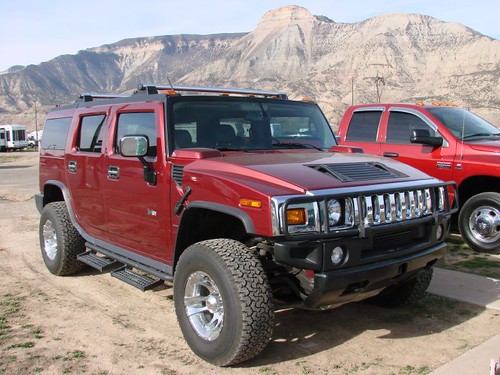
The Hummer H2, introduced in the early 2000s, immediately became a focal point of intense controversy for its colossal size and notoriously poor fuel efficiency. Its design was a deliberate aesthetic statement, characterized by aggressive lines and a military-inspired appearance, a direct descendant of its predecessor, the original Hummer. This audacious styling further fueled public backlash, making the H2 an immediate target for environmental advocates and critics of gas-guzzling vehicles during a period of escalating environmental concerns.
At its core, the H2 transcended being merely a vehicle; it quickly evolved into a powerful symbol of perceived excess and a flagrant disregard for ecological impact. The context explicitly mentions that the original Hummer brand “generated plenty of contention in its own right,” with environmentalists so outraged that “several Hummer dealerships were firebombed.” The H2 inherited and amplified this legacy, cementing its status as an emblem of wretched excess and a contentious representation of American automotive bravado.
Its aggressive design and sheer physical presence left no room for neutrality, polarizing public opinion sharply. While some saw it as the ultimate expression of power and freedom, many others viewed it as an irresponsible design choice in a world increasingly conscious of its environmental footprint. The H2’s controversial design choices, therefore, ensured its place in automotive history not just as a vehicle, but as a cultural flashpoint in the ongoing debate between automotive indulgence and environmental responsibility.
Car Model Information: 2003 Hummer H2 Base
Name: Hummer H2
Manufacturer: AM General
Production: 2002–2009
ModelYears: 2003–2009
Assembly: Mishawaka, Indiana,Kaliningrad,designer = Clay Dean (2000)
Class: Full-size SUV
BodyStyle: Sports utility vehicle,pickup truck
Platform: GMT800
Related: Chevrolet Silverado,Chevrolet Avalanche,Chevrolet Tahoe,Chevrolet Suburban,Cadillac Escalade
Layout: Front-engine, four-wheel-drive layout,four-wheel drive
Engine: General Motors LS-based small-block engine#LQ4
Transmission: 4L60E,4-speed 4L65E automatic (2005–2007),automatic transmission
Wheelbase: 122.8 in
Abbr: on – 6.2 L
Length: 203.5 in
Width: 81.3 in
Height: 2002–03: {{convert,77.8,in,mm,0,abbr=on
Weight: {{convert,6400,lb,kg,0,abbr=on
Categories: 2000s cars, AM General vehicles, All-wheel-drive vehicles, All articles needing additional references, Articles needing additional references from January 2024
Summary: The Hummer H2 is a full-size off-road SUV that was marketed by Hummer and built in the AM General facility under contract from General Motors from 2002 until 2009. It is based on a modified GMT820 GM three-quarter-ton pickup truck in the front and a half-ton 1500 frame in the rear. A four-door pickup truck version with a midgate that opens the vehicle’s interior to the external cargo bed was introduced for the 2005 model year as the H2 SUT (sport utility truck).
Get more information about: Hummer H2
Buying a high-performing used car >>>
Brand: Hummer Model: H2
Price: $12,490 Mileage: 152,679 mi.
Read more about: The Road to Ruin: 12 High-Performance Cars That Drove Straight into Disaster and Became Automotive Nightmares
4. **Pontiac Aztek (2001-2005)**
Launched in 2000, the Pontiac Aztek was General Motors’ ambitious attempt to create a crossover vehicle with “adventurous styling.” However, its design, which boldly combined elements of an SUV and a coupe, was met with widespread ridicule instead of admiration. The Aztek’s angular lines, decidedly odd proportions, and a distinctive split grille made it instantly recognizable, but more often than not, it was recognized for all the wrong reasons. Many critics swiftly relegated it to numerous “worst car” lists.
Despite the torrent of aesthetic criticism, the Aztek did possess several practical features and boasted considerable versatility. It offered innovative camping accessories and a spacious interior, demonstrating a clear focus on utility and adventure. Yet, as the context emphasizes, “the Aztek’s design was a major factor in its commercial failure and negative public perception.” Its unconventional aesthetics proved to be such a dominant force that it overshadowed any of its functional merits, preventing the vehicle from finding widespread acceptance.
Intriguingly, in recent years, the Aztek’s reputation has experienced a surprising softening, partly attributed to its prominent role in popular culture. Nevertheless, the Aztek’s divisive design endures as a classic “case study in how unconventional aesthetics can overshadow functionality, a concern voiced by Coding Horror.” It serves as a potent reminder that while innovation and practicality are vital, a vehicle’s visual appeal holds immense sway over public perception and market success.
Car Model Information: 2004 Pontiac Aztek 4dr All Purpose FWD
Name: Pontiac Aztek
Manufacturer: General Motors
Production: July 2000 – December 2004
Assembly: Ramos Arizpe
Designer: Tom Peters (chief designer: 1997)
Class: Mid-size crossover SUV
BodyStyle: SUV
Platform: GM U platform
Related: Buick Rendezvous
Layout: Front-engine, front-wheel-drive layout
Engine: General Motors 60° V6 engine#LA1,V6
Transmission: GM 4T65-E transmission,Automatic transmission
Wheelbase: 108.3 in (2,751 mm)
Length: 182.1 in (4,625 mm)
Width: 73.7 in (1,872 mm)
Height: 66.7 in (1,694 mm)
Weight: 3,779–4,043 lb (1,714–1,834 kg)
Predecessor: Pontiac Sunrunner
Successor: Pontiac Torrent
ModelYears: 2001–2005
Categories: All-wheel-drive vehicles, All articles needing additional references, All articles with unsourced statements, Articles needing additional references from October 2013, Articles with short description
Summary: The Pontiac Aztek is a mid-size crossover SUV marketed by General Motors introduced in 2000 for the model years 2001 through 2005. As a four-door crossover with front-wheel drive and optional all-wheel drive, the Aztek featured a four-speed automatic transmission with a V6 engine. Marketed by Pontiac as a “sport recreational vehicle,” the Aztek used a shortened platform shared with GM’s minivans (e.g., the Pontiac Montana) featuring 94 cubic feet of cargo room with its rear seats removed. The design employed conventional rear outswing doors rather than sliding doors, and a split rear tailgate, the lower section formed with seat indentations and cupholders. Other features included a front center console that doubled as a removable cooler, optional rear stereo controls in the cargo area, optional sliding cargo floor with grocery compartments, and optional camping package with an attachable tent and air mattress.
Get more information about: Pontiac Aztek
Buying a high-performing used car >>>
Brand: Pontiac Model: Aztek
Price: $995 Mileage: 0 mi.
Read more about: The Road to Ruin: 12 High-Performance Cars That Drove Straight into Disaster and Became Automotive Nightmares
5. **Fiat Multipla (1998-2010)**
The Fiat Multipla burst onto the scene in 1998 with a design so bizarre it instantly provoked “widespread mockery.” Its strikingly unusual appearance, characterized by a prominent visual break between the windshield and the main body, along with a unique three-rows-of-two-seats arrangement and an asymmetrical layout, transformed it into an immediate and frequent target of criticism and jokes. This radical departure from conventional minivan aesthetics ensured it stood out, though not always for positive reasons.
From a purely practical standpoint, the Multipla was lauded for its exceptional spaciousness and clever interior packaging. Its innovative cabin design maximized passenger comfort and cargo versatility within a relatively compact footprint. However, these undeniable functional advantages were largely overshadowed by its polarizing exterior. The context accurately states that “The Multipla’s design was so polarizing that it became a symbol of automotive oddities,” cementing its place in design history as a vehicle admired by some for its audaciousness but largely derided by the public.
The Multipla’s commercial run, which lasted over a decade, underscored a critical tension in automotive design: how far can a manufacturer push aesthetic boundaries in pursuit of functionality before alienating the mass market? It demonstrated that while a utilitarian focus can yield a highly practical vehicle, an aesthetic that strays too far from conventional beauty can prove insurmountable for broad consumer appeal. The Multipla ultimately became an enduring symbol of how design risk, even when justified by interior innovation, can lead to widespread derision and a lasting reputation for visual eccentricity.
Read more about: 19 Hilariously Bad Cars That Became Unforgettable Icons

6. **Edsel (1958-1960)**
Ford’s Edsel was launched with grand ambitions in 1957, intended to revolutionize the mid-range market and establish a new brand for the company, its “first all-new car line in decades.” However, instead of a revolution, it became one of the biggest failures in automotive history, flopping spectacularly. The Edsel’s design, especially its “distinctive vertical grille” and overall unconventional styling, immediately polarized the public, marking it as a critical misstep right from the start.
The public’s reaction to the Edsel’s aesthetics was swift and unforgiving. While some might have seen its look as futuristic, many others “mocked its ‘horse collar’ front end, calling it unattractive and awkward,” as highlighted by Wired. This “over-the-top chrome accents” and peculiar grille design, combined with an uninspiring name chosen by a committee—”Edsel was Henry Ford’s son’s name, but the public was puzzled by it at best”—failed to conjure any sense of performance, adventure, or modernity that Ford had hoped for.
Beyond the polarizing aesthetics, the Edsel suffered from a confluence of other issues. Its quality was inconsistent, its price high, and it included questionable design choices like a push-button transmission located in the steering wheel hub, which notoriously led “drivers to shift when they meant to hit the horn, often with disastrous consequences.” These factors, compounded by a national recession, ensured the Edsel brand “didn’t stand a chance.” Although sales plummeted and it became “synonymous with design failure,” collectors today appreciate its bold approach. The Edsel remains a powerful reminder of how innovation, when it “strays too far from public taste,” can backfire dramatically.
Car Model Information: 1959 Edsel Ranger
BirthName: Edsel Bryant Ford
Caption: Ford in 1921
BirthDate: [object Object]
BirthPlace: Detroit, Michigan
DeathDate: [object Object]
DeathPlace: Grosse Pointe Shores, Michigan
Occupation: Automobile executive
Title: Ford Motor Company
Spouse: [object Object]
Parents: Henry Ford,Clara Bryant Ford
Relations: Edsel Ford II
Children: Henry Ford II,Benson Ford,Josephine Ford,William Clay Ford Sr.
Categories: 1893 births, 1943 deaths, 20th-century American businesspeople, All Wikipedia articles written in American English, All articles with dead external links
Summary: Edsel Bryant Ford (November 6, 1893 – May 26, 1943) was an American business executive and philanthropist, who was the only child of pioneering industrialist Henry Ford and his wife, Clara Jane Bryant Ford. He was the president of Ford Motor Company from 1919 until his death in 1943.
He worked closely with his father, as sole heir to the business, but was keen to develop cars more exciting than the Model T (“Tin Lizzie”), in line with his personal tastes. Even as president, he had trouble persuading his father to allow any departure from this formula. Only a change in market conditions enabled him to develop the more fashionable Model A in 1927. Edsel also founded the Mercury division and was responsible for the Lincoln-Zephyr and Lincoln Continental. He introduced important features, such as hydraulic brakes, and greatly strengthened the company’s overseas production.
Ford was a major art benefactor in Detroit and also financed Admiral Richard Byrd’s polar explorations. He died of stomach cancer aged 49. Henry Ford temporarily reassumed the presidency of Ford Motor Company on Edsel’s death, then Edsel’s eldest son, Henry Ford II, succeeded Henry as president of the company in 1945.
He was also a member of the board of directors of American IG, the American subsidiary of the German chemical conglomerate IG Farben.
Get more information about: Edsel Ford
Buying a high-performing used car >>>
Brand: Ford Model: Edsel
Price: $19,000 Mileage: 21,529 mi.
Read more about: Gearhead Dreams: 15 Iconic Defunct Car Brands We Desperately Want Back on the Road

7. **Chevy SSR (2003)**
The Chevrolet SSR, introduced in 2003, represented a truly unique and controversial design experiment: the blending of a retro-inspired roadster with the practical bed of a pickup truck. This unusual combination was conceptualized as a tribute to classic Chevy trucks with its “curvy fenders and retractable hardtop,” yet its hybrid identity “left many scratching their heads.” It found itself struggling to fit neatly into any traditional automotive category.
The SSR’s design, while undeniably distinctive, consequently sparked a significant divide in public opinion. A segment of buyers was undoubtedly drawn to its “nostalgic flair and an open-air driving experience,” appreciating its audacious individuality. However, critics were quick to point out its fundamental identity crisis, arguing that it was “neither a true sports car nor a practical truck.” This inherent ambiguity in its purpose limited its appeal.
As highlighted by Top Gear, the SSR’s polarizing design directly contributed to its lukewarm sales figures and, ultimately, a brief production run. The vehicle stands as a compelling example of how pushing boundaries by merging disparate automotive segments can result in a design that is creatively intriguing but commercially challenging. The SSR’s lasting legacy is one of a daring, yet ambiguous, vehicle that, despite its uniqueness, struggled to achieve widespread market acceptance, becoming a cult favorite for those who appreciate its peculiar charm.
Car Model Information: 2004 Chevrolet SSR LS
Name: Chevrolet SSR
Manufacturer: Chevrolet
Production: 2003–2006
ModelYears: 2003–2006
Assembly: Lansing, Michigan
Class: Pickup truck
BodyStyle: ubl
Platform: GMT360
Related: ubl
Layout: Front-engine, rear-wheel drive layout
Engine: ubl
Transmission: ubl
Wheelbase: 116.0 in
Abbr: on
Length: ubl
Width: 78.6 in
Height: ubl
Designer: ubl
Categories: All articles needing additional references, All articles with unsourced statements, Articles needing additional references from July 2008, Articles with short description, Articles with unsourced statements from August 2023
Summary: The Chevrolet SSR (Super Sport Roadster) is a retro-styled and retractable hardtop convertible pickup truck manufactured by Chevrolet between 2003 and 2006.
During the 2003 and 2004 model years, the SSR used General Motors’ 5.3 L 300 hp (224 kW; 304 PS) Vortec 5300 V8. Performance was 7.7 seconds for 0–60 mph (0–97 km/h) with a 15.9 second 1⁄4 mile (402.3 m) time at 86.4 mph (139.0 km/h).
For the 2005 model year, the SSR used the 390 hp (291 kW; 395 PS) LS2 V8 engine also used in the C6 Corvette, Trailblazer SS, and Pontiac GTO, now offering a manual transmission option, the six-speed Tremec, for the first time. Performance improved dramatically with the LS2; the 6-speed manual version had an advertised 0–60 mph (97 km/h) acceleration time of 5.29 seconds. In addition, GM badges were added to the vehicle.
For 2006, output of the LS2 increased to 395 hp (295 kW; 400 PS).
Get more information about: Chevrolet SSR
Buying a high-performing used car >>>
Brand: Chevrolet Model: SSR
Price: $21,799 Mileage: 54,685 mi.
8. **Dodge Ram SRT-10**
The Dodge Ram SRT-10 took the already formidable Ram pickup and, with a stroke of audacious engineering, transformed it into an unparalleled muscle truck, housing the beastly Viper V10 engine. As noted by Moparinsiders, its design was uncompromising: an aggressive hood scoop, massive wheels, and pronounced, muscular lines that carved an imposing silhouette on the road. For some, it wasn’t merely a vehicle; it was the ultimate, unvarnished expression of American power and bravado, a brazen declaration of performance in a utility vehicle that dared to defy convention.
Naturally, not everyone embraced the SRT-10’s overt styling. Many critics perceived its aesthetics as excessive and undeniably unnecessary for a pickup truck, a vehicle traditionally valued for its utilitarian function. The truck’s over-the-top appearance sharply divided enthusiasts, creating a distinct chasm between those who revered its raw, unapologetic power and those who found its visual ostentation, its sheer size, and its gas-guzzling nature to be a bridge too far. It was a loud statement, and like any such declaration, it inevitably invited strong opinions and passionate debate.
Despite the division, the SRT-10 has cemented its legacy as a revered cult favorite, particularly among those who crave blistering performance, an intimidating presence, and an abundance of attitude from their vehicles. This audacious design pushed the very boundaries for what a truck could aspire to be, prioritizing raw, track-worthy power and an unapologetically aggressive aesthetic. Its bold existence irrevocably carved out a distinct niche as a high-performance, segment-bending vehicle, serving as a true testament to automotive audacity that continues to captivate and inspire a dedicated following.
Car Model Information: 2017 Honda Accord Touring
Name: Dodge Ram SRT-10
Aka: Ram SRT-10 (Europe)
Manufacturer: DaimlerChrysler
Production: 2004–2006
Assembly: Saltillo, Coahuila
Layout: FR layout
Class: Sports car,pickup truck
Platform: Chrysler DR platform
BodyStyle: 2-door regular cab,4-door Quad Cab
Wheelbase: 120.5 in
Abbr: on
Length: 203.1 in
Width: 79.9 in
Height: 74.4 in
Engine: Viper engine,V10 engine
Powerout: horsepower
Transmission: Tremec T-56 transmission,Manual transmission
Related: Dodge Ram
Categories: All articles needing additional references, All articles with dead external links, Articles needing additional references from June 2008, Articles with dead external links from February 2022, Articles with permanently dead external links
Summary: The Dodge Ram SRT-10 is a sport pickup truck produced by Dodge, based on the standard Ram 1500, with only 10,046 units built. It was introduced as a concept at the January 2002 North American International Auto Show, while the production model was introduced in 2003 as a 2004 model year.
Get more information about: Dodge Ram SRT-10
Buying a high-performing used car >>>
Brand: Dodge Model: Ram SRT-10
Price: $19,960 Mileage: 86,317 mi.
Read more about: Buckle Up! These Are the 10 Most Absolutely Rad American Car Names of All Time That Still Give Us Chills!
9. **Cadillac Cimarron**
In the early 1980s, Cadillac, a marque synonymous with American luxury, introduced the Cimarron—a compact car conspicuously based on the humble Chevrolet Cavalier. The initial hopes were high for this venture: it aimed to be a fresh, entry-level luxury vehicle, crafted to attract a younger demographic and to stand toe-to-toe with European luxury imports. However, the Cimarron’s rather bland styling and its overt similarities to its far less expensive Chevy sibling profoundly disappointed loyal Cadillac fans, who expected a distinctive, premium design befitting the brand’s esteemed heritage.
The backlash was swift and unforgiving. Many automotive critics lambasted the Cimarron for what they saw as a grave dilution of Cadillac’s prestige, arguing it offered frustratingly little in the way of distinctive design, genuinely luxurious appointments, or a unique, refined driving experience. MotorTrend, among others, emphatically highlights that its controversial styling and glaring lack of luxury features made it one of the brand’s most profoundly derided models, marking it as an unequivocal misstep in Cadillac’s illustrious history. It felt, to many, less like a genuine Cadillac and more like a barely rebadged economy car.
The Cimarron ultimately stands as a stark and enduring cautionary tale of badge engineering gone profoundly awry, vividly illustrating the significant perils of attempting to cut corners and compromise on core brand values within the highly competitive luxury segment. Its commercial failure and critical panning left a lasting stain on Cadillac’s reputation for exclusivity and premium design, an unfortunate brand association that took considerable time and effort for the marque to truly overcome. Its legacy forcefully underscores the critical importance of maintaining a consistent, elevated brand identity.
Read more about: Why We Still Adore Them: A Deep Dive into the Most Gloriously Awkward ’80s Cars That Were So Ugly, They Became Icons
10. **AMC Pacer**
AMC’s Pacer, a truly singular creation, burst onto the American automotive scene in 1975, immediately distinguishing itself as profoundly unlike anything else on the roads at the time. Its design philosophy was radical: a wide, almost bulbous, rounded greenhouse paired with a short, stubby body, which collectively endowed it with a distinctly fishbowl appearance. This was a bold departure from prevailing designs. AMC claimed this innovation maximized interior space and outward visibility, aiming to create a compact car that, despite its exterior, felt remarkably airy and spacious inside.
However, as pointed out by History.com, while its interior packaging was often lauded, the exterior aesthetic proved to be highly divisive. Many quickly found the look odd, ungainly, and even comical, making it an immediate subject of both intense scrutiny and widespread ridicule. The Pacer’s unconventional appearance, while certainly memorable, subsequently struggled to find a broad audience beyond those few who appreciated its sheer eccentricity and avant-garde approach. It often polarized opinions between those who loved its quirky uniqueness and those who openly mocked its perceived awkwardness.
Today, the AMC Pacer has carved out a fascinating niche in automotive lore, remembered as a quintessential symbol of 1970s automotive eccentricity. It’s a vehicle simultaneously beloved by a devoted subset of enthusiasts for its distinctive individuality and its trailblazing interior packaging, yet still occasionally mocked by others for its enduringly awkward proportions. The Pacer embodied an era of bold experimentation in automotive design. While its unique aesthetic may not have resonated universally, its commitment to maximizing interior space and outward visibility was undeniably a pioneering effort, securing its quirky place in automotive history.
Read more about: The Resurgent Roar: Unearthing Eight Forgotten Luxury Car Brands Poised for a Modern Comeback
11. **Chevrolet Corvette C4**
When Chevrolet unveiled the C4 Corvette in 1984, it heralded a seismic shift, marking a sharp and deliberate break from the long-standing tradition of curvaceous lines that had defined previous models. This new iteration was a striking statement: its angular bodywork, contemporary aerodynamic styling, and a revolutionary digital dashboard all pointed toward a distinctly futuristic vision for America’s quintessential sports car. It was a bold leap into modern design and engineering, aiming to propel the Corvette into a new era of performance and technological sophistication. Yet, this radical transformation was not universally applauded.
Indeed, a strong contingent of Corvette purists voiced their discontent, lamenting the loss of the classic, flowing aesthetics, seeing the C4 as a departure from the brand’s soul. Conversely, many others enthusiastically welcomed the modern update as not just desirable, but a necessary evolution, crucial for the Corvette to remain competitive and relevant in an increasingly high-tech automotive landscape. Writing for The Autopian, Adrian Clarke vividly recounts that intense debate erupted among loyal Corvette fans, creating passionate arguments on both sides. However, the C4’s undeniable performance advancements, technological innovations, and improved handling dynamics eventually began to win over many skeptics, proving its inherent merit well beyond its initially divisive aesthetics.
Despite the initial controversy and spirited arguments, this era remains one of the most compelling and frequently discussed chapters in Corvette history, a pivotal period of transition that challenged established perceptions of what a Corvette could, and should, be. The C4, with its bold reinterpretation, represented a vital and necessary evolution, masterfully balancing the brand’s revered tradition with a forward-thinking vision. It ultimately solidified the Corvette’s place as a global performance icon, and its polarizing debut paved an essential pathway for future generations of the storied nameplate.
Car Model Information: 2017 Honda Accord Touring
Name: Chevrolet Corvette (C4)
Caption: 1994 Chevrolet Corvette
Manufacturer: Chevrolet
Production: January 3, 1983 – June 20, 1996
ModelYears: 1984–1996
Predecessor: Chevrolet Corvette (C3)
Successor: Chevrolet Corvette (C5)
Class: Sports car
Assembly: Bowling Green, Kentucky
BodyStyle: targa top,Convertible (car)
Layout: Front-engine, rear-wheel-drive layout#FMR
Platform: GM Y platform
Wheelbase: cvt
Length: cvt
Width: cvt
Height: Coupe: {{cvt,46.7,in,mm
Transmission: automatic transmission,Overdrive (mechanics),GM 4L60-E transmission,ZF Friedrichshafen
Engine: {{cvt,350,cuin,L,1,Chevrolet small-block engine (first- and second-generation)#L83
Weight: cvt
Designer: Jerry Palmer
Related: Callaway Cars#C4 (RPO B2K Callaway Twin Turbo Corvette),Callaway Cars#C4 (RPO B2K Callaway Twin Turbo Corvette),Callaway Cars#C4 (RPO B2K Callaway Twin Turbo Corvette),Callaway Cars#C6 (Callaway SuperNatural Corvette),Callaway Cars#C4 (RPO B2K Callaway Twin Turbo Corvette)
Categories: 1990s cars, All articles with dead external links, All articles with unsourced statements, Articles with dead external links from November 2016, Articles with permanently dead external links
Summary: The Chevrolet Corvette (C4) is the fourth generation of the Corvette sports car, produced by American automobile manufacturer Chevrolet from 1983 until 1996. The convertible returned, as did higher performance engines, exemplified by the 375 hp (280 kW) LT5 found in the ZR1. In early March 1990, the ZR1 would set new records for the highest average speed over 24 hours at over 175 mph (282 km/h) and highest average speed over 5,000 miles at over 173 mph (278 km/h). With a completely new chassis, modern sleeker styling, and other improvements to the model, prices rose and sales declined. The last C4 was produced on June 20, 1996.
Get more information about: Chevrolet Corvette (C4)
Buying a high-performing used car >>>
Brand: Chevrolet Model: Corvette C4
Price: $19,960 Mileage: 86,317 mi.
Read more about: Inside Vanilla Ice’s Garage: A Deep Dive into the Rapper’s Eclectic and Multi-Million Dollar Automotive Collection
12. **Plymouth Prowler**
The Plymouth Prowler, launched in 1997, represented an unapologetically radical departure from mainstream automotive design, a daring and audacious homage to the classic American hot rods of yesteryear. Its distinctive features included open front wheels, a dramatically pointed nose, and a low-slung, aggressively styled body, all directly inspired by the customized vehicles of the 1930s. This retro-futuristic styling wasn’t a subtle nod; it was a deliberate, almost theatrical, design choice by Chrysler, conceived to evoke a powerful sense of nostalgia while simultaneously pushing the aesthetic boundaries of contemporary production cars.
While a dedicated segment of automotive enthusiasts fervently applauded Chrysler’s sheer willingness to take such significant design risks in an era characterized by increasingly homogenized designs, others found the Prowler’s retro-futuristic look to be simply too extreme and glaringly impractical for the demands of daily driving. Its design was not merely unique; it was explicitly theatrical and provocative, intentionally prompting strong reactions that ranged from fervent admiration to outright critique and bewilderment. It was, without question, a car explicitly built for spectacle and individual expression.
Consequently, its inherently limited practicality, combined with its undeniably bold and polarizing styling, ensured that the Prowler remained a distinctly niche vehicle. It appealed primarily to a specific segment of collectors and automotive aficionados who valued its artistic statement and unique presence. However, this very polarizing design has, over time, earned it a devoted and passionate following among those who deeply appreciate its daring spirit and its artistic, almost sculptural, interpretation of automotive heritage. The Prowler powerfully demonstrated that radical, niche designs could indeed find a loyal audience, and it remains a celebrated example of a pure concept car courageously brought to vivid life.
Car Model Information: 1999 Plymouth Prowler
Name: Plymouth Prowler
Manufacturer: Chrysler Corporation
Production: 1997–2002,11,702 produced
Assembly: Detroit, Michigan
Class: Sports car
Layout: Front-engine, rear-wheel-drive layout#Front mid-engine, rear-wheel-drive layout
Platform: Chrysler PR platform
BodyStyle: Roadster (automobile)
Engine: Chrysler SOHC V6 engine#3.5,V6 engine
Transmission: Ultradrive#A606/42LE,automatic transmission
Aka: Chrysler Prowler (2000–2002)
Wheelbase: 113.3 in
Abbr: on
Length: 165.3 in
Width: 76.5 in
Height: 50.9 in
Weight: 2800 lb
Successor: Chrysler Crossfire
Designer: Tom Gale (designer)
Caption: 2000 Plymouth Prowler
Categories: 2000s cars, All articles needing additional references, Articles needing additional references from November 2015, Articles with short description, Cars introduced in 1997
Summary: The Plymouth Prowler, later the Chrysler Prowler, is a two-door, two passenger sports car, manufactured and marketed by DaimlerChrysler for model years 1997-2002 — widely known for its hand-crafted aluminum bodywork and its retro-hot rod styling with open, Indy racer-style front wheels.
Based on the 1993 concept car of the same name, Chrysler offered the Prowler over a single generation, with a V6 front-engine, and a rear-transaxle, rear-drive configuration — reaching a total production of 11,702 units.
Get more information about: Plymouth Prowler
Buying a high-performing used car >>>
Brand: Plymouth Model: Prowler
Price: $36,999 Mileage: 7,000 mi.
Read more about: Unearthing Hidden Performance: 14 Underrated Sports Cars That Defy Expectations for Today’s Performance Seekers
13. **Lincoln Blackwood**
Lincoln’s Blackwood, introduced in 2002, represented an ambitious, yet ultimately ill-fated, experiment by the luxury marque to seamlessly blend the plush comfort and sophisticated amenities of a luxury sedan with the rugged utility and imposing presence of a pickup truck. Its distinctive design included a unique, carpeted, power-operated tonneau cover for the cargo bed, a dazzling, chrome-laden exterior, and an interior meticulously appointed with upscale materials and advanced features, all curated to exude the premium, sophisticated aesthetic typically associated with Lincoln’s most esteemed luxury sedans. It was an audacious attempt to create a new category in the luxury market.
However, the Blackwood’s lofty upscale aspirations fundamentally and irrevocably clashed with the traditional, rugged, and unpretentious utilitarian image historically associated with a pickup truck. This stark juxtaposition severely confused traditional truck buyers, who prioritize practicality, durability, and raw capability over overt luxury. Simultaneously, dedicated luxury car fans did not embrace the Blackwood either, often finding its truck-based platform, its inherent size, and its surprisingly limited cargo functionality unsuited to their expectations for a high-end, refined vehicle. Its remarkably brief production run, lasting only a single model year, starkly reflected the market’s widespread ambivalence.
The Blackwood’s controversial and ultimately unsuccessful design unequivocally demonstrated that not all automotive mashups, no matter how ambitiously conceived, are destined for commercial success or widespread market acceptance. This is especially true when they attempt to bridge two fundamentally distinct market segments without fully satisfying the core demands of either. It served as an interesting, albeit commercially challenged, experiment in fusing disparate automotive segments, a bold endeavor that ventured far from conventional wisdom. The Blackwood thus leaves a legacy as a unique, almost avant-garde, attempt to redefine luxury utility, a daring design that, despite its innovative spirit, simply couldn’t find its essential footing.
Car Model Information: 2002 Lincoln Blackwood 2WD
Name: Lincoln Blackwood
Manufacturer: Lincoln Motor Company
Production: September 25th 2000 – August 8th, 2002
ModelYears: 2002 (United States),2002–2003 (Mexico)
Assembly: Claycomo, Missouri
Successor: Lincoln Mark LT
Class: luxury car,pickup truck
BodyStyle: pickup truck
Layout: Front-engine, rear-wheel drive layout
Related: Ford F-Series (tenth generation),Lincoln Navigator
Engine: Ford Modular engine#5.4 L
Transmission: Automatic transmission
Wheelbase: 138.5 in
Abbr: on
Length: 220.2 in
Width: 78.0 in
Height: 73.6 in
Designer: Patrick Schiavone
Caption: 2002 Lincoln Blackwood
Categories: All articles with unsourced statements, Articles with short description, Articles with unsourced statements from November 2024, Cars discontinued in 2002, Cars introduced in 2001
Summary: The Lincoln Blackwood is a luxury pickup truck that was marketed by the Lincoln division of Ford Motor Company for the 2002 model year. The first pickup truck marketed by Lincoln, the Blackwood was derived from the Ford F-150 SuperCrew and the Lincoln Navigator. Drawing its name from its simulated black woodgrain cargo box, the Blackwood was offered solely with a black-painted exterior.
Although the concept vehicle had a positive public reception, the production Blackwood fell far under sales projections in the United States and Mexico. After the 2002 model year, the Blackwood was discontinued in the United States, with a short run of 2003 models produced for Mexico. In total, only 3,383 units (NOT the commonly quoted 3,356 number) were produced, making it both the rarest and shortest-produced Lincoln model line.
For 2006, Lincoln entered the pickup truck segment for a second time with the Lincoln Mark LT — again based on the Ford F-150 —which, even though it also sold poorly, was more popular than the Blackwood.
The first Lincoln vehicle manufactured exclusively outside of the state of Michigan since 1958, the Blackwood was assembled by Ford at its Kansas City Assembly facility in Claycomo, Missouri, alongside the F-150 from September 2000 to August 2002.
Get more information about: Lincoln Blackwood
Buying a high-performing used car >>>
Brand: Lincoln Model: Blackwood
Price: $14,199 Mileage: 77,219 mi.
Read more about: Buyer’s Remorse: 15 Cars Drivers Wished They Never Bought
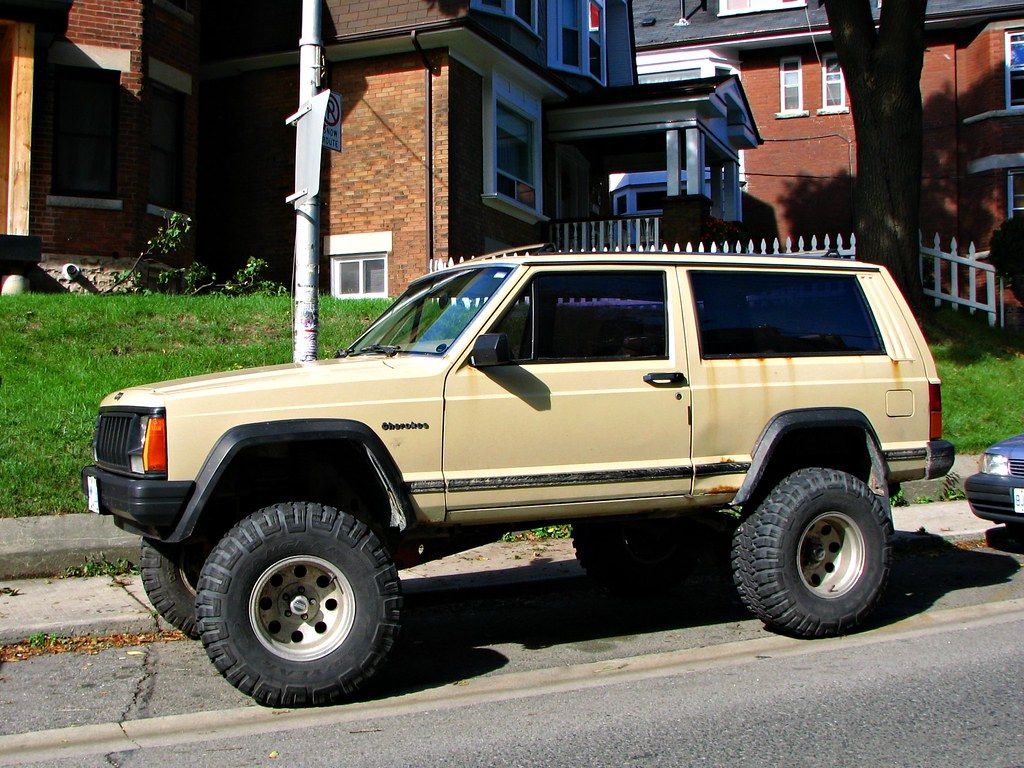
14. **Jeep Cherokee XJ**
The Jeep Cherokee XJ, launched in 1984, marked a significant and influential departure from the rounded, often softer, SUV shapes that dominated its era, distinguishing itself with its iconic boxy, utilitarian, and strikingly functional design. Initially, its stark, angular lines and no-nonsense aesthetic were met with a degree of criticism; some observers and critics found it rather unattractive and perhaps too stark when compared to more stylized competitors. It was undeniably a vehicle that unapologetically prioritized function and robust engineering over flamboyant, fleeting trends in automotive form.
However, the XJ’s inherently rugged appearance, combined with its highly functional layout, impressive off-road capabilities, and remarkably practical interior, quickly transcended initial aesthetic skepticism. It rapidly won a loyal and fervent following among serious off-roaders, adventurous families, and those who valued genuine utility, durability, and straightforward design. Its unpretentious, yet incredibly effective, design proved to be exceptionally durable and reliable, swiftly cementing its reputation as a tireless workhorse and an unparalleled adventure vehicle. Initial aesthetic criticisms gave way to a widespread and enduring appreciation for its inherent robustness and timeless appeal.
With the passage of time, the XJ’s distinctive design has come to symbolize not just durability and simplicity, but also a certain rugged authenticity and unwavering capability. What was once considered controversial or even unattractive by some is now universally celebrated as an undisputed classic, proving emphatically that polarizing designs can, under the right circumstances, evolve to become beloved icons when they genuinely deliver on their intended purpose and cultivate a dedicated, passionate community. Its remarkable design trajectory stands as a compelling testament to how initial market resistance can, in time, transform into widespread admiration, particularly when a design proves its profound long-term value through consistent function and enduring appeal.
Car Model Information: 2017 Honda Accord Touring
Name: Jeep Cherokee (XJ)
Caption: 1984–1996 Jeep Cherokee 2-door
Manufacturer: American Motors Corporation,Chrysler Corporation,DaimlerChrysler
Aka: Jeep Wagoneer Limited (1984–1990),Renault Jeep Cherokee,In China:,Jeep 2500/2700,Beijing BJ2021/BJ7250,BAW Qishi,Shuanghuan SHJZH213
Production: U.S.: 1983–June 2001,China:,Beijing Jeep,1994–1997 (Shuanghuan),BAW,South America,Venezuela: 1987–2001,Argentina: 1996–2000,Egypt: 1992–2001
ModelYears: U.S.: 1984–2001
Assembly: Toledo, Ohio,Beijing,Valencia, Carabobo,Ferreyra, Córdoba,Pademangan,Cairo
Class: Compact SUV,Compact car
BodyStyle: Sport utility vehicle,4-door SUV
Related: Jeep Comanche,Jeep Grand Cherokee (ZJ),Jeep Wrangler (YJ),#XJ in China,BAW Qishi
Layout: Front-engine, rear-wheel-drive layout,rear-wheel drive
Engine: unbulleted list
Abbr: on (BAW Qishi)
Order: VM Motori,List of VM Motori engines#425 OHV
Transmission: Aisin,Aisin,Peugeot,Aisin,New Venture Gear,Chrysler,TorqueFlite#30RH,Aisin
Wheelbase: {{convert,101.4,in,mm,0,abbr=on
Length: 1987–1990: {{convert,165.3,in,mm,0,abbr=on
Width: 1987–1993, BAW Qishi: {{convert,70.5,in,mm,0,abbr=on
Height: 1987–1988 2WD: {{convert,63.4,in,mm,0,abbr=on
Weight: {{convert,3357,lb,kg,abbr=on
Predecessor: Jeep Cherokee (SJ),Jeep Wagoneer (SJ)
Successor: Jeep Liberty (KJ),Jeep Grand Cherokee (ZJ)
Designer: Dick Teague
Categories: 1980s cars, 1990s cars, 2000s cars, All-wheel-drive vehicles, All articles with dead external links
Summary: The Jeep Cherokee (XJ) is a sport utility vehicle developed by American Motors Corporation (AMC) and marketed across a single generation by Jeep in the United States from 1983 (model year 1984) through 2001, and globally through 2014. It was available in two- or four-door, five-passenger, front-engine, rear- or four-wheel drive configurations.
Sharing the name of the original, full-size Cherokee SJ model, the 1984 XJ Cherokee was Jeep’s first all-new design since the 1963 SJ Wagoneer, as well as the first American off-road vehicle built with fully integrated body-and-frame (unibody) design, and formed the mechanical basis for the Jeep Comanche (MJ) pickup truck (1986–1992).
Jeep marketed XJs as Sportwagons, a precursor to the modern sport utility vehicle (SUV) before that term was used. The XJ is credited for spawning competitors, as other automakers noticed the design cannibalizing sales from regular cars, supplanting the role of the station wagon and transforming the vehicle type “from truck to limousine in the eyes of countless suburban owners,” though GM had also launched road-biased, RWD and 4WD compact SUVs, the Chevrolet S-10 Blazer and GMC S-15 Jimmy, one year earlier, initially available in two-door form only.
The 2007 book Jeep Off-Road called the XJ a “significant link in the evolution of the 4×4.” In 2011, Kiplinger magazine selected the XJ as one of the “cars that refuse to die.” Automotive journalist Robert Cumberford, writing for Automobile, called the Jeep XJ one of the 20 greatest cars of all time — for its design, and “possibly the best SUV shape of all time, it is the paradigmatic model to which other designers have since aspired.”
Get more information about: Jeep Cherokee (XJ)
Buying a high-performing used car >>>
Brand: Jeep Model: Cherokee XJ
Price: $19,960 Mileage: 86,317 mi.
Read more about: The Resurgent Roar: Unearthing Eight Forgotten Luxury Car Brands Poised for a Modern Comeback
As we conclude our critical analysis of these pivotal and often contentious designs, from the muscle-bound pickup that roared defiance to the luxury experiment that lost its way, and the angular classic that forged a new path, these automotive sagas vividly illustrate the delicate, precarious balance designers must continually strike. It’s a constant negotiation between pushing the frontiers of innovation and successfully garnering widespread public acceptance, between groundbreaking aesthetic vision and market realities. Each of these vehicles, in its own unique and undeniably controversial way, has contributed profoundly to the rich, dynamic tapestry of automotive history, serving as powerful reminders that every bold stroke of design leaves an indelible mark. They shape not just the vehicles we drive and the roads we traverse, but also our collective perceptions and evolving expectations of what a car can, and indeed should, aspire to be. The fascinating journey through these contentious creations underscores a vital and enduring truth: in the exhilarating, ever-evolving world of automotive design, controversy is often less a fundamental roadblock to progress and more an unexpected, yet powerful, engine of both evolution and passionate public discourse.