
In the world of automotive enthusiasm and business operations, few topics spark as much debate and deep analytical dives as vehicle value, performance, and the often-overlooked realm of depreciation. It’s a question that perplexes many: how can a sophisticated, high-end luxury sedan, a symbol of prestige and advanced engineering, potentially lose its effective business value faster than a rugged, utilitarian standard truck? This isn’t just about market demand or resale curves; it’s about a fascinating intersection of tax policy, strategic business investment, and the nuanced definition of ‘luxury’ itself when viewed through the IRS lens. To truly understand this dynamic, we must shift our focus from mere sticker price to the powerful financial tools available to businesses, tools that can dramatically alter the real cost of vehicle ownership.
At the heart of this seemingly counter-intuitive reality lies a series of potent tax incentives, particularly the Section 179 deduction, designed to stimulate business investment in qualifying equipment and vehicles. While the word ‘luxury’ often implies a ‘relatively large consumption of wealth for nonessential pleasures,’ for the purpose of tax write-offs, the IRS draws a very different line. This distinction profoundly impacts how different types of vehicles are treated, making certain heavy-duty workhorses far more financially attractive for businesses than their sleek, lighter counterparts, regardless of brand or initial cost. It’s a compelling narrative that underscores the importance of an expert, authoritative, and analytical approach to vehicle acquisition for any business owner.
Join us as we navigate the intricate rules of vehicle depreciation, breaking down how the IRS categorizes vehicles and the significant tax benefits associated with each. We’ll delve into the foundational principles of Section 179, bonus depreciation, and standard MACRS, demonstrating why a robust truck or SUV, often perceived as a less ‘luxurious’ purchase, can actually offer a superior long-term financial advantage for your company. Understanding these mechanics is crucial for maximizing your investment, managing cash flow, and ultimately, boosting your bottom line in the competitive automotive landscape.

1. **The Concept of Luxury and Vehicle Value: A Shifting Definition in the Business World**The term “luxury” itself is inherently fluid, implying ‘a relatively large consumption of wealth for nonessential pleasures,’ with ‘no absolute definition, for the conception is relative to both time and person.’ What was once a luxury can become a necessity, as exemplified by the private bath, which evolved from a Roman Empire extravagance to a modern-day staple. In the context of vehicles, a luxury brand’s sedan certainly embodies this traditional definition, often representing peak comfort, sophisticated design, and advanced technology. However, when evaluating vehicle value for a business, this conventional understanding of luxury takes a backseat to specific IRS classifications and deduction opportunities.
From an economic standpoint, luxury has ‘played a great role in the history of economic development,’ stimulating growth and accumulation of wealth. However, the private expenditure on luxury, such as ‘racing stables or private yachts or the purchase of magnificent furs or jewelry,’ has been debated by classical economists who argue that such spending withdraws ‘capital and labour’ from other productive uses. This historical perspective highlights the tension between personal consumption and economic investment, a tension that is directly reflected in how business vehicle purchases are treated for tax purposes.
For businesses, the ‘value’ of a vehicle isn’t solely its market price or brand prestige, but its ability to serve as a productive asset that can also provide significant tax advantages. This is where a fundamental divergence occurs between a traditionally defined luxury sedan and a robust, heavier truck. The tax code often redefines ‘luxury’ not by brand or appointments, but by weight class and intended business utility, offering a pathway for heavier vehicles to yield greater financial returns through immediate expensing rather than prolonged depreciation.
Read more about: Rating 10 Full-Size Trucks Proved to Last Beyond 320,000 Kilometers

2. **Understanding Vehicle Depreciation for Businesses: Recovering Costs Over Time**Vehicle depreciation, in a business context, is a critical tax deduction mechanism that allows companies to ‘recover the cost of a business vehicle over time.’ Rather than deducting the entire purchase price in the year of acquisition, businesses generally ‘write off portions of the cost across several years.’ This process acknowledges that a vehicle’s value ‘wears down (depreciates) as you use it for business,’ aligning its expense recognition with its economic useful life.
For small business owners, understanding and utilizing depreciation ‘translates into significant tax savings.’ By spreading the vehicle’s cost as an expense each year, companies can ‘lower your business’s taxable income year after year,’ directly reducing their tax bill. This strategic approach ensures compliance with IRS rules while also ‘help[ing] you manage cash flow by not missing out on valuable deductions.’ It’s a fundamental principle of asset management that directly impacts a business’s financial health.
Consider an example: ‘Suppose you buy a delivery van for $50,000.’ Without depreciation, the immediate deduction options might be limited. However, ‘with depreciation, you might deduct around $10,000 (or more) each year over several years.’ If a business’s ‘tax rate is 24%, each $10,000 deduction saves about $2,400 in taxes.’ Over time, these savings accumulate, putting ‘real money back in your pocket.’ This illustrates the tangible financial benefit of carefully applying depreciation strategies to business vehicle acquisitions.

3. **The IRS Section 179 Deduction Explained: An Immediate Write-Off Advantage**The Section 179 deduction is a powerful provision within the IRS tax code that offers a significant advantage to businesses investing in qualifying equipment and vehicles. This deduction ‘allows businesses to immediately write off the cost of qualifying equipment and vehicles,’ a stark contrast to the standard practice of spreading depreciation over several years. Its primary purpose is to ‘provide an immediate tax benefit and helps preserve cash flow,’ making it easier for businesses to invest in necessary tools, including their vehicle fleet.
For business owners looking to acquire new vehicles, Section 179 can be a game-changer. It permits ‘you to deduct part or all of its cost in the first year,’ a benefit that is notably dependent on the vehicle’s weight and classification. However, the IRS maintains ‘specific rules for vehicles to prevent excessive deductions for luxury or personal-use cars,’ ensuring that the incentive primarily targets legitimate business investments. This means not all vehicles are created equal in the eyes of Section 179.
In 2025, ‘businesses can deduct up to $1,250,000 in qualifying purchases’ under Section 179. While there’s an overall limit, it’s crucial to understand how this applies specifically to vehicles. This immediate expensing capability is particularly beneficial for small business owners, as it allows them to ‘immediately deduct the full purchase price of qualifying vehicles instead of depreciating the value over several years,’ thereby ‘provid[ing] significant tax savings and help[ing] stimulate business growth.’

4. **Passenger Vehicles (< 6,000 lbs. GVWR) and Their Tax Treatment: The Sedan’s Reality**When it comes to vehicle taxation, not all automobiles are treated equally, especially under Section 179. ‘Passenger Vehicles (< 6,000 lbs. GVWR)’ represent a category that includes most sedans, smaller SUVs, and light-duty cars, which are subject to a different set of rules compared to their heavier counterparts. For these vehicles, ‘standard depreciation rules’ apply, typically accompanied by ‘a lower first-year deduction cap.’ This means that even a luxury brand’s sedan, regardless of its high purchase price, will face significant limitations on its immediate tax write-off potential.
Historically, the IRS has imposed annual depreciation deduction limits, often referred to as ‘luxury auto caps,’ for passenger automobiles weighing 6,000 lbs or less. These caps mean that ‘even if the MACRS percentages would yield a higher number, you cannot deduct above the cap for that year.’ For instance, the context notes that ‘in 2023 the max depreciation for a car in the first year was $12,200 (if you don’t claim bonus) or $20,200 (if you do claim bonus).’ These set dollar limits restrict the write-off amount for each year of the vehicle’s life, primarily affecting higher-cost cars that fall into this lighter category.
Consequently, if a business invests in a luxury sedan, its depreciable value for tax purposes will be constrained by these ‘luxury auto caps.’ This is a critical factor in why such a vehicle might appear to depreciate faster from a business accounting perspective. The ability to claim a large portion of its cost upfront is significantly limited, forcing businesses to spread the deduction over a longer period, thus reducing the immediate financial incentive compared to other vehicle types.

5. **Heavy Vehicles (Over 6,000 lbs. GVWR) and Their Advantage: A Business Game-Changer**The contrast between passenger vehicles and ‘Heavy Vehicles (Over 6,000 lbs. GVWR)’ in terms of tax treatment is dramatic, representing a significant strategic advantage for businesses. This category encompasses a wide array of vehicles including ‘SUVs, trucks, and vans that exceed 6,000 pounds Gross Vehicle Weight Rating (GVWR).’ The crucial distinction is that these vehicles ‘qualify for a larger tax write-off’ under Section 179, positioning them as highly desirable assets for business investment.
Unlike their lighter counterparts, ‘Vehicles with a gross weight over 6,000 lbs are exempt from these “luxury auto” caps.’ This exemption means that the full potential of Section 179 can be realized for these vehicles, offering a much more substantial first-year deduction. For 2025, the context specifies that ‘the maximum Section 179 deduction for SUVs is $31,300, with the remaining cost depreciated over time.’ This figure alone is significantly higher than the limits imposed on passenger cars, immediately providing greater tax relief.
This differential treatment effectively levels the playing field, and in many cases, tips it in favor of heavier vehicles for business use. Even a ‘luxury SUV’ that falls into this weight class can qualify for these enhanced deductions, making them fiscally more attractive than a high-end sedan that doesn’t meet the GVWR threshold. The ability to expense a larger portion of the cost upfront drastically improves the vehicle’s effective depreciation rate for a business.

6. **Work Trucks & Vans (Beds 6+ Feet Long) – The Ultimate Write-Off for Business**Beyond just heavy SUVs, there’s a specific class of vehicles that offers an even more compelling tax advantage: ‘Work Trucks & Vans (Beds 6+ Feet Long, >6,000 lbs. GVWR).’ These specialized vehicles are recognized by the IRS as essential tools for many business operations, leading to extraordinary deduction opportunities. This category includes robust options such as ‘certain cargo vans, heavy-duty pickups, and box trucks,’ which are explicitly designed for strenuous commercial tasks.
The significant benefit for these vehicles is that they ‘may qualify for 100% Section 179 expensing.’ This means that businesses purchasing these types of workhorses can ‘deduct the full purchase price in the year you place them in service.’ This is the ultimate immediate write-off, allowing companies to essentially recover their entire investment from a taxable income perspective within the first year of ownership. It’s an unparalleled incentive for businesses reliant on such vehicles.
The treatment of ‘Work Trucks & Vans’ as being ‘treated like equipment’ under Section 179 underscores their integral role in fostering economic activity. This ability to deduct the *full* purchase price immediately represents a substantial financial boon, preserving cash flow and significantly reducing federal tax liability for small business owners. When considering the long-term cost of ownership, the 100% expensing for these vehicles makes them incredibly efficient and valuable assets, far surpassing the tax benefits of a lighter, traditionally luxurious sedan.

7. **Business-Use Requirement: The 50% Rule and Its Critical Implications**Regardless of a vehicle’s weight or classification, a fundamental requirement underpins all Section 179 deductions: the ‘Business-Use Requirement.’ To qualify for any Section 179 deduction for a vehicle, it must be used ‘at least 50% for business.’ This threshold is not merely a suggestion but a strict IRS mandate that dictates eligibility and the extent of the deduction a business can claim.
The importance of this 50% rule cannot be overstated. If a vehicle’s ‘business use falls below this threshold, the deduction is reduced proportionally,’ directly impacting the financial benefit. Furthermore, this rule extends beyond initial eligibility, affecting the long-term tax implications. The context explicitly states, ‘if your business use of the vehicle falls to 50% or below in any year, you can’t use accelerated depreciation anymore.’ This means an immediate shift away from the advantageous Section 179 or bonus depreciation methods.
More critically, if a business had initially taken Section 179 or bonus depreciation and then the ‘business use drops ≤50%, the IRS will recapture (take back) some of the tax benefit.’ This ‘depreciation recapture’ means that ‘you may have to pay back taxes on the excess depreciation’ previously claimed. In such a scenario, the business would ‘also switch to a straight-line method for depreciation going forward.’ This underscores the absolute necessity of maintaining ‘detailed records and documentation to support your deductions,’ including meticulous mileage logs, to substantiate the business-use percentage and avoid potential complications with the IRS. It’s a key factor in maximizing and maintaining the long-term value of any business vehicle investment.

8. **Bonus Depreciation Explained: The Phasing Down Advantage**Beyond the immediate relief offered by Section 179, bonus depreciation stands as another potent tool for businesses seeking to maximize their first-year tax write-offs. This special depreciation allowance allows for the deduction of a set percentage of a vehicle’s cost upfront, providing an additional layer of financial benefit. While distinct from Section 179, bonus depreciation works in concert with it, offering a comprehensive approach to asset cost recovery, particularly for new and used qualifying property.
Historically, bonus depreciation was a game-changer, reaching 100% for qualifying property placed in service between late 2017 and 2022 under the Tax Cuts and Jobs Act. This meant businesses could potentially write off the *entire* business portion of a vehicle in the first year. However, this generous incentive is now in a phasedown, with rates decreasing to 80% in 2023, 60% in 2024, and for the 2025 tax year, it will be set at 40%. This shift significantly impacts the overall deductions businesses can claim on qualifying assets, including vehicles.
A key distinction of bonus depreciation is that it is ‘not limited by business income,’ a crucial difference from Section 179, which cannot be used to create a tax loss. This flexibility means bonus depreciation ‘can create a tax loss’ or a Net Operating Loss (NOL), which can be carried forward to offset income in future tax years. Typically, businesses apply Section 179 first, then bonus depreciation on any remaining basis, and finally regular depreciation on what’s left, creating a strategic stack of deductions.
Even with the reduction to 40% in 2025, bonus depreciation remains a valuable mechanism for enhancing a business’s immediate cash flow and reducing taxable income. It offers an automatic deduction for qualifying assets, provided the business opts in, and significantly contributes to the strategy of front-loading tax benefits. Understanding its phasedown is vital for accurate tax planning and maximizing the financial efficacy of vehicle acquisitions in the coming tax year.

9. **Standard MACRS Depreciation: The Backbone of Long-Term Asset Recovery**While Section 179 and bonus depreciation provide powerful first-year write-offs, the Modified Accelerated Cost Recovery System (MACRS) forms the fundamental framework for long-term asset cost recovery. Most business vehicles are depreciated using MACRS, allowing companies to ‘recover the cost of a business vehicle over time’ when immediate expensing isn’t fully utilized or is not the preferred strategy. It’s the standard, methodical approach to acknowledging a vehicle’s value ‘wears down (depreciates) as you use it for business.’
Under MACRS, a passenger automobile or light truck is generally classified as ‘5-year property.’ This classification doesn’t imply the vehicle is only depreciated for five years, but rather it defines the specific ‘schedule of percentages you deduct each year.’ The system uses ‘accelerated rates,’ meaning a larger portion of the cost is deducted in the earlier years of the vehicle’s life. Additionally, it incorporates a ‘half-year convention,’ which automatically treats the vehicle as having been placed in service halfway through the first year by default, streamlining calculations.
The standard MACRS depreciation schedule for 5-year property with the half-year convention is structured to recover 100% of the depreciable basis over six years. The percentages typically look like this: 20% in Year 1, 32% in Year 2, 19.2% in Year 3, 11.52% in Year 4, 11.52% in Year 5, and a final 5.76% in Year 6. These rates ensure that the vehicle’s cost is systematically expensed over its IRS-defined useful life, offering consistent tax relief over a sustained period.
For businesses that prefer to spread their deductions over several years, or when their net taxable income might not be sufficient to absorb large immediate write-offs, standard MACRS depreciation is the go-to method. It ensures that the investment in a business vehicle continues to generate tax savings annually, helping to ‘lower your business’s taxable income year after year.’ This steady, predictable recovery of costs is a cornerstone of sound financial management and long-term tax planning.

10. **Combining Strategies: Section 179, Bonus, and MACRS for Maximum Impact**Navigating the various depreciation strategies—Section 179, bonus depreciation, and standard MACRS—is a critical exercise for any business aiming to optimize its vehicle acquisitions. The decision isn’t merely about choosing one path; it often involves strategically combining these tools to achieve the most advantageous tax outcome. It truly comes down to a “timing decision: get the benefits now vs. later,” with each method offering distinct advantages depending on a business’s financial situation and immediate needs.
For businesses seeking the ‘biggest immediate deduction,’ the most effective approach is often to combine Section 179 with bonus depreciation (when available). This powerful tandem can potentially ‘write off most or all of your vehicle’s business cost in Year 1,’ significantly reducing taxable income right away. This strategy is particularly appealing for companies looking to maximize cash flow and take advantage of current year profits, turning a substantial capital expenditure into an immediate tax reduction.
The order of application is important: typically, you would first elect Section 179 for a portion or all of the qualifying vehicle’s cost, up to its specific limits (e.g., $31,300 for heavy SUVs in 2025). Then, any ‘remaining cost’ can be subject to bonus depreciation, which for 2025 is 40%. Finally, if there’s still a depreciable basis left, the standard MACRS rules would apply to recover the remainder over the vehicle’s recovery period. This layered approach ensures that every possible immediate deduction is utilized before resorting to long-term depreciation.
Conversely, if a business’s current year income is modest, or if spreading deductions over several years is a more desirable financial strategy, relying primarily on standard MACRS without electing Section 179 or bonus depreciation might be more appropriate. This flexibility allows businesses to tailor their depreciation strategy to their unique financial landscape, ensuring that deductions align with their profitability and long-term fiscal objectives. It’s a testament to the nuanced planning required in savvy vehicle acquisition.
It’s crucial to remember that ‘once you use up the vehicle’s cost via Section 179 or bonus, you won’t have depreciation deductions in later years.’ This underscores the trade-off inherent in accelerated depreciation—front-loading benefits means fewer, if any, deductions in subsequent years. Therefore, careful consideration of current and projected business income is essential when deciding how to best combine these powerful tax-saving strategies.

11. **The Crucial Role of IRS Form 4562: Documenting Your Deductions**Successfully claiming vehicle depreciation deductions isn’t just about understanding the rules; it’s about meticulous documentation. This is where IRS Form 4562, titled “Depreciation and Amortization,” becomes an indispensable part of your tax filing. This form is the official mechanism through which businesses report and substantiate their depreciation claims to the Internal Revenue Service, ensuring transparency and compliance with federal tax regulations.
Form 4562 is meticulously structured to accommodate different types of depreciation and assets. ‘Part I of Form 4562 is for the Section 179 deduction.’ Here, businesses electing to immediately expense part of a vehicle’s cost will enter critical details such as the asset’s original cost, its business use percentage, and the specific amount they are electing to deduct under Section 179. This section ensures a clear record of the immediate write-off benefit.
Moving further, ‘Part II is for special depreciation allowance (bonus depreciation).’ If a business is taking advantage of bonus depreciation, such as the 40% rate available in 2025, the relevant amount is reported in this section. This separates the bonus depreciation claim from the Section 179 election, though both contribute to first-year deductions, highlighting the comprehensive nature of the form.
‘Part III is for listed property (which includes vehicles).’ This is a particularly critical section for business vehicle owners. Here, you will enter detailed information about your vehicle, including its original cost, the ‘date placed in service,’ the exact ‘business-use percentage,’ and the depreciation method being applied (e.g., MACRS). Crucially, ‘there’s also a section in Part V where you detail the business vs. personal use miles to ensure you meet the >50% requirement for accelerated methods,’ demonstrating the IRS’s emphasis on substantiating business use.
Properly filling out and attaching Form 4562 to your tax return is more than just a procedural step; it’s a safeguard. It ensures that your deductions are clearly documented and justifiable, helping to prevent ‘delays or complications with your tax filing.’ Furthermore, ‘keeping records’ like purchase documents and mileage logs, alongside the completed Form 4562, is paramount ‘in case of any IRS questions down the road,’ reinforcing the need for thoroughness in all aspects of tax compliance.

12. **Navigating Depreciation Recapture: Avoiding Costly Pitfalls**While the Section 179 deduction and bonus depreciation offer substantial immediate tax benefits, businesses must remain vigilant regarding the ‘Business-Use Requirement,’ especially in subsequent years. A critical concept known as ‘depreciation recapture’ can turn an initial tax saving into a costly repayment obligation if the vehicle’s business use changes. This provision is designed to ensure that the accelerated tax benefits are only retained if the qualifying conditions continue to be met.
The core of the recapture rule centers on the 50% business-use threshold. If a vehicle for which Section 179 or bonus depreciation was initially claimed subsequently sees its ‘business use falls below this threshold’ in any year, the IRS will ‘recapture (take back) some of the tax benefit.’ This means that a portion of the previously deducted amount that exceeded what would have been allowed under straight-line depreciation might have to be added back to your taxable income.
The ramifications of depreciation recapture are significant: ‘you may have to pay back taxes on the excess depreciation’ that was previously claimed. Furthermore, in such a scenario, the business would also face a forced change in its future depreciation method. It would ‘switch to a straight-line method for depreciation going forward,’ losing the advantages of accelerated depreciation for the remainder of the vehicle’s recovery period.
To effectively navigate these complexities and ‘avoid potential complications with the IRS,’ maintaining ‘detailed records and documentation to support your deductions’ is absolutely essential. This includes meticulous mileage logs that clearly differentiate between business and personal use. Regular review of a vehicle’s usage percentage is key to proactively manage potential recapture issues, ensuring that the initial tax benefits translate into sustainable financial advantages rather than unexpected liabilities.
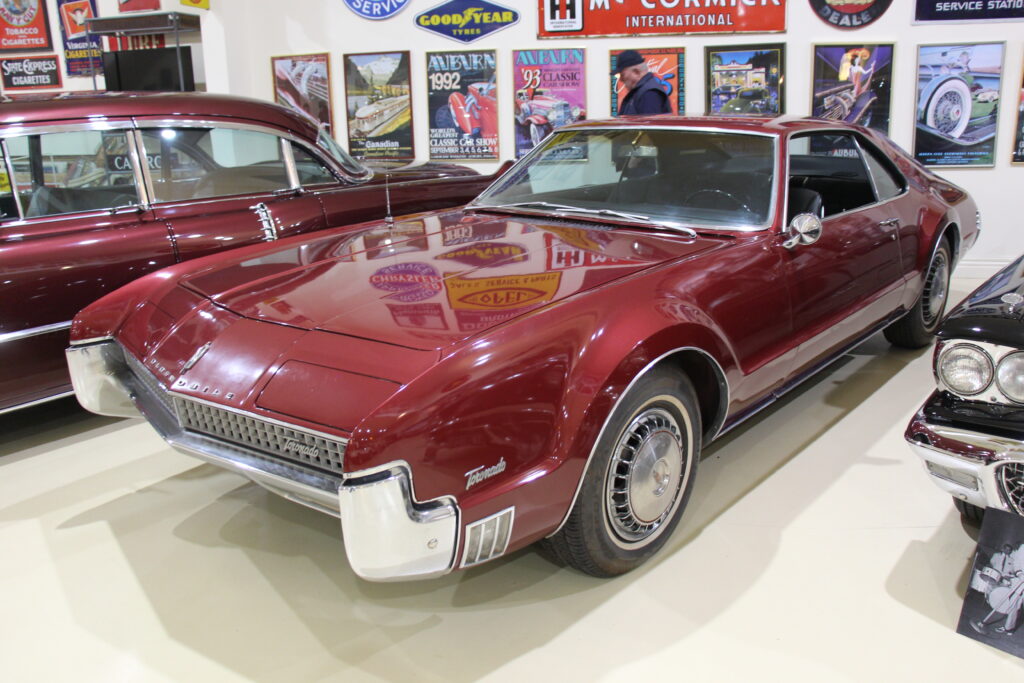
13. **Identifying Qualifying Heavy Vehicles: A Detailed List for 2025**The strategic advantage of ‘Heavy Vehicles (Over 6,000 lbs. GVWR)’ for significant tax write-offs is clear, but knowing *which* vehicles meet this criterion is paramount for businesses. The eligibility for these enhanced tax incentives, such as the Section 179 deduction, is not automatic. It is ‘contingent upon several key criteria,’ starting with the ‘GVWR of 6,000 pounds or higher,’ but extending to other crucial factors.
Beyond the weight, a qualifying vehicle ‘must be used for business purposes, meaning it must be utilized primarily for business activities rather than personal use.’ This foundational rule ensures that the tax incentive supports genuine commercial operations. Furthermore, to cement eligibility, the vehicle ‘must be purchased and placed into service within the tax year for which the deduction is being claimed,’ meaning active use for business must commence in the same tax year the deduction is sought.
For businesses looking for luxury-appointed vehicles that still qualify for these substantial tax benefits, several models elegantly merge comfort with capability, exceeding the 6,000 lbs. GVWR threshold. Options include the Audi Q7 (Approx GVW 6,900 lbs.), BMW X5 xDrive45e (7,165 lbs.), Bentley Bentayga (7,275 lbs.), Cadillac Escalade (7,100 lbs.), Mercedes-Benz GLS 580 4MATIC (6,768 lbs.), and the Land Rover Defender 110 (7,165 lbs.). These luxury SUVs offer a blend of high-end features and robust construction that places them firmly within the advantageous heavy vehicle category.
Shifting to the more utilitarian workhorses, which often represent the ‘ultimate write-off’ for businesses, the list is extensive. Heavy-duty pickups like the Chevrolet Silverado 2500HD (10,000 lbs.), Ford F-250 Super Duty (10,000 lbs.), GMC Sierra 2500HD (10,000 lbs.), Nissan Titan (7,300 lbs.), and Toyota Tundra (6,800 lbs.) are clear front-runners. Cargo and passenger vans also play a vital role, with models such as the Chevrolet Express Cargo Van 2500 (8,600 lbs.) and Ford Transit Cargo Van T-250 HD (9,070 lbs.) offering significant expensing potential, especially those with beds 6+ feet long.
To broaden the perspective, other popular SUVs and trucks also comfortably exceed the weight requirement, making them excellent candidates for tax benefits. These include the Dodge Durango (6,500 lbs.), Jeep Grand Cherokee (6,500 lbs.), Lincoln Navigator (7,200 lbs.), and Infiniti QX80 (7,385 lbs.). Even the Tesla Model X (6,000 lbs.) technically meets the minimum GVWR. This diverse selection underscores that businesses have a wide array of choices when selecting a heavy vehicle that not only serves their operational needs but also optimizes their tax position.

14. **Expert Guidance: Why Consulting a Tax Professional is Non-Negotiable**The intricate landscape of vehicle depreciation, Section 179 deductions, bonus depreciation, and IRS compliance is undeniably complex. While this guide provides a comprehensive overview, the nuances of individual business situations, specific vehicle acquisitions, and evolving tax laws necessitate expert intervention. It is emphatically ‘wise to consult with a tax professional or vehicle valuation expert’ when claiming the Section 179 deduction or navigating any significant business vehicle tax strategy.
These qualified professionals bring invaluable expertise to the table. They ‘can accurately assess the vehicle’s value and ensure compliance with IRS guidelines,’ helping to avoid common pitfalls and maximize legitimate deductions. A tax advisor ‘can help determine the depreciable value and provide documentation to support the deduction,’ ensuring that all claims are robust and defensible in the event of an audit. Their foresight can prevent costly errors and unforeseen tax liabilities.
Consulting a tax professional is especially critical during the various ‘steps to claim the Section 179 vehicle deduction.’ This includes guiding businesses to ‘Determine Eligibility’ by verifying vehicle criteria, ensuring thorough ‘Gather Documentation’ such as purchase receipts and mileage logs, and accurately ‘Calculate Depreciation’ using IRS Form 4562. They are instrumental in helping to ‘Complete Form 4562’ correctly and ensuring its proper submission when you ‘File Your Tax Return.’
Furthermore, an expert provides crucial support in the ongoing process. They help ‘Review for Accuracy’ before submission and advise on the vital practice to ‘Keep Records’ for subsequent years and potential IRS audits. Their knowledge is essential not only for immediate tax savings but also for long-term financial health, ensuring that businesses remain compliant with ‘current tax laws’ and continuously ‘maximize your potential write-offs’ throughout the vehicle’s useful life. This professional partnership is truly non-negotiable for optimized outcomes.
In the ever-evolving automotive market and complex tax landscape, understanding the intricate relationship between vehicle classification, depreciation strategies, and IRS regulations is no longer optional for astute business owners. The seemingly counter-intuitive reality that a rugged truck can offer superior financial advantages over a sleek luxury sedan is a testament to the power of strategic tax planning. By meticulously leveraging tools like Section 179, bonus depreciation, and MACRS, and by carefully adhering to business-use requirements, companies can transform vehicle acquisitions from mere expenses into powerful engines for tax savings and cash flow preservation. This deep dive into automotive tax strategy empowers businesses to make informed decisions, ensuring every vehicle purchased isn’t just a mode of transport, but a significant contributor to the bottom line, proving that true value often extends far beyond the sticker price. Maximize your investment, manage your cash flow, and drive your business forward with unparalleled financial efficiency.