The entertainment industry, a realm typically defined by glittering premieres, captivating performances, and the relentless buzz of promotion, found itself in an unprecedented state of quietude for much of 2023. A confluence of labor disputes, notably the Screen Actors Guild – American Federation of Television and Radio Artists (SAG-AFTRA) strike, brought the machinery of Hollywood to a grinding halt, fundamentally altering the landscape for actors, studios, and audiences alike. This industrial action, which began on July 14 at 12:01 PT and eventually concluded with a tentative agreement on November 8, marked a pivotal moment, shaping how projects are made, marketed, and consumed.
The magnitude of the SAG-AFTRA strike, coupled with the ongoing Writers’ Guild of America (WGA) strike, created a “double strike” — a phenomenon not witnessed since 1960. This collective stoppage meant an almost complete paralysis of production and publicity, leaving a void where once there was a constant stream of new content and celebrity engagement. The implications were far-reaching, from the smallest independent film sets to the grandest awards ceremonies, underscoring the deep interdependencies within the entertainment ecosystem.
For an industry that thrives on visibility and the star power of its talent, the strike imposed a strict blackout on a myriad of activities crucial for a project’s success. As we delve into the core aspects of this historic labor dispute, we’ll explore the explicit prohibitions that redefined an actor’s role during the strike, the limited avenues still available to them, and the immediate, tangible effects that resonated through the fall film season and beyond. This comprehensive overview aims to illuminate the intricate details of the strike and its profound impact on the very fabric of Hollywood.
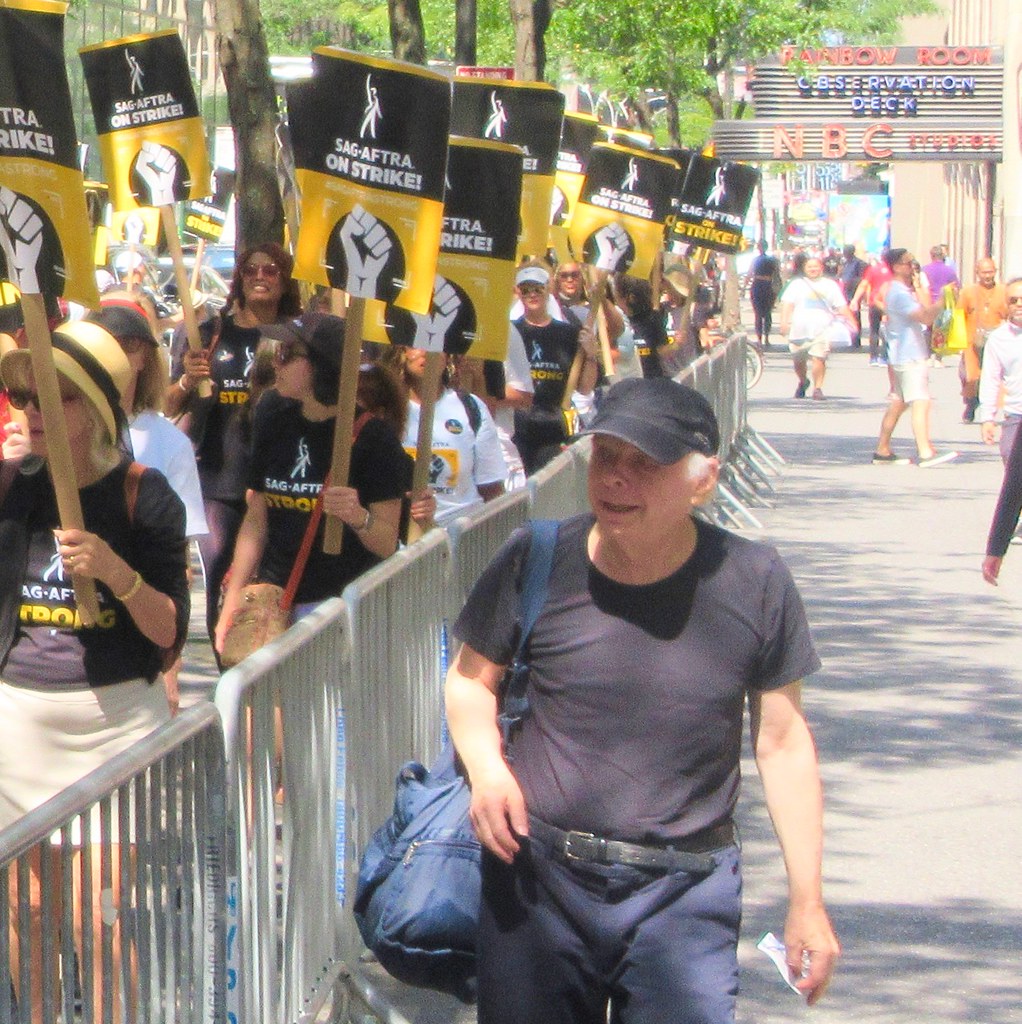
1. **The Core of the Dispute: Pay, Conditions, and AI**
The underlying reasons for the SAG-AFTRA strike were deeply rooted in the evolving dynamics of the entertainment industry, particularly concerning actor compensation, working conditions, and the burgeoning threat of artificial intelligence. Actors voiced strong demands for better pay and improved working conditions, arguing that their compensation had not kept pace with the massive shifts brought about by streaming services and global distribution models. The traditional residuals system, once a reliable income stream, had significantly diminished, leaving many performers struggling financially.
A paramount concern for the union was the looming specter of artificial intelligence. SAG-AFTRA sought robust contractual protections against the exploitative use of AI, demanding safeguards to prevent performers from being replaced by machines or having their digital likenesses used without proper consent and compensation. This forward-looking demand highlighted the union’s commitment to protecting the future livelihoods of its members in an increasingly technologically advanced industry.
Fran Drescher, the president of SAG-AFTRA, powerfully articulated the gravity of the situation, calling the strike “a moment of history” and a “moment of truth.” She emphasized the existential threat facing performers, stating, “If we don’t stand tall right now, we are all going to be in trouble.” Her impassioned plea underscored the union’s belief that this strike was not merely about immediate contractual improvements, but about securing the fundamental dignity and viability of the acting profession in the long term, facing “big business who cares more about Wall Street than you and your family.”
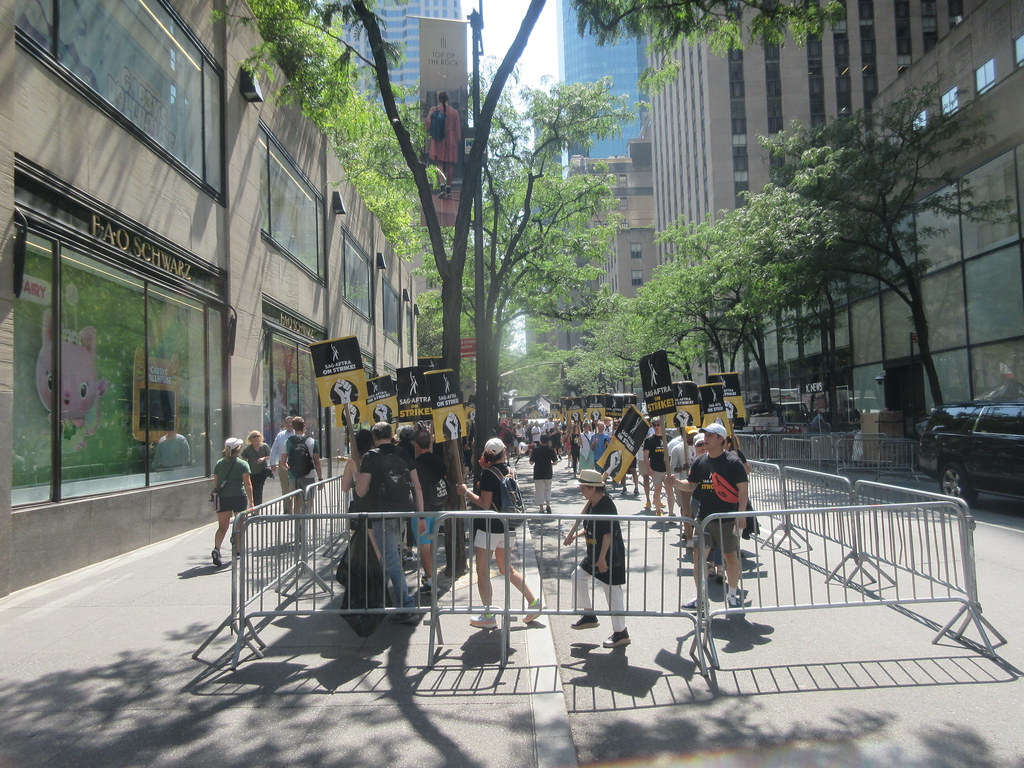
2. **Unprecedented Freeze: The Scope of On-Camera Bans**
When the SAG-AFTRA strike commenced, it instituted a near-total cessation of most on-camera work for its approximately 160,000 members. This ban was sweeping, encompassing virtually every facet of performance that brings characters to life on screen. The “Strike Notice and Order,” an open memo sent to all union members, clearly delineated the prohibited activities, making it unequivocally clear that production on struck projects had to cease immediately.
The prohibitions extended to foundational aspects of acting, directly impacting the ability of performers to engage in their primary craft. Members were barred from “Acting,” “Singing,” “Dancing,” and “Performing stunts,” which are the very cornerstones of film and television production. This meant that any ongoing filming, whether for major studio blockbusters or television series, had to halt, resulting in darkened sets and deserted soundstages across Hollywood and beyond.
Beyond these traditional forms of performance, the strike rules also addressed more specialized and modern aspects of on-camera work. Union members were explicitly forbidden from “Piloting on-camera aircraft,” “Puppeteering,” and engaging in “Performance capture or motion capture work.” These granular details underscore the comprehensive nature of the strike, designed to exert maximum pressure on the studios by cutting off the supply of talent essential for contemporary storytelling.
3. **Beyond the Lens: Off-Camera Work Halted**
The impact of the SAG-AFTRA strike was not confined solely to on-camera performances; it also extended significantly to a wide array of crucial off-camera work that supports film and television production. Many essential post-production and preparatory tasks, typically performed by actors, were brought to a standstill, further complicating the release schedules and completion of projects. This illustrated the deep integration of actors into virtually every stage of content creation.
Among the key off-camera activities prohibited was “ADR/looping,” the process where a film’s original audio is re-recorded in a studio to enhance clarity or alter dialogue. Similarly, actors were banned from recording “TV trailers, promos, theatrical trailers,” which are vital for generating buzz and attracting audiences to upcoming releases. This extended to “Voice acting” and “Singing” for off-screen roles, as well as “Narration,” including audio descriptive services, though the union did note some exceptions if covered by different collective bargaining agreements.
The strike notice also specifically forbade “Stunt coordinating and related services,” which are critical for ensuring the safety and execution of complex action sequences. Furthermore, the memo explicitly stated that members were “prohibited from engaging in background work, such as stand-in or body double work, fittings, wardrobe or makeup test, rehearsals or camera tests, and interviews and auditions, among other services.” This extensive list meant that from pre-production to post-production, many essential functions performed by union members were entirely suspended, creating a pervasive chill across the industry.

4. **The Silent Red Carpet: A Promotion Blackout**
Perhaps one of the most visible and impactful aspects of the SAG-AFTRA strike, especially for the public, was the complete prohibition on actors promoting any of their projects. In an industry heavily reliant on star power and celebrity endorsement to draw audiences, this ban represented a significant strategic move, designed to starve projects of essential publicity. As the union explicitly stated, “In short — no,” actors could not promote their filmed projects.
This sweeping promotional blackout encompassed a wide array of public-facing activities that are typically integral to a film or TV show’s release. Actors were forbidden from participating in “interviews, premieres, fan expos, press junkets, festivals, and podcast appearances, among other types of publicity.” Even the modern staple of promotion, social media, was included, with “SAG members also banned from promoting their projects via social media.” This meant the glamorous red carpets would be largely empty of the very stars who bring films to life.
A stark and immediate example of this promotions ban unfolded on the evening of July 13 at the London premiere of Christopher Nolan’s highly anticipated film, “Oppenheimer.” Just hours before the strike was officially called, the film’s cast, including luminaries such as Emily Blunt, Matt Damon, Cillian Murphy, and Florence Pugh, made a poignant departure from the premiere early. Emily Blunt candidly told Variety on the red carpet, “Obviously we stand with all of the actors and at whatever point it’s called, we’re going to be going home and standing together through it because I want everyone to get a fair deal,” encapsulating the solidarity that led to many silent premieres. The director himself, Mr. Nolan, quipped to the crowd that the actors were “off to write their picket signs,” highlighting the unexpected and dramatic shift in a usually celebratory event.

5. **Navigating the Nuances: What Actors Could Still Do**
While the SAG-AFTRA strike imposed extensive prohibitions, it was not an absolute cessation of all work for its members. The union carefully delineated specific categories of productions and activities that were still permitted, allowing some actors to continue working under certain agreements not involved in the strike. This nuanced approach helped to focus the strike’s pressure points while acknowledging existing contractual frameworks.
One significant area where members were permitted to work was on productions covered by the Network Television Code. This particular code was not involved in the strike, meaning that actors could participate in “non-dramatic productions such as variety shows, talk shows, game shows, reality and competition shows, and special events.” This provided a narrow but important channel for work, albeit in different genres than the high-profile film and scripted television productions that were largely shut down.
Furthermore, the union website clarified that members were allowed to “honor any contractual commitments to work on an an award show” if their role was in the capacity of a host or performing in a skit. However, a crucial caveat was added: union members were strictly “not allowed to ‘appear on an award show to promote a struck project (whether nominated or not) or accept an award for performance in a struck production.’” This distinction aimed to preserve the integrity of the strike while acknowledging existing commitments for specific performance types. Work on “daytime serials,” commonly known as soap operas, was also explicitly permitted, offering another avenue for continued employment for a segment of the union’s membership.

6. **The Ripple Effect on Film Festivals: A Glitz-Free Fall**
The fall film festival circuit, traditionally a bustling arena for premieres, networking, and early awards season campaigning, experienced a profoundly altered landscape due to the SAG-AFTRA strike. Key events like the Venice Film Festival, the Telluride Film Festival, and the Toronto International Film Festival (TIFF) – all scheduled around mid-September – typically rely heavily on the presence of star talent to generate buzz and media attention. However, with actors barred from promotion, these festivals faced an unprecedented challenge.
The absence of A-list stars from red carpets and press conferences significantly diminished the usual glitz and glamour associated with these prestigious events. Films that were expected to make their grand debuts, such as Michael Mann’s “Ferrari,” Sofia Coppola’s “Priscilla,” and Bradley Cooper’s “Maestro,” found their promotional strategies severely hampered. The usual energetic atmosphere created by cast interviews, photo calls, and fan interactions was largely absent, creating a quieter, more subdued festival experience.
A vivid illustration of this impact was seen with Luca Guadagnino’s “Challengers,” starring Zendaya, Mike Faist, and Josh O’Connor. The film, which “looked to be the most ually charged movie of the year,” was initially slated for a plum Venice Film Festival premiere in August. However, MGM pulled it and bumped its release to April 2024, “presumably because talent wouldn’t be able to promote it,” as noted in the context. This decision highlighted the critical role actors play in a film’s festival launch and subsequent box office success, and the studios’ reluctance to release major projects without their stars’ promotional support.

7. **Awards Season in Limbo: The Emmys Postponed**
The celebratory cornerstone of television, the Emmy Awards, found itself directly in the crosshairs of the Hollywood strikes, leading to an unprecedented postponement. Originally scheduled for September 18, the Television Academy ultimately realized by the end of July that proceeding as planned was untenable. The core issue stemmed from the SAG-AFTRA and WGA strike rules, which prohibited union members from attending awards shows for struck projects, severely impacting the event’s viability.
The prospect of a major awards ceremony without its key players—the nominated actors and writers—was deemed unfeasible. Duncan Crabtree-Ireland, the union’s chief negotiator, explicitly stated, “Our strike rules will not allow any form of promotion for television series, or streaming series that have been produced under these contracts.” He added, “My expectation is that it will bring any actor participation in Emmy campaigning to a close.” This meant no red carpet interviews, no emotional acceptance speeches from the winners, and no backstage press engagements – essentially stripping the event of its most compelling elements.
The postponement served as a stark reminder of the widespread disruption caused by the strikes. The context noted the potential for a “final Succession sweep” and the disappointment of “not get[ting] to see any of the deserving actors accept their awards in person.” This impact was particularly felt for “lesser-known stars and creatives,” who often rely on Emmy recognition for significant career boosts and public acknowledgment. The decision to postpone underscored the industry’s deep reliance on its talent for both celebratory events and the promotional cycles surrounding them.
The ripple effects of the Hollywood strikes extended far beyond silenced red carpets and postponed awards ceremonies, fundamentally altering release strategies, marketing approaches, and even the financial stability of various industry players. The initial shockwaves from the dual WGA and SAG-AFTRA strikes quickly translated into a complex logistical puzzle for studios, forcing unprecedented decisions regarding their most anticipated projects. This subsequent section will delve into the tangible consequences of these labor disputes, examining the strategic reshuffling of major film releases, the unique challenges confronted by independent productions and documentaries, and the dramatically altered landscape of celebrity promotion for highly anticipated ventures.

8. **Major Film Delays and Their Broad Box Office Impact**
The most immediate and financially significant fallout of the SAG-AFTRA strike was the strategic reshuffling of major film releases, fundamentally altering the theatrical landscape for late 2023 and beyond. Studios, recognizing the critical role of star talent in a film’s promotional cycle, made the difficult decision to push back numerous blockbusters. Denis Villeneuve’s sequel, “Dune: Part Two,” initially slated for November 3, was rescheduled to March 15 of the following year, highlighting the studios’ reluctance to release high-budget features without their stars’ promotional engagement.
Similarly, other highly anticipated projects found their release dates postponed. A new Godzilla and King Kong movie, along with the latest “Lord Of The Rings” and a sequel to “Dirty Dancing,” also experienced delays. Sony, for instance, moved back its upcoming “Ghostbusters” sequel and, notably, removed “Spider-Man: Beyond The Spider-Verse” from its entire 2024 slate. Disney followed suit, delaying each of the next three “Avatar” movies by a full year, signaling a widespread industry recalibration.
These delays were not without significant financial implications for the industry, which was already facing challenges. The North American box office was reportedly down roughly 20 percent from the previous year even before the strike, making the absence of promotional efforts by A-list stars a further blow. Terry Press, a top Hollywood marketer, noted that without the “free” publicity generated by actors, studios would be forced to “buy more noise,” incurring substantial additional costs to market their films effectively.
Read more about: The Billion-Dollar Secret: Uncovering How Movie Theaters Make a Fortune Beyond Ticket Sales

9. **Independent Productions Find a Unique Path**
While major studio productions faced a near-total blackout on actor-led promotion, the SAG-AFTRA strike rules offered a distinct, albeit narrow, avenue for independent films. This created a bifurcated system where certain productions, not affiliated with the Alliance of Motion Picture and Television Producers (AMPTP) and operating under specific interim agreements or independent contracts, could continue to engage their talent for promotional activities. This nuance became a crucial point of discussion during the fall festival circuit.
A prominent example of this distinction was seen with Michael Mann’s film “Ferrari.” Its star, Adam Driver, was notably in full festival mode at a press conference in Venice, a stark contrast to many of his peers. Driver explicitly stated his pride in supporting a movie that was not part of the AMPTP, leveraging the situation to highlight the disparity in negotiations. He publicly questioned why “a smaller distribution company like Neon and STX International can meet the dream demands of SAG’s wish list, but a big company like Netflix and Amazon can’t,” underscoring the union’s perspective.
This allowance for independent films provided a glimmer of activity amidst the widespread promotional freeze, demonstrating that some projects could navigate the strike’s complexities. It emphasized the union’s strategic targeting of the major studios while attempting to minimize harm to smaller, independent ventures that often operate on different financial models and contractual terms. This situation also put a spotlight on the varying capacities of different industry players to meet the union’s demands.
Read more about: Beyond the Spotlight: Unpacking the Controversies and Boycotts Plaguing Lady Gaga’s Cinematic Ventures

10. **Documentaries Face Hurdles: The Case of “The Road Between Us”**
The unique challenges faced by documentaries during the strike were brought into sharp focus by the controversy surrounding Barry Avrich’s “The Road Between Us: The Ultimate Rescue” at the Toronto International Film Festival (TIFF). Initially rejected by TIFF, then reinstated after an outcry, the film ultimately faced significant limitations on its screenings, particularly for press and industry. This situation highlighted the delicate balance of programming, publicity, and political sensitivities during the strike.
TIFF executive director Cameron Bailey initially cited issues with securing rights to footage for the film’s temporary withdrawal, insisting it was not about censorship. However, following pressure from various groups, including the Auschwitz Jewish Center Foundation and the Creative Community for Peace, he reversed his decision. This public reversal underscored the intense scrutiny and external pressures festivals faced when managing their lineups during the period of industrial action.
Despite its reinstatement, the documentary was ultimately shown only once, with significant restrictions on access for press and potential distributors. This situation, while generating considerable publicity for the film due to the controversy, simultaneously hampered its traditional distribution and critical exposure. It served as a potent example of how the broader climate of the strikes, combined with other external factors, could create unforeseen obstacles for even critically important stories within the documentary space.

11. **Missed Opportunities for Rising Stars and Ensemble Casts**
The promotional blackout severely impacted a new generation of talent and highly anticipated ensemble casts, preventing them from capitalizing on crucial career-defining moments. For up-and-coming stars, festival appearances and press tours are invaluable for building public profiles and securing future roles. The strike, however, largely silenced these opportunities, leaving many deserving performers unable to shine.
Consider the case of Ethan Coen’s first solo directorial effort, “Drive-Away Dolls,” starring Margaret Qualley and Geraldine Viswanathan. These “up-and-coming stars” were poised to become “the talk of the town,” but the strike meant their potential “iconic duo” status and coordinated red carpet fashion would remain largely unseen. Similarly, the prequel to “The Hunger Games,” “The Ballad of Songbirds and Snakes,” which launched Jennifer Lawrence’s career, could not offer the same promotional springboard for its new leads, Hunter Schafer, Rachel Zegler, and Tom Blyth, who were denied the chance to “sport flaming-hot dresses on the red carpet” or promote tie-in music.
Even established, beloved ensemble casts felt the pinch. The highly anticipated third season of Netflix’s “Bridgerton,” focusing on Penelope and Colin’s “slow burn,” could not provide the usual “flirtatious clips online” of its romantic leads, Nicola Coughlan and Luke Newton. These missed promotional beats meant audiences were deprived of the supplementary content that often fuels fan engagement and extends a project’s cultural impact, directly affecting the vibrancy of popular culture.
Read more about: Eddie Giacomin, Rangers Goalie and Hall of Famer, Dies at 86: A Look Back at an Enduring Legacy

12. **High-Profile Star Projects Navigating Promotional Restrictions**
Beyond the general blackout, specific high-profile projects starring major names faced unique dilemmas, as their leading actors, while potentially attending events, were explicitly forbidden from promoting their work. This created an awkward public dynamic, where the presence of a star did not equate to their usual public engagement, thus undermining the traditional purpose of such appearances.
Emma Stone, for instance, notably attended the opening of her new movie, “Poor Things,” at Telluride, reportedly spending her own money to be there. However, due to SAG-AFTRA rules, she could not actively promote the film. This scenario underscored the solidarity amongst union members, even at a personal financial cost, but simultaneously highlighted the challenges faced by studios trying to generate buzz for their prestige titles. The film’s director, Yorgos Lanthimos, still engaged in interviews, but the absence of his star’s participation left a noticeable void.
Another significant project affected was Martin Scorsese’s “Killers of the Flower Moon,” starring Leonardo DiCaprio and Lily Gladstone. While Gladstone had walked the red carpet at Cannes earlier in the year before the strike, her expected “full-throttle campaign for Best Supporting Actress” was effectively halted. The film’s release in October meant that without a deal, Gladstone and her co-stars had to “sit this one out,” leaving director Scorsese to “fly solo” for much of the film’s publicity, though the context noted he would at least be spared “pesky questions about Marvel movies.”

13. **The Unseen Chemistry: Lost Promotional Narratives**
A particularly regrettable consequence of the promotional ban was the loss of the intangible magic generated by on-screen couples or rumored real-life romances during press tours. This “chemistry” is often a significant draw for audiences, adding an extra layer of appeal to romantic comedies and dramas. The strike forced these compelling narratives and flirtatious interactions, which often go viral, to remain strictly behind the scenes.
Luca Guadagnino’s “Challengers,” starring Zendaya, Mike Faist, and Josh O’Connor, was an anticipated project precisely for its “ually charged” dynamic, including a prominent threesome storyline. The film’s original Venice Film Festival premiere was pulled, and its release pushed to April 2024, “presumably because talent wouldn’t be able to promote it.” This decision directly stemmed from the inability of the three leads, who possessed “incomparable chemistry,” to engage in the kind of “horny on a press tour together” antics that would have amplified the film’s buzz.
Similarly, the rom-com “Anyone But You,” starring Sydney Sweeney and Glen Powell, suffered from a promotional silence. The pair had generated considerable speculation about a real-life romance during filming in Australia, with Powell reportedly ending a relationship shortly after production. The potential for “scandalous flirting” and “flirting in press clips” was a key marketing asset for the film, but the strike effectively privatized these interactions, denying audiences the public spectacle that often boosts interest in such projects.

14. **The Broader Chilling Effect on Oscar Campaigning**
The comprehensive nature of the SAG-AFTRA strike, especially when coupled with the WGA strike, cast a significant pall over the entire Oscar campaigning season. This pivotal period, which traditionally kicks off in late September with film festivals and builds momentum through various promotional activities, faced an unprecedented landscape of silence and uncertainty. The very “grammar of releasing these movies requires the festival circuit,” as one marketer put it, underscoring how vital these promotional opportunities are for awards hopefuls.
Key elements of an Oscar campaign, such as in-depth profiles, exclusive interviews, and industry-favorite segments like Variety’s “Actors on Actors,” were either significantly curtailed or entirely canceled. Actors, who are central to the narratives crafted for awards consideration, were unable to engage in the strategic public appearances and media engagements designed to sway Academy voters. This created a scenario where voters might have been “forced to not let actors’ campaigns sway them into making their picks,” potentially leading to a more merit-based, albeit quieter, selection process.
The absence of this promotional machinery was particularly poignant for “prestige films geared toward the awards season.” These films rely heavily on the buzz generated by their stars’ presence at festivals and subsequent media coverage to build critical acclaim and public awareness. Without their leading talent actively participating, the usual vibrant ecosystem of Oscar campaigning was largely dormant, forcing a reevaluation of how films gain traction in a crowded awards field and highlighting the profound impact of actor visibility on awards success.
Read more about: Yikes! 14 Hollywood Stars Who Acted Like Total Jerks and Seriously Felt the Burn
The tentative agreement reached on November 8, officially ending the SAG-AFTRA strike on November 9, marked a significant turning point for Hollywood. While the immediate return to normalcy would take time, the agreement signaled the industry’s slow but determined journey toward recovery. The lessons learned from this period of unprecedented disruption, particularly concerning actor compensation, AI protections, and the critical role of talent in promotion, will undoubtedly shape future labor negotiations and industry practices. This historic strike underscored the indispensable value of human creativity and performance in the entertainment world, reminding everyone that while machines may evolve, the power of a compelling story told by a human voice remains irreplaceable.