In the bustling, often chaotic, world of theatre and film production, the director stands as the singular visionary, the architect of an entire creative universe. They are the ones who hold the ultimate concept and execution in their hands, translating abstract ideas into tangible performances and visual narratives. While the image of a director passionately gesturing from the sidelines or offering impassioned speeches to their cast is a familiar one, an equally powerful, though perhaps less dramatic, method of guidance often underpins the most polished productions: the strategic deployment of notes and detailed directives.
Indeed, the notion of a director who predominantly communicates through carefully crafted notes and written instructions might seem like an anachronism in an age of instant verbal feedback. However, this approach, far from being a limitation, can be a profound strength, fostering clarity, accountability, and a deep understanding that impromptu verbal exchanges sometimes miss. It transforms ephemeral words into enduring records, allowing for reflection, precise application, and a shared, unambiguous roadmap for every participant.
This article delves into the meticulous art of communication through the written word, exploring how a director can harness the power of detailed notes, digital dispatches, and structured feedback to elevate performances and streamline production. We’ll uncover specific methods that prioritize written instruction, examine the critical importance of precise guidance, and see how maintaining continuity and establishing robust communication channels are vital when the pen, or keyboard, becomes the primary conduit of the director’s vision.

1. **The Post-Run Rundown: The Digital Dispatch**One of the most effective, and increasingly prevalent, methods for directors to communicate their insights post-rehearsal or run-through is through the digital dispatch – what we might call the ‘Post-Run Rundown.’ This involves the director taking their comprehensive notes, collected during the intense observation of a performance, and meticulously typing them up. These structured lists are then distributed to the cast and crew, often via email or dedicated digital platforms such as a private Facebook group, Google Classroom, or other specialized communication resources.
This method offers a compelling suite of benefits that directly address the inherent challenges of real-time verbal feedback. By allowing students and crew to go home immediately after rehearsal, it facilitates much-needed rest and decompression, ensuring they approach the notes with a fresh mind rather than an exhausted one. The digital format grants them the invaluable opportunity to read, absorb, and critically think about the feedback at their own pace, fostering deeper understanding and allowing for private practice at home before the next session.
Furthermore, the digital rundown provides directors with a crucial window to collect their own thoughts, review their observations in a calmer, more reflective environment away from the high-octane emotions of the theatre. This allows for a more nuanced and objective refinement of notes, ensuring that the feedback is not only comprehensive but also thoughtfully articulated, free from the immediate pressures of the moment.
However, the digital realm introduces its own set of distinct challenges. The most glaring issue is the ease with which these digital dispatches can be overlooked, ignored, or simply lost in the deluge of daily digital communication. Ensuring that every member of the cast and crew has not only received but also actively read and understood the notes becomes a significant hurdle. Directors employing this method must therefore devise robust systems to verify engagement, such as requiring digital acknowledgments or specific check-ins.
Another practical consideration is the often-tight turnaround dictated by rigorous rehearsal schedules. The window between a run-through, the director typing up extensive notes, and the subsequent rehearsal can be incredibly narrow. This necessitates efficient note-taking, swift transcription, and timely distribution to afford actors and crew sufficient time to process and internalize the feedback before they are expected to implement it.

2. **The Checklist: Backstage Accountability**A distinct, yet equally powerful, note-based communication strategy is the ‘Checklist’ method, a practice embraced by many experienced theatre professionals. Similar in its initial phase to the digital rundown, this approach sees the director meticulously typing up notes from a run-through. However, the delivery mechanism is decidedly analog and physically interactive: the notes are formatted as a checklist, printed, and posted in prominent backstage or rehearsal areas.
What sets this method apart is the ingenious mechanism for accountability it builds in. Alongside each specific note point, a small space is provided for the applicable student or crew member to initial, signifying that they have not only received but also fully understand the directive. This simple act shifts the responsibility squarely onto the individual, transforming the passive receipt of information into an active engagement with their feedback. It fosters self-reliance and teaches invaluable professional responsibility.
The benefits of this system are manifold. By placing the onus on the student to actively seek out and acknowledge their notes, it significantly reduces the administrative burden and stress on directors, allowing them to focus on the broader creative vision. The initialing system also provides a clear, undeniable paper trail, making it remarkably easy to track who has accessed and acknowledged their feedback, thus identifying any potential communication gaps early on.
Yet, this method is not without its practical downsides. Despite the requirement for initials, there remains the inherent risk that students might superficially acknowledge a note without genuinely internalizing or even reading it thoroughly. Furthermore, the physical nature of a single, or even a few, posted note sheets can lead to congestion in backstage areas as multiple cast members vie to access and initial the document, especially during busy pre-rehearsal periods.
To mitigate these logistical challenges, a director might consider printing multiple copies of the checklist and strategically posting them in various, easily accessible locations around the backstage and rehearsal spaces, thereby diffusing potential bottlenecks. It’s also crucial for directors to explicitly articulate the expectation that notes should be read and absorbed *before* the commencement of the next rehearsal, preventing valuable group time from being consumed by individual note review.

3. **Precision in Guidance: Beyond “Act Natural”**Effective directorial communication, particularly through written notes, hinges on one immutable principle: specificity. Vague, generalized directives like “Just act natural” or “Just be yourself” offer little meaningful insight or actionable direction to an actor. They leave too much to interpretation, often leading to confusion rather than clarity, and can stifle an actor’s ability to truly embody their character with authentic detail.
A director’s notes, especially when delivered in written form, must serve as precise navigational charts, guiding actors through the intricate emotional and physical landscape of their roles. They should dissect moments, illuminate motivations, and articulate desired outcomes with granular detail. This level of precision empowers actors, providing them with concrete adjustments they can apply, rather than nebulous concepts they struggle to grasp.
Consider the profound difference. Instead of a dismissive “that wasn’t very good,” a director communicating effectively would offer “could you try adding a bit more emotion to that line?” The context provides an even more exemplary instance of this specificity, offering a masterclass in written direction: “Hank, when Samantha approaches, don’t step back. Look her straight in the eye. It’s a challenge. Which of the two of you is in command of this moment? She thinks she is. You’re letting her know she’s not. It’s a power play.”
This kind of detailed instruction, whether conveyed verbally or, more enduringly, in a written note, provides actors with a clear, vivid path to embodying their characters authentically. It moves beyond superficial observations to delve into the underlying power dynamics, emotional stakes, and physical choices that define a moment. Such precision is not just about correcting errors; it’s about enriching the performance, adding layers of intention and nuance that bring the director’s vision to vivid life on stage or screen.

4. **Maintaining Character Continuity On and Off-Camera**Beyond the specific actions and line readings, a director committed to excellence understands that a performance’s authenticity is often cemented in the continuity of character, extending even into the moments when the camera isn’t rolling or the stage lights are dimmed. This means fostering an environment where actors are encouraged, and sometimes directed through written notes, to remain in character between takes or during breaks in rehearsal.
The rationale behind this directive is deeply rooted in the psychology of performance. By consistently inhabiting their roles, actors become more intimately comfortable with their characters’ mannerisms, emotional landscapes, and internal logic. This sustained immersion transforms the performance from a series of isolated moments into a fluid, organic continuum, making their portrayal feel inherently more convincing and realistic when the crucial “Action!” is called.
A director can effectively communicate this expectation through notes, perhaps outlining specific periods where actors are encouraged to maintain character or providing guidance on how to transition in and out of character respectfully and effectively. These written directives serve as a constant reminder, reinforcing the professional discipline required to sustain a performance’s integrity throughout a demanding production schedule.
Moreover, the practice contributes significantly to the overall creative atmosphere on set or in the rehearsal room. It cultivates a focused, immersive environment where the boundary between actor and character subtly blurs, leading to a deeper collective engagement with the narrative. This seemingly small detail—maintaining character continuity—can, in fact, be a cornerstone in achieving truly transformative and believable performances, a testament to the director’s foresight and strategic communication.
Read more about: Beyond the Bazinga! 14 Wild Rules The Big Bang Theory Cast Had To Follow On Set

5. **Establishing Clear Channels of Communication**In any complex collaborative endeavor, especially one as dynamic and multifaceted as a theatre or film production, the establishment of clear, well-defined channels for communication is not merely beneficial; it is absolutely fundamental. When a director primarily relies on notes and written directives, these channels become the very lifeblood of the production, ensuring that information flows efficiently, questions are addressed promptly, and no critical detail is lost in translation or overlooked.
These channels can take various forms, adapting to the specific needs and technological capabilities of the production. The context identifies several actionable platforms: regular scheduled meetings (even if for discussing written notes), consistent email updates, designated physical bulletin boards for printed materials, and modern group messaging applications. The key is to ensure these platforms are not only accessible to everyone but are also understood as the official conduits for all essential information.
Actionable tips for directors emphasize consistency and leveraging digital tools. This includes scheduling consistent meetings specifically for updates and feedback sessions, creating dedicated times to discuss the written notes that have been distributed. Furthermore, the utilization of project-management software or specialized communication platforms ensures real-time collaboration, document sharing, and a centralized repository for all written directives, fostering transparency and accessibility.
The strategic establishment of these communication channels ensures that every member of the team, from the lead actor to the furthest crew member, knows precisely where to look for updates, where to submit their questions regarding written notes, and how to stay abreast of all developments. This structural clarity minimizes misunderstandings, preempts delays, and ultimately supports a harmonious and productive working environment, proving that even a director who communicates primarily through notes is a master of organizational flow.
Read more about: An Exclusive Deep Dive into the Phenomenal World of Shaun the Sheep and Its Enduring Global Appeal

6. **Providing Constructive Feedback: The Art of Improvement**Feedback is the very engine of refinement and development in any creative process, and its effective delivery is paramount to a director’s success. When communicating through notes, the art of providing constructive feedback becomes an even more nuanced skill, as the absence of immediate verbal cues necessitates heightened clarity and precision in the written word. The goal is always to illuminate paths to improvement, not simply to point out deficiencies.
Effective written feedback, as highlighted in the context, must adhere to several core principles: it needs to be specific, leaving no room for ambiguity about what needs adjustment; it must be actionable, offering clear steps or approaches the actor can take; and crucially, it should be focused on behavior or performance elements, rather than personal attributes, maintaining professionalism and encouraging growth rather than defensiveness.
Directors committed to this approach actively frame their feedback in a positive, encouraging light. This involves highlighting areas of strength and specific moments of success before gently guiding attention to areas for improvement. Crucially, such notes go beyond mere criticism by actively offering solutions or suggesting alternative approaches, providing actors with a tangible roadmap for integrating the feedback into their performance.
In essence, constructive feedback delivered through well-crafted notes transforms potential critique into a powerful learning tool. It allows actors the space and time to process information without the pressure of an immediate response, enabling them to reflect deeply, experiment privately, and return to the next rehearsal or take with a more refined and intentional approach. This method ensures that feedback is not just heard, but truly absorbed and effectively translated into enhanced performance.

7. **Fostering a Unified Vision: Directorial Authority and Avoiding External Interference**In the intricate dance of a production, where myriad talents converge, the director stands as the ultimate arbiter of artistic vision. This clarity hinges on a singular, authoritative voice, especially concerning the nuanced craft of acting. A director committed to communicating primarily through notes inherently reinforces this hierarchy, establishing their written directives as the definitive guide.
However, this meticulously crafted communication can be easily undermined if unchecked advice from other quarters permeates the actor’s process. The context rightly points out that if crew members or fellow cast members are freely offering acting suggestions, it can directly compromise the director-actor relationship. This influx of conflicting opinions breeds confusion, dilutes the original intent, and ultimately leads to inconsistency in performances, unraveling the very fabric of the director’s carefully articulated vision.
This is where the director’s strategic use of written communication truly shines as a tool for governance. By clearly establishing that their notes are the primary, authoritative source of guidance, a director can preempt this creative disarray. These documented instructions become the actor’s undisputed compass, ensuring that every adjustment and character beat aligns with the central vision, free from the noise of well-meaning but often misaligned peripheral input. This clear delineation of authority, paradoxically, strengthens trust by providing an unambiguous roadmap.

8. **The Art of the Accent: When and How to Apply Specificity**Beyond the raw emotion and physical blocking, the subtle intricacies of a performance often lie in elements like vocal delivery or dialect. For a director who communicates through notes, addressing such specific aspects demands an unparalleled level of precision. It’s not enough to simply suggest; one must guide with surgical accuracy, ensuring that these details elevate, rather than detract from, the overall portrayal, as poorly executed accents can instantly jar an audience and divert an actor’s focus from emotional authenticity.
In such cases, a director’s written notes become critical diagnostic tools. They wouldn’t simply state, “Your accent isn’t working.” Instead, the notes would offer actionable guidance: “The specific ‘th’ sound needs refinement,” or “Consider dropping the dialect for this scene to prioritize emotional clarity.” This moves beyond mere critique, providing concrete steps or even recommending professional dialect coaching if the role absolutely demands it.
This meticulous attention to vocal nuances underscores the director’s commitment to precision in all facets of performance. It demonstrates an understanding that every detail, however seemingly minor, contributes to the character’s believability and the audience’s immersion. Through carefully worded directives, a notes-based director ensures that vocal choices are always intentional, impactful, and integral to the character’s truthful embodiment.
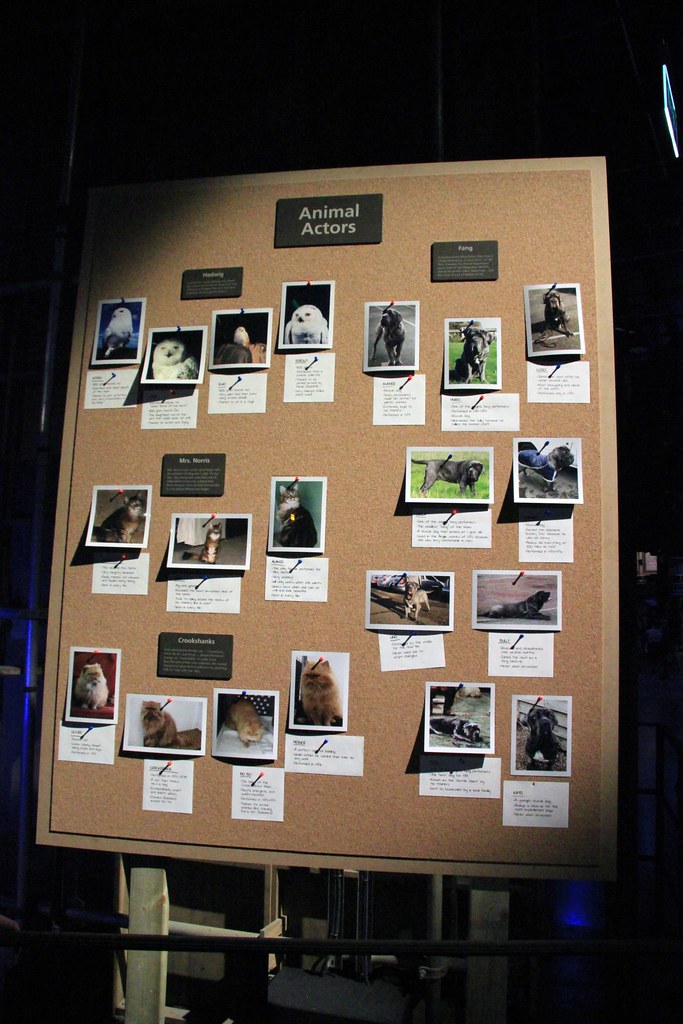
9. **Navigating Unique Demands: Directing Children and Animals with Patience**Any seasoned filmmaker or theatre director will tell you that the most unpredictable elements on set often wear the most innocent faces: children and animals. These unique “actors” introduce a delightful, yet often challenging, dynamic to any production. Their presence necessitates not just patience, but a profound adaptability in the director’s approach, particularly when communication relies on the written word.
The core challenge, as experience dictates, is the sheer investment of time and effort these cast members demand for that “perfect shot.” While direct verbal cues are often necessary in the moment, the strategic director anticipates these variables. They translate their adaptive needs into meticulous, pre-emptive written guidance for the *human* team members, who must manage these subjects effectively.
Thus, a director employing a notes-based system wouldn’t necessarily write notes *for* the child or the animal, but rather *about* them. These directives would target the handlers, the adult actors interacting with them, and the crew. Notes might outline specific cues for a child’s entrance, suggest ways for adult actors to maintain focus despite animal antics, or detail precise camera movements to accommodate unpredictable behavior, ensuring everyone else is prepared for the unexpected.

10. **The Power of Preparation: Maximizing Rehearsal Through Written Guidance**Before the lights glare and the cameras roll, or the curtain rises, there is rehearsal—the sacred ground where performances are forged and characters truly come to life. For a director who champions written communication, this phase isn’t just about running lines; it’s a meticulously guided journey into the soul of a character, with every step carefully charted through comprehensive notes.
The director’s profound role during rehearsals extends far beyond mere staging; it encompasses helping actors unearth their characters’ deeper motivations and subtle nuances. The context emphasizes this, highlighting the importance of preparing actors not only for their lines but for the profound psychological landscape of their roles. Here, written notes offer an unparalleled advantage, allowing actors to absorb, reflect, and internalize these insights at their own pace.
Imagine a rehearsal where actors receive detailed, written character biographies, intricate breakdowns of scene objectives, or even psychological profiles of their roles. These notes serve as a robust framework, guiding their independent study and informing their choices. They can delve into the specific power dynamics of a scene, as exemplified by the “Hank and Samantha” note, long after the rehearsal hall has emptied, solidifying their intentionality, leading to more polished, authentic performances.

11. **Beyond the Script: Cultivating Camaraderie Through Social Engagement**While the meticulously penned note may be the primary conduit for a director’s creative instructions, the intangible alchemy of a successful production often hinges on something far more human: a cohesive, trusting team. Even a director who meticulously documents every artistic directive understands that fostering a positive, collaborative atmosphere is not just beneficial, but absolutely essential for superior outcomes, extending beyond the performance itself.
The context offers a refreshingly human touch to this otherwise formal communication style: the strategic use of social events. Hosting post-audition gatherings where both cast and crew can mingle and truly get to know one another serves a vital purpose. It breaks down the often-rigid professional barriers, allowing personalities to shine through beyond their roles, building a foundation of mutual understanding and respect, which is crucial for a harmonious set.
For a director whose primary method is written feedback, this camaraderie is invaluable. Actors are far more receptive to even critical notes when they perceive them coming from a place of genuine support and shared purpose, rather than just detached instruction. These social bonds cultivate psychological safety, encouraging actors to bravely experiment with feedback and take creative risks, knowing they are part of a supportive ensemble for a higher quality final product.

12. **Speaking the Director’s Language: Key Terms for Nuanced Performance**A director who communicates solely through notes is not merely writing sentences; they are composing in a specialized language, a lexicon of theatrical and cinematic craft. Their directives are imbued with specific terminology that transcends colloquial explanation, offering a precise shorthand for complex performance concepts, paramount for actors to truly decode and execute the director’s vision.
Consider the rich glossary provided in the context, a veritable dictionary for the stage and screen. Terms like “Blocking,” “Beat,” “Subtext,” “Pace,” and “Intensity” are not casual suggestions; they are exact technical cues. When these words appear in a note, they carry a weight of shared understanding, allowing for swift, unambiguous adjustments that would otherwise require lengthy verbal explanations.
Imagine receiving a note that simply states: “More Projection for Act 1, Scene 3. Sharpen your Timing on ‘the reveal.’ Add more Contrast to your Tone in the monologue.” These aren’t just words; they are direct, actionable commands, instantly conveying the director’s intent. “Focus,” “Mark,” “Cue,” “Character,” “Energy,” “Emotion”—each term is a cornerstone in the architect’s blueprint, guiding actors towards a specific internal or external adjustment.
Furthermore, the director’s lexicon extends to finer points like “Nuance,” “Commit,” “Flexibility,” “Layer,” “Objective,” and “Subtlety.” When these are carefully deployed in written feedback, they demand a deeper, more reflective engagement from the actor. Instructions transform into invitations for artistic exploration, encouraging performers to delve into the psychological and emotional depths prescribed by the director’s vision. Mastering this director’s language, both in giving and receiving notes, is the ultimate key to unlocking exceptional performances, bridging abstract concept and compelling art.
**Conclusion: The Enduring Power of the Meticulously Penned Vision**
In the grand tapestry of theatre and film, where fleeting moments coalesce into enduring narratives, the director’s role as visionary and guide is indisputable. As we’ve journeyed through the intricate world of a director who communicates primarily through notes, it becomes strikingly clear that this method is far from a relic of the past; instead, it emerges as a sophisticated, profoundly effective strategy, capable of fostering unparalleled clarity and depth in any production.
From the precise guidance on character motivation to the strategic cultivation of camaraderie, every aspect of this approach underscores the power of meticulous documentation. It transforms vague intentions into actionable directives, ensuring that every actor, every crew member, and every creative decision is aligned with a singular, unblemished vision. The benefits—enhanced accountability, deeper artistic immersion, and ultimately, more compelling performances—are a testament to its enduring value. A director who masters the art of the written word doesn’t just manage a production; they craft a legacy of understanding, proving that the quiet authority of a well-placed note, carefully considered and thoughtfully delivered, can speak louder, and resonate far longer, than any impassioned speech.