Look up at the night sky, and you’re greeted by a dazzling tapestry of stars, each a distant beacon of light. For millennia, humanity has been captivated by these celestial objects, weaving myths, tracking seasons, and charting paths across oceans. Yet, beneath their serene exterior lies a universe of staggering forces, epic transformations, and mind-bending physics that truly beggars belief.
But what exactly are these glowing behemoths? Beyond the twinkling beauty lies an intricate scientific narrative of cosmic proportions. From their violent beginnings within swirling nebulae to their dramatic, often explosive, finales, stars lead lives far more dynamic and impactful than we might ever imagine from our vantage point on Earth.
Prepare to embark on an incredible journey through the life and times of stars, uncovering facts that might just surprise you. We’ll explore how these luminous spheroids of plasma come into being, how our own Sun keeps us warm, and how ancient civilizations first began to decipher the sky’s silent language. Get ready to have your curiosity sparked as we delve into the fundamental truths of the universe’s most iconic residents.
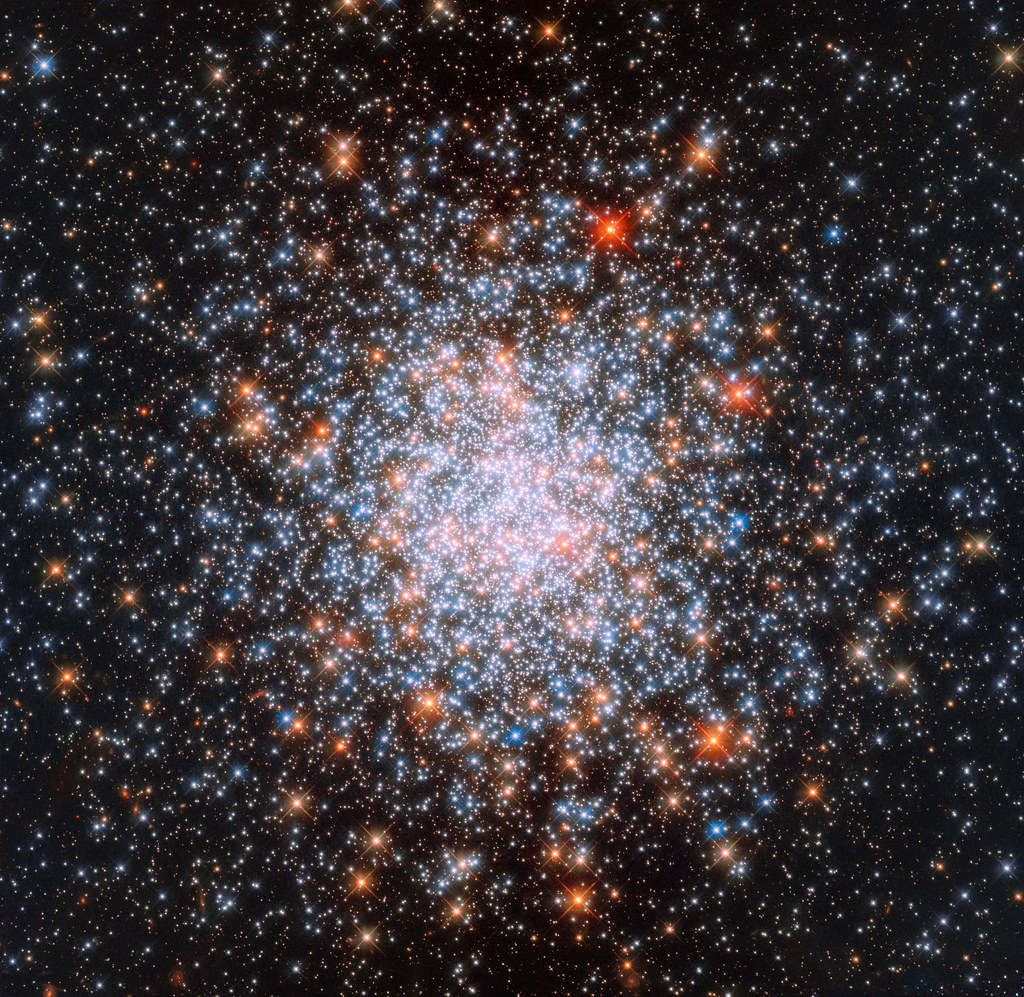
1. **The Cosmic Womb: How Stars Are Born from Nothing (Almost)**It’s tempting to think of space as an empty void, but in certain cosmic nurseries, the building blocks of stars are quietly coalescing. Our journey begins with immense gravitational instability within “molecular clouds,” which consist primarily of hydrogen, helium, and traces of heavier elements. Incredibly, their density is “less dense than within a vacuum chamber,” a diffuse gas ready to spark into brilliance.
One famous example is the Orion Nebula. Within these clouds, high-density pockets, often triggered by “compression of clouds by radiation from massive stars” or “the collision of different molecular clouds,” begin to collapse. As a region reaches “sufficient density of matter to satisfy the criteria for Jeans instability,” it shrinks under its own immense gravitational force, forming “Bok globules.”
As a globule collapses, gravitational energy converts into heat, causing temperatures to rise dramatically. Eventually, a “protostar” forms at the core, reaching “hydrostatic equilibrium.” These nascent stars, often surrounded by a “protoplanetary disk,” are powered by converting gravitational energy. This contraction phase lasts “about 10 million years for a star like the sun,” before nuclear fusion ignites.
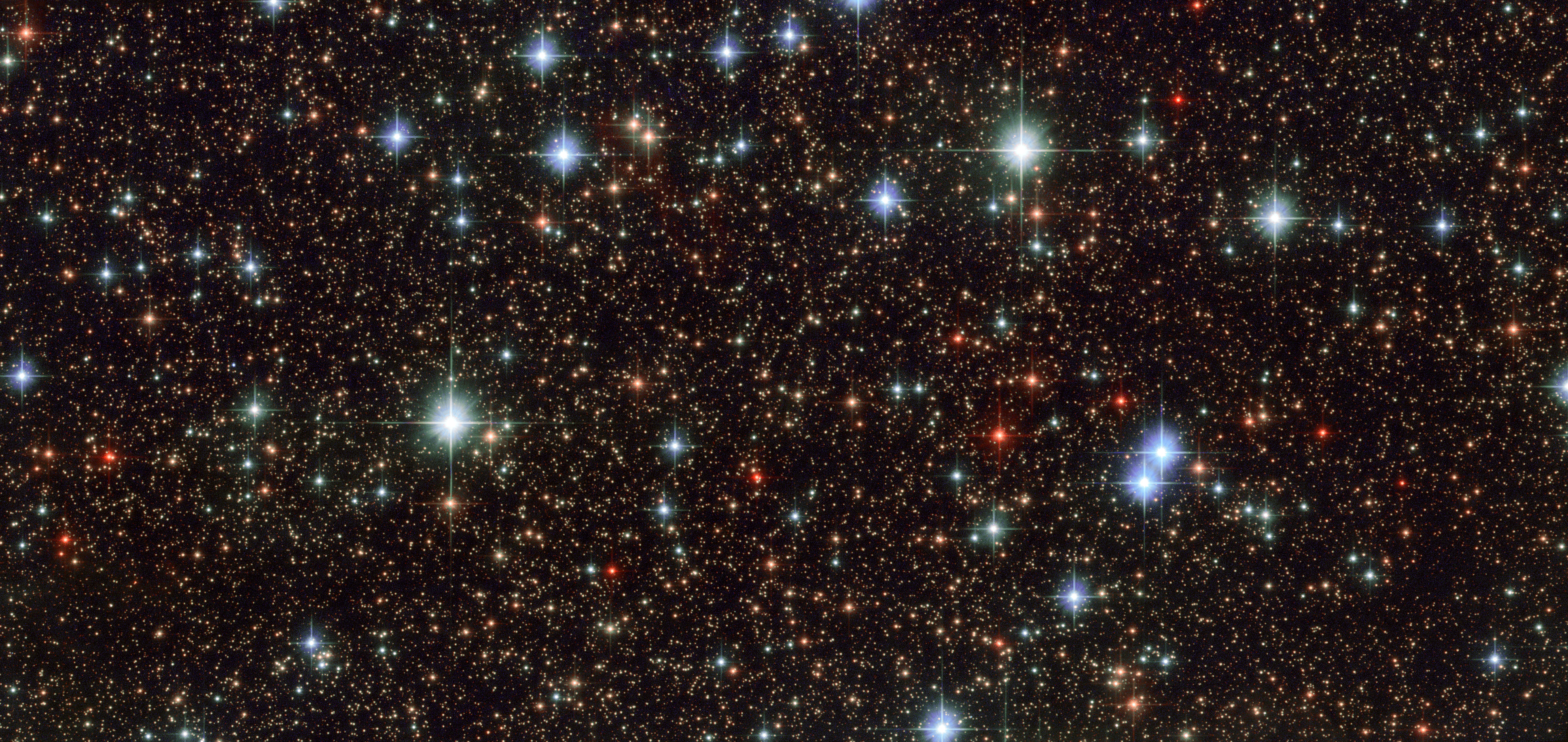
2. **The Sun’s Slow Burn: Our Star’s Billion-Year Saga**Our very own Sun, a “G-type main-sequence star,” represents the prime of life for most stars across the cosmos. During this incredibly stable phase, a star tirelessly fuses “hydrogen into helium in high-temperature-and-pressure reactions in their cores.” This process generates the immense energy that makes the star shine, maintaining a perfect balance between outward pressure and inward gravity.
The Sun, classified as a “dwarf star,” has been on its main sequence for “4.6 billion (4.6×10⁹) years.” Throughout this time, the helium proportion in its core has steadily increased. This chemical change causes “the rate of nuclear fusion at the core” to “slowly increase,” along with “the star’s temperature and luminosity.” Our Sun’s luminosity “is estimated to have increased by about 40%” over its lifespan.
While stars appear unchanging, they constantly shed material through a “stellar wind of particles.” For our Sun, this “mass lost is negligible,” merely “0.01% of its total mass over its entire lifespan.” The duration of this main sequence phase depends on mass and fuel-burning rate. Our Sun is expected to live for “10 billion (1010) years.” Low-mass “red dwarfs” last “about one trillion (10×1012) years,” far exceeding the universe’s current age.
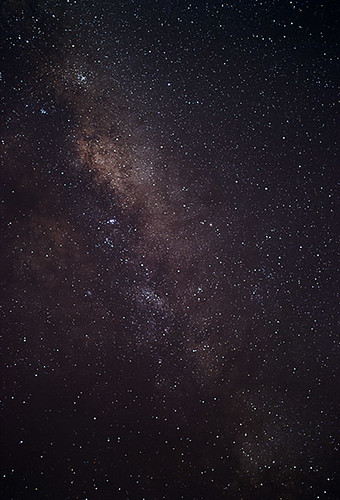
3. **From Dwarf to Giant: The Dramatic Metamorphosis of Aging Stars**Even stable main-sequence stars eventually deplete their core hydrogen, signaling the start of their dramatic twilight years. For stars “at least 0.4 M ☉,” this depletion triggers a profound transformation. They begin fusing “hydrogen in a shell surrounding the helium core,” causing their “outer layers” to “expand and cool greatly,” turning them into spectacular “red giants.” Our Sun will experience this, swelling to “250 times its present size” and losing “30% of its current mass.”
As the hydrogen-burning shell creates more helium, the star’s core “increases in mass and temperature.” For red giants up to “2.25 M ☉,” the helium core becomes “degenerate” before fusion ignites. Then, a critical temperature triggers an “explosively” beginning “helium flash.” This causes the star to “rapidly shrink in radius,” “increase its surface temperature,” and shift on the Hertzsprung-Russell diagram to the “horizontal branch.”
After core helium fusion, the star starts fusing “helium along a shell surrounding the hot carbon core,” entering the “asymptotic giant branch (AGB)” phase. This period sees “thermal pulses,” where luminosity fluctuates, and matter “is ejected from the star’s atmosphere,” forming a beautiful “planetary nebula.” This “mass loss process” can shed “50 to 70% of a star’s mass.” The ejected material, “enriched with the fusion products dredged up from the core,” disperses, enriching the “interstellar medium.”
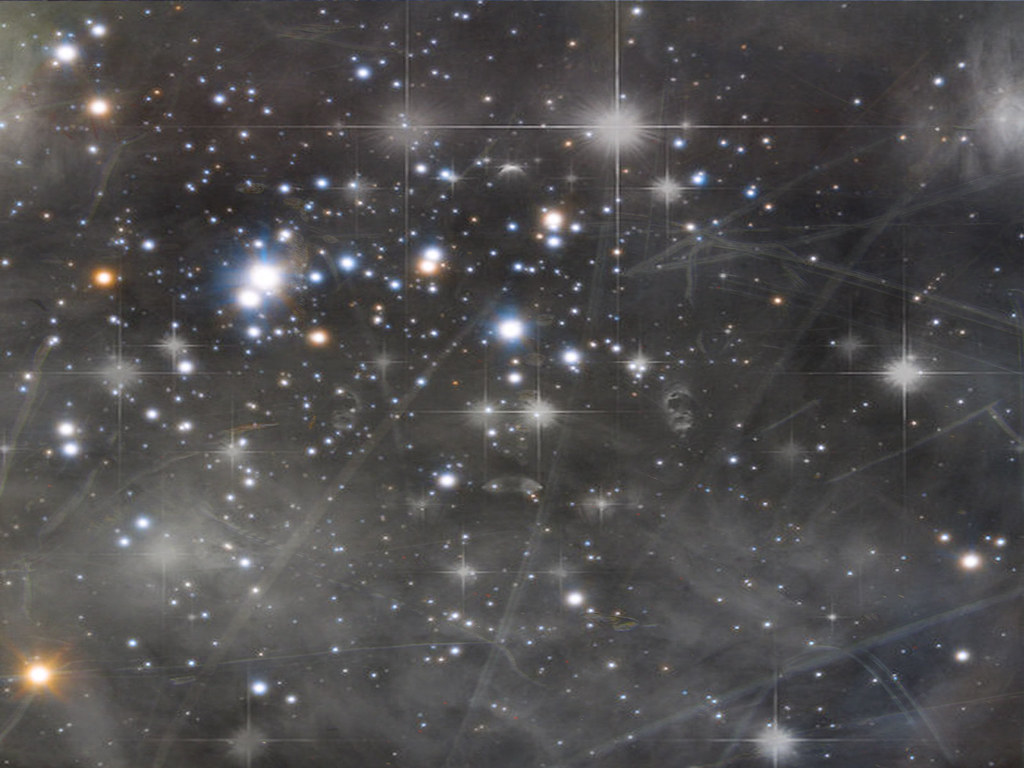
4. **Ancient Stargazers: How Our Ancestors Mapped the Heavens**Long before telescopes, humanity looked to the stars for guidance, inspiration, and understanding. “Stars have been important to civilizations throughout the world,” serving far more than scientific curiosity. They were woven into “religious practices, divination rituals, mythology,” and crucially, “used for celestial navigation and orientation, to mark the passage of seasons, and to define calendars.” The night sky provided an essential clock and compass for ancient societies.
Early astronomers, using only their eyes, distinguished “fixed stars” from “wandering stars” (pl anets). Many believed stars were “permanently affixed to a heavenly sphere and that they were immutable.” They “grouped prominent stars into asterisms and constellations” to “track the motions of the planets and the inferred position of the Sun.” This meticulous tracking allowed for “calendars, which could be used to regulate agricultural practices,” a legacy enduring in our modern “Gregorian calendar.”
The depth of ancient knowledge is staggering. The “oldest accurately dated star chart was the result of ancient Egyptian astronomy in 1534 BC.” “Earliest known star catalogues were compiled by the ancient Babylonian astronomers.” Greek astronomy continued this, with “Aristillus” creating “the first star catalogue in Greek astronomy in approximately 300 BC.” Later, “Hipparchus” compiled a catalog of “1,020 stars,” used for “Ptolemy’s star catalogue,” and is known for discovering “the first recorded nova (new star).” Many “constellations and star names in use today derive from Greek astronomy.”

5. **The Sky’s Secret Language: Unlocking Stellar Properties from Afar**How do astronomers know so much about objects light-years away? It’s all thanks to the “sky’s secret language”—the light stars send us. By observing a star’s “apparent brightness, spectrum, and changes in its position in the sky over time,” scientists deduce an astonishing array of “stellar properties,” including “mass, age, metallicity, variability, distance, and motion through space.” It’s like reading a cosmic autobiography from across the galaxy.
A pivotal breakthrough came with “stellar spectroscopy,” pioneered by “Joseph von Fraunhofer and Angelo Secchi.” They realized that dissecting a star’s light identified dark “absorption lines,” caused by elements in the star’s atmosphere. Comparing stars like Sirius to the Sun revealed profound “differences in the strength and number of their absorption lines.” This led Secchi to begin “classifying stars into spectral types” in 1865, a system refined by “Annie J. Cannon” in the early 1900s.
Measuring distance was a monumental challenge. “Friedrich Bessel,” in 1838, made “the first direct measurement of the distance to a star (61 Cygni at 11.4 light-years)” using the “parallax technique,” conclusively “demonstrating the vast separation of the stars.” Further innovations, like “Karl Schwarzschild’s” method for determining temperature from color, and “Albert A. Michelson’s” 1921 use of an interferometer to measure “stellar diameter,” continuously peeled back layers of stellar mystery. The Hertzsprung-Russell diagram and “Cecilia Payne-Gaposchkin’s” thesis that stars were “primarily of hydrogen and helium” revolutionized understanding.
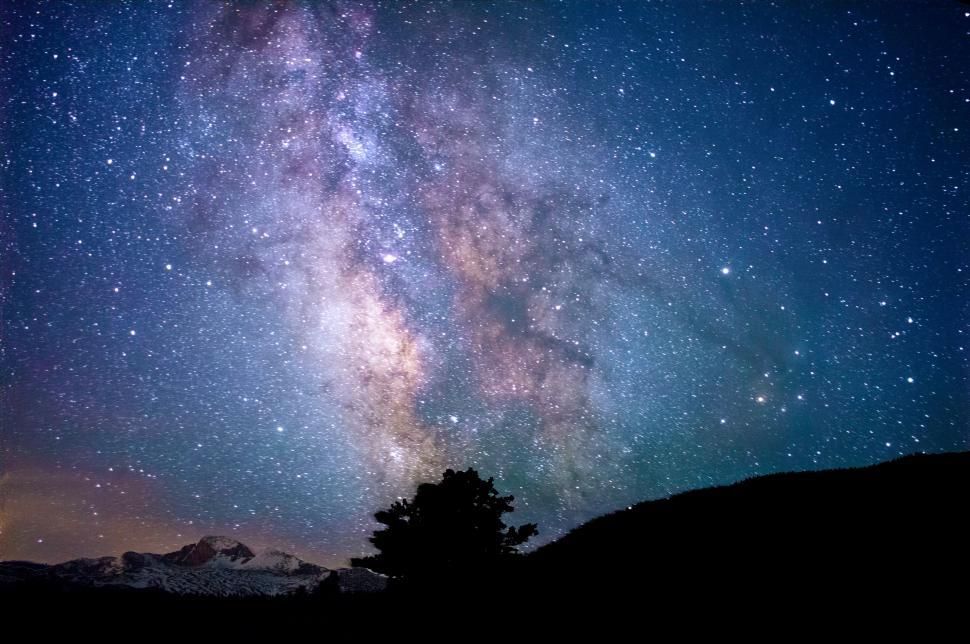
6. **Star-Stuff: Why We Are All Made of Stardust**One of the most profound truths about the cosmos is that we are, quite literally, made of “star stuff.” This isn’t just a metaphor; it’s a scientific reality rooted in stellar evolution. At the heart of this cosmic alchemy is “stellar nucleosynthesis,” the incredible process by which “stars or their remnants create almost all naturally occurring chemical elements heavier than lithium.” Everything from the carbon in our bodies to the iron in our blood was forged in the fiery hearts of stars.
This chemical enrichment isn’t a one-way street. When stars reach the end of their lives, through “stellar mass loss or supernova explosions,” they “return chemically enriched material to the interstellar medium.” The remnants of cosmic titans, having spent eons fusing elements, now disperse these precious building blocks back into space. This newly enriched material then “is recycled into new stars,” forming a magnificent cosmic cycle where dying stars sow seeds for the next generation.
This cycle is also fundamental to life itself. The “heavy elements” blown off by dying stars are the very ingredients that “allow the formation of rocky planets.” Without stellar furnaces diligently cooking up these elements, Earth and all terrestrial worlds simply couldn’t exist. The “outflow from supernovae and the stellar wind of large stars play an important part in shaping the interstellar medium,” sculpting the cosmic landscape and distributing materials for planets and life.
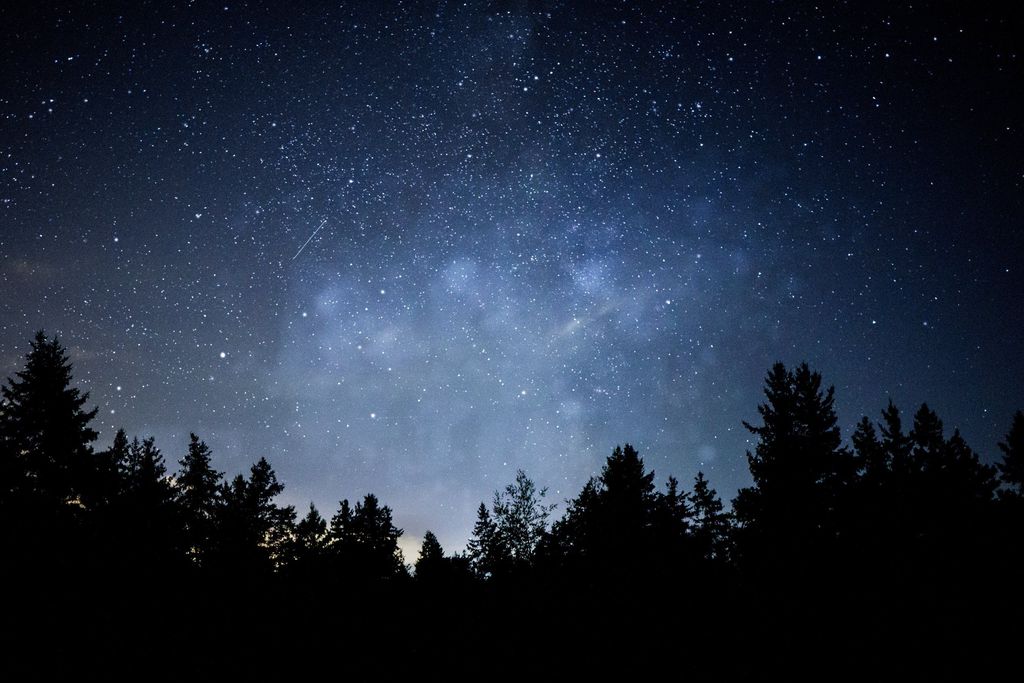
7. **The Sun’s True Colors: Unmasking Our Nearest Star’s Identity**When we gaze at the Sun, its familiar golden glow seems to define what a “star” truly is. Yet, our local star, while vital to our existence, is just one among an unfathomable multitude. At its most fundamental, a star is a “luminous spheroid of plasma held together by self-gravity.” And indeed, “the nearest star to Earth is the Sun.” Its classification as a “G-type main-sequence star” hints at a wider stellar diversity.
While appearing enormous, our Sun is merely an average-sized star. Only “about 4,000” stars are “visible to the eye at night,” all “within the Milky Way galaxy.” This is a tiny fraction of the “estimated 1022 to 1024 stars” in the “observable universe,” a number dwarfing “all the grains of sand on planet Earth.” These distant suns are categorized into “constellations and asterisms,” with many brightest bearing “proper names,” reflecting millennia of human observation.
Astronomers use the Sun as a cosmic benchmark, making it “most convenient to express mass, luminosity, and radii in solar units.” The “nominal solar luminosity L ☉ = 3.828 × 1026 W” and “nominal solar radius R ☉ = 6.957 × 10⁸ m” are defined as “SI constants” for standardization. Although precise solar mass “M ☉ was not explicitly defined by the IAU,” a highly precise “nominal solar mass parameter: G M ☉ = 1.327 1244 × 1020 m3 /s2” allows scientists to quantify other stars relative to our own. This standardization helps us appreciate the Sun as a critical yardstick in understanding the cosmos’s sprawling stellar population.
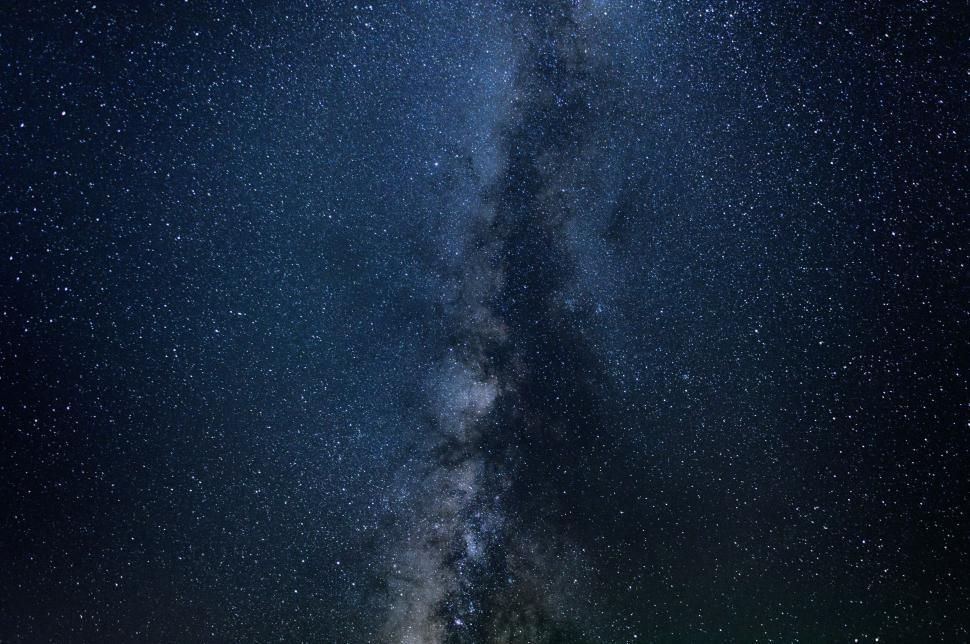
8. **The Violent Endings of Massive Stars: Supernovae and Beyond**Massive stars are the universe’s ultimate drama queens, ending their lives not with a gentle fade, but with a cataclysmic bang that can briefly outshine entire galaxies. These titans, generally with a minimum mass of “8 M ☉,” consume their hydrogen fuel at an incredible rate. Once their core hydrogen is depleted, they embark on a journey of fusing increasingly heavier elements, expanding into “blue supergiant” and then “red supergiant” phases, though stars exceeding “40 solar masses” might skip the red supergiant stage due to extreme mass loss, instead becoming “Wolf–Rayet stars.”
Inside these stellar behemoths, an astonishing process unfolds. After helium is exhausted, the core contracts, and temperatures skyrocket, allowing fusion to continue with elements like carbon, neon, oxygen, and silicon. Imagine an “onion-layer” structure, where different elements are fusing in successive shells around the core—hydrogen on the outside, then helium, and so forth, until the star’s very heart is a ticking time bomb of newly forged elements.
The spectacular finale for these giants arrives when they begin producing iron. This is the ultimate cosmic dead-end, because fusing iron nuclei doesn’t release energy; it *consumes* it. Without this outward pressure from fusion, gravity wins. The iron core, now larger than “1.4 M ☉,” can no longer support its own mass and collapses inward at unbelievable speeds. Electrons are driven into protons, forming neutrons, neutrinos, and gamma rays in an instant.
This sudden, catastrophic core collapse creates an immense “shockwave” that blasts the star’s outer layers into space. What we witness from afar is a “supernova,” an event so bright it can momentarily “outshine the star’s entire home galaxy.” These explosions are not just cosmic fireworks; they are fundamental to enriching the universe. The remnants left behind are equally mind-boggling: a super-dense “neutron star,” perhaps spinning as a “pulsar” or an “X-ray burster,” or, for the most massive stars, a mysterious “black hole greater than 4 M ☉.”

9. **Cosmic Partners: The Intricate Dance of Binary Stars**While we often picture stars as solitary figures, a staggering number of them prefer company. “Most stars are observed to be members of binary star systems,” or even larger “multi-star system[s]” with three or more gravitationally bound stars. The simplest, and most common, is the binary pair, where two stars orbit each other in a celestial ballet that can be surprisingly complex and dramatic.
These close encounters have a profound impact, significantly altering a star’s evolution compared to a single star of the same mass. When a star expands into a red giant, for instance, its outer layers can extend past its “Roche lobe,” the gravitational boundary where its material is still bound to it. If a binary partner is close enough, some of this material can spill over, creating fascinating phenomena like “contact binaries,” “cataclysmic variables,” and even “blue stragglers.” This “mass transfer” can even lead to the “Algol paradox,” where the more evolved star in a system is actually the *less* massive one!
The influence of binary systems is especially crucial for understanding massive stars. Some astronomers propose that “single massive stars may be unable to expel their outer layers fast enough” to account for the observed numbers and types of evolved stars, or the supernovae progenitors we see. The solution? “Mass transfer through gravitational stripping in binary systems” could be the cosmic helping hand that sculpts these giants into their observed forms.
Recent studies highlight just how common these partnerships are. “Around half of Sun-like stars, and an even higher proportion of more massive stars, form in multiple systems.” For instance, a 2017 study of the Perseus molecular cloud suggested that “most of the newly formed stars are in binary systems,” with some later splitting apart. So, while our Sun might be a lone wolf, it’s actually the exception, not the rule, in the grand cosmic scheme!

10. **Cosmic Crowds: Stars in Clusters and Galaxies**Imagine a universe where stars are spread out like solitary grains of sand. Thankfully, that’s not our reality. Instead, “stars are not spread uniformly across the universe but are normally grouped into galaxies along with interstellar gas and dust.” These grand cosmic islands are home to billions, even trillions, of stars, painting spectacular spirals and ellipses across the void.
Our own Milky Way, a “typical large galaxy,” holds “hundreds of billions of stars.” But that’s just a drop in the cosmic ocean. The “observable universe contains an estimated 10^22 to 10^24 stars” spread across “more than 2 trillion (10^12) galaxies.” While most stars reside within these galactic havens, a fascinating discovery is that “between 10 and 50% of the starlight in large galaxy clusters may come from stars outside of any galaxy,” drifting through intergalactic space like cosmic nomads.
Within galaxies, stars often gather into even tighter communities known as “star clusters.” These aren’t just random groupings; they’re gravitationally bound families, ranging from small, loose “stellar associations” with a handful of members to “open clusters” housing dozens or thousands, and up to magnificent “globular clusters” with hundreds of thousands of stars.
What makes these clusters so special? All the stars in an open or globular cluster typically “formed from the same giant molecular cloud.” This means they’re usually siblings, sharing “similar ages and compositions.” Studying these cohesive groups offers astronomers unique insights into stellar evolution, providing natural laboratories for understanding how stars live and die together.
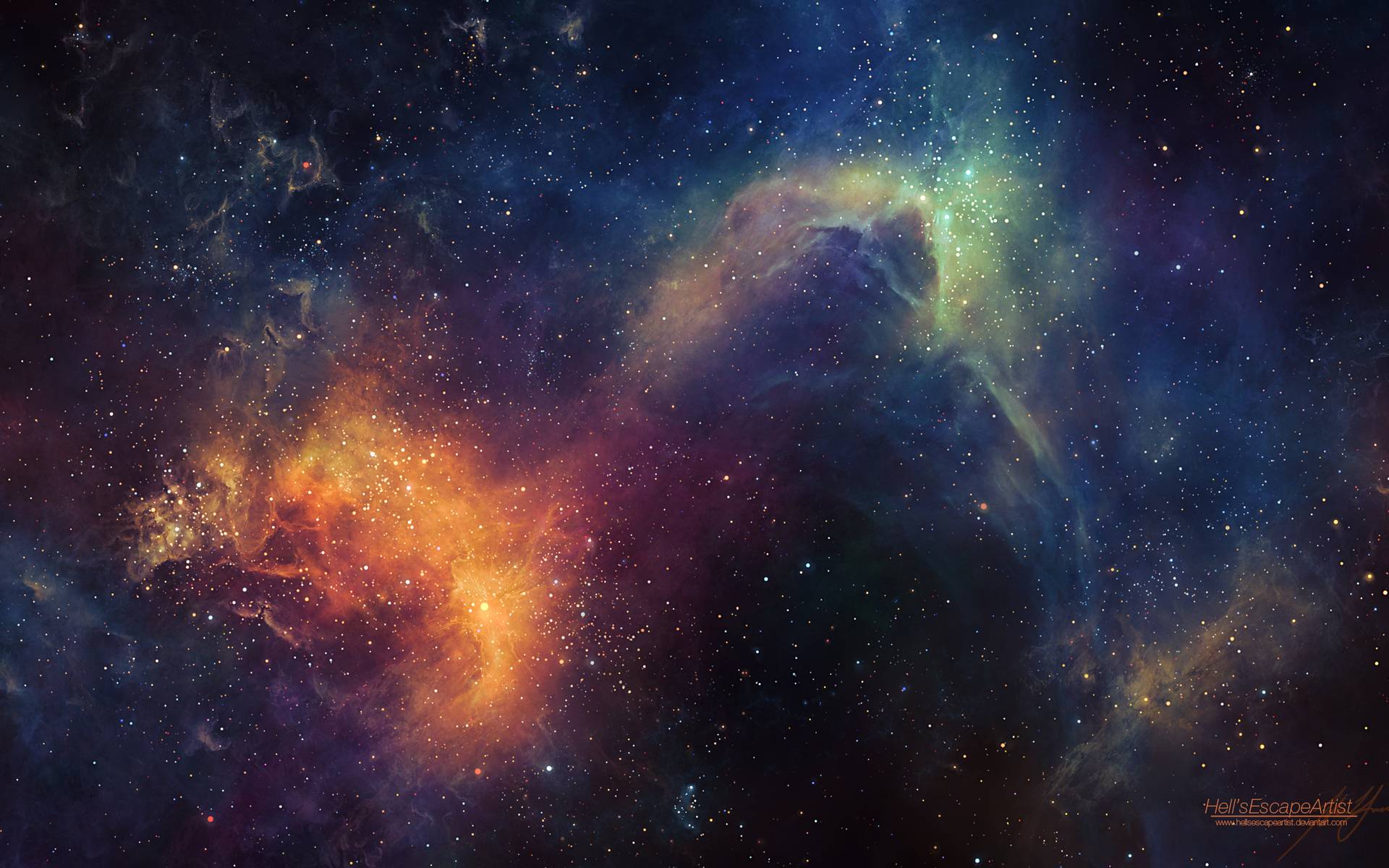
11. **The Universe’s Grand Total: Counting the Uncountable**Trying to count all the stars in the universe is like trying to count grains of sand on all the beaches of Earth—it’s a truly mind-boggling task. Yet, astronomers have made incredible estimates, revealing a scale of existence that stretches our imagination. The sheer volume of stars out there is, quite frankly, staggering and a testament to the universe’s boundless generative power.
Hold onto your hats, because the numbers are immense. The “observable universe contains an estimated 10^22 to 10^24 stars.” To put that into perspective, this number is “more stars than all the grains of sand on planet Earth.” Think about that for a moment – every single tiny speck of sand on every beach, desert, and riverbed combined still wouldn’t match the number of stars twinkling across the cosmos.
And yet, despite this cosmic abundance, our eye can only glimpse a minuscule fraction. On a clear night, away from city lights, we might see “only about 4,000 of these stars,” and every single one of them is “within the Milky Way galaxy.” This tiny handful of visible stars is but a whisper of the universe’s true stellar symphony.
This incredible disparity between what we see and what truly exists underscores both the vastness of space and the limitations of our perception. It also highlights the monumental achievement of scientific inquiry, allowing us to extrapolate and estimate such colossal figures through clever observation and theoretical models, taking us far beyond the reach of our immediate senses.
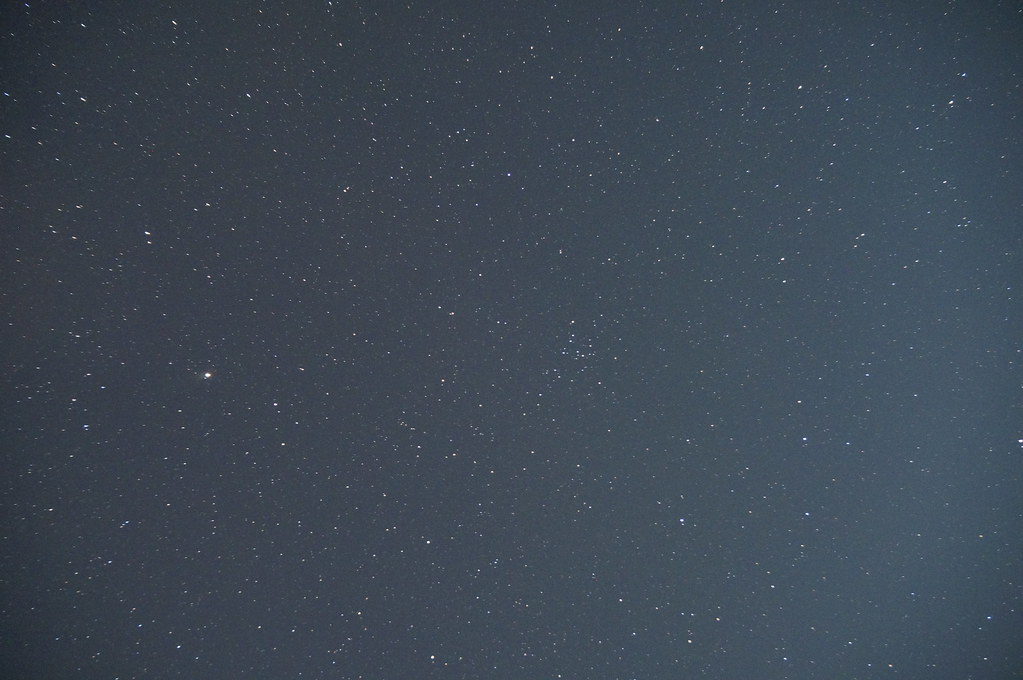
12. **Celestial Cartography: How We Name and Categorize Stars**From ancient myths to modern science, humanity has always sought to bring order to the dazzling chaos of the night sky. Our ancestors didn’t just stare; they organized, creating “constellations and asterisms” by grouping prominent stars into patterns. These patterns weren’t just pretty pictures; they were vital tools, forming the basis of “religious practices, divination rituals, mythology,” and crucially, for “celestial navigation and orientation, to mark the passage of seasons, and to define calendars.”
The naming game goes way back. “Many of the brightest stars have proper names,” with a rich history reflecting diverse cultures. For instance, “Medieval Islamic astronomers gave Arabic names to many stars that are still used today,” a testament to their profound contributions to astronomy. The “concept of a constellation was known to exist during the Babylonian period,” and “many of the constellations and star names in use today derive from Greek astronomy,” showcasing a deep, shared human heritage in mapping the heavens.
As astronomy evolved, so did the need for more systematic classification. Around “1600,” the German astronomer “Johann Bayer” introduced a system using Greek letters to designate stars within each constellation, creating star maps that became foundational. Later, “John Flamsteed’s star catalogue” added a “numbering system based on the star’s right ascension,” leading to what we now call “Flamsteed designation or Flamsteed numbering.”
Today, the “internationally recognized authority for naming celestial bodies is the International Astronomical Union (IAU).” Through its “Working Group on Star Names (WGSN),” the IAU “catalogs and standardizes proper names for stars,” ensuring a consistent, global language for the cosmos. It’s a crucial effort that helps professional astronomers and enthusiasts alike navigate the universe without confusion, even as some “private companies sell names of stars which are not recognized by the IAU,” a practice the British Library calls an “unregulated commercial enterprise.”
Read more about: The Mind-Blowing Science of Stars: Uncovering the Cosmic Truths Behind the Twinkle

13. **The Modern Age of Stargazing: Advanced Observatories and Discoveries**While ancient astronomers relied on the eye, the modern era has revolutionized our ability to peer into the universe’s deepest secrets. From early Islamic observatories to cutting-edge twenty-first-century telescopes, each advancement has unlocked new dimensions of stellar understanding, pushing the boundaries of what we can observe and comprehend about these distant lights.
The “twentieth century saw increasingly rapid advances in the scientific study of stars.” Photography became an indispensable tool, allowing astronomers to capture and study light with unprecedented detail. Further innovations, like the “photoelectric photometer,” enabled “precise measurements of magnitude at multiple wavelength intervals,” giving us richer data about a star’s energy output across different parts of the electromagnetic spectrum. It’s like moving from a black-and-white sketch to a vibrant, full-color portrait of the cosmos.
Breakthroughs in technology allowed for incredibly precise measurements previously thought impossible. In “1921,” “Albert A. Michelson made the first measurements of a stellar diameter using an interferometer on the Hooker telescope at Mount Wilson Observatory,” a monumental achievement that gave us the actual size of a star far beyond our Sun. This era also saw profound theoretical work, with “successful models” explaining stellar interiors and evolution, and “Cecilia Payne-Gaposchkin’s” groundbreaking “1925 PhD thesis” establishing that stars were primarily made of “hydrogen and helium,” a fact now fundamental to astrophysics.
Today, our view extends far beyond our Milky Way. While most individual stars are observed within our “Local Group” and visible parts of our galaxy, we’ve pushed the limits. “Individual stars such as Cepheid variables have been observed in the M87 and M100 galaxies,” which are members of the Virgo Cluster. In a truly mind-bending feat, “with the aid of gravitational lensing, a single star (named Icarus) has been observed at 9 billion light-years away,” reminding us that the universe is vast, and our capacity to explore it continues to grow.

14. **The Cosmic Legacy: Why Stars Matter to Everyone**As we conclude our journey through the unbelievable story of stars, it becomes abundantly clear that these luminous spheroids of plasma are more than just distant points of light. They are the universe’s alchemists, architects, and storytellers, shaping everything around us, from the elements in our bodies to the very structure of galaxies. Their lives and deaths are intimately woven into the fabric of our existence.
The concept of “star stuff” isn’t merely poetic; it’s a profound scientific truth. It’s “stellar nucleosynthesis” that creates “almost all naturally occurring chemical elements heavier than lithium,” making stars the ultimate cosmic factories. When these stars die, through “stellar mass loss or supernova explosions,” they “return chemically enriched material to the interstellar medium,” scattering the very building blocks of life and planets back into space.
This grand cosmic recycling program is essential for the universe’s continuous evolution. These “heavy elements” aren’t just for show; they “allow the formation of rocky planets,” providing the crucial foundation for worlds like Earth. The “outflow from supernovae and the stellar wind of large stars” don’t just happen randomly; they “play an important part in shaping the interstellar medium,” influencing where and how new stars and planetary systems will form.
Read more about: Hollywood’s Golden Legacy: Iconic Stars of the 70s & 80s Who Remain Millionaires Today
Ultimately, understanding stars is understanding ourselves. Every atom in your hand, every breath you take, and every planet circling a distant sun owes its existence to the fiery hearts of stars, both ancient and young. They are the engines of cosmic change, the creators of complexity, and the enduring symbols of the universe’s endless wonder. The more we unravel their unbelievable story, the more we appreciate our own incredible connection to the cosmos.