
In the annals of Hollywood, few names resonate with the warmth, talent, and sheer charisma of Michael J. Fox. A figure synonymous with the quintessential American teenager Marty McFly from the beloved *Back to the Future* trilogy, and the sharp-witted Alex P. Keaton from *Family Ties*, Fox carved an indelible niche in popular culture, captivating audiences with his comedic timing and profound dramatic range. His career trajectory in the 1980s was nothing short of meteoric, transforming him from a promising young actor into a global icon, seemingly unstoppable in his ascent. Yet, beneath the veneer of dazzling success, an unforeseen challenge emerged, one that would fundamentally alter the course of his extraordinary life and career.
At the tender age of 29, at what many would consider the absolute zenith of his professional life, Fox received a diagnosis that would forever change his path: young-onset Parkinson’s disease. This progressive neurodegenerative disorder, typically associated with older individuals, struck him in his prime, presenting a personal struggle that he would grapple with for years in private before transforming it into a public mission of unprecedented scale. His journey through this unexpected landscape of illness has not only redefined his professional engagements but has also cast him as one of the most compelling and effective advocates for medical research in contemporary history.
This article delves into the formative experiences and pivotal moments that shaped Michael J. Fox’s early life and burgeoning career, leading up to the shocking diagnosis that compelled him to confront mortality and purpose in an entirely new light. We will explore how a boy from Canada became a household name, the subtle beginnings of an insidious illness, and the years he spent navigating his condition in secret, ultimately laying the groundwork for a profound pivot from full-time acting to a life dedicated to advocacy, research, and an unwavering spirit of optimism.

1. **Early Life and the Genesis of an Actor: From “Army Brat” to Stage**Michael Andrew Fox was born in 1961 in Alberta, Canada, embarking on a childhood marked by constant relocation. As he often described himself, he was an “army brat,” a term that perfectly encapsulates the itinerant nature of his early years. This nomadic upbringing, a consequence of his father’s service in the Canadian Armed Forces, meant that stability was a relative concept, fostering perhaps an early adaptability that would serve him well in the unpredictable world of acting.
It was not until his father retired from the Canadian Armed Forces in 1971 that the family finally settled in Burnaby, British Columbia, providing Michael with a stable environment where his innate talents could begin to blossom. It was there, in the local junior high, that he first discovered the drama club—a pivotal moment that would ignite his passion and reveal a natural talent for performance. His facility for acting was immediately apparent, a raw, undeniable gift that quickly caught the attention of his mentors.
Encouraged by his theater teacher, young Michael auditioned for a new Canadian Broadcasting Corp. series titled *Leo & Me*. He successfully won the part, a testament to his burgeoning abilities, and from that point, his career began to gain momentum. He started working steadily on television and in local theater productions within Vancouver, accumulating invaluable experience. By the age of 17, with a clear vision and an ambitious drive, Michael made the momentous decision to leave school and relocate to Los Angeles, determined to pursue his acting career on a larger stage.

2. **The “J” in Michael J. Fox: A Nod to a Character Actor**Upon his arrival in Hollywood and his earnest attempts to establish himself, Michael encountered a peculiar bureaucratic hurdle when he sought to join the Screen Actors Guild (SAG). There was, as it turned out, already an actor named “Michael Fox” listed as a SAG member. This unexpected overlap necessitated a slight but significant alteration to his professional moniker, forcing the new Canadian arrival to append a middle initial to differentiate himself.
Contemplating his options, Michael quickly ruled out “Michael A. Fox” for what he described as “obvious reasons,” a decision that often elicits a knowing chuckle. Instead, with a thoughtful nod to artistic heritage, he chose to adopt the middle initial “J.” This choice was not random but a deliberate homage to a figure he deeply admired: the character actor Michael J. Pollard. This seemingly minor detail underscores Fox’s early appreciation for the craft and the artists who dedicated their lives to it, even as he was just embarking on his own journey.
This small yet distinctive addition to his name would become globally recognized, inextricably linked to the iconic roles that followed. It transformed a common name into a unique brand, signifying the individual who would soon capture the hearts of millions. The “J” became more than just an initial; it became part of a legacy, marking the individual who navigated the challenging currents of Hollywood with both talent and a touch of serendipitous rebranding.

3. **Breakthrough with *Family Ties* and Rising Stardom: From Lean Years to Television Royalty**After enduring what he later referred to as a few “lean years” in Los Angeles, a period common for many aspiring actors, Michael J. Fox’s perseverance paid off spectacularly. He landed the role of Alex P. Keaton on the NBC sitcom *Family Ties* in 1982. This part, portraying a conservative, fiscally-minded son to former hippie parents, was initially intended to be a supporting character, with the show’s focus supposedly on the parents, Steven and Elyse Keaton, played by Michael Gross and Meredith Baxter.
However, Fox’s exceptional performance quickly captivated audiences and critics alike, shifting the show’s dynamic. His portrayal of Alex P. Keaton was so compelling, blending wit with a unique generational perspective, that the series soon “skyrocketed to one of television’s top comedies.” The focus organically gravitated towards his character, a phenomenon openly acknowledged and supported by his co-stars. As Meredith Baxter noted, “When Michael started emerging as this wonderful character, that they could really feel the heat and the energy and excitement around him, no one really begrudged him that because he did it so well.”
His success on *Family Ties* brought him widespread acclaim and solidified his status as a major television star. For his work on the show, Michael won three Primetime Emmy Awards and a Golden Globe Award, illustrating the profound impact of his performance. Beyond the professional accolades, *Family Ties* also proved personally significant: in 1988, he married his co-star, Tracy Pollan, whom he met on the set, marking the beginning of a profound personal partnership that would weather many storms, including the birth of their first child, Sam, a year later.

4. **Cinematic Icon: *Back to the Future* and the Zenith of an Era**The phenomenal success of *Family Ties* inevitably opened the doors to the silver screen, and movie offers soon began to pour in for Michael J. Fox. Among these was a role that would etch his name into cinematic history: Marty McFly in *Back to the Future*. Released in 1985, the film was an instant cultural phenomenon, becoming “the number one movie of 1985 and a role that brought him worldwide fame.” This iconic performance showcased his natural charm and comedic timing, cementing his status as a bona fide movie star.
Interestingly, Fox almost missed out on this career-defining role, much like his initial opportunity with *Family Ties*. He was the first choice for Marty McFly, but scheduling conflicts with *Family Ties* (especially during Meredith Baxter’s maternity leave) led to Eric Stoltz being cast. However, after filming commenced, a deal was painstakingly worked out that allowed Fox to juggle both his demanding television schedule and the rigorous demands of the film set. This grueling period proved immensely rewarding, solidifying his versatility and appeal across different mediums.
Throughout his 20s, Fox not only completed seven seasons of *Family Ties* but also starred in a remarkable ten feature films. These included other notable successes such as *Teen Wolf*, *The Secret of My Success*, *Casualties of War*, and, of course, the highly anticipated *Back to the Future* sequels. This period represented the absolute height of his conventional acting career, where he effortlessly transitioned between television and film, proving himself a versatile and indispensable talent in Hollywood.
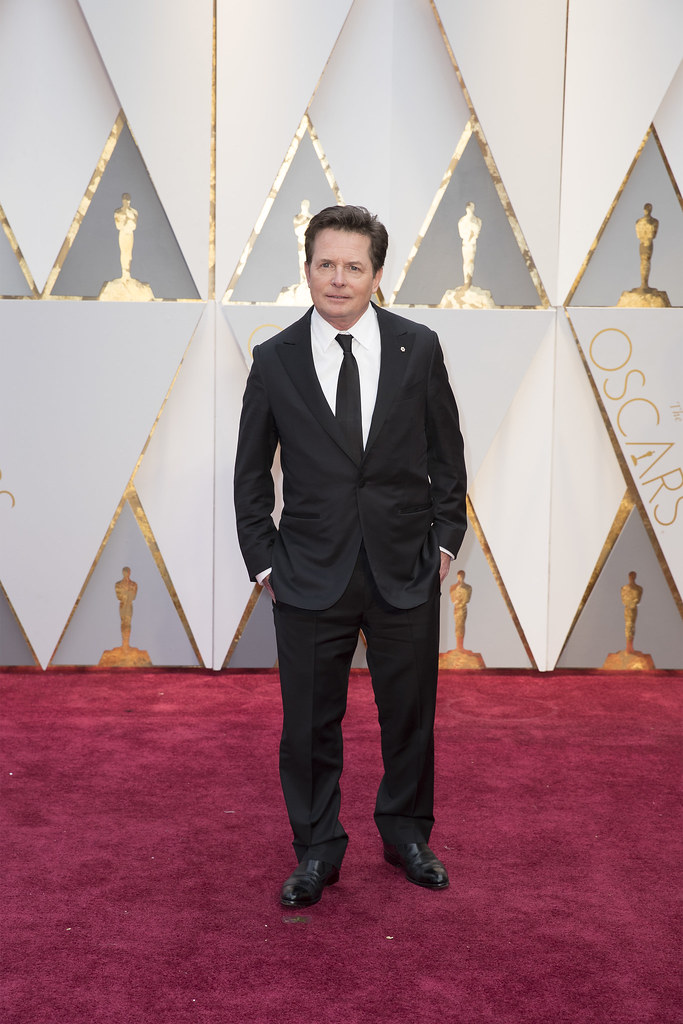
5. **The First Tremor: Initial Symptoms and a Devastating Diagnosis at 29**At the peak of his multifaceted career, while filming *Doc Hollywood* in Gainesville, Florida, in 1991, Michael J. Fox experienced the first subtle, yet profoundly unsettling, sign that something was amiss. He noticed a persistent “twitch” in his left pinkie finger. At first, the 29-year-old actor, who had maintained a fast-paced lifestyle, dismissed it, initially thinking it might be an after-effect of a bad hangover. He sought initial medical advice from a local neurologist in Florida, who, unaware of the full picture, suggested he might have simply injured his funny bone.
However, the seemingly innocuous twitch escalated. Six months later, the symptoms had worsened significantly; his entire left hand began to tremble, and his shoulder became stiff and achy. The persistence and progression of these signs prompted him to consult another doctor in Manhattan. It was during this appointment that he received a “surprising and devastating diagnosis”: he had young-onset Parkinson’s disease (PD). He was, to his own incredulity, only 29 years old—an age far removed from the typical demographic for a disease that primarily affects patients over 60.
This moment, as he recalled, was “incomprehensible.” The news hit him and his wife, Tracy Pollan, with profound shock and fear. Pollan, upon seeing him tremble during a jog in Martha’s Vineyard, had urged him to seek further medical attention, noting, “Your left side is not moving. Only the right side is moving. It doesn’t look good.” The swiftness and severity of the diagnosis marked an abrupt and life-altering turn, plunging him into a reality he never anticipated, despite doctors assuring him he could function for years.

6. **The Secrecy and Early Coping Mechanisms: A Private Battle in the Public Eye**Following his 1991 diagnosis, Michael J. Fox made the difficult decision to keep his illness under wraps for several years, navigating his private battle while continuing to work steadily in the public eye. He acknowledged that he wasn’t “ashamed of it,” but rather, he needed time to learn how to deal with it on his own. During this period, only a very small circle of family and trusted friends—including his wife, mother, and siblings—were privy to his condition, as he feared making his ailment public might lead potential employers to hesitate in hiring him for future roles.
This seven-year span was characterized by an immense personal struggle and significant career choices that, in retrospect, he viewed critically. Faced with the stark reality of his prognosis, and told by doctors that he might only have “10 years of work left,” Fox admitted his “decision-making was ridiculous” during this time, often driven by “time restrictions” and “financial pressures” that were “inflated in my head.” He confessed to taking on many “quick successful movies” like *Life with Mikey* (1993), *For Love or Money* (1993), and *Greedy* (1994) because he was “so scared” and unfamiliar with Parkinson’s.
Adding to the personal challenge, Fox revealed that he had leaned “too heavily on drinking” after his diagnosis as a coping mechanism. This period of heavy consumption, however, eventually led to a crucial turning point. A year after his diagnosis, a morning waking up to his son climbing on him amidst strewn beer cans, met with his wife’s indifference rather than disgust, served as a profound “course correction.” He realized he “had to look at the way I was living: the drinking,” and subsequently gave up alcohol altogether, understanding that this challenge was a major “caution in flashing lights.” This introspection eventually led him to a crucial acceptance: “acceptance doesn’t mean resignation. It means understanding and dealing straightforwardly.”

7. **The Return to Television and Public Revelation of Parkinson’s**Following his private battle with Parkinson’s, Michael J. Fox strategically shifted his career back to television. After *The American President* (1995), he sought a New York City-based role to be closer to family, leading to the ABC sitcom *Spin City*. Before accepting the lead, Fox disclosed his diagnosis to network president Robert Iger and DreamWorks’ Jeffrey Katzenberg, who unequivocally supported him: “Let’s go!”
This openness allowed him to excel in a demanding television schedule, earning an Emmy, three Golden Globes, and two Screen Actors Guild Awards. However, by *Spin City*’s third season, his Parkinson’s symptoms became too challenging to conceal. He first informed his castmates, followed by a risky four-hour brain procedure.
By late 1998, with visible symptoms, Fox decided to go public. He revealed his diagnosis on the cover of *People* magazine, ending seven years of private struggle. This public disclosure marked a profound turning point. Choosing to leave full-time acting after four seasons, Fox embraced advocacy, strategically channeling his energy towards championing a cure.
Read more about: Robin Williams: The Unseen Depths of a Comedic Titan’s Battle for Well-being

8. **Founding The Michael J. Fox Foundation**With his public revelation and departure from full-time acting, Michael J. Fox committed to a singular goal: finding a Parkinson’s cure. In fall 2000, he launched The Michael J. Fox Foundation for Parkinson’s Research, an initiative driven by his firsthand experience and desire to change the future for millions.
The foundation’s mission was clear: aggressively fund scientific research to accelerate therapies and a cure. It rapidly became a dominant force in medical philanthropy, lauded by *The New York Times* as “the most credible voice on Parkinson’s research in the world” for its rigorous agenda.
Under Fox’s impassioned leadership, the foundation galvanized the scientific community, becoming the world’s largest nonprofit funder of Parkinson’s research. To date, it has raised over $2.5 billion, meticulously invested in research that has significantly advanced the field. Fox’s philosophy of optimism — “acceptance doesn’t mean resignation” — continues to inspire hope worldwide.
Read more about: Joan Jett at 67: The Unyielding Power of a Rock & Roll Icon Who Only Gets Cooler

9. **Strategic Return to Acting: Incorporating PD Symptoms**Though he retired from full-time acting for advocacy, Michael J. Fox’s passion for acting persisted. After stabilizing his Foundation, he agreed to return to supporting roles, but with a crucial condition: he would incorporate his Parkinson’s symptoms into his characters. This transformed a personal challenge into an authentic performance element.
This innovative approach allowed Fox to remain connected to his profession, educating audiences and normalizing Parkinson’s symptoms. He took recurring guest roles in popular series like *Scrubs* and *Boston Legal*, subtly weaving his tremors and gait into his portrayals, thus challenging conventional notions of disability on screen.
Highlights included his role as Dwight on *Rescue Me*, earning his fifth Emmy Award. He received six more Emmy nominations for Louis Canning on *The Good Wife* and a hilarious turn as himself on *Curb Your Enthusiasm*. Additionally, in 2009, he produced and hosted *Adventures of an Incurable Optimist* for ABC, exploring optimism globally.
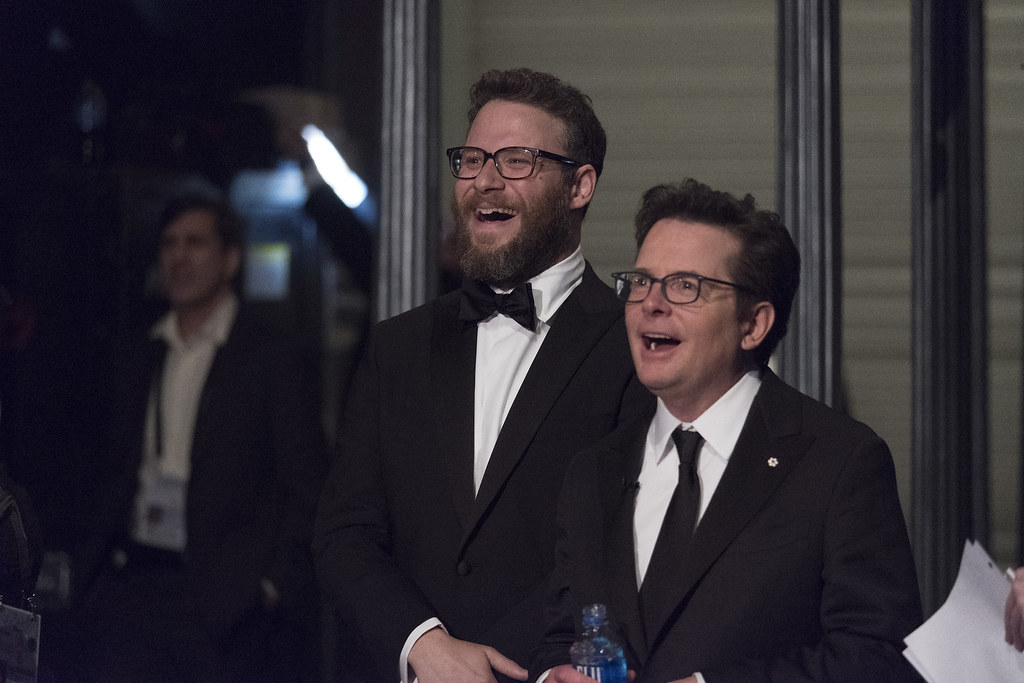
10. **Literary Contributions and Enduring Optimism**Alongside acting and advocacy, Michael J. Fox has made an indelible mark through prolific literary contributions, sharing his personal journey and unique perspective. He writes extensively about approaching life’s challenges, including Parkinson’s, with unwavering optimism and humor, resonating widely and offering solace.
His autobiography, *Lucky Man*, became a *New York Times* number one bestseller, an honest account of his life, diagnosis, and evolving relationship with Parkinson’s. It cemented his role as a compelling storyteller and articulate voice for purposeful living.
He authored three more best-sellers: *Always Looking Up* (Grammy Award for Best Spoken Word Album, 2010), *A Funny Thing Happened on the Way to the Future*, and *No Time Like the Future*. These works explore hope, perseverance, and refining his philosophy of acceptance, articulated as: “acceptance doesn’t mean resignation. It means understanding and dealing straightforwardly.”
This philosophy underpins his approach to life with Parkinson’s, showing that acknowledging reality fuels constructive action and optimism. His clarity enriches readers and provides insights into living with chronic illness. His literary journey continues with *Future Boy*, his fifth book, due fall 2025.
Read more about: The Haunting Echoes: Unveiling the Final Written Words of Beloved Celebrities

11. **Humanitarian Awards and Global Recognition**Beyond entertainment and medical research, Michael J. Fox has received numerous humanitarian awards, a testament to his extraordinary societal contributions. These accolades confirm a legacy transcending celebrity, recognizing him as a global figure dedicated to improving lives, especially for those affected by Parkinson’s.
A pinnacle came on January 4, 2025, when Michael was awarded the Presidential Medal of Freedom, the nation’s highest civilian honor. This award recognizes exemplary contributions to prosperity, values, or security, powerfully acknowledging his unwavering advocacy and transformative work in Parkinson’s research.
His global influence is clear: *Time Magazine* included him in its 2024 list of 100 people transforming the world. He holds honorary degrees from prestigious institutions like The Karolinska Institute and New York University. He was also named *GQ Man of the Year* in 2000 and an Officer of the Order of Canada in 2010.
In fall 2022, the Academy of Motion Picture Arts and Sciences presented him with an honorary Oscar, the Jean Hersholt Humanitarian Award, for his humanitarian efforts within film. Combined with lifetime achievement awards for acting, his career has amassed 18 Emmy nominations (five wins), four Golden Globes, one Grammy, two SAG Awards, and a People’s Choice Award, celebrating artistic brilliance and profound compassion.
Read more about: Bye, Bye Tinseltown: 13 Famous Faces Who Traded Hollywood’s Glitz for a Totally Different Life

12. **The Michael J. Fox Foundation’s Continued Impact and Legacy**Decades after his diagnosis, Michael J. Fox tirelessly pursues a Parkinson’s cure. The Michael J. Fox Foundation remains a commanding voice in scientific philanthropy, galvanizing research. Its aggressive funding model makes it the world’s largest nonprofit funder of Parkinson’s research, a testament to Fox’s enduring commitment and vision.
The foundation’s impact is tangible. It has raised over $2.5 billion, invested in research advancing treatments and a cure. A significant breakthrough occurred in April: a study, partially using Foundation data, identified a Parkinson’s biomarker, potentially leading to the first diagnostic lab test and predictive capabilities. As Fox noted, “This is, this changes everything,” highlighting future potential for treatment.
Fox’s life and journey were chronicled in the 2023 documentary *Still: A Michael J. Fox Movie*. This critically acclaimed, Emmy-winning film offered an intimate retrospective of his handling a life-changing disease, showcasing his struggles, humor, and relentless pursuit of a cure, solidifying his image as an “incurable optimist.”
Michael J. Fox’s legacy is profound: shifting chronic illness narratives from fear and silence to hope, proactive advocacy, and scientific pursuit. His story of resilience, humor, and belief in progress has inspired millions. Living with Parkinson’s for over 30 years, he has defied expectations, proving that purpose, growth, and optimism are possible even amidst overwhelming challenges, impacting entertainment, medical research, and public perception of disability.
Read more about: Unraveling the Enigma: Michael J. Fox, Parkinson’s, and the Intricate Dance of Genetics and Environment
As Michael J. Fox continues his tireless work, striving for a future where Parkinson’s disease is no longer a lifelong sentence, his influence reverberates across generations. He remains an emblem of strength and perseverance, a true rock star not just of Hollywood, but of humanitarian endeavors. His journey stands as a powerful testament to the human spirit’s capacity to transform personal adversity into a universal mission of hope, leaving an enduring legacy that will continue to inspire for decades to come.