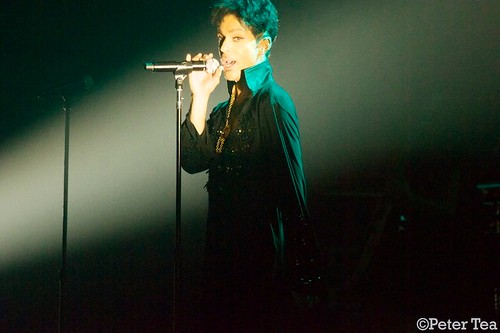
The name Prince evokes so much – an explosion of purple, a guitar wail that pierced through the air, and an undeniable aura of pure, unadulterated talent that few artists could ever hope to match. He was a force of nature, a musical polymath who dared to be different, and whose influence continues to resonate deeply within the realms of music, fashion, and pop culture.
But beyond the legendary performances and the iconic flamboyant, androgynous persona, lay a story of relentless creativity, fierce independence, and an artist who continuously pushed boundaries, musically and personally. His journey wasn’t just about topping charts; it was about reimagining what was possible, blending genres, challenging norms, and always, always staying true to his unique vision. He became known for his wide vocal range—which included a far-reaching falsetto—and high-pitched screams, as well as his skill as a multi-instrumentalist, often preferring to play all or most of the instruments on his recordings.
We’re diving deep into the defining moments of Prince Rogers Nelson’s extraordinary life and career, tracing his path from a gifted kid in Minneapolis to a global superstar who redefined pop culture. Get ready to explore the pivotal chapters that shaped the artist we still adore, starting from his earliest days and through the unforgettable era of ‘Purple Rain.’
1. **Early Life & Musical Awakening: The Seeds of Genius in Minneapolis**Prince Rogers Nelson entered the world in Minneapolis on June 7, 1958, born to jazz singer Mattie Della and pianist/songwriter John Lewis Nelson. Music was in his blood, as his parents performed together in a jazz group called the Prince Rogers Trio, a namesake that would later become synonymous with musical genius. This early exposure to music undoubtedly planted the seeds for his future.
Despite being named after his father’s stage persona, Prince wasn’t always fond of his given name, preferring to be called “Skipper” during his childhood—a testament to his early inclination towards forging his own identity. He also revealed a challenging start, stating he was “born epileptic” and experienced seizures as a child, which he believed he overcame through a spiritual experience, telling his mother an angel had told him he wouldn’t be sick anymore.
His younger sister, Tyka, born in 1960, also developed a keen interest in music, fostering an environment where artistic expression was encouraged by their father. It was on his father’s piano, at the tender age of seven, that Prince wrote his very first song, a track he called “Funk Machine,” hinting at the genre-bending innovator he would become. This early creative spark was a clear indicator of the prodigious talent simmering within him.
Life took a turn when his parents divorced when he was 10. He experienced a somewhat fraught relationship with his stepfather, Hayward Baker, which led to him frequently switching homes, living with both his mother and father at different times. However, Baker did introduce him to the electrifying experience of a James Brown concert, an event Prince later credited with profoundly influencing his artistic direction.
After a period of living with his father, who bought him his first guitar, Prince eventually moved into the basement of the Anderson family, neighbors who would become a vital support system. Here, he befriended Andre Anderson, who would later be known as André Cymone, a crucial collaborator in his early career. Prince also pursued classical ballet training at the Minnesota Dance Theatre, showcasing a multidisciplinary artistic drive from a young age, later becoming an advocate for dancers and using his wealth to save the Joffrey Ballet in Chicago during the 1990s. He even helped test the original ‘The Oregon Trail’ video game while attending Bryant Junior High.
2. **Forging His Path: Early Recordings and the Groundbreaking Warner Bros. Deal**The mid-1970s saw Prince begin to transform his raw talent into tangible musical output. In 1975, he contributed guitar tracks and co-wrote the song “Just Another Sucker” for the band 94 East, formed by his cousin Shauntel’s husband, Pepe Willie, alongside Marcy Ingvoldstad and Kristie Lazenberry. This early collaboration resulted in tracks that would eventually form the album ‘Minneapolis Genius – The Historic 1977 Recordings,’ providing a glimpse into his burgeoning skill.
After graduating from Central High School in 1976, Prince created a demo tape with producer Chris Moon, a critical step towards realizing his professional ambitions. When securing a recording contract proved elusive initially, Moon brought the tape to Minneapolis businessman Owen Husney. Husney, recognizing Prince’s immense potential, signed the then 19-year-old artist to a management contract and helped him create a polished demo at Sound 80 Studios.
The quality of this demo, coupled with a compelling press kit crafted by Husney’s ad agency, sparked significant interest from major record labels, including Warner Bros. Records, A&M Records, and Columbia Records. This competitive landscape ultimately led to Prince signing a landmark recording contract with Warner Bros. in 1977, a deal that, crucially, granted him creative control for three albums and allowed him to retain his publishing rights.
Prince and Husney then relocated to Sausalito, California, where Prince’s debut album, ‘For You,’ was meticulously recorded at Record Plant Studios. The album, released on April 7, 1978, was a monumental personal achievement; according to its liner notes, Prince wrote, produced, arranged, composed, and played all 27 instruments on the recording, with the sole exception of the lyrics for “Soft and Wet,” co-written by Chris Moon. The endeavor, costing twice his initial advance, showcased his unparalleled commitment to his artistic vision.
‘For You’ quickly yielded chart success, with “Soft and Wet” reaching No. 12 on the Hot Soul Singles chart and No. 92 on the Billboard Hot 100, while “Just as Long as We’re Together” hit No. 91 on the Hot Soul Singles chart. During this period, Prince also explored nurturing other talents, attempting to mentor teenage singer Sue Ann Carwell after being impressed by her performance on the Minneapolis R&B scene. Although a projected 1978 album with her went unreleased due to Carwell resisting his suggestion of using the name “Susie Stone,” it highlighted Prince’s early aspirations beyond his own performing career.
3. **Building a Band and Breaking Through: *Prince* and *Dirty Mind***With his debut album under his belt, Prince swiftly moved to assemble a live band to bring his vibrant sound to the stage. In 1979, he formed a dynamic ensemble featuring André Cymone on bass, Dez Dickerson on guitar, Gayle Chapman and Doctor Fink on keyboards, and Bobby Z. on drums. Their inaugural performance took place at the Capri Theater on January 5, 1979, an important step in solidifying his stage presence and musical identity, though Warner Bros. executives felt they needed more development time.
Later that year, in October 1979, Prince released his self-titled second album, ‘Prince,’ which rapidly climbed the charts, hitting No. 4 on the Billboard Top R&B/Black Albums charts and No. 22 on the Billboard 200, ultimately achieving platinum status. The album cemented his commercial appeal, yielding two significant R&B hits: “Why You Wanna Treat Me So Bad?” and “I Wanna Be Your Lover.” The latter track was a massive success, selling over a million copies and peaking at No. 11 on the Billboard Hot 100, alongside a two-week reign at No. 1 on the Hot Soul Singles chart. These songs were prominently showcased during his performance on ‘American Bandstand’ in January 1980.
The year 1980 brought forth ‘Dirty Mind,’ an album that marked a daring shift towards more ually explicit material, including provocative tracks like the title song, “Head,” and “Sister.” Music critic Stephen Thomas Erlewine aptly described it as a “stunning, audacious amalgam of funk, new wave, R&B, and pop, fueled by grinningly salacious sex and the desire to shock.” Recorded in Prince’s own studio, ‘Dirty Mind’ was certified gold, and its single “Uptown” reached No. 5 on both the Billboard Dance chart and the Hot Soul Singles chart. His rising profile even landed him an opening slot on Rick James’ 1980 ‘Fire It Up’ tour.
Prince continued to push boundaries and gain visibility. In February 1981, he made his memorable debut on ‘Saturday Night Live,’ performing “Partyup.” The album ‘Controversy’ followed in October 1981, and to support it, Prince opened for the Rolling Stones on their US tour. This period, however, wasn’t without its challenges; during a Los Angeles show, Prince, performing in a trench coat and black bikini briefs, was unfortunately forced off stage after just three songs due to audience members throwing trash at him, highlighting the resistance some audiences had to his boundary-pushing image.
‘Controversy’ also marked the genesis of Prince’s distinctive use of abbreviated spelling, such as ‘U’ for you, ‘2’ for to, and ‘4’ for for, a stylistic choice that would become a hallmark of his artistry and branding for decades. During this fertile creative period, Prince also branched out by forming a side project band, The Time, in 1981. He often wrote and performed most of the instrumentation and backing vocals for their albums, sometimes under pseudonyms like “Jamie Starr” or “The Starr Company,” with Morris Day taking on lead vocals.
4. **The Ascent to Stardom: *1999* and the MTV Breakthrough**In late 1982, Prince solidified his burgeoning superstardom with the release of the iconic double album, ‘1999,’ which went on to sell more than four million copies. This album wasn’t just a commercial success; it was a cultural touchstone that perfectly captured the anxieties and exuberance of its era. The title track, a potent protest against nuclear proliferation, resonated globally, becoming Prince’s first top 10 hit in countries beyond the United States, showcasing his ability to blend social commentary with irresistible pop hooks.
One of the album’s most pivotal contributions was the single “Little Red Corvette.” Its accompanying music video became one of the first two by Black artists (alongside Michael Jackson’s “Billie Jean”) to be played in heavy rotation on MTV. This was a groundbreaking moment, as MTV had previously been perceived as resistant to “black music,” and it took a threat from CBS President Walter Yetnikoff to pull all CBS videos for the channel to change its programming policy. This landmark achievement also intensified the competitive rivalry between Prince and Michael Jackson, a dynamic that would persist for many years.
Beyond its historical significance, ‘1999’ continued to generate hits, with “Delirious” also placing in the top ten on the Billboard Hot 100 chart. The album’s sophisticated songwriting and innovative production garnered critical acclaim, and the track “International Lover” earned Prince his very first Grammy Award nomination at the 26th Annual Grammy Awards, recognizing his exceptional talent and burgeoning influence within the music industry.
This period also saw the subtle introduction of his backing band, The Revolution, whose name was cleverly printed, in reverse, inside the letter “I” of the word “Prince” on the album cover of ‘1999.’ The band, featuring Lisa Coleman and Doctor Fink on keyboards, Bobby Z. on drums, Brown Mark on bass, and Dez Dickerson on guitar, alongside backing singer Jill Jones, was initially used sparingly in the studio. However, their role gradually expanded throughout 1983, setting the stage for the collective brilliance that would soon define an entire era.
Read more about: Prince Rogers Nelson: The Architect of Sound – A Comprehensive Journey Through the Life and Enduring Legacy of a Musical Icon
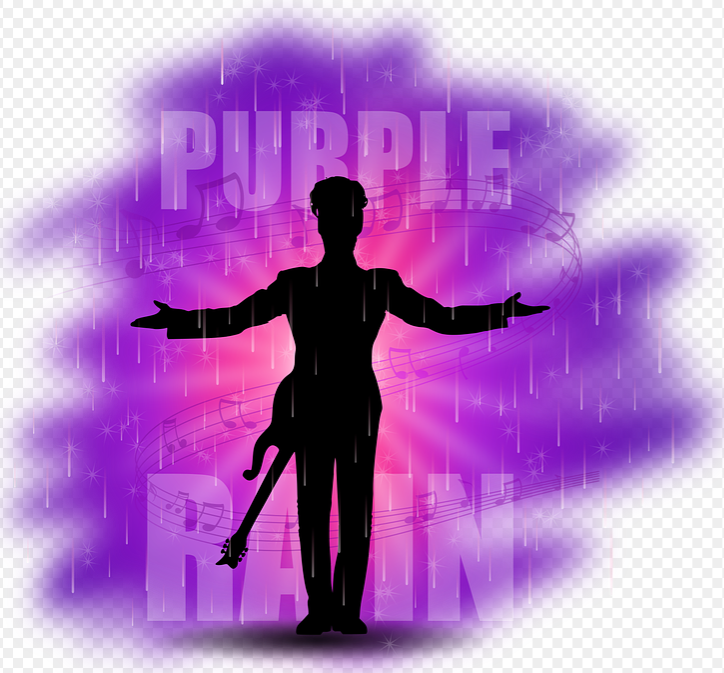
5. **The Purple Reign Begins: *Purple Rain* Album and Film**The mid-1980s heralded Prince’s definitive arrival as a global icon with the monumental success of ‘Purple Rain.’ According to his former manager Bob Cavallo, in the early 1980s, Prince adamantly required his management to secure a deal for him to star in a major motion picture, even though his mainstream exposure at that point was primarily limited to pop and R&B hits, music videos, and occasional TV appearances. This audacious ambition led directly to the hit film ‘Purple Rain’ in 1984.
Starring Prince himself, the film was loosely autobiographical and became an instant classic. Its eponymous studio album served as the soundtrack and proved to be an even greater phenomenon. The ‘Purple Rain’ album was a commercial juggernaut, selling more than 13 million copies in the US alone and dominating the charts by spending an incredible 24 consecutive weeks at No. 1 on the Billboard 200 chart. It was a cultural touchstone that defined an entire generation, celebrated for its raw energy and emotional depth.
The film itself was a critical and commercial triumph, earning Prince an Academy Award for Best Original Song Score—a rare feat for a musician. It grossed over $68 million in the US, contributing significantly to its cultural impact, and has been consistently regarded as one of the greatest musical films of all time. The blend of music, narrative, and Prince’s charismatic performance captivated audiences worldwide.
Songs from the film quickly became international hits, dominating pop charts globally. “When Doves Cry” and “Let’s Go Crazy” both soared to No. 1 on the Billboard Hot 100, while the powerful title track, “Purple Rain,” reached No. 2. In an unprecedented achievement in 1984, Prince simultaneously held the No. 1 album, single, and film in the US, becoming the first singer to ever achieve such a feat. This unparalleled success cemented his status as a singular force in entertainment.
The ‘Purple Rain’ album’s critical acclaim matched its commercial prowess, being ranked 8th in *Rolling Stone’s* “500 Greatest Albums of All Time” and included on *Time* magazine’s list of All-Time 100 Albums. It also garnered two of Prince’s first three Grammy Awards at the 27th Annual Grammy Awards: Best Rock Performance by a Duo or Group with Vocal and Best Score Soundtrack for Visual Media, underscoring its profound artistic and commercial significance.
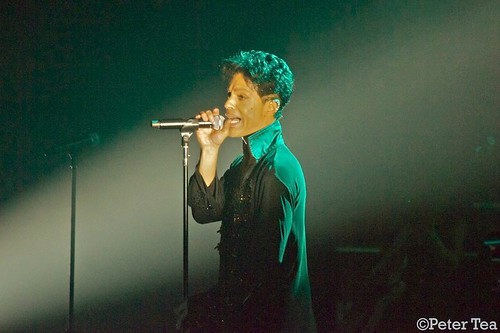
6. **Artistic and Cultural Impact: “Darling Nikki” and Andy Warhol**Prince’s impact during the ‘Purple Rain’ era extended far beyond album and box office sales; he became a central figure in cultural conversations and even a muse for iconic artists. His song “Darling Nikki,” featured on the ‘Purple Rain’ soundtrack, gained widespread notoriety for its ually explicit lyrics and a direct reference to masturbation. This particular track caught the attention of Tipper Gore, wife of then-Senator Al Gore, when her 11-year-old daughter Karenna was listening to it.
The controversy surrounding “Darling Nikki” directly led Tipper Gore to co-found the Parents Music Resource Center (PMRC), a lobbying group that advocated for the mandatory use of warning labels on records deemed to contain language or lyrical content unsuitable for minors. The recording industry later voluntarily complied with this request, leading to the ubiquitous “Parental Advisory: Explicit Lyrics” labels that became a fixture on album covers, a lasting legacy of Prince’s provocative artistry.
Beyond challenging social norms, Prince also became a fascinating subject for the art world. In 1984, the renowned pop artist Andy Warhol created the painting “Orange Prince.” Warhol was captivated by Prince’s unique persona and ultimately produced a total of twelve unique paintings of him in different colorways, all of which he kept in his personal collection. Today, four of these compelling portraits are housed in the collection of The Andy Warhol Museum in Pittsburgh, a testament to Prince’s visual magnetism.
In November 1984, *Vanity Fair* magazine published Warhol’s portrait to accompany an article titled “Purple Fame” by Tristan Fox. The article highlighted how Warhol’s silkscreen image, with its vibrant pop colors, perfectly captured the recording artist “at the height of his powers.” This *Vanity Fair* piece was one of the first global media features written as a critical appreciation of the musician, perfectly coinciding with the launch of the massive 98-date ‘Purple Rain Tour,’ solidifying his place as both a musical and cultural phenomenon.
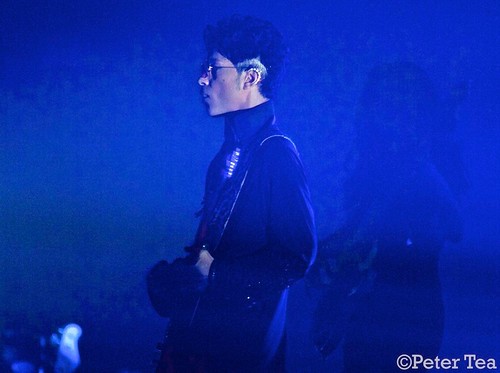
7. **Post-Purple Rain Evolutions: *Around the World in a Day* and *Parade***Following the unprecedented success of ‘Purple Rain,’ Prince, ever the unpredictable artist, made a surprising announcement in 1985: he would discontinue live performances and music videos after the release of his next album. This declaration, coming at the peak of his commercial popularity, was a testament to his independent spirit and his desire to constantly evolve rather than repeat past successes. True to his word, his subsequent recording, ‘Around the World in a Day’ (1985), quickly followed the ‘Purple Rain’ phenomenon.
‘Around the World in a Day’ proved that Prince’s creative momentum was unstoppable, holding the No. 1 spot on the Billboard 200 for three weeks. The album yielded significant singles, with “Raspberry Beret” reaching an impressive No. 2 on the Billboard Hot 100, and “Pop Life” climbing to No. 7. These tracks demonstrated a continued adventurousness in his sound, further cementing his reputation as an artist unwilling to be pigeonholed.
In 1986, Prince continued his prolific output with the album ‘Parade,’ which reached No. 3 on the Billboard 200 and No. 2 on the R&B charts. The album’s lead single, “Kiss,” became an instant classic, with its iconic video choreographed by Louis Falco, and soared to No. 1 on the Billboard Hot 100. Interestingly, “Kiss” was originally written for a side project band named Mazarati, showcasing Prince’s generous spirit in sharing his creative genius with other artists.
That same year, Prince’s songwriting prowess was further highlighted when “Manic Monday,” a song he penned, was recorded by The Bangles and reached No. 2 on the Hot 100 chart, proving his ability to craft hits for himself and others. ‘Parade’ also served as the soundtrack for Prince’s second film, ‘Under the Cherry Moon’ (1986). Prince took on multiple roles, directing and starring in the movie, which also featured Kristin Scott Thomas. While the ‘Parade’ album went platinum and sold two million copies, the film itself received a far less enthusiastic reception, earning a Golden Raspberry Award for Worst Picture (tied with ‘Howard the Duck’), and Prince himself received Golden Raspberry Awards for Worst Director, Worst Actor, and Worst Original Song (for “Love or Money”).
Despite the initial critical panning, ‘Under the Cherry Moon’ has been re-evaluated by some critics after Prince’s passing, with some now declaring it a cult classic and drawing comparisons to films like ‘8½,’ ‘Casablanca,’ and ‘It Happened One Night,’ suggesting its artistic merit was perhaps ahead of its time. Following the film and album, Prince embarked on a series of live performances known as the ‘Hit n Run – Parade Tour.’ After the tour, a significant shake-up occurred: Prince disbanded The Revolution, firing Wendy & Lisa, and Brown Mark subsequently quit. Only keyboardist Doctor Fink remained, as Prince began recruiting new band members like Miko Weaver on guitar, Atlanta Bliss on trumpet, and Eric Leeds on saxophone, signaling yet another new chapter in his ever-evolving musical journey.
Following the dissolution of The Revolution, Prince, ever the musical chameleon, was already deep into new creative endeavors. He had been concurrently developing two distinct projects: the Revolution-infused ‘Dream Factory’ album and a solo venture titled ‘Camille.’ Both were brimming with fresh material, and ‘Dream Factory’ even saw significant input from band members like Wendy & Lisa, featuring their lead vocals for the first time on a band album. This era was a testament to Prince’s boundless energy and his inclination to constantly explore new artistic identities. It showed how he was always pushing not just his own boundaries, but also those of his collaborators.
With The Revolution officially dismissed, Prince decided to merge the best of both worlds, consolidating the material from these shelved albums, along with some brand-new tracks, into an ambitious triple-LP set he intended to title ‘Crystal Ball.’ This was pure Prince – dreaming big, creating prolifically, and aiming for an epic statement. However, Warner Bros. Records, perhaps wary of such a sprawling release, stepped in and insisted he condense his vision. It was a familiar tug-of-war between artistic freedom and commercial realities that would define much of his relationship with the label for years to come.
The result of this compromise was the iconic double album, ‘Sign o’ the Times,’ released on March 31, 1987. Despite the label’s intervention, the album was a monumental critical triumph, widely hailed as one of the greatest works of his career. It effortlessly blended funk, rock, and soul, delivering potent social commentary alongside his signature sensuality. The album’s lead single, the title track ‘Sign o’ the Times,’ became a top 3 hit, followed by other notable singles like ‘If I Was Your Girlfriend,’ ‘U Got the Look’ (a duet with Sheena Easton), and ‘I Could Never Take the Place of Your Man.’ This collection of songs further solidified his place as a visionary artist who wasn’t afraid to address the complexities of the world around him.
To promote this magnum opus, Prince assembled a new backing band, featuring a mix of holdovers like Doctor Fink and new talents such as bassist Levi Seacer Jr., keyboardist Boni Boyer, and the dynamic dancer/choreographer Cat Glover, alongside the powerhouse drummer Sheila E. This fresh lineup embarked on the successful ‘Sign o’ the Times Tour’ overseas, captivating audiences with its electrifying performances. Though Warner Bros. and Prince’s management hoped to bring the tour to the US to boost album sales, Prince, already focused on his next recording, opted for a filmed compromise. The resulting ‘Sign o’ the Times’ concert film, despite initially modest box-office returns, has since been recognized as a powerful document of his live artistry.
8. **From *The Black Album* to *Batman*: Shifting Sounds and Controversies**Just as ‘Sign o’ the Times’ showcased his expansive artistry, Prince’s next project took an unexpected, darker turn. Before the release of ‘Lovey,’ Prince had recorded ‘The Black Album,’ an intensely instrumental, funk- and R&B-themed record that also saw him experimenting with hip-hop on tracks like ‘Bob George’ and ‘Dead on It.’ This album, intended for a minimalist release with a plain black cover, was a stark contrast to his previous pop-leaning works. It was a raw, unfiltered expression, hinting at a grittier side of his musical genius.
However, in a move that would become legendary, Prince had a sudden spiritual epiphany after 500,000 copies of ‘The Black Album’ had already been pressed. Convinced the album was ‘evil,’ he ordered its immediate recall, making it one of the most famously unreleased albums in music history until Warner Bros. later issued it as a limited edition in 1994. This decision was a powerful demonstration of his profound spiritual conviction and his willingness to sacrifice commercial gain for his personal beliefs. It underscored his reputation as an artist who always marched to the beat of his own drum, even if it meant defying industry expectations.
Following this dramatic recall, Prince retreated to the studio, emerging just eight weeks later with ‘Lovey,’ released in May 1988. This album was presented as the spiritual antithesis to ‘The Black Album,’ embodying themes of love, spirituality, and positivity. Every track on ‘Lovesexy’ was a solo effort, with the exception of ‘Eye No,’ which featured his new backing band. The album reached No. 11 on the Billboard 200, and its lead single, the catchy ‘Alphabet St.,’ became a top 10 hit, selling 750,000 copies. While the subsequent ‘Lovesexy World Tour’ garnered critical acclaim and played to huge crowds, its elaborate and expensive sets meant it ultimately failed to turn a net profit, a testament to Prince’s unwavering commitment to grand artistic spectacle, regardless of the cost.
The year 1989 saw Prince’s versatile talents extend to unexpected collaborations and blockbuster soundtracks. He contributed significantly to Madonna’s album ‘Like a Prayer,’ co-writing and singing the duet ‘Love Song,’ and lending his unmistakable, uncredited electric guitar work to several other tracks, including the title song. This collaboration showcased his ability to elevate other artists’ work while maintaining his unique musical imprint. But perhaps the most high-profile project of this period was his involvement with Tim Burton’s ‘Batman’ film. Approached to record a few songs, Prince, being Prince, went into overdrive, producing an entire nine-track album for the soundtrack, which Warner Bros. released in June 1989. The album was a massive commercial success, peaking at No. 1 on the Billboard 200 and selling 4.3 million copies. Its lead single, ‘Batdance,’ topped both the Billboard Hot 100 and R&B charts, further cementing his pop cultural dominance. Though the deal required him to sign away all publishing rights to the songs on the album to Warner Bros., it was a powerful reminder of his ability to blend artistic integrity with mainstream appeal, even on his own terms.
9. **The New Power Generation and the ‘Love Symbol’ Era**As the 1990s dawned, Prince was once again ready for a fresh start, revamping his live band for the ‘back-to-basics’ Nude Tour in 1990. Out went some familiar faces, and in came new talent, including keyboardist Rosie Gaines, drummer Michael Bland, and the energetic dancing trio, the Game Boyz. This rejuvenated lineup brought a renewed vigor to his performances, as the European and Japanese legs of the tour proved to be a financial success with its greatest hits-packed setlist. It was clear that Prince was continually evolving, always seeking new dynamics to fuel his creative fire.
However, 1990 also saw the release of his fourth film, ‘Graffiti Bridge,’ and its accompanying album. Despite initial reluctance from Warner Bros., Prince’s assurances that it would be a spiritual sequel to ‘Purple Rain,’ coupled with the involvement of original members of The Time, convinced the studio to greenlight the project. While the album reached respectable chart positions and spawned hits like ‘Thieves in the Temple’ and ‘Round and Round’ (featuring a young Tevin Campbell), the film itself proved to be a box-office flop. Following this, the last remaining members of The Revolution, Miko Weaver and Doctor Fink, departed, signaling the complete end of one era and the imminent beginning of another.
In 1991, a truly new chapter began with the debut of Prince’s latest backing band, the New Power Generation. This iteration of his musical collective included Sonny T. on bass, Tommy Barbarella on keyboards, and the Hornheads brass section, alongside Levi Seacer (who shifted to guitar), Rosie Gaines, Michael Bland, and the Game Boyz. Their fresh sound and collaborative energy were immediately evident on the album ‘Diamonds and Pearls,’ released on October 1, 1991. The album was a commercial juggernaut, reaching No. 3 on the Billboard 200 and yielding four smash singles in the United States, including ‘Gett Off,’ the chart-topping ‘Cream’ (which became his fifth US No. 1 single), ‘Diamonds and Pearls,’ and ‘Money Don’t Matter 2 Night.’ It sold over two million copies in the US alone, proving that Prince’s creative genius, amplified by his new band, was as potent as ever.
The momentum continued into 1992, as Prince renewed his contract with Warner Bros. in what was reportedly a colossal $100 million deal, committing to release six more albums. That November, he released his 14th studio album, the second to feature the New Power Generation. This album, however, bore no traditional title, only an unpronounceable symbol on its cover—later copyrighted as ‘Love Symbol #2’ and explained as a fusion of the male and female gender symbols. While singles like ‘Sexy MF,’ ‘My Name Is Prince,’ and ‘7’ performed well, the album, later colloquially referred to as ‘Love Symbol,’ sold 2.8 million copies worldwide, falling short of the sky-high expectations set by its predecessor. This enigmatic shift was an early indicator of the deeper tensions brewing between Prince and his record label, as he sought to redefine his identity and artistic control.
Read more about: From A-Listers to Awkward Phases: 15 Unforgettable Photos of Celebrities Before They Hit the Big Time
10. **Breaking Free: Independent Spirit and the ‘Slave’ Era**By 1993, Prince’s simmering frustrations with Warner Bros. had reached a boiling point. The label’s refusal to release his vast backlog of music at a pace he desired felt creatively stifling. In a bold act of rebellion, Prince formally adopted the unpronounceable ‘Love Symbol’ as his stage name, declaring his independence from the corporate machinery that he felt was dictating his artistic output. This unprecedented move forced Warner Bros. to adapt, even resorting to mailing out floppy disks with a custom font so media outlets could print his new name. For years, he was widely known as ‘the Artist Formerly Known as Prince,’ a moniker that perfectly encapsulated his defiant spirit and his unwavering commitment to artistic autonomy.
Amidst this contractual strife, Warner Bros. released a comprehensive greatest hits compilation, ‘The Hits/The B-Sides,’ in 1993. This three-disc set was a treasure trove for fans, featuring the majority of his hit singles, alongside previously hard-to-find B-sides and even unreleased tracks like the Revolution-era ‘Power Fantastic’ and a live recording of ‘Nothing Compares 2 U’ with Rosie Gaines. New promotional singles, ‘Pink Cashmere’ and ‘Peach,’ were also included. It was a retrospective that reminded the world of his unparalleled catalog, even as his future with the label remained uncertain.
In 1994, Prince took another step towards independent distribution, releasing the single ‘The Most Beautiful Girl in the World’ through a small, independent distributor, Bellmark Records. This move proved wildly successful, with the song reaching No. 3 on the US Billboard Hot 100 and climbing to No. 1 in many other countries, demonstrating his enduring global appeal outside the traditional major-label framework. This taste of independence only fueled his desire to break free entirely from his Warner Bros. obligations, leading him to embark on a strategy of releasing albums in quick succession. He pushed for simultaneous releases of ‘Come’ and ‘The Gold Experience,’ but Warner Bros., fearing market saturation, delayed ‘The Gold Experience.’ This corporate decision was met with a powerful visual protest from Prince, who began making public appearances with the word ‘slave’ written on his face, a poignant commentary on his contractual bondage.
When ‘The Gold Experience’ finally saw the light of day in September 1995, it was met with critical acclaim, further underscoring the creative quality he maintained even during his most contentious period. Unfortunately, the album faced later distribution issues due to a plagiarism case related to ‘The Most Beautiful Girl in the World,’ though it has since been reissued on streaming platforms, CD, and vinyl. By 1996, Prince had delivered ‘Chaos and Disorder’ and submitted ‘The Vault: Old Friends 4 Sale’ (which would eventually be released in 1999), officially fulfilling his contractual obligations. With these releases, Warner Bros. finally agreed to release him from his contract, marking the end of a tumultuous but incredibly prolific chapter in his career.
11. **The *Emancipation* and Digital Frontiers: Reclaiming His Music**With the chains of his Warner Bros. contract finally broken, Prince immediately seized his newfound freedom to unleash a torrent of creativity. Later in 1996, he made a grand statement with ‘Emancipation,’ a sprawling 36-song, three-CD set, with each disc precisely 60 minutes long. Released through his own NPG Records with distribution through EMI, this album was a declaration of independence, both artistically and business-wise. For this monumental effort, Prince abandoned his long-standing publishing arrangement with Controversy Music – ASCAP, opting instead for Emancipated Music Inc., a clear signal of his complete artistic and financial autonomy. The album, a mix of original material and covers like Joan Osborne’s ‘One of Us’ and ‘I Can’t Make You Love Me,’ was a testament to his boundless energy and diverse influences, and it was rightfully certified Platinum by the RIAA, marking a triumphant return to form on his own terms.
This era also saw Prince diving into his legendary vault of unreleased material, a treasure trove rumored to contain hundreds, if not thousands, of songs. In 1998, he released ‘Crystal Ball,’ a five-CD collection intended to showcase some of this long-hidden music. However, its distribution proved to be a chaotic affair, frustrating many loyal fans who pre-ordered the album on his website up to a year in advance, only to see it appear in retail stores months before their own copies arrived. The retail edition itself was also slightly different, missing the ‘Kamasutra’ disc found in some versions. Despite these logistical hiccups, ‘Crystal Ball’ offered an unparalleled glimpse into the depth and breadth of his prodigious output.
Alongside ‘Crystal Ball,’ Prince continued his prolific streak, releasing the ‘Newpower Soul’ album just three months later. He also engaged in notable collaborations, contributing to Chaka Khan’s ‘Come 2 My House’ and Larry Graham’s ‘GCS2000,’ both released on the NPG label. These projects were actively promoted with live appearances on popular shows like ‘Vibe with Sinbad’ and the ‘NBC Today show’s Summer Concert Series, demonstrating his commitment to connecting with audiences across various platforms. By 1999, Prince was ready to engage with major labels once more, albeit on his own terms, signing with Arista Records to release ‘Rave Un2 the Joy Fantastic,’ signaling a strategic return to broader commercial distribution. The year culminated in the ‘Rave Un2 the Year 2000’ pay-per-view concert, a spectacular event showcasing footage from his 1999 tour, featuring an array of guest musicians like Lenny Kravitz and George Clinton, which was later released for home video. It was a fitting, celebratory end to a decade defined by radical transformations and fierce independence.
12. **Return to Prominence: *Musicology* and Hall of Fame Recognition**The new millennium brought with it a shift in Prince’s professional identity. On May 16, 2000, he officially retired the ‘Love Symbol’ as his stage name, reverting to his birth name, Prince. This change came after his publishing contract with Warner/Chappell expired, freeing him from the “undesirable relationships” he associated with the symbolic name. While he continued to incorporate the symbol as a logo and on his iconic guitars, this decision marked a personal and professional reclamation of his original identity. For several years, he innovatively leveraged his internet subscription service, NPGOnlineLtd.com (later NPGMusicClub.com), to release new music directly to his dedicated fanbase, including albums like ‘The Rainbow Children’ and ‘One Nite Alone…’. This pioneering approach demonstrated his foresight in navigating the evolving music industry.
While Prince was forging new paths, Warner Bros. released ‘The Very Best of Prince’ in 2001, a timely compilation that reminded the world of his immense commercial success throughout the 1980s. In 2002, he delivered his first live album, the three-CD ‘One Nite Alone… Live!,’ capturing the electric energy of his ‘One Nite Alone…Tour.’ During this period, Prince made concerted efforts to engage directly with his fanbase, fostering a vibrant community through the NPG Music Club, special pre-concert sound checks, and exclusive yearly “celebrations” at his legendary Paisley Park studios. Fans were invited into his creative sanctuary for tours, discussions, and music-listening sessions, deepening their connection to the artist and his craft.
February 2004 marked a powerful resurgence into the mainstream spotlight, as Prince delivered an unforgettable performance at the 46th Annual Grammy Awards alongside Beyoncé. Their electrifying medley of his hits like ‘Purple Rain’ and ‘Let’s Go Crazy’ intertwined with Beyoncé’s ‘Crazy in Love’ opened the show and instantly became one of the most talked-about Grammy moments. Just a month later, Prince received a well-deserved induction into the Rock and Roll Hall of Fame. Presented by Alicia Keys, Big Boi, and André 3000 of OutKast, the ceremony was highlighted by Prince’s own dynamic performances and a now-legendary two-minute guitar solo during a tribute to George Harrison’s ‘While My Guitar Gently Weeps,’ a moment that transcended the event itself and reaffirmed his status as a guitar god.
April 2004 saw the release of ‘Musicology,’ an album that signified a strategic return to traditional major-label distribution through a one-album agreement with Columbia. The album quickly climbed into the top five on international charts, including the US, UK, Germany, and Australia. Its US chart success was notably boosted by an innovative marketing strategy where CDs were included as part of concert ticket purchases, effectively counting each sale towards chart placement. This move was a game-changer for the industry and cemented ‘Musicology’s’ commercial triumph. That same year, *Spin* magazine boldly declared him the greatest frontman of all time, and *Rolling Stone* crowned him the highest-earning musician in the world, raking in an astounding $56.5 million annually, largely thanks to his ‘Musicology Tour,’ which Pollstar recognized as the top concert draw in the US. The album itself garnered two Grammy Awards: Best Male R&B Vocal Performance for ‘Call My Name’ and Best Traditional R&B Vocal Performance for the title track, proving that his artistic and commercial prowess were perfectly aligned once more.
13. **Super Bowl Spectacle and *3121*: Reigniting the Flame**Prince continued his artistic renaissance in 2005, lending his distinctive guitar talents (with En Vogue providing backing vocals) to Stevie Wonder’s single ‘So What the Fuss,’ Wonder’s first new music since 1999. This collaboration further highlighted his willingness to support and intertwine with other musical legends. By late 2005, Prince had inked a new deal with Universal Music, setting the stage for the release of his next studio album, ‘3121,’ on March 21, 2006. The album’s lead single, ‘Te Amo Corazón,’ featured a captivating music video directed by actress Salma Hayek and filmed in the exotic locales of Marrakech, Morocco, starring Argentine actress and singer Mía Maestro. The subsequent video for ‘Black Sweat’ even earned an MTV VMA nomination for Best Cinematography, showcasing Prince’s continued mastery of visual storytelling.
‘3121’ was an immediate triumph, giving Prince his first-ever No. 1 debut on the Billboard 200, a clear indication of his reinvigorated popularity and the anticipation surrounding his new music. However, it was his performance at the Super Bowl XLI halftime show in February 2007 that truly cemented his legendary status for a new generation. Despite torrential rain, Prince delivered one of the most iconic and electrifying halftime shows in history, famously performing ‘Purple Rain’ as the skies opened up. The performance captivated a record-breaking audience, and critics universally hailed it as one of the greatest Super Bowl halftime shows of all time. It was a moment of pure, unadulterated musical magic that transcended the sporting event itself, once again proving Prince’s unparalleled stage presence and showmanship.
That same year, Prince’s talents were recognized by the film industry when he was awarded a Golden Globe for Best Original Song for ‘The Song of the Heart,’ featured in the animated film ‘Happy Feet.’ The track also received a Grammy nomination, further underscoring his diverse artistic reach. To promote ‘3121,’ Prince opened the exclusive 3121 House, a private club in Los Angeles where he would perform weekly, creating an intimate yet exclusive experience for his fans. This was followed by a residency at the Rio All-Suite Hotel and Casino in Las Vegas, further solidifying his presence in the entertainment capital.
Prince continued to explore innovative distribution methods in the late 2000s, exemplified by his 2007 album ‘Planet Earth,’ which caused a stir by being distributed in the UK as a free covermount with *The Mail on Sunday* newspaper. This bold move led to controversy with traditional retailers but showcased his dedication to reaching audiences in new ways. He also released the critically acclaimed ‘Lotusflow3r’ in 2009, alongside ‘MPLSound’ and ‘Elixir’ (by his protégé Bria Valente), exclusively through Target and his website. ‘Lotusflow3r,’ a rich blend of rock, funk, and jazz, reached No. 2 on the US charts and No. 1 on the US R&B charts, proving that his genre-bending sound was as relevant as ever. In 2010, he continued this free distribution model with ’20Ten,’ provided with European newspapers, famously criticizing the internet as a ‘dead’ medium shortly after and shutting down his official website. This period was marked by an artist constantly experimenting, both with his sound and with how his art reached the world.
14. **A Legacy Etched in Purple: Final Years, Enduring Influence, and Untapped Vaults**Even in his later years, Prince’s creative output remained relentless, a testament to his unending passion for music. In 2011, he continued to mesmerize audiences with electrifying performances, including a standout show at Madison Square Garden. He embarked on various tours, including the ‘Live Out Loud’ tour with his new backing band 3RDEYEGIRL in 2013, a collaboration that brought a fierce rock edge to his sound and resulted in the critically acclaimed album ‘Plectrumelectrum.’ Their performance at the South by Southwest festival that year was a powerful reminder of his enduring vitality and ability to continually reinvent himself and his sound.
In 2014, in a surprising turn of events, Prince announced his return to Warner Bros. Records, the label he had famously battled for years. This reconciliation included plans to reissue expanded editions of classic albums like ‘Purple Rain’ and ‘1999,’ allowing a new generation to experience his foundational works. Demonstrating his ongoing prolificacy, he simultaneously released two new albums that year: ‘Art Official Age’ and ‘Plectrumelectrum’ with 3RDEYEGIRL. ‘Art Official Age’ quickly topped the US R&B charts and reached No. 5 on the Billboard 200, showcasing his continued commercial success and artistic relevance. That same year, his profound impact on music was recognized with the prestigious Billboard Icon Award, a fitting tribute to a career defined by innovation and boundary-pushing artistry.
Tragically, this vibrant chapter of his career was cut short. His final public performances were imbued with his characteristic energy, including a memorable appearance at ‘Saturday Night Live’s’ 40th anniversary party. His last official concert took place in Atlanta, though he had to postpone it due to illness, later making an emergency plane landing. Just days before his passing, he gave what would be his final public performance at his Paisley Park home, playfully showcasing a new guitar and piano, leaving fans with a lasting image of his dedication to his craft. Prince Rogers Nelson passed away on April 21, 2016, at the age of 57, due to an accidental fentanyl overdose at his Paisley Park home and recording studio in Chanhassen, Minnesota, leaving the world in shock and mourning.
Prince’s legacy is, simply put, colossal. During his lifetime, he released an astonishing 39 albums, a testament to his prolific genius. Yet, even that number only scratches the surface, as he famously left behind a vast array of unreleased material—including fully completed albums and over 50 finished music videos—stored in a custom-built bank vault beneath his Paisley Park home. His estate has since begun the monumental task of releasing numerous posthumous collections, allowing the world to continually discover new facets of his artistry. He sold over 100 million records worldwide, firmly placing him among the best-selling music artists of all time.
His trophy case gleams with accolades, including the Grammy President’s Merit Award, multiple American Music Awards, the Billboard Icon Award, an Academy Award, and a Golden Globe Award. Prince was deservedly inducted into the Rock and Roll Hall of Fame in 2004, the UK Music Hall of Fame in 2006, and the Rhythm and Blues Music Hall of Fame in 2016, with a double induction into the Black Music & Entertainment Walk of Fame in 2022. Estimates of the complete number of songs written by Prince range anywhere from 500 to well over 1,000, illustrating the sheer depth of his creative wellspring. He wasn’t just a musician; he was a phenomenon, an artist who fearlessly redefined genres, challenged norms, and inspired countless others to embrace their own unique voices. Prince’s music and his spirit continue to resonate, a vibrant, indelible mark on the tapestry of global culture, ensuring his purple reign will never truly end.