

Microsoft Corporation stands as an undisputed titan in the technology industry, a name that has become synonymous with the evolution of personal computing, productivity software, and, more recently, the expansive realms of cloud computing and artificial intelligence. From its humble beginnings in 1975 to its current stature as one of the most valuable public companies and brands globally, Microsoft’s journey provides a compelling narrative of continuous innovation, strategic market dominance, and remarkable adaptability. Consumers across the globe interact with its diverse suite of products and services daily, often without fully grasping the intricate history and complex corporate strategies that underpin these essential tools.
This comprehensive article, adopting the objective and consumer-centric style of Consumer Reports, aims to deliver an in-depth analysis of Microsoft’s transformative evolution. We will meticulously examine key historical milestones, pivotal strategic shifts, and the significant forces that have collectively shaped its trajectory from a software startup to a global technology conglomerate. Understanding this rich history is not merely an academic exercise; it is crucial for any discerning consumer or industry observer seeking to make informed decisions and comprehend the ever-changing landscape of modern technology.
Our exploration will commence with Microsoft’s foundational period, detailing its initial ascent to dominance in the operating system and office software markets. We will then trace the monumental financial impact of its initial public offering, scrutinize the early confrontations with antitrust regulators, and analyze its critical, rapid pivot towards embracing the internet. This section will also cover the significant leadership transitions that have occurred, providing a robust overview for understanding the bedrock upon which today’s Microsoft is built.

1. **Founding and Early Software Monopoly:**The genesis of Microsoft traces back to 1975, born from the shared vision of childhood friends Bill Gates and Paul Allen. Their initial entrepreneurial foray, Traf-O-Data, in 1972, involved selling a rudimentary computer for traffic data analysis, laying practical groundwork for their future ambitions in computing. This early venture cultivated their skills in developing specialized software solutions.
A pivotal moment arrived with the January 1975 issue of *Popular Electronics*, featuring the Altair 8800 microcomputer. Inspired, Allen proposed programming a BASIC interpreter for it. Gates, acting quickly, contacted MITS, claiming a working interpreter, which led to a critical demonstration. Their success in March 1975 with Altair BASIC directly spurred the official establishment of Microsoft on April 4, 1975, with Gates as CEO. Allen is credited with suggesting the name “Micro-Soft,” encapsulating their focus on micro-computer software.
Microsoft’s influence rapidly expanded, marked by its first international office in Japan in 1977 and a relocation to Bellevue, Washington, in 1979. A monumental shift occurred in 1980 when IBM contracted Microsoft for an operating system for its new Personal Computer. Microsoft acquired 86-DOS, rebranded it as MS-DOS, and crucially retained ownership. While IBM copyrighted its BIOS, Microsoft’s OS remained unrestricted, allowing it to become the preeminent PC operating systems vendor. This strategic maneuver cemented Microsoft’s early dominance, laying the foundation for a near-monopoly in the nascent personal computing market.
2. **The Dawn of Windows and Office:**Building on MS-DOS, Microsoft pursued a vision of graphical user interfaces. Windows 1.0, released on November 20, 1985, emerged as a graphical extension for MS-DOS, marking the company’s entry into visual computing. This development was concurrent with a joint OS/2 project with IBM, illustrating Microsoft’s multi-pronged approach to operating system development. Early diversification also included the Microsoft Mouse in 1983 and the establishment of Microsoft Press, signaling a broader engagement with the computing ecosystem.
A significant leap occurred on May 22, 1990, with Windows 3.0. This version showcased streamlined user interface graphics and enhanced protected mode capability for Intel 386 processors, profoundly improving the user experience. Its rapid commercial success underscored the public’s appetite for intuitive graphical environments, solidifying Microsoft’s position in the evolving operating system landscape and setting the stage for future Windows iterations.
Complementing its OS advancements, Microsoft introduced the Microsoft Office suite in 1990. This groundbreaking bundle integrated essential applications like Microsoft Word and Excel. The convenience of a unified productivity suite quickly made Office dominant, redefining efficiency for businesses and individual users. Concurrently, the development of Windows NT, released in 1993, introduced a modular kernel and a 32-bit API, simplifying application porting and further demonstrating Microsoft’s technical prowess. This dual dominance in both foundational operating systems and critical productivity software fundamentally shaped the personal computing experience for consumers.

3. **Initial Public Offering and Wealth Generation:**Microsoft’s corporate trajectory underwent a profound transformation with its initial public offering (IPO) on March 13, 1986, on the NASDAQ exchange, following its headquarters relocation to Redmond, Washington. This move from a private entity to a publicly traded corporation was a pivotal moment, ushering in a new era of growth and financial expansion for the burgeoning software giant.
The IPO proved to be an extraordinary financial success, significantly impacting its early employees. The subsequent surge in Microsoft’s share price created substantial wealth, turning an estimated three individuals into billionaires and approximately 12,000 employees into millionaires. This unprecedented wealth generation became a defining characteristic of Microsoft’s rapid ascent, highlighting the immense economic potential unlocked by groundbreaking technological innovation in the software sector.
This strategic financial maneuver not only rewarded early contributors but also empowered Microsoft with substantial capital for aggressive expansion. The ability to attract and retain top talent through lucrative stock options became a powerful competitive advantage. This financial strength enabled the company to invest heavily in research and development, pursue strategic acquisitions, and navigate the fiercely competitive technology landscape, firmly establishing its long-term market leadership and economic influence.
Read more about: Hal Lindsey: Unpacking the Enduring Legacy of the ‘Late Great Planet Earth’ Author at 95

4. **Early Antitrust Challenges:**Microsoft’s rapid market dominance inevitably attracted regulatory scrutiny, leading to a decade of legal challenges beginning in 1990. The Federal Trade Commission initiated an examination into potential collusion, particularly concerning Microsoft’s partnership with IBM. This marked the start of a period that would significantly influence Microsoft’s business practices and public image.
A central issue in these early investigations was Microsoft’s “per processor licenses,” which the Department of Justice’s Antitrust Division criticized in a July 1994 statement. This practice compelled Original Equipment Manufacturers (OEMs) to pay Microsoft a royalty for each computer sold with a specific microprocessor, regardless of whether a Microsoft operating system was included. Regulators argued this effectively acted as a “penalty, or tax, on the OEM’s use of a competing PC operating system.”
The Department of Justice noted that “Since 1988, Microsoft’s use of per processor licenses has increased,” highlighting a systemic behavior designed to entrench its market power. These licensing structures were seen as stifling competition by disincentivizing OEMs from supporting rival operating systems, raising serious concerns about fair market practices and consumer choice. These early antitrust battles served as a critical precursor to later, more extensive legal actions, forcing Microsoft to reassess its aggressive market strategies under intense governmental and public scrutiny.
5. **Navigating the “Internet Tidal Wave”:**The mid-1990s heralded the rise of the World Wide Web, a transformative force that Bill Gates termed an “Internet Tidal Wave” in a pivotal May 1995 memo. Recognizing the profound shift, Microsoft rapidly reoriented its product strategy, significantly expanding into computer networking and internet services. This decisive pivot distinguished Microsoft from many established companies that were slower to adapt.
Unlike competitors such as Borland, WordPerfect, and IBM, Microsoft moved with remarkable agility, quickly becoming a key player in the nascent web landscape. This responsiveness proved critical in securing market dominance in this new digital frontier. A cornerstone of this strategy was the launch of Windows 95 on August 24, 1995, featuring a completely new user interface and 32-bit compatibility. This operating system came bundled with MSN, an online service intended to compete with existing platforms like CompuServe and AOL.
Although Internet Explorer was not initially included with retail Windows 95, it was soon integrated into later packs and OEM releases. This aggressive bundling, supported by an “expensive introduction of a computer product,” as noted by *The New York Times*, swiftly propelled Windows 95 and Internet Explorer to widespread adoption. Furthermore, Microsoft diversified into new sectors, including a partnership with NBC to create MSNBC in 1996 and the development of Windows CE 1.0 for personal digital assistants, showcasing its ambition to extend its reach across the evolving technological landscape.
Read more about: Microsoft’s Enduring Legacy: A Comprehensive Look at Four Decades of Innovation, Dominance, and Transformation
6. **Leadership Transition and Renewed Legal Battles:**The new millennium brought significant changes to Microsoft’s executive leadership. On January 13, 2000, Bill Gates transitioned from his role as CEO, passing the reins to Steve Ballmer, a long-time associate and employee since 1980. Gates, however, remained influential, taking on the newly created position of Chief Software Architect to continue guiding the company’s technological vision. This marked a generational shift at the helm of the tech giant.
Despite the leadership change, Microsoft continued to face intense regulatory scrutiny. In October 1999, the company joined others in forming the Trusted Computing Platform Alliance, an initiative aimed at enhancing security. However, critics immediately voiced concerns, perceiving it as a mechanism to impose “indiscriminate restrictions over how consumers use software,” potentially securing computers “against its owner as well,” raising flags about digital rights management.
The legal challenges culminated dramatically on April 3, 2000, with a judgment in *United States v. Microsoft Corp.*, which famously labeled the company an “abusive monopoly.” This significant ruling led to a settlement with the U.S. Department of Justice in 2004, forcing Microsoft to adapt its business practices. Internationally, the European Union also initiated antitrust action in March 2004, imposing a €497 million ($613 million) fine and mandating special Windows XP versions without Windows Media Player, asserting that Microsoft had abused its OS dominance.
The European Union’s scrutiny persisted, leading to another substantial fine of €899 million ($1.4 billion) on February 27, 2008. This penalty was for Microsoft’s alleged non-compliance with the 2004 judgment, specifically for “unreasonable prices for key information about its workgroup and backoffice servers.” Microsoft, while claiming compliance, highlighted that “these fines are about the past issues that have been resolved,” underscoring the continuous regulatory pressure exerted on dominant technology corporations to ensure competitive markets and consumer choice.
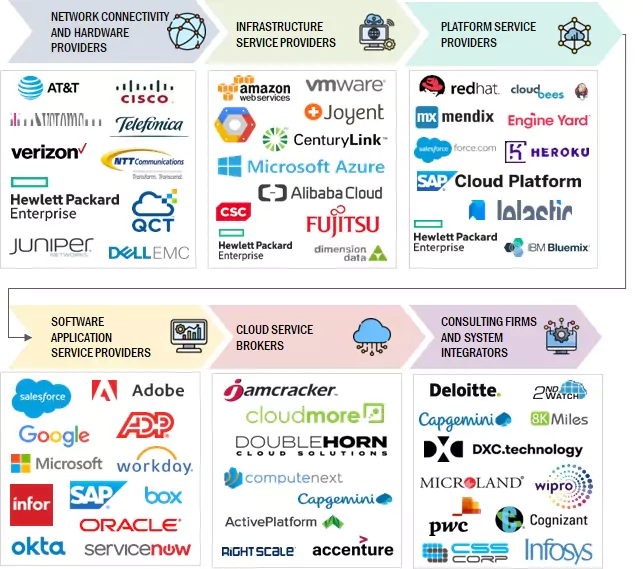
7. **Expansion into Hardware and Cloud Services: A New Frontier**Following a period of intense legal scrutiny and a significant leadership change, Microsoft began a strategic reorientation, venturing more deeply into hardware and laying the groundwork for its massive cloud computing ambitions. This period marked a crucial diversification, moving beyond its traditional software stronghold to encompass a broader ecosystem of products and services, reflecting a proactive approach to evolving technological landscapes.
In 2006, Microsoft introduced the Zune series of digital media players, succeeding its earlier Portable Media Center software platform. While the Zune ultimately did not achieve market dominance against competitors, it signaled a growing commitment to consumer electronics and in-house hardware development. By 2007, Microsoft had already established a strong presence in PC accessories, selling top-ranking wired keyboards, mice, and webcams in the United States, demonstrating its capability to produce successful physical products.
Further reinforcing its hardware aspirations, Microsoft launched the innovative Surface “digital table” in 2007, later renamed PixelSense. This groundbreaking product, a multi-touch surface computer, showcased the company’s vision for interactive computing environments. Concurrently, a more profound strategic shift was brewing: Microsoft’s entry into the burgeoning cloud computing market. This vision materialized with the launch of the Azure Services Platform on October 27, 2008, designed to provide cloud capabilities for Windows, a move that would prove foundational for its future growth and market leadership.
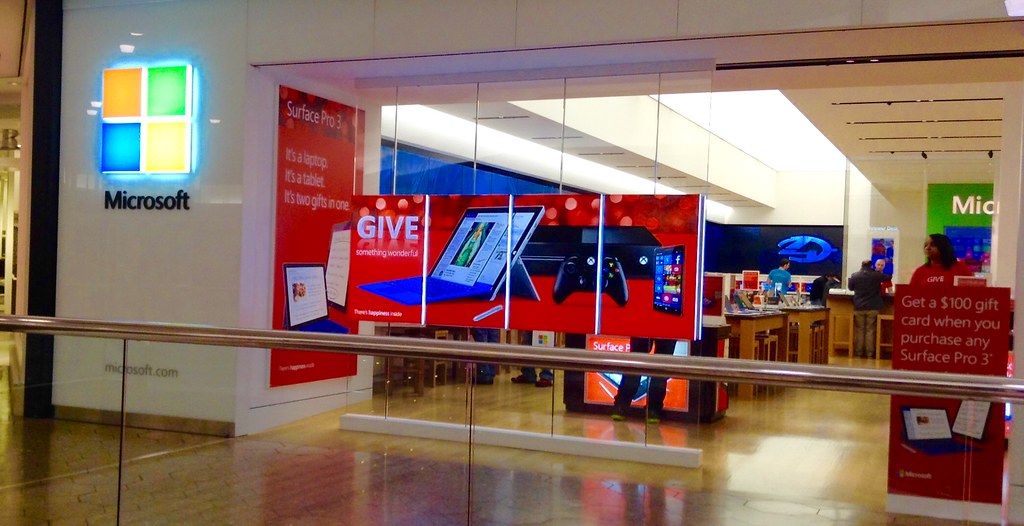
To better connect with consumers and showcase its expanding product portfolio, Microsoft also announced its intent to open a chain of Microsoft-branded retail stores in February 2009. The first Microsoft Store officially opened its doors in Scottsdale, Arizona, on October 22, 2009. This physical retail presence aimed to provide a direct channel for consumers to experience Microsoft’s hardware and software innovations, mirroring strategies employed by other major technology companies.

8. **Navigating the Mobile Challenge and Hardware Reinvention: The Surface and Xbox Eras**As the 2000s drew to a close and the smartphone industry rapidly accelerated, Microsoft encountered significant challenges in the fiercely competitive mobile operating system market. It lagged behind rivals such as Apple and Google-sponsored Android, prompting a comprehensive overhaul of its mobile strategy to regain relevance and secure its position in the rapidly digitizing world.
In 2010, Microsoft replaced its aging Windows Mobile with the entirely new Windows Phone OS, adopting a fresh user interface design language codenamed “Metro.” This minimalist approach, emphasizing simple shapes, typography, and iconography, aimed to offer a consistent and intuitive user experience across all devices running the OS. A pivotal alliance was forged with Nokia in 2011, working closely to co-develop Windows Phone, while also maintaining partnerships with long-time Windows Mobile OEM HTC.
Beyond mobile, Microsoft embarked on a significant hardware initiative in 2012, unveiling the Surface tablet. This marked a historic moment as it was the first computer in the company’s history to have its hardware made directly by Microsoft, signaling a new era of integrating hardware and software design. Windows 8, an operating system designed for both personal computers and tablet computers, was released in October 2012, alongside the Surface, embodying the company’s vision for a unified computing experience.
Further diversifying its hardware portfolio, Microsoft upgraded its Kinect motion-sensing input device for the 2013 release of the Xbox One video game console. The enhanced Kinect featured an ultra-wide 1080p camera, infrared sensor for dark environments, higher processing power, and the ability to detect fine movements and even a user’s heart rate. However, this period was not without its struggles; in July 2013, Microsoft’s stock suffered its largest one-day percentage sell-off since 2000 due to investor concerns over the poor showings of Windows 8 and the Surface tablet, resulting in a loss of over $32 billion.
In a major strategic move to solidify its mobile presence, Microsoft agreed to acquire Nokia’s mobile unit for $7 billion in September 2013, with the subsidiary later renamed Microsoft Mobile Oy. This acquisition underscored Microsoft’s determination to establish a stronger foothold in the mobile hardware space, despite the prevailing market challenges and financial setbacks experienced with its initial hardware ventures.
9. **Satya Nadella’s Ascension and Strategic Reorientation: Cloud First, Mobile First**A transformative era for Microsoft began on February 4, 2014, when Satya Nadella, formerly the head of Microsoft’s Cloud and Enterprise division, succeeded Steve Ballmer as CEO. This leadership change heralded a profound strategic reorientation, shifting the company’s primary focus towards “cloud first, mobile first,” a vision that would dramatically reshape Microsoft’s product portfolio, market strategy, and corporate culture. Bill Gates, while stepping down as chairman, remained an active technology advisor, providing continuity during this pivotal transition.
Under Nadella’s direction, Microsoft rapidly accelerated its investment and commitment to cloud computing, recognizing it as the central pillar for future growth. This emphasis was not merely rhetorical; it manifested in significant product development and strategic acquisitions. On September 15, 2014, Microsoft acquired Mojang, the creators of the hugely popular game Minecraft, for $2.5 billion, signaling an early move into expanding its content and user engagement platforms that would later integrate with its cloud and gaming strategies.
The year 2015 saw a major milestone with the release of Windows 10 on July 29, designed as a unified operating system across various devices, reflecting the “mobile first” part of Nadella’s vision, even as the company’s direct efforts in smartphone hardware faced difficulties. In Q1 2015, Microsoft was still the third-largest maker of mobile phones globally, selling 33 million units. However, only 8 million of these were Windows smartphones, highlighting the disparity in its mobile hardware market share compared to its overall phone shipments.
Despite the Windows 10 launch, the mobile-phone business continued to be a significant challenge. During the summer of 2015, Microsoft incurred a substantial loss of $7.6 billion related to its mobile-phone operations, necessitating the layoff of 7,800 employees. This painful restructuring underscored the company’s commitment to realigning its resources toward more promising growth areas, particularly cloud computing. A significant cultural shift under Nadella also involved embracing open source, famously demonstrated in November 2016 when Microsoft, previously a vocal critic, joined the Linux Foundation as a Platinum member, costing $500,000 annually, a move deemed unthinkable just a decade prior.
10. **Deepening Cloud and Open Source Commitment: Azure’s Ascendance and Collaborative Ecosystems**Building on the strategic shifts initiated under Satya Nadella, Microsoft continued to deepen its commitment to cloud computing and increasingly embraced open-source technologies, fundamentally transforming its relationship with developers and the broader tech community. This period saw the significant expansion of its Azure cloud platform and a series of high-profile open-source initiatives that redefined Microsoft’s image.
In June 2016, Microsoft announced Project named Microsoft Azure Information Protection, an initiative aimed at helping enterprises secure their data as it traversed between servers and various devices. This underscored the growing importance of enterprise security within the cloud ecosystem. The company further expanded its cloud offerings with Azure Government, partnering with 17 American intelligence agencies in May 2018 to develop specialized cloud computing products, demonstrating its reach into critical national infrastructure projects such as the Joint Enterprise Defense Infrastructure (JEDI) surveillance program.
Microsoft’s commitment to open source became unequivocally clear with several key actions. In January 2018, it released PowerShell Core 6.0 for macOS and Linux operating systems, a significant cross-platform expansion of a core Microsoft tool. This was followed by the announcement of Azure Sphere in April 2018, its own derivative of the Linux operating system, further solidifying its move into open-source software development. The acquisition of GitHub for $7.5 billion, officially announced on June 4, 2018, and closed in October, was perhaps the most symbolic embrace of the open-source community, integrating the world’s leading platform for software development into the Microsoft family.
Further demonstrating this paradigm shift, Microsoft joined the Open Invention Network community in October 2018, despite holding more than 60,000 patents, signifying a collaborative approach to intellectual property in the open-source realm. In December 2018, the company announced Project Mu, an open-source release of the UEFI core used in Microsoft Surface and Hyper-V products, promoting “Firmware as a Service.” Simultaneously, Microsoft announced the open-source implementation of Windows Forms and Windows Presentation Foundation (WPF), signaling greater transparency and community involvement in its core Windows desktop application frameworks.
11. **Massive Investments in AI and Gaming Expansion: Redefining Digital Entertainment and Intelligence**
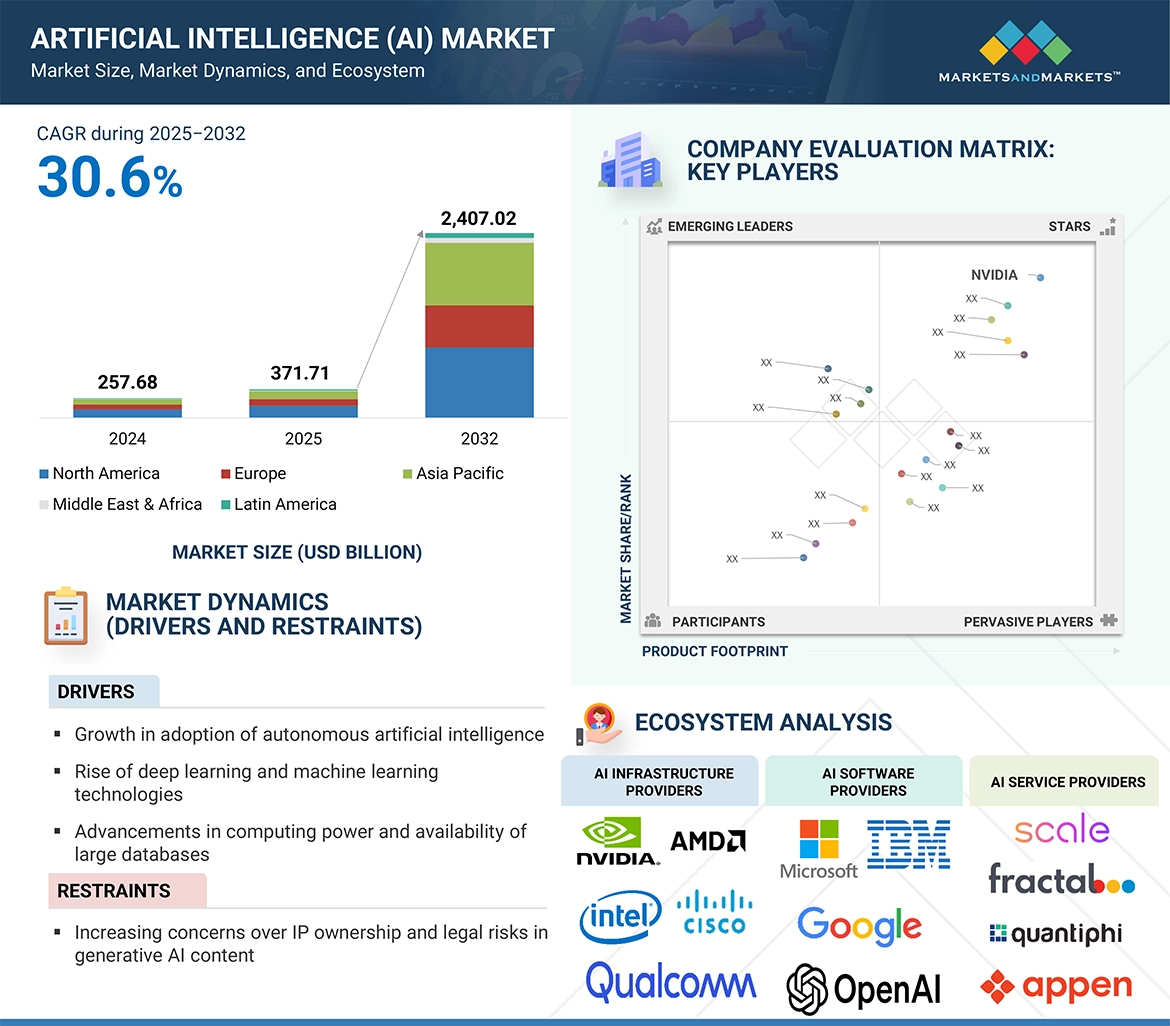
As the 2010s drew to a close and a new decade began, Microsoft embarked on an aggressive strategy of expansion into artificial intelligence and significantly bolstered its presence in the video gaming industry through a series of massive acquisitions and groundbreaking partnerships. These moves cemented its position as a diversified technology conglomerate with ambitious visions for the future of digital interaction and intelligence.
A landmark moment for Microsoft’s AI ambitions came on September 22, 2020, when it announced an exclusive license to use OpenAI’s GPT-3 artificial intelligence language generator. This partnership with a leading AI research organization granted Microsoft unparalleled access to advanced AI capabilities, which it subsequently began integrating across its product ecosystem. This move positioned Microsoft at the forefront of the generative AI revolution, promising innovative applications across various sectors.
In parallel, Microsoft made monumental strides in the gaming sector. On September 21, 2020, it announced its intent to acquire ZeniMax Media, the parent company of Bethesda Softworks, for approximately $7.5 billion, a deal finalized in March 2021. This brought popular franchises like *The Elder Scrolls* and *Fallout* under the Xbox Game Studios umbrella. Further solidifying its gaming commitment, the Xbox Series X and Xbox Series S video game consoles were released on November 10, 2020, marking the next generation of its flagship hardware.
The most significant gaming acquisition arrived on January 18, 2022, when Microsoft announced an all-cash deal worth $68.7 billion to acquire Activision Blizzard, known for iconic franchises such as *Call of Duty*, *Warcraft*, and *Candy Crush Saga*. This acquisition, finalized in October 2023, was touted by both companies as a move to benefit their businesses in the burgeoning metaverse, and it instantly established Microsoft as one of the largest gaming companies globally. Concurrently, Phil Spencer was named CEO of the newly established Microsoft Gaming division, overseeing all Xbox operations and the company’s vast portfolio of game publishers.
Beyond AI and gaming, Microsoft continued a spree of strategic acquisitions, including Affirmed Networks for $1.35 billion (2020), Nuance Communications for approximately $16 billion (2021), Takelessons (2021) to expand into online education, Clipchamp (2021) for video editing, and Ally.io (2021) for OKR measurement. These acquisitions showcased Microsoft’s multifaceted growth strategy, aiming to enhance its cloud offerings, productivity tools, and consumer services, ensuring broad market leadership.

12. **AI Dominance and Continued Market Leadership: A Vision for the Future**Microsoft’s strategic investments in cloud computing, gaming, and especially artificial intelligence have propelled the company to new heights of influence and market valuation in recent years. Under Satya Nadella, the company has not only embraced but actively driven the AI revolution, positioning itself as a central player in shaping the future of technology and maintaining its global leadership.
In January 2023, Microsoft announced a new multi-year, multi-billion dollar investment deal with ChatGPT developer OpenAI, deepening its strategic partnership and access to cutting-edge AI research. This collaboration has been instrumental in integrating advanced AI capabilities across Microsoft’s product suite, from Azure to its productivity applications. This commitment was further evidenced in June 2023 with the release of Azure Quantum Elements, a service leveraging AI, high-performance computing, and quantum computing for molecular simulations in computational chemistry and materials science, including Copilot, a GPT-4 based large language model tool for researchers.
Recognizing the critical need for specialized hardware to power its AI ambitions, Microsoft unveiled two custom-designed computing chips in November 2023: the Maia chip, specifically engineered to run large language models, and the Cobalt CPU, designed to power general cloud services on Azure. These in-house hardware developments underscore a comprehensive strategy to optimize performance and efficiency for its AI and cloud infrastructure, ensuring competitive advantages.
The company’s aggressive pursuit of AI talent and technology continued into 2024. Following a brief public saga involving OpenAI’s leadership, Microsoft announced that Inflection AI’s co-founders, Mustafa Suleyman and Karen Simonyan, would join Microsoft to start Microsoft AI, with Microsoft also acquiring nearly the entirety of Inflection’s 70-person workforce and licensing its technology for $650 million. This strategic acqui-hire further bolstered Microsoft’s internal AI capabilities and research efforts, solidifying its talent pool in this critical area.
Financially, Microsoft’s sustained innovation and strategic growth have yielded impressive results. In January 2024, the company became the most valued publicly traded company globally, a testament to its successful diversification and market execution. That same month, it announced a subscription offering of artificial intelligence for small businesses via Copilot Pro, making advanced AI accessible to a broader consumer base. International investments in AI and cloud infrastructure further underscore its global ambitions, including a $1.5 billion investment in Emirati AI firm G42 and a $1.7 billion plan for data centers and digital transformation in Indonesia, demonstrating Microsoft’s continued trajectory as a leading force in the technological world.
Read more about: Beyond the Name: Celebrating the Enduring Legacies of Remarkable Individuals Named Richard
Microsoft’s journey from a nascent software startup to a global technology behemoth is a testament to its relentless pursuit of innovation, strategic adaptability, and an unwavering commitment to shaping the digital future. Through its pivots from operating systems to cloud computing, its embrace of open source, and its monumental investments in artificial intelligence, Microsoft continues to redefine the boundaries of what technology can achieve. For consumers and businesses alike, understanding this dynamic evolution is not just an appreciation of history, but a crucial insight into the tools and platforms that will power our world for decades to come, ensuring informed choices in an ever-accelerating technological landscape.