In the gilded halls of Hollywood, where star power often translates into influence far beyond the silver screen, few figures have navigated the intricate dance between celebrity and politics with the calculated grace and undeniable impact of George Clooney. His journey from a beloved actor and director to a prominent political voice has been marked by both fervent advocacy and moments of profound personal reflection, particularly when the stakes of national elections demand an unwavering, often controversial, commitment. It is within this crucible of public expectation and partisan fervor that Clooney has repeatedly found himself at a crossroads, contemplating the very nature of his engagement.
Clooney’s political odyssey is not merely a series of endorsements or donations; it is a complex narrative of a public figure grappling with the weight of his platform, employing his considerable persuasive abilities to shape national discourse, and subsequently confronting the often-brutal blowback that accompanies such interventions. These are the chapters where the line between actor and activist blurs, and where the allure of a quieter life might beckon, even if momentarily. We delve into the critical junctures where Clooney’s political actions brought him closest to re-evaluating his public role, painting a vivid portrait of an ‘actorvist’ whose commitment to ideals has sometimes led him to the brink of stepping back from the political fray altogether.
Here, we meticulously chronicle the pivotal moments that have defined George Clooney’s intense engagement with the political landscape, exploring the profound impact of his words and actions, and the personal toll they have sometimes exacted, leading to his contemplation of a strategic retreat from the relentless scrutiny of the political spotlight.
1. Clooney’s Influential Call for Biden to Step Aside
Perhaps the most audacious and consequential of George Clooney’s recent political interventions was his searing op-ed in The New York Times, published in July, urging then-President Joe Biden to abandon his 2024 re-election bid. This was not a subtle nudge but a direct, unequivocal public declaration from a lifelong Democrat and a figure who wields significant influence within the party’s liberal wing, signaling a dramatic shift in the political landscape. The article, which swiftly became a lightning rod for debate, articulated a sentiment that many Democrats privately harbored but few dared to vocalize with such stark clarity.
Clooney’s piece landed like a bombshell, coming less than a month after he had successfully spearheaded a $30 million fundraiser for Biden’s re-election campaign. This timing added a layer of complexity and even audacity to his position, suggesting that his critique stemmed not from opposition to the party’s goals, but from a deep, albeit painful, conviction about the candidate’s electability. He asserted with blunt force, “We are not going to win in November with this president,” a statement that underscored the profound concerns many felt about Biden’s age and perceived stamina following a shaky presidential debate performance in June.
The actor’s willingness to publicly challenge the incumbent president, particularly one he had previously supported both financially and vocally, highlighted the extraordinary nature of the moment. It demonstrated Clooney’s belief that the stakes—specifically, the prevention of Donald Trump’s return to the White House—justified an unprecedented celebrity intervention. This move was a quintessential example of his “actorvist” persona, utilizing his fame not just to support, but to strategically guide and, if necessary, correct the course of his chosen political party.
The fallout from Clooney’s op-ed was immediate and widespread, significantly amplifying discussions around Biden’s candidacy and energizing calls for an alternative Democratic nominee. While some criticized the spectacle of a celebrity dictating party strategy, many within the Democratic establishment and media sphere listened. His intervention, according to commentators, had “the biggest impact on discussions around Biden’s candidacy,” solidifying his reputation as a “leading liberal” in Hollywood whose voice resonated far beyond the confines of entertainment.
2. The $30 Million Fundraiser for Biden
Long before his pivotal op-ed, George Clooney had already demonstrated his unwavering financial commitment to the Democratic Party, particularly through his substantial fundraising efforts for Joe Biden’s re-election campaign. In the weeks leading up to his controversial public challenge, Clooney co-hosted a fundraiser that successfully amassed an impressive $30 million for the president. This event was not merely a social gathering of Hollywood elite; it was a powerful display of the financial machinery that underpins modern political campaigns, meticulously orchestrated by one of its most charismatic figures.
The fundraiser underscored Clooney’s deep integration into the Democratic Party’s financial apparatus. His ability to draw such significant sums speaks volumes about his influence, not just as a public figure, but as a trusted and effective mobilizer of resources among high-net-worth individuals. These events are crucial lifelines for political campaigns, and Clooney’s consistent presence at their helm signifies a role far more substantial than that of a mere celebrity endorsement; he is a strategic partner in the party’s financial endeavors.
The stark contrast between his fundraising prowess and his subsequent public critique of Biden’s candidacy is particularly revealing. It suggests that Clooney’s actions are driven by a complex mix of loyalty to the Democratic cause and a pragmatic, even ruthless, assessment of political realities. His efforts to bolster Biden’s campaign financially were seemingly an attempt to ensure the party’s strength, even as he harbored serious doubts about the specific candidate leading it. This duality showcases a political engagement that prioritizes the overarching objectives of the party over uncritical allegiance to any single figure.
Such substantial financial contributions and organizational efforts are a testament to the considerable time and personal capital Clooney has invested in political outcomes. They are not fleeting gestures but sustained commitments that require significant personal involvement and a deep understanding of political strategy. The $30 million raised was not just money; it was a potent symbol of the power a celebrity can wield in shaping the destiny of a political movement, even if that power would soon be used in a way that shocked many.
3. Endorsement of Kamala Harris and the “Historic Quest”
Following President Biden’s decision to step aside from the 2024 presidential race, a move significantly influenced by widespread concerns echoed by figures like Clooney, the Hollywood star quickly pivoted his support to Vice President Kamala Harris, the Democratic presidential nominee. His endorsement was framed as a rallying cry behind Harris’s “historic quest,” signifying a crucial moment of consolidation within the party and a reaffirmation of his commitment to the Democratic platform, even as the candidate changed. This rapid shift underscored his pragmatic approach to political outcomes.
Clooney’s support for Harris was not immediate in the days following Biden’s withdrawal, as he reportedly felt that the Democrats should have “taken a step back” to weigh their options more thoroughly. This initial hesitation suggests a thoughtful, rather than reflexive, engagement with the political process, even amid a whirlwind of party maneuvering. Once Harris emerged as the clear successor, however, Clooney threw his considerable weight behind her, aiming to leverage his influence to unite the fractured Democratic base.
The endorsement also served as an opportunity for Clooney to praise Biden, thanking him for “saving Democracy” by conceding his place in the race. This narrative not only elevated Biden’s departure to an act of profound selflessness but also strategically smoothed over any lingering friction from Clooney’s earlier op-ed. By commending Biden, Clooney sought to present a united front, essential for galvanizing support around the new nominee, showcasing his adeptness at political messaging.
His public backing of Harris, a figure who represented the continuation of the Democratic agenda, cemented his role as a key influencer in the party’s most critical moments. It demonstrated that his earlier critique of Biden was not a rejection of the party but a strategic move to ensure its strongest possible candidate against an formidable opponent. Clooney’s endorsement of Harris was not just a celebrity seal of approval; it was a calculated step in a broader strategy to influence the electoral outcome, solidifying his position as a committed, if sometimes critical, Democratic stalwart.
4. The Scapegoat Narrative: Backlash Over Harris’s Loss
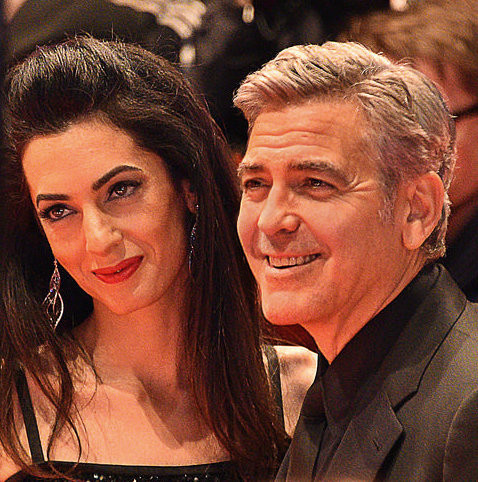
The aftermath of the 2024 election, which saw Donald Trump secure a stunning victory over Kamala Harris, brought an unexpected and deeply disheartening backlash for George Clooney. Suddenly, the celebrated actor found himself in the crosshairs of frustrated Democrats, who, in their search for answers and accountability, began to pin the blame for Harris’s loss on his influential role. This narrative, swiftly propagated across social media and certain media outlets, cast Clooney as a “scapegoat” in a furious blame game, a role he clearly resented.
Sources close to Clooney revealed his profound sense of injustice regarding these accusations. “George feels that the backlash he is getting for Kamala losing is not at all warranted,” an insider shared. “He thinks it is completely unfair to try and make him a scapegoat for her loss.” The intensity of this criticism highlights the double-edged sword of celebrity activism: while a powerful voice can shape opinion, it also becomes an easy target for blame when outcomes fall short of expectations. The sentiment was captured by comments like, “It’s all George Clooney’s fault!” and even a journalist humorously posting, “Thank you George Clooney,” implying sarcasm.
This period of intense scrutiny and public condemnation was particularly challenging for Clooney, who had invested “so much time and money” into the Democratic Party’s cause. The notion that his efforts, intended to bolster the party, could be twisted into a primary cause for its failure was profoundly disillusioning. It presented a stark contrast to his usual role as an admired advocate, forcing him to confront the harsh realities of political accountability and the often-unpredictable nature of public perception.
The experience of being singled out for blame after a significant political defeat undoubtedly prompted a period of introspection for Clooney. It raised fundamental questions about the efficacy and risks of such high-profile celebrity involvement in partisan politics. For someone accustomed to a certain level of respect and influence, the swift transformation into a convenient villain for the defeated left was a bitter pill, leading directly to his contemplation of a significant shift in his approach to political engagement.
5. Taking a “Step Back from Politics”
The stinging criticism and the designation as a “scapegoat” in the wake of Kamala Harris’s electoral defeat catalyzed a significant personal decision for George Clooney: to take a “step back from politics.” This declaration, revealed by insiders, marked a pivotal moment in his long-standing engagement with the political arena, suggesting a pause, if not a complete withdrawal, from the intensity of partisan campaigning. It was a direct response to the disheartening backlash and the perceived unfairness of being blamed for outcomes beyond his individual control.
“He has backed the Democratic Party and invested so much time and money into them, but he is going to take a step back for now. He feels very disheartened,” a source exclusively told DailyMail.com. This sentiment underscores the emotional toll that high-stakes political involvement can exact, even on a seasoned public figure like Clooney. The decision was not born of apathy but of disillusionment, a consequence of his genuine investment being met with unmerited opprobrium.
This strategic retreat implies a reconsideration of how Clooney will channel his political energies in the future. It suggests a potential shift away from direct, election-focused interventions and perhaps toward other forms of advocacy, or simply a period of less public, less scrutinized engagement. Such a move for a figure so deeply entrenched in the political conversation is significant, akin to a prominent athlete opting for a sabbatical after a particularly grueling season.
The phrase “take a step back” resonates with the theme of almost quitting the political aspects of his public life, reflecting a desire for distance from the immediate fray and its accompanying vitriol. It illustrates the limits of even immense celebrity influence when confronted with the unpredictable currents of electoral politics and the harsh realities of blame. This moment represents a profound shift in Clooney’s trajectory as an “actorvist,” prompting a re-evaluation of his methods and the boundaries of his public commitment to political causes.
6. The Taunting Offer to Donald Trump
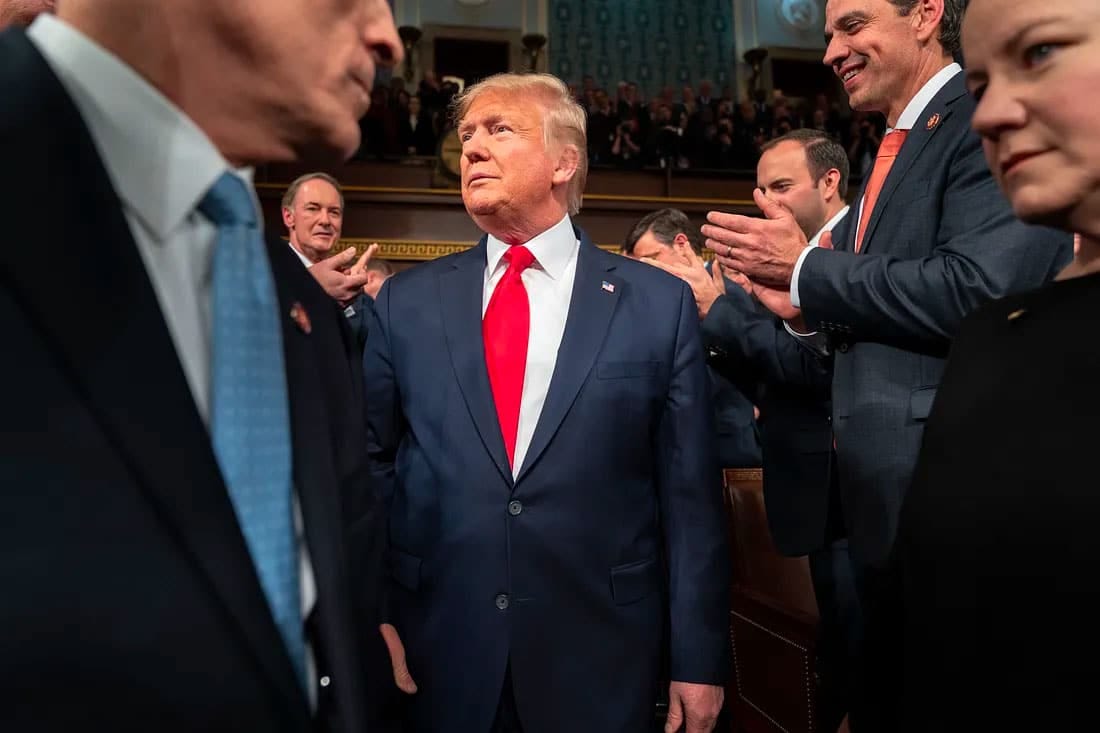
Amidst the introspection and the decision to “take a step back” from the political front lines, George Clooney’s inherent wit and showmanship resurfaced in a memorable exchange on Jimmy Kimmel Live! when he issued a taunting, yet revealing, offer to former President Donald Trump. After Trump had criticized Clooney in a Truth Social post, dismissing him as a “fake movie actor” who should “get out of politics and go back to television,” Clooney delivered a sharp retort that captivated audiences.
On the late-night show, Clooney responded to Trump’s jab with characteristic aplomb: “I will if he does,” he quipped, referring to Trump’s suggestion that he exit politics. “That’s a trade-off I’d do.” This playful yet pointed challenge not only underscored Clooney’s willingness to engage directly with his political adversaries but also highlighted his enduring presence in the political conversation, even as he considered a retreat from active campaigning. It showed that while he might step back, his voice would not be silenced.
Kimmel, seizing on the moment, even suggested that Clooney pen another essay urging Trump to drop his bid, playfully noting that it “worked once.” Clooney’s response, while light-hearted, reaffirmed his perspective on the gravitas of political action and the selflessness required at its highest echelons, sidestepping the direct challenge with grace. This public exchange demonstrated that even in moments of contemplating a broader retreat, Clooney’s instinct for sharp, politically charged banter remains undimmed, a part of his public persona that is inextricably linked to his political identity.
The incident, occurring within a period of reflection for Clooney, also served as a reminder that his political identity is not easily shed. Despite the desire for distance from the harsh realities of electoral defeat and blame, his celebrity status inevitably pulls him back into the political discourse. His witty offer to Trump was a momentary, yet potent, re-engagement, showcasing that even a “step back” might still involve periodic, strategic verbal sparring, maintaining his presence as an insightful, if exasperated, commentator on the American political scene.
7. Championing Biden’s “Selfless Act”
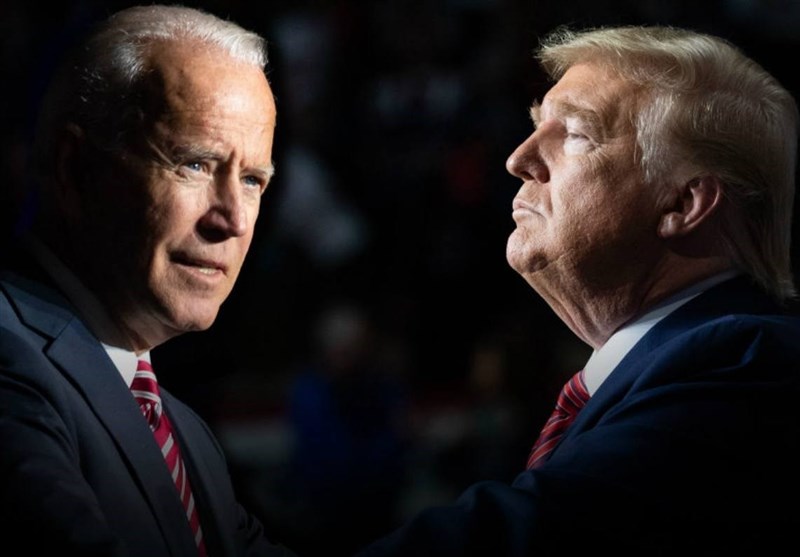
In the wake of President Joe Biden’s momentous decision to withdraw from the 2024 presidential race, a move that George Clooney had controversially advocated for in his New York Times op-ed, Clooney publicly championed Biden’s exit as an act of profound selflessness. This commentary, delivered at a Venice Film Festival press conference for his film *Wolfs*, was more than just a political observation; it was a characteristically eloquent framing of a challenging political transition, aimed at shaping the historical narrative.
“The person who should be applauded is the president who did the most selfless thing that anybody has done since George Washington,” Clooney declared. This comparison, drawing a direct line to America’s founding father, imbued Biden’s decision with immense historical weight and moral fortitude, elevating it beyond a mere political maneuver. Clooney emphasized, “All of the machinations that got us there, none of that’s going to be remembered, and it shouldn’t be.” This statement subtly minimized his own role in the sequence of events, shifting the focus entirely to Biden’s character.
He continued, highlighting the rarity and difficulty of such a concession: “What should be remembered is the selfless act of someone who did the hardest thing to do. It’s very hard to let go of power — we know that; we’ve seen it all around the world — and for someone to say, ‘I think there’s a better way forward,’ all the credit goes to him, and that’s really the truth.” This insightful commentary revealed Clooney’s understanding of the psychological complexities inherent in relinquishing power, particularly at the presidential level, presenting Biden’s actions as an exceptional display of democratic integrity.
Clooney reiterated a similar sentiment on Jimmy Kimmel Live!, further cementing his narrative. His focus on Biden’s selflessness, rather than his own influence, was a strategic and graceful way to navigate the political aftermath. It allowed him to reinforce the idea of a greater good guiding the Democratic Party’s direction, subtly justifying his prior intervention while ensuring that the departing president received due recognition for a difficult, yet ultimately unifying, decision. This demonstrated Clooney’s continued ability to craft compelling narratives even as he contemplates his own role in the political landscape.” , “_words_section1”: “1947
8. Clooney’s Anti-War Stances and Early Activism
Before he became a fixture in the highest echelons of Democratic fundraising and strategy, George Clooney’s political voice resonated loudly in a different, equally critical arena: anti-war activism. A defining moment arrived in 2003 when he vehemently spoke out against the US invasion of Iraq, delivering a stark critique of the then-President George W. Bush. His memorable comparison of the Bush administration to the fictional crime family in ‘The Sopranos’ not only captured headlines but also signaled the emergence of a formidable celebrity voice in the political discourse.
This early and outspoken stance on a contentious national issue quickly garnered Clooney significant credibility among liberal and center-left circles. It wasn’t merely a fleeting protest; it established a clear precedent for his willingness to engage in policy debates that extended far beyond the confines of Hollywood. He carved out a niche as an intellectual and moral voice, deeply concerned with global events and unafraid to challenge prevailing narratives, even when it meant confronting powerful political figures.
His anti-war efforts laid the groundwork for his enduring persona as an ‘actorvist,’ demonstrating a consistent pattern of leveraging his considerable platform for causes he believed were just. This foundational period showcased a commitment that transcended fleeting endorsements, marking him as a public figure whose political convictions were deeply ingrained and strategically deployed, often with a keen understanding of media impact.

9. High-Profile Support for Barack Obama
In the subsequent decade, George Clooney further cemented his role as a political heavyweight, becoming one of President Barack Obama’s most prominent and steadfast supporters. His backing of Obama during the 2010s was not merely a celebrity endorsement; it was a deeply integrated partnership that mobilized significant resources and influence for the Democratic Party. Clooney positioned himself as an indispensable ally, leveraging his star power for tangible political outcomes.
Perhaps the most striking testament to this allegiance was his pivotal role in Obama’s 2012 re-election campaign. Clooney hosted a series of Democratic fundraisers that proved exceptionally successful, ultimately generating more than US$15 million (£11.5 million) for the president’s bid. These events underscored his unique ability to galvanize financial support from high-net-worth individuals, showcasing a sophisticated grasp of political fundraising mechanics that few other celebrities could match.
Beyond the financial contributions, the bond between Clooney and Obama was depicted as one of genuine camaraderie. Widely circulated stories of their close friendship, including reports of “dinner dates” and shared basketball games, further humanized the political machine and cemented Clooney’s image as an insider within the Democratic establishment. This personal connection lent an air of authenticity to his political endorsements, making him a trusted voice among the party faithful.
This period undeniably solidified Clooney’s reputation as a key political figure within Hollywood and a powerful, effective ally for the Democratic Party. His high-profile support for Obama demonstrated a sustained and multifaceted commitment to progressive causes, extending his influence far beyond the cinematic realm and into the very heart of American political power.
Read more about: Robert B. Barnett: A Master Dealmaker Who Reshaped Washington’s Political and Publishing Spheres, Dies at 79
10. The Work of the Clooney Foundation for Justice
Beyond the partisan fray of electoral politics, George Clooney has dedicated substantial resources and personal capital to humanitarian causes, epitomizing a commitment to global justice. A remarkable example of this dedication emerged in 2013, when the actor revealed he was using a portion of his endorsement deal earnings to fund a satellite. This innovative initiative was designed to “monitor for human rights abuses” specifically on the volatile border between Sudan and South Sudan, offering a tangible, technology-driven approach to advocacy.
His commitment to human rights was further amplified following his marriage in 2014 to the esteemed human rights lawyer, Amal Alamuddin. Together, they established the Clooney Foundation for Justice, an organization that has rapidly become a significant force in international legal and humanitarian efforts. The foundation is dedicated to the critical work of gathering evidence of “mass human rights abuses” and, crucially, providing free legal advice to victims, offering a lifeline to those most vulnerable.
This concerted effort underscores a profound, sustained commitment to addressing systemic injustices on a global scale. The foundation’s work provides a more profound dimension to Clooney’s activism, showcasing a dedication that transcends celebrity endorsements or electoral campaigns. It positions him not merely as a political commentator but as a direct agent of change, actively working to uphold human rights and provide legal recourse for those who have suffered.
Through these initiatives, Clooney demonstrates a long-term investment in fostering tangible, positive change in the world. His humanitarian endeavors reveal a deep-seated belief in accountability and justice, solidifying his role as a global advocate whose influence extends far beyond the red carpet, reaching into the critical landscapes of international law and human rights protection.
Read more about: The Unavoidable Impact: 14 Movie Deaths That Absolutely *Needed* to Happen for the Narrative
11. How He Navigates Public Criticism
Like many celebrities who venture into the volatile world of politics, George Clooney has not been immune to public scrutiny and sharp criticism. His high-profile activism has, at times, made him a target for satire and skepticism. One memorable instance of this was the 2006 animated TV show ‘South Park’ episode, which humorously devoted an entire segment to mocking Clooney’s “liberal do-gooding,” even depicting a “cloud of smug” emanating from his Oscars acceptance speech, threatening to engulf California.
More recently, critiques have highlighted a perceived conflict between his ardent humanitarianism and his lucrative work as an “ambassador” for Nespresso, the Nestlé-owned coffee brand. This particular line of criticism points to the complexities and potential hypocrisies that can arise when public figures intertwine their advocacy with commercial ventures, prompting questions about the consistency of their ethical stances. It’s a challenging tightrope walk for any celebrity aiming for both influence and financial success.
Yet, despite these waves of criticism and satirical jabs, Clooney is consistently described as an exceptionally “effective political operator.” Commentators often praise his unique ability to strike a delicate balance between “serious messaging and more laid-back charm.” This strategic approach allows him to navigate public perception deftly, often avoiding the “preachiness” that can alienate audiences and undermine the efforts of other well-meaning Hollywood liberals. His polished communication style transforms potential liabilities into assets.
His enduring appeal, even in the face of controversy, speaks to his sophisticated understanding of public relations and political communication. Clooney’s capacity to articulate complex issues with an accessible demeanor, coupled with his genuine commitment to the causes he champions, enables him to maintain influence and respect across a broad spectrum of opinions, even among those who might disagree with his political leanings.
Read more about: Kendall Jenner’s Secret Stash: The Luxury Items She Sold for Shockingly Low Prices (And Why!)

12. Enduring Comparisons to Warren Beatty
George Clooney’s extensive charitable and political endeavors are deeply rooted in a longer, storied tradition of Hollywood liberalism, prompting frequent and insightful comparisons to earlier icons. Chief among these is the legendary American actor and filmmaker Warren Beatty, a figure whose own career blended artistry with intense political engagement. Commentators have consistently hailed Clooney as a “successor” to Beatty, recognizing a distinct lineage in their shared approach to celebrity activism.
The parallels between the two figures are striking and illuminating. Both Clooney and Beatty emerged as captivating heartthrobs who masterfully transformed their public images by not only excelling in acting but also achieving critical success behind the camera as directors. Crucially, both men demonstrated a willingness to take significant, often lengthy, breaks from their demanding cinematic careers to immerse themselves in political work, prioritizing advocacy over relentless screen presence.
This sustained engagement naturally led to a perennial question that has shadowed both their careers: “When will he run for office himself?” This speculation, which surrounded Beatty for decades before it began to attach itself to Clooney, underscores the profound level of political commitment and influence they both commanded. It highlights how their public personas became inextricably linked with the prospect of direct political leadership, a rare feat for entertainers.
What truly connects Clooney and Beatty, however, is their distinctive “brand of populist liberalism.” At their most effective, both stars skillfully framed liberal politics in ways that extended their appeal far beyond the demographic of “staunch Democrats.” They possessed a unique ability to articulate progressive ideals with a broad, engaging charm that resonated with a wider public, demonstrating a political savviness that transcended typical partisan boundaries and amplified their impact.
Read more about: A Striking Resemblance, A Touching Homage: Natalie Wood’s Granddaughter Clover’s Modeling Debut with Mom Natasha Gregson Wagner
13. His Impactful ‘Vote Common Good’ Ad Campaign
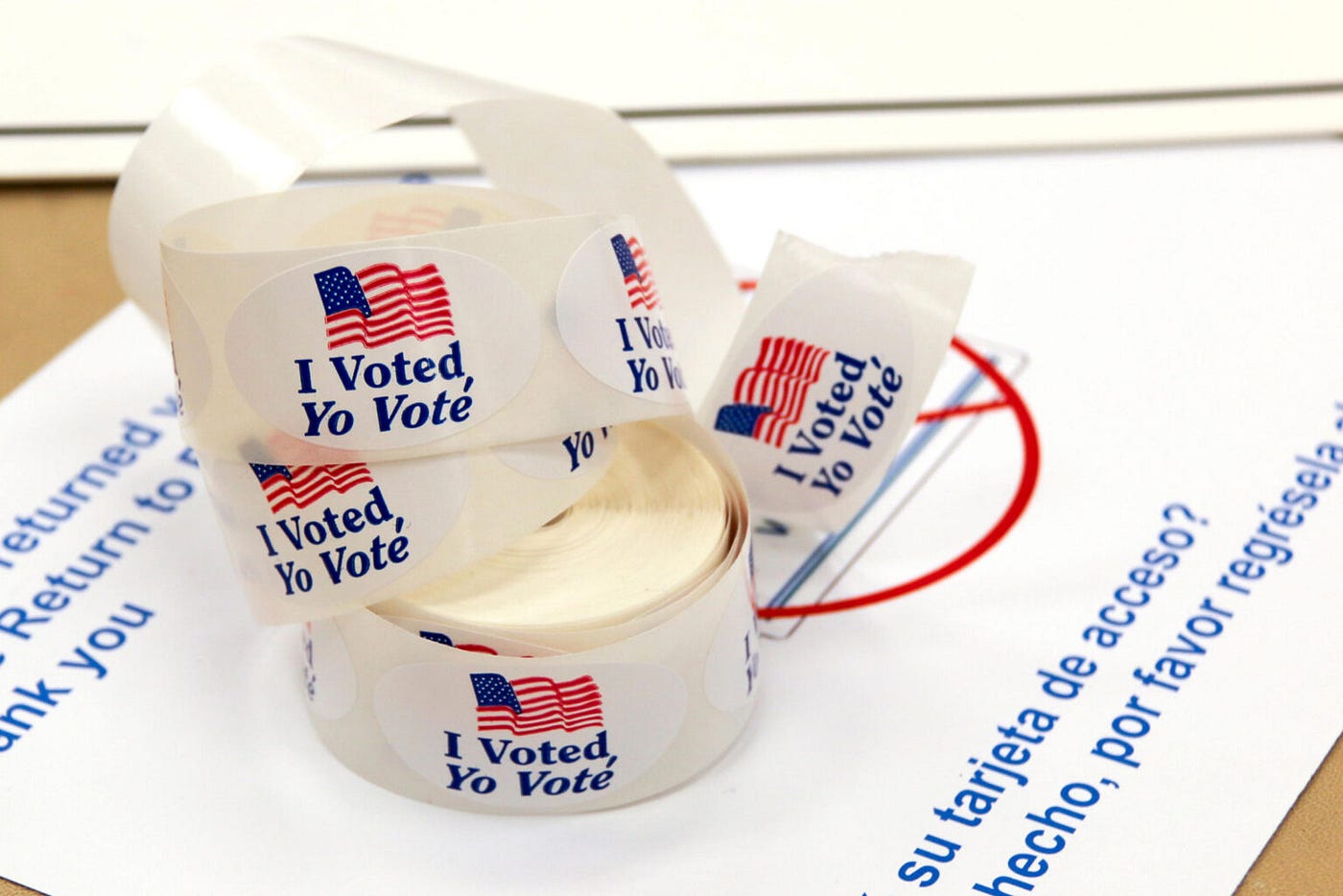
In the intense crucible of the 2024 election cycle, George Clooney strategically lent his voice to the ‘Vote Common Good’ ad campaign, orchestrating a nuanced effort to sway critical demographics. His narration for an advertisement supporting Kamala Harris and Tim Walz was particularly notable for its targeted approach, specifically designed to resonate with Republican-leaning men and encourage a re-evaluation of their electoral choices, even if privately.
The ad meticulously constructed a compelling narrative: a group of Republican men gathered, contemplating their votes. A pivotal moment featured one man gazing at a family photograph, a poignant symbol of personal responsibility, as Clooney’s distinctive voice urged viewers to “think about how it will impact the people you care about the most.” This emotional appeal was crafted to encourage introspection, leading the character to “secretly vote for Harris” while outwardly affirming his “patriotic duty” to his friends.
This carefully structured campaign subtly highlighted key issues, implicitly addressing concerns such as abortion rights, a central platform for Harris following the Supreme Court’s 2022 decision to overturn Roe v. Wade. The involvement of Clooney’s close friend Julia Roberts, who also lent her voice to an ad for the Christian-backed group endorsing Harris, further broadened the campaign’s celebrity reach and amplified its message, creating a collective, influential celebrity front.
Ultimately, the ‘Vote Common Good’ campaign exemplifies Clooney’s sophisticated use of his platform to influence voters indirectly. By appealing to deeply held personal values and family considerations rather than overt partisan rhetoric, Clooney reinforced his reputation as a shrewd and adaptable ‘actorvist.’ This strategic deployment of his celebrity for political ends demonstrates a continuing evolution in his methods, proving his dedication to shaping the political landscape even as he considers a broader retreat from its immediate pressures.
Read more about: Zendaya’s Unforgettable Red Carpet Moment: The Controversial Look That Sparked a Fashion Firestorm
From challenging presidents over war to meticulously fundraising for campaigns, and from championing global human rights to subtly influencing voters, George Clooney’s journey through the political landscape has been anything but conventional. He has consistently demonstrated that his commitment extends beyond fleeting moments of celebrity, evolving into a sophisticated and often critical voice. His ongoing navigation of public scrutiny, and the historical echoes of ‘actorvists’ like Warren Beatty, only underscore the complex and enduring power of Hollywood’s most thoughtful political players. As the dust settles from one political season and another inevitably begins, the question of Clooney’s next act in the grand theater of public life remains as compelling as ever, proving that for some stars, the biggest roles are found not on screen, but in the challenging, vital drama of democracy.