Most individuals encounter the dollar sign on a daily basis, whether in retail transactions, digital interfaces, or various media. This omnipresent symbol has become a shorthand for money, wealth, capitalism, and even commodification in global discourse. Despite its pervasive presence and immediate recognition, the deeper history and precise origins of its distinctive “S” shape remain subjects of intriguing scholarly inquiry and popular fascination.
The journey of the dollar sign is inextricably linked to centuries of international trade and the establishment of national monetary systems. From its earliest appearances in the business correspondence of the West Indies to its formal adoption by the nascent United States, the symbol has evolved alongside the currencies it represents. Understanding its trajectory reveals not only a complex tapestry of economic history but also a testament to the enduring power of symbolic representation.
This in-depth examination will trace the historical threads that weave together the narrative of the dollar sign, exploring the most compelling theories regarding its genesis. We will delve into the foundational role of the Spanish American peso, analyze the leading hypotheses about the symbol’s graphic evolution, and uncover lesser-known but equally captivating explanations that have shaped our understanding of this iconic emblem.
1. **The Dollar Sign: A Ubiquitous Global Symbol**The dollar sign, known formally as the peso sign in certain contexts, is a currency symbol consisting of a capital ‘S’ crossed with one or two vertical strokes. This ubiquitous symbol is employed to indicate the unit of various currencies across the globe, most notably those denominated as “dollar” or “peso.” Its widespread recognition makes it one of the most identifiable graphical representations of value worldwide.
In its common usage, the dollar sign frequently appears as part of compound currency symbols, such as the Brazilian real (R$) or the United States dollar (US$). While the nationality prefix is often omitted in local contexts, the symbol itself immediately conveys monetary value. In regions where other currency symbols are prevalent, the simple ‘$’ often defaults to signifying the US dollar, a testament to its global economic prominence.
The symbol’s universal presence on keyboards and in digital encoding standards further solidifies its status as an international icon. Whether encountered in financial reports, online shopping, or everyday transactions, the dollar sign serves as a constant reminder of the interconnectedness of global commerce and the shared human endeavor of assigning value.
Read more about: The Enduring Symbol: A Comprehensive Examination of the Dollar Sign’s Origins, Evolution, and Modern Applications
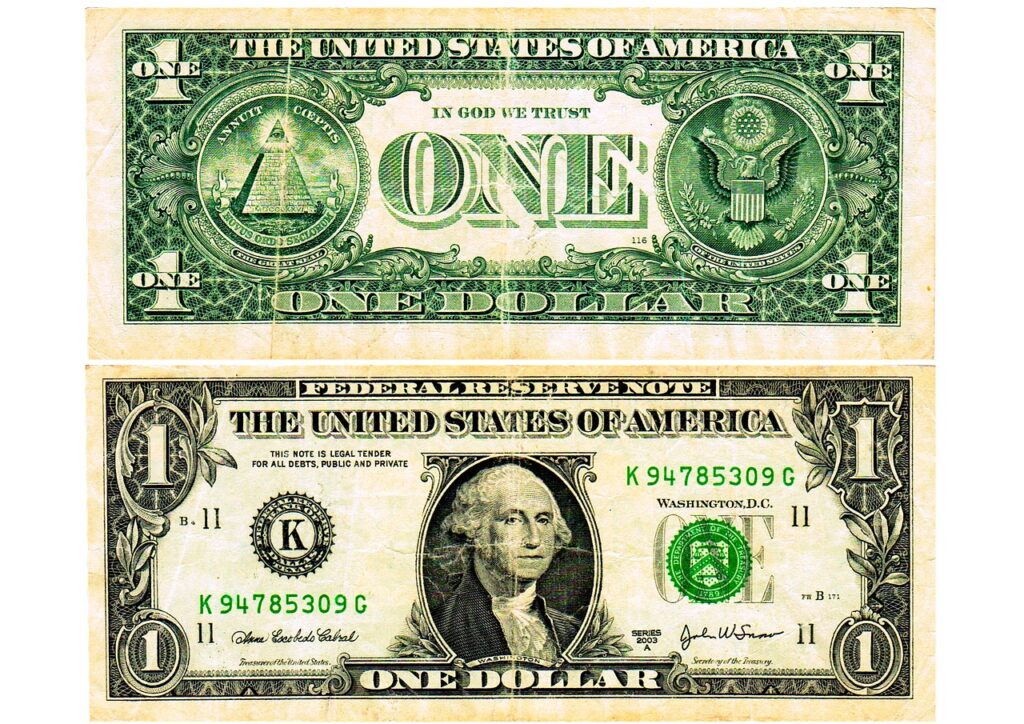
2. **From Spanish Peso to US Dollar: An Early History**The earliest documented appearances of the dollar sign trace back to the business correspondence of the 1770s from the West Indies. In these historical records, the symbol referred specifically to the Spanish American peso, which was also widely recognized as the “Spanish dollar” or “piece of eight” in British America. These Spanish coins served as the foundational model for the currency system later adopted by the United States.
The Coinage Act of 1792 marked a pivotal moment, as the United States Congress formally created the U.S. dollar, explicitly defining its value as that of “a Spanish milled dollar as the same is now current.” This legislative act solidified the connection between the emerging American currency and its Spanish predecessor. Despite the establishment of the U.S. dollar, a variety of foreign coins, including the Spanish peso, continued to be considered legal tender in the United States until their status was officially ended by the Coinage Act of 1857.
Interestingly, the earliest U.S. dollar coins themselves did not feature any dollar symbol. The first recorded instance of the symbol in print is attributed to Archibald Binny, a Philadelphia printer and creator of the Monticello typeface, in the 1790s. Later, a $1 United States Note issued in 1869 famously included a large symbol comprised of a ‘U’ with the right bar overlapping an ‘S’ like a single-bar dollar sign, alongside a very small double-stroke dollar sign in its legal warning against forgery.
3. **The “Ps” Abbreviation Theory: The Leading Contender**Among the various hypotheses attempting to explain the origin of the dollar sign, the most widely accepted theory posits that the symbol evolved from the scribal abbreviation “p s” for pesos. This explanation offers a compelling narrative rooted in the practicalities of 18th-century commerce and record-keeping in Spanish-speaking regions. The need for quick and efficient notation often led to abbreviations that gradually transformed over time.
Detailed studies of late 18th- and early 19th-century manuscripts provide significant documentary evidence for this theory. These studies illustrate a clear progression where the letter ‘s’ for pesos gradually came to be written directly over the letter ‘p’. This superimposition, through repeated use and stylistic evolution, developed into a form that closely resembles the modern ‘$’ mark, with the ‘S’ often appearing to intersect or sit atop a single vertical stroke that was once part of the ‘P’.
Further bolstering this theory is the documented usage by Oliver Pollock, a wealthy Irish trader and a notable early supporter of the American Revolution. In a letter dated 1778, Pollock employed the abbreviation “ps,” sometimes rendered in a way that bore an almost exact resemblance to the dollar sign we recognize today. Additionally, historical documents confirm the common use of the two-stroke version of the symbol in Portugal as early as 1775, providing further insight into the early graphic variations and widespread adoption of a similar mark.
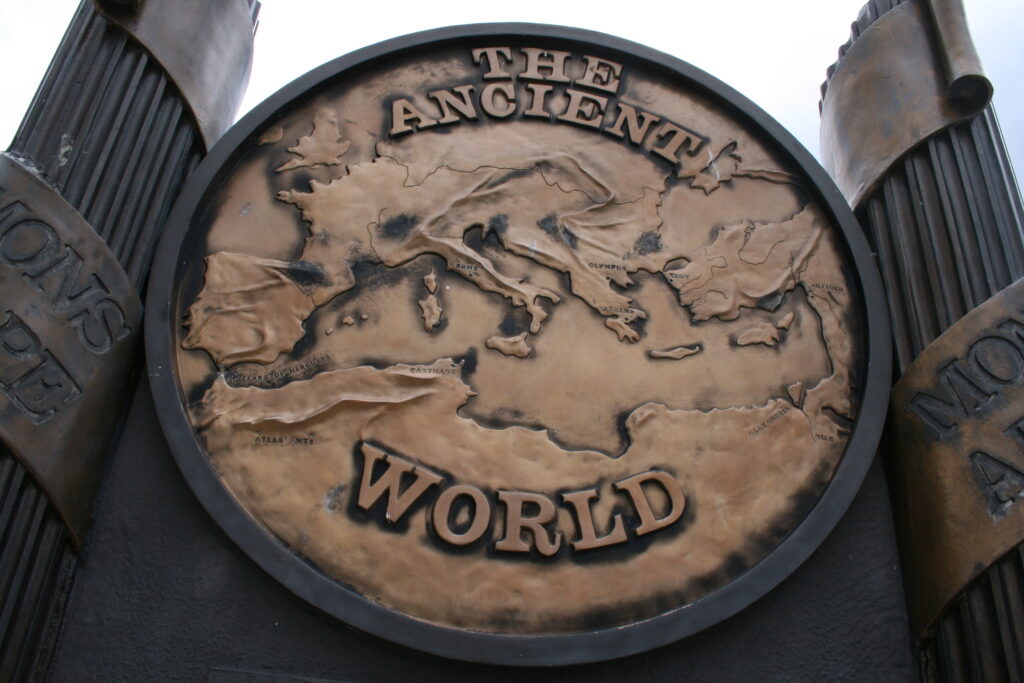
4. **The Pillars of Hercules: A Symbolic Origin?**Another compelling hypothesis regarding the dollar sign’s origin ties it to a rich classical symbol: the Pillars of Hercules. This device, depicting two sides of the Strait of Gibraltar, served as a classical emblem for the ancient world’s western limits, often adorned with a ribbon proclaiming ‘Plus Ultra’ (meaning “further beyond”). It held significant symbolic weight in the Spanish Empire, appearing as a support element on the Spanish coat of arms.
Crucially, this iconic depiction of the Pillars of Hercules, entwined with an ‘S’-shaped ribbon, was prominently featured on the most common real de ocho coins circulating throughout the Americas and Europe during that era. These were particularly those minted at the Potosí mint in Bolivia, an operation active from 1573 to 1825 and a major source of the Spanish Empire’s silver. The visual resonance between the ‘S’-wrapped pillars on these widely circulated coins and the dollar sign is striking, offering a strong argument for this symbolic lineage.
The cultural impact of this imagery was so profound that in Qing Dynasty China, one of the names used for Spanish dollars was 雙柱 (Shuāngzhù), which directly translates to ‘double-pillar.’ This historical detail underscores the widespread recognition of the Pillars of Hercules motif on these coins and supports the idea that the symbol’s distinctive form could have been influenced by such a potent and prevalent visual element. The elegant intertwining of the ‘S’ ribbon around the pillars presents an alternative, visually elegant explanation for the dollar sign’s appearance.

5. **Unraveling Other Historical Hypotheses: Potosí and the German Thaler**Beyond the two most prominent theories, other intriguing hypotheses have emerged concerning the dollar sign’s ancestry, each offering a unique perspective on its historical development. One such variant focuses specifically on the Potosí mint, a colossal source of silver for the Spanish Empire. A distinguishing feature on many of these coins was a distinctive monogram formed by superimposing the letters “P T S I.” Proponents of this theory suggest that the core of this complex monogram, particularly the ‘S’ intersecting with a vertical element, inherently forms a single-stroked dollar sign.
Another fascinating theory connects the symbol to the English word “dollar” itself. The term “dollar” for the Spanish piece of eight was not directly English but arrived through the Dutch “daalder,” which in turn originated from “Joachimsthaler” or “thaler” – a large German silver coin widely used across Europe. This linguistic lineage leads to the conjecture that the dollar sign might have derived from a symbol used to denote this German silver coin, a symbol comprising a superimposed ‘S’ and ‘I’ or ‘J’. Such a symbol notably appears in John Collins’ 1686 edition of *An Introduction to Merchants’ Accounts*, suggesting an earlier, non-Spanish precursor.
An alternative interpretation of the Thaler connection suggests the symbol could have emanated from a snake and cross emblem found on some Thaler coins. While these theories may not command the same widespread acceptance as the “ps” abbreviation, they underscore the rich and diverse landscape of historical speculation surrounding the dollar sign. Each hypothesis contributes to a broader understanding of how such a significant symbol could have emerged from various cultural, linguistic, and numismatic influences across continents and centuries.
6. **The Intriguing Cifrão: Portugal’s Double-Stroked Symbol**Within the rich tapestry of the dollar sign’s history, the double-stroked variant, known as the cifrão (Portuguese pronunciation: [siˈfɾɐ̃w]), holds a distinct and historically significant place, particularly within the Portuguese Empire. In Portugal, Brazil, and other territories under Portuguese influence, the cifrão was traditionally employed not merely as a currency indicator but as a thousands separator within the national currency, the real (plural “réis,” abbreviated “Rs.”). This unique usage is attested as early as 1775, though its origins may stretch back a century or more.
For instance, a sum written as 123 500 réis would conceptually be equivalent to 123,500 réis in modern notation, with the cifrão serving to demarcate the thousands. This system provided a clear and distinctive way to manage large monetary figures. In 1911, Portugal redefined its national currency as the escudo, valued at 1000 réis and divided into 100 centavos. Remarkably, the cifrão adapted to this change, transitioning from a thousands separator to a decimal separator, so that 123 50 signified 123.50 escudos, or 123 escudos and 50 centavos.
This practice persisted until 2002, when Portugal adopted the euro. However, Cape Verde, a republic and former Portuguese colony, which switched to its local escudo and centavos in 1914, retains the cifrão usage as a decimal separator to this day. The cifrão is always written with two vertical lines, distinguishing it graphically. Its name, “cifrão,” originates from the Arabic word “ṣifr” (صِفْر), meaning ‘zero,’ highlighting an ancient etymological link to numerical representation. The historical application of the cifrão vividly illustrates how a currency symbol can evolve to serve specialized numerical functions within a distinct cultural and economic sphere.
Section 2: Modern Applications, Variants, and Unexpected Roles of the Dollar Sign
Having journeyed through the dollar sign’s historical landscape and explored its contested origins, our investigation now turns to its contemporary manifestations and surprising versatility. The symbol, far from being confined to its monetary function, has permeated diverse fields, from the intricacies of computer programming to the subtle cues of everyday digital interfaces. This section will meticulously examine the stylistic nuances of its graphical representation, its placement conventions across different cultures, and its expansive, often critical, roles in the digital realm and beyond.
7. **One Stroke vs. Two: A Matter of Style and Standardization**The dollar sign, in its most common graphical forms, appears with either a single or a double vertical stroke. While this distinction might seem significant, particularly given the historical use of the double-barred cifrão, the Unicode computer encoding standard officially treats these as mere stylistic variants. This means that U+0024, the primary Unicode code point for the dollar sign, represents both versions, with the specific rendition often depending on the typeface being used.
Historically, there were instances where the number of strokes held specific implications. For example, in some places and during certain periods, the one- and two-stroke versions were intentionally employed to differentiate between the U.S. dollar and other local currencies, such as the former Portuguese escudo. This contextual usage provided a localized clarity that is not globally standardized today.
Despite these historical precedents, modern convention largely views the choice between one and two strokes as an aesthetic design preference rather than a functional distinction. Computer and typewriter keyboards typically feature only a single key for the dollar sign, reinforcing its singular encoding across various character sets, including ASCII. Even within the same digital document, different fonts can display the symbol with either one or two strokes, without altering the underlying code point. This widespread acceptance of stylistic variation underscores the symbol’s adaptability while occasionally leading to a lack of precise visual differentiation for those unfamiliar with its nuances.

8. **Placement Conventions: Where Does the Dollar Sign Go?**The placement of the dollar sign in relation to the numerical amount it represents exhibits interesting geographical and linguistic variations. In many English-speaking countries, including the United States, Australia, and New Zealand, as well as in nations like Mexico, Argentina, and Chile, the symbol is conventionally positioned to the left of the number. For instance, one would write “$5” even though the spoken or written phrase is “five dollars” or “cinco pesos.”
This prefix convention is widely adopted, creating a visual shorthand that precedes the value it denotes. It immediately signals the monetary nature of the accompanying numerals, a practice ingrained in financial literacy across these regions. The consistency of this placement aids in rapid comprehension, particularly in contexts like financial statements or price tags.
An notable exception to this pattern is observed in French-speaking Canada, where the dollar symbol is typically placed *after* the number, such as “5$”. This regional custom diverges from the common English-speaking practice, much like how the cent symbol is generally positioned after the number in most countries that utilize it (e.g., “5¢”). Such distinctions highlight the influence of linguistic and cultural norms on the visual grammar of monetary notation, demonstrating that even a widely recognized symbol can adapt to local conventions.
9. **Beyond Currency: The Dollar Sign in Computing**The dollar sign’s ubiquity extends far beyond its monetary origins, particularly within the realm of computer software. Its inclusion in early American computer character sets, driven by business accounting applications, inadvertently paved the way for its appropriation for numerous purposes entirely unrelated to financial values in programming and command languages. This digital adoption transformed the ‘$’ into a versatile sigil, a fundamental building block in various computational paradigms.
This broad utility is reflected in its standardized encoding. The dollar sign ‘$’ is assigned Unicode code point U+0024, inherited directly from ASCII and Latin-1. While there are no separate Unicode encodings for the one- or two-line variants, considering them merely typeface-dependent allographs, the symbol’s presence is further solidified by other specialized code points for East Asian standards, such as the Taiwanese small form variant and the CJK fullwidth form, although these are primarily aesthetic or typographic distinctions.
The Unicode standard, as of 2019, consistently views the distinction between a single-bar and double-bar dollar sign as a stylistic font choice, not requiring separate code points, even for the distinct cifrão. This design decision means that despite the symbol’s long history and varied graphical representations, its digital identity as U+0024 remains unified. This foundational encoding has empowered its widespread repurposing, making it a critical, non-monetary character across virtually all computing environments.
Read more about: Strategic Foundations: Understanding the U.S. Military’s Global Power and Operational Framework
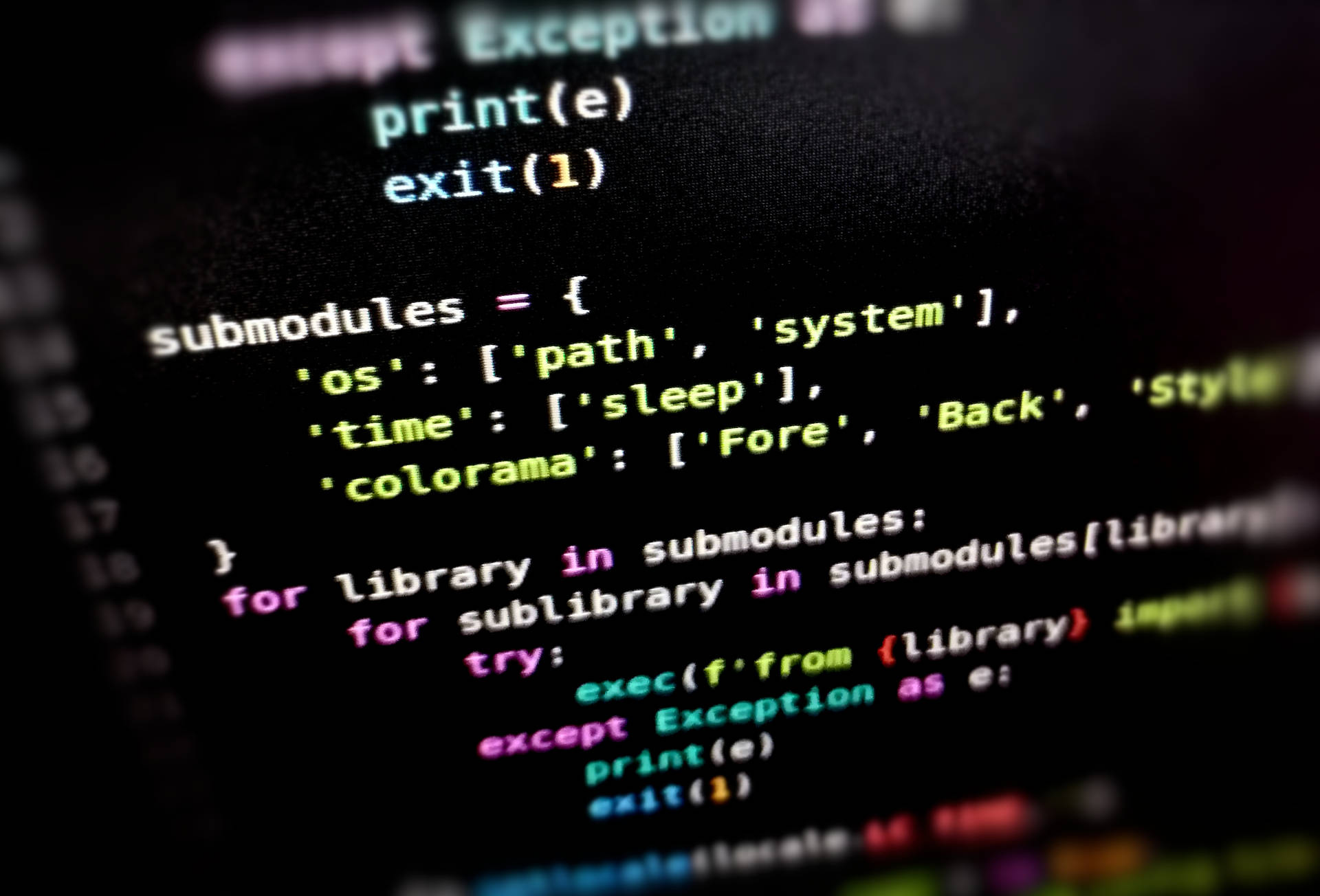
10. **Programming Languages: A Developer’s Essential Sigil**In the intricate world of computer programming, the dollar sign has evolved into a powerful and multifaceted sigil, serving diverse syntactic functions across a myriad of languages. Its appropriation for non-monetary roles highlights its enduring utility and adaptability within algorithmic logic. For instance, in BASIC, the ‘$’ is appended to a variable name, such as `H$=”Hello, world!”`, to explicitly define its data type as a character string, a clear indicator of its content.
Other languages employ the dollar sign as a prefix to declare or identify specific types of variables. In PHP and AutoIt, ‘$’ is used to define variables, while in Perl, it denotes scalar variables, including individual elements within arrays (`$array[7]`) and hashes (`$hash{foo}`). Ruby, similarly, utilizes the ‘$’ prefix for global variables. This convention transforms the symbol into a crucial identifier, providing immediate context about the nature or scope of the data it precedes.
Beyond variable declarations, the ‘$’ sign frequently introduces expressions or special functionalities. Unix shells, followed by languages like Perl, JavaScript, C#, Scala, Groovy, and Kotlin, use ‘$’ to signal an expression that needs to be evaluated to produce text. Conversely, Java and Python might use it to mark insertion points for expression results within text. The symbol also serves to delimit hexadecimal constants in certain assembly languages (e.g., Motorola 6800, MOS Technology 6502) and Pascal-like languages. Furthermore, it defines transput format regions in ALGOL 68, delimits mathematical regions in TeX, and even acts as a function application operator in Haskell, showcasing its remarkable range in programming syntax.
11. **Operating Systems: Beneath the User Interface**Within operating systems, the dollar sign takes on specialized, often technical, roles that underpin system functionality, typically operating beneath the visible user interface. These applications demonstrate its versatility as a control character or an indicator of system-level attributes. In CP/M and subsequent MS-DOS compatible systems, for example, ‘$’ traditionally marks the termination of text strings displayed by system function 9, a critical delimiter for managing output.
Microsoft Windows employs the dollar sign in a practical security and organizational context: appending ‘$’ to a share name, such as `\server\share$`, conceals that shared folder or resource from casual browsing on a network. While this does not alter access permissions, it requires explicit reference for access, making administrative shares more discreet. This hidden attribute is a common feature for system-managed resources.
Other operating systems and protocols leverage the symbol for structured data management. The LDAP directory access protocol utilizes ‘$’ as a line separator within various standard entry attributes, such as `postalAddress`, enabling multiline data within single fields. On UNIVAC EXEC 8, ‘$’ signifies “system” entities, appearing appended to system file names, sender names in operator messages, and default names for compiler-generated files (e.g., `TPF$`). In RISC OS, it demarcates application-specific variables from the application name (e.g., `Draw$Dir`) and refers to the root directory of a file system, illustrating its diverse administrative and navigational functions.
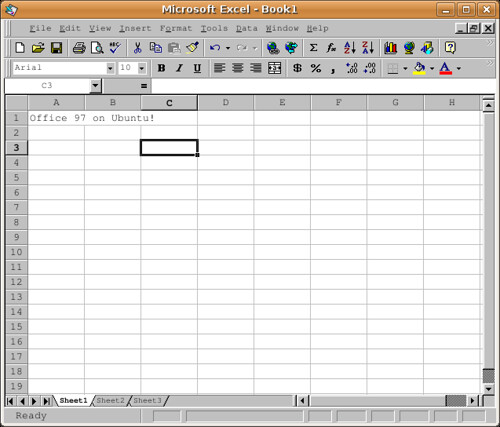
12. **Software Applications: Everyday Utility**Beyond the foundational layers of operating systems and the syntax of programming languages, the dollar sign also plays several distinct and highly functional roles within a variety of everyday software applications. These uses often streamline user interaction and data management, demonstrating the symbol’s practical utility in different digital environments. One of its most recognized applications is found in spreadsheet software like Microsoft Excel.
In Excel and similar programs, the dollar sign is instrumental in defining cell references. When placed before a column letter or row number (e.g., `$A1` or `A$1`), it creates a fixed reference, preventing that specific part of the cell address from changing when a formula is copied to other cells. An absolute cell reference, `$A$1`, locks both the column and row. This functionality is crucial for financial modeling and complex data analysis, ensuring that formulas consistently refer to specific data points.
Moreover, the dollar sign acts as a subfield delimiter within the structured computer coding of library catalog records. This specialized use allows for the precise segmentation of information, enabling more granular organization and retrieval of bibliographic data. In the realm of text processing, the dollar sign is a powerful metacharacter in regular expressions used by tools like `sed`, `grep`, and `POSIX` and Perl regular expressions. Here, ‘$’ signifies the end of a line or string, making it an indispensable tool for pattern matching and text manipulation, as well as indicating the end of a line or the entire file in various text editors such as `ed`, `ex`, and `vi`.
13. **Miscellaneous Meanings: From Satire to Science**The dollar sign’s widespread recognition and inherent association with value have also led to its adoption in a diverse array of miscellaneous contexts, extending its symbolic reach into cultural commentary, personal branding, and even scientific notation. These uses, often creative and sometimes unexpected, underscore the symbol’s flexible semiotics.
Culturally, the dollar sign is frequently employed derisively as a substitute for the letter ‘S’ to critique perceived greed or excessive commercialism. Examples like “Micro$oft,” “Di$ney,” “Chel$ea,” and “GW$” or to denote overt Americanization, as seen in “$ky,” highlight its power as a satirical device. Conversely, it is intentionally integrated into personal branding to stylize names, as exemplified by artists like A$AP Rocky, Ke$ha, and Ty Dolla $ign, or in artistic wordplay such as “¥€$,” lending an edgy or opulent flair.
Beyond these cultural appropriations, the dollar sign finds highly specialized applications in technical fields. In Scrabble notation, a dollar sign is appended to a word to indicate its validity within North American word lists but not within British ones, serving as a critical differentiator for competitive play. Perhaps most profoundly, in nuclear reactor physics, the dollar symbol designates a unit of reactivity. Here, 0$ represents the threshold of slow criticality, where the reaction rate is stable, while 1$ signifies the threshold of prompt criticality, a critical point that could lead to a nuclear excursion or explosion. This precise scientific application showcases the symbol’s ability to convey profound technical meaning.
The evolution of the dollar sign, from its ambiguous origins rooted in 18th-century commerce to its current roles in programming, operating systems, and even nuclear physics, paints a vivid picture of a symbol far more dynamic than its common monetary association suggests. It stands as a testament to the ingenuity of human communication and the unexpected paths that simple graphical marks can traverse, continually acquiring new layers of meaning and utility in an ever-changing world. The ‘$’ symbol, in its quiet pervasiveness, remains a powerful and fascinating emblem of both our economic past and our technological future.