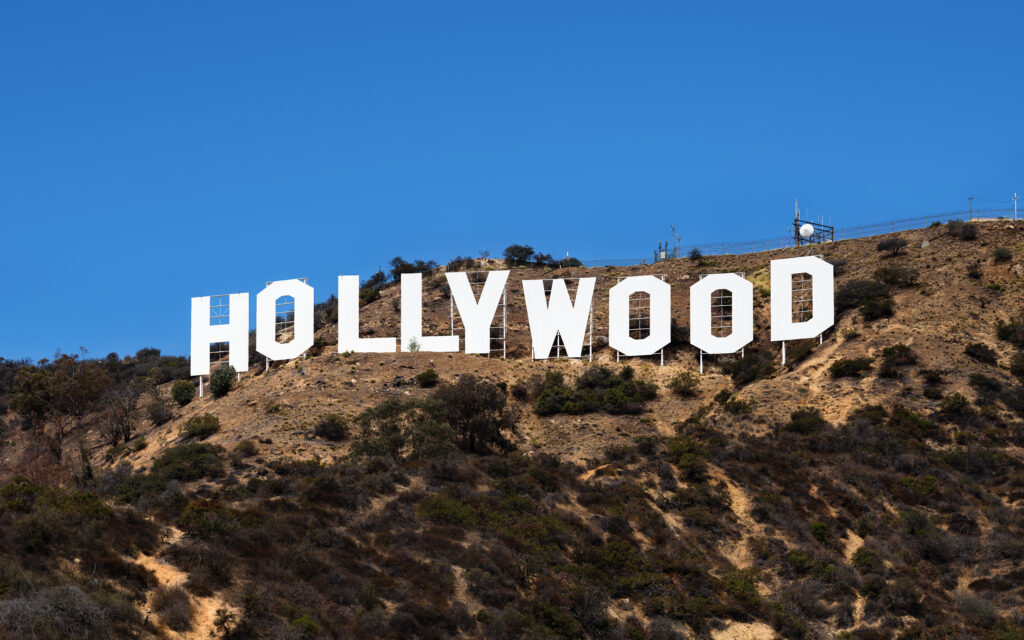
The landscape of entertainment has undergone a seismic transformation in recent years, a shift dramatically accelerated by a global pandemic that forced cinemas to shutter and audiences indoors. As streaming services ascended to unprecedented prominence, a fundamental question arose: how would the established financial structures of Hollywood adapt, particularly concerning the compensation of its most valuable stars?
This evolving dynamic came to a head in a high-profile legal battle that captivated industry observers: the lawsuit filed by acclaimed star Scarlett Johansson against The Walt Disney Company. At its heart, the dispute was not merely about a single film or an individual’s earnings; it became a crucial test case for contract integrity in a new distribution model, spotlighting the tensions between traditional theatrical releases and the burgeoning world of streaming.
Johansson’s suit, centered on her compensation for the Marvel blockbuster “Black Widow,” unveiled the complex financial arrangements underpinning major film productions and exposed the vulnerabilities of existing contracts in a rapidly changing media environment. As we delve into the core elements of this landmark legal challenge, we explore the crucial decisions, arguments, and industry ripple effects that shaped this pivotal moment for Hollywood.

1. **The Genesis of the Dispute: Johansson’s Breach of Contract Claim**In July of this year, the entertainment world was rocked by the news that Scarlett Johansson had taken the extraordinary step of suing Disney. The lawsuit, filed in Los Angeles Superior Court, explicitly cited a breach of contract regarding her compensation for the highly anticipated Marvel film, “Black Widow.” This was not merely a disagreement over earnings but a formal legal challenge to Disney’s adherence to a contractual agreement, setting a precedent for how talent might approach future negotiations in an industry grappling with new distribution strategies.
Johansson’s complaint underscored a pivotal concern for actors whose compensation is often tied to box office performance. The alleged breach stemmed from a clear expectation of how the film would be released and how that release strategy would directly impact her back-end earnings. Such a direct legal confrontation between a major studio and one of its marquee talents is a rare occurrence, especially within the typically tightly managed ecosystem of the Marvel Cinematic Universe.
This move immediately signaled the seriousness with which Johansson and her legal team viewed Disney’s actions, perceiving them as a fundamental violation of an agreed-upon term. The decision to pursue legal action, rather than internal negotiation, highlighted the perceived intransigence of the situation and the critical financial implications at stake for the star, asserting that the established contract had been fundamentally undermined by the studio’s choices.

2. **The “Wide Theatrical Release” Premise: A Core of the Agreement**The crux of Scarlett Johansson’s complaint against Disney rested firmly on a specific contractual promise: that “Black Widow” would receive a “wide theatrical release.” This term, standard in many high-level talent contracts, carries significant implications for an actor’s compensation, particularly for those, like Johansson, whose agreements often include substantial bonuses tied to box office performance. The expectation of a traditional cinematic run was therefore central to her anticipated earnings structure.
According to her complaint, the understanding was that Disney would adhere to a “standard” period of exclusivity for theatrical exhibition, typically ranging from 90 to 120 days, before making the film available on any streaming platform. This window is crucial for maximizing box office revenue, thereby directly influencing the back-end participation clauses common in major star contracts. The integrity of this exclusivity period was, for Johansson, a non-negotiable component of her initial agreement.
This contractual detail highlights a core tension that has emerged in Hollywood: the value placed on theatrical exclusivity versus the growing imperative for studios to drive subscriptions and engagement on their proprietary streaming services. For actors like Johansson, the initial promise of a wide theatrical release was not merely a formality but a foundational element upon which their financial commitments and expectations for the project were built.

3. **The Simultaneous Release Strategy: Disney+’s Premier Access**Defying the traditional theatrical window and, as alleged, the spirit of Scarlett Johansson’s contract, Disney opted for a simultaneous release strategy for “Black Widow.” The film debuted not only in cinemas worldwide but also on its Disney+ streaming service through a feature known as Premier Access. This model allowed subscribers to watch the movie at home for an additional fee, offering an immediate alternative to movie theater attendance.
This decision, made during a period of ongoing uncertainty regarding cinema attendance due to the global pandemic, was presented by Disney as a response to unprecedented circumstances. However, for talent like Johansson, it dramatically altered the playing field. The immediate availability of the film on a streaming platform, even with an extra charge, directly competed with the theatrical box office, which was traditionally the sole initial revenue stream feeding into performance-based bonuses.
For many in the industry, Disney’s move underscored a broader strategic shift by major studios towards prioritizing their streaming platforms. While this approach served to bolster Disney+ subscriptions and engagement, it simultaneously raised profound questions about the contractual obligations owed to the artists whose work was now being distributed through multiple, potentially competing, channels from day one. The Premier Access model, while beneficial for Disney’s direct-to-consumer strategy, became the flashpoint for Johansson’s legal challenge.

4. **The $50 Million Allegation: Quantifying the Loss**A central and eye-catching figure in Scarlett Johansson’s lawsuit was the estimated $50 million in lost earnings. This substantial sum represented the alleged difference between what Johansson would have received under the original contractual terms, which anticipated a traditional theatrical release, and what she actually earned due to the simultaneous streaming debut of “Black Widow.” The core argument was that the immediate availability on Disney+ severely cannibalized box office receipts, thereby reducing her performance-based bonuses.
Johansson contended that offering an in-home option directly undermined the box office earnings of the film, which in turn directly impacted her back-end compensation. Such bonuses, often structured as a percentage of box office gross after certain thresholds are met, form a significant portion of a star’s overall pay for major blockbusters. The simultaneous release, her team argued, artificially depressed the theatrical performance, preventing her from reaching these critical earning benchmarks.
This allegation put a concrete value on the perceived harm, transforming the abstract concept of a contract breach into a tangible financial loss. It highlighted the intricate and often opaque nature of Hollywood accounting and the challenge of accurately quantifying revenue streams when films are distributed across multiple platforms. The $50 million figure became a stark representation of the financial stakes involved in the evolving distribution models.

5. **Disney’s Initial Counter: Citing the Pandemic and “Callous Disregard”**Disney’s response to Scarlett Johansson’s lawsuit was swift and unusually aggressive, revealing a rare glimpse into the usually private world of talent-studio relations. In a statement, Disney’s attorneys denied the allegations of breach and accused Johansson’s suit of showing a “callous disregard for the horrific and prolonged global effects of the COVID-19 pandemic.” This strong rebuttal attempted to frame Disney’s simultaneous release decision as a necessary measure driven by global health and safety concerns, rather than a calculated breach of contract.
This defensive posture sought to shift public perception, portraying Johansson as prioritizing personal profit over the broader societal challenges posed by the pandemic. The statement underscored Disney’s position that their actions were a responsible adaptation to an unprecedented crisis, arguing that the release strategy was designed to ensure audience access to the film when theatrical attendance was uncertain, while also providing a revenue stream for the studio.
Furthermore, Disney asserted that they had “fully complied with Ms. Johansson’s contract” and that the release of “Black Widow” on Disney+ with Premier Access had “significantly enhanced her ability to earn additional compensation on top of the $20M she has received to date.” This counter-argument aimed to discredit the $50 million claim by highlighting the upfront payment already received by the actress and suggesting that the streaming release had, in fact, created new avenues for her earnings, a point fiercely contested by Johansson’s team.

6. **The “Force Majeure” Defense: A Legal Loophole Explored**In its aggressive rebuttal, Disney’s legal strategy alluded to a defense grounded in necessity, suggesting that the unprecedented circumstances of the COVID-19 pandemic compelled their actions. This line of reasoning immediately brought to mind the concept of a “force majeure” clause, a common provision in contracts that can relieve parties of their contractual obligations due to unforeseen events beyond their control, such as natural disasters, wars, or, in this case, a global pandemic.
Typically, if a “force majeure” clause is included in a contract, it could theoretically excuse Disney from its promise to Johansson on the basis that circumstances beyond their control—specifically, COVID-19—made performance of the original contract terms “inadvisable, commercially impracticable, illegal, or impossible.” Such clauses are designed to protect parties from liability when events make it impossible or extremely difficult to fulfill their commitments, and they were frequently invoked across industries during the pandemic.
However, the context implies that such a clause was likely absent or not broadly applicable to the specific terms of Johansson’s contract, particularly concerning the exclusivity window. The fact that the parties ultimately settled, rather than pursuing a lengthy court battle predicated on such a defense, suggests that Disney may have recognized the limitations of arguing a “force majeure” defense in this particular instance, especially when revenue was still being generated, albeit through a different distribution channel.

7. **Hollywood’s Collective Concern: SAG-AFTRA’s Stance**The ripple effects of Scarlett Johansson’s lawsuit extended far beyond the immediate parties involved, resonating deeply within the broader Hollywood community. Gabrielle Carteris, the president of the Screen Actors Guild – American Federation of Television and Radio Artists (SAG-AFTRA), articulated this collective apprehension, stating that “Scarlett Johansson is shining a white-hot spotlight on the improper shifts in compensation that companies are attempting to slip by talent as distribution models change.”
Carteris’s statement underscored a growing concern among actors and their representatives about the seismic changes in how content is distributed and monetized. As streaming platforms increasingly became primary outlets for major productions, existing compensation structures, often heavily reliant on box office performance, were being challenged. The fear was that studios might unilaterally alter release strategies, thereby eroding talent’s anticipated earnings without proper renegotiation or compensation.
This institutional support from SAG-AFTRA indicated that Johansson’s fight was viewed not just as an individual grievance but as a critical bellwether for the entire industry. Her lawsuit served as a powerful signal to studios that talent would not passively accept what they perceived as unfair alterations to their contracts in the name of evolving business models, emphasizing the need for clear, proactive dialogue and updated contractual frameworks that reflect the new realities of entertainment distribution.

8. **The Unexpected Truce: Resolution in a High-Stakes Dispute**After weeks of public contention and sharp exchanges, the legal battle between Scarlett Johansson and The Walt Disney Company reached a quiet and unexpected resolution. The acclaimed actress, who had initiated a $50 million lawsuit alleging breach of contract over the release of ‘Black Widow,’ formally withdrew her legal action, marking an end to one of Hollywood’s most closely watched disputes in recent memory. This swift settlement underscored the industry’s preference for resolving internal conflicts away from the prolonged scrutiny of a courtroom.
The cessation of hostilities came without an exhaustive court battle, suggesting that both parties recognized the potential for protracted litigation to inflict further reputational and financial costs. Such disputes, particularly between major studios and their marquee talent, are a rare occurrence, especially within the typically tightly managed ecosystem of Marvel Studios, known for its healthy talent relations. The resolution signaled a desire from both sides to move past the contentious phase and avoid setting potentially damaging legal precedents.
The agreement marked a turning point in a conflict that had captivated industry observers, offering a glimpse into the evolving dynamics of power and compensation in the entertainment landscape. While the precise factors leading to the settlement remain undisclosed, the decision to resolve the matter outside of court speaks volumes about the complexities of quantifying damages and the mutual desire to preserve future working relationships in a fiercely competitive industry.

9. **A Public Reconciliation: Joint Statements and Future Ventures**Following the settlement, both Scarlett Johansson and Disney released joint statements, signaling a surprising return to amicable terms. Ms. Johansson expressed her contentment, stating, “I am happy to have resolved our differences with Disney. I’m incredibly proud of the work we’ve done together over the years and have greatly enjoyed my creative relationship with the team. I look forward to continuing our collaboration in years to come.” Her remarks conveyed a clear intent to rebuild and continue her professional ties with the media giant.
Alan Bergman, Chairman of Disney Studios, reciprocated the sentiment, affirming the company’s satisfaction with the outcome. He stated, “I’m very pleased that we have been able to come to a mutual agreement with Scarlett Johansson regarding Black Widow. We appreciate her contributions to the Marvel Cinematic Universe and look forward to working together on a number of upcoming projects, including Disney’s Tower of Terror.” This mention of a new project, specifically one based on a Disney theme park attraction, offered a tangible sign of renewed collaboration.
These carefully worded public statements aimed to project an image of unity and a mutual path forward, effectively putting a cap on the public controversy. The swift transition from heated accusations to expressions of future partnership highlighted Hollywood’s intricate network of relationships, where long-term collaboration often outweighs the temporary friction of contractual disagreements.

10. **The Undisclosed Terms: Precedent and the Veil of Confidentiality**Crucially, the terms of the resolution between Scarlett Johansson and Disney were not disclosed to the public. This confidentiality, while common in high-profile settlements, left many industry observers without specific details that could establish a clear precedent for similar disputes. The absence of a public financial figure or a detailed breakdown of the agreement means that, officially, the case concluded without a definitive judicial ruling on the core contractual arguments.
However, the very act of settling, especially after Disney’s aggressive initial stance, suggested an acknowledgment of the validity of some of Johansson’s underlying concerns. The studio’s decision to move towards a resolution rather than a protracted legal battle, potentially involving a “force majeure” defense that was likely absent or not broadly applicable to the contract, indicated a strategic pivot away from a risky courtroom outcome.
While the specifics remain private, the settlement implicitly serves as a powerful signal to the industry. It underscores that talent, particularly major stars whose compensation is tied to evolving distribution models, possesses leverage to challenge perceived breaches of contract. The confidential nature of the terms also allows both parties to avoid setting an explicit benchmark for future negotiations, preserving flexibility while still acknowledging the need for adaptation.

11. **Reshaping Compensation: Talent in the Streaming Paradigm**The Johansson lawsuit served as a stark illumination of the challenges facing talent compensation in an entertainment landscape increasingly dominated by streaming services. As traditional theatrical windows shorten or disappear, the historical financial models, which often relied heavily on box office performance for back-end bonuses, have become precarious. The dispute brought into sharp focus the imperative for new frameworks that accurately value an artist’s contribution across diverse distribution channels.
Gabrielle Carteris, the president of SAG-AFTRA, powerfully articulated this industry-wide apprehension. She stated that “Scarlett Johansson is shining a white-hot spotlight on the improper shifts in compensation that companies are attempting to slip by talent as distribution models change.” Her observation highlighted the fear that studios might unilaterally alter release strategies, thereby eroding anticipated earnings without proper renegotiation or equitable compensation, particularly in the absence of updated contractual language.
The implications extend beyond individual stars, affecting a wide array of actors, writers, and crew whose livelihoods are intrinsically linked to the financial success of productions. The ‘Black Widow’ case has, therefore, become a guiding force, prompting critical discussions about how to protect performers from what are perceived as “surprise reductions in expected compensation” as studios prioritize direct-to-consumer strategies and subscriber growth over traditional box office metrics. It underscores a fundamental need for the industry to recalibrate its understanding of value and revenue generation in this new era.

12. **Quantifying the Intangible: The Challenge of Streaming’s Impact on Earnings**A significant underlying complexity in the ‘Black Widow’ dispute, and indeed for future negotiations, was the speculative nature of quantifying lost earnings from a simultaneous streaming release. Scarlett Johansson’s team alleged losses of $50 million, a substantial sum predicated on the idea that the immediate availability on Disney+ Premier Access cannibalized theatrical box office receipts, thereby reducing her performance-based bonuses.
However, as highlighted in internal industry discussions, objectively calculating such losses presents formidable challenges. Disney had priced its Premier Access at $30 per viewing, attempting to account for potential lost theater profits by estimating an average cost for family or single-user viewings. Yet, as the analysis revealed, there is “no way to truly know if this was effective because Disney simply cannot be certain of how many viewers there were behind the screens of peoples’ homes.” The opacity of streaming viewership data complicates accurate financial projections.
Furthermore, the pandemic introduced an unprecedented variable: “there is no way for Disney to guarantee that had the film not been available on the streaming site, the same number of viewers would have visited the theater.” Even with loosening restrictions, audience comfort levels varied, making a direct comparison between theatrical-only and hybrid release scenarios inherently uncertain. This difficulty in retrospectively proving a definitive financial impact means that, in this case, “the company was forced to settle based on these speculations,” a situation both parties would likely prefer to avoid in the future.

13. **Anticipating the Future: The Imperative of Proactive Contractual Reforms**The most profound lesson emanating from the Scarlett Johansson-Disney dispute is the critical need for proactive negotiation in an evolving media landscape. To prevent similar legal battles in the foreseeable future, industry experts and talent representatives agree that companies and actors must negotiate compensation terms ahead of time that explicitly anticipate the continuation of streaming service releases in the wake of COVID-19 and beyond. The ‘Black Widow’ controversy serves as a clear warning that traditional contracts are no longer sufficient.
This foresight extends to incorporating detailed clauses that address various distribution scenarios, including simultaneous releases, exclusive streaming windows, and varying pricing models. Such preliminary negotiations would delineate how an artist’s back-end participation and bonuses would be structured across theatrical, premium video-on-demand (PVOD), and subscription streaming platforms. This forward-thinking approach would create clarity and stability for all stakeholders, moving beyond the ambiguities that fueled the ‘Black Widow’ conflict.
The benefits of such proactive engagement are mutual. For talent, it ensures fair compensation commensurate with their contribution to a project’s success across all revenue streams. For production companies like Disney, it offers protection “from unsubstantiated payouts” based on retrospective, speculative loss calculations, fostering a more predictable and legally sound operating environment. The dispute underscored that leaving such crucial financial terms open to interpretation in a rapidly changing market is a recipe for discord.

14. **From Speculation to Structure: Evolving Payment Models for a New Era**To navigate the complexities illuminated by the ‘Black Widow’ lawsuit, the entertainment industry is now faced with the task of transitioning from a reactive, speculative approach to a structured, anticipatory model for talent compensation. This shift necessitates the development of new contractual frameworks that explicitly define how revenue generated from different distribution channels – theatrical, premium digital rental, and subscriber-driven streaming – will be accounted for and distributed among stakeholders. Such frameworks must be robust enough to withstand further evolutions in content consumption.
One pathway involves establishing clear benchmarks and metrics for streaming performance that can trigger bonuses or additional compensation, analogous to box office thresholds. This might entail linking payments to subscriber growth directly attributable to a particular film, or to specific viewership numbers on a streaming platform, rather than relying solely on theatrical performance. The goal is to create transparent mechanisms that reflect the new realities of monetization.
Ultimately, the industry must recognize that “Black Widow won’t be the last controversy on the subject” if contracts fail to adapt. The emphasis must move towards creating equitable and transparent financial agreements that are impervious to technological shifts and market disruptions. This involves ongoing dialogue between studios, talent agencies, and guilds to codify best practices and ensure that the value generated by creative works is fairly distributed in an increasingly multifaceted distribution ecosystem.

15. **A Wider Echo: Hollywood’s Vigilance and Lingering Concerns**The resolution of the Johansson-Disney lawsuit, while bringing an end to that specific battle, did not extinguish the broader anxieties simmering within Hollywood. The case served as a critical bellwether, prompting widespread reflection on talent’s vulnerability in the face of shifting distribution models. The concern that studios might unilaterally alter release strategies without adequate compensation remains palpable among actors and their representatives.
Indeed, in the immediate aftermath of Johansson’s filing, rumors began circulating about other potential high-profile lawsuits. Whispers suggested that Emma Stone for ‘Cruella’ and Emily Blunt for ‘Jungle Cruise’ might be next to challenge their contracts, although, as the context notes, “neither have come to fruition” so far. Nevertheless, the mere circulation of such rumors highlighted the deep-seated apprehension across the talent community, viewing Johansson’s actions as a potential blueprint for challenging established studio practices.
This collective vigilance, championed by organizations like SAG-AFTRA, signals that the industry is at a crossroads. The ‘Black Widow’ case has undeniably accelerated the imperative for clear, proactive dialogue and updated contractual frameworks. While the immediate dispute is resolved, its legacy will continue to shape negotiations, ensuring that artists receive fair remuneration in a world where content consumption is as diverse as the platforms that deliver it.
The ‘Black Widow’ lawsuit, though settled, leaves an indelible mark on Hollywood. It has not only forced a re-evaluation of how talent is compensated in a streaming-first world but has also ignited an urgent conversation about the future of contractual integrity. As the industry continues to evolve, the clarity and foresight embedded in future agreements will be paramount, defining the partnership between creative vision and corporate strategy for years to come. The era of assuming traditional distribution models is over; the new age demands precision, transparency, and a mutual commitment to shared success across all screens.