Francis Ford Coppola’s 1972 masterpiece, *The Godfather*, stands as an immovable pillar in the pantheon of cinematic achievement, a multi-generational crime saga that redefined the gangster genre and etched itself into the very fabric of popular culture. Its enduring power lies not only in its compelling narrative and groundbreaking performances but also in a script so rich, so meticulously crafted, that its lines have become part of our collective lexicon. Yet, beneath the polished surface of this widely celebrated film lies a labyrinthine journey of creation, marked by unseen struggles, uncredited contributions, and moments of serendipitous brilliance that profoundly shaped the words we remember.
Indeed, for a film so iconic, the behind-the-scenes evolution of its screenplay is a narrative in itself, a testament to the often-contentious alchemy of filmmaking. From the desperate origins of its source material to the intense clashes between studio executives and a visionary director, and even the subtle, often overlooked, sparks contributed by its legendary cast, *The Godfather*’s script was forged in a crucible of intense pressure and artistic ambition. It is a story of how a seemingly straightforward adaptation became a profound meditation on power, family, and the American dream.
In this deep dive, we pull back the curtain on some of the most revealing, yet ‘unseen,’ facets of *The Godfather*’s script development. We will uncover the hidden influences and pivotal moments that transformed mere dialogue into indelible cinematic history, examining the profound impact of those who, directly and indirectly, shaped the enduring power of its narrative and the unforgettable cadences of its characters’ voices. Join us as we explore the intricate tapestry of creative choices and behind-the-scenes drama that gave life to one of cinema’s most revered screenplays.
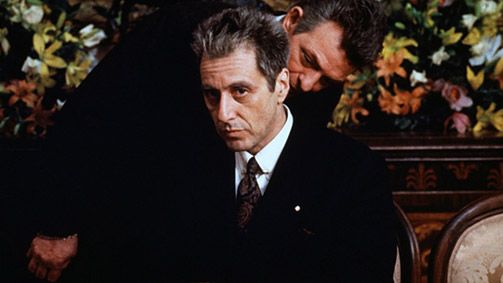
1. **The Origin of “The Godfather”: From “Mafia” Manuscript to Bestseller**The legendary saga of the Corleone family began not with a meticulously planned cinematic venture, but as a gritty sixty-page manuscript titled *Mafia*. Penned by Mario Puzo, this initial draft caught the attention of Peter Bart, then Paramount Vice President of Production, through the keen eye of a literary scout. Bart, recognizing the raw potential, believed the work was “much beyond a Mafia story” even in its nascent form.
Paramount Pictures, through Bart’s foresight, extended an offer to Puzo: a $12,500 option for the unfinished manuscript, with the promise of $80,000 if the completed work were to be adapted into a film. This proposition, however, was met with resistance from Puzo’s agent, who advised him to decline. Yet, Puzo, facing urgent financial hardship and needing $10,000 to settle gambling debts, ignored the counsel and accepted the deal, a decision he later confided to Paramount’s Robert Evans in early 1968.
Published in 1969, Puzo’s completed novel, *The Godfather*, quickly transcended its initial genre confines. It rocketed to unprecedented success, remaining on The New York Times Best Seller list for an astounding 67 weeks and selling over nine million copies within two years. For several years, it held the distinction of being the best-selling published work in history, cementing its place as a literary phenomenon and making the $80,000 film option a prescient investment for Paramount, officially confirmed in 1969.
This phenomenal success of the novel became an undeniable force, propelling the film adaptation forward and imbuing it with a level of anticipation rarely seen. The book’s widespread popularity would, in turn, become a powerful leverage point for director Francis Ford Coppola during the tumultuous production, allowing him to push for his artistic vision against a studio initially bent on cost-cutting measures. The unseen financial desperation of its author ultimately seeded the ground for one of cinema’s greatest achievements, transforming a personal financial gamble into a cultural touchstone.
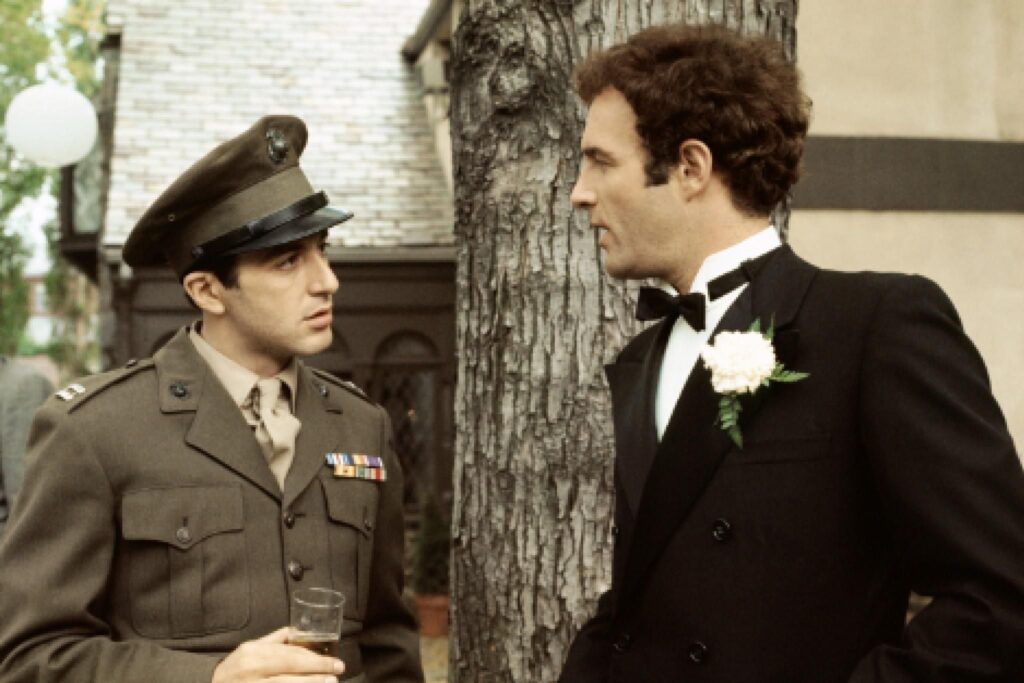
2. **Coppola’s Transformative Vision: Beyond “Sleazy and Sensationalist”**When Francis Ford Coppola was first approached to direct *The Godfather*, his reaction was far from enthusiastic. He initially dismissed Mario Puzo’s novel as “pretty cheap stuff,” finding it both sleazy and sensationalist. This initial disdain posed a significant hurdle, as Coppola believed the material lacked the depth and artistic merit he sought in his projects. His reluctance highlights a critical, often unseen, conceptual chasm that had to be bridged for the film to become the profound work it is known as today.
However, Coppola’s personal financial circumstances played a pivotal role in his eventual acceptance. His studio, American Zoetrope, was deep in debt, owing over $400,000 to Warner Bros. due to budget overruns on his previous film, *THX 1138*. Coupled with his own precarious financial standing, and persuasive advice from friends and family, Coppola reversed his initial decision, officially taking on the director’s mantle on September 28, 1970, agreeing to a sum of $125,000 and six percent of the gross rentals.
This pragmatic decision, born of necessity, ultimately led to a profound artistic re-evaluation of the source material. Coppola, initially seeing only a gangster story, later discovered a “deeper theme.” He reshaped his understanding, deciding that the film should not merely be about organized crime, but rather a “family chronicle, a metaphor for capitalism in America.” This conceptual metamorphosis was a crucial, unseen shift that imbued the script with its thematic richness and universal resonance.
This reinterpretation moved the narrative beyond mere genre tropes, elevating it into a complex study of power, loyalty, and the corrosive nature of ambition. It transformed Puzo’s bestselling crime novel into a sophisticated commentary on the American experience, focusing on the internal dynamics of a family grappling with tradition, modernity, and morality. Coppola’s visionary reframing was arguably the single most important ‘unseen’ contribution to the script’s enduring power, laying the intellectual and emotional groundwork for the cinematic masterpiece that would follow.
Read more about: The Unseen Genius: How The Godfather’s Improvised Magic and Production Battles Forged Cinematic History
3. **The Parallel Screenplays: Puzo’s Drafts and Coppola’s Production Notebook**The crafting of *The Godfather*’s screenplay was an unconventional, often bifurcated process that saw both Mario Puzo and Francis Ford Coppola working on separate drafts. Puzo, officially hired by Paramount for $100,000 plus a percentage of profits to adapt his novel, initially focused on retaining elements from his book. His first draft, clocking in at 150 pages, was completed on August 10, 1970, setting a foundational, yet evolving, blueprint for the story.
Once Coppola was brought on as director, the writing process diverged. While Puzo continued his work in Los Angeles, Coppola embarked on his own version in San Francisco. This parallel development meant two distinct creative forces were shaping the narrative, each bringing their unique perspectives and priorities to the script. The dynamic required constant communication and negotiation between the two, as they made crucial decisions about what to include and what to remove for the final version.
Coppola’s personal method for developing his screenplay was particularly meticulous and revealing. He created a unique “book” by tearing pages directly from Puzo’s novel and pasting them into his own notebook. Within this personal tome, he made extensive notes for each of the book’s fifty scenes. These annotations included identifying major themes, assessing whether a scene should be included in the film, and brainstorming ideas and concepts that could be utilized during filming to ensure the movie remained true to Italian culture.
This ‘unseen’ notebook served as Coppola’s creative anchor, a tangible manifestation of his deep immersion in the material and his commitment to cultural authenticity. The collaborative yet independent nature of the writing, culminating in a second draft of 173 pages by March 1, 1971, and a final 163-page screenplay on March 29, 1971—40 pages over Paramount’s requested length—underscores the intense dedication to the narrative. Coppola’s personal notebook, which he famously referred to during filming, illustrates the depth of artistic control he sought and ultimately achieved in shaping the script’s intricate detail.
4. **Paramount’s Battle for a Modern Setting: Studio vs. Director**Before *The Godfather* even entered production, Paramount Pictures was navigating a turbulent period, marked by a string of financial disappointments. Recent films like *The Brotherhood*, *Darling Lili*, *Paint Your Wagon*, and *Waterloo* had either underperformed at the box office or grossly exceeded their budgets. This context created immense pressure on studio executives to control costs for *The Godfather*, leading to a vision for the film that clashed dramatically with Coppola’s artistic aspirations.
Paramount executives, prioritizing economy, initially wanted the movie to be set in contemporary Kansas City. Their rationale was purely practical: filming in a modern setting and utilizing the studio backlot would significantly cut down on production expenses. This cost-saving measure represented a starkly different artistic direction, one that would have fundamentally altered the film’s aesthetic, narrative gravitas, and historical authenticity. It was a clear demonstration of the studio’s ‘unseen’ commercial anxieties attempting to dictate creative choices.
Coppola, however, vehemently objected to this proposal. He argued passionately for setting the movie in the same time period as the novel, the 1940s and 1950s. His reasons were deeply rooted in the narrative’s integrity, emphasizing crucial plot points such as Michael Corleone’s service in the wartime Marine Corps, the emergence of corporate America, and the profound societal shifts in America immediately following World War II. These elements were integral to the Corleone family’s saga and Michael’s personal transformation.
The director’s steadfast commitment to historical accuracy and his cinematic vision ultimately prevailed, largely aided by the burgeoning popularity of Puzo’s novel. As the book’s success grew, Coppola’s wishes were granted, allowing him to film on location in New York City and Sicily. This victory against the studio’s cost-cutting agenda ensured that *The Godfather* retained its rich period detail and thematic depth, elements that are now inseparable from its iconic status. The unseen battle over the film’s setting was a defining moment, securing the historical authenticity that underpins its legendary script.
5. **Robert Towne’s Uncredited Dialogue Crafting: The “Script Doctor’s” Touch**While the screenplay for *The Godfather* is officially credited to Francis Ford Coppola and Mario Puzo, the intricate layering of its dialogue involved other, often unacknowledged, talents. One such figure was Robert Towne, a highly respected screenwriter who was brought in to do uncredited work as a “script doctor.” This behind-the-scenes contribution highlights a vital but frequently unseen aspect of filmmaking: the subtle refinement of dialogue that can elevate a scene from good to unforgettable.
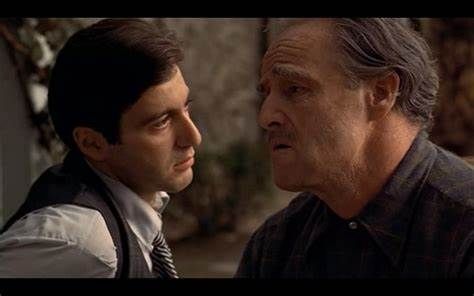
Towne’s specific focus, as detailed in the production notes, was particularly on the dialogue in the pivotal “Pacino-Brando garden scene.” This scene, featuring the intensely charged interaction between Michael Corleone (Al Pacino) and his father, Vito Corleone (Marlon Brando), is a masterclass in familial tension and the transfer of power. The very nature of a script doctor’s role implies a need for nuanced improvements, suggesting that even in a highly developed script, there were still layers of dialogue to be perfected.
The garden scene is renowned for its quiet power, the unspoken understandings, and the subtle shifts in authority between father and son. Towne’s uncredited work here suggests he played a crucial role in sharpening these verbal exchanges, ensuring every word carried weight and every pause resonated with significance. Such contributions, though not earning a credit, are fundamental to the film’s overall linguistic precision and emotional depth.
These ‘unseen’ contributions by script doctors like Towne underscore the collaborative, and sometimes anonymous, effort involved in perfecting a screenplay. The polish and precision of *The Godfather*’s dialogue—particularly in moments of profound emotional or thematic importance—are a testament to the myriad hands that touched it, ensuring that its spoken words would leave an indelible mark on cinematic history. His work on this critical scene underscores how much of the script’s magic lay in refinements beyond the principal writers’ drafts, adding an invaluable layer of sophistication to its enduring language.
6. **External Pressures: The Italian-American Civil Rights League’s Dialogue Demands**The journey of *The Godfather*’s script, even after its foundational elements were in place, was fraught with external challenges that directly impacted its language and narrative. One of the most significant, yet often unseen, interventions came from the Italian-American Civil Rights League, an organization led by the notorious mobster Joseph Colombo. Their vocal concerns about the film perpetuating negative stereotypes of Italian-Americans created a considerable, and at times threatening, pressure on the production. This forced a crucial, if subtle, evolution in the very words that would eventually become etched into cinematic history.
This league vehemently demanded the removal of specific terminology that they felt was defamatory, fearing the film would reinforce damaging perceptions. Their primary targets were the words “mafia” and “Cosa Nostra,” which they believed unfairly linked an entire ethnic group to organized crime. The stakes were undeniably high; producer Albert S. Ruddy, whose commitment to the project was unwavering, even had the windows of his car shot out, accompanied by a stark note warning him to “shut down the movie—or else.” Such was the intensity of the pushback that the very vocabulary of this iconic gangster film became a point of contention, forcing a re-evaluation of its script’s most sensitive linguistic choices.
Ruddy, in an effort to navigate this volatile situation and secure peace, engaged in multiple meetings with Joseph Colombo and his son Anthony, as well as about 1,500 delegates from the League. These discussions were pivotal, with Ruddy ultimately agreeing to base the film on individuals rather than broad generalizations, and assuring that it would not defame or stereotype Italians. Coppola himself confirmed that Mario Puzo’s original screenplay contained only two instances of the word “mafia” and no uses of “Cosa Nostra.” This clarification, though seemingly minor, was crucial in demonstrating compliance.
Ultimately, these few, yet potent, words were removed and replaced with other terms, a testament to how external societal pressures directly shaped the film’s final dialogue without compromising its powerful story. This agreement not only secured the League’s eventual support but also underscored the complex political landscape in which the film was forged, subtly altering the script in ways many viewers would never discern. This ‘unseen’ battle over language was a defining moment, demonstrating how the external world could intrude upon and reshape the internal artistic vision of even the most formidable cinematic undertaking.
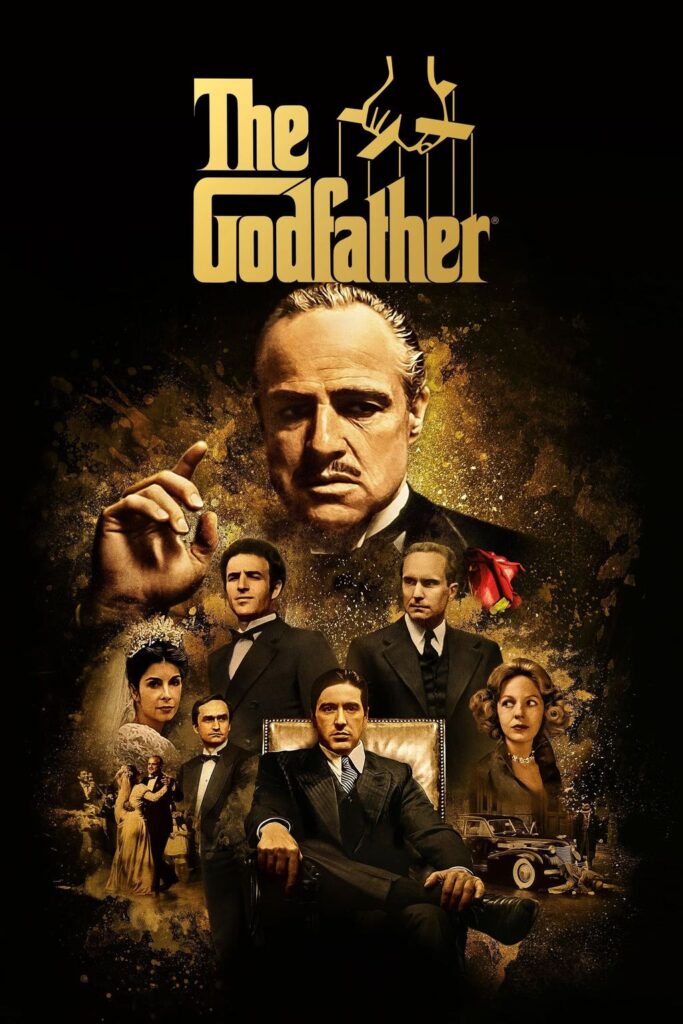
7. **The Director’s Constant Battle: On-Set Script Evolution Amidst Paramount’s Demands**Even with a comprehensive script in hand, the creative process for *The Godfather* was far from a static affair; it was a dynamic, often contentious, evolution that unfolded directly on set. Francis Ford Coppola frequently found himself in a precarious position, battling studio executives who were skeptical of his vision and his methods. He openly stated that he “felt he could be fired at any point,” highlighting the immense pressure under which he worked and the constant conflicts with Paramount, which was not happy with many of his decisions, including the number of screen tests he performed.
The studio’s commercial anxieties directly influenced the script’s development, pushing for changes that they believed would broaden the film’s appeal. For instance, Paramount threatened Coppola with a “violence coach” to inject more excitement into the narrative, believing the initial cuts lacked sufficient visceral impact for a wide audience. This imposition created an unseen tension, forcing the director to consider elements beyond his artistic inclinations and adapt his storytelling in real time.
In response to this executive pressure, Coppola conceded to adding specific violent scenes to keep the studio appeased. A prime example is the scene where Connie smashes crockery after discovering Carlo has been cheating. This particular moment, now memorable for its raw emotional outburst, was directly inserted into the script to satisfy Paramount’s demand for heightened drama and visible conflict, illustrating how the push and pull between artistic integrity and commercial viability actively shaped the screenplay during production.
Such instances reveal that *The Godfather*’s script was not a fixed document, but a living entity, constantly subject to revision and adaptation in the face of directorial indecisiveness, executive intervention, and escalating costs—which were around $40,000 per day. The film editor, Aram Avakian, and assistant director, Steve Kestner, even conspired to get Coppola fired, complaining he wasn’t shooting enough footage, only for Coppola to preemptively dismiss them. These on-set struggles ensured that elements of the story, including its dialogue, were molded and refined within the crucible of a demanding and high-stakes production environment, offering a deeper look into the ‘unseen’ forces at play.
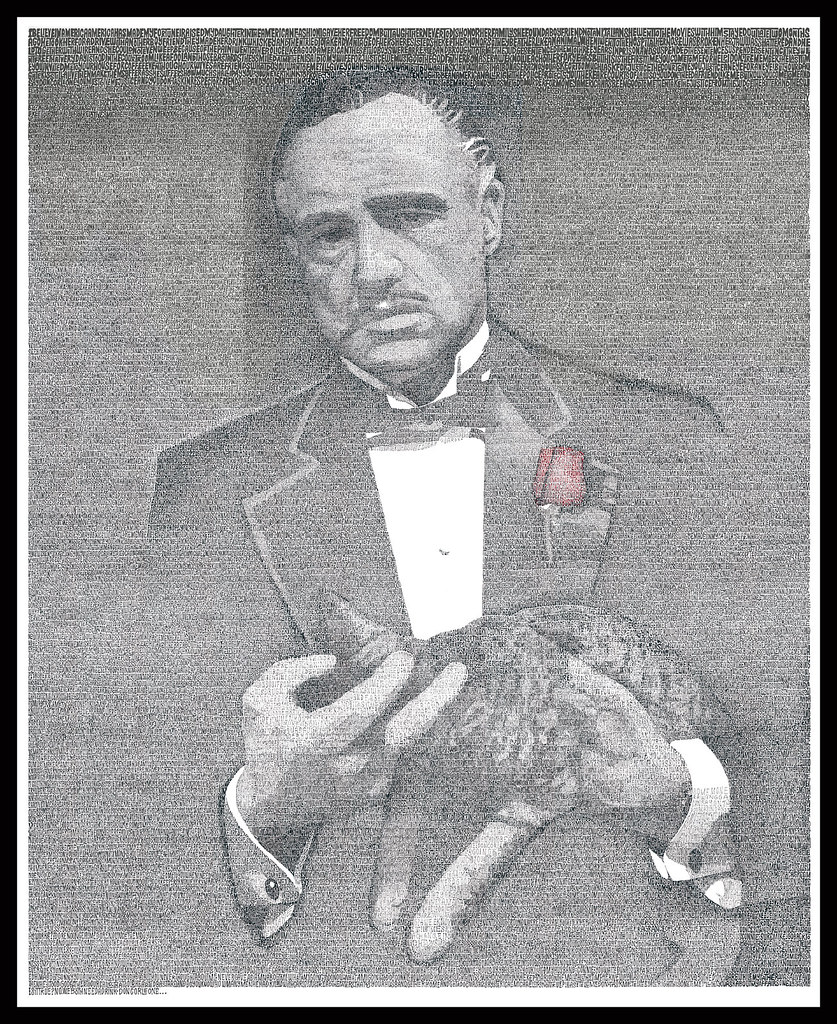
8. **Al Pacino’s Crucible: Improvised Beginnings and the Search for Michael**The casting of Michael Corleone was one of the most fraught and decisive battles during *The Godfather*’s pre-production, a struggle that directly illuminates how a cast member’s journey can profoundly influence the essence of a film’s dialogue and character. Paramount executives, driven by commercial considerations, vehemently desired a popular star for the role, with names like Warren Beatty, Alain Delon, and Robert Redford being floated. Robert Evans, particularly drawn to the charismatic French actor Alain Delon, saw him as Europe’s biggest symbol, actively carrying a copy of Puzo’s book. However, Coppola held firm, envisioning an unknown Italian-American, and relentlessly pushed for Al Pacino.
Pacino himself, despite Coppola’s conviction, harbored significant doubts about embodying Michael Corleone. He confessed to not envisioning himself in the role, perceiving Michael as someone more glamorous, more self-contained—an image perhaps closer to the polished allure of Alain Delon. This internal conflict, a struggle for identity with the character, manifested physically in his early screen tests. Here, Pacino faced significant challenges, often “forgetting lines and improvising dialogue,” a candid admission that offers a rare glimpse into the chaotic yet creative genesis of an iconic performance.
This period of improvisation, born out of Pacino’s initial discomfort and struggle to connect with the written word, is a critical ‘unseen’ contribution. While these specific improvised lines from early tests may not have made it into the final cut verbatim, they represent a direct instance of a cast member organically shaping dialogue. Such moments of raw, unscripted expression, emerging from the actor’s sincere attempt to find their character’s voice, undeniably contribute to the authenticity and natural cadence that define *The Godfather*’s legendary performances.
Ultimately, Coppola’s persistence paid off, convincing producers Al Ruddy and Evans after they saw Pacino in *Panic in Needle Park*. Despite Pacino’s early struggles, his eventual commitment, even while contracted to another studio (MGM’s *The Gang That Couldn’t Shoot Straight*), secured his place. His raw, improvisational spirit in those early days, as he grappled with Michael’s identity and the script’s lines, intrinsically contributed to the gravitas and nuanced delivery that would later make Michael Corleone one of cinema’s most compelling figures, demonstrating how profound internal actor struggles can subtly infuse a script with unforeseen depth.
9. **The Power of Immersion: Rehearsals, Brando’s Nuance, and Character Ownership**The profound depth and authenticity of *The Godfather*’s performances, particularly the indelible portrayals of its central family, were not solely the product of the script but were meticulously cultivated through an immersive pre-filming process. Before cameras rolled on March 29, 1971, the entire cast underwent a rigorous two-week rehearsal period. This wasn’t merely about memorizing lines; it was about internalizing the world of the Corleones, culminating in a legendary dinner where “each actor and actress had to assume character for its duration.” Such a profound commitment to method acting transformed the cast into a true ensemble, deeply influencing their delivery and ownership of the dialogue.
Marlon Brando’s portrayal of Vito Corleone stands as a towering example of how an actor’s preparation and individual artistry can elevate a script. Despite Paramount’s initial strong opposition—due to poor box office performance of his recent films and his reputation for a “short temper”—Coppola steadfastly championed Brando. The studio’s demand for a screen test led to a stroke of genius from Coppola, who disguised it as an “equipment test” at Brando’s residence, not wanting to offend the acting legend. For this, Brando ingeniously stuffed cotton balls in his cheeks, darkened his hair with shoe polish, and rolled his collar, spontaneously crafting the iconic look of the Don.
This unscripted physical transformation, coupled with Brando’s unique voice and mannerisms that captivated executives, underscored his unparalleled ability to inhabit a character. Furthermore, Brando’s fierce loyalty to Coppola, evident when he “threatened to quit if Coppola was fired” amidst the director’s struggles with the studio, demonstrates a deep artistic partnership and commitment to the collective vision. This level of dedication extended beyond mere acting; it was an investment in the film’s soul, which inherently influenced how Vito’s profound, often understated, dialogue would be delivered.
The impact of this immersive approach is immeasurable. When actors are so deeply steeped in their roles, their delivery of dialogue transcends mere recitation; it becomes an organic extension of their character’s inner life. The famous quotes from the film, such as Vito’s profound pronouncements, owe their lasting power not just to the words themselves, but to the intricate web of personal struggle, immersive preparation, and the ‘unseen’ nuances infused by actors like Brando and Pacino. Their complete ownership of their characters allowed the script’s essence to truly shine through, elevating it from powerful text to legendary cinema.
10. **The Unwritten Word: Dialogue Forged in the Dynamic Heat of Production**While *The Godfather* boasts an undeniably masterful screenplay, officially credited to Francis Ford Coppola and Mario Puzo, the reality of its creation reveals a far more fluid and dynamic process. It is a testament to the organic nature of filmmaking that, even after the third draft was completed on March 29, 1971, “some scenes in the film were still not written yet and were written during production.” This fact profoundly impacts our understanding of the script’s origins, highlighting that not every iconic line or pivotal exchange was meticulously pre-penned, but rather forged in the intense, often chaotic, heat of live filming.
Coppola’s personal working method underscores this continuous evolution. He famously referred to a unique “book” he created, filled with pages torn from Puzo’s novel, annotated with his own notes for each of the fifty scenes. This ‘unseen’ notebook, which he carried and consulted throughout filming, served as a dynamic blueprint, constantly being revised and informed by the exigencies of production, the performances of the actors, and his ever-deepening understanding of the narrative. It demonstrates that the final script was not a static document, but a living text, open to modification and refinement as the film itself came to life.
Beyond the explicit writing of dialogue on set, the very visual and atmospheric choices made during filming profoundly influenced the delivery and impact of the script’s words. Cinematographer Gordon Willis, initially hesitant due to the production’s “chaotic” nature, eventually collaborated with Coppola to create a distinctive visual language. Their decision to use a “tableau format” and deliberately underexpose the film, crafting a “yellow tone” and interplay of shadows and low light, was not just aesthetic. These choices created a somber, psychologically charged environment that informed the cadence, tone, and emotional weight of every spoken line, ensuring that the dialogue resonated deeply with the film’s thematic darkness.
Ultimately, *The Godfather*’s legendary dialogue wasn’t just penned on paper; it emerged from a truly dynamic and multifaceted creative process. It was a crucible of external pressures, directorial vision, and the profound, sometimes uncredited, influences of its extraordinary cast. From Pacino’s early improvisations to Brando’s deep character immersion, and from the forced removal of sensitive words to the on-set writing of entire scenes, the screenplay was constantly reshaped. The enduring power of its words is a testament to this unseen, collaborative alchemy, where every struggle, every suggestion, and every unforeseen moment contributed to the indelible cinematic language that continues to captivate audiences half a century later.
The legacy of *The Godfather* is a mosaic, painstakingly pieced together not just by its credited writers, but by the myriad ‘unseen’ hands that touched its narrative. It stands as a timeless reminder that true cinematic artistry is often born from a fierce, unyielding battle of wills, where the boundaries between script, performance, and circumstance blur, giving rise to dialogue so authentic, it feels less written and more simply *lived*. These subtle, often overlooked contributions, particularly from those who brought the Corleones to life, are the true whispers behind the enduring roar of a masterpiece.