When Netflix first introduced its German-language original series, ‘Dark,’ back in 2017, it quietly unleashed a narrative beast that would soon capture the imaginations (and often, the exasperation) of viewers worldwide. This wasn’t just another sci-fi show; it was a sprawling, multi-generational saga, acclaimed for its intricate plotting, stellar acting, and a tone so immersive it practically pulled you into its gloomy, rain-swept world.
At its heart, ‘Dark’ is a science fiction mystery that begins with a classic, unsettling premise: children vanishing from a small, seemingly tranquil German town named Winden. But what quickly unfolds is far from a typical procedural. Instead, viewers are plunged into a mind-bending exploration of time, fate, and the deeply entrenched secrets of four interconnected families whose histories are far more intertwined than anyone could possibly imagine.
Prepare to dive deep into the initial layers of Winden’s temporal labyrinth. We’re about to explore the foundational mysteries, the shocking paradoxes, and the enigmatic characters that set the stage for one of the most compelling and, indeed, ‘dark and gritty’ television experiences in recent memory. Get ready to have your brain rewired, because in Winden, everything is connected, and the past, present, and future are always in flux.
1. **The Haunting Disappearances: Winden’s Central Enigma**The series kicks off with a chilling series of child disappearances in the German town of Winden. In June 2019, after 43-year-old Michael Kahnwald takes his own life, his teenage son Jonas returns from a psychiatric facility, only to find the town gripped by the disappearance of Erik Obendorf, the local drug dealer, two weeks prior. This initial mystery quickly escalates when, during a search for Erik’s drug stash, Jonas, Bartosz Tiedemann, the three Nielsen children (Martha, Magnus, and Mikkel), and Franziska Doppler are startled in the caves, leading to the sudden vanishing of pre-teen Mikkel Nielsen.
These events immediately echo a dark chapter in Winden’s history: the disappearance of Ulrich Nielsen’s younger brother, Mads, in 1986. The immediate parallel creates a palpable sense of dread and a hint that something supernatural or historically rooted is at play. Police officer Ulrich Nielsen, Mikkel’s father, is particularly haunted, feeling an eerie connection between the current disappearances and his brother’s cold case. The weight of these unresolved tragedies presses down on the town, shattering any illusion of peaceful normalcy.
Further deepening the enigma, a body of a young boy is discovered, but it isn’t Mikkel. Clues like 1980s clothing, ears destroyed by extreme pressure, and a death only 16 hours prior, despite the vintage attire, signal that this is no ordinary crime. These perplexing details force Police chief Charlotte Doppler to consider explanations beyond human capabilities, hinting at the bizarre temporal forces at work within Winden. The discovery also serves to expose the strained relationships and hidden lives of the town’s residents, setting the stage for the unearthing of generations of secrets.
2. **The Wormhole in the Caves: Winden’s Temporal Anomaly**Central to Winden’s sprawling mystery is the intricate cave system that runs beneath the local nuclear power plant. This subterranean labyrinth is not merely a setting but the very heart of the time travel conspiracy. It’s here, amid strange sounds and flickering lights, that the first season’s missing children are drawn, and where the fabric of time itself appears to be thin.
Within these caves, members of Winden’s central families gradually become aware of a wormhole, a mystical conduit that allows passage through different eras. The key characteristic of this wormhole is its adherence to 33-year increments, meaning travel is fixed between 2019, 1986, 1953, and later, other significant years. This specific temporal rhythm becomes a crucial element in understanding the show’s complex chronology and the recurring patterns that shape Winden’s fate.
Jonas Kahnwald, guided by his father’s notes and equipment provided by an enigmatic stranger, ventures into these caves. He discovers a door emblazoned with the Latin phrase “Sic mundus creatus est” – “Thus the world was created.” This phrase not only offers a philosophical underpinning to the temporal mechanics but also hints at an organized, almost religious, faction manipulating events through time. The wormhole thus serves as the direct physical link that connects the four estranged families across generations, unraveling a sinister conspiracy that defies linear understanding.
3. **The Intertwined Destinies: Winden’s Four Families**The narrative of ‘Dark’ masterfully weaves together the lives of four core families: the Kahnwalds, the Nielsens, the Dopplers, and the Tiedemanns. Far from being isolated households, their histories are deeply, often tragically, interconnected across generations. The disappearances of children in Winden act as the catalyst, forcing these families to confront not only present-day anxieties but also the buried secrets, fractured relationships, and double lives that have plagued them for decades.
Consider the initial snapshot: Ulrich Nielsen, Mikkel’s father, is having an affair with Hannah Kahnwald, Jonas’s mother. This illicit connection is just one thread in a vast tapestry of betrayal and hidden desires. The Nielsen family, dealing with the trauma of Mads’s earlier disappearance and Mikkel’s current one, is already strained. Meanwhile, the Dopplers, specifically Charlotte and her husband Peter, are navigating their own marital issues, further complicated by Peter’s secret life and the unsettling behavior of his father, Helge.
The Tiedemanns, seemingly more outwardly successful with their control over the nuclear power plant, harbor their own deeply disturbing secrets, particularly surrounding Claudia Tiedemann, the plant’s director, and her father, Egon. What begins as a local police investigation quickly devolves into an archaeological dig through family trees, revealing how grudges, loyalties, and even bloodlines have been twisted and shaped by unseen forces, all linked to the town’s temporal anomaly. Each revelation about one family inevitably implicates another, highlighting the inescapable web that binds them all.
4. **Mikkel Nielsen Becomes Michael Kahnwald: The First Major Paradox**One of the most profound and mind-bending revelations in ‘Dark’ comes with the opening of Michael Kahnwald’s suicide note. Hiding it, his mother Ines initially keeps its contents secret, but when Jonas eventually uncovers it, the truth shatters his understanding of his own reality and sets the stage for the series’ intricate time travel mechanics. This letter isn’t just a farewell; it’s a confession that rewrites history.
Michael’s letter reveals that on November 4, 2019, the very day Mikkel Nielsen disappears, Mikkel travels back in time to 1986. Unable to return to his own time, he grows up in Winden, adopted by Ines Kahnwald, and assumes the identity of Michael. He eventually marries Hannah Krüger (Jonas’s mother) and becomes Jonas’s father. This shocking twist means that Jonas’s father is, in fact, his best friend Martha’s younger brother, Mikkel Nielsen.
This revelation is a cornerstone of ‘Dark’s’ narrative, cementing the idea of a fixed loop where past, present, and future are inextricably linked. It presents Jonas with an almost unbearable paradox: to bring Mikkel back to 2019 would mean his own non-existence, as Michael would never marry Hannah and father Jonas. The emotional weight of this paradox, coupled with the intellectual challenge it poses to the audience, immediately elevates ‘Dark’ beyond a simple mystery, transforming it into a profound exploration of identity, destiny, and the unyielding nature of time.

5. **Jonas Kahnwald: The Reluctant Traveler and The Stranger**Jonas Kahnwald is, in many ways, the audience’s entry point into the bewildering world of Winden. Initially introduced as a grieving teenager struggling with his father’s suicide and his crush Martha now dating his best friend Bartosz, Jonas’s life takes an extraordinary turn. His discovery of maps and cryptic notes about the caves in his family’s garage marks the beginning of his reluctant journey into time travel.
Crucially, Jonas receives a mysterious package containing a Geiger counter, a light, and his father Michael’s suicide note – delivered to him by ‘The Stranger.’ This enigmatic figure, who checks into Regina Tiedemann’s hotel, becomes a mentor and guide for Jonas, offering clues and warnings about the consequences of interfering with time. The ultimate revelation that ‘The Stranger’ is, in fact, the adult version of Jonas himself, adds a layer of profound irony and predestination to his character arc.
As the younger Jonas, he grapples with the terrifying truth of his own existence and the intricate web of cause and effect. He ventures into the caves, armed with his father’s notes and the equipment, driven by a desperate desire to understand and perhaps undo the tragedies. However, he quickly learns that his attempts to alter the past are often the very actions that create the future he seeks to change, reinforcing the show’s deterministic themes and solidifying his role as a central, tragic figure caught in an endless loop.

6. **Noah: The Mysterious Priest and Drug Supplier**Among the most enigmatic and unsettling figures in Winden is Noah, a character who appears across multiple timelines, seemingly ageless and always pursuing a hidden agenda. First encountered as a priest visiting Mikkel in the hospital in 1986, his serene facade belies a far more sinister role. Later, in 2019, he shockingly emerges as Erik Obendorf’s drug supplier, demonstrating his pervasive influence within the town’s darker underbelly.
Noah’s involvement in the disappearances of the children, including Erik and Yasin Friese, is gradually revealed to be central to his overarching mission. He is the hooded figure seen strapping Erik to a chair, and he oversees attempts to create a functional time machine, a process that tragically results in the deaths of the abducted boys. He views these grim experiments as necessary sacrifices, part of a larger plan to ‘free humanity’ from the constraints of time, positioning him as a dark zealot.
As an acolyte of Sic Mundus Creatus Est, the clandestine society of time travelers led by the mysterious Adam, Noah is a key antagonist. His calm, almost detached demeanor, coupled with his willingness to commit horrific acts in service of a greater, hidden goal, makes him a chilling presence. He manipenses Bartosz Tiedemann, drawing him into the fold, and actively works to thwart perceived adversaries like Claudia Tiedemann, underscoring his deep commitment to the time travel conspiracy that engulfs Winden.
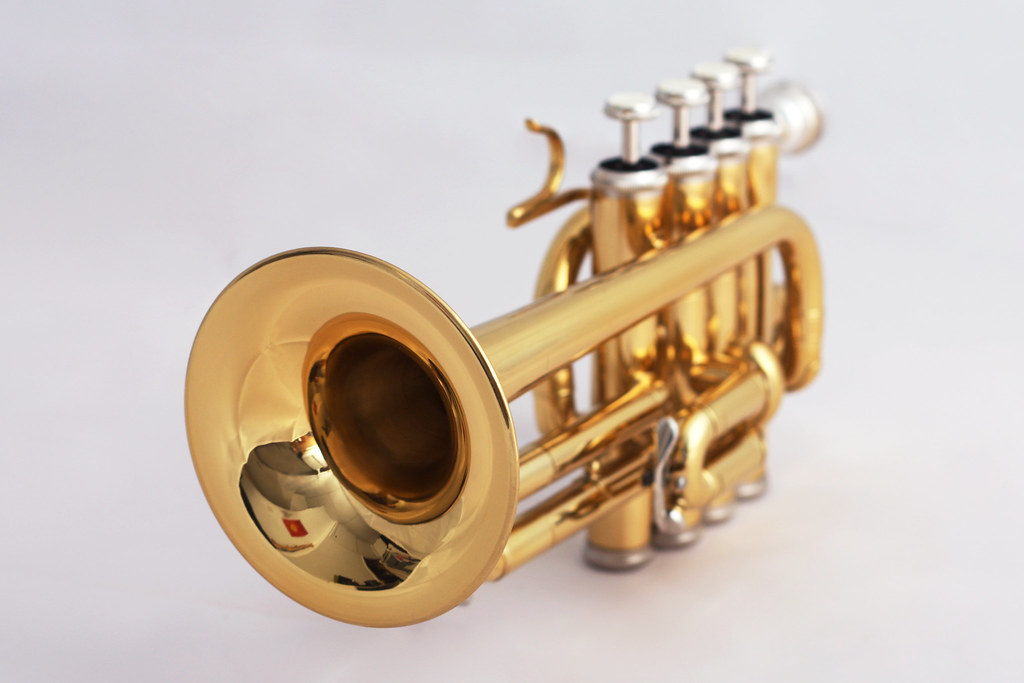
7. **H.G. Tannhaus and the Brass Device: The Theoretical Foundation**No grand time travel narrative is complete without its theoretical underpinnings, and in ‘Dark,’ that role is expertly filled by H.G. Tannhaus. A local clockmaker, lecturer in theoretical physics, and author of the seminal book ‘Eine Reise durch die Zeit’ (A Journey Through Time), Tannhaus provides the intellectual framework that makes Winden’s temporal anomalies comprehensible, if still incredibly complex.
His book, which appears in various timelines and is read by characters like Helge Doppler and Claudia Tiedemann, details theories of time travel through wormholes and the specific mechanics of temporal shifts, particularly the 33-year cycles. Tannhaus’s writings transform what might otherwise seem like random occurrences into a structured, albeit sinister, science. His research serves as a vital guide for characters attempting to understand or manipulate the temporal passages within the Winden caves.
Beyond his theoretical contributions, Tannhaus is also a practical inventor. The Stranger (adult Jonas) seeks him out in 1986 to repair a crucial ‘broken brass device,’ a rudimentary time machine. Tannhaus not only fixes it but later studies it alongside his “original version,” deepening his understanding of the wormhole and his own inventions. His direct involvement in building and understanding these devices makes him a pivotal, albeit often unwitting, player in the unfolding time travel saga, especially given his later role as the guardian of Charlotte Doppler, further cementing his deep, paradoxical connection to Winden’s interwoven destinies.
Deeper into the Abyss: Unraveling Seven Advanced Conspiracies, Factions, and Parallel Realities in Netflix’s ‘Dark’
Having peeled back the initial layers of Winden’s bewildering temporal labyrinth, it’s time to plunge further into the abyss. The foundational mysteries we’ve explored were merely the prologue to an even grander, more sinister narrative. Get ready to confront the masterminds behind the paradoxes, the ultimate engines of time travel, and the mind-bending reality of parallel worlds. We’re about to navigate the intricate web of advanced conspiracies and existential questions that cement ‘Dark’ as a true modern classic.
8. **The Rise of Sic Mundus and Adam: Winden’s Grand Manipulators**The machinations in Winden weren’t just random temporal anomalies; they were orchestrated by a powerful, clandestine society of time travelers known as Sic Mundus Creatus Est, Latin for ‘Thus the world was created.’ This faction emerges as a central force in the ongoing battle for the ultimate fate of the people of Winden and the world itself. Their origins are rooted in the past, with a young Noah seen in 1921 building the very passages that become crucial to their operations, already guided by his older self.
At the helm of Sic Mundus is the enigmatic and disfigured figure known only as Adam. He is, in fact, the elder version of Jonas Kahnwald, scarred by decades of time travel and a profound, often cynical, understanding of Winden’s cyclical nature. Adam’s philosophy centers on the idea of breaking the endless loop of suffering, believing that only through ultimate destruction can a new, untainted world emerge. His influence permeates every timeline, as he manipulates events and individuals, including the adult Noah, to serve his grand design.
Adam’s guidance of Noah is a chilling example of his foresight and control. In 1921, he instructs the adult Noah to retrieve Claudia’s diary, a critical piece of information, all in preparation for an impending ‘apocalypse’ set to occur on June 27, 2020. Sic Mundus is not merely a group of time travelers; they are zealots convinced of their divine mission, willing to sacrifice countless lives in their pursuit of what they believe is ultimate freedom from the constraints of time and fate.
9. **The God Particle: Winden’s Ultimate Temporal Engine**Beyond the humble brass device and the natural wormhole in the caves, ‘Dark’ introduces a far more powerful and devastating engine of time travel: the God Particle. This amorphous black blob, found within the ruins of the nuclear power plant in post-apocalyptic Winden in 2053, represents the ultimate manifestation of the town’s temporal anomaly. It’s a raw, unstable energy source, capable of ripping holes in the fabric of space-time, making it the most potent tool in the ongoing temporal war.
Teenage Jonas, trapped in 2053 and monitored by the now-adult Elisabeth Doppler, discovers this terrifying phenomenon. Elisabeth, leading a group of survivors, strictly forbids entry to the power plant, understanding the immense danger it poses. However, Jonas, driven by desperation and a thirst for answers, ventures into the forbidden Dead Zone, where he encounters the pulsating black mass, hinting at its immense power.
It is through recordings left by the elder Claudia Tiedemann that Jonas, and by extension the audience, learns the true nature of this phenomenon: the ‘God Particle’ is indeed a usable portal for time travel. With the help of Elisabeth’s curious interpreter, Silja, Jonas manages to access this dangerous temporal engine, embarking on a journey that will unravel even more layers of Winden’s convoluted history. This powerful force becomes a crucial element in both Adam and Eva’s plans, a weapon capable of altering, or perhaps fixing, the very nature of existence.

10. **The Countdown to Apocalypse: Winden’s Inevitable Fate**Throughout the second season, a looming sense of dread permeates Winden, all building towards an inescapable event: the apocalypse. This isn’t just a metaphor for the town’s unraveling secrets but a literal cataclysm predicted to occur on June 27, 2020. The impending disaster amplifies the already tense atmosphere among the residents, as the intertwining family dramas reach their breaking point against the backdrop of an almost cosmic countdown.
Leading up to this fateful date, the various factions are frantically preparing, each believing their actions will either avert or facilitate the event to achieve their desired outcome. Aleksander Tiedemann, the director of the nuclear power plant, is seen orchestrating the secretive movement of radioactive waste into the facility, a clear precursor to the disaster. His actions, like so many others in Winden, are part of a larger, predetermined chain of events.
Adam, as the leader of Sic Mundus, views the apocalypse not as an end, but as a necessary purification, a reset button for existence. He specifically instructs Noah to secure Claudia’s diary, indicating the strategic importance of information in guiding the events towards this critical juncture. The apocalypse, therefore, becomes the nexus where all timelines converge, a devastating consequence of the town’s ceaseless temporal manipulations, and the moment that ushers in new, fractured realities.

11. **Parallel Worlds and Eva: A Mirror of Destinies**Just when viewers thought Winden couldn’t get any more complex, the third season shatters the perceived singular reality by introducing a parallel world. This groundbreaking revelation fundamentally changes the scope of the narrative, revealing that the intricate web of destinies isn’t confined to one universe but is mirrored, and twisted, in another. Suddenly, every character, every event, takes on a dual significance, existing in variations across tethered realities.
Central to this parallel world is the figure of Eva, who is revealed to be the elder version of Martha Nielsen from this alternate reality. Much like Adam, Eva leads her own faction, Erit Lux, and is dedicated to preserving her world and the existence of her son. The introduction of Eva brings a new philosophical conflict to the series, presenting an antagonist who, despite her opposing goals, mirrors Adam’s conviction and devotion to her own version of the loop.
The existence of these alternate versions of main characters, some with subtly different paths or relationships, showcases the profound ‘what ifs’ that linger beneath Winden’s surface. These parallel worlds complicate the struggle for control over time, as both Adam’s Sic Mundus and Eva’s Erit Lux work to further their own desires for each world, convinced that their path is the only one to salvation or preservation. The series masterfully explores how even with different choices, certain destinies seem inescapably entwined across realities.
12. **The Endless Labyrinth: Intricate Temporal Loops and Fixed Events**One of the most enduring and mind-bending aspects of ‘Dark’ is its relentless commitment to the concept of intricate temporal loops and fixed events. The narrative repeatedly demonstrates that characters’ desperate attempts to alter the past or prevent future tragedies are, in fact, the very actions that bring those events to fruition. This creates a profound sense of helplessness and underscores the series’ deterministic philosophy, where destiny is not just a concept but an unbreakable law of the universe.
From Jonas trying to prevent Michael’s suicide, only to inadvertently cause Mikkel to travel back in time and become Michael, to Ulrich’s futile attempts to kill a young Helge, which instead sets Helge on his path, the loops are everywhere. The 33-year cycles are not merely a mechanism for time travel but a recurring rhythm that ensures historical events repeat themselves, sometimes with slight variations but always leading to the same, predestined outcomes. Every choice, every intervention, closes another segment of the circle.
This labyrinthine structure means that cause and effect are not linear but circular. A character’s future self might influence their past self, creating an endless, self-sustaining chain of events. The series challenges viewers to grapple with the unsettling idea that free will might be an illusion, and that every character, no matter how much they resist, is merely playing out a role in a cosmic play scripted by time itself. It’s a narrative that demands careful attention, as every small detail can be a clue to an even larger, more devastating temporal paradox.

13. **Existential Echoes: Fate, Free Will, and the Nature of Time**At its philosophical core, ‘Dark’ is an intense exploration of profound existential questions, forcing viewers to confront the very nature of fate, free will, and the relentless, unyielding march of time. The show isn’t just a puzzle box of temporal mechanics; it’s a deep dive into what it means to be human when your entire existence is seemingly predetermined, trapped in a cycle you cannot escape. It challenges our fundamental understanding of choice and consequence.
The characters in Winden are not merely pawns in a time-travel game; they are individuals grappling with the crushing weight of their inherited histories and the horrifying realization that their attempts to change their lives only solidify their predetermined destinies. This exploration of the ‘existential implications of time and its effect on human nature and life’ is what elevates ‘Dark’ beyond typical science fiction. It’s a tragedy where love, loss, and betrayal are magnified by their cyclical recurrence.
Adam and Eva, the elder versions of Jonas and Martha, embody this central conflict. Their epic battle for the “ultimate fate” of Winden and the world isn’t just about winning a temporal war; it’s a struggle over whether existence itself can be truly free or if it is eternally bound. ‘Dark’ leaves us pondering whether happiness is achievable if every joy is destined to be followed by sorrow, and if breaking a cycle means sacrificing everything you’ve ever known. It’s a series that lingers long after the credits roll, a chilling meditation on what it truly means to be caught in the web of time.
Read more about: Unearthing Trauma: The Enduring Narrative of ‘Beloved’ for a Dark and Gritty Live-Action Reboot
And there you have it, a deeper plunge into the intricate, mind-bending world of Netflix’s ‘Dark.’ From the enigmatic rise of Sic Mundus and the terrifying power of the God Particle to the revelations of parallel worlds and the ultimate philosophical wrestling with fate, this series is a masterclass in complex storytelling. It’s a narrative that doesn’t just entertain; it challenges, provokes, and ultimately leaves you with a profound appreciation for its ambitious narrative and the unyielding mysteries of time. If you haven’t ventured into Winden yet, what are you waiting for? Just be prepared to have your understanding of reality thoroughly rewired. Everything is connected, after all.