Hollywood, a realm where dreams are spun and legends forged, exists in a delicate, often volatile, dance with the media. For decades, actors, musicians, and directors have leveraged press conferences, junket interviews, and late-night couches to amplify their projects and personas. This symbiotic relationship typically ensures mutual benefit: widespread promotion for the stars and captivating content for the hungry public, yet it is a terrain where boundaries are frequently tested, and decorum, shattered.
The allure of an exclusive peek behind the curtain of celebrity life can regrettably tempt interviewers to stray beyond the professional remit, venturing into personal, inappropriate, or even hostile territory. However, a new paradigm has emerged, characterized by stars who are no longer content to passively endure ill-mannered inquiries. Instead, they boldly reclaim the narrative, transforming potential public relations disasters into powerful demonstrations of self-respect and intelligence. These instances offer compelling insights into the evolving power dynamics within the entertainment industry, showcasing how celebrities are masterfully outclassing their interviewers, often with memorable and profound impact.

1. **Mila Kunis Shut Down a Rude Interview Question in Russian**
A compelling example of celebrity poise unfolded in Moscow in 2011, as Justin Timberlake and Mila Kunis promoted “Friends with Benefits.” During a press conference, a Russian journalist asked Timberlake, in Russian, why he was now acting. Kunis, fluent in Russian and immediately recognizing the subtle dismissiveness in the query — implying individuals from other showbiz corners weren’t always great at acting — quickly intervened. Her sharp intervention not only defended her co-star but also highlighted the unprofessionalism of the question.
Kunis swiftly dismantled the premise, firing back in Russian, “Wait, you’re asking why he wants to be in movies?” She then escalated her defense, querying, “Well, what would you rather have him do?” When the journalist reiterated that “showbiz” should be enough, Kunis delivered a decisive rhetorical blow. “Well, if he wants to make movies, why shouldn’t he? What kind of question is that? Why are YOU here?” This masterful redirection flipped the script, forcing the interviewer to confront her own motivations and the appropriateness of her line of questioning.
The journalist, visibly flustered, insisted she was “merely doing her job.” Kunis, unyielding, met this with equal force: “Well so is he! It’s the same thing!” This powerful exchange underscored that an actor’s chosen path is their prerogative, and journalistic inquiries demand professional respect. Kunis’s quick thinking and linguistic prowess diffused an ill-mannered moment, transforming it into an impressive display of celebrity solidarity and intellectual superiority that left an indelible mark on the media landscape.
2. **Iggy Pop Explained ‘Punk Rock’ to a Stodgy Canadian Interviewer**
The late 1970s witnessed the eruption of punk rock, a raw and defiant counter-movement challenging established musical norms. It was within this tumultuous cultural landscape that Iggy Pop, the legendary frontman of The Stooges, appeared on the Canadian TV talk show “90 Minutes Live” in 1977. Interviewed by host Peter Gzowski, Pop found himself confronted with an attempt to neatly categorize his rebellious artistry under a label he deeply resented, particularly after a prior “cross-border snafu” prevented him from performing with David Bowie.
When Gzowski, seeking to define “punk rock,” posed the question, Pop seized the opportunity for a profound, visceral rejection of the term. He declared, “Well, I’ll tell you about punk rock. Punk rock is a word used by dilettantes and heartless manipulators, about music that takes up the energies, and the bodies, and the hearts, and the souls, and the time, and the minds, of young men who give what they have to it … it’s a term that’s based on contempt … and everything that’s rotten about rock ‘n’ roll.” This was not just a dismissal; it was an eloquent, impassioned dissection, exposing the label’s reductive and contemptuous nature.
Pop’s powerful denunciation underscored a common journalistic pitfall: oversimplifying complex artistic movements with loaded labels. He challenged the very authority of such categorization, asserting his right to define his own art. When Gzowski pressed if he simply didn’t “like the label,” Pop retorted, “I don’t like to hear it come out of someone’s mouth,” emphasizing the personal offense at its trivialization. He further deflected attempts to sensationalize his past “outrageous onstage antics,” refusing to indulge manufactured drama. This interview remains a masterclass in an artist reclaiming their narrative from the reductive gaze of mainstream media.
3. **Bill Burr Flipped the Script When a Host Demanded He Perform His Stand-Up Act**
The unpredictable and honest world of stand-up comedy finds its embodiment in Bill Burr, a comedian known for his blunt observations and scathing rants. Burr is not one to tolerate foolishness, a lesson an Atlanta radio host learned the hard way. Ahead of a comedy gig, Burr engaged in what was loosely termed an “interview” with Southside Steve Rickman, an encounter that quickly became a memorable display of Burr’s sharp intellect and disdain for facile media tactics.
The interaction began awkwardly, with Rickman introducing Burr perfunctorily before shoving a large microphone into his face. Burr’s incredulous “That’s your question?” signaled his immediate refusal to conform. The situation escalated dramatically when Rickman, with astonishing presumption, “ordered” Burr to perform his stand-up routine, seemingly oblivious to the setting. Burr’s response was a masterstroke of comedic defiance: “And I I’m gonna do stand-up in front of nine people in a radio station? No, I’m not doin’ that.” This pithy refusal highlighted the absurdity, asserting his professional boundaries with firm authority.
The host’s continued, awkward thrusting of the microphone only underscored his lack of control, providing Burr the perfect opening to seize command. Taking the mic, Burr not only gained physical control but symbolically flipped the power dynamic. He then delivered a lesson in broadcasting etiquette: “That’s the number one thing you don’t do… you never give up the microphone. See, now I have the power.” What followed was a relentless, hilarious roasting of Rickman, turning the tables on the unprepared host with incisive commentary on journalistic unprofessionalism.
4. **Dylan McDermott Sidestepped Insensitive Questions About His Mother’s Murder**
Celebrity interviews often hinge on an unspoken compact of respect, particularly when discussing profound personal tragedy. This delicate understanding, however, was conspicuously absent during Dylan McDermott’s appearance on SiriusXM’s “Jim and Sam Show.” McDermott, acclaimed for his role in “The Practice,” carries the burden of his mother’s murder when he was five, a deeply sensitive subject he understandably avoids in public forums.
The interviewer, comedian Jim Norton, regrettably demonstrated a jarring lack of discretion. Without preamble, he blurted out, “Now I know your mom was killed,” forcing a topic of immense personal grief into a seemingly light-hearted discussion. McDermott’s immediate response, “Yeah, I don’t really want to get into that now,” clearly signaled his desire to redirect to his television project. Yet, the hosts, Norton and fellow comedian Doug Stanhope, remained stubbornly oblivious, even making an “awkward murder joke” and pressing about the murder’s role in his acting career.
McDermott’s response was a masterclass in dignified evasion. Despite the egregious line of questioning, he managed to “sidestep that entirely,” maintaining a cordial demeanor even as he was visibly “perturbed” by the intrusion. He firmly refused to be drawn into a sensationalized discussion of his trauma, instead holding firm to his boundaries. This remarkable composure, in the face of such a profound personal affront, underscored his resilience and highlighted how some interviewers prioritize shock value over respectful engagement, necessitating an actor’s unwavering self-protection.
5. **Tom Cruise Lectured a Wannabe Prankster Who Squirted Him in the Face During an Interview**
Tom Cruise, a figure synonymous with Hollywood longevity and unwavering professionalism, has cultivated a public persona built on courtesy and respect. This reputation makes any deviation from respectful interaction particularly jarring, as seen on a red carpet in 2005 during the “War of the Worlds” promotional tour, where Cruise became the target of an utterly juvenile and disrespectful stunt.
Mid-interview, earnestly discussing his film, an interviewer abruptly “sprays water in Cruise’s face with a water pistol.” The immediate shock and offense on Cruise’s face were palpable. His initial, incredulous query, “Now why would you do that?”, underscored not just his surprise but a fundamental questioning of the interviewer’s motivations and stark lack of professionalism. As the interviewer attempted to flee, Cruise refused to let the moment pass, pursuing him and demanding an explanation.
“What’s so funny about that?” he pressed, his voice clear and firm, adding, “It’s ridiculous. Do you like thinking less of people, is that it?” Refusing to allow escape, Cruise delivered a cutting rebuke: “Hey, hey, no, no — don’t run away. That’s incredibly rude. I’m here giving you an interview and answering your questions … You’re a jerk.” This unflinching confrontation, delivered with gravity, transformed a moment of indignity into a public lesson in decorum, solidified by the interviewer’s ignominious retreat and Channel 4’s subsequent apology.

6. **Matt Damon Stood Up for Teachers in a Clumsy Interview**
The intersection of celebrity and social advocacy can often be a fraught territory, particularly when public figures champion complex societal issues. In 2011, Matt Damon, joined by his mother, a dedicated Boston schoolteacher, participated in the “Save Our Schools” march in Washington, D.C. This genuine engagement became the backdrop for a surprisingly clumsy interview with a reporter from Reason TV, who advanced a problematic premise about teacher efficacy.
The reporter’s line of questioning hinged on a controversial supposition: that job security for teachers might diminish their work ethic, drawing a facile parallel to the entertainment industry. “There’s an incentive to work hard and be a better actor because you want to have a job, so why isn’t it like that for teachers?” the interviewer posited. Damon, however, met this assertion with immediate and vehement disagreement, his passion evident. “So you think job insecurity is what makes me work hard?” he countered, articulating a profound truth: “It’s like saying a teacher is going to get lazy when they have tenure, a teacher wants to teach! … why else would you take a s***ty salary and really long hours… unless you really love to do it?”
The situation took an even more peculiar turn when the cameraman interjected with an unsubstantiated claim: “Ten percent of teachers are bad.” This off-the-cuff remark, met by Damon’s mother’s astute challenge, exposed the flimsy basis of their argument. The cameraman’s subsequent struggle to justify his figure provided Damon with the perfect opportunity for a “scathingly perfect response” that abruptly, and definitively, ended the interview. “Well, okay. But maybe you’re a s***ty cameraman, I don’t know,” Damon retorted, a concise yet devastating rebuttal that silenced the ill-conceived questioning.
Beyond these initial skirmishes, the entertainment landscape is rife with further examples of stars who have not only challenged but fundamentally reshaped the terms of engagement with the press. These moments often underscore the pivotal role publicists play, or reveal a celebrity’s unwavering resolve to protect their privacy and integrity, illuminating the intricate ballet of power that defines modern Hollywood interactions. From abrupt departures to sharp rebuttals, these instances have carved a new path for celebrity interviews, demanding a level of respect and professionalism that was once regrettably optional. This evolution reflects a growing empowerment within the industry, as figures demand autonomy over their stories.
7. **Robert Downey Jr. Walked Out When Questioning Turned to His History of Addiction**
Robert Downey Jr.’s journey through Hollywood has been uniquely marked by both astounding professional highs and deeply personal struggles with addiction. While the latter, including a period of incarceration in the 1990s, was widely publicized, it was a chapter he had demonstrably moved past by 2015. Yet, during a promotional junket for the blockbuster “Avengers: Age of Ultron,” British journalist Krishnan Guru-Murthy seemed intent on excavating this painful past, asking Downey if he felt “free” from his previous issues with addiction.
The context of a superhero movie promotion made Guru-Murthy’s line of questioning particularly jarring and inappropriate. Downey’s initial reaction was a visible seething, a testament to the intrusion he felt. Ultimately, he chose to terminate the interview, uttering a grimly smirking “I’m sorry, I really don’t … what are we doing?” before offering a dismissive wave, pulling off his mic, and walking off. This decisive exit was a powerful statement of boundary-setting, asserting his right to control the narrative of his public appearances.
Reflecting on the encounter later on “The Howard Stern Show,” Downey Jr. articulated his profound displeasure, explaining that he perceived the questions as stemming from a “creepy, dark agenda” and characterized Guru-Murthy as a “bottom-feeding muckraker.” He expressed regret for not having ended the interview sooner, contemplating future strategies to distance himself from such “syphilitic parasite[s].” This incident became a stark illustration of a celebrity refusing to be defined solely by their past traumas, demanding that professional engagements remain focused on their current work and public persona, rather than sensationalist rehashing of personal history.
8. **Quentin Tarantino Refused to Answer Interviewer’s Loaded Question About Movie Violence**
Filmmaker Quentin Tarantino, celebrated for his distinctive cinematic style, frequently incorporates intense and graphic violence into his work, a thematic element that has consistently sparked debate and critical discussion. In 2013, during an interview with the same British journalist, Krishnan Guru-Murthy, Tarantino was confronted with a highly charged question about the connection between the violence depicted in his films and real-life violence. It was a loaded inquiry designed to provoke, yet Tarantino met it with unwavering defiance.
His immediate response, “I’m not biting,” followed by a firm “I refuse your question,” set the tone for a confrontational exchange. When Guru-Murthy pressed for a reason, Tarantino’s retort was a potent assertion of autonomy: “Because I refused your question. I’m not your slave and you’re not my master. You can’t make me dance to your tune. I’m not a monkey.” This powerful declaration dismantled the interviewer’s perceived authority, establishing a clear boundary between the interviewer’s agenda and the artist’s willingness to engage.
Tarantino steadfastly held his ground, explaining that he had already exhaustively addressed the subject of cinematic violence in prior discussions, suggesting that any interested party could easily find his consistent viewpoints online. When Guru-Murthy tried to argue that Tarantino hadn’t “fleshed it out,” the director retorted, “It’s not my job to flesh it out!” He concluded the contentious exchange with a definitive, “And I’m shutting your butt down,” unequivocally ending the line of questioning. This incident highlights an artist’s right to refuse to re-litigate settled topics, particularly when they feel a journalist is pursuing an agenda rather than genuine inquiry.
9. **John Lydon Schooled Tom Snyder Over His Clueless Questioning**
John Lydon, globally recognized as Johnny Rotten, the provocative frontman of the Sex Pistols, has consistently embodied a spirit of rebellion and an unapologetic disregard for convention. This ethos was vividly on display in a 1979 appearance on NBC’s “Tomorrow” with host Tom Snyder, who had previously interviewed Lydon during his Sex Pistols era. This time, Lydon was promoting his new post-Pistols project, Public Image Ltd., and arrived visibly angry and agitated, setting the stage for a famously contentious encounter.
The interview quickly devolved as Snyder questioned Lydon and fellow PiL member Keith Levene about their professed hatred for rock ‘n’ roll. Lydon seized the opportunity to unleash an epic rant, declaring rock ‘n’ roll “dead, it’s a disease, it’s a plague, it’s been going on for too long, it’s history… It’s vile. It’s not achieving anything … they play rock ‘n’ roll at airports.” His articulate, yet scathing, dismissal illustrated a profound rejection of mainstream music culture, executed with a characteristic blend of intellectual disdain and raw emotion.
Lydon continued to derail Snyder’s every attempt at a conventional interview, continually bumming cigarettes and frustrating the host’s lines of inquiry. Snyder, exasperated, attempted to summarize their conversation, noting, “Not a band, a company. Not a performance, a gig.” When Snyder proposed asking viewer questions, Lydon predicted, “It’s bound to be awful.” Snyder then challenged Lydon directly, asking if he didn’t care what his audiences thought, to which Lydon coolly replied, “No. It doesn’t matter. It’s irrelevant.” This exchange epitomized an artist’s refusal to conform to media expectations, unapologetically prioritizing artistic integrity and personal vision over popular appeal or journalistic categorization.
10. **Ariana Grande Confronted Sexist Questions and Called for an End to Bigotry and Intolerance**
Pop superstar Ariana Grande has consistently used her platform to advocate for social justice, and her commitment to challenging inequality extends even to the casual ism often encountered in media interviews. In a 2015 radio interview on Power 106 FM, she was met with questions that quickly veered into stereotypical gender territory, highlighting the pervasive nature of unconscious bias within media interactions. Her responses were a masterclass in graceful, yet firm, redirection.
One male host asked Grande to choose between makeup or her phone if she could only use one for the final time. Grande’s immediate, surprised retort — “Is this what you think girls have trouble choosing between? Is this men assuming this is what girls have to choose between?” — deftly exposed the ist premise of the question. She refused to validate the stereotype, forcing the hosts to confront their own assumptions about women’s priorities. This pivotal moment underscored her commitment to challenging reductive portrayals of femininity in the public eye.
The conversation further shifted to the recently released unicorn emoji, which the male hosts presumed was exclusively for women, a notion Grande swiftly refuted by stating it was for anyone who wished to use it. This progressive stance culminated when she was asked to identify one problem she would fix in the world. Grande, seizing the opportunity to articulate a broader vision, responded, “I have a long list I’d like to change. I think judgment in general. Intolerance, meanness, double standards, misogyny, racism, ism. All that sh*t. There’s lots that we’ve got to start on. That’s what we need to focus on. We’ve got work to do.” Her comprehensive answer transformed a trivial query into a profound statement, showcasing her intellectual depth and unwavering commitment to a more equitable world.
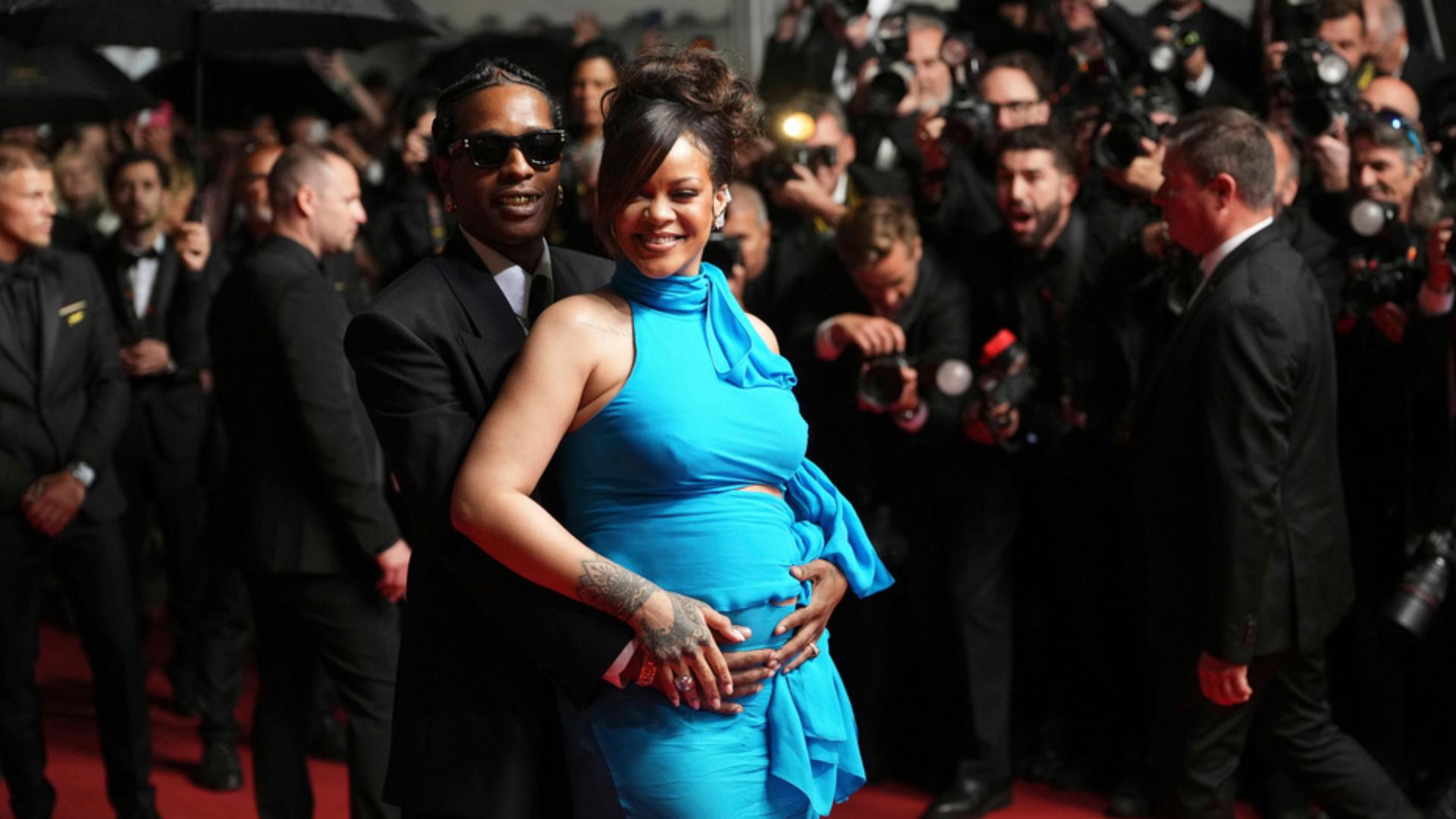
11. **Rihanna Rose Above ‘Disappointing’ Question About Ashton Kutcher Romance at Battleship Presser**
Rihanna, a global fashion and music icon, seamlessly transitioned into acting with her debut in the 2012 film “Battleship.” While promoting the movie, she found herself navigating a swirl of tabloid rumors suggesting a romantic involvement with actor Ashton Kutcher. At a London press conference for the film, a journalist chose to pivot from a question about her burgeoning acting career to an intrusive inquiry about her personal life, illustrating a common journalistic tendency to prioritize gossip over professional achievements.
The reporter’s question, which began with a compliment on her career before segueing into the blunt inquiry, “Will we see a certain Mr. Ashton Kutcher perhaps making a trip over here?”, visibly shifted Rihanna’s demeanor from engaged interest to one of sheer disgust. Her immediate and unvarnished response — “Wow, how disappointing was that question,” delivered with a humorless chuckle and a shake of her head — was a potent dismissal. It was a succinct yet powerful rebuke, signaling her refusal to indulge speculative personal queries during a professional engagement.
As a voice offered to move on to another question, Rihanna readily agreed, “Absolutely.” She then briefly revisited the original intrusive query, stating plainly, “I’m happy and I’m single, if that’s what you are really asking.” This final, concise statement not only clarified her relationship status but also served as a dignified way to reclaim control of the narrative, directly addressing the underlying intention of the question while firmly shutting down further speculation. Rihanna’s response exemplifies a celebrity’s right to define the boundaries of their public discourse, prioritizing their work over manufactured romantic drama.

12. **Jerry Seinfeld Hilariously Shredded Larry King for Suggestion His Sitcom Was Canceled**
Jerry Seinfeld, a comedian synonymous with sharp wit and observational humor, possesses a ly side when confronted with perceived absurdity or ignorance. This characteristic was famously on display during a 2007 appearance on CNN’s “Larry King Live,” an interview that highlighted King’s legendary, albeit sometimes problematic, refusal to prepare for his guests. The exchange became a classic example of a celebrity using humor and incredulity to dismantle an interviewer’s ill-informed premise.
King, evidently unaware of a widely known fact, sought clarification on whether Seinfeld had chosen to end his wildly successful sitcom “Seinfeld” or if it had been canceled. Seinfeld’s incredulous response, “You’re not aware of this? You think I got canceled? I thought that was pretty well documented — is this still CNN?” immediately signaled his disbelief. He then emphatically clarified that “Seinfeld” was the number one show on television when it concluded in 1998, nearly a decade prior, with an astounding 75 million viewers for its final episode.
His passionate retort, “It’s a big difference between being canceled and being No. 1 — geez!”, underscored the absurdity of King’s misapprehension. While seemingly testy at the time, Seinfeld later clarified via Twitter after King’s 2021 passing that the “canceled” bit was “just me having fun with his little mistake. Nothing more. Or less.” This incident serves as a memorable reminder of the dynamics between an unprepared interviewer and a quick-witted celebrity, where the latter can turn a gaffe into a moment of memorable television, subtly reasserting their authority and knowledge in a public forum.
The evolving tapestry of celebrity interviews reveals a clear and compelling shift: stars are no longer passive recipients of intrusive questions or inappropriate lines of inquiry. These twelve instances, from sharp verbal take-downs to decisive walk-outs, illustrate a powerful paradigm where the celebrity, often supported by the strategic interventions of publicists, actively shapes the discourse. They are moments not just of confrontation, but of profound reclamation — of dignity, autonomy, and the right to define their own narrative. As the entertainment world continues its intricate dance with the media, these pivotal encounters serve as enduring lessons in professionalism, respect, and the unwavering power of a well-placed, confident refusal. It’s a brave new world for celebrity interviews, one where authenticity and boundaries are increasingly paramount, setting a formidable standard for all who dare to ask the next question.