The glittering facade of Hollywood often distracts from a far more complex and occasionally brutal reality: the world of the box office bomb. These cinematic misfires, far from simply underperforming, represent colossal financial losses that ripple through studios, distributors, and production companies, often reshaping industry strategies for years to come. Understanding what truly constitutes a ‘box-office bomb’ requires looking beyond mere production budgets and theatrical grosses, delving into a labyrinth of hidden costs, elusive profit margins, and the economic nuances of the entertainment industry.
It’s a common misconception that a film breaking even on its production budget guarantees profitability. The reality is far more intricate. Distributors, for instance, don’t collect the full gross from ticket sales; as tax filings for Cinemark Theatres in 2010 revealed, only about 54.5 percent of ticket revenues went to the distributor, with exhibitors retaining the rest. This percentage can fluctuate, but a Hollywood studio typically collects roughly half the gross in the United States, and even less internationally. Furthermore, the overall cost of a film extends significantly beyond its production budget, encompassing substantial distribution and marketing expenses. For an average-sized budget film, promotion and advertising can easily equal half of the production budget, and for smaller films, marketing costs can even surpass the initial production expenses.
This deep dive into Hollywood’s most notorious box office bombs is not merely a recounting of failures but an analytical journey into the economics and decision-making behind these colossal financial missteps. We’ll examine films across various genres and eras, adjusting their losses for inflation using the United States Consumer Price Index to provide a comparable understanding of their equivalent purchasing power today. It’s a testament to the high-stakes nature of the film industry, where ambition, creative vision, and market realities often collide with spectacular, and often multi-million dollar, consequences.

1. **Cutthroat Island (1995)**:In the mid-nineties, pirate movies were far from the bankable blockbusters they would later become, and “Cutthroat Island” stands as a stark, cautionary tale from this era. With a nominal production budget of $98 million, a hefty sum for 1995, and a worldwide gross of a mere $18.3 million, this swashbuckling adventure carved out a place in history for all the wrong reasons. Its estimated nominal loss was a staggering $105 million, a figure that only grows more astounding when adjusted for inflation.
When we factor in currency inflation, the true scale of “Cutthroat Island’s” financial disaster becomes even more apparent. Its adjusted loss for inflation reaches a colossal $217 million. This film was, for a period, famously listed in the Guinness World Records as having the ‘largest box office loss,’ a testament to its monumental failure to recoup investments. While the category has since been retired, its legacy as a financial black hole persists, highlighting the inherent risks of launching big-budget epics without a clear audience or compelling narrative.
The film’s troubles were extensive, involving numerous delays, directorial changes, and budget overruns that plagued its production. Its eventual release was met with lukewarm critical reception and dismal audience turnout, proving that even grand aspirations and expensive sets couldn’t guarantee success. “Cutthroat Island” serves as a vivid reminder that production costs, even before considering marketing and distribution, can quickly spiral out of control, leading to an almost insurmountable climb to profitability in the theatrical market.
The failure of “Cutthroat Island” undoubtedly contributed to a prevailing skepticism within Hollywood about the viability of pirate-themed movies, a sentiment that would only be successfully challenged years later. Its story underscores the brutal realities of film financing, where a strong concept can be torpedoed by production woes and an inability to connect with moviegoers, leaving a deep financial scar that remains significant even decades later.
Read more about: The ’90s Called, They Want Their Laughs Back! Unpacking 10 Hilariously Iconic Comedy Movies That Still Rule Your Rewatch List

2. **The Lone Ranger (2013)**:Johnny Depp’s post-“Pirates of the Caribbean” career saw him attempt to recreate that blockbuster magic with another iconic character: “The Lone Ranger.” However, this 2013 Disney production, with its reported production budget ranging from $225 million to $250 million, proved to be another epic misfire, failing to capture the imagination of audiences despite its star power and grand scale. Its worldwide gross of $260.5 million, while seemingly substantial, barely covered the lower end of its production costs, leaving a vast chasm when all expenditures were considered.
The estimated nominal loss for “The Lone Ranger” was equally daunting, ranging from $160 million to $190 million. After adjusting these figures for inflation, the actual financial hit ballooned to an estimated $216 million to $256 million. This positions “The Lone Ranger” as one of the most expensive box office bombs in recent memory, demonstrating that even a well-known IP and a beloved star are no guarantee against monumental financial setbacks in a competitive marketplace.
The challenges faced by “The Lone Ranger” were multifaceted. Reports indicated a troubled production, with significant budget disputes and reshoots that drove costs ever higher. Beyond the production challenges, the film struggled to find its identity, resulting in a product that critics found inconsistent and audiences largely ignored. This combination of bloated expenses and a failure to resonate with viewers is a classic recipe for a box office disaster, reinforcing how crucial creative coherence is alongside financial discipline.
“The Lone Ranger” stands as a prime example of Hollywood’s occasional misjudgment of audience appetite, particularly for revisiting classic material with a modern, expensive twist. The film’s inability to attract sufficient crowds to justify its lavish budget resulted in losses that serve as a potent reminder of the immense financial risks inherent in tentpole filmmaking. Its legacy is not one of adventure, but of a staggering financial miscalculation that continues to be cited in industry discussions about project viability.
Read more about: Beyond the Script: 10 Jaw-Dropping Real-Life Incidents That Shaped Harrison Ford’s Legendary Persona
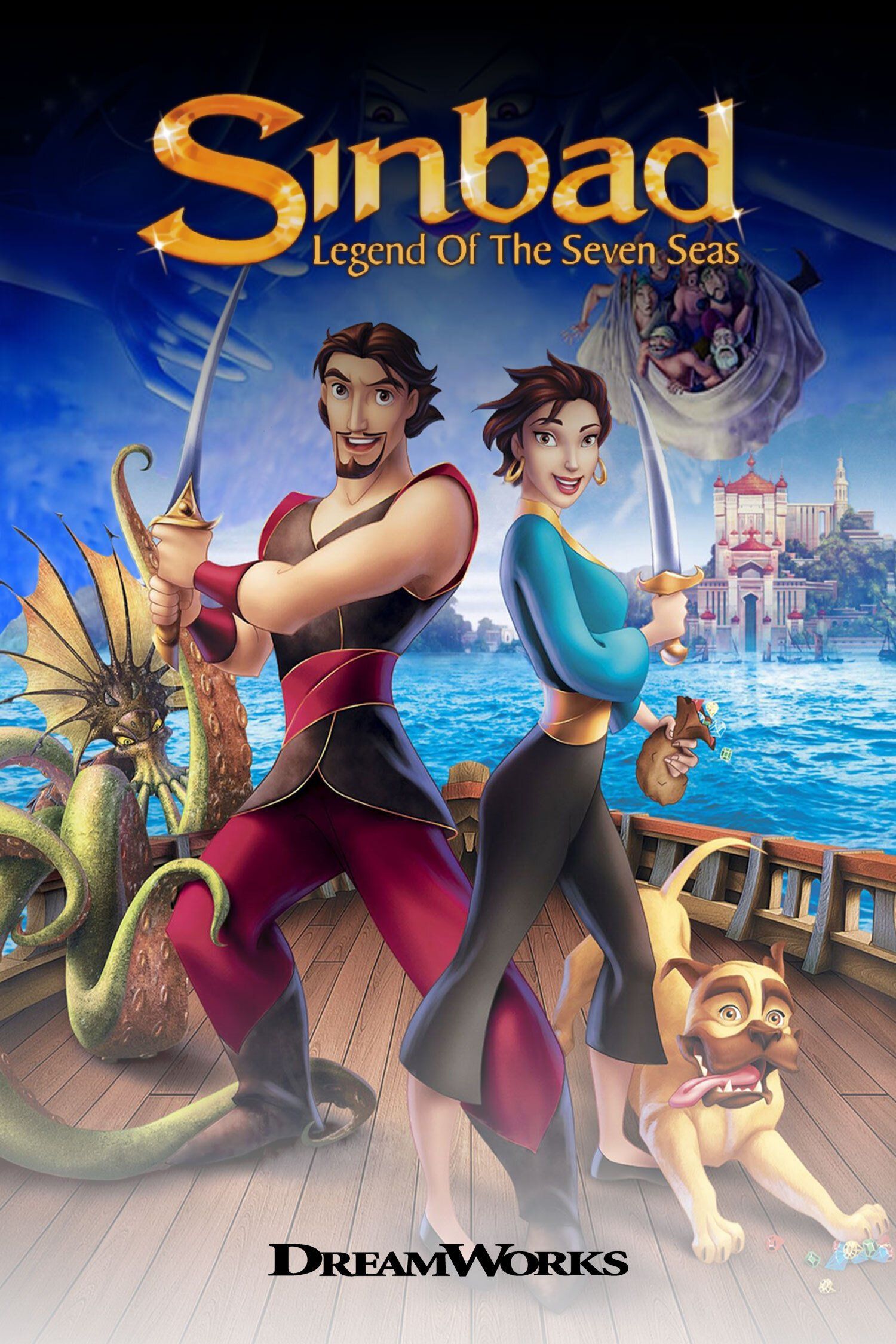
3. **Sinbad: Legend of the Seven Seas (2003)**:Animated features, while often lucrative, are not immune to the harsh realities of the box office, and “Sinbad: Legend of the Seven Seas” serves as a regrettable example. Released in 2003 with a production budget of $60 million, this DreamWorks Animation film featured a star-studded voice cast but struggled to make waves against a competitive summer landscape. Its worldwide gross of $80.8 million, while exceeding its nominal budget, masked a deeper financial problem when the true costs were tallied.
Despite grossing more than its nominal production budget, the film incurred an estimated nominal loss of $125 million. This discrepancy highlights a crucial aspect of film economics: a distributor does not collect the full gross, and substantial distribution and marketing costs must be factored in. Once adjusted for inflation, “Sinbad: Legend of the Seven Seas” represents an even more substantial financial setback, with estimated losses reaching an eye-watering $214 million.
The film’s underperformance was attributed to several factors. It was released in a crowded animation market, competing with other studios’ offerings, and it also arrived during a period when traditionally animated films were beginning to cede ground to the rise of computer-generated imagery. The audience for traditional animation was shifting, and “Sinbad” failed to capture enough attention to justify its expenditure, leading to a significant loss for the studio.
“Sinbad: Legend of the Seven Seas” stands as a sobering illustration of how evolving audience preferences and a failure to properly position a film within the market can lead to massive losses, even for a project that superficially appears to have covered its production cost. Its impact served as a catalyst for studios to re-evaluate their animation strategies, underscoring the delicate balance between artistic vision and commercial viability.
Read more about: The Shocking Truth: 14 Mega-Movies Nobody Expected to Crash and Burn at the Box Office

4. **Strange World (2022)**:In a more contemporary example of animated ambition meeting financial disappointment, Disney’s “Strange World” arrived in 2022 with a substantial production budget of $180 million. The film aimed to deliver a vibrant, imaginative adventure, but despite Disney’s proven track record in animation, it failed to connect with a broad audience in theaters. Its worldwide gross was a disheartening $73.6 million, signalling a clear theatrical rejection.
The estimated nominal loss for “Strange World” was reported to be between $178 million and $197 million. When these figures are adjusted for inflation, reflecting the equivalent purchasing power in the current economic climate, the estimated losses climb to a staggering $191 million to $212 million. This places “Strange World” among the highest contemporary box office bombs, raising questions about audience engagement and studio marketing strategies in the post-pandemic era.
Several factors contributed to the film’s theatrical struggles. Released during a competitive holiday season, it also had to contend with a perception among some audiences that Disney was increasingly prioritizing streaming releases. While the film may find an audience on streaming platforms, its anemic box office performance vividly illustrates the challenges of enticing families back to cinemas, especially for original animated stories that lack pre-existing franchise appeal.
“Strange World” underscores the evolving dynamics of film distribution and audience consumption, particularly for animated content. The immense losses incurred by its theatrical run highlight the difficulty of launching new intellectual property in a landscape dominated by sequels and established franchises, even for a studio with Disney’s formidable marketing power. It serves as a recent, high-profile example of how even a visually stunning, family-friendly film can struggle to justify its production investment in the current theatrical climate.
Read more about: Zendaya’s Unforgettable Red Carpet Moment: The Controversial Look That Sparked a Fashion Firestorm

5. **Titan A.E. (2000)**:Another animated feature that crashed and burned at the box office, “Titan A.E.” from 2000 represented a bold, visually striking foray into science fiction animation. With a production budget estimated between $75 million and $90 million, the film combined traditional and computer animation to tell an epic story of humanity’s last hope. However, its ambitious vision did not translate into box office success, yielding a worldwide gross of only $36.8 million.
The estimated nominal loss for “Titan A.E.” was a crushing $100 million. Once adjusted for inflation, this figure soars to an estimated $183 million, cementing its place as one of the most significant financial failures in animated film history. The film’s substantial losses contributed to the closure of Fox Animation Studios, demonstrating the severe consequences that can arise from a major box office flop, impacting not just individual films but entire studio divisions.
“Titan A.E.” suffered from a combination of marketing missteps, a competitive release schedule, and perhaps a failure to fully capture a clear demographic. Its darker, more mature themes for an animated film may have alienated younger audiences, while its animated format might have deterred older science fiction fans. The film struggled to find its footing, ultimately unable to draw the necessary crowds to offset its considerable production and marketing expenses.
The case of “Titan A.E.” is a powerful illustration of the risks inherent in animation, especially when studios venture into genres or themes that deviate from traditional family-friendly fare. Its failure serves as a cautionary tale about balancing artistic ambition with commercial realities, and how a lack of clear market positioning can lead to truly devastating financial outcomes, leaving a long-lasting impact on the animation industry.
Continuing our deep dive into the industry’s most spectacular financial miscalculations, we now turn our attention to another slate of films that, despite varying ambitions and circumstances, ultimately shared the ignominious fate of becoming a box office bomb. This section will further unravel the complexities behind these failures, examining how everything from genre fatigue to global pandemics can derail even the most promising productions. We’ll explore films that highlight the shifting sands of audience tastes, the enduring challenges of animation, and the stark realities of an industry constantly battling rising costs and unpredictable market dynamics.

6. **Jungle Cruise (2021)**:Inspired by one of Disneyland’s classic attractions, Disney’s “Jungle Cruise” arrived in 2021 with grand ambitions and a powerhouse lead duo in Dwayne Johnson and Emily Blunt. This adventure film commanded a production budget of $200 million, signaling Disney’s intent to launch a new, swashbuckling franchise akin to “Pirates of the Caribbean.”
However, like “Turning Red,” “Jungle Cruise” was released under the shadow of the COVID-19 pandemic, significantly impacting its theatrical performance. With a worldwide gross of $220.9 million, it technically surpassed its nominal production budget, a feat that would normally suggest a modest success. Yet, the realities of distribution during the pandemic painted a very different financial picture.
The film’s estimated nominal loss was a staggering $150 million. When adjusted for inflation, this figure reaches $174 million, highlighting the severe financial hit the film took in its theatrical run. The film was released simultaneously in theaters and on Disney+ Premier Access, a strategy designed to provide revenue during uncertain times but one that inevitably cannibalized potential box office earnings.
While “Jungle Cruise” may have found a significant audience and generated revenue through its streaming release, its theatrical performance unequivocally positioned it as a box office bomb in traditional terms. This scenario exemplifies the complex and often debated economics of hybrid releases during the pandemic, where a film’s ‘success’ became a multifaceted calculation extending beyond cinema ticket sales, yet still leaving a substantial mark on the box office ledger. It’s a testament to the fact that even big stars and beloved IP couldn’t overcome the unique challenges of a global health crisis and shifting release paradigms.
Read more about: Dwayne ‘The Rock’ Johnson’s Unprecedented Transformation: The Real Story Behind His Dramatic New Physique and Bold Career Shift

7. **The Adventures of Pluto Nash (2002)**:Widely regarded as one of the most infamous box office bombs of all time, “The Adventures of Pluto Nash” is a perfect storm of comedic ambition gone awry. Starring Eddie Murphy at the height of his powers, this science fiction comedy from 2002 boasted a significant production budget of $100 million. The premise, an ex-smuggler turned nightclub owner on the moon battling the mob, sounded like a high-concept vehicle for Murphy’s talents.
The reality, however, was a catastrophic theatrical performance. “The Adventures of Pluto Nash” managed a paltry worldwide gross of just $7.1 million, a figure so low it immediately cemented its status in box office infamy. This abysmal return left a chasm between costs and revenue that few films have ever matched.
The estimated nominal loss for the film was a crushing $96 million. Adjusted for inflation, the financial devastation swells to an incredible $168 million, making it one of the most costly comedic misfires in Hollywood history. Its failure was so pronounced that it became a benchmark for how badly a major studio film could perform, particularly one starring a top-tier comedic actor.
Critics savaged the film, citing a weak script, uninspired direction, and a lack of comedic spark. Audiences stayed away in droves, perhaps signaling a fatigue with Murphy’s brand of humor in a sci-fi setting, or simply a rejection of a concept that failed to connect. “The Adventures of Pluto Nash” is a stark reminder that even the biggest stars are not immune to monumental flops, and that a hefty budget does not guarantee success when the creative execution falls flat. Its legacy is not one of lunar laughs, but of a financial crater that continues to be studied and cited in discussions of Hollywood’s biggest bombs.
Read more about: Ouch! 14 Hollywood Movies That Absolutely Bombed at the Box Office (And the Wild Stories Behind Their Massive Losses)

8. **Final Fantasy: The Spirits Within (2001)**:“Final Fantasy: The Spirits Within” was a groundbreaking, albeit ultimately tragic, endeavor in animation history. Released in 2001, this film adaptation of the beloved video game franchise was revolutionary for its hyper-realistic computer-generated imagery. It carried a colossal production budget of $137 million, a truly ambitious sum for an animated feature at the time, reflecting the studio’s commitment to pushing technological boundaries.
Despite its visual splendor and technological marvel, the film struggled immensely to find an audience. Its worldwide gross of $85.1 million, while not insignificant, fell far short of the colossal sum required to break even after factoring in its production, marketing, and distribution expenses. The gap between expectation and reality was vast, and deeply concerning for the studio.
The estimated nominal loss for “Final Fantasy: The Spirits Within” was a devastating $94 million. When adjusted for inflation, the true financial blow reaches an estimated $167 million, making it a monumental animated flop. The scale of this loss had profound consequences, contributing to the financial difficulties of Square Pictures, the film’s production studio.
The film’s failure was multifaceted. While visually stunning, critics often found the narrative dense and less engaging than the emotional depth of the video game series. It also faced a challenge in attracting both dedicated fans of the game, who may have had different expectations, and a general audience unfamiliar with the source material. “Final Fantasy: The Spirits Within” remains a poignant example of artistic ambition outstripping commercial viability, demonstrating that even pioneering technology and a famous IP cannot guarantee success if the storytelling doesn’t capture the broader public imagination. It serves as a reminder that pushing the envelope technologically requires an equally compelling narrative to connect with moviegoers on a mass scale.
Read more about: Beyond the Hype: 14 Critically Panned Sci-Fi Gems You Absolutely Need to See Right Now

9. **Gigli (2003)**:Few films have achieved the level of notoriety and critical disdain as “Gigli,” a romantic comedy-crime film from 2003. Famously starring Ben Affleck and Jennifer Lopez during the height of their public relationship, the film generated immense media buzz, yet its production budget of $75.6 million was still substantial for a genre film. It was meant to capitalize on the stars’ chemistry and public appeal, but instead became an object lesson in cinematic misjudgment.
The box office performance of “Gigli” was nothing short of disastrous. It limped to a worldwide gross of a mere $7.3 million, a figure so low that it became synonymous with commercial failure. The public, despite the tabloid fascination with its stars, simply refused to buy tickets, indicating a complete rejection of the film’s premise and execution.
The estimated nominal loss for “Gigli” was a stark $72 million. When adjusted for inflation to reflect equivalent purchasing power today, that loss swells to an estimated $123 million. This substantial financial hit underscored how a high-profile pairing and intense media scrutiny can paradoxically lead to a magnified public backlash, especially when the final product fails to deliver.
Critics universally panned “Gigli,” with many reviews highlighting a convoluted plot, unconvincing performances, and an overall lack of entertainment value. Its infamy grew to legendary status, frequently cited as one of the worst films ever made and a prime example of a film whose real-life star power could not save it from creative and commercial ruin. “Gigli” stands as a powerful reminder that even the most celebrated actors and a highly publicized romance cannot guarantee a hit, and that ultimately, a film must connect with audiences on its own merits to avoid becoming a financial and critical punchline.
Read more about: From Cinematic Giants to Screen Stumbles: 14 Great Actors and Their Most Questionable Performances
The journey through these cinematic financial missteps offers a crucial perspective on the often-brutal economics of Hollywood. From ambitious animated epics that failed to find their audience, to star-studded vehicles that collapsed under the weight of poor execution, and even films caught in the unprecedented crosscurrents of a global pandemic, each bomb tells a story not just of lost millions, but of lessons learned, strategies re-evaluated, and the ever-present gamble inherent in the pursuit of cinematic magic. It’s a world where ambition constantly battles market realities, reminding us that even in the dazzling realm of filmmaking, a clear-eyed understanding of the numbers is often the truest blockbuster of all.