Alright, gearheads and road warriors, gather ’round! You’ve seen them, creeping along at a pace that makes a snail look like a top-fuel dragster, often occupying more lane than your average pickup, and sometimes, just sometimes, making you wonder if they’re actually *trying* to infuriate you. We’re talking about farm tractors, those majestic beasts of burden that make the fields flourish but can send a shiver down the spine of even the most seasoned city driver.
It’s a clash of cultures, really. One moment, you’re cruising on a pristine, multi-lane highway, surrounded by fellow commuters who understand the unspoken rules of the urban jungle. The next, you’ve ventured into the wild, untamed frontier of rural roads, where the “rules” seem to be written in tractor tracks and the only illumination comes from the heavens. Suddenly, your finely tuned urban driving instincts are about as useful as a spare tire on a unicycle.
So, if you’ve ever found yourself white-knuckling the wheel behind a piece of farm equipment, or cursing the darkness of a moonless country night, this one’s for you. We’re diving deep into the psyche of the city driver when faced with the realities of country roads and the agricultural machinery that calls them home. Let’s peel back the layers and see what’s *really* going on in their heads, and maybe, just maybe, learn a thing or two along the way.

1. **The Dark Unknown: Night Driving in the Country**Imagine this: You’re a city driver, accustomed to a perpetual glow. Streetlights, neon signs, headlights, taillights—the urban night is a symphony of artificial illumination. You might even be one of those “big-city-only drivers,” as one veteran commenter noted, “conditioned to usually driving at night under street-lights.” Then you find yourself on a rural road, early in the morning, still dark, with “zero bad weather/road conditions, and nothing but empty fields.” It’s a whole new ball game, and for some, it’s a terrifying one.
The sheer, unadulterated darkness of a country night can be profoundly unsettling if you’re not used to it. The context mentions “independent courier drivers almost freaking out about being up from the city when it’s dark out,” which perfectly illustrates the point. It’s not just a matter of “lousy night-vision,” though that can certainly play a role for people of any age.
It’s the profound difference in visual cues, the absence of familiar landmarks, and the lack of a constant, reassuring light source. Modern cars, with their bright headlights, offer an advantage compared to the “old sealed beams back when,” as one experienced driver recalls. Yet, even with superior illumination, the psychological impact of vast stretches of unlit road can be significant. It forces a reliance on headlights alone, which, while powerful, can’t replicate the ambient glow of a city. This can lead to increased caution, often manifesting as driving “too slowly through mild curves on wide, good-condition, paved rural roads,” much to the bewilderment of locals.

2. **Winding Roads, No Shoulders: The City Driver’s Nemesis**Beyond the darkness, there’s another architectural challenge that city drivers often grapple with: the very design of rural infrastructure. Forget your wide, multi-lane boulevards with generous shoulders and meticulously maintained curbs. Out here, roads are often “somewhat narrow, winding roads with little or no shoulder,” as Oaktree wisely observed. This isn’t just an aesthetic difference; it’s a fundamental shift in driving dynamics.
An old friend, “who’s lived in the city for many years,” complained about locals “passing him on one particular stretch of road.” What he perceived as aggressive driving, the locals likely saw as simply navigating a familiar route efficiently. The friend’s discomfort stemmed from these “somewhat narrow, winding roads with little or no shoulder,” a common feature that city drivers are simply not conditioned to handle with speed or confidence.
For someone used to strict lane discipline enforced by physical barriers, the concept of a vanishing shoulder—or no shoulder at all—can be genuinely unnerving. A slight miscalculation, and a tire could drop off the pavement. As one comment highlights, a “brand new Lexus SUV on its side taking out 80′ of brothers new deer fence” after the “driver said road to narrow and right wheel went off pavement into culvert… she jerked wheel to left and rolled car… single vehicle event in clear dry weather.” The driver’s assessment? “Road is unsafe because of culverts.” But was it unsafe, or just unfamiliar? This illustrates a crucial disconnect in perception.
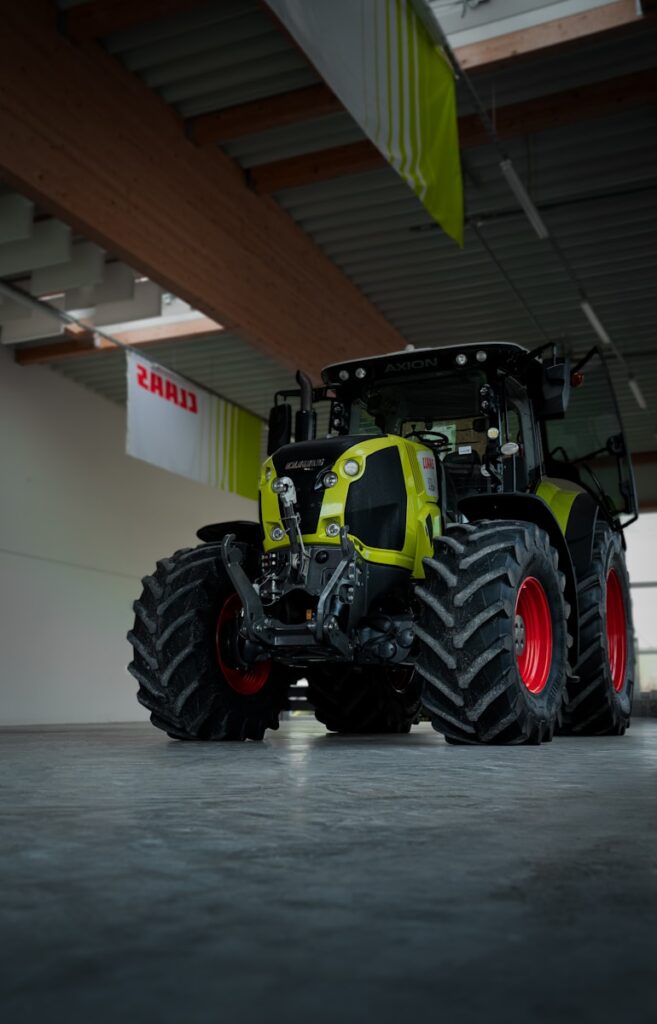
3. **The Peril of the Pokey Pace: Slow Farm Vehicles**Ah, the quintessential rural road frustration: getting stuck behind a slow-moving vehicle. For a city driver, speed is often paramount, and any impediment to flow can feel like a personal affront. When a farm tractor, classified as a “slow-moving vehicle” (SMV), rolls onto the public road, it instantly becomes a focal point of this tension.
These machines “often travel at slow speeds,” which is a polite way of saying they crawl. The typical maximum speed for agricultural vehicles on most roads is around “25 mph,” though some registered tractors can hit “40 mph.” Compare that to the “65” mph locals might average on a typical winding rural road, only slowing to “50 for a couple of the turns, 55 for the rest.”
The speed differential is massive. Someone driving it for the first time might average “40 to 45,” which is still significantly faster than a tractor. This disparity creates a bottleneck, especially during planting and harvest seasons, when tractors are most active. Locals, often “in a hurry,” might pass on country roads where city drivers hesitate. The frustration builds when “you may not be able to pass right away,” leading to the temptation of “aggressive driving.” This is precisely when accidents can happen.
State Farm wisely advises patience: “It can be frustrating to drive behind farming trucks… so don’t risk a potential accident by partaking in aggressive driving.” City drivers, conditioned to faster traffic and more frequent passing opportunities, often find this patience a difficult virtue to cultivate.

4. **Sudden Stops & Oncoming Lights: Rural Road Anxiety**The forum posts are rife with anecdotes about city drivers’ peculiar habits when faced with rural road conditions, particularly at night or on winding stretches. One common observation: “They hit the brakes when a car comes from the other direction—they get scared it seems.” This isn’t just an occasional occurrence; it’s a recurring pattern that signals a fundamental discomfort with rural driving.
Consider the scenario: a city driver, already wary of narrow roads and unseen hazards, suddenly sees an approaching vehicle, especially with bright headlights. Their immediate, instinctive reaction is to reduce speed drastically, often to “25mph everytime they have headlights approaching.” This over-correction, while seemingly cautious, can be just as hazardous as speeding, particularly for drivers following behind who don’t anticipate such severe braking.
Another point of contention highlighted by forum users is the use of high beams. “At night they put on the brights, even on the long straightaways,” someone noted. For experienced rural drivers, who rarely use their brights in familiar territory, this can be baffling, if not irritating. It suggests a lack of understanding of headlight etiquette, perhaps a reflection of their reliance on ambient city light where brights are rarely necessary, or simply a deep-seated anxiety about the dark. This behavior makes “driving much less fun having to hot the brakes all the time when I’m only trying to do the speed limit” for locals.

5. **Distractions and Delusions: Gawkers & “Unsafe Roads”**The rural landscape offers a stark contrast to the urban concrete jungle, and for many city dwellers, it’s a novelty. This novelty, however, can translate into dangerous distractions on the road. “Have a lot of people who just stop to gawk at the cows or a deer, thinking the road is a fine place to park for a view,” one commenter quipped. While charming in theory, stopping unexpectedly on a winding country road, especially one with blind spots, is an invitation for disaster.
This kind of behavior betrays a fundamental lack of “situational awareness,” as 3930dave points out. Rural roads are not just scenic routes; they are working arteries for communities and agriculture. Stopping abruptly to admire livestock, or slowing dramatically to observe a new subdivision being built, creates unpredictable obstacles for other drivers. It implies a perception of the road as a leisurely attraction rather than a functional thoroughfare requiring constant vigilance.
Adding to this, there’s a tendency to externalize blame when things go wrong. Remember the Lexus SUV incident? The driver, after rolling her car off the road, declared the “road is unsafe because of culverts.” The road, an “old county road” that was once “subdivision farm land annexed by city,” was simply *different* from what she was used to. This narrative of “unsafe” roads, rather than acknowledging a driver’s unfamiliarity or error, becomes a convenient delusion that prevents learning and improvement. “If it’s always somebody/something else’s fault, then that driver will never improve,” perfectly sums up this dangerous mindset.
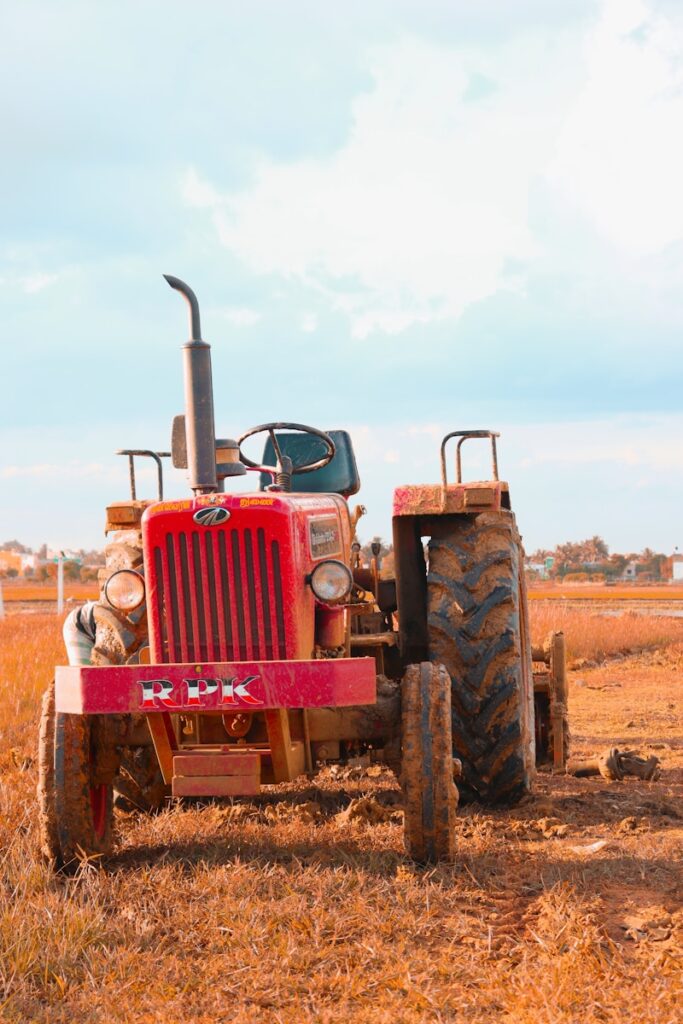
6. **The Curb-Bouncer Mentality: Misunderstanding Road Edges**In the urban sprawl, curbs are your friends. They delineate lanes, protect sidewalks, and provide a forgiving barrier that, in a pinch, can be “bounced off” without immediate catastrophic consequences. This ingrained behavior, however, becomes a liability on rural roads where the “edge of the road” might not be a solid curb but rather a soft shoulder, a culvert, or a sheer drop.
As one experienced driver wisely put it, “Some people get used to bouncing off curbs, back into their lane, in the city….. and they don’t ever realize what they are relying on.” Standard driver training used to include what “to do (or, more importantly what NOT to do….) if you drop a wheel off the edge of the road.” This vital knowledge seems to have evaporated for many modern drivers, particularly those who’ve spent their entire driving lives within city limits.
The consequences of this misunderstanding can be severe, as evidenced by the Lexus SUV driver who “jercked wheel to left and rolled car” after her “right wheel went off pavement into culvert.” Instead of smoothly guiding the vehicle back onto the road, a sudden, aggressive correction led to a single-vehicle rollover. This isn’t just about a lack of skill; it’s a profound ignorance of rural road dynamics, where the forgiving boundaries of the city are replaced by unforgiving realities. Having “lots of money tends to compound that attitude,” as some believe, implying a detachment from the practicalities of driving in diverse environments.
Alright, city slickers and rural road warriors, we’ve dissected the mental gymnastics city drivers perform when encountering the vast, unlit, and sometimes tractor-laden expanse of the countryside. We’ve commiserated over the slow crawl, the phantom curbs, and the general bewilderment. But here’s the thing: those majestic farm machines aren’t just out there to test your patience. They’re vital pieces of equipment with their own set of rules, regulations, and realities. It’s time we peel back the layers on what makes these agricultural behemoths road-legal (and sometimes road-aggravating), offering up some crucial insights so we can all share the asphalt without losing our minds—or worse, our fenders.

7. **Navigating the Legal Maze: Licensing & Registration Realities for Tractors**If you thought piloting one of these beasts was just about knowing which pedal does what, think again. Operating a tractor on public roads isn’t like hopping into your daily driver; it’s a deep dive into the legal labyrinth, a bureaucratic ballet that varies wildly depending on your state and exactly what agricultural shenanigans you’re up to. Most farm tractors, especially when used exclusively for farming and moving short distances between fields, get a pass as an “implement of husbandry,” meaning a standard Class C driver’s license often suffices. It’s the bare minimum, really, for keeping the wheels turning without the DMV breathing down your neck.
But here’s where it gets interesting, and potentially expensive. Just because it’s a “farm vehicle” doesn’t mean it’s exempt from all the heavy-hauling rules. If you’re hooking up equipment that tips the scales at over 10,000 pounds, suddenly you might find yourself needing a Class A or B commercial driver’s license (CDL). That’s right, your weekend tractor warrior ambitions could necessitate a whole new level of licensing, with the California Department of Motor Vehicles and its counterparts across the nation enforcing these rules with the iron fist of bureaucracy.
Then there’s the sticky wicket of registration. Many tractors, bless their hard-working hearts, are exempt from registration if they’re used *exclusively* for farming. However, dare to use it for non-agricultural purposes, or start making frequent road trips that aren’t field-to-field, and you might be filing paperwork faster than you can say “crop rotation.” In states like Texas, for instance, if your tractor is a commercial motor vehicle with a gross weight over 10,000 pounds, it’s definitely subject to registration, complete with fees and a vehicle identification number (VIN). It just goes to show, even the humblest farm machine has a paper trail.
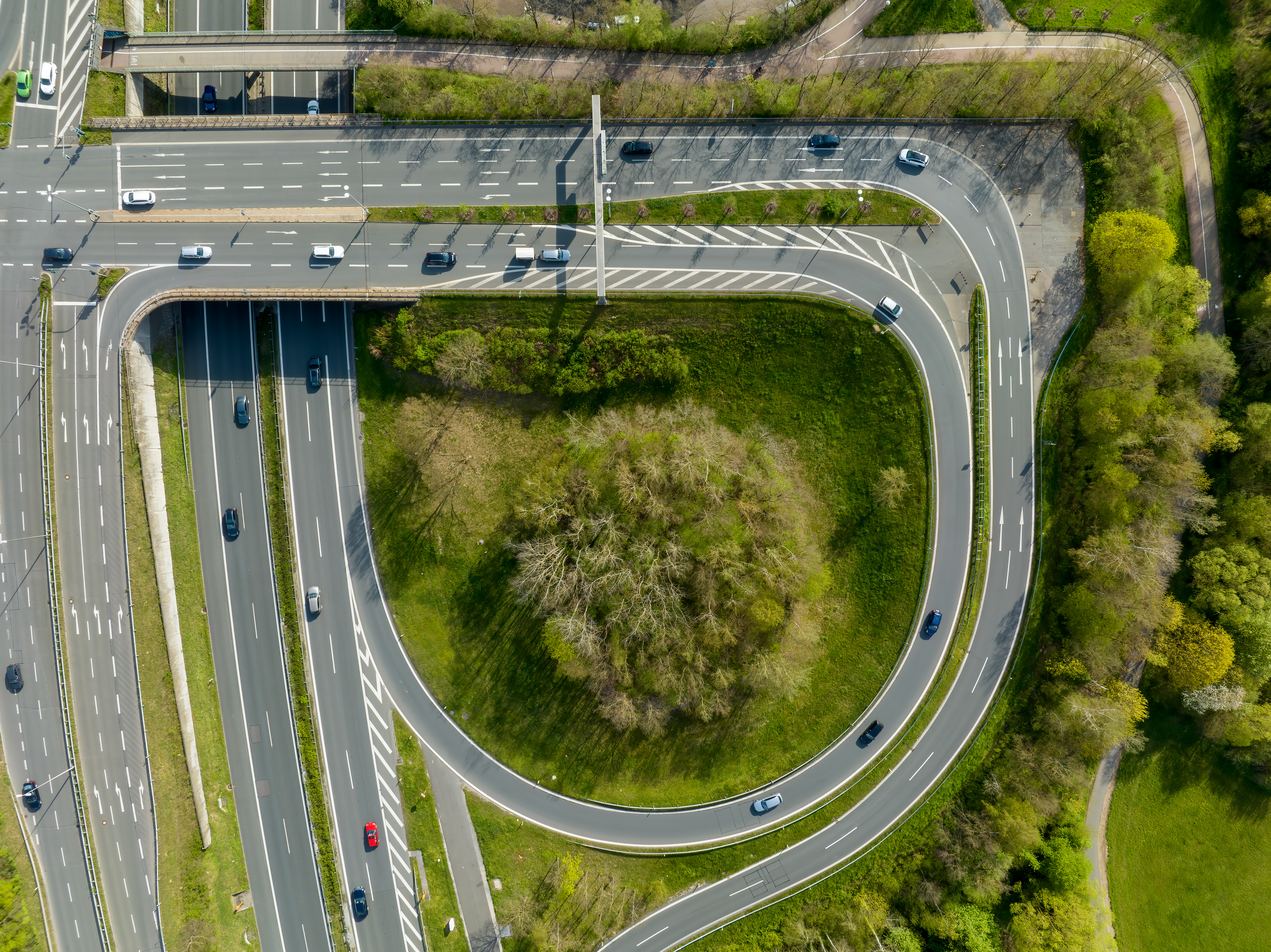
8. **The Need for Speed (Limits): Understanding Tractor Pace on Public Roads**Let’s be honest, nothing makes a city driver spontaneously combust with road rage quite like getting stuck behind a tractor. We’ve all been there, mentally calculating how long it’ll take to reach the next passing zone. But there’s a method to that slow-moving madness, folks. Tractors, by their very design and purpose, “often travel at slow speeds” on public roads, typically capped at a “maximum speed limit… of 25 mph.” This isn’t just a suggestion; it’s a “construction speed” standard, ensuring these heavy machines can be operated safely given their weight, braking capabilities, and sheer size.
Now, before you start lamenting the tortoise-like pace, there’s a glimmer of hope on the horizon—at least for some. As of January 2021, “the new speed limit for tractors and other farm vehicles with registration numbers is 40 mph.” That’s a significant jump, practically warp speed in tractor terms! However, it comes with a massive asterisk: “all parts of the farm tractors must be adjusted according to their construction speed, including brakes.” You can’t just slap a new number on the speedometer; the entire vehicle needs to be engineered to handle those higher velocities, especially when it comes to stopping power.
Speaking of stopping, the braking requirements for these machines are no joke, varying based on that construction speed. You need a specific “braking capacity, reaction distance, and stopping distance.” For those lumbering along at 20-25 mph, it’s one standard, but above those speeds, a higher standard of 4.5 m/s² kicks in. Furthermore, despite their general road allowance, tractors are “generally prohibited from high-speed highways and freeways due to their slow speeds.” So, don’t expect to see a tractor doing 60 mph on the interstate anytime soon. Local jurisdictions might even impose “additional restrictions, including prohibiting tractors on certain roads or limiting their use during peak traffic hours,” reinforcing that these aren’t your typical commuter cars.
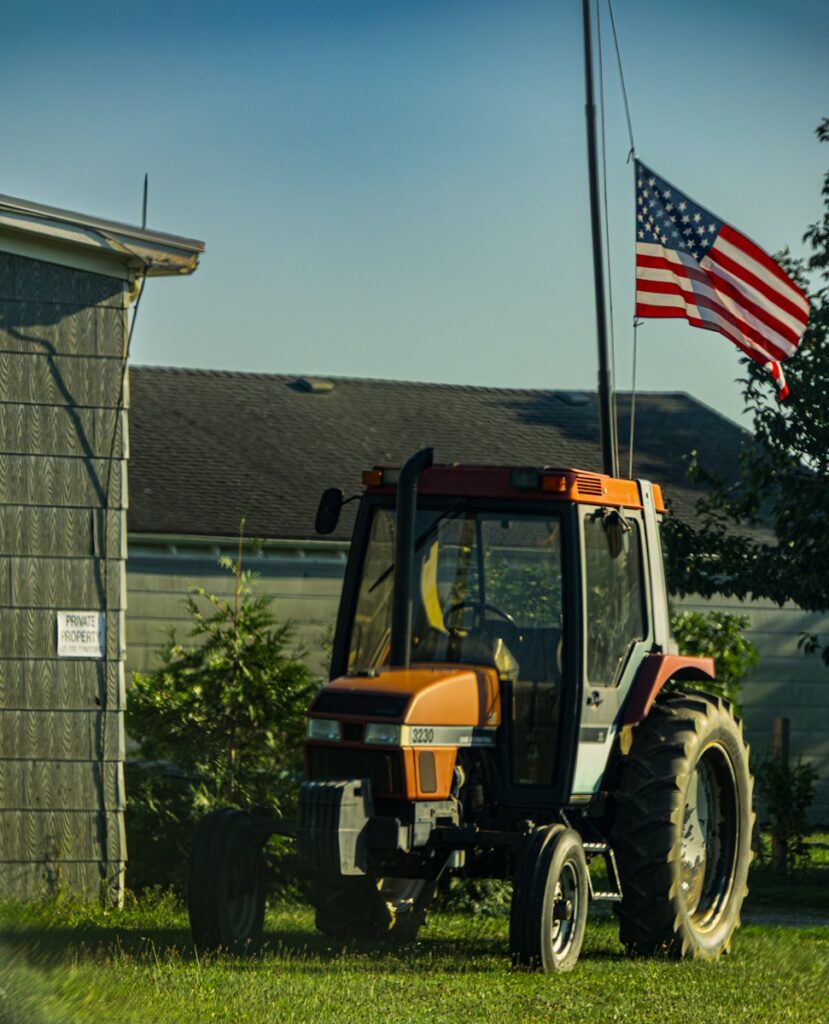
9. **Light Up Your Life: Compulsory Illumination for Road-Ready Tractors**Imagine cruising down a pitch-black country road, only to be startled by the hulking silhouette of a tractor ahead. Not ideal, right? This is precisely why when a farm vehicle ventures onto public roads, it’s absolutely crucial for it to be lit up like a Christmas tree—but with regulatory precision. “When traveling on public roads, it is important to be visible in traffic to oncoming vehicles.” This isn’t just about good manners; it’s a legal mandate to “ensure the best safety standards,” especially “at night or in low-light conditions.” We’re talking white headlamps, red taillights, and all the fixings to make sure everyone knows you’re there.
Those bright, illuminating eyes of a tractor are called “dipped beam headlights,” designed to shine below the normal beam distance, providing enough visibility for the operator without blinding oncoming traffic. Proper adjustment is key; an improperly aimed beam can turn a safety feature into a temporary blindness hazard for other drivers. Beyond this, “city lights on the mudguards” (parking lights) make “a parked vehicle more visible,” acting as silent guardians when you’ve pulled over.
Then come the communicators: “direction indicators” are “mandatory when operating agricultural equipment on public roads.” No guessing games about turns here; a flashing light is a universal sign of intent, helping “avoid potential collisions.” Crucially, “rear lights are a must for agricultural tractors traveling in the dark,” giving vehicles behind a fighting chance to see you. Paired with these are “brake lights,” which scream “I’m slowing down!” to anyone following, offering those precious split seconds of reaction time to prevent an unfortunate rear-ender. Even the humble “license plate lights” are required by law to be illuminated at all times, ensuring your registration is visible day or night, rain or shine.
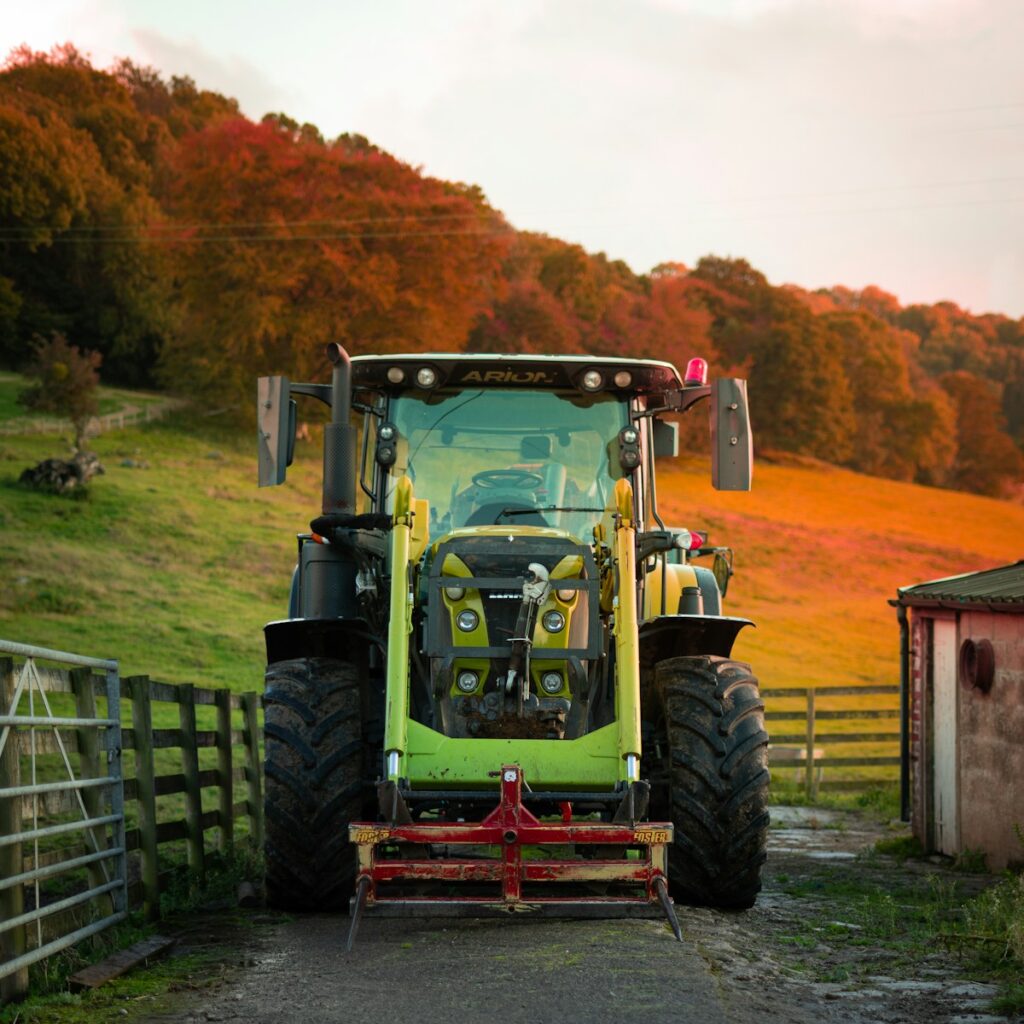
10. **Beyond the Beams: Additional Safety Features & SMV Essentials**Alright, we’ve covered the basics of making your tractor seen, but there’s more to being road-safe than just having a working set of lights. Enter the unsung hero of rural road safety: the Slow Moving Vehicle (SMV) sign. This isn’t just a pretty orange triangle; it’s an “important safety precaution to alert other drivers on the road of a vehicle that is not moving as fast as they are.” That reflective orange triangle, bordered with red, is a clear, unmistakable warning that the vehicle ahead is cruising at “25 miles per hour or less.” Slapping one on the rear of your tractor is non-negotiable for public road use.
Beyond active lighting, passive safety plays a huge role. Tractors “must also have reflectors fitted, not just lights,” which are champions at “reflecting the ambient light off them to make the vehicle more visible.” You’ll typically find “two or four red reflectors” at the rear, with “slow-moving vehicles must display truncated triangular reflectors without sharp points.” And while LED work lights and bars are awesome for, well, *work*, the context is crystal clear: “these flashing lights should not be used while driving since they are too bright and could potentially cause a distraction to other drivers.” Safety first, showboating second.
Then there are the flashy bits—literally. “Beacons,” or flashing lights, “may be required when traveling on public roads” if your tractor is a bit wider than average, specifically “if it exceeds 2 meters 60 in width.” In such cases, “orange (amber) flashing lights are a must,” and other colors are a definite no-go to avoid confusion with emergency vehicles. And let’s not forget the unseen protectors like Rollover Protection Systems (ROPS), and the dictates of “weight, size & load” limits, with updated regulations allowing agricultural vehicles “up to 20 meters in length” and trailers with specific width limitations. These aren’t arbitrary numbers; they’re vital for stable, safe operation, preventing everything from jackknifing to taking up two lanes unnecessarily.
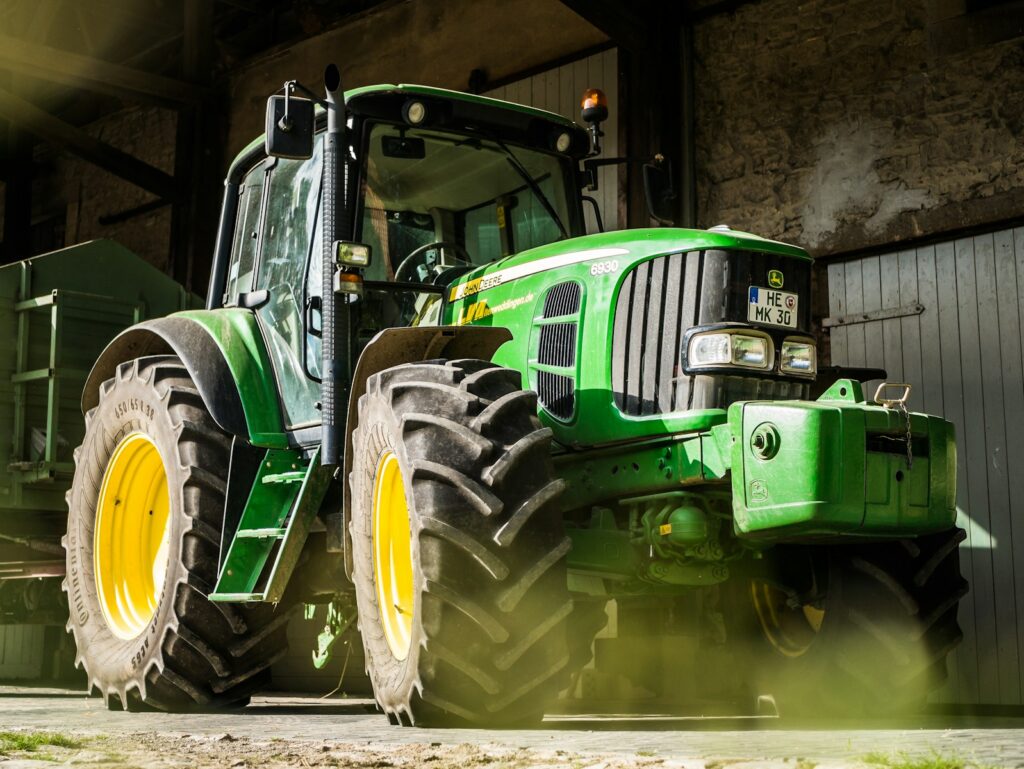
11. **Sharing the Asphalt: Defensive Driving & Patience Around Farm Vehicles**Okay, so we’ve covered what tractor operators *should* be doing to stay legal and visible. Now, let’s flip the script and talk about *us*, the regular drivers, and how we can avoid turning a rural drive into a scene from Mad Max. State Farm, bless their sensible hearts, has some gold-standard advice: “Drive defensively.” This isn’t just a quaint suggestion; it’s a battle plan, especially during the “planting and harvest seasons which are typically around the spring and fall” when farm vehicles are out in force. Being alert and anticipating their presence isn’t just smart; it’s essential for “avoid[ing] road incidents.”
The first, and perhaps most challenging, piece of advice for the speed-addicted city driver is simple: “Slow down.” We know farm vehicles are slow, but constantly riding their bumper does precisely nothing to speed them up and everything to increase your risk. State Farm suggests starting “braking when you see the slow-moving vehicle” and maintaining “a safe distance back—around 50 feet.” Why 50 feet? Because “the farm equipment driver may have trouble seeing you otherwise.” These aren’t rearview-mirror-laden sedans; visibility for a tractor operator can be limited, especially with wide loads.
Then there’s the art of the pass, which on rural roads, is less about aggression and more about finesse. “Pass carefully.” This means waiting for “a safe passing zone,” diligently checking for “oncoming traffic,” signaling your intentions, and only returning to your lane once the tractor is clearly “in your rearview mirror.” Crucially, “Don’t pass near intersections, around curves, over railroad crossings or near bridges.” And if that farm vehicle is extra-wide, “wait to pass until the driver pulls over and signals that it’s safe.” Sometimes a polite honk can even help, in case they haven’t spotted you lurking.
This brings us to a critical, often misunderstood maneuver: the wide left-hand turn. “A driver may appear to be pulling to the right to let you pass when they are actually making a wide left-hand turn.” This isn’t a friendly wave-through; it’s the physics of a long machine needing extra room. Before you dart past, “look for driveways, roads or fields where the vehicle might be turning.” Check for “hand gestures or lights signaling the driver’s intention to turn.” And for the love of all that is sensible, “yield” to wide farm vehicles, pulling onto the shoulder or into a field entrance if you can, because “large farm trucks or farm tractors can’t always pull over to the road’s shoulder safely.”
Ultimately, the biggest takeaway is to “Stay calm.” It’s incredibly “frustrating to drive behind farming trucks,” but that frustration is your enemy. “Don’t risk a potential accident by partaking in aggressive driving.” And always, always, “take a second look” before pulling into an intersection or passing. “Tall crops can create ‘blind’ corners,” and farm vehicles might materialize from “unmarked access drives on the fields” like agricultural ninjas. It’s all about respecting the unique dynamics of rural roads and the giants that work them.
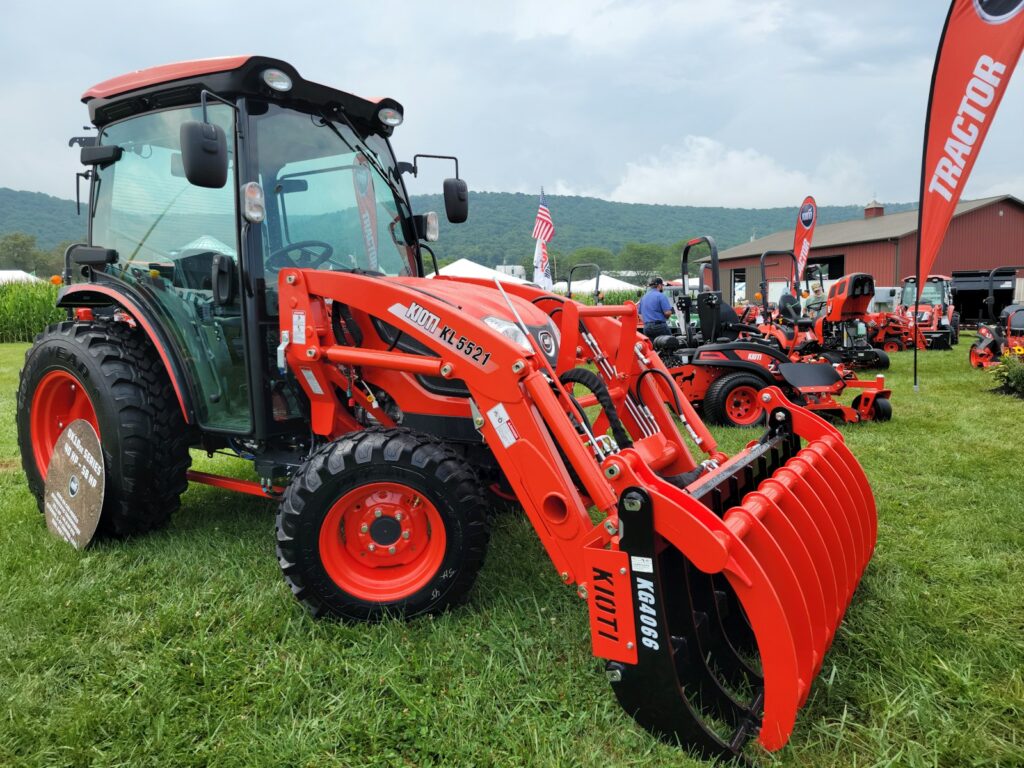
12. **The Cost of Carelessness: Penalties & Liabilities for Non-Compliance**So, you’ve read all about the rules, the lights, the SMV signs, and the polite dance required to share the road. But what happens if you, or that tractor driver, decides to play fast and loose with these regulations? Well, dear readers, the stakes are higher than just a few annoyed city drivers. “Failure to comply with California’s tractor operation laws can lead to fines, vehicle impoundment, or even misdemeanor charges.” The California Highway Patrol and other law enforcement agencies aren’t just looking for speeders; they’re maintaining public safety, and that includes those big green (or red, or blue) machines.
Let’s talk cold, hard cash. Operating a tractor without the proper license isn’t a slap on the wrist. You could be looking at “fines up to $250 for a first offense,” and repeat violations? They “carry higher penalties.” If you’re operating something that requires a CDL without the proper credentials, those fines can “exceeding $1,000 and possible CDL disqualification.” That’s right, your commercial driving career could be sidelined because you didn’t check the box on your farming rig.
Equipment violations, like a missing SMV emblem or faulty lighting, typically start with “fix-it tickets,” giving you a chance to rectify the issue and prove compliance. But don’t think you can ignore it. “Repeated offenses or operating a tractor in hazardous conditions can lead to steeper fines and vehicle impoundment.” And just like your grandma warned you about cutting through the neighbor’s yard, “driving a tractor on a restricted road can also result in citations.” These aren’t just minor inconveniences; they’re legal headaches and financial drains.
The most severe consequence, of course, isn’t just about the law. It’s about responsibility. “In cases where an improperly operated tractor causes an accident, the operator may face civil liability.” This means not only criminal charges but also being sued for damages. Imagine the cost of a new Lexus SUV, a deer fence, and potentially medical bills—all because someone thought the rules didn’t apply. So, while city drivers might secretly judge your tractor’s pace, the real secret is that ignoring the rules can lead to a whole lot more than just dirty looks.
So there you have it, folks. The open road, whether a winding country lane or a straight shot through farmland, demands respect from every driver, especially when agricultural giants are sharing the asphalt. It’s not just about what you *think* those tractor operators are doing; it’s about understanding the intricate web of regulations, safety standards, and practical realities that govern their world. By demystifying these powerful machines and embracing a bit of shared responsibility, we can all navigate these roads with less frustration, more safety, and perhaps, a newfound appreciation for the hard work that keeps our country running—one slow-moving tractor at a time. Drive smart, drive safe, and keep those eyes peeled!