Muscle cars, by their very nature, are meant to scream power, performance, and style. We envision sleek lines, aggressive stances, and a rumble that promises pure exhilaration, capturing the essence of American automotive prowess. They’re the automotive equivalent of a rockstar – loud, proud, and undeniably cool, often becoming icons of their era.
Yet, as with any art form, sometimes the vision gets a little… warped. Sometimes, an automaker fumbles the design ball and produces something that makes enthusiasts scratch their heads, wondering what exactly went wrong. The glory days of muscle car production, while filled with spectacular mechanical triumphs, also gave us some truly questionable packages that defied conventional beauty. It seems all that raw power sometimes came wrapped in an undeniable eyesore, proving that even legends can have an off day.
So, buckle up, gearheads! We’re about to take a deep dive into the annals of automotive history to spotlight some of the most visually perplexing muscle cars ever released. These vehicles had serious power under their hoods but simply couldn’t outrun their awkward styling, earning them a permanent spot on our list of automotive head-scratchers. Prepare to cringe, to wonder, and perhaps, to appreciate the timeless beauty of a truly well-designed car even more after seeing these unfortunate examples.
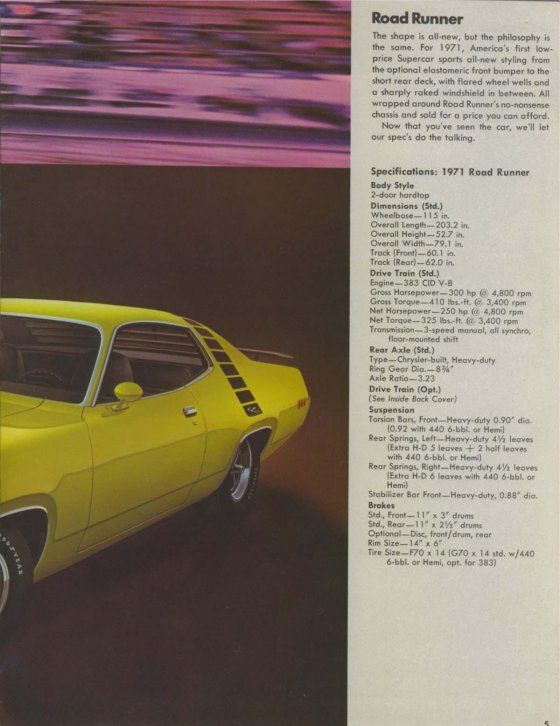
1. **1971 Plymouth Road Runner**Performance enthusiasts let out a collective wail when Plymouth unveiled its 1971 Road Runner, and for good reason. Gone was the taut, aggressive styling that defined the beloved ’70 models, replaced by something far less inspiring, lacking the previous model’s distinctive edge. It was a redesign that swapped sharp, muscular lines for rounded curves, and a distinctive grille for one that simply melted into the front fascia, losing much of its personality.
This wasn’t just a superficial cosmetic shift; the redesign added nearly 200 pounds to the vehicle’s frame, diminishing its athletic appeal. Imagine taking a lean, athletic runner and suddenly saddling them with a significant handicap – that’s what happened here. While it did come with the addition of the powerful 340 V8, the visual impact was undeniably negative, creating a car that looked less like a predator and more like it had overindulged. It looked, quite frankly, bloated.
The ’71 Road Runner struggled to maintain the intimidating presence its predecessors commanded with ease. Its lines appeared softer, less purposeful, losing that vital “don’t mess with me” attitude that muscle car aficionados cherished and expected. This particular model year marked a clear aesthetic misstep, failing to capture the dynamic spirit that defined the Road Runner nameplate.
For many, this Road Runner represented a sad departure, transforming a beloved icon into something that felt like a compromise between performance and a confused attempt at a more mainstream look. The shift from aggressive styling to these less distinctive, more rounded aesthetics was a tough pill for purists to swallow, forever cementing its place in the “what were they thinking?” hall of fame among muscle car enthusiasts.
Car Model Information: 2022 Dodge Charger R/T
Name: Plymouth Road Runner
Assembly: Detroit,Michigan
Manufacturer: Plymouth (automobile)
Class: Mid-size car
Production: 1968–1980
Related: unbulleted list
Layout: FR layout
Categories: 1970s cars, 1980s cars, All articles needing additional references, All articles with peacock terms, All articles with unsourced statements
Summary: The Plymouth Road Runner is a muscle car introduced by Chrysler in the United States for the 1968 model year and marketed under its Plymouth brand. Initially based on the Belvedere, the brand’s basic mid-size model, the Road Runner combined a powerful engine with a spartan trim level and a price that undercut increasingly upscale and expensive muscle cars such as the Pontiac GTO and Plymouth’s own GTX. It was initially a sales success.
The Road Runner was built in three generations on the mid-size B platform. Like most muscle cars, its performance and sales declined in the 1970s due to an increasing focus on fuel economy and the adoption of more stringent U.S. emission standards. The nameplate became to a trim package for the compact Plymouth Volaré for model year 1976—no longer offering any special performance capability—and was discontinued in 1980.
Get more information about: Plymouth Road Runner
Buying a high-performing used car >>>
Brand: Plymouth Model: Road Runner
Price: $33,961 Mileage: 44,022 mi.
Read more about: Go Green, Save Green: 14 Gas-Guzzlers You Absolutely Should Not Keep in 2025, According to Emissions Data and Auto Experts

2. **1974 AMC Matador X**AMC, bless its heart, always wanted to stand apart from the Big Three, and they certainly achieved that with the Matador X, though perhaps not in the way they intended. They had big dreams for this model, hoping it would go head-to-head with popular heavyweights like the Ford Torino. Unfortunately, their design team seemingly veered off into a bizarre alternate reality, creating what many consider “automotive styling gone horribly wrong.” It’s hard to argue with that assessment when you actually see one in the metal.
The front end of the Matador X featured a protruding, almost bug-eyed appearance that seemed to bulge out in an unsettling way, as if the car itself was perpetually surprised. This odd face was then paired with an awkwardly sloping rear, culminating in a vehicle that truly looked “perpetually confused.” You could almost imagine it asking, “Am I coming or going? And what exactly am I looking at?” – a true automotive identity crisis.
It was a car that didn’t just lack conventional beauty; it actively embraced a kind of bizarre, unintentional comedy, becoming instantly recognizable for its unique awkwardness. The Matador X became notorious, not for its prowess or widespread style, but for its singular ability to make onlookers do a double-take followed by a bewildered shake of the head. It truly stood apart, just not in the desirable way AMC had hoped for its aspiring muscle machine.
This car is a testament to the idea that sometimes, trying too hard to be unique can backfire spectacularly in the design studio. The Matador X’s unique combination of a strange, almost anthropomorphic face and an odd posterior left an indelible, if not entirely flattering, mark on the landscape of muscle car design, remembered more as a curiosity than a coveted prize.
Car Model Information: 2024 Hyundai PALISADE Calligraphy
Caption: 1975 AMC Matador sedan
Name: AMC Matador
Aka: American Motors Matador
Manufacturer: American Motors Corporation
Production: 1970–1978
Assembly: Unbulleted list
Class: Mid-size car,Full-size car
Layout: Front-engine, rear-wheel drive layout
Predecessor: AMC Rebel,AMC Ambassador
Related: AMC Ambassador
Designer: Dick Teague
Categories: AMC vehicles, Adam-12, All articles with dead external links, All articles with unsourced statements, Articles with dead external links from July 2023
Summary: The AMC Matador is a series of mid- and full-size automobiles produced by American Motors Corporation (AMC) from 1971 through 1978 model years. Initially positioned as a mid-size family car, the Matador spanned two distinct generations: the first (1971-1973) featured two-door hardtop, four-door sedan, and station wagon body styles, while the second (1974-1978) transitioned to a full-size platform, offering two-door coupes as well as four-door sedans and wagons.
While aimed at the family market, the first generation Matador also saw performance-oriented versions. The two-door versions were successfully campaigned in NASCAR racing with factory support from 1972 until 1975.
After AMC discontinued the Ambassador line in 1974, the second generation Matador became the automaker’s flagship full-size model. Premium trim levels of the coupe, marketed as the Barcelona and noted fashion designer Oleg Cassini editions, targeted the personal luxury car segment.
The Matador sedan became popular as a police car in the United States and was prominently featured in several 1970s television series. The newly introduced Matador coupe was featured in the 1974 James Bond film, The Man with the Golden Gun
Internationally, the Matador continued to be marketed under the Rambler marque and assembled under license in Costa Rica, Mexico, and Australia. American Motors also exported right-hand-drive versions to markets such as the United Kingdom.
Get more information about: AMC Matador
Buying a high-performing used car >>>
Brand: AMC Model: Matador X
Price: $38,192 Mileage: 32,295 mi.
Read more about: Unleashing Automotive Legends: 14 Iconic 1970s Cars Now Commanding Millions in the Collector’s Market
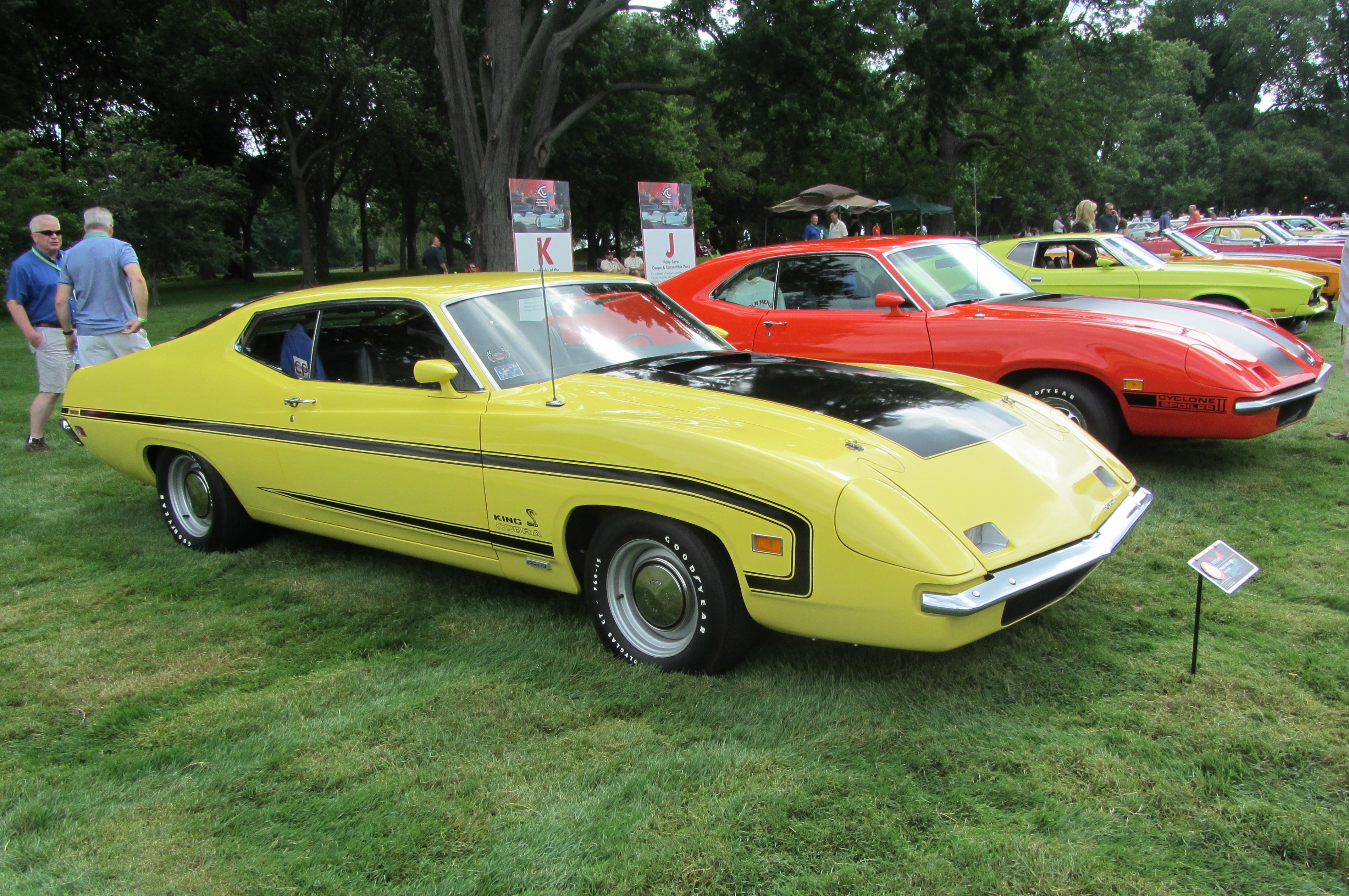
3. **1970 Ford Torino King Cobra**Thankfully, the public was largely spared from the mass-produced ugliness of the 1970 Ford Torino King Cobra, as only three prototypes of this “aerodynamic nightmare” were ever built. Designed with the singular goal of dominating NASCAR tracks, its pursuit of extreme speed clearly trumped any fleeting consideration for aesthetics. And oh, how that functional-first approach manifested itself in the visual department!
The King Cobra featured a dramatic, almost exaggerated drooping nose that seemed to plunge aggressively towards the asphalt, creating a highly unconventional profile. This elongated snout housed hideaway headlights that probably wished they could stay hidden forever, contributing to a front fascia that was undeniably aggressive but ultimately unsettling. This was a car built for a very specific purpose on the track, and it absolutely looked the part – a single-minded race car, not a cruiser for the street.
Its design was a pure function over form statement, taken to the absolute extreme. Ford eventually abandoned the project, not because of its challenging looks (NASCAR cars aren’t typically beauty queens, after all), but due to NASCAR changing its homologation rules, rendering the design obsolete before it could truly shine or offend on a larger scale.
It’s safe to say that while it might have been blindingly fast on an oval, it would have been a tough sell in showrooms, even to the most ardent performance junkies. This prototype serves as a fascinating glimpse into a period where automotive engineers pushed boundaries, sometimes resulting in shapes that were undeniably effective in a specific context but visually jarring everywhere else. The King Cobra remains a quirky, almost mythical beast that represents a moment where extreme aerodynamics took over, for better or worse, in a very noticeable way.
Car Model Information: 2024 Hyundai PALISADE Calligraphy
Aka: Ford Fairlane (Venezuela)
Name: Ford Torino
Caption: 1970 Ford Torino Cobra SportsRoof
Manufacturer: Ford Motor Company
Production: 1968–1976
Class: Mid-size car,muscle car
Layout: FR layout
Related: Mercury Montego
Assembly: ubl
Predecessor: Ford Fairlane (Americas)
Successor: Ford LTD II
Categories: 1960s cars, 1970s cars, All Wikipedia articles written in American English, All articles with vague or ambiguous time, Articles with short description
Summary: The Ford Torino is an automobile that was produced by Ford for the North American market between 1968 and 1976. It was a competitor in the intermediate market segment and essentially a twin to the Mercury Montego line.
Just as the Ford LTD had been the upscale version of the Ford Galaxie, the Torino was initially an upscale variation of the intermediate-sized Ford Fairlane. In the 1968 and 1969 model years, the intermediate Ford line consisted of lower-trim Fairlanes and its subseries, the upper-trim Torino models. In 1970, Torino became the primary name for Ford’s intermediate, and the Fairlane was now a subseries of the Torino. In 1971, the Fairlane name was dropped altogether, and all Ford intermediates were called Torino.
Most Torinos were conventional cars, and generally the most popular models were the four-door sedans and two-door hardtops. However, Ford produced some high-performance “muscle car” versions of the Torino by fitting them with large powerful engines, such as the 428 cu in (7.0 L) and 429 cu in (7.0 L) “Cobra-Jet” engines. Ford also chose the Torino as the base for its NASCAR entrants, and it has a successful racing heritage.
Get more information about: Ford Torino
Buying a high-performing used car >>>
Brand: Ford Model: Torino King Cobra
Price: $38,192 Mileage: 32,295 mi.
Read more about: The Horsepower Haze: Performance Vehicles Assessed on Actual Output – From Dyno Kings to Paper Tigers

4. **1974 AMC Gremlin X**Ah, the AMC Gremlin X. Just saying the name conjures images of that infamous “bizarre chopped-rear profile” that makes this vehicle instantly recognizable – though for “all the wrong reasons,” as the context so perfectly puts it. AMC’s ambition was to create a performance subcompact, an admirable goal, but the visual execution left many scratching their heads and reaching for a history book.
The Gremlin X genuinely looked like “a car with its back half removed in a tragic accident,” an observation that’s surprisingly accurate. It’s hard to unsee once you’ve considered that description. The abruptly truncated tail end, combined with the longer hood, created proportions that were, to put it mildly, deeply unconventional and visually unbalanced, giving it an undeniably odd silhouette.
Despite its visually perplexing appearance, the Gremlin X did manage to pack a respectable punch with its optional 304 V8 engine, offering a surprising amount of grunt for such a compact package. It was a classic case of hidden power in an unexpected, and arguably unappealing, wrapping. This juxtaposition of commendable performance and peculiar styling is precisely what makes the Gremlin X so memorable, even decades later.
Its quirky shape has been both mocked and celebrated as a bold departure from traditional car designs, but in the realm of muscle car aesthetics, it often leans towards the former. The Gremlin X proved that you could have guts under the hood, but if the exterior looked like it had been through a bizarre accident, it would still earn a prominent spot on the “ugliest” list, sparking conversations for generations.
Car Model Information: 2023 BMW X3 sDrive30i
Caption: 1975 AMC Gremlin
Name: AMC Gremlin
Aka: American Motors Gremlin
Manufacturer: American Motors Corporation
Production: 1970–1978 (US),1974–1983 (Mexico),671,475 produced
Assembly: Kenosha, Wisconsin,Brampton,Mexico City
Class: Subcompact car
BodyStyle: Sedan (automobile),hatchback
Layout: FR layout
Successor: AMC Spirit
Engine: unbulleted list
Transmission: Borg-Warner,Overdrive (mechanics),3-speed Borg-Warner automatic (1970–1971),Chrysler
Length: {{convert,161.3,in,mm,0,abbr=on
Abbr: on
Width: 70.6 in
Height: 51.8 in
Wheelbase: 96 in
Weight: 2633 lb
Related: AMC Spirit,AMC Eagle,AMC Hornet,AMC Concord
Designer: Bob Nixon,Dick Teague
Categories: AMC vehicles, All articles with unsourced statements, Articles with short description, Articles with unsourced statements from February 2024, CS1: unfit URL
Summary: The AMC Gremlin, also called American Motors Gremlin, is a subcompact car introduced in 1970, manufactured and marketed in a single, two-door body style (1970–1978) by American Motors Corporation (AMC), as well as in Mexico (1974–1983) by AMC’s Vehículos Automotores Mexicanos (VAM) subsidiary.
Using a shortened Hornet platform and bodywork with a pronounced kammback tail, the Gremlin was classified as an economy car and competed with the Chevrolet Vega and Ford Pinto, introduced that same year, as well as imported cars including the Volkswagen Beetle and Toyota Corolla. The small domestic automaker marketed the Gremlin as “the first American-built import.”
The Gremlin reached a total production of 671,475 over a single generation. It was superseded for 1979 by a restyled and revised variant, the AMC Spirit, which continued to be produced through 1983. This was long after the retirement of the Ford Pinto that suffered from stories about exploding gas tanks, as well as the Chevrolet Vega with its rusting bodies, durability problems and its aluminum engine.
Get more information about: AMC Gremlin
Buying a high-performing used car >>>
Brand: AMC Model: Gremlin X
Price: $29,991 Mileage: 26,421 mi.
Read more about: Beyond Glare: Unpacking the Most Controversial Car Design Features and Their Unforeseen Impacts on the Road and Culture
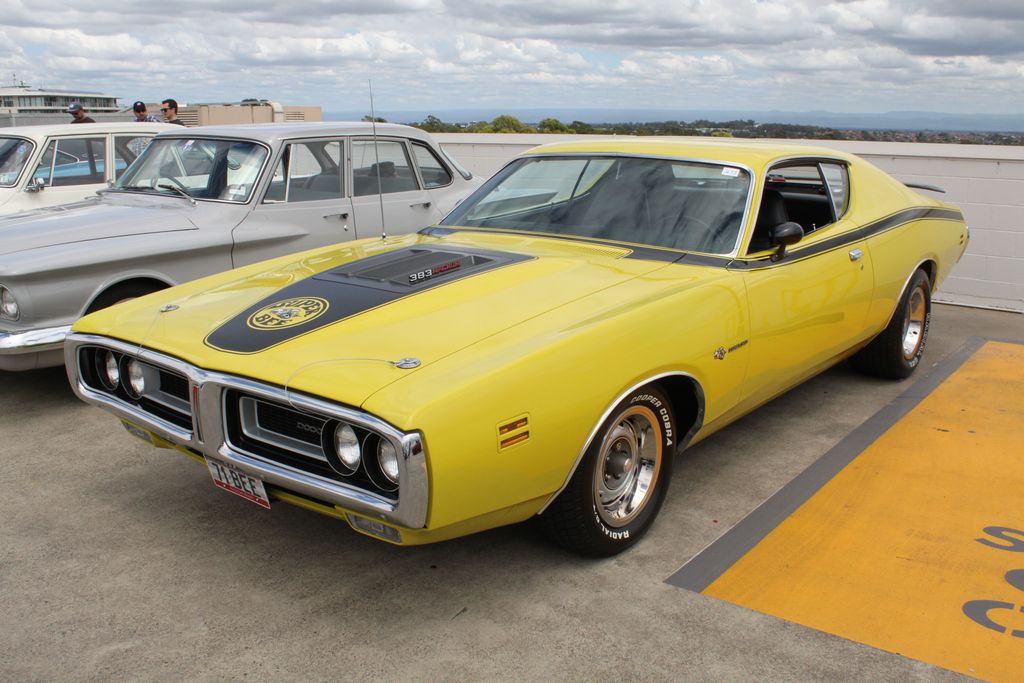
5. **1971 Dodge Charger Super Bee**Following up on one of history’s most iconic muscle car designs is no easy feat, but the 1971 Dodge Charger Super Bee managed to do so in a way that left many loyal fans scratching their heads. Dodge embarked on a redesign that significantly increased the car’s visual weight, making it appear heavier and less agile, losing the lean, aggressive stance of its predecessors. This felt like a betrayal of the Charger’s inherent identity.
Perhaps the most controversial aesthetic change was the addition of a split grille, which fans quickly likened to “a whale’s mouth.” This wide, gaping maw replaced the more refined and aggressive front fascias of earlier Chargers, diminishing much of its predatory charm and sleekness. It was a jarring visual shift for a vehicle that had previously epitomized powerful elegance, and it certainly wasn’t for everyone.
Dodge’s decision to transfer the Super Bee badge from the Coronet to the Charger coincided with this highly debated redesign, adding more fuel to the fire. While the Super Bee name carried significant performance prestige, its new home was cloaked in a body that many felt actively betrayed the classic, beloved lines of the Charger, struggling to live up to its heritage.
The 1971 Super Bee stands as a stark reminder that even legendary nameplates can stumble dramatically in the design department. Its visual bulk and the divisive “whale’s mouth” grille marked a turning point that, for many enthusiasts, sent the Charger’s aesthetic appeal heading in the wrong direction, making it a curious footnote rather than a celebrated chapter.
Car Model Information: 2023 BMW X3 sDrive30i
Name: Dodge Super Bee
Manufacturer: Chrysler Corporation
Production: 1968–1971 , 1970–1980 (Mexico only) , 2007–2009 , 2012–2013
Layout: FR layout
Class: Muscle car
Caption: 1969 Dodge Coronet Super Bee A12 “Six Pack”
Categories: 1960s cars, 1970s cars, All articles needing additional references, All articles with dead external links, All articles with unsourced statements
Summary: The Dodge Super Bee is a mid-sized muscle car marketed by Dodge, that was produced for the 1968 through 1971 model years.
In Mexico, the Super Bee was based on a compact-sized Chrysler platform and marketed from 1970 until 1980.
The Super Bee model name was resurrected for the 2007, 2008, 2009, 2012, and 2013 Dodge Charger Super Bee models.
Get more information about: Dodge Super Bee
Buying a high-performing used car >>>
Brand: Dodge Model: Charger Super Bee
Price: $29,991 Mileage: 26,421 mi.
Read more about: The Million-Dollar Muscle: Classic American V8s That Now Command Prices Beyond Iconic Ferraris

6. **1975 Ford Elite**The mid-70s were a particularly confusing and often disorienting time for automotive design, and the 1975 Ford Elite perfectly embodies Ford’s “disoriented direction” during this era. This wasn’t just a muscle car; it was marketed as a “personal luxury muscle car,” a contradiction in terms that almost always signals an identity crisis on wheels. And boy, did the Elite have one of the worst cases.
Excess chrome, those ubiquitous opera windows, and vinyl roofs were all hallmarks of this new, softened aesthetic, attempting to signal prestige and sophistication. However, these elements instead stripped the Elite of any genuine muscle car aggression or athleticism. It gained weight, not just physically on the scales, but also visually, appearing bloated, heavy, and undeniably less dynamic than any true performance machine should.
Crucially, while gaining physical and visual weight, the Elite also suffered a significant loss in power and style, failing to deliver on the “muscle” part of its moniker. Despite Ford marketing it as a prestige vehicle, it simply couldn’t hide its true nature: it was “essentially an underpowered Torino,” cloaked in an uncomfortable disguise. The big V8 options might have kept it in the muscle category on paper, but its styling screamed “oversized family car.”
The 1975 Ford Elite is remembered mostly as a design experiment gone wrong, a vehicle that attempted to blend two disparate concepts – raw muscle and plush luxury – and ended up achieving neither with conviction. It’s a classic example of a car that tried to be everything to everyone and, in the end, pleased very few discerning enthusiasts, leaving an ugly mark on Ford’s muscle car history.
Car Model Information: 2021 Ford Escape TITANIUM
Caption: 1976 Ford Elite 2-Door Hardtop
Name: Ford Gran Torino Elite , Ford Elite
Manufacturer: Ford Motor Company
Production: 1974–1976
ModelYears: 1974 (Gran Torino Elite) , 1975–1976 (Elite)
Assembly: Chicago, Illinois
Class: Personal luxury car
BodyStyle: coupe
Layout: FR layout
Engine: 351 cuin
Abbr: on
Transmission: Automatic transmission
Wheelbase: 114 in
Related: Ford Torino,Mercury Cougar#Third generation (1974–1976),Mercury Montego#Second generation (1972–1976)
Successor: Ford Thunderbird (seventh generation),Ford LTD II
Categories: Articles with short description, Cars introduced in 1974, Commons category link from Wikidata, Coupés, Ford vehicles
Summary: The Ford Elite is a personal luxury car produced by Ford and marketed in North America from February 1974 to 1976, using the name Gran Torino Elite for its first model year only then simplified to just Elite for the following two model years.
Get more information about: Ford Elite
Buying a high-performing used car >>>
Brand: Ford Model: Elite
Price: $25,329 Mileage: 44,564 mi.
Read more about: Unleashing Automotive Legends: 14 Iconic 1970s Cars Now Commanding Millions in the Collector’s Market
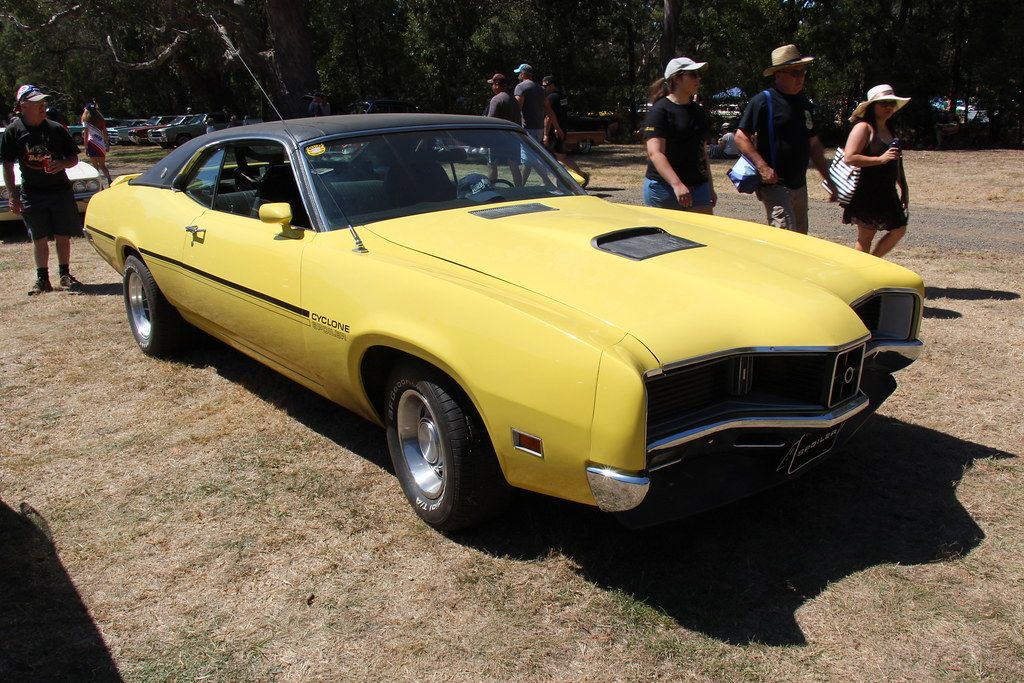
7. **1970 Mercury Cyclone Spoiler**Mercury’s earnest, almost scientific approach to aerodynamics in the 1970 Cyclone Spoiler resulted in “one of the strangest front ends ever bolted onto a production automobile.” If you’ve ever wondered what happens when engineers prioritize wind tunnel results above all else, completely disregarding public perception, then look no further. This car, particularly its front, is the answer in metallic form.
The Cyclone Spoiler featured a dramatically pointed nose combined with deeply recessed headlights, creating a face that the context aptly describes as something “only an engineer could love.” It wasn’t just unusual; it was genuinely peculiar, giving the car a perpetually surprised, or perhaps even indignantly aggressive, expression that stood out in any crowd – for better or for worse.
While rigorous wind tunnel testing may indeed have proven the layout effective for minimizing drag and maximizing straight-line speed, “aesthetic considerations were secondary.” This is a rather polite way of saying they seemed to completely forget about making the car look conventionally good, focusing solely on the numbers. The result was a vehicle that, despite its potential performance benefits, struggled immensely to win hearts based on its visual appeal alone.
The 1970 Mercury Cyclone Spoiler serves as a fantastic illustration of design choices driven purely by function, with little to no regard for universal form. It’s a testament to the fact that sometimes, even when you’re technically “right” about aerodynamics, you can still end up with a car that’s aesthetically a bit of a head-scratcher, creating a polarizing and memorable visual legacy in the muscle car world.
Alright, so we’ve already cringed our way through a good chunk of muscle car misfires, but hold onto your hubcaps, because we’re not quite done. It turns out that the era of raw power and roaring engines sometimes produced designs so… unique, that they continue to baffle and amuse us today. Sometimes, trying too hard to be different, or trying to compromise, just leads to an automotive identity crisis that everyone remembers for all the wrong reasons.
Let’s dive back into the annals of automotive fashion faux pas, because these next seven rides truly encapsulate what happens when horsepower collides with questionable aesthetics. Prepare yourselves for more head-scratching moments and a newfound appreciation for the cars that actually got it right!
Car Model Information: 2023 BMW X3 sDrive30i
Name: Mercury Cyclone Spoiler II
Manufacturer: Mercury (division)
Aka: Ford Torino Talladega
Production: 1969
ModelYears: 1969
Class: Race car
BodyStyle: fastback
Layout: FR layout
Designer: FoMoCo
Categories: All articles needing additional references, All articles with unsourced statements, Articles needing additional references from July 2025, Articles with short description, Articles with unsourced statements from April 2025
Summary: The Mercury Cyclone Spoiler II is a muscle car that was produced by Mercury in early 1969. The Mercury Cyclone Spoiler II was a special, more aerodynamic version of the Mercury Cyclone. It was produced specifically to compete against the Dodge Charger Daytona and Plymouth Superbird produced by Chrysler, and the nearly identical Ford Torino Talladega, in NASCAR stock car racing, and was sold to the public only because homologation rules required a minimum number of cars (500 in 1969) be produced and made available for sale to the public. A total of 503 cars were built in both Yarborough (285) and Gurney (215) versions, a during the first few weeks of 1969.
Get more information about: Mercury Cyclone Spoiler II
Buying a high-performing used car >>>
Brand: Mercury Model: Cyclone Spoiler
Price: $29,991 Mileage: 26,421 mi.
Read more about: Gearhead Dreams: 15 Iconic Defunct Car Brands We Desperately Want Back on the Road
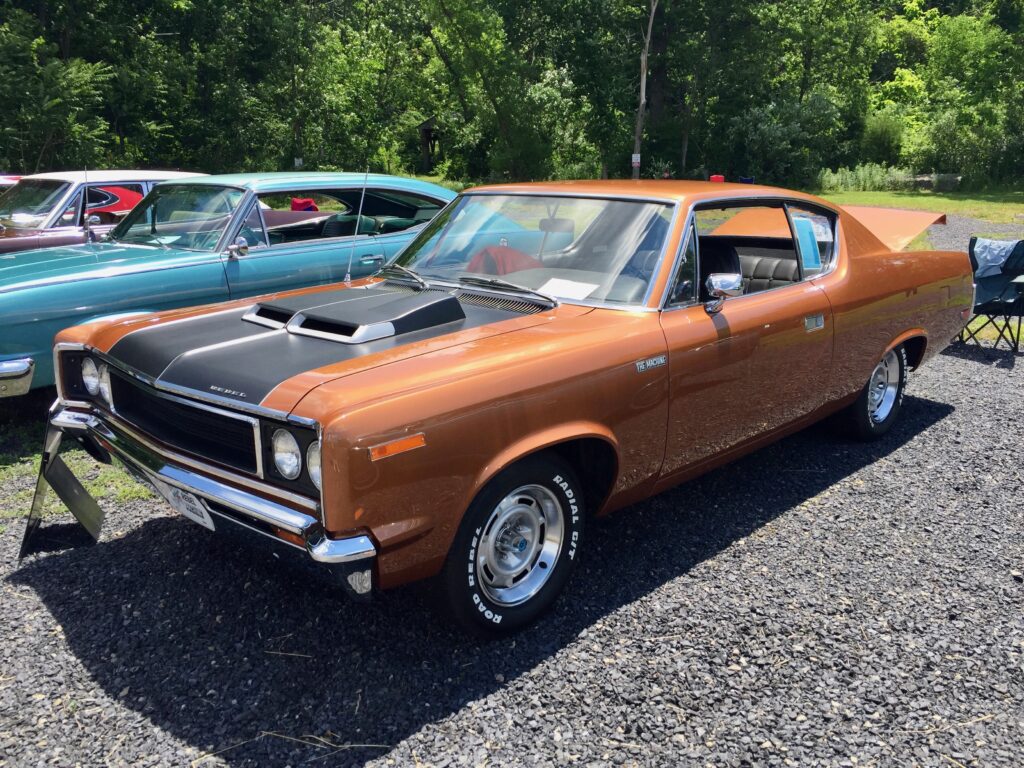
8. **1970 AMC Rebel Machine**Now, if you wanted to make a statement in 1970, AMC certainly offered a way with their Rebel Machine. This wasn’t just a car; it was a loud, proud, and frankly, bewildering declaration of patriotism, or perhaps an attempt at one, painted in eye-searing white with bold red and blue graphics. It was AMC’s audacious, perhaps even desperate, swing for the fences in the muscle car arena.
However, the result was less of a home run and more of a foul ball that landed squarely in the “what were they thinking?” category. The Machine, as it was aptly nicknamed, genuinely looked like a patriotic experiment gone wrong, a vibrant mishmash that, even today, makes onlookers do a double-take – though mostly in bewildered confusion rather than admiration. It was undeniably distinct, but not in the sleek, aggressive way muscle car enthusiasts typically crave.
What makes the Rebel Machine’s story even more poignant is the stark contrast between its audacious exterior and its commendable performance. Underneath all that visual noise, it packed some serious mechanical punch, capable of holding its own against the era’s heavy hitters. Yet, for all its grunt and go, it never quite garnered the widespread respect its mechanical specifications truly deserved, often overshadowed by its polarizing visual presentation.
It’s a testament to how crucial aesthetics can be, even for a machine built primarily for speed and power. The 1970 AMC Rebel Machine remains a fascinating, if visually challenging, artifact from a time when automakers were pushing boundaries, sometimes with spectacular, and often spectacularly odd, results. It’s definitely one for the history books, if only for its sheer, unadulterated visual chutzpah.
Car Model Information: 2023 BMW X3 sDrive30i
Caption: 1968 AMC Rebel 770 station wagon
Name: AMC Rebel
Aka: Australia,Mexico,Europe
Manufacturer: American Motors Corporation
Production: 1967–1970 (US market)
ModelYears: 1967–1970 (US market)
Assembly: Australia
Class: Mid-size car
BodyStyle: sedan (car),convertible,hardtop,4-door sedan,station wagon
Engine: 232 CID
Abbr: on approx.
Transmission: Manual transmission,Overdrive (mechanics),4-speed manual floor or console,Automatic transmission,3-speed “Shift-Command” on console
Layout: Front-engine, rear-wheel drive layout
Wheelbase: 114 in
Length: {{convert,197,in,mm,0,abbr=on
Width: 77.29 in
Height: 53.5 in
Weight: 3500 lb
Platform: AMC’s “senior cars”
Predecessor: Rambler Classic
Successor: AMC Matador
Related: AMC Ambassador
Categories: 1970s cars, AMC vehicles, All articles with dead external links, Articles with dead external links from July 2023, Articles with permanently dead external links
Summary: The AMC Rebel (known as the Rambler Rebel in 1967) is a midsized car produced by American Motors Corporation (AMC) from the 1967 until the 1970 model year. It replaced the Rambler Classic. A similar AMC Matador line replaced the Rebel models, starting with the 1971 model year.
The Rebel was positioned as the high-volume seller in the independent automaker’s line of models. The Rebel was also available in several specialty models, including station wagons featuring themed trim and luxury equipment offered only in selected geographical regions. A high-performance, low-priced muscle car version was produced in 1970, the Machine, which is most recognized in its flamboyant white, red, and blue trim.
The Rebel is the shorter-wheelbase, intermediate-sized version of the longer-wheelbase, full-sized Ambassador line.
The Rebel was built at AMC’s West Assembly Line (along with the Ambassador) in Kenosha, Wisconsin, and in Brampton, Ontario, Canada (Bramalea – Brampton Assembly Plant).
The Rebel was also assembled from Complete Knock-down (CKD) kits under license in Europe (by Renault in 1967), in Mexico (by Vehiculos Automotores Mexicanos), in Costa Rica by Purdy Motor; and from Semi Knockdown kits (SKD) in Australia (by Australian Motor Industries), and in New Zealand (by Campbell Motor Industries). Although the Rambler name was discontinued on the Rebel in the U.S. and Canadian markets after the 1967 model year, the cars continued to be sold in international markets under the historic “Rambler” brand.
Get more information about: AMC Rebel
Buying a high-performing used car >>>
Brand: AMC Model: Rebel Machine
Price: $29,991 Mileage: 26,421 mi.
Read more about: Unveiling Automotive Legends: The 12 Rarest Muscle Cars Ever Produced by the Big Three

9. **1975 Chevrolet Camaro**Ah, the mid-1970s. A time of shifting automotive priorities, new regulations, and, for many iconic models like the Chevrolet Camaro, a serious identity crisis. When federally mandated 5-mph bumpers entered the scene, designers across the board scrambled to integrate them, and for the 1975 Camaro, the outcome was, shall we say, less than graceful. It was like trying to bolt a refrigerator onto a supermodel.
What emerged from this design struggle was a Camaro that was a far cry from its sleek, predatory predecessors. The once-sharp profile now featured a bulbous, oddly proportioned front end, complete with an ungainly rubber-tipped nose that seemed to awkwardly protrude, disrupting the car’s natural flow. It looked less like a lean, mean machine and more like it had run headfirst into a wall, then tried to pretend nothing happened.
Unsurprisingly, this aesthetic compromise, coupled with engine options that felt “neutered” by new emissions standards, didn’t exactly win over the masses. Sales saw a noticeable decline from 1974, a clear indicator that drivers were recoiling from the styling changes and the perceived loss of the Camaro’s raw, unadulterated spirit. It was a tough pill for muscle car loyalists to swallow, seeing their beloved icon softened and clunkified.
The 1975 Chevrolet Camaro stands as a prime example of how regulatory changes, even with the best intentions, can profoundly impact automotive design, often for the worse. It represents a period where the struggle to adapt resulted in a car that, while still a Camaro in name, struggled to embody the visual aggression and uncompromised spirit that defined its legendary badge.
Car Model Information: 2018 Chevrolet Camaro 1LS
Name: Chevrolet Camaro
Manufacturer: Chevrolet
Production: 1966–2002,2009–2023
ModelYears: 1967–2002,2010–2024
Class: Pony car
BodyStyle: coupe,convertible
Platform: GM F platform,GM Zeta platform,GM Alpha platform
Layout: Front-engine, rear-wheel-drive layout
Categories: 1970s cars, 1980s cars, 1990s cars, 2+2 coupés, 2000s cars
Summary: The Chevrolet Camaro is a mid-size American automobile manufactured by Chevrolet, classified as a pony car. It first went on sale on September 29, 1966, for the 1967 model year and was designed to compete with the Ford Mustang. The Camaro shared its platform and major components with the Firebird, produced by General Motors’ Pontiac division that was also introduced for the 1967 model year.
Four distinct generations of the Camaro were developed before production ended in 2002. The nameplate was revived on a concept car that evolved into the fifth-generation Camaro; production started on March 16, 2009.
Production of the sixth generation of the Camaro ended in December 2023, for the 2024 model year.
Get more information about: Chevrolet Camaro
Buying a high-performing used car >>>
Brand: Chevrolet Model: Camaro
Price: $18,785 Mileage: 69,196 mi.
Read more about: Unleashing Automotive Legends: 14 Iconic 1970s Cars Now Commanding Millions in the Collector’s Market
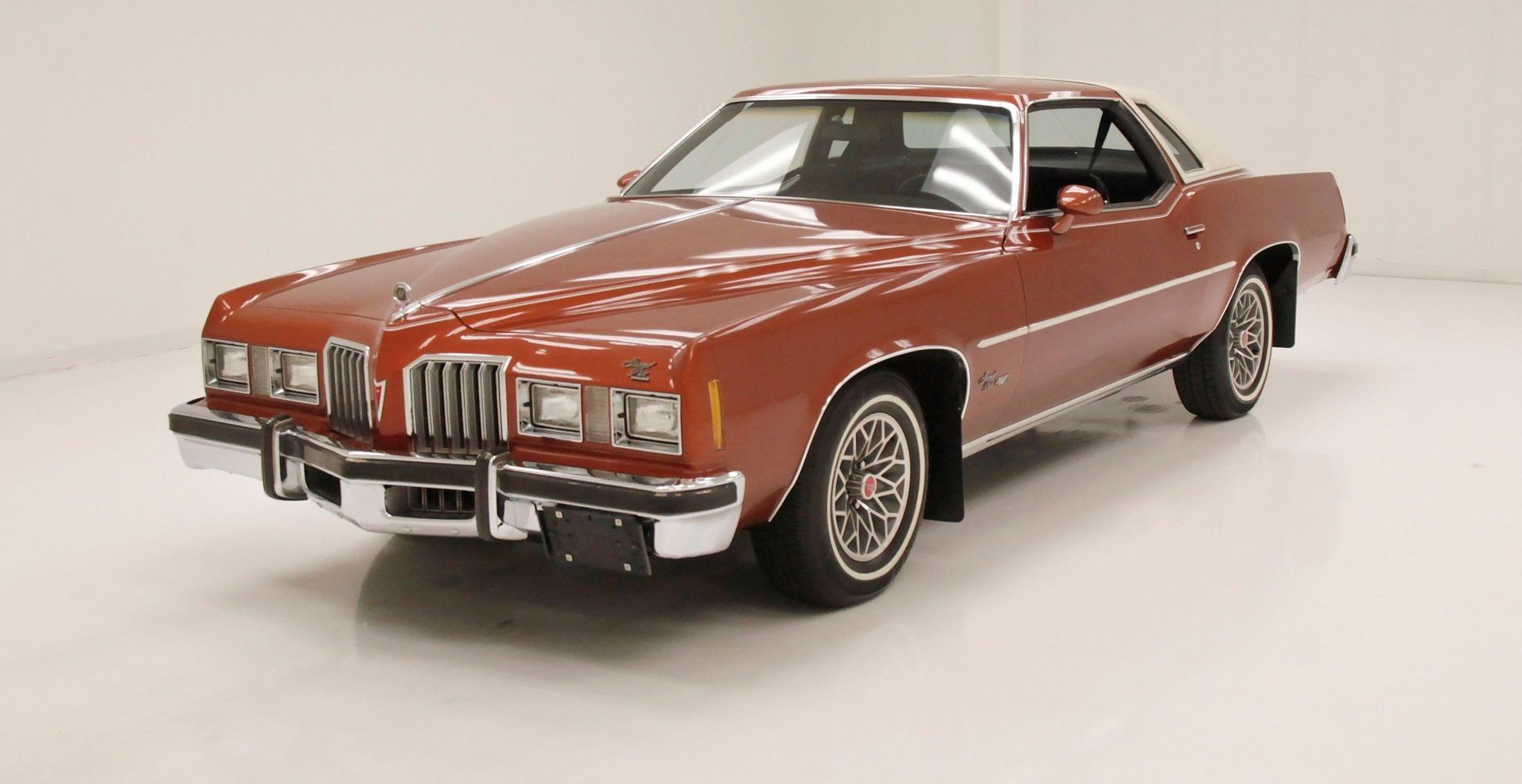
10. **1977 Pontiac Can Am**In the late 70s, Pontiac found itself in a bit of a pickle, desperately trying to reignite the dwindling flames of muscle car glory in an era of tightening regulations and shifting tastes. Their answer, in 1977, was the Can Am: a bold, almost desperate, attempt to recapture that magic. They took a Colonnade coupe, slapped on some serious flair, and hoped for the best.
This “strange Colonnade coupe” certainly didn’t hold back on the visual spectacle. It sported outlandish graphics that screamed for attention, combined with a massive shaker hood scoop that was pure, unadulterated muscle car bravado. It was an aesthetic blitz, designed to grab you by the eyeballs and shake you, asserting its performance intentions with every decal and curve, whether you liked it or not.
However, the Can Am’s journey was tragically short-lived, proving that sometimes, even the most ambitious designs are doomed by practicalities. Production problems with the fiberglass rear spoilers arose, leading to Pontiac canceling the model after just 1,377 units rolled off the line. It was a classic case of mechanical woes derailing a visually assertive, if polarizing, statement piece.
Despite its brief stint and divisive looks, the 1977 Pontiac Can Am has carved out a niche in automotive history. It’s remembered as an intriguing, albeit flawed, attempt to keep the muscle car flame burning during a challenging period. It serves as a quirky reminder that even when things don’t go according to plan, a car can still leave an indelible, if not entirely beautiful, mark.
Car Model Information: 2023 BMW X3 sDrive30i
Categories: 1970s cars, Articles with short description, Mid-size cars, Pontiac vehicles, Short description matches Wikidata
Summary: The Pontiac Can Am is a midsize muscle car built by Pontiac and based on the Pontiac LeMans and the Pontiac Grand Am. The Can Am was a special edition option package and was only available in 1977. It was named for the Can Am racing series, continuing the race theme used for the Pontiac Grand Prix, LeMans and Trans Am.
Get more information about: Pontiac Can Am
Buying a high-performing used car >>>
Brand: Pontiac Model: Can Am
Price: $29,991 Mileage: 26,421 mi.
Read more about: Unleashing Automotive Legends: 14 Iconic 1970s Cars Now Commanding Millions in the Collector’s Market

11. **1973 Pontiac Grand Am**The 1973 Pontiac Grand Am is one of those cars that tried to be everything to everyone and, in doing so, ended up pleasing very few discerning enthusiasts. Pontiac aimed for a blend of European sophistication and American muscle, but the result was, to put it mildly, an awkward hybrid. It was like wearing a tuxedo jacket with jogging pants – comfortable, perhaps, but visually confusing.
On one hand, the carmakers did manage to extract reasonable performance from the available 455 V8, an admirable feat given the increasingly stringent emissions requirements of the era. So, it had some grunt under the hood, holding onto a sliver of its muscle car heritage. But then you looked at it, and things got complicated.
The styling was a prime example of this identity crisis, featuring a busy, overcomplicated front end paired with proportions that just felt… off. It was too luxurious and heavy for the traditional muscle car purist, lacking the lean, aggressive stance they craved. Yet, at the same time, it wasn’t refined or sleek enough to truly compete with the elegant European luxury sports sedans it ostensibly aimed to emulate. It seemed stuck in design purgatory.
Ultimately, while the 1973 Grand Am rode well and offered solid V8 performance, its styling never truly resonated with either camp. It became an obscure footnote in Pontiac’s rich performance timeline, a testament to the idea that sometimes, trying to bridge too many stylistic worlds can result in a car that stands out, but perhaps not for the reasons its creators intended. It was a noble effort, but one that left its aesthetic impact largely unresolved.
Car Model Information: 2023 BMW X3 sDrive30i
Name: Pontiac Grand Am
Manufacturer: Pontiac (automobile)
Production: 1973–1975,1977–1980,1984–2005
BodyStyle: fastback,notchback,fastback,notchback
Predecessor: Pontiac LeMans,Pontiac Phoenix,Pontiac Tempest#Third generation 1987–1991
Successor: Pontiac G6
Categories: 1980s cars, 1990s cars, 2000s cars, All articles with dead external links, Articles with dead external links from May 2016
Summary: The Pontiac Grand Am is a car model that Pontiac Division of General Motors produced in various years between 1973 and 2005. The first and second generations were RWD mid-size cars built on the LeMans GM A platform. The Grand Am name was reused for a FWD compact car for the third- and fourth-generations. The fifth-generation versions was enlarged to a mid-size car.
The platform began development intended to be the next generation GTO, but the muscle car era was drawing to a close. Pontiac decided to make this model America’s answer to European luxury sports sedans. The Grand Am name was derived from two other Pontiacs; “Grand” signifying Grand Prix luxury, and “Am” for Trans Am performance.
The first generation Grand Am featured innovations that included a deformable urethane nose (an evolution of the “Endura” bumper pioneered on the 1968 GTO) and was one of only three GM cars (Olds Cutlass Salon, Chevy Monte Carlo S) to debut radial-ply tires (RTS – Radial Tuned Suspension) as standard equipment. The intermediate sized Grand Am was canceled in 1980 when it was replaced by the Pontiac 6000.
A compact-sized Grand Am, based on the GM N-platform, was released in 1985, replacing the Pontiac Phoenix. It became Pontiac’s best selling car and was later replaced by the Pontiac G6, so named as it was intended to be the 6th generation of the Grand Am.
All 1973 through 1975 Grand Ams were built in Pontiac, Michigan at Pontiac’s main assembly plant. The 1978-1980 Grand Ams were built in Pontiac, Michigan at Pontiac’s main assembly plant and in Atlanta, Georgia at GMAD Lakewood. All Grand Ams between 1985 and 2005 were built in Lansing, Michigan at the Lansing Car Assembly.
Get more information about: Pontiac Grand Am
Buying a high-performing used car >>>
Brand: Pontiac Model: Grand Am
Price: $29,991 Mileage: 26,421 mi.
Read more about: The Million-Dollar Muscle: Classic American V8s That Now Command Prices Beyond Iconic Ferraris
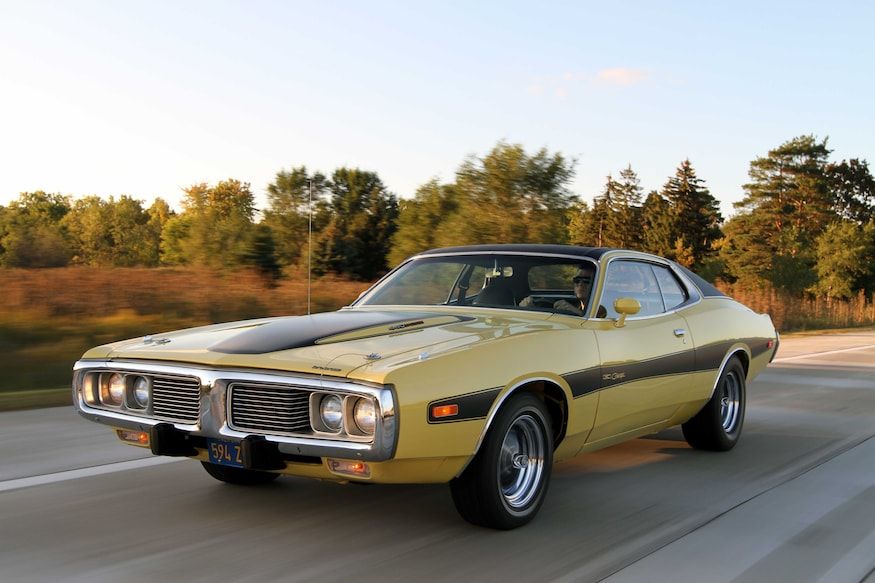
12. **1974 Dodge Charger SE**You know what they say: there’s a time and a place for everything. And for opera windows, that place is definitely not on a muscle car, especially one as iconic as the Dodge Charger. Yet, in a baffling decision that sent shockwaves through the enthusiast community, Dodge opted to incorporate this characteristic into the 1974 Charger SE, effectively destroying the Charger’s image overnight. It was like giving a fierce lion a perm.
The Charger, a name synonymous with raw power, aggressive lines, and an undeniable aura of cool, suddenly found itself sporting a design cue traditionally reserved for formal luxury cars. These small, often ornamental, windows on the C-pillar felt completely out of place, signaling a softening of the Charger’s persona, a blatant disregard for its performance-oriented heritage. It was an aesthetic betrayal that left fans scratching their heads.
To add insult to injury, this visual misstep coincided with the car’s burgeoning physical bulk and diminished performance. The 1974 Charger SE weighed in at a hefty nearly 4,300 pounds, a significant increase that only exacerbated its perceived sluggishness. Despite its largest engine option generating around 280 horsepower, the added weight meant it was nowhere near the lean, mean machines of previous years.
The 1974 Dodge Charger SE is a stark reminder of how a single design choice, when fundamentally misaligned with a brand’s identity, can have catastrophic consequences. The opera windows transformed a revered muscle machine into something diluted and confused, marking a low point in the Charger’s storied, powerful history, forever remembered as the moment it traded its muscle for misguided luxury.
Car Model Information: 2022 Dodge Charger SRT Hellcat Redeye Widebody Jailbre
Name: Dodge Charger
Caption: 1969 Dodge Charger
Manufacturer: Dodge
Production: 1966–1978,1981–1987,2005–present
ModelYears: 1966–1978,1982–1987,2006–present
Categories: 1960s cars, 1970s cars, 1980s cars, 2000s cars, 2010s cars
Summary: The Dodge Charger is a model of automobile marketed by Dodge in various forms over eight generations since 1966.
The first Charger was a show car in 1964. A 1965 Charger II concept car resembled the 1966 production version.
In the United States, the Charger nameplate has been used on mid-size cars, personal luxury coupes, subcompact hatchbacks, and full-size sedans.
Get more information about: Dodge Charger
Buying a high-performing used car >>>
Brand: Dodge Model: Charger
Price: $88,138 Mileage: 7,100 mi.
Read more about: The Million-Dollar Muscle: Classic American V8s That Now Command Prices Beyond Iconic Ferraris
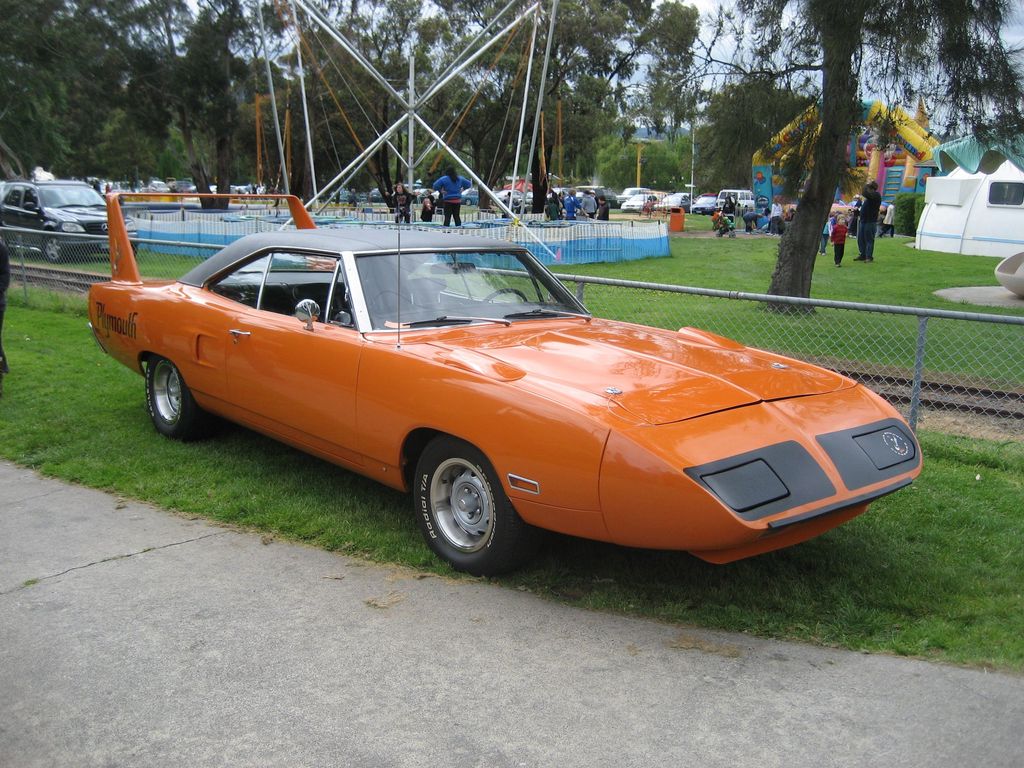
13. **1970 Plymouth Superbird**Okay, here’s one where the automotive world is truly divided: the 1970 Plymouth Superbird. You either absolutely adore its audacious, outlandish appearance, or you wish you could unsee it. There’s really no middle ground when it comes to this winged beast. It was, undeniably, an automobile made purely for one thing: NASCAR domination, and its design reflects that singular, uncompromising purpose.
The Superbird’s wild styling, with its ridiculously tall rear wing and elongated, pointed nose cone, wasn’t born from an aesthetic whim. It was the brutal, functional reality of late-1960s aerodynamics, engineered to slice through the air and generate downforce on oval tracks. On the race track, it was a marvel, granting Richard Petty and other drivers a distinct advantage that helped cement its legend.
However, translate that track-focused design to the street, and well, the “overall design left much to be desired” for many. It was ungainly, impractical, and frankly, a bit cartoonish for everyday driving. While it couldn’t be ignored, some argued that maybe it *should* have been, at least from an aesthetic standpoint for street-legal cars. It was a vehicle that prioritized extreme function to such a degree that conventional form was utterly discarded.
Despite its polarizing looks, the 1970 Plymouth Superbird remains an undeniable icon, a testament to an era where manufacturers literally built race cars for the street just to qualify for NASCAR. It’s a love-it-or-hate-it machine that perfectly encapsulates the extreme, no-holds-barred spirit of muscle car development, proving that sometimes, pure performance leads to truly unforgettable, if not universally beautiful, designs.
Read more about: The Million-Dollar Muscle: Classic American V8s That Now Command Prices Beyond Iconic Ferraris

14. **1972 Buick Gran Sport**The 1972 Buick Gran Sport often makes people pause and wonder: why? Why did Buick designers abandon the clean, aggressive styling that had defined their earlier muscle car efforts for something so… different? This particular intermediate model marked a curious departure, leaving many enthusiasts scratching their heads at the new direction. It felt like a band changing genres midway through a hit album.
The car featured strange concave body panels that seemed to scoop inward, creating an unconventional visual texture that broke up the sleekness. This, combined with an awkward front end, resulted in a look that simply didn’t interest everyone. It lacked the cohesive, powerful stance that one expected from a Gran Sport, appearing almost apologetic in its styling compared to its bolder predecessors.
What’s even more perplexing is the timing of this design shift. Some found the look less cohesive even *before* the federally mandated 1973 bumper regulations took full effect, which would typically be blamed for such design compromises. This suggests that the 1972 Gran Sport’s aesthetic choices were, in many ways, self-inflicted, a deliberate attempt at a new look that just didn’t quite land with the muscle car faithful.
Ultimately, the 1972 Buick Gran Sport stands as a peculiar chapter in Buick’s muscle car history, a design experiment that moved away from its established successful formula. It’s a reminder that even renowned marques can sometimes take a visual detour that leaves fans yearning for the clarity and aggression of what came before, proving that not every innovation is a step forward, especially in the world of iconic automotive aesthetics.
Car Model Information: 2022 Dodge Charger R/T
Name: Gran Sport
Logo: Buick gs emblem.png
Producttype: Performance car
Currentowner: General Motors
Producedby: General Motors
Introduced: [object Object]
Related: T-Type
Markets: U.S.
Categories: All Wikipedia articles in need of updating, All articles with unsourced statements, Articles with short description, Articles with unsourced statements from September 2020, Articles with unsourced statements from September 2025
Summary: The Gran Sport name has been used on several high-performance cars built by General Motors for its Buick brand since 1965. In the GM brands hierarchy, Buick was surpassed in luxury and comfort appointments only by Cadillac, which did not produce performance models. As a result, the Buick GS series were the most opulently equipped GM sport models of their era.
The Gran Sport performance enhancements on all Buick products during this era sought to affirm Buick’s tradition of producing powerful and comfortable products going back to the 1930s when all Buicks of the time were upgraded to the Buick Fireball Straight Eight, then installed the 278 cu in (4.6 L) Roadmaster engine in the shortest model Special and introduced the Century, known as “the banker’s hot rod” with a three speed synchromesh manual transmission. The Gran Sport sought to identify cars that were fun to drive with a luxury approach.
Get more information about: Buick Gran Sport
Buying a high-performing used car >>>
Brand: Buick Model: Gran Sport
Price: $33,961 Mileage: 44,022 mi.
Read more about: More Bark Than Bite: 14 Classic Cars That Didn’t Quite Live Up to Their Legendary Looks
So, there you have it, gearheads! Our cringe-worthy, chuckle-inducing tour through the automotive hall of shame. From patriotic experiments gone wrong to cars that looked perpetually confused, these machines remind us that even in the glorious age of muscle, beauty was sometimes an afterthought – or perhaps, just completely missed the mark. But hey, at least they gave us plenty to talk about, right? These oddities, for all their visual shortcomings, add character and a good dose of humor to the rich tapestry of American automotive history. They teach us that while power is undeniable, sometimes, a car’s looks are just as unforgettable, for better or for worse! And let’s be honest, wouldn’t a world filled only with perfectly sleek, conventionally beautiful cars be just a little bit boring? Bring on the ugly, we say, for they make the truly stunning cars shine even brighter!