The automotive world moves at a breathtaking pace, constantly innovating and evolving with new designs, technologies, and performance benchmarks. In this relentless pursuit of progress, some truly remarkable vehicles, machines that pushed boundaries or offered unique driving experiences, regrettably slip through the cracks of public memory. Whether overshadowed by more aggressively marketed rivals, hampered by unfortunate timing, or simply too far ahead of their time, many of these incredible cars never truly received the recognition and spotlight they so richly deserved.
Make no mistake, the cars we’re about to rediscover are anything but ordinary. They are engineering marvels, performance beasts, and, in many cases, simply misunderstood masterpieces. This article takes a deep dive into some truly awesome cars that, for various reasons, time and the broader public have largely forgotten. Our journey through this curated collection of hidden automotive gems is a testament to the diverse ingenuity and passion that defines the industry, revealing that even in obscurity, true coolness can endure.
From groundbreaking mechanical layouts to revolutionary design choices, each vehicle on this list tells a compelling story of ambition and unique character. We’ve meticulously gathered facts, figures, and specifications from reputable sources like MotorTrend, Car and Driver, Parkers, Evo, and Road & Track to ensure an authoritative look back at these unsung heroes of the road. Prepare to be astonished as we bring these forgotten legends back into the conversation, celebrating what made them special and asserting their rightful place in automotive lore.
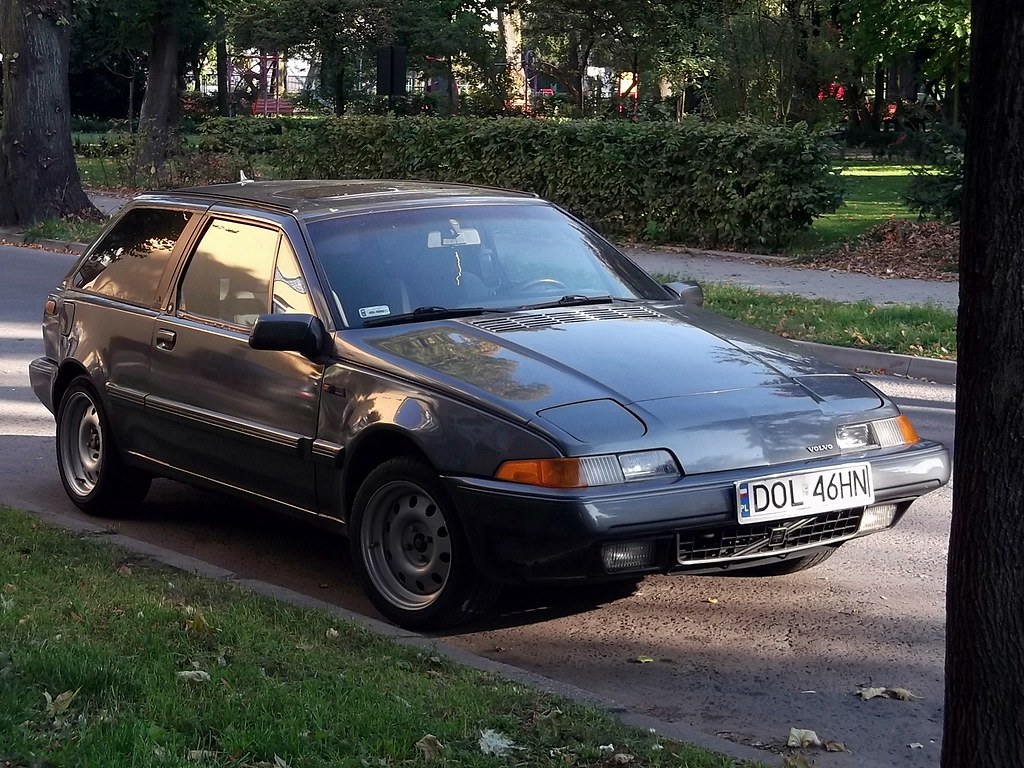
1. **Volvo 480 Turbo**
When discussing the aesthetic trends of the 1970s and 80s, the prevalence of wedge-shaped car designs is undeniable. Volvo, a brand more commonly associated with safety and understated design, entered this stylistic arena in 1986 with the 480, arriving fashionably late but with a distinctive statement. This car marked a significant milestone for the Swedish automaker, being Volvo’s first-ever front-wheel-drive vehicle, a bold departure from their traditional rear-wheel-drive offerings.
Under its sleek, angular hood, the 480 Turbo housed a transverse-mounted four-cylinder engine, a configuration chosen to optimize space and weight distribution for its front-wheel-drive setup. Yet, what truly set the 480 apart aesthetically, contributing significantly to its cool factor, were its “uber-cool pop-up headlights.” These retracting lamps were a quintessential design flourish of the era, adding a touch of sporty flair that contrasted with Volvo’s more conservative image.
Despite its innovative engineering and distinctive looks, the Volvo 480 Turbo found itself in a fiercely competitive market. The late 1980s were a golden age for hot hatches, with an abundance of exciting, performance-oriented options available to consumers. In this crowded segment, the 480 struggled to match the raw appeal and established reputations of its rivals, leading to its swift fade into obscurity. It was a commendable effort from Volvo, but one that, unfortunately, was quickly overlooked by the masses.
Read more about: The Torque Test: Unveiling the Towing Prowess of 15 Top Electric Trucks and SUVs – From Mighty Haulers to Range Considerations
2. **Alfa Romeo SZ**
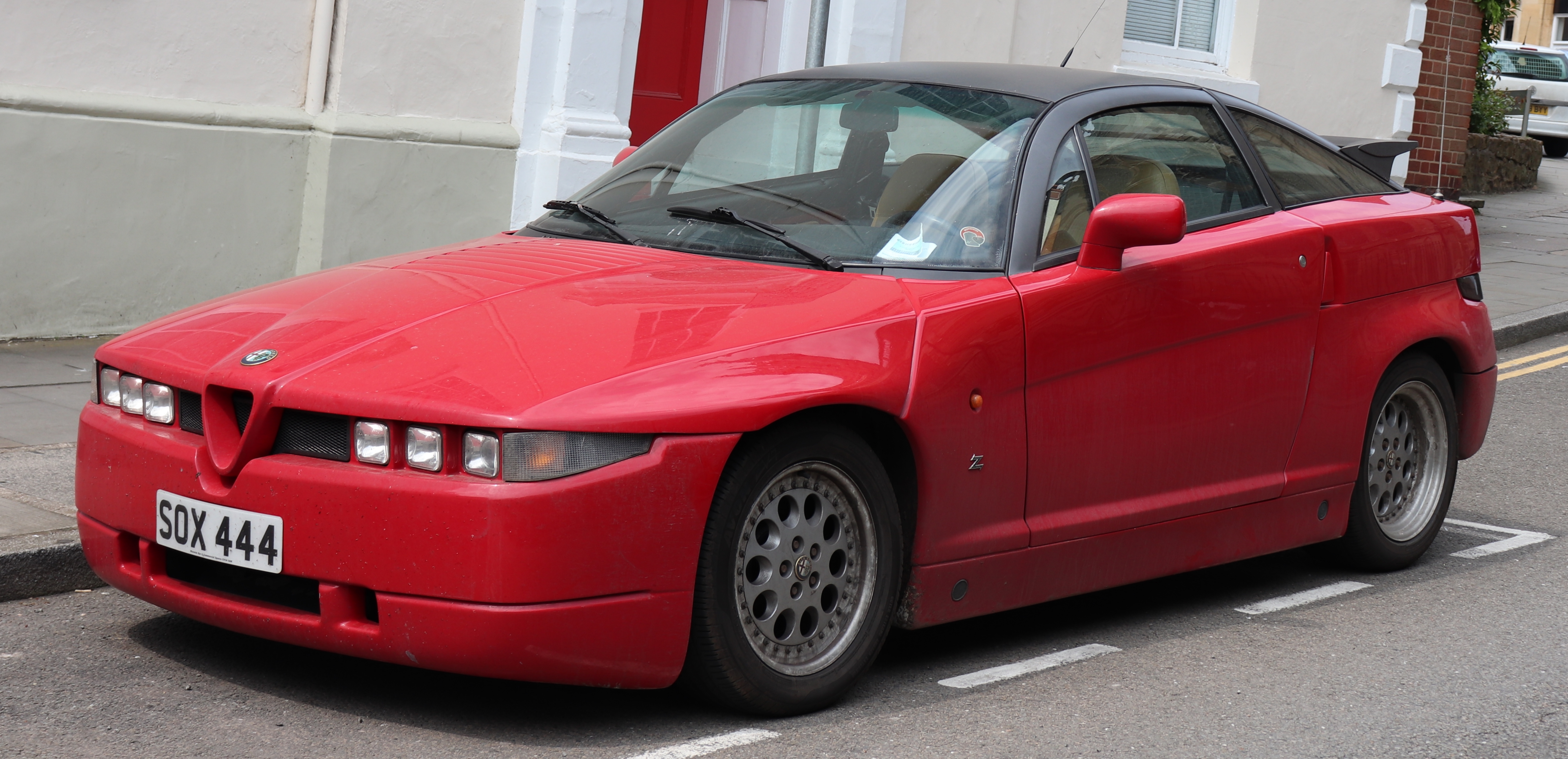
The Alfa Romeo SZ is a car that, from the moment of its reveal, solidified its place as one of the most jaw-dropping classic Italian sports cars ever conceived. Its aggressive, angular styling, often nicknamed ‘Il Mostro’ (The Monster), was the brainchild of the legendary coachbuilder Zagato. This striking machine was not mass-produced; instead, it was meticulously handbuilt in Milan, a testament to its exclusivity and bespoke craftsmanship that made quite an impact in the late 1980s.
The design of the SZ was certainly not to everyone’s taste, eliciting strong opinions due to its uncompromising, almost brutalist aesthetic. However, it was precisely this polarizing appearance that contributed to its unique allure. Its short wheelbase, wide track, and low-slung stance gave it an undeniable presence, demanding attention wherever it went.
With just around 1,000 examples built, according to Stellantis Heritage, the Alfa Romeo SZ was always destined to be a rare sight. This limited production, coupled with its distinctive and often debated appearance, ensured that the SZ would never achieve widespread commercial success. Instead, it carved out a niche for itself, remaining a revered cult icon among the most passionate ‘Alfistis’—devoted Alfa Romeo enthusiasts who appreciate its bold character and the sheer audacity of its design.
Car Model Information: 2022 Dodge Charger R/T
Caption: Alfa Romeo SZ
Name: Alfa Romeo SZ,Alfa Romeo RZ
Manufacturer: Alfa Romeo
Aka: ES-30 (internal codename),Il Mostro
Production: 1989–1991 (SZ),1992–1994 (RZ)
Assembly: Rho (Italy)
Class: Sports car
BodyStyle: coupé,convertible
Layout: Front-engine, rear-wheel-drive layout
Powerout: cvt
Engine: cvt,Alfa Romeo V6 engine#3.0
Transmission: Manual transmission
Wheelbase: cvt
Length: cvt
Width: cvt
Height: {{cvt,1310,mm,in,1
Weight: {{cvt,1260,kg,lb,0
Related: Alfa Romeo 75
Designer: Centro Stile Fiat:,Robert Opron,Antonio Castellana
Categories: 1990s cars, Alfa Romeo vehicles, All articles needing additional references, Articles needing additional references from November 2024, Articles with short description
Summary: The Alfa Romeo SZ (for Sprint Zagato) and codenamed ES-30 for Experimental Sportscar 3.0 litre, is a high-performance limited-production sports car built from 1989 to 1991 by a partnership between Centro Stile Zagato, Centro Stile Alfa Romeo and Centro Stile Fiat. It was unveiled as the ES-30 at the 1989 Geneva Motor Show as a prototype by Zagato with the styling house assigned the responsibility of assembling the car.
Get more information about: Alfa Romeo SZ
Buying a high-performing used car >>>
Brand: Alfa Romeo Model: SZ
Price: $33,961 Mileage: 44,022 mi.
Read more about: Why We Still Adore Them: A Deep Dive into the Most Gloriously Awkward ’80s Cars That Were So Ugly, They Became Icons
3. **BMW Z1**
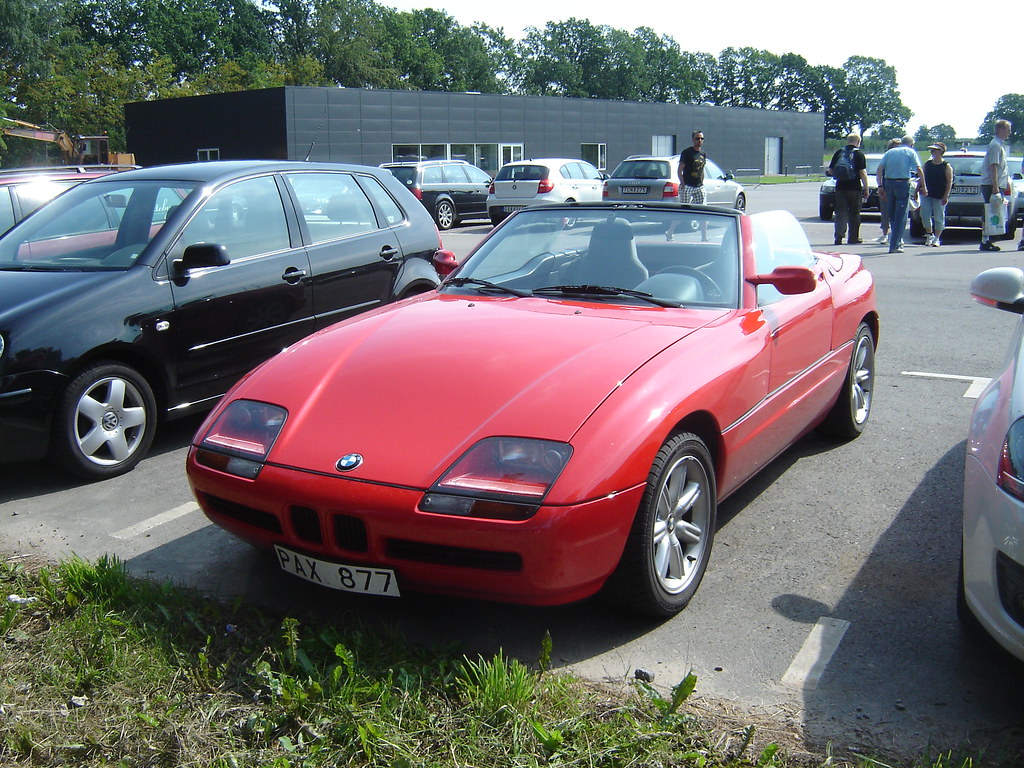
In 1989, BMW unveiled a car that would signal the dawn of a new era for the Bavarian automaker: the Z1, their very first Z car. In line with traditional topless sports car conventions, it featured a classic rear-wheel-drive layout, a manual transmission for an engaging driving experience, and a retractable canvas roof, perfect for open-air motoring. However, these conventional aspects were merely the starting point for a vehicle that quickly transcended the ordinary.
What truly made the BMW Z1 a standout, an engineering marvel that captured imaginations, were its incredibly innovative and unique features. Foremost among these were its vertical sliding doors, which, rather than swinging outwards, ingeniously vanished downwards into the car’s sills. This futuristic mechanism was not just a gimmick; it offered an unparalleled sense of openness and drama upon entry and exit, making the Z1 an immediate conversation starter.
Beyond the doors, the Z1 also boasted body panels that could be completely swapped out, allowing owners to easily change the car’s color if they desired—a level of customization unheard of at the time. With BMW producing only 8,000 examples of the Z1, the chances of encountering one of these beautiful and technologically advanced roadsters in the wild are exceedingly slim, further solidifying its status as a forgotten but truly cool piece of automotive history.
Read more about: The Pinnacle of Comfort and Performance: 14 Elite Luxury Cars for Discerning Wealthy Retirees

4. **Mitsubishi Pajero Mini**
Kei cars, as MotorTrend accurately defines them, are “the smallest street-legal passenger cars, vans, and trucks that you can buy in Japan.” These diminutive vehicles represent a fascinating subculture of automotive design, born from unique Japanese regulations. While beloved by many, their geographical exclusivity means that for a vast majority of the global automotive audience, they remain largely forgotten, existing almost as mythical creatures only whispered about by enthusiasts.
Among these charmingly compact machines, the Mitsubishi Pajero Mini stands out. It is, in essence, a bite-sized interpretation of the larger, more rugged Mitsubishi Pajero, famous for its off-road prowess. Yet, despite its undeniably cutesy appearance and small stature, it would be a mistake to underestimate its capabilities. The Pajero Mini was engineered with a surprising degree of off-road aptitude, inheriting much of its larger sibling’s adventurous spirit.
This miniature SUV came equipped with a robust driveline that allowed drivers to choose between two- and four-wheel drive, providing versatility for various terrains. Furthermore, it featured other legitimate off-road goodies, making it far more capable than its dimensions might suggest. The Pajero Mini proved that even in a tiny package, serious utility and genuine adventure could be found, an often-overlooked testament to thoughtful design in a niche market.
Car Model Information: 2022 Dodge Charger R/T
Name: Mitsubishi Pajero Mini
Manufacturer: Mitsubishi Motors
Aka: Nissan Kix
Production: 1994–2012
Assembly: Kurashiki, Okayama
Class: Kei car
BodyStyle: SUV
Layout: unbulleted list
Successor: Mitsubishi eK#fourth
Categories: 2000s cars, All-wheel-drive vehicles, Articles containing Japanese-language text, Articles with short description, CS1 Japanese-language sources (ja)
Summary: The Mitsubishi Pajero Mini (Japanese: 三菱・パジェロミニ, Hepburn: Mitsubishi Pajero Mini) is a kei car produced by Mitsubishi Motors from December 1994 until June 2012.
Get more information about: Mitsubishi Pajero Mini
Buying a high-performing used car >>>
Brand: Mitsubishi Model: Pajero Mini
Price: $33,961 Mileage: 44,022 mi.
Read more about: Mechanic’s Crucial Warning: 15 Popular Vehicles That Turn into Costly Financial Traps Well Before 120,000 Miles

5. **Alfa Romeo 145 Cloverleaf**
Even for the most devoted ‘Alfisti,’ it’s easy for certain models to recede into the shadows of memory, and the Alfa Romeo 145 Cloverleaf is a prime example of such a phenomenon. A car that, by the admission of even ardent Alfa Romeo fans, almost slips from consciousness. Yet, upon closer inspection, its merits and unique character quickly resurface, reminding us why it deserves a second look.
Performance-wise, the 145 Cloverleaf, according to figures from Parkers, was capable of accelerating from 0 to 60 mph in a respectable 8 seconds. While this might not set any modern-day hot hatch records, it was a spirited performance for its era, offering a genuinely engaging driving experience. Its true appeal, however, lay not just in its speed but in its distinctive presence.
The 145 stood out significantly due to its flamboyant design, a clear reflection of the bold and often expressive automotive aesthetics prevalent in the 1990s. Those were indeed different times, where character and flair were often prioritized. It’s a genuine shame that such a distinctively styled and fun-to-drive car was ultimately overshadowed by the sheer volume of other compelling and popular vehicles that dominated the automotive landscape of the 90s, preventing it from truly shining.
Car Model Information: 2022 Dodge Charger R/T
Name: Alfa Romeo 145,Alfa Romeo 146
Caption: Alfa Romeo 145 Quadrifoglio
Manufacturer: Alfa Romeo
Production: Unbulleted list
Assembly: Alfa Romeo Pomigliano d’Arco plant,Campania
Designer: unbulleted list
Class: Small family car
BodyStyle: Unbulleted list
Layout: Longitudinal engine,Front-engine, front-wheel-drive layout
Platform: Fiat Tipo Due platform
Related: Unbulleted list
Engine: Alfa Romeo Boxer engine,1.6 L Boxer Flat-4,1.7 L Boxer Flat-4,Alfa Romeo Twin Spark engine,1.6 L Twin Spark I4,1.8 L Twin Spark I4,2.0 L Twin Spark I4,turbo-diesel,JTD engine
Transmission: Manual transmission
Wheelbase: Convert
Length: 145,1994–1999: {{Convert,4093,mm,in,1,abbr=on
Width: Convert
Height: Convert
Weight: Convert
Predecessor: Alfa Romeo 33
Successor: Alfa Romeo 147
Sp: uk
Categories: 2000s cars, All articles with dead external links, Articles with dead external links from February 2018, Articles with permanently dead external links, Articles with short description
Summary: The Alfa Romeo 145 (Type 930A) and the Alfa Romeo 146 (Type 930B) are small family cars produced by Italian automobile manufacturer Alfa Romeo between 1994 and 2000. The 145 is a three-door hatchback and was launched at the 1994 Turin Motor Show, while the 146 is a five-door hatchback, launched in 1995 to replace the Alfa Romeo 33.
The 145 and 146 share exterior and interior components from the B-pillar forwards. A total of 221,037 145s and 233,295 146s were built.
Get more information about: Alfa Romeo 145 and 146
Buying a high-performing used car >>>
Brand: Alfa Romeo Model: 145 Cloverleaf
Price: $33,961 Mileage: 44,022 mi.
Read more about: Unearthing Hidden Gems: 13 Forgotten Hot Hatches from the ’70s, ’80s, and ’90s That Still Go Like Hell
6. **Suzuki X-90**
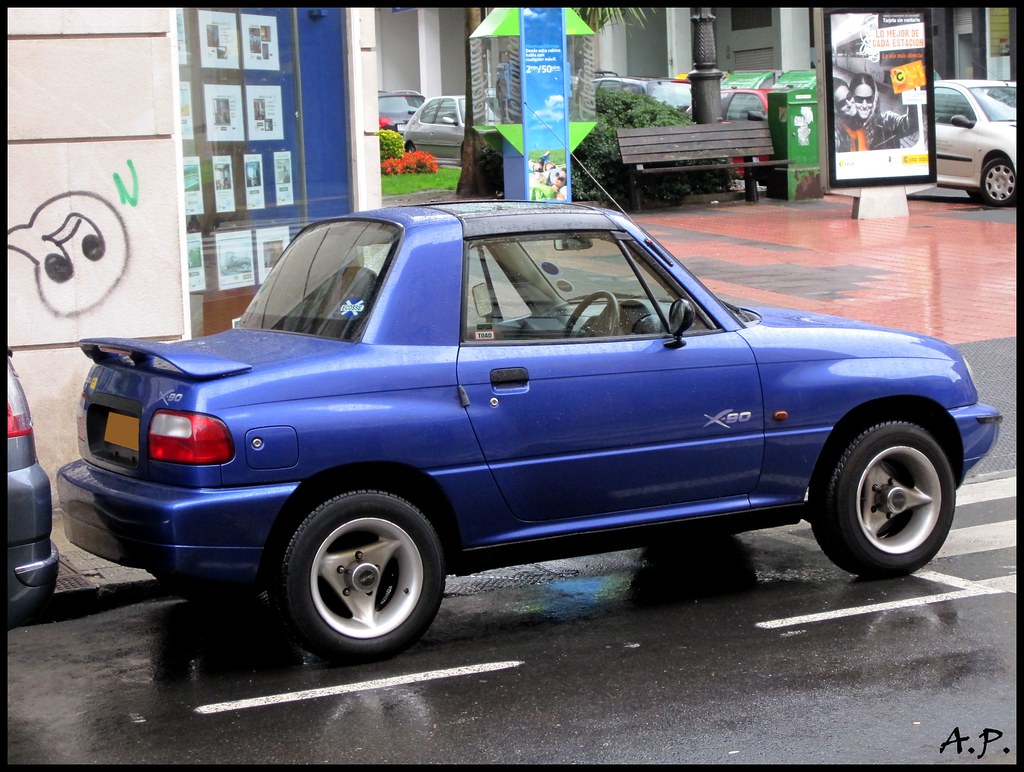
The Suzuki X-90 is a vehicle that defies easy categorization, a bold experiment in automotive design that still sparks conversation today. Suzuki itself introduced it as “the world’s first two-seater SUV coupe,” a description that, while technically accurate, encapsulates the very reason for its struggles in the marketplace. If you were to ask many observers, the X-90’s failure to become a smash hit with the crowd was largely attributable to its conflicted target audience.
On one hand, the X-90 was genuinely equipped as an off-road-capable SUV. It featured a proper four-wheel-drive system and low-range gearing, attributes typically associated with rugged, go-anywhere vehicles. This mechanical specification suggested a focus on utility and adventure, appealing to those who sought to venture beyond paved roads. It had the hardware to back up its SUV moniker, at least functionally.
However, the visual presentation told a very different story. With its compact dimensions and bulbous, almost cartoonish styling, the X-90 undeniably resembled a “cute little gerbil.” This aesthetic clashed significantly with the expectations of cross-country enthusiasts who typically associated ruggedness with more imposing, conventionally tough-looking vehicles. The disconnect between its appearance and its capabilities made it a challenging sell, yet despite this perceived contradiction, it remains an awesome and uniquely eccentric piece of machinery.
Car Model Information: 1996 Suzuki X-90 4WD
Name: Suzuki X-90
Manufacturer: Suzuki
Aka: Suzuki Vitara X-90 (Europe)
Production: 1995–1997
Assembly: Iwata, Shizuoka
Class: Subcompact car
BodyStyle: coupe
Layout: Front-engine, rear-wheel-drive layout,Front-engine, four-wheel-drive layout
Chassis: Body-on-frame
Engine: SOHC,Suzuki G engine#G16A
Transmission: Automatic transmission,Manual transmission
Wheelbase: 2200 mm
Abbr: on
Length: 3710 mm
Width: 1695 mm
Height: 1550 mm
Weight: 1100 kg
Related: Suzuki Vitara
Predecessor: Suzuki Jimny#Second generation (1981)
Categories: All-wheel-drive vehicles, All articles with unsourced statements, Articles with short description, Articles with unsourced statements from August 2018, Cars introduced in 1995
Summary: The Suzuki X-90 is a front engine, rear or four wheel drive, two door, two seater car manufactured and marketed by Suzuki for the model years 1995-1997. Derived from the Suzuki Vitara, the X-90 featured a T Section removable roof. Replacing the Samurai in the market in the United States, Suzuki began marketing the X-90 in Japan by the end of 1995, and in western markets in April 1996.
Get more information about: Suzuki X-90
Buying a high-performing used car >>>
Brand: Suzuki Model: X-90
Price: $5,000 Mileage: 146,943 mi.
Read more about: Remember These? 17 Cars That Went From Cool to Cringe
7. **Isuzu VehiCross**
In the automotive world, quirkiness often breeds memorability, with unusual designs tending to spark conversations and leave lasting impressions. Yet, the Isuzu VehiCross seems to defy this logic. After more than 25 years since its debut, the fervent admiration and collective drooling that once surrounded this distinctive SUV appear to have significantly waned, pushing it into the realm of forgotten, albeit fascinating, vehicles.
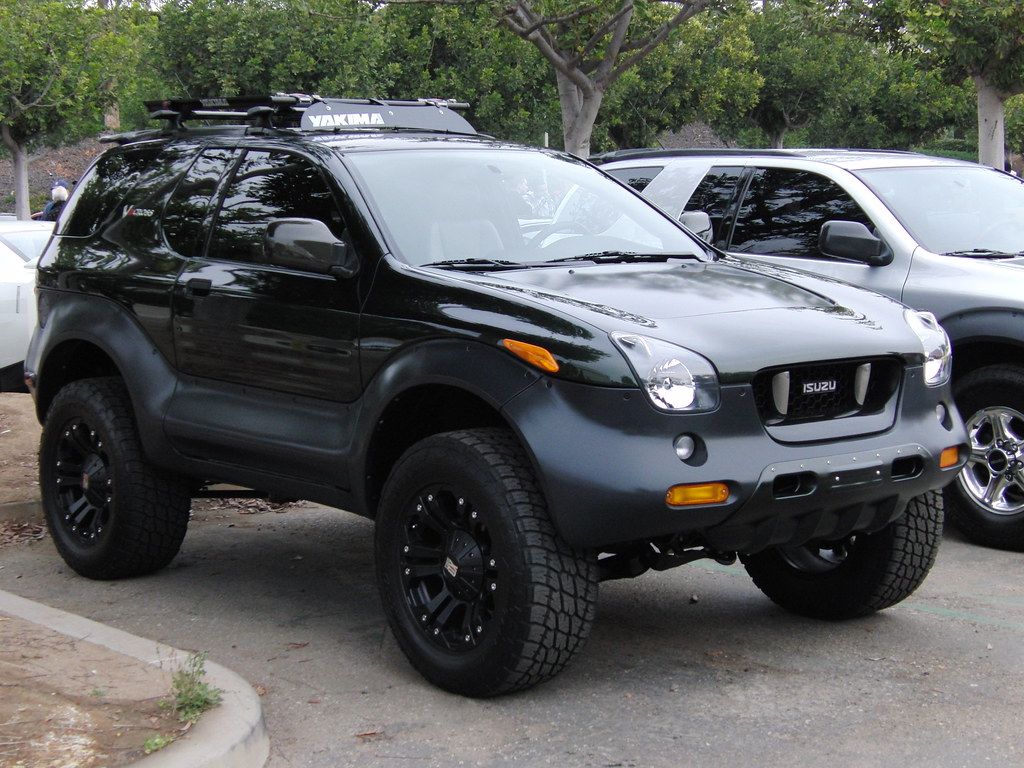
MotorTrend aptly described the VehiCross as “the sport/ute equivalent of a cross-trainer shoe,” a brilliant analogy that perfectly encapsulates its multifaceted nature. It was designed to be versatile, capable of handling a variety of terrains and tasks, much like how a cross-trainer excels in different athletic activities. This conceptual clarity underpinned its functional prowess, making it far more than just a peculiar face.
The VehiCross’s utilitarian design, characterized by its robust cladding, short overhangs, and aggressive stance, was not merely for show. Beneath its unique skin lay a host of purposeful drivetrain upgrades, transforming it into an exceptionally capable exploration vehicle. Its advanced Torque-On-Demand 4WD system and other rugged components truly made the VehiCross an unsung hero for adventurers, embodying a rare blend of unconventional aesthetics and genuine off-road performance that is still cool today, even if largely forgotten.
Read more about: Remember These? 14 Forgotten Cars That Were Cooler Than You Think and Deserve a Second Look!

8. **Qvale Mangusta**
The story of the Qvale Mangusta is a fascinating, albeit brief, chapter in Italian automotive history, primarily because Qvale itself was a short-lived carmaker that, remarkably, built only this single model. Conceived to fuse potent American muscle with distinctive Italian flair, the Mangusta emerged as a bold, if ultimately niche, offering in a competitive market. It stands as a testament to the ambitions of its creators, even if widespread recognition eluded it.
Underneath its striking exterior, the Mangusta housed a formidable heart: the very same V8 engine found in the acclaimed Ford SVT Mustang Cobra. This American powerhouse delivered robust performance, providing a compelling blend of accessible power and exotic car aesthetics. Its body, an intriguing detail for enthusiasts, was constructed from three layers of molded resin, a unique approach that differentiated it from many of its contemporaries.
The visual impact of the Mangusta was undeniable, a direct result of the legendary Marcello Gandini’s artistic hand. Gandini, whose portfolio includes such iconic designs as the Alfa Romeo Montreal, Lamborghini Countach, and Fiat X1/9, imbued the Mangusta with an “eye-catching design” that ensured it stood out. His distinctive touch is evident in every line and curve, contributing significantly to its unique appeal.
Despite its impressive pedigree and distinctive looks, the Qvale Mangusta faced an uphill battle in the marketplace. With an MSRP of $84,200 at the time, it found itself up against more established and “cheaper, more well-known alternatives.” This pricing strategy, coupled with the brand’s nascent status, ultimately limited its reach, relegating it to an obscure, though undeniably cool, footnote in performance car history.
Read more about: Remember These? 14 Forgotten Cars That Were Cooler Than You Think and Deserve a Second Look!

9. **Renault Avantime**
Prepare to be astonished by one of the automotive world’s most daring and, arguably, most misunderstood creations: the Renault Avantime. This vehicle defies easy classification, a luxury car that some might even describe as an obscure minivan. With its audacious design and innovative features, it was truly a car ahead of its time, designed not just for transportation but for an experience.
The Avantime’s engineering prowess was evident in its remarkable specifications, challenging conventional notions of vehicle design. It boasted two pilarless doors, creating an expansive, unimpeded opening to a surprisingly luxurious cabin. Power came from a V6 engine, paired with a manual transmission, allowing for an engaging driving experience that could propel this unique machine to a top speed of 140 mph—a truly impressive feat for its segment.
Thierry Metroz, the design project manager, explicitly stated his ambition: he “wanted someone walking around the car to be continually astonished.” It’s safe to say that his mission was an unqualified success. The Avantime’s sheer audacity, from its unconventional proportions to its dramatic glasshouse and unique door mechanism, guaranteed a double-take from anyone who encountered it.
This commitment to astonishment, however, meant the Avantime struggled to find a mass audience. It was too different, too bold, for many consumers of its era. Yet, it is precisely this uncompromising vision that has solidified its status as a “future classic,” a vehicle now revered by connoisseurs who recognize its groundbreaking design and profound influence on automotive thought.
Read more about: Remember These? 14 Forgotten Cars That Were Cooler Than You Think and Deserve a Second Look!

10. **Alfa Romeo 156 GTA Sportwagon**
While the Alfa Romeo 156 GTA sedan rightfully garners considerable attention and rave reviews from gearheads, its estate sibling, the 156 GTA Sportwagon, often languishes in undeserved obscurity. This performance wagon, a magnificent blend of practicality and passion, represents an often-forgotten chapter in Alfa Romeo’s illustrious history, embodying a unique combination of utility and spirited driving dynamics.
Beneath the hood of the 156 GTA Sportwagon lay an “exquisite 3.2-liter V6,” an engine celebrated for its sonorous exhaust note and eager power delivery. This powerplant was perfectly complemented by the car’s “stunning Walter de Silva design,” a masterclass in elegant yet aggressive styling that made the wagon as visually appealing as its sedan counterpart. Its sculpted lines and purposeful stance truly set it apart.
However, one aspect of the 156 GTA Sportwagon, and indeed the entire 156 GTA lineup, caused “some controversy among enthusiasts”: its front-wheel-drive configuration. For a brand synonymous with rear-wheel-drive sports cars, this choice was a point of contention for purists who expected a more traditional Alfa Romeo performance layout. This mechanical distinction, despite the car’s undeniable performance, contributed to its relative obscurity among a segment of the enthusiast community.
Despite this perceived drawback, the 156 GTA Sportwagon was a formidable machine, offering spirited acceleration and engaging handling, albeit with the inherent characteristics of a powerful front-wheel-drive setup. Its rarity today, coupled with its blend of practicality, performance, and distinctive Italian design, makes it an exceptionally cool, if largely forgotten, proposition for those who appreciate a unique driving experience.
Car Model Information: 2022 Dodge Charger R/T
Caption: Alfa Romeo 156
Name: Alfa Romeo 156
Manufacturer: Fiat Auto
Production: 1996–2007
Assembly: Pomigliano d’Arco
Designer: Walter de Silva,Giorgetto Giugiaro
Class: Compact executive car
BodyStyle: Sedan (car),Station wagon,Crossover (automobile)
Layout: Front-engine, front-wheel-drive layout,Front-engine, four-wheel-drive layout
Related: Alfa Romeo 147,Alfa Romeo GT,Fiat Bravo,Fiat Marea,Fiat Multipla,Lancia Lybra,Alfa Romeo Dardo
Platform: Fiat C-platform
Engine: ubl
Transmission: Manual transmission,6-speed manual,Selespeed,6-speed Selespeed automated manual (GTA),Aisin,url=http://www.autoweb.com.au/cms/A_51082/title_Unique%20Performance%20Automatic%20Gearboxes%20for%20the%20New%20Alfa%20Romeo%20156/newsarticle.html,title=Unique performance automatic gearboxes for the new Alfa Romeo 156,access-date=27 January 2008,website=autoweb.com.au,archive-url=https://web.archive.org/web/20070928083305/http://www.autoweb.com.au/cms/A_51082/title_Unique%20Performance%20Automatic%20Gearboxes%20for%20the%20New%20Alfa%20Romeo%20156/newsarticle.html,archive-date=28 September 2007
Wheelbase: cvt
Length: {{cvt,4430,mm,in,1
Width: {{cvt,1743,mm,in,1
Height: {{cvt,1415,mm,in,1
Weight: cvt
Predecessor: Alfa Romeo 155
Successor: Alfa Romeo 159
Sp: uk
Categories: 2000s cars, Alfa Romeo vehicles, All-wheel-drive vehicles, All articles with unsourced statements, Articles containing explicitly cited English-language text
Summary: The Alfa Romeo 156 (Type 932) is a compact executive car produced by the Italian automobile manufacturer Alfa Romeo. It was introduced at the 1997 Frankfurt Motor Show as the replacement for the Alfa Romeo 155. The 156 received a positive reception and in the following year went on to win the 1998 European Car of the Year award. The 156 saloon was discontinued in Europe late in 2005, while the Q4 Crosswagon continued in production until the end of 2007.
Cars were assembled at the Fiat Group factory in Pomigliano d’Arco, Italy and at a General Motors facility in Rayong, Thailand. Production in Thailand began in March 2002 and ran for only a couple of years. The cars produced there were targeted for the Asia-Pacific markets. Between 1996 and 2007, 673,435 units of the 156 were produced.
The 156 was available in saloon, Sportwagon (estate) and Crosswagon (crossover) bodystyles with seven engine configurations; it went through two facelifts, first in 2002 and then in 2003. The Sportwagon advertising campaign was made featuring actress Catherine Zeta-Jones.
In 2005, the 159 became the replacement for the 156.
Get more information about: Alfa Romeo 156
Buying a high-performing used car >>>
Brand: Alfa Romeo Model: 156 GTA
Price: $33,961 Mileage: 44,022 mi.
Read more about: Remember These? 14 Forgotten Cars That Were Cooler Than You Think and Deserve a Second Look!

11. **Infiniti M45 (Second-Generation)**
For the uninitiated, the second-generation Infiniti M45 might appear to be nothing more than another well-built, handsome Japanese sedan, easily overlooked in a parking lot. Yet, this unassuming facade is precisely what cemented its reputation as “one of the best sleepers of all time.” It masterfully blended sophisticated luxury with a hidden beast, a combination that truly set it apart for those in the know.
The true magic of the M45 lay in its powertrain. Concealed beneath its “handsome, yet not-so-striking body” was a formidable 4.5-liter V8 engine. This potent powerplant delivered an impressive 340 horsepower and a robust 333 lb-ft of torque, endowing the luxury sedan with surprising acceleration and effortless highway cruising capabilities. It was a wolf in sheep’s clothing, ready to unleash its power at a moment’s notice.
While its exterior deliberately avoided drawing undue attention, the M45’s interior was a clear declaration of its luxury aspirations. It remained “a luxury car at heart,” prioritizing occupant comfort and refinement. The cabin was appointed with sumptuous “Sojourner” leather seats, which offered both heating and cooling functions for ultimate comfort, complemented by elegant wood trim and a premium Bose sound system, creating an oasis of calm and sophistication.
This intelligent duality – overt luxury combined with covert performance – made the M45 a compelling package for discerning drivers who valued understated potency. Its blend of high-performance engineering, plush amenities, and discreet styling ensures its place as a uniquely cool, yet regrettably forgotten, Japanese performance sedan, proving that sometimes the best things are indeed hidden in plain sight.
Car Model Information: 2007 INFINITI M45 Sport
Name: Infiniti M
Manufacturer: Nissan
Aka: Infiniti Q70
Caption: 2011 Infiniti M37
Production: 1989–1992 (M30 coupé),2002–2019 (M sedan)
Predecessor: Infiniti I,Infiniti J30
Successor: Infiniti Q70
Class: Executive car
BodyStyle: sedan (car)
Platform: Nissan FM platform
Categories: All-wheel-drive vehicles, All Wikipedia articles written in American English, All articles with dead external links, All articles with unsourced statements, Articles with dead external links from September 2024
Summary: The Infiniti M is a line of mid-size luxury (executive) cars from the Infiniti luxury division of Nissan. From 2013 (model year 2014) on it has been marketed as the Infiniti Q70, reflecting the company’s later naming formula.
The first iteration was the M30 Coupé/Convertible, rebadged variants of the JDM Nissan Leopard. After a hiatus, the M nameplate was used for Infiniti’s short-lived mid-luxury M45 sedan, a rebadged version of the Japanese-spec Nissan Gloria and Infiniti’s subsequent flagship M35/45 and M37/56/35h/30d, based on the JDM Nissan Fuga.
Get more information about: Infiniti M
Buying a high-performing used car >>>
Brand: Infiniti Model: M45
Price: $9,995 Mileage: 81,101 mi.
Read more about: Remember These? 14 Forgotten Cars That Were Cooler Than You Think and Deserve a Second Look!

12. **Lexus IS 300 SportCross**
The Lexus IS 300 SportCross holds a special, almost legendary, status among a select group of enthusiasts, largely due to a surprising secret lurking beneath its utilitarian exterior. As some well-known automotive personalities have highlighted, it possesses an undeniable and exciting connection to one of Japan’s most revered sports cars. This unassuming wagon is far more intriguing than its initial appearance suggests, promising more than its practical form suggests.
The revelation lies within its engine bay: the “reliable 2JZ” engine, the very same legendary inline-six found in the iconic Mark IV Toyota Supra. While it was the naturally aspirated 2JZ-GE variant, rather than the more coveted turbocharged GTE, this fact does not diminish the sheer “novelty of having a mundane-looking, rear-wheel-drive Japanese station wagon with the same engine as a Toyota Supra.” It offered an unexpected dose of performance heritage in a practical package, delivering smooth power and a robust driving feel.
Despite this incredible mechanical foundation and its inherent coolness, one crucial factor “hindered the IS 300 SportCross from becoming an instant icon”: the absence of a manual transmission. It was exclusively offered with a 5-speed automatic, a decision that, while perhaps fitting for its luxury wagon brief, prevented it from fully captivating the enthusiast market that craved a more direct, engaging driving experience often associated with the 2JZ engine. This choice, unfortunately, limited its appeal to purists.
The Lexus IS 300 SportCross therefore remains a fascinating ‘what if’ in automotive history. It was a vehicle that offered an incredible performance engine, rear-wheel-drive dynamics, and Japanese reliability in a practical wagon body. Its lack of a manual option kept it from the pantheon of JDM legends, yet for those who appreciate its unique combination, it remains a cool and often-overlooked gem, ripe for rediscovery, promising a distinctive blend of utility and surprising power.
Car Model Information: 2022 Dodge Charger R/T
Name: Lexus IS
Caption: 2021 Lexus IS 300 F Sport (ASE30, Canada)
Manufacturer: Toyota
Aka: Toyota Altezza (Japan, 1998–2005)
Production: October 1998 – present
ModelYears: 1999–present
Class: Compact executive car
Predecessor: Lexus GS
Layout: unbulleted list
Categories: 2000s cars, 2010s cars, 2020s cars, All-wheel-drive vehicles, All Wikipedia articles written in British English
Summary: The Lexus IS (Japanese: レクサス・IS, Hepburn: Rekusasu IS) is a compact executive car (D-segment in Europe) sold by Lexus, a luxury division of Toyota, since 1998. The IS was originally sold under the Toyota Altezza (Japanese: トヨタ・アルテッツァ, Hepburn: Toyota Arutettsua) nameplate in Japan from 1998 until 2005 (the word Altezza is Italian for ‘height’ or ‘highness’). The IS was introduced as an entry-level sport model positioned below the ES in the Lexus lineup. It was the smallest car in the Lexus lineup until the introduction of the CT in 2011.
The first-generation Altezza (codename XE10) was launched in Japan in October 1998, while the Lexus IS 200 (GXE10) made its debut in Europe in 1999 and in North America as the IS 300 (JCE10) in 2000. The first-generation models were powered by a straight-six engine and available in sedan and wagon variants. The second-generation IS (codename XE20) was launched globally in 2005 with V6-powered IS 250 (GSE20) and IS 350 (GSE21) and Diesel-powered IS 200d/220d (ALE20) sedan models, followed by a high-performance V8 sedan version, the IS F, in 2007, and coupé convertible versions, the IS 250 C and IS 350 C, in 2008. The third-generation Lexus IS premiered in January 2013 and includes the V6-powered IS 250 and IS 350, turbocharged IS 200t/300, hybrid IS 300h and performance-tuned F Sport variants. The IS designation stands for “Intelligent Sport”.
Get more information about: Lexus IS
Buying a high-performing used car >>>
Brand: Lexus Model: IS 300 SportCross
Price: $33,961 Mileage: 44,022 mi.
Read more about: Remember These? 14 Forgotten Cars That Were Cooler Than You Think and Deserve a Second Look!
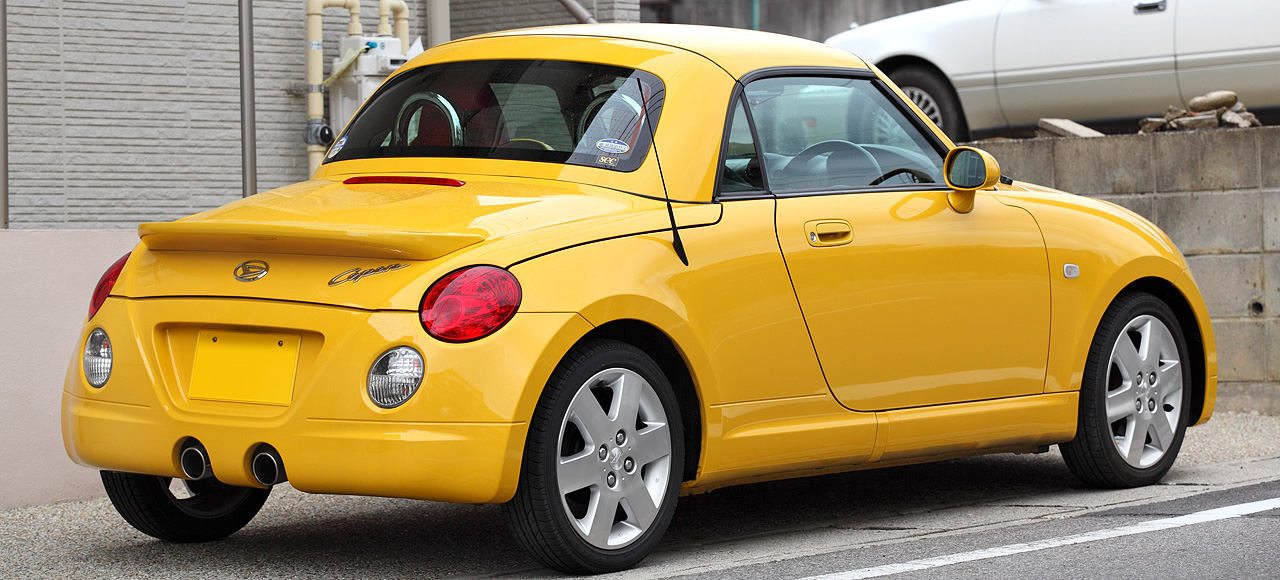
13. **Daihatsu Copen (First Gen)**
Stepping into the world of kei cars once again, we encounter the charming Daihatsu Copen, a vehicle that playfully blurs the lines between a legitimate roadster and what could easily be described as “the closest thing you’ll find to a road-legal toy car.” Its diminutive size and distinctive styling immediately capture attention, evoking a sense of whimsical motoring that is utterly unique in the automotive landscape.
From a raw performance perspective, the Copen was never going to break any speed records; “Car and Driver managed to crawl from 0 to 60 mph in nearly 10 seconds.” However, for a car like the Copen, such figures are largely irrelevant. As its proponents would argue, “that doesn’t matter” when the core appeal lies in a different kind of driving satisfaction, one focused on engagement and character rather than brute force.
The Copen’s true charm resided in its ability to deliver an authentic, open-air sports car experience in an incredibly accessible package. Its roof went down, offering unadulterated enjoyment of the elements, and it notably came with “a stickshift transmission,” ensuring a direct connection between driver and machine. It was “the perfect alternative for someone craving an affordable convertible sports car that will stand out from everything else on the road,” even if it meant sacrificing the ability to keep up with faster traffic.
This delightfully eccentric roadster, with its cheerful demeanor and surprisingly engaging dynamics, cultivated a dedicated following. Despite its humble origins and modest performance figures, the Daihatsu Copen carved out its own niche, proving that character, affordability, and the sheer joy of driving can often outweigh raw power, securing its place as an awesome, if often forgotten, automotive treasure.
Read more about: Remember These? 14 Forgotten Cars That Were Cooler Than You Think and Deserve a Second Look!
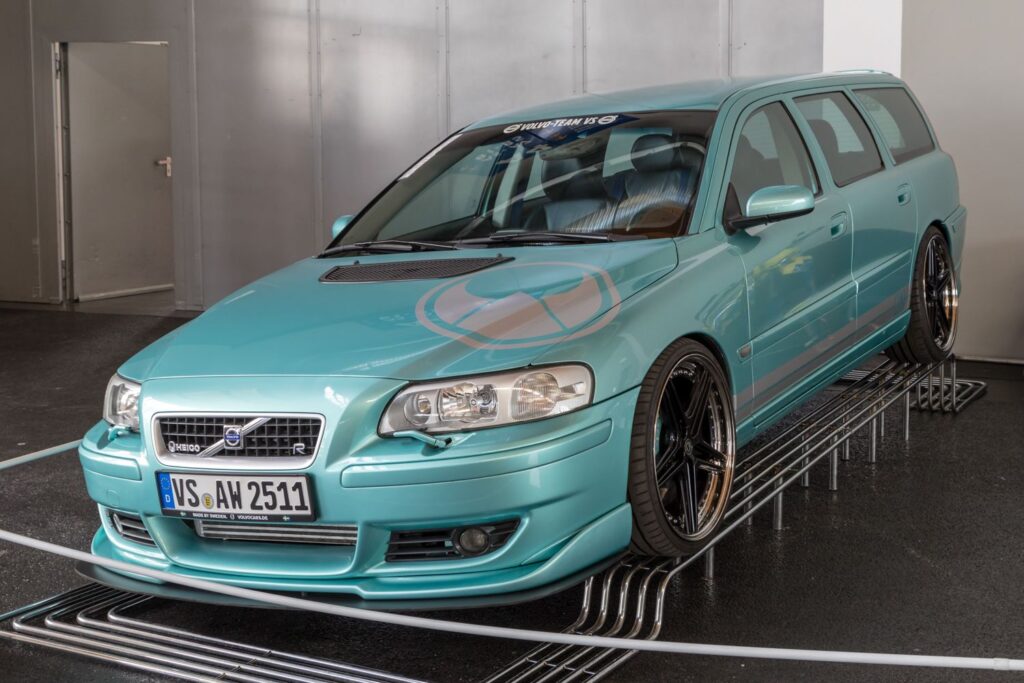
14. **Volvo V70 R**
The Volvo V70 R epitomizes the concept of the “sleeper” car, a vehicle so adept at hiding its formidable performance capabilities that “most people completely forget about” them. At first glance, it presents itself as a practical, comfortable Swedish wagon—the archetypal family hauler. However, this understated exterior belies a potent engineering marvel designed to deliver serious thrills.
Hidden beneath its “somewhat ordinary styling” is a powertrain that shatters expectations: a “rowdy 2.5-liter turbocharged five-cylinder” engine. This magnificent unit was engineered to produce a substantial 296 horsepower and an equally impressive 295 lb-ft of torque. These figures are not just statistics; they are a clear indication of Volvo’s intention to infuse this wagon with genuine high-performance credentials.
The sheer power of the V70 R translates directly into exhilarating real-world performance. Volvo confidently claimed that this versatile wagon could “rocket you from 0 to 60 in less than 6 seconds,” a sprint time that could easily humble many dedicated sports cars of its era. This blend of deceptive speed and everyday practicality made the V70 R an astonishing proposition, truly embodying the spirit of a high-performance sleeper.
For those in the know, the Volvo V70 R remains a celebrated icon, a testament to intelligent engineering that prioritizes both usability and unadulterated driving pleasure. Its enduring appeal lies in its ability to surprise and delight, offering a driving experience far beyond what its outwardly sensible appearance would suggest. It is a brilliant example of a truly cool car that, for too long, has been unjustly overlooked by the wider automotive world.
***
The automotive world is a vibrant tapestry woven with countless threads of innovation, design, and raw passion. Yet, as our journey through these forgotten machines vividly illustrates, history isn’t always fair. While some models achieve iconic status, others, despite their unique merits, regrettably fade into obscurity, remembered only by a passionate few.
These hidden gems — engineering marvels, design statements, and misunderstood masterpieces — remind us that true automotive coolness can endure even when the spotlight shifts. From the audacious design of the Qvale Mangusta to the sleeper prowess of the Volvo V70 R, each vehicle on this list dared to be different, pushing boundaries and offering a distinctive driving experience that deserved more recognition.
Car Model Information: 2022 Dodge Charger R/T
Name: Volvo V70
Manufacturer: Volvo Cars
Production: 1996–2016
Class: Executive car
BodyStyle: Station wagon,crossover (automobile)
Layout: Front-engine, front-wheel-drive layout,front-wheel drive
Predecessor: Volvo 850
Successor: Volvo V60,Volvo V90
Categories: 2010s cars, All-wheel-drive vehicles, All articles with dead external links, Articles with dead external links from September 2017, Articles with permanently dead external links
Summary: The Volvo V70 is an executive car manufactured and marketed by Volvo Cars from 1996 to 2016 across three generations.
The name V70 combines the letter V, standing for versatility, and 70, denoting relative platform size (i.e., a V70 is larger than a V40, but smaller than a V90).
The first generation (1996–2000) debuted in November 1996. It was based on the P80 platform and was available with front and all-wheel drive (AWD), the latter marketed as the V70 AWD. In September 1997, a crossover version called the V70 XC or V70 Cross Country was introduced. The sedan model was called Volvo S70.
The second generation (2000–2007) debuted in spring 2000. It was based on the P2 platform and, as with its predecessor, was also offered as an all-wheel drive variant marketed as the V70 AWD and as a crossover version initially called V70 XC. For the 2003 model year, the crossover was renamed to XC70. The sedan model was called Volvo S60.
The third generation (2007–2016) debuted in February 2007. It was based on the P3 platform and marketed as the V70 and the XC70. Production of the V70 ended on 25 April 2016, the XC70 continued until 13 May 2016. The sedan model was called Volvo S80.
Get more information about: Volvo V70
Buying a high-performing used car >>>
Brand: Volvo Model: V70 R
Price: $33,961 Mileage: 44,022 mi.
Read more about: Post-Warranty Peril: 5 Vehicles That Fail Right After Coverage, And 5 That Go The Distance
It’s time to celebrate these unsung heroes once more, not just for the specs on their sheets, but for the ambition and character they embodied. The automotive landscape is richer for their existence, and by bringing them back into conversation, we honor the ingenuity that makes car culture so endlessly captivating. These forgotten legends are not merely relics of the past; they are enduring symbols of daring innovation, proving that sometimes, the coolest stories are found off the beaten path.