Alright, gearheads, petrolheads, and anyone who’s ever cursed at a check engine light, gather ’round. We’re about to embark on a journey, not of glorious horsepower or groundbreaking design, but a descent into the automotive abyss. America, the land that gave us muscle cars, iconic pickups, and the very concept of the open road, has also, on occasion, served up some truly baffling abominations. These aren’t just ‘bad’ cars; these are the ‘worst,’ the machines that make you wonder what exactly the engineers were thinking, or perhaps, what they were drinking during the design phase.
Now, when we talk about the ‘worst,’ we’re not just throwing around casual insults. We’re talking about vehicles that betrayed their owners, rusted faster than a forgotten garden tool, or simply failed to live up to the most basic expectations of what a car should be. These are the four-wheeled nightmares that left a lasting, bitter taste in the mouths of countless drivers, forever staining the otherwise illustrious tapestry of American automotive history. Forget your rose-tinted glasses; today, we’re putting on our brutally honest, critically analytical spectacles.
Indeed, some creations roll off the country’s automotive production lines and are anything but a celebrated success. They are, to put it mildly, pretty awful. In a quest to unearth these legendary misses, we reached out to the very people who lived through these vehicular calamities, asking what cars truly deserve the dubious title of the worst American car ever made. And boy, did you deliver. So, buckle up, because we’re not pulling any punches as we kick off our ignominious countdown of America’s most egregious automotive failures, starting with some absolute duds that still haunt the nightmares of enthusiasts and former owners alike.
1. **Chevrolet Vega**
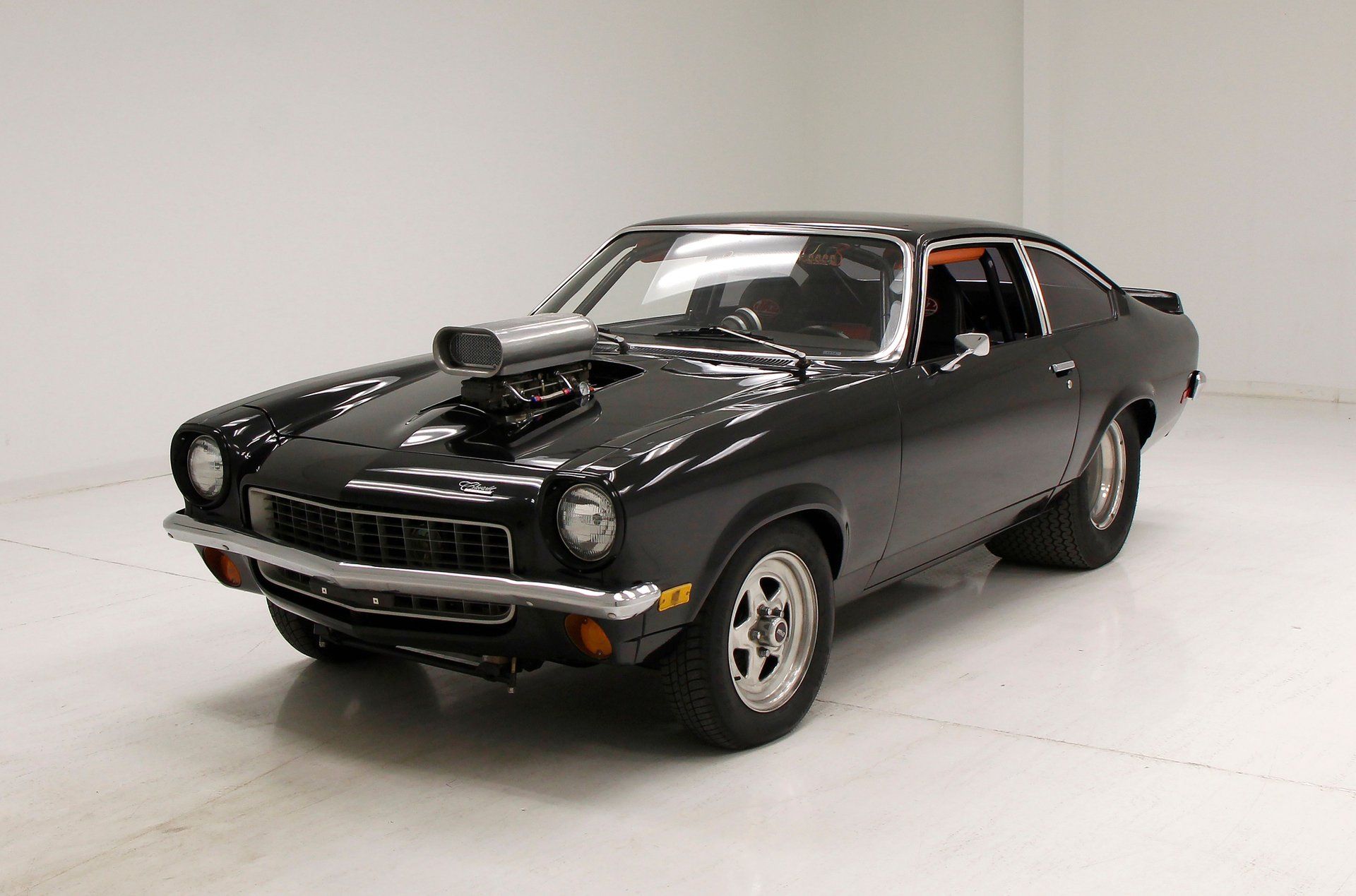
Ah, the Chevrolet Vega. If you mention this name in certain circles, you can practically hear the collective groan of despair. For many, this compact contender isn’t just a bad car; it’s a monumental symbol of what can go wrong when ambition outstrips execution. One particularly candid enthusiast, dustynnguyendood, put it perfectly: “Gotta be the Vega. While the Mustang II featured in the article was awful, the Vega took it to a whole other level.” That’s right, it out-awfuled the Mustang II, a car not exactly known for its stellar reputation. This immediately sets the stage for a vehicle truly deserving of its place in the hall of shame.
The Vega’s myriad issues started almost immediately after it rolled off the assembly line, with premature rust being a particularly egregious flaw. It wasn’t just a bit of surface corrosion; we’re talking about structural integrity giving up the ghost seemingly before the first oil change. This meant that what might have looked like a spry new compact car on the showroom floor quickly transformed into a flaky, orange-tinged harbinger of decay on the driveways of America. The engineering and material choices behind such widespread, rapid deterioration were nothing short of baffling, undermining any perceived value or longevity the car might have offered.
Then there was the engine, a unit that managed to combine poor design with an insatiable thirst for oil. As our bitter friend recalls, the Vega “drank oil like a two-stroke, had this stupid sealed air cleaner.” Imagine, if you will, the sheer frustration of having an engine that consumes oil at a rate usually reserved for lawnmowers, combined with a sealed air cleaner that made routine maintenance a needlessly complicated affair. It was a perfect storm of mechanical headaches, ensuring that ownership was a constant battle against depletion and inefficiency, turning every road trip into an anxiety-fueled scavenger hunt for a top-off.
The real sting, however, came from the personal sacrifices many made to acquire this automotive lemon. dustynnguyendood’s father, for instance, “traded in his ’69 Chevelle SS 396 for one” during the gas crisis. Think about that: a legendary American muscle car, a symbol of power and pride, swapped for a compact that required “a case of oil in the back to top off the engine at every fuel stop.” This wasn’t just a car; it was a profound disappointment, a daily reminder of a downgraded driving experience and a testament to truly awful engineering choices. The Vega wasn’t just a car you owned; it was a car that owned a piece of your sanity.
Car Model Information: 1976 Chevrolet Vega
Name: Chevrolet Vega
Caption: 1971 Chevrolet Vega
Aka: Vega 2300
Manufacturer: Chevrolet
Production: 1970–1977
ModelYears: 1971–1977
Assembly: Lordstown, Ohio
Predecessor: Chevrolet Corvair
Successor: Chevrolet Monza
Class: Subcompact car
BodyStyle: notchback,hatchback,station wagon,Panel van
Layout: FR layout
Platform: GM H platform (RWD)
Engine: {{cvt,2.3,L,cuin,0,Chevrolet 2300 engine
Transmission: manual transmission,4-speed manual,overdrive (mechanics),Torque-Drive 2-speed Powerglide requiring manual shifting,Powerglide,Turbo-Hydramatic
Wheelbase: cvt
Length: cvt
Width: cvt
Height: cvt
Weight: cvt
Related: Pontiac Astre,Chevrolet Monza,Pontiac Sunbird#First generation (1976–1980),Buick Skyhawk#First generation (1975–1980),Oldsmobile Starfire#Second generation (1975–1980)
Designer: Bill Mitchell (designer)
Categories: 1970s cars, All articles needing additional references, All articles with unsourced statements, Articles needing additional references from July 2023, Articles with short description
Summary: The Chevrolet Vega is a subcompact automobile manufactured and marketed by GM’s Chevrolet division from 1970 until 1977. Available in two-door hatchback, notchback, wagon, and sedan delivery body styles, all models were powered by an inline four-cylinder engine designed specifically for the Vega, with a lightweight aluminum alloy cylinder block. The Vega first went on sale in Chevrolet dealerships on September 10, 1970. Variants included the Cosworth Vega, a short-lived limited-production performance version introduced spring 1975.
The Vega received the 1971 Motor Trend Car of the Year. Subsequently, the car became widely known for a range of problems related to its engineering, reliability, safety, propensity to rust, and engine durability. Despite numerous recalls and design upgrades, Vega’s problems tarnished its reputation and that of General Motors. Production ended with the 1977 model year.
The car was named for Vega, the brightest star in the constellation Lyra.
Get more information about: Chevrolet Vega
Buying a high-performing used car >>>
Brand: Chevrolet Model: Vega
Price: $30,000 Mileage: 82,344 mi.
Read more about: Beyond the Hype: 14 Classic Cars That Aren’t Worth the Money for Serious Car Enthusiasts

2. **GM’s Diesel Sedans from the 1980s**
The 1980s were a fascinating, if sometimes bewildering, decade for American automotive manufacturers. Amidst a renewed push for fuel efficiency, General Motors made a bold, yet ultimately catastrophic, foray into diesel passenger cars. The vision, presumably, was to combine the burgeoning popularity of diesel power in Europe with the comfort and scale of American sedans. The reality, however, was a masterclass in how to alienate a customer base and irrevocably damage the perception of an entire powertrain type. As one commenter sagely noted, these diesel experiments, alongside others, “made any vehicle pretty bad to own or drive.”
Specifically, we’re talking about vehicles like the fifth-generation Buick LeSabre, the fourth-generation Chevy Malidu, and the seventh-generation Pontiac Bonneville – all iconic names attached to cars that, when fitted with GM’s early 1980s diesels, became synonymous with trouble. These weren’t niche models; they were mainstream offerings from some of GM’s most recognizable brands, meaning the issues propagated widely and sullied the reputation of not just these specific models, but GM’s engineering prowess across the board. The broad reach of these problematic vehicles only amplified the scale of the disappointment.
The underlying problem with these diesel sedans stemmed from GM’s ill-fated attempt to convert existing gasoline V8 engines into diesels, rather than designing them from the ground up for the much higher compression ratios and stresses inherent to diesel operation. While the context doesn’t dive into the technical specifics, the phrase “pretty bad to own or drive” speaks volumes. This likely encompassed a litany of reliability nightmares: blown head gaskets, fuel system woes, starting difficulties in cold weather, and overall sluggish performance that was both noisy and unrefined. Owners weren’t just experiencing a new type of engine; they were enduring a perpetual state of mechanical anxiety and frequent, costly trips to the service bay.
For many American consumers, these 1980s GM diesels weren’t just a bad purchase; they were a profound betrayal. The promise of better fuel economy and rugged durability was shattered by chronic breakdowns and an ownership experience that rapidly deteriorated. This era tragically set back the acceptance of diesel passenger cars in the United States for decades, poisoning the well of consumer trust and creating an enduring skepticism that persists even today. It was a massive, expensive lesson in product development, but one that came at the significant cost of GM’s reputation and its customers’ hard-earned money.
Car Model Information: 2023 BMW X3 xDrive30i
Name: General Motors Company
Logo: General Motors (logo with wordmark, horizontal).svg
LogoSize: 250px
Type: Public company
Industry: Automotive industry
Isin: ISIN
Foundation: unbulleted list
Decat: true
Child: true
Label2: Chair & CEO
Data2: Mary Barra
Label3: President
Data3: Mark Reuss
TradedAs: unbulleted list
Founder: William C. Durant
Predecessor: Motors Liquidation Company
Location: Renaissance Center
LocationCity: Detroit
LocationCountry: United States
Locations: 396 facilities on six continents
AreaServed: Worldwide
KeyPeople: indented plainlist
Products: unbulleted list
Production: decrease 5,998,000 vehicles (sales, 2024)
Services: unbulleted list
Revenue: increase {{US$
OperatingIncome: increase US$12.78 billion (2024)
NetIncome: decrease US$6.008 billion (2024)
Assets: increase US$279.8 billion (2024)
Equity: decrease US$63.07 billion (2024)
NumEmployees: 162,000 (2024)
Brands: unbulleted list
Subsid: Collapsible list
Title: International
Homepage: url
Categories: 1908 establishments in Michigan, 1910s initial public offerings, 2010 initial public offerings, Aircraft engine manufacturers of the United States, All articles containing potentially dated statements
Summary: General Motors Company (GM) is an American multinational automotive manufacturing company headquartered in Detroit, Michigan, United States. The company is most known for owning and manufacturing four automobile brands: Chevrolet, Buick, GMC, and Cadillac, each a separate division of GM. By total sales, it has continuously been the largest automaker in the United States, and was the largest in the world for 77 years before losing the top spot to Toyota in 2008.
General Motors operates manufacturing plants in eight countries. In addition to its four core brands, GM also holds interests in Chinese brands Baojun and Wuling via SAIC-GM-Wuling Automobile. GM further owns a namesake defense vehicles division which produces military vehicles for the United States government and military, the vehicle safety, security, and information services provider OnStar, the auto parts company ACDelco, and a namesake financial lending service.
The company originated as a holding company for Buick established on September 16, 1908, by William C. Durant, the largest seller of horse-drawn vehicles at the time. The first half of the 20th century saw the company grow into an automotive behemoth through acquisitions; going into the second half, the company pursued innovation and new offerings to consumers as well as collaborations with NASA to develop electric vehicles. The current entity was established in 2009 after the General Motors Chapter 11 reorganization.
As of 2024, General Motors ranks 25th by total revenue out of all American companies on the Fortune 500 and 50th on the Fortune Global 500. In 2023, the company was ranked 70th in the Forbes Global 2000. In 2021, GM announced its intent to end production of vehicles using internal combustion engines by 2035, as part of its plan to achieve carbon neutrality by 2040. These plans were mostly scaled back in 2025.
Get more information about: General Motors
Buying a high-performing used car >>>
Brand: General Motors Model: Diesel Sedans
Price: $34,646 Mileage: 29,133 mi.
Read more about: The Curious Divide: Why Certain Cars Spark Driver Outrage But Executive Approval – An In-Depth Look at Automotive Satisfaction and Scorn

3. **GM’s 4-6-8 V-8s**
Just as GM was fumbling with its diesel aspirations, another technological gambit was simultaneously unfolding, equally destined for the ignominy of the ‘worst car’ list: the much-maligned 4-6-8 V-8 engine. This was an ambitious, albeit spectacularly flawed, attempt at variable cylinder management, a system designed to improve fuel economy by deactivating cylinders when less power was needed. On paper, the concept of having an engine seamlessly transition between 4, 6, or 8 cylinders might have sounded like a stroke of genius, a visionary leap towards efficiency. In practice, it was anything but, once again reinforcing the critique that these innovations “made any vehicle pretty bad to own or drive.”
The idea was to have sophisticated electronics manage solenoid-operated lifters that would cut off fuel and spark to certain cylinders under light load, allowing the engine to run on fewer cylinders and theoretically save gas. When more power was required, those cylinders would seamlessly reactivate. However, the technology of the early 1980s was simply not up to the task of executing such a complex system reliably or smoothly. Owners found themselves grappling with an engine that, far from being seamless, was unpredictable, often sputtering, surging, or simply failing to engage or disengage cylinders as intended, leading to a jarring and often frustrating driving experience.
These engines were a prime example of over-engineering without adequate testing and refinement. The complexity introduced a host of new failure points, making diagnoses and repairs a mechanic’s nightmare. Imagine the confusion and annoyance of driving a car that couldn’t decide how many cylinders it wanted to run on, often leading to rough idling, loss of power, and an alarming frequency of dashboard warning lights. This wasn’t just an inconvenience; it was a fundamental flaw that undermined the very purpose of an automobile: reliable, predictable transportation. The aspiration for efficiency curdled into a reality of vexation.
The 4-6-8 V-8 became another significant black eye for GM’s engineering department in the early 1980s. It joined the diesel debacle in demonstrating a pattern of introducing technologies that were simply not ready for prime time, foisting experimental and unproven designs onto an unsuspecting public. The disastrous performance of these variable displacement engines further eroded consumer confidence in GM’s ability to innovate reliably, leaving a legacy of skepticism about future attempts at ‘smart’ engine technologies. It was a painful, yet ultimately formative, lesson in the importance of robust development before mass market deployment, echoing across the decades as a warning against premature technological leaps.” , “_words_section1”: “1947
Alright, gearheads, petrolheads, and anyone who’s ever cursed at a check engine light, gather ’round. We’re about to embark on a journey, not of glorious horsepower or groundbreaking design, but a descent into the automotive abyss. America, the land that gave us muscle cars, iconic pickups, and the very concept of the open road, has also, on occasion, served up some truly baffling abominations. These aren’t just ‘bad’ cars; these are the ‘worst,’ the machines that make you wonder what exactly the engineers were thinking, or perhaps, what they were drinking during the design phase.
Now, when we talk about the ‘worst,’ we’re not just throwing around casual insults. We’re talking about vehicles that betrayed their owners, rusted faster than a forgotten garden tool, or simply failed to live up to the most basic expectations of what a car should be. These are the four-wheeled nightmares that left a lasting, bitter taste in the mouths of countless drivers, forever staining the otherwise illustrious tapestry of American automotive history. Forget your rose-tinted glasses; today, we’re putting on our brutally honest, critically analytical spectacles.
Indeed, some creations roll off the country’s automotive production lines and are anything but a celebrated success. They are, to put it mildly, pretty awful. In a quest to unearth these legendary misses, we reached out to the very people who lived through these vehicular calamities, asking what cars truly deserve the dubious title of the worst American car ever made. And boy, did you deliver. So, buckle up, because we’re not pulling any punches as we kick off our ignominious countdown of America’s most egregious automotive failures, starting with some absolute duds that still haunt the nightmares of enthusiasts and former owners alike.
Read more about: America’s Automotive Hall of Shame: Unforgettable Engineering Blunders and the Cars We Love to Lament
4. **The ‘Boat Anchor’ Iron Duke**
If you thought GM’s engineering department was just having a bad day with their variable displacement V8s and ill-conceived diesels, think again. The 1980s proved to be a veritable carnival of mechanical missteps, and one of the most infamous entries into this hall of shame is the much-maligned ‘Iron Duke’ four-cylinder engine. This wasn’t just a powerplant; it was, as one frustrated enthusiast aptly described, a “boat anchor,” and for anyone who had the misfortune of owning a vehicle equipped with it, that sentiment rings painfully true. It’s hard to imagine a more damning descriptor for an engine, a component meant to propel, not impede.
The very nickname “Iron Duke” hinted at its fundamental flaws. Far from being a nimble, efficient four-cylinder, this engine was notorious for its sheer bulk and profound lack of power, characteristics more suited to mooring a battleship than motivating a passenger car. It often felt as though you were dragging the literal weight of a small maritime vessel behind you, utterly defeating the purpose of a compact, economical engine. This heavy, underpowered unit was shoehorned into countless GM models, from the Pontiac Fiero to various Chevrolet and Oldsmobile offerings, effectively neutering any potential for enjoyable or even merely adequate performance.
The driving experience with an Iron Duke under the hood was, to put it mildly, an exercise in patience and low expectations. Acceleration was often glacial, requiring a heavy foot and a strong dose of optimism to merge onto any freeway. The engine would groan and vibrate, sounding less like a finely tuned machine and more like a desperate, wheezing beast pleading for mercy. This relentless struggle, combined with a distinct lack of refinement, ensured that any vehicle powered by the Iron Duke felt, as our expert commenter noted, “pretty bad to own or drive.” It truly managed to turn mundane commutes into heroic, noise-filled sagas.
Furthermore, the Iron Duke wasn’t just slow and heavy; it also often suffered from its own set of reliability issues, contributing to the overall misery of ownership. While specific technical failures aren’t detailed in our records here, the reputation alone suggests a frequent companion to the tow truck or the local mechanic. It was a testament to an era where compromise seemed to be the guiding principle, where efficiency goals were pursued with designs that inadvertently created more problems than they solved. The consequence was an engine that felt outdated from the moment it debuted, a relic in an era yearning for progress.
Ultimately, the Iron Duke stands as a vivid example of how a seemingly basic component can utterly define the failure of an entire vehicle. It wasn’t flashy or complex like the 4-6-8 V-8, nor was it a grand, misguided experiment like the diesel conversions. Instead, it was a workhorse that simply wasn’t up to the task, a plodding, inefficient, and often aggravating heart for cars that deserved so much more. Its legacy is etched in the memories of those who drove them, a heavy, clunky reminder of GM’s curious design choices during a particularly challenging decade.
Read more about: America’s Automotive Hall of Shame: Unforgettable Engineering Blunders and the Cars We Love to Lament
5. **Dodge Dart (Early 2010s)**
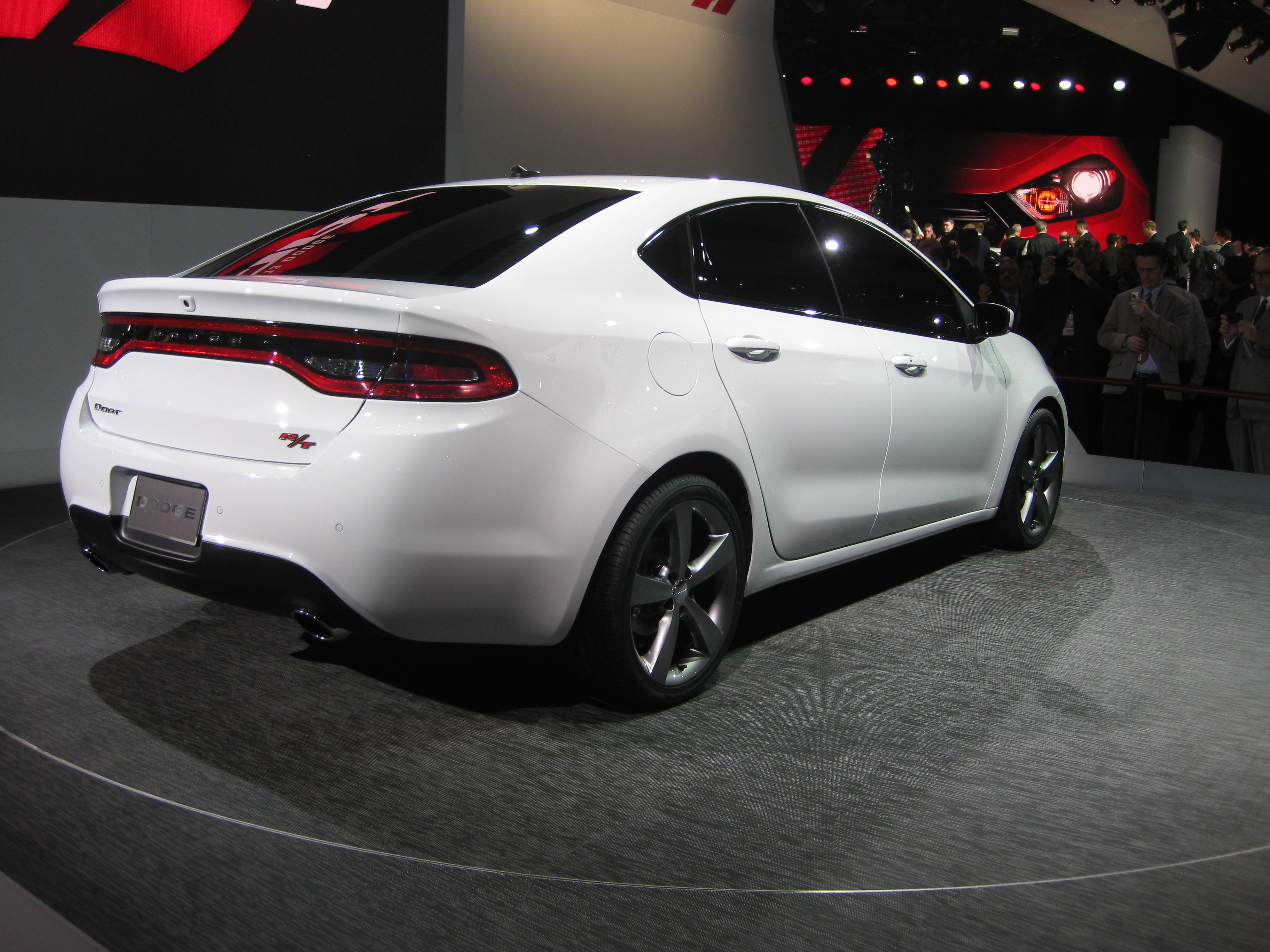
Moving from the misfires of the 80s to a more recent, yet equally baffling, stumble, we arrive at the early 2010s incarnation of the Dodge Dart. This wasn’t some antique anomaly; this was a contemporary compact sedan, seemingly conceived in a boardroom where “good on paper” triumphs over “good in reality.” As one frustrated observer, mosko13, incisively points out, the concept of a “little cheap sedan” might have resonated favorably in the post-FCA merger discussions. However, the journey from theoretical market opportunity to tangible, drivable product was clearly fraught with peril, yielding a vehicle that was anything but an anticipated success.
The execution of the Dart was so profoundly flawed that it conjures images of engineers laboring under duress. “I’m convinced the engineers had to be made to work on this thing at gunpoint,” our commenter mused, a sentiment that perfectly captures the palpable sense of reluctant compromise oozing from every panel gap and underperforming component. This wasn’t a car born of passion or innovation; it felt like a checkbox exercise, rushed and unloved, pushing out a product that barely met the minimum criteria of “sedan” without ever aspiring to be genuinely good. It’s a sad indictment when the very creators of a vehicle are suspected of being coerced into its design.
The consequences of this rushed, uninspired development quickly became apparent, not just to owners but to the very dealerships meant to sell it. “And lord knows the dealers wanted nothing to do with it,” is a stark revelation. When the frontline sales force, the very people whose livelihoods depend on moving metal, shy away from a particular model, you know you have a genuine lemon on your hands. This isn’t just a minor manufacturing hiccup; it speaks volumes about fundamental problems that made the car a hard sell, a blight on the showroom floor, actively resisting attempts to find it a home.
Indeed, the Dart’s ignominious tenure in the U.S. market lasted a mere three years, a brutal testament to “all its issues.” While our context doesn’t dive into the nitty-gritty specifics of these woes, the brevity of its production run screams volumes. Whether it was powertrain deficiencies, abysmal interior quality, uninspired driving dynamics, or a catastrophic combination of all three, the Dart simply failed to resonate with buyers. It was a prime example of a car that promised affordable transportation but delivered a potent cocktail of disappointment and regret, quickly cementing its reputation as a vehicle to be forgotten, rather than cherished.
The early 2010s Dodge Dart serves as a cautionary tale for modern automotive manufacturing. It highlights the dangers of prioritizing theoretical market segments over robust engineering and genuine consumer appeal. It was a vehicle that embodied the very worst aspects of cost-cutting and hurried development, arriving on the scene as a desperate attempt to fill a void but instead creating a new, gaping chasm in consumer trust. For a brand like Dodge, with its storied history, the Dart was a jarring detour into mediocrity, a temporary aberration that hopefully remains an isolated incident in their pursuit of automotive excellence.
Car Model Information: 2015 Dodge Dart SXT
Name: Dodge Dart
Caption: 1966 Dodge Dart GT 2-door hardtop
Manufacturer: Dodge
Production: 1959–1976 (US market)
ModelYears: 1960–1976 (US market)
Class: Full-size
Layout: FR layout
Predecessor: Dodge Coronet#Fourth generation (1957–1959)
Related: Plymouth Valiant,Chrysler Valiant,Dodge Phoenix
Successor: Dodge Aspen,Dodge Diplomat,Talbot Tagora
Categories: 1970s cars, All articles with unsourced statements, Articles with short description, Articles with unsourced statements from December 2023, Articles with unsourced statements from May 2025
Summary: The Dodge Dart is a line of passenger cars produced by Dodge from the 1959 to 1976 model years in North America, with production extended to later years in various other markets.
The production Dodge Dart was introduced as a lower-priced full-size model in 1960 and 1961, but became a mid-size car for one model year for 1962, and was then reduced to a compact for two generations, from 1963 to 1976.
Chrysler had first used ‘Dart’ name plates on two Italian styled show cars, in 1956 and 1957, before it became a Dodge model name. The Dart nameplate was resurrected for a Fiat-derived compact car that was introduced in 2012.
Get more information about: Dodge Dart
Buying a high-performing used car >>>
Brand: Dodge Model: Dart
Price: $9,995 Mileage: 143,082 mi.

6. **Crosley Stratoswift**
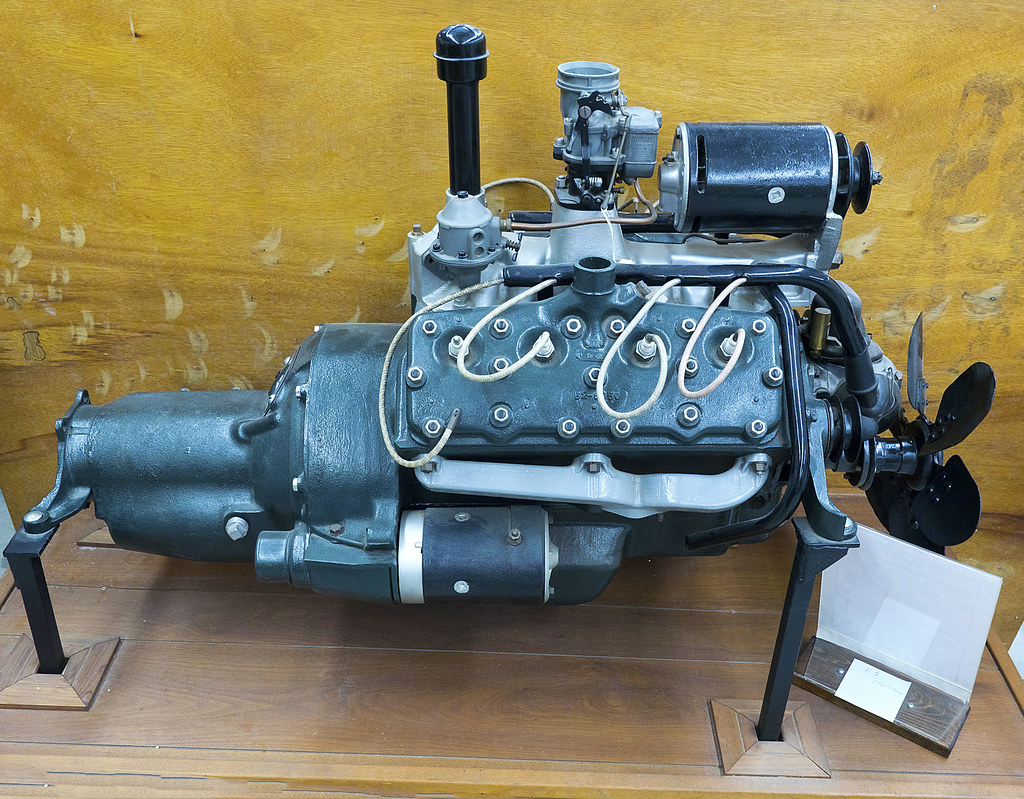
And now, for a journey into the truly obscure, a relic from a bygone era that still manages to elicit a shudder from anyone familiar with its bizarre engineering. We’re talking about the 1946-1949 Crosley, specifically its Stratoswift iteration, a car that dared to be different, and in doing so, achieved a singular kind of automotive infamy. At its heart, or rather, its utterly perplexing engine bay, lay a unit known as the ‘CoBra’ engine. Just the name itself evokes a certain sense of foreboding, and for good reason—this was no ordinary powerplant, and its construction was, to put it mildly, revolutionary in all the wrong ways.
The ‘CoBra’ engine earned its peculiar moniker not from some serpentine design, but from its utterly unconventional construction: “Copper Brazed.” This wasn’t a typical engine block cast from iron or aluminum, the industry standard for robust and reliable power. Oh no, Crosley decided to forge a new path, utilizing “stamped sheet metal that was copper” for its blocks and cylinder heads. Imagine that: an engine, the very heart of a car, assembled from thin, stamped sheets of metal, bonded together with copper. It was an audacious departure from established engineering principles, driven perhaps by post-war material shortages or a misguided quest for lightweight novelty.
The practical implications of such a design were, predictably, disastrous. While light and cheap to produce, an engine built from stamped sheet metal simply could not withstand the immense pressures and temperatures of combustion over time. These flimsy constructions were prone to warping, cracking, and leaking, leading to catastrophic failures that left owners stranded and mechanics baffled. The copper brazing, while innovative, was hardly a substitute for solid cast metal in terms of structural integrity and thermal management. This wasn’t just a bad engine; it was a fundamental misunderstanding of what makes an internal combustion engine durable and reliable.
Owning a Crosley Stratoswift with its CoBra engine was less about driving and more about constantly anticipating the next mechanical meltdown. The engine became a perpetual source of anxiety, requiring obsessive attention and frequent, often futile, repairs. It was a car that essentially aged decades in a matter of months, its experimental heart quickly revealing its fatal flaws. The very idea that such a critical component would forgo the tried and true methods for such an experimental and ultimately fragile construction speaks volumes about Crosley’s desperate attempts to innovate, or perhaps, simply to cut costs to an absurd degree.
In the annals of automotive engineering, the CoBra engine and the Crosley Stratoswift stand as a stark, shining example of how innovative ideas, when poorly executed or based on flawed premises, can lead to monumental failure. It was an engine that promised efficiency and lightness but delivered only headaches and an early grave for countless vehicles. For those who believe American ingenuity always triumphs, the CoBra engine is a humbling reminder that sometimes, the road to hell is paved with copper-brazed sheet metal and good intentions. It unequivocally earns its place as one of the worst automotive ideas ever conceived, a bizarre, almost comical, footnote in history.
Read more about: America’s Automotive Hall of Shame: Unforgettable Engineering Blunders and the Cars We Love to Lament
So, there you have it, folks – our unflinching, sometimes brutal, but always honest journey through the scrapyard of American automotive history. From the prematurely rusting promise of the Vega to the baffling choices of GM’s 80s engine experiments, the rushed disappointment of the modern Dart, and the truly bizarre engineering of the Crosley Stratoswift, these are the machines that remind us innovation, passion, and good intentions aren’t always enough. They serve as stark, rattling, and sometimes smoking, cautionary tales. May their failures pave the way for future successes, and may we never again mistake a “boat anchor” for a power plant, or believe a car built at “gunpoint” will be anything but awful. Drive safe, drive smart, and for heaven’s sake, avoid these at all costs.