

In our increasingly interconnected world, where information flows freely across borders, a fascinating challenge often emerges: the coexistence of distinct measurement systems. While much of the globe has embraced the elegant simplicity of the metric system, the imperial system continues to hold its ground, particularly in the United States, Canada, and the United Kingdom for many everyday applications. This dual reality means that the ability to seamlessly translate measurements, such as converting centimeters to feet, isn’t just a technical skill but a crucial bridge for communication and precision.
From vast international engineering projects requiring meticulous specifications to simply understanding a person’s height from an overseas report, accurate length conversion is a silent hero. It ensures that designs are implemented correctly, goods are manufactured to precise standards, and personal information is universally understood. Without a clear and reliable method for these conversions, misunderstandings could easily arise, impacting everything from blueprints to basic daily interactions.
This article aims to illuminate the intricacies of centimeter to foot conversion, breaking down the essential concepts into clear, digestible insights. We’ll embark on a journey through the definitions, histories, and practical formulas that empower us to confidently navigate the metric-imperial divide, transforming what might seem like a complex task into an easily mastered skill. Get ready to unlock the secrets behind precise length conversions and appreciate the subtle technology that underpins our measured world.
1. **Understanding the Need for Centimeter to Foot Conversion**In a truly globalized society, the landscape of measurement systems is wonderfully diverse, yet this diversity also presents a persistent need for accurate translation. The metric system, specifically utilizing centimeters for smaller lengths, enjoys widespread adoption across most continents, while the imperial system, with its reliance on feet and inches, remains deeply embedded in the daily lives of millions in countries like the United States, Canada, and the United Kingdom.
This ongoing coexistence mandates a robust understanding of conversion methodologies. Consider, for a moment, an architect finalizing blueprints for a skyscraper in a nation that exclusively uses metric units. If those plans are then transferred to a construction team operating solely within an imperial framework, the potential for misinterpretation without precise conversion is immense, threatening project integrity and efficiency.
But the necessity extends far beyond large-scale industry. In our personal lives, we frequently encounter this exact dilemma. Perhaps you are researching furniture dimensions from an international vendor, or reading about an athletic achievement reported in centimeters. The desire to intuitively grasp these measurements, to bring them into a relatable context, drives the everyday demand for reliable conversion.
Therefore, mastering the conversion from centimeters to feet is far more than a mere academic exercise; it’s a fundamental life skill in the 21st century. It serves as a vital linguistic tool, bridging communication gaps across various professional fields like engineering, manufacturing, and fashion, and fundamentally enhancing our capacity to engage with and comprehend our globally interconnected environment.
Read more about: Beyond the Battery: 8 Core Electrical Realities Every Savvy User (and EV Owner) Should Master
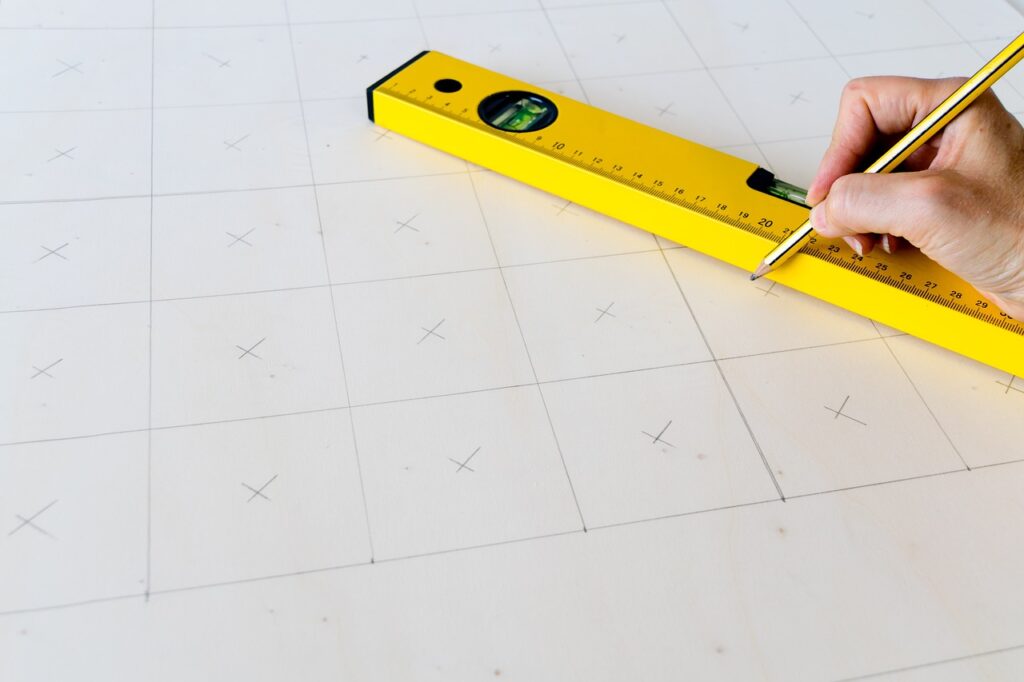
2. **Demystifying the Centimeter (cm)**At the very core of metric length measurement lies the centimeter, universally represented by the concise symbol ‘cm’. This unit is an integral component of the International System of Units (SI), which is globally recognized as the modern and preferred embodiment of the metric system. Specifically, the centimeter is precisely defined as one-hundredth of a meter, illustrating its clear hierarchical relationship within the system.
The nomenclature itself is quite telling; the prefix “centi-” is derived from Latin and directly signifies one hundredth. This perfectly aligns with the logical, decimal-based framework of metric prefixes, which span an impressive range from factors of 10^-18 up to 10^18. Within this expansive system, the base unit—in this case, the meter—stands as the central reference point, possessing a factor of 1.
Centimeters are used in a vast array of applications worldwide, especially in countries that have undergone metrication. They are particularly invaluable in scenarios where a smaller, more granular denomination of the meter is required. This makes them perfectly suited for measuring a diverse range of objects and dimensions. For instance, outside of the United States, measuring human height in centimeters is a common practice, providing a precise and standardized figure.
To offer a tangible sense of its length, consider a familiar object: a standard number 2 pencil. Its thickness is approximately 1 cm, offering a helpful mental benchmark for this unit of measure. Furthermore, understanding the centimeter involves recognizing its direct relationships with other metric units, such as 1 centimeter being equal to 10 millimeters (mm), reinforcing the consistent and intuitive nature of the metric scale.
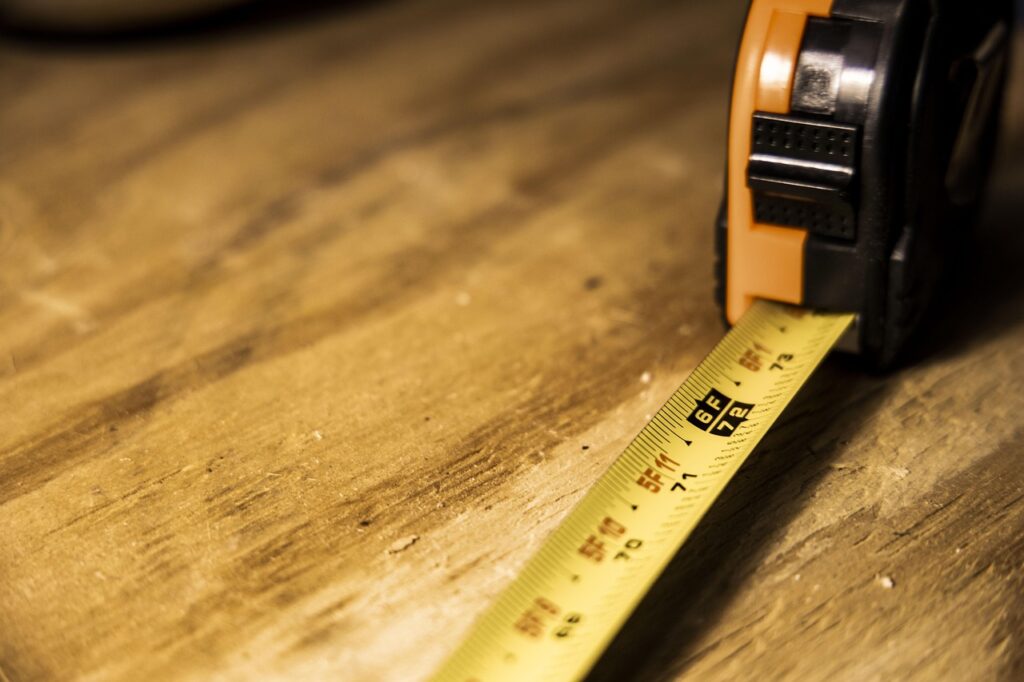
3. **Unpacking the Foot (ft)**Crossing over the measurement divide, we encounter the foot, denoted by the symbol ‘ft’, a foundational unit within the imperial and US customary systems. Unlike the metric system’s more recent, scientifically derived definitions, the foot boasts a rich and varied history, deeply rooted in human experience and historical physical references.
Its modern, standardized definition, established in 1959, precisely equates one foot to 0.3048 meters. This internationally agreed-upon uniformity is a relatively modern development, contrasting sharply with its ancient, less consistent origins. Historically, the measurement of a foot was employed in numerous diverse systems, including Greek, Roman, English, Chinese, and French traditions, with its actual length varying significantly between them.
These historical fluctuations stemmed largely from the early practice of using parts of the human body as referential units of length. Such units, often termed ‘anthropic units,’ included the cubit, hand, span, and digit. The length designated as a ‘foot’ could, in ancient times, range anywhere from 250 mm to 335 mm before the current, globally accepted definition of 304.8 mm provided much-needed consistency. This evolution makes the foot’s journey a compelling narrative in the history of measurement.
Today, the foot remains a prominently used unit, primarily in the United States, Canada, and the United Kingdom for a wide range of everyday applications. In the US, it is routinely employed for personal height measurements, shorter distances, and even the length of sports fields, often in conjunction with yards. Its utility extends into specialized domains, being a common unit for quantifying altitude in aviation and elevation for geographical features like mountains.
Within its own system, the foot maintains clear and consistent relationships: one foot is defined as comprising 12 inches, and three feet collectively constitute one yard. Interestingly, the concept of an “international foot” even offers a relatable benchmark, corresponding to specific human shoe sizes, further cementing this ancient unit’s enduring presence in our modern world.

4. **The Fundamental Formula for Centimeters to Feet**At the very heart of any accurate unit translation lies a precise mathematical expression. For the crucial task of converting measurements from centimeters into feet, this formula is remarkably straightforward and universally recognized: `Feet = Centimeters ÷ 30.48`. This equation serves as the indispensable foundation for navigating the bridge between metric and imperial length measurements.
The number 30.48, which appears as the divisor in this formula, is far from an arbitrary figure; it embodies the exact conversion ratio that defines the relationship between the two units. Specifically, it means that for every single foot of length, there are precisely 30.48 centimeters. A solid understanding of this ratio is paramount, as it forms the bedrock for accurately and consistently translating values across these distinct measurement systems.
To illustrate this principle in practice, let’s consider a common conversion scenario. If you possess a measurement of 170 centimeters and need to express it in feet, you would apply this formula directly and efficiently. The calculation unfolds as `feet = 170 cm ÷ 30.48`, which, when computed, yields an approximate result of 5.577428 feet. Thus, 170 cm is precisely 5.577428 feet when represented in its decimal form.
This fundamental conversion formula offers a clear, direct, and highly efficient method for quickly comprehending lengths initially expressed in centimeters by translating them into feet. It represents the crucial initial step in a broader understanding of length conversion, providing the essential groundwork before delving into more nuanced transformations, such as breaking down decimal feet into the more traditionally used feet and inches.
Read more about: Urban Summer Fashion Inspirations: Cool and Chic Styling Rules Demonstrated by Stars
5. **Mastering the Cm to Feet and Inches Conversion**While expressing a length in decimal feet provides numerical accuracy, practical applications within the imperial system often necessitate measurements presented in terms of whole feet and specific inches. This is because, as the context points out, “feet in decimal form… are usually used with inches to represent a fraction of a foot,” offering a more intuitive and granular understanding of actual length.
Transforming centimeters into this widely understood “feet and inches” format requires a systematic, multi-step approach that cleverly builds upon the foundational cm-to-feet conversion. The process commences with the initial division of the measurement in centimeters by the crucial conversion factor of 30.48. This initial calculation provides the total length expressed in its decimal feet form, serving as the essential starting point for the more user-friendly representation.
The next vital stage involves extracting the whole number located to the left of the decimal point from your calculated decimal feet value. This integer represents the complete number of “whole feet.” What then remains is the decimal portion, which precisely quantifies the fractional segment of a foot. To translate this decimal remainder into inches, you simply multiply it by 12, acknowledging the established fact that there are exactly 12 inches within every single foot.
Upon obtaining the decimal value for inches, the recommended practice is to “round that result to the nearest whole number to get the number of inches.” This rounding step is frequently essential for practical measurements, as it allows for figures that are both clear and manageable in everyday usage. Finally, you seamlessly combine the “number of whole feet and inches to get your final answer,” thereby presenting the measurement in its commonly recognized and intuitive format.
It is important to acknowledge that this comprehensive process, particularly due to the rounding of inches for practical utility, might introduce a slight approximation. As articulated in the provided context, when converting 170 cm to approximately “5 ft 7 in,” we frequently utilize an “approximately equal” sign. This is because “170 centimeters is not exactly equal to 5 feet, 7 inches,” highlighting the thoughtful balance between mathematical precision and real-world applicability in measurement conversions.

6. **The Magic Number: Why 30.48 is Key**In the intricate and often demanding realm of unit conversions, certain numerical constants stand out, serving as indispensable bridges between disparate measurement systems. For the specific and frequently performed translation between centimeters and feet, this pivotal and singularly important number is 30.48. This precise value is not merely an approximation but represents the internationally agreed-upon metric conversion factor for the foot, firmly establishing its role as the definitive and accurate link.
Its historical roots can be traced directly to 1959, the year when the “foot was defined as exactly 0.3048 meters.” This singular, globally recognized standardization was a monumental achievement, as it successfully eliminated a multitude of historical inconsistencies that had plagued foot measurements for centuries. This decisive act provided a stable, unchanging, and universal constant, ensuring consistency across all subsequent calculations.
Consequently, when we undertake the process of converting feet into centimeters, this foundational definition translates directly into the clear and undeniable fact that there are 30.48 centimeters within every single foot. The unwavering reliability of this conversion factor is precisely what makes calculations universally consistent and trustworthy, whether they are being performed for complex engineering blueprints, highly precise manufacturing specifications, or the simple act of determining one’s height for various international documents. It stands as a critical pillar of technological harmonization, facilitating seamless data exchange and fostering mutual understanding across the diverse tapestry of global measurement cultures.

7. **Real-World Application: Converting Mabel’s Height**To truly appreciate the practical utility and inherent elegance of these conversion formulas, let’s explore a concrete, relatable example directly from the provided context. We’re introduced to a scenario where “Mabel is 171cm tall. She wants to know how tall she is in feet and inches.” This common, everyday query perfectly illustrates the real-world application of the multi-step conversion process that we’ve meticulously explored.
Mabel’s initial step in her quest for understanding involves converting her height entirely into feet, presenting the measurement first in its decimal form. By applying the core formula, she calculates her height as “171 ÷ 30.48 = 5.61 feet.” While this decimal representation offers a numerically precise length, it’s not typically the conventional or most intuitive way imperial heights are expressed in daily conversation or records.
To bridge this gap and achieve the more familiar feet and inches format, Mabel proceeds to the next crucial stage. Recognizing that “there are 12 inches in a foot,” she then takes the fractional decimal portion of her feet measurement, which is 0.61 feet, and multiplies it by 12. This calculation yields the result of “0.61 feet * 12 = 7.32 inches.” This figure now quantifies the precise fractional part of her height, expressed in inches.
Finally, Mabel effortlessly combines her whole feet with her meticulously calculated inches. Her height is thus clearly revealed as “5 feet 7.32 inches.” For most practical purposes and ease of communication, this is commonly rounded to a simple 5’7″. This clear, step-by-step example vividly demonstrates how a systematic and informed approach enables individuals like Mabel to seamlessly bridge the metric-imperial gap, allowing them to comprehend and communicate their own measurements in whichever system is most relevant to their specific context or audience.
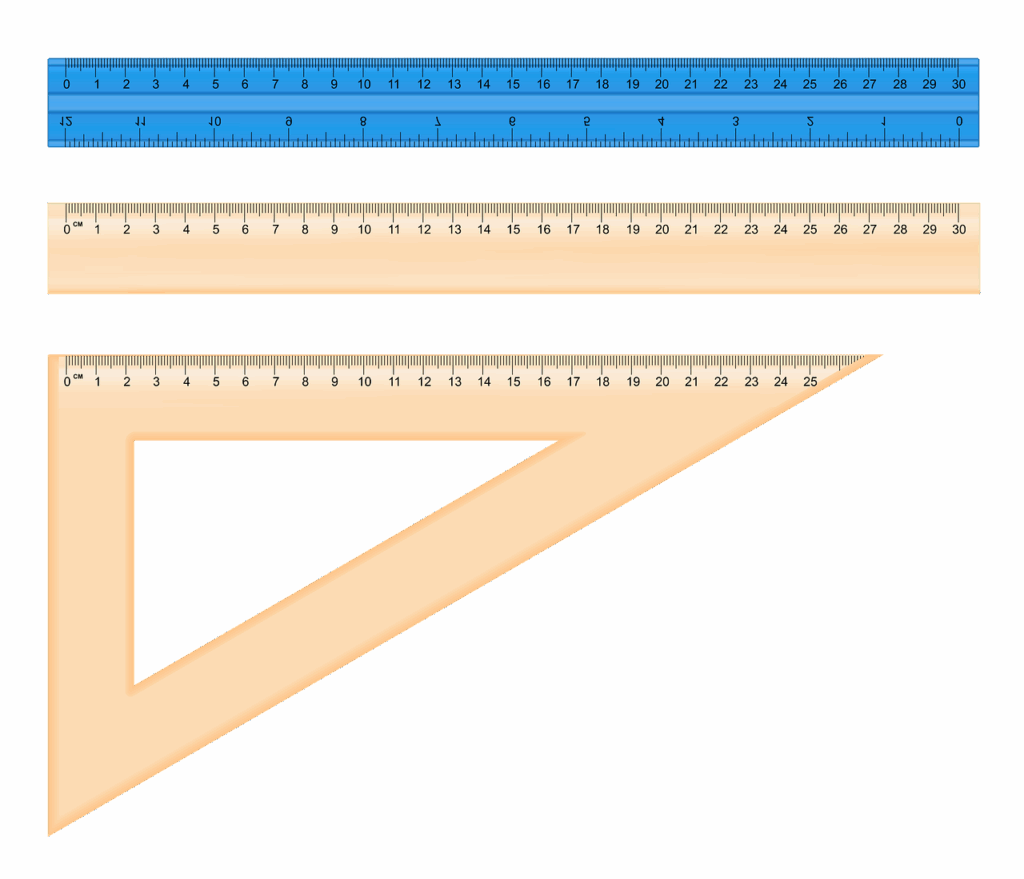
8. **The Inverse Journey: Converting Feet to Centimeters**Having thoroughly navigated the path from metric centimeters to imperial feet, our journey across the measurement divide now prompts us to consider the equally crucial, inverse conversion: translating lengths from feet into centimeters. This reverse operation is frequently encountered in an interconnected world, particularly when imperial measurements, common in the United States, Canada, and the United Kingdom, need to be understood or integrated into systems and documents that predominantly utilize the metric system. It’s an essential skill for anyone dealing with international specifications, global data, or simply communicating dimensions across different cultural measurement norms.
At the heart of this inverse transformation lies a remarkably direct mathematical relationship, building upon the constant we’ve already identified. To convert a measurement expressed in feet into its centimeter equivalent, the formula is elegantly straightforward: `Centimeters = Feet × 30.48`. This equation directly reverses the division used for the centimeter-to-feet conversion, solidifying the ‘30.48’ as the unwavering anchor point for both directions of this fundamental length translation. Its consistent application ensures an accurate and reliable outcome every single time.
This pivotal factor of 30.48, which emerged from the international standardization of the foot in 1959, isn’t just a number; it represents a precise agreement that one foot is exactly 0.3048 meters, and consequently, 30.48 centimeters. By multiplying the length in feet by this constant, we are directly scaling the imperial unit to its exact metric counterpart, ensuring that the integrity and precision of the original measurement are perfectly preserved. It’s a testament to the scientific rigor that underpins modern metrology, providing a stable foundation for cross-system communication.
Therefore, understanding and mastering this inverse conversion is not merely a supplementary skill but a vital complement to our previous discussions. It completes the cycle of measurement translation, allowing for seamless back-and-forth communication between the imperial and metric realms. Whether you’re receiving specifications in feet and needing to relay them in centimeters, or simply curious about a familiar imperial length in metric terms, this formula serves as your dependable guide.