Let’s be real: a movie’s ending can make or break the entire experience. You can sit through two hours of cinematic magic, but if those final moments fall flat, leave you confused, or worse, outright enraged, it’s pretty hard to shake that feeling. Hollywood history is absolutely jam-packed with shocking finales that have not only left people scratching their heads but have also sparked fierce debates that rage on for years, sometimes even decades, after the credits roll. It just goes to show, you can’t please everyone, and when it comes to wrapping up a story, pleasing *most* people is a win in itself!
We’re talking about those cinematic moments that became water cooler (or, let’s be honest, social media) topics, causing viewers to throw popcorn at the screen, write angry letters, or dedicate entire forum threads to dissecting what went wrong – or, occasionally, what went brilliantly right, even if it hurt. From iconic blockbusters to indie darlings, every film in this list managed to push some serious buttons with its final scene. So, buckle up, because we’re taking a deep dive into some of the most controversial movie endings of all time, and believe us, major spoilers lie ahead. You’ve been warned!
Seriously, these are the finales that launched a thousand arguments, got entire episodes of TV shows dedicated to them, and sometimes even had directors explaining themselves years later. Get ready to revisit some truly wild cinematic conclusions that prove filmmakers are just as capable of stirring the pot as they are of crafting masterpieces. Let’s get into it!
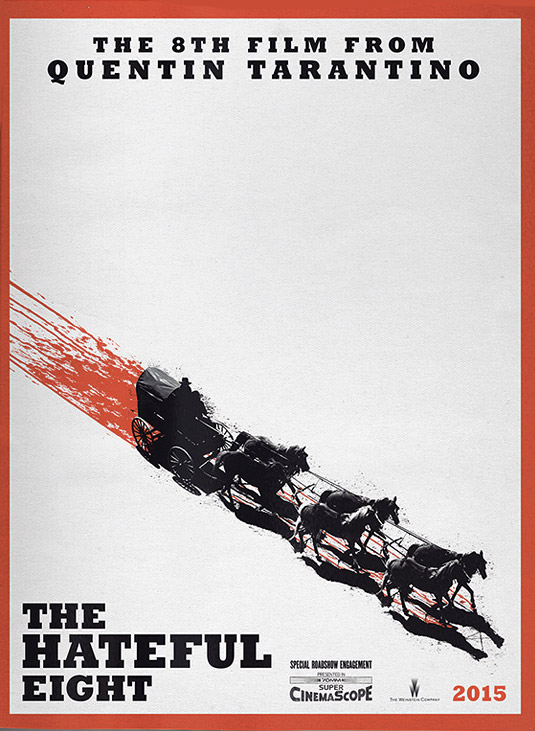
1. **The Hateful Eight (2015)**Okay, so a Quentin Tarantino movie without a splash of controversy? That just wouldn’t be a Quentin Tarantino movie. And when it comes to his sprawling filmography, “The Hateful Eight” might just take the cake for being his most contentious. This blood-soaked western drops us into a blizzard-battered cabin with a motley crew of desperadoes, all seemingly waiting for the perfect moment to double-cross or outright kill each other.
Among this delightful bunch is Daisy Domergue (played by the phenomenal Jennifer Jason Leigh), an outlaw who’s supposedly on her way to the hangman’s noose. But before she even gets there, she endures relentless, brutal punches from men like John “The Hangman” Ruth, Major Marquis Warren, and Sheriff Chris Mannix throughout the entire film. It’s a tough watch, to say the least.
But the real kicker comes at the very end. Warren, a Black Yankee, and Mannix, a white Rebel, actually set aside their intense political and racial differences. Their common ground? Teaming up to string Domergue up from the roof. As she’s “dancing midair,” these two men share a laugh, seemingly enjoying their newfound roles as executioners. Needless to say, “this last scene is disturbing as all get out.”
Naturally, this finale sparked a major outcry, with many labeling the movie as outright misogynistic. The glee taken in lynching a female outlaw after she’s been so viciously abused throughout the film was a bitter pill for many viewers. However, Jennifer Jason Leigh herself stepped up to defend Tarantino, claiming “he’s the most female-centric director around.”
Some critics even appreciated the film, arguing that the intense violence against Domergue was meant as a stark commentary on ism within American society. Whether you side with the critics who slammed it or those who found a deeper meaning, one thing’s for sure: “we’re not planning on re-watching that final scene anytime soon.” It leaves a mark, alright.
Read more about: Hollywood’s Most Divisive Final Frames: Unpacking Iconic Controversial Movie Endings That Still Spark Debate
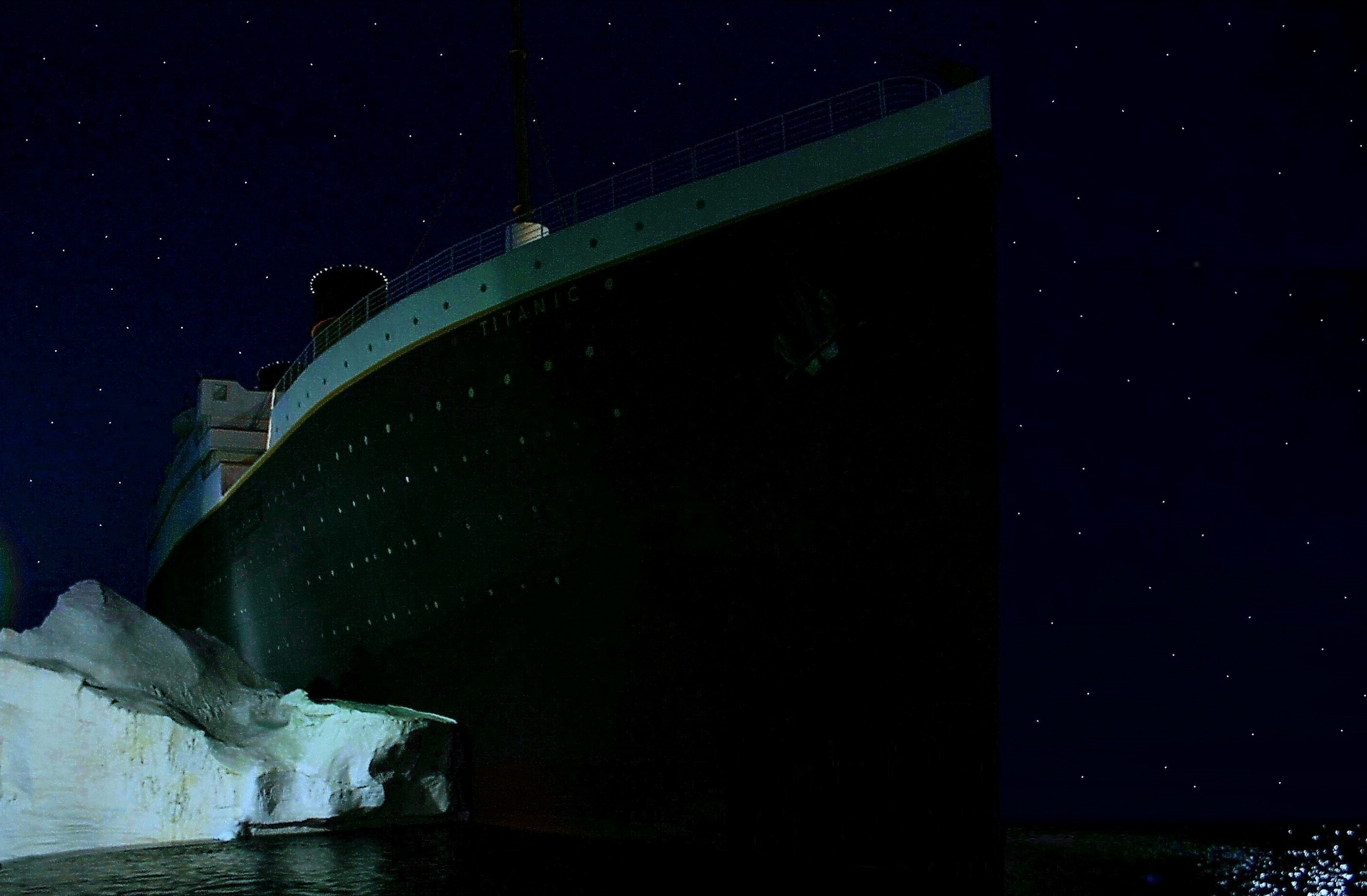
2. **Titanic (1997)**”Titanic” holds its place as the second highest-grossing movie of all time, a true cinematic behemoth. But even billions of dollars at the box office couldn’t save this epic romance from the relentless scrutiny of internet nitpickers and dedicated fans worldwide. For countless viewers, the ending of this supposedly most romantic movie ever made is nothing short of a complete disaster.
Once the titular ship makes its dramatic descent, our star-crossed lovers, Jack (Leonardo DiCaprio) and Rose (Kate Winslet), find themselves plunged into the absolutely freezing cold Atlantic Ocean. It’s a truly dire situation for both, but things take a particularly tragic turn for poor Jack. Rose manages to float atop a detached door, seemingly a perfectly good improvised life raft, while Jack is only partially submerged, his upper half resting on the wood, his lower half slowly turning into a popsicle.
Tragically, Jack succumbs to the icy waters before help arrives, leaving Rose to be rescued alone. This heartbreaking death scene, however, didn’t just spark tears; it ignited a fiery debate that has endured for decades. The burning question on everyone’s mind: “Wasn’t there room on that piece of wood for the both of them? Did Jack die a pointless death?”
The intensity of this debate even led “Mythbusters” to dedicate an entire episode in 2012 to finding a definitive answer. With direct input from none other than director James Cameron himself, hosts Adam Savage and Jamie Hyneman concluded that if Jack or Rose had tied a life jacket to the underside of the door, there actually “would’ve been enough buoyancy to hold them both.” Case closed? Not quite.
Cameron, ever the defiant storyteller, doesn’t buy that argument for a second. His response? “The script says Jack dies, he has to die. Maybe we screwed up. The board should have been a tiny bit smaller. But the dude’s going down.” Talk about a mic drop! Regardless of the physics or the director’s artistic vision, the image of Jack freezing while Rose floats comfortably remains one of cinema’s most debated, and for many, most infuriating, final moments.
Read more about: The 12 Most Romantic First Kisses That Still Give You Butterflies – And The Wild Stories Behind Them!
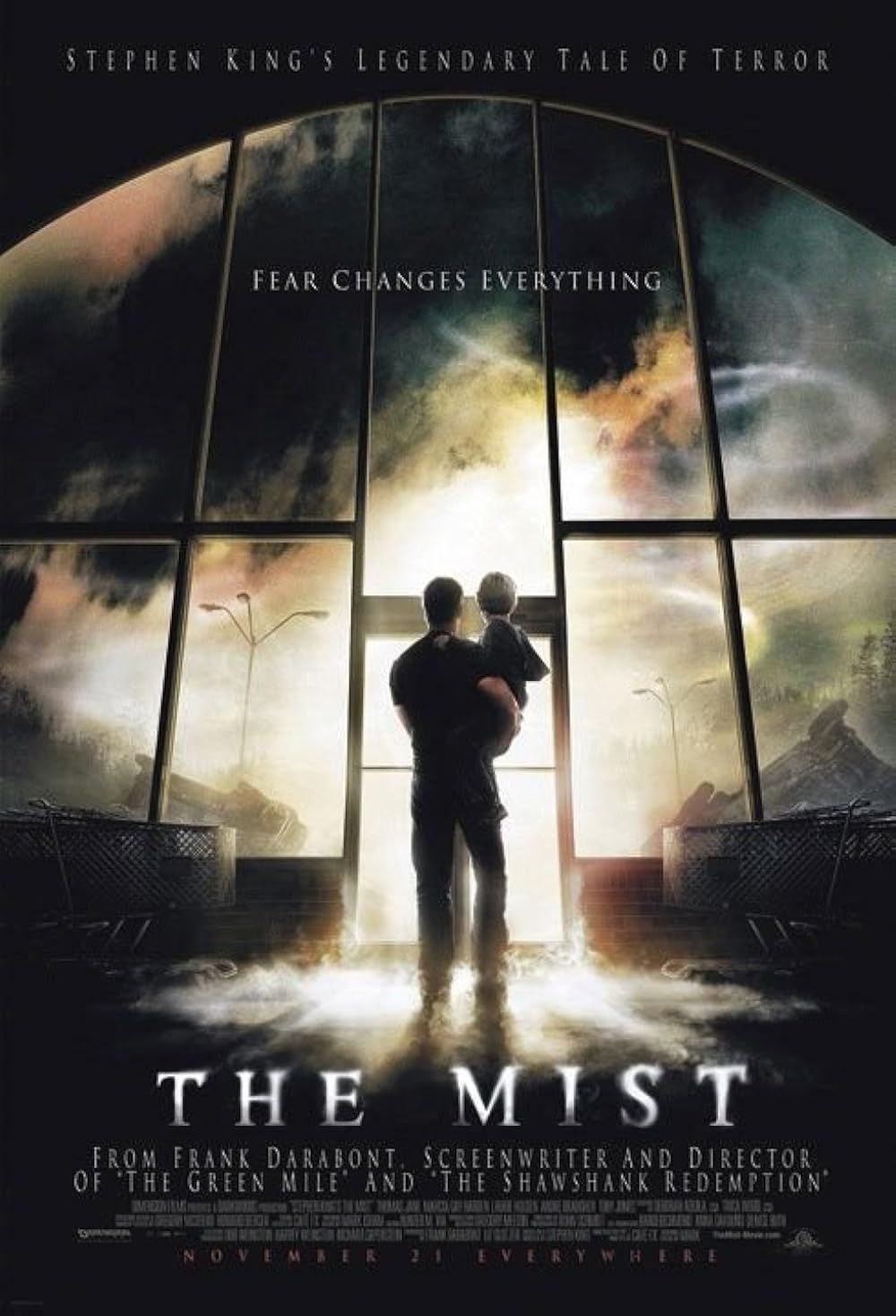
3. **The Mist (2007)**If you’re looking for a bleak, soul-crushing finale, then look no further than “The Mist.” This movie’s ending is so notoriously grim that Haleigh Foutch of Collider perfectly captured the audience reaction, stating, “The ending is often described as a gut punch, I’d say it’s more of a kick in the balls—the worst pain you’ve ever felt mixed with curdling nausea.” Directed by Frank Darabont, the film traps a group of New Englanders in a grocery store as a mysterious, monster-filled fog descends upon them.
Things quickly go from bad to worse inside the store, as fear and fanaticism lead to sacrifices. Desperate for survival, David Drayton (Thomas Jane) makes a break for freedom with a small band of survivors, hoping to outrun the terrifying creatures lurking in the mist. But here’s the catch: there’s absolutely no happy ending in sight for this crew. Lost and with hope dwindling, David makes an unthinkable decision to spare his friends—and his own young son—from the encroaching horrors.
He performs a mercy killing, a devastating act to prevent a far worse fate. And then, in a cruel twist of fate that has traumatized viewers for years, the Army shows up to save the day. Literally, “seconds later,” the military rolls in, clearing the mist and dispatching the creatures. But it’s too late for poor David, who is left utterly alone in the fog, having just committed an unimaginable act for what turned out to be no reason at all.
Yeah, it’s bleak, it’s grim, and it’s a monumental departure from Stephen King’s original novella. But here’s the kicker: the author himself, Stephen King, absolutely loved Darabont’s brutal twist, calling it “the most shocking ending ever.” He was clearly a fan of the gut-wrenching despair.
However, not everyone shared King’s enthusiasm, and the controversy around this ending rages to this day. Recent social media posts, like those compiled by Chris Eggertsen of Uproxx, clearly show that people are still reeling from those final few minutes. One person bluntly wrote, “Ok, but do we all agree that The Mist has the most effed up ending ever?” Another tweeted, “If anyone ever wants to witness the worst ending to a movie in all of existence watch ‘The Mist.'” Whether you grudgingly appreciate its audacity or simply hate it, that devastated Twitter user who wrote, “The ending of The Mist emotionally damaged me,” pretty much sums up the collective feeling.
Read more about: Laughing All the Way to Legend: 15 Iconic TV Scenes Where Comedians Totally Lost It on Live TV

4. **Watchmen (2009)**Alan Moore’s “Watchmen” isn’t just a graphic novel; it’s widely hailed as the greatest graphic novel ever written, a true masterpiece of the medium. So, getting a movie adaptation onto the big screen was always going to be a monumental task, and after several attempts, the challenge eventually fell to Zack Snyder. The resulting film was, for the most part, a pretty faithful rendition of the iconic source material. Emphasis on “for the most part.”
Because there was one *major* change that sent shockwaves through the comic book fandom and beyond. In Moore’s original, incredibly complex story, the villainous Ozymandias executes a chilling plan: he destroys New York City using an alien squid that he cooked up in a lab. The arrival of this utterly bizarre, world-shattering monster then convinces the global superpowers that an extraterrestrial attack is imminent.
This forces the US and the USSR, who were on the brink of nuclear war, to put aside their profound differences and unite against a common, otherworldly foe. It’s a dark, cynical, but undeniably brilliant twist. However, Snyder, in his adaptation, completely dropped the entire cephalopod angle. Instead, his Ozymandias (Matthew Goode) frames the god-like Dr. Manhattan (Billy Crudup).
He tricks America and the Soviet Union into believing that Manhattan is now their shared enemy, thus uniting them against the blue superhero. As you can imagine, this dramatic departure from the sacred text didn’t sit well with a legion of dedicated comic book fans. Sara J. Van Ness even memorably labeled the entire fiasco “Squidgate.”
Snyder, who acknowledges that this ending was “the biggest knock against the movie,” explained that the squid was cut primarily to allow more screen time for developing the characters of Manhattan and the tormented Rorschach (Jackie Earle Haley). While the ending does have its defenders, including comedian Patton Oswalt, the Dr. Manhattan frame-up simply didn’t resonate with a significant portion of the fanbase. Many, it seems, probably decided against watching the Watchmen ever again.
Read more about: Hollywood’s Most Divisive Final Frames: Unpacking Iconic Controversial Movie Endings That Still Spark Debate

5. **The Dark Knight Rises (2012)**Christopher Nolan’s “Dark Knight” trilogy wasn’t just good; it was a game-changer for superhero movies, redefining the genre with its gritty realism and profound storytelling. The second installment, with Heath Ledger’s unforgettable Joker, was universally beloved by virtually every Batfan on the planet. This meant “The Dark Knight Rises” had an almost impossible legacy to live up to for its grand finale.
So, what did Nolan deliver? Instead of diving headfirst into the even deeper abyss of darkness many expected, the third film ended on a much, dare we say, *happier* note. The Caped Crusader (Christian Bale) manages to save Gotham from a devastating nuclear bomb, and then, seemingly, he hangs up his cape and cowl for good, opting to travel the world with Selina Kyle (Anne Hathaway). It was an unexpectedly upbeat farewell.
This final scene immediately sparked intense speculation among fans, many of whom wondered if this was some kind of “Inception”-style dream sequence. The theory gained traction because the scene plays out almost exactly like a fantasy Alfred (Michael Caine) had described earlier in the film – a peaceful retirement for Bruce Wayne, sipping cocktails in Florence.
However, the actors involved were quick to shut down the dream theory, insisting that Batman’s happy ending was completely real. Christian Bale, for one, emphatically stated, “No, it was not a dream.” This didn’t deter others who felt the movie should have gone in a far more depressing direction, perhaps with the ultimate sacrifice of the superhero.
But for every person who desperately wanted Batman to meet a fiery, heroic end, there was an equally passionate fan who was genuinely glad that Bruce Wayne finally got the happy ending he deserved after so much pain. As Kevin P. Sullivan of MTV wisely pointed out, perhaps we shouldn’t have been so surprised by the film’s upbeat finale, especially since, as Harvey Dent once explained, “the night is darkest just before the dawn.”
Read more about: Hollywood’s Most Divisive Final Frames: Unpacking Iconic Controversial Movie Endings That Still Spark Debate
6. **Star Trek II: The Wrath of Khan (1982)**If you’re a sci-fi fan, or just a human with emotions, “Star Trek II: The Wrath of Khan” probably features one of the most profoundly sad death scenes you’ll ever witness. Directed by Nicholas Meyer, this film plunges the crew of the USS Enterprise into serious trouble after their intense showdown with the formidable Khan Noonien Singh (Ricardo Montalban). With a superweapon about to detonate, Captain Kirk (William Shatner) finds himself unable to escape the blast in time due to severe damage to the ship’s warp drive.
And that’s precisely when Spock (Leonard Nimoy) steps up, making the ultimate sacrifice. Embodying the Vulcan philosophy of “the needs of the many ahead of the needs of the few,” Spock deliberately exposes himself to deadly radiation. His goal? To repair the ship’s warp drive manually, saving his crewmates. His plan works, and the Enterprise escapes intact, but our beloved pointy-eared hero pays the ultimate price.
He dies a tragic death, separated from his best friend Kirk by a pane of glass, sharing a final, heartbreaking salute. It’s a scene so powerful and tear-jerking that, if you’re not getting a bit misty-eyed just thinking about it, “it’s probably because you’re a Vulcan.” The emotional impact on audiences was immense, but the reaction in 1982 went far beyond mere sadness.
Fans were downright furious. News of Spock’s impending demise had actually leaked pretty early during the filming of “Wrath of Khan,” leading to a massive outcry. Executive producer Harve Bennett revealed that the filmmakers received “a hundred thousand letters” pleading for Spock’s life to be spared. One particularly devoted Trekkie even took out a full-page magazine ad, directly demanding that Paramount Pictures save the Vulcan.
Some fans were so upset that their anger spilled over into harassing Leonard Nimoy himself, actually “threatening the man and his family.” In a desperate attempt to throw fans off the scent, Meyer and his team added a scene early in the film where Spock fakes his death during a training sequence. Honestly, that probably only made it hurt even more when the Vulcan finally gave his trademark salute for the last time. Of course, this wasn’t quite his *final* final time, given “Star Trek III: The Search for Spock” eventually came out. But for a moment there, the world truly thought Spock was gone, and they were NOT happy about it.
Read more about: From Box Office Bombs to Beloved Classics: The Untold Stories of Cinema’s Greatest Comebacks
7. **The Grey (2012)**When Liam Neeson stars in a movie with wolves, you’re pretty much expecting him to throw down with those wolves, right? That’s certainly what the trailers for “The Grey” implied, promising an epic showdown between man and beast. But if you walked into that theater expecting a Neeson-vs.-canine brawl, you likely walked out howling in frustration. The film delivered a far more ambiguous, and for many, unsatisfying, ending.
Set in the brutal Alaskan wilderness, “The Grey” follows Neeson’s character, John Ottway, a hunter stranded with oil workers after a plane crash. Initially suicidal, Ottway slowly reclaims his will to live as he faces the elements and a relentless pack of wolves. The movie builds to what should be the ultimate confrontation, a fight for survival against the alpha wolf.
And then, just as Ottway prepares for the fight, grabbing a knife and taping broken bottles to his hand, the screen cuts to black. No epic punch-out, no definitive victory, just an abrupt end. Audiences were sharply divided. Some, like Nordling of Ain’t It Cool News, argued the implied fight was the point, a symbolic climax about a man choosing to fight when he knows he won’t win. Others felt completely ripped off, with one viewer lamenting, “I wasted my two hours and $10, the very least you can give us a definitive answer.” Director Joe Carnahan admitted the promotional material “was the enemy of the film,” creating a “promise that people felt the movie didn’t live up to.” Maybe don’t promise wolf-punching if there’s no wolf-punching!
Read more about: Beyond the Badge: 12 Japanese Icons That Deliver More Driving Thrills Than A Porsche 911

8. **The Devil Inside (2012)**Let’s be brutally honest: nobody really *likes* “The Devil Inside.” Its Rotten Tomatoes score sits at a measly six percent, which honestly makes you wonder about those few approving critics. Beyond critical disdain, when the film hit theaters in 2012, there were reports of audience members booing, jeering, and shouting in pure anger after the credits started rolling. Now, *that’s* an ending that truly gets people fired up!
So, what kind of cinematic send-off could cause such a demonic outcry? “The Devil Inside” is a found footage horror flick about Isabella, who’s documenting her murderous, demon-possessed mother, Maria. The story culminates in a climactic exorcism where, in a truly unfortunate twist, the demons decide to leave their host and possess our heroes.
This leads to Isabella and her friend speeding down a busy highway when her possessed buddy suddenly swerves into oncoming traffic. The movie then abruptly cuts to black. But wait, there’s more! A title card pops up, brazenly proclaiming, “The facts surrounding the Rossi case remain unresolved. For more information about the ongoing investigation, visit www.TheRossiFiles.com.”
For most moviegoers, this wasn’t cool; it felt like a blatant scam. People genuinely believed they *had* to visit the website to find out how the story ended, only to discover it was just a bizarre bit of promotional fluff. As Annalee Newitz of io9 perfectly encapsulated the collective fury, “The audience in the screening I was at actually booed. It felt like we’d just watched an 85 minute teaser ad for a website.” Talk about a horror movie for all the wrong reasons!
Read more about: Unveiling Cinematic Terror: Top Scary Movies That Leave Audiences Breathless
9. **Safe Haven (2013)**If you’re heading into a Nicholas Sparks adaptation, you usually expect a predictable, albeit tear-jerking, romance. But “Safe Haven” throws a twist so completely out of left field that it earned a measly 12 percent approval rating on Rotten Tomatoes, with much of that hatred squarely aimed at its bonkers finale. Critics and audiences alike were left utterly baffled by an ending that channels “The Sixth Sense” but without any of the groundwork.
The story initially sets up as a seemingly grounded romance. Katie, a battered wife on the run, lands in a new town, attempting to build a new life. She befriends Jo, a local woman, and falls for Alex, a hunky widower. Everything seems to be settling into that familiar, cozy romantic drama groove, with Katie and Alex eventually getting together.
But then, moments before the credits roll, the film pulls the rug out from under everyone. The happy couple discovers a stack of letters written by Alex’s dead wife, Carly. And guess what else they find? A photograph of his old flame, and *surprise!* – she looks exactly like Jo. That’s right, Katie’s supportive friend Jo is, in fact, the ghost of Alex’s deceased wife, returned from the afterlife to play matchmaker for her hubby.
Seriously, as twists go, this one is utterly nuts, especially because there wasn’t a single apparent supernatural element in the entire movie until that final, baffling reveal. Matt Neal of The Standard perfectly summed up the collective outrage, writing that the twist “will make you want to punch the movie in the face.” Richard Roeper, always one for a good burn, declared, “If it can be said movies have personalities, I give you three words to sum up the basic core identity of ‘Safe Haven.’ Bat. Bleep. Crazy.” We couldn’t agree more.
Read more about: Ready for Liftoff? We’re Ranking 13 Of The Best Space Movies Ever – How Many Have You Actually Seen?

10. **The Interview (2014)**”The Interview” wasn’t just a Seth Rogen and Evan Goldberg comedy; it became an honest-to-goodness international incident, all stemming from its controversial premise and, yes, its explosive ending. When James Franco and Seth Rogen’s characters finally blast Kim Jong-un’s helicopter with a tank, watching the dictator’s face catch fire in slow motion, it felt like a bold, if ridiculously over-the-top, comedic climax.
The original ending was even more violent, with Kim’s entire head exploding. Sony CEO Kazuo Hirai insisted Rogen tone down the gore, a decision that was just the beginning of the film’s infamy. The real madness began when North Korea declared releasing “The Interview” an “act of war,” leading to a North Korean-backed group, the Guardians of Peace, hacking Sony and leaking private emails.
Things escalated dramatically with chilling terrorist threats, ominously promising to remind Americans about “the lessons of the 11th of September, 2001.” As a direct consequence, major theater chains dropped “The Interview,” and Sony initially declined to release the movie online, effectively shelving it. While the film eventually made its way to screens, it’s wild to think that a Seth Rogen and James Franco comedy sparked an actual international crisis. Who knew satire could be so… incendiary?
Read more about: Unlocking the Empire: Kendall Jenner’s Journey from Reality TV Star to Global Fashion & Business Mogul

11. **Blade Runner (1982)**When we talk about directors who tinker with their films, George Lucas often takes the heat for his “Star Wars” changes. But let’s be fair, Ridley Scott is right there with him, having released *seven* different versions of “Blade Runner.” Thanks to all that endless tinkering, sci-fi fans have spent countless hours dissecting one of cinema’s most enduring questions: Is Rick Deckard (Harrison Ford) actually a replicant?
If you only ever saw the original theatrical cut, the answer was a pretty straightforward “no.” That version ends on an upbeat, almost Hollywood-esque note, with Deckard and his robotic lady love, Rachael, escaping into the mountains to live happily ever after. There’s nothing to suggest Deckard is anything other than human, making for a relatively clear, if somewhat conventional, conclusion.
However, that all changed with the Director’s Cut. This is the version where Scott reinserted Deckard’s haunting unicorn dream sequence and, crucially, cut that happy Hollywood ending. Instead, the film concludes with Deckard discovering Gaff’s origami unicorn message, a detail many interpreted as Gaff knowing what Deckard dreams about. This, in turn, implies that Deckard’s memories are implants, thus strongly suggesting he is a replicant himself.
Ever since, the debate about Deckard’s true nature has raged on, fiercely dividing fans, critics, and even the cast and crew. Ridley Scott firmly believes Deckard is a machine, adding layers of darkness and complexity. Yet, Harrison Ford staunchly maintains his character is 100 percent human, arguing the replicant theory undermines Deckard’s journey. Regardless of where you stand, “Blade Runner” remains incredibly influential, and its multiple, ambiguous endings ensure people will talk about it for a very, very long time.
Read more about: From Box Office Bombs to Beloved Classics: The Untold Stories of Cinema’s Greatest Comebacks

12. **Passengers (2016)**On paper, “Passengers” seemed like a surefire hit for 2016. It boasted two of Hollywood’s biggest stars, Chris Pratt and Jennifer Lawrence, and was based on a screenplay widely considered one of the best unproduced scripts in the business. The trailers promised a sweeping, romantic sci-fi epic set in space. What could possibly go wrong? Well, a lot, it turns out. The film ended up being a major flop, and its controversial ending is largely to blame.
Moviegoers were led to expect a story where two charming protagonists accidentally wake up early from suspended animation. They’re fated to spend their lives together on a spaceship, sparking an intergalactic romance. A charming premise, right? Except the trailers were misleading, glossing over a deeply unsettling core.
Pratt’s character, Jim, wakes up alone after his pod malfunctions. Facing a lifetime of solitude, he makes a horrific, morally reprehensible decision: he *intentionally* wakes Lawrence’s character, Aurora, against her will, essentially kidnapping and murdering her chances at a new life. The movie, rather than delving into ethical implications, bizarrely has her fall in love with Jim and decide to spend her life with him, even after discovering his heinous act.
Unsurprisingly, this premise and its resolution did *not* sit well with audiences or critics. Critics hit the movie hard for its problematic narrative, and audiences stayed away. Irate film fans took to social media, labeling “Passengers” as “creepy” and condemning Jim’s actions, dooming the movie to a lonely existence without much love. It just goes to show, even with two beloved stars, you can’t gloss over a fundamentally creepy plot point and expect everyone to just fall in love with it.
Read more about: Hollywood’s Most Divisive Final Frames: Unpacking Iconic Controversial Movie Endings That Still Spark Debate
And there you have it, a wild ride through some of the most debated and discussed movie endings ever to grace the big screen. From tragic sacrifices that sparked real-world threats to twists so bizarre they made audiences want to throw their popcorn, these finales prove that a film’s last moments are often its most impactful. Whether they leave us fuming, scratching our heads, or endlessly debating their meaning, one thing’s for sure: a truly controversial ending sticks with you, forever cementing its place in cinematic lore and ensuring we keep talking about movies long after the credits roll.