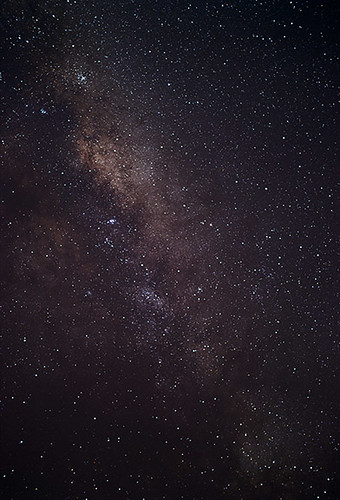
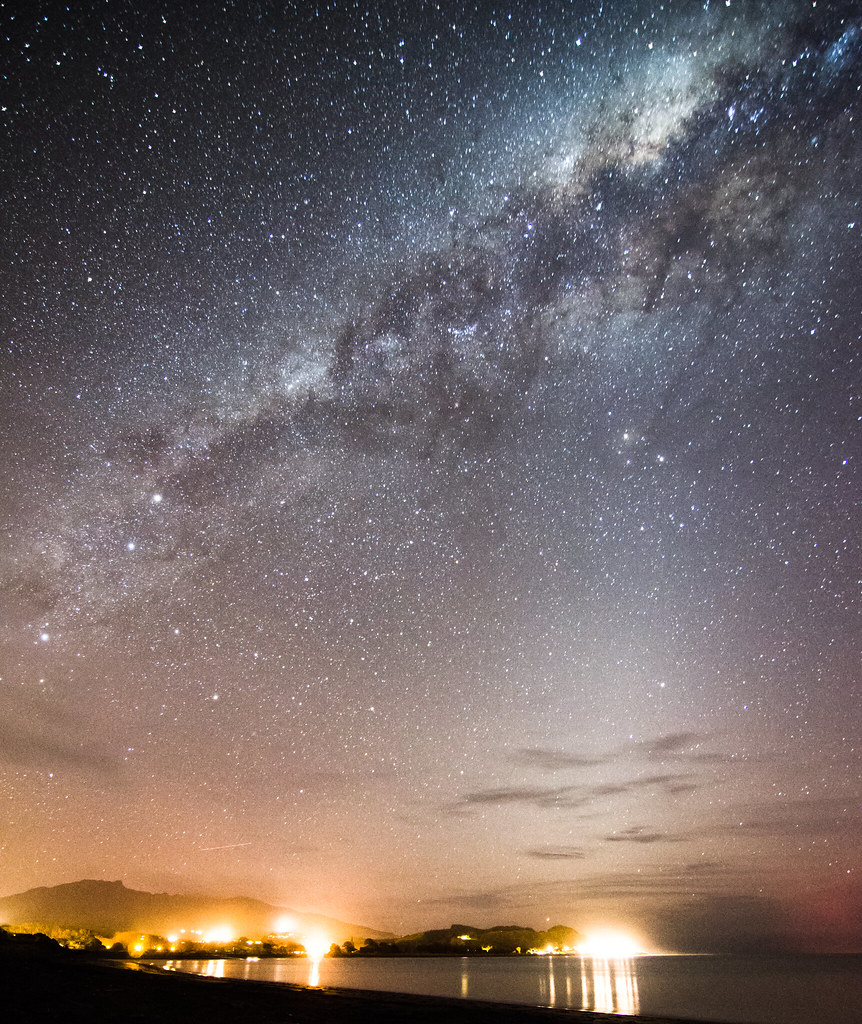
From the earliest human gazes skyward to the sophisticated instruments of modern astrophysics, stars have captivated our imagination and fueled our quest for understanding the cosmos. These luminous spheroids of plasma, held together by their own formidable gravity, are not merely distant points of light; they are the fundamental building blocks of galaxies, the crucibles of chemical elements, and the driving forces behind the universe’s grand narrative. Their sheer numbers are staggering, with an estimated 10^22 to 10^24 stars populating the observable universe, a figure that dwarfs the grains of sand on Earth, yet only a minuscule fraction—about 4,000—are visible to the eye, all nestled within our own Milky Way galaxy.
Our journey through stellar science reveals a universe in constant flux, where stars are born from collapsing clouds of gas and dust, mature through eons of thermonuclear fusion, and eventually meet their dramatic ends as white dwarfs, neutron stars, or even black holes. This intricate lifecycle profoundly impacts their surroundings, enriching the interstellar medium with heavier elements that sow the seeds for subsequent generations of stars and, crucially, for the formation of rocky planets like our own. The study of stars is, therefore, not just an exploration of distant celestial bodies but a deep dive into the very origins and ongoing evolution of everything we see and know.
In this comprehensive exploration, we will traverse the remarkable tapestry of stellar existence, starting from the ancient observations that first mapped their presence and named their patterns. We will then transition into the precise scientific frameworks that allow us to measure and categorize these colossal cosmic engines, examining their birth in stellar nurseries, their long, stable main-sequence lives, and the initial transformative phases of their post-main sequence evolution, including the distinctive paths forged by stars of immense mass. This initial section lays the groundwork for appreciating the profound complexities and breathtaking phenomena that characterize these distant suns.
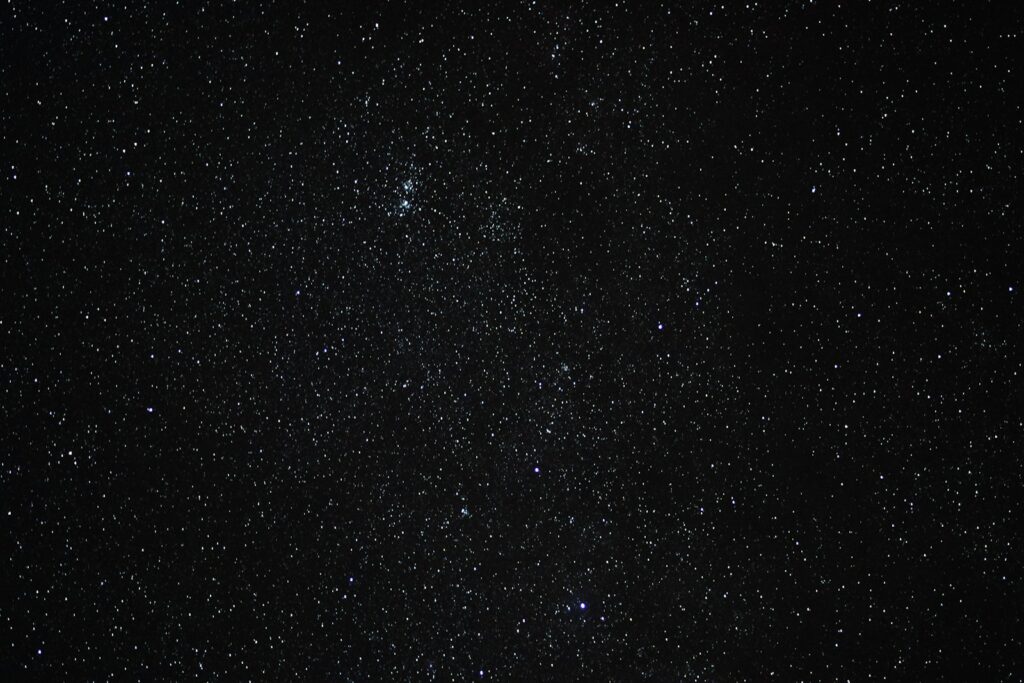
1. **Observation History of Stars**Humanity’s relationship with the stars dates back millennia, with these celestial bodies serving as pivotal elements in religious practices, divination rituals, and mythological narratives across civilizations. Beyond their cultural significance, stars were indispensable tools for practical purposes, guiding celestial navigation, marking the passage of seasons, and defining calendars. Early astronomers meticulously observed the night sky, drawing a crucial distinction between “fixed stars,” which maintained their positions on the celestial sphere, and “wandering stars”—planets—whose noticeable movements relative to the fixed background over days or weeks presented a dynamic enigma.
Ancient belief often held that stars were permanently affixed to an immutable heavenly sphere. Despite this, astronomers in various cultures began to systematically categorize and track them. Conventionally, prominent stars were grouped into asterisms and constellations, patterns utilized to monitor the motions of planets and infer the Sun’s position. This astronomical knowledge was directly applied to terrestrial life; the Sun’s motion against the background stars, coupled with its position on the horizon, was fundamental in creating calendars that regulated agricultural practices, underpinning human survival and societal organization.
One of the earliest accurately dated star charts emerged from ancient Egyptian astronomy in 1534 BC. This was followed by the first known star catalogues, compiled by Babylonian astronomers in Mesopotamia during the late 2nd millennium BC, specifically in the Kassite Period. In Greek astronomy, Aristillus, aided by Timocharis, created the first star catalogue around 300 BC. Hipparchus, in the 2nd century BC, compiled a catalogue of 1,020 stars, which subsequently informed Ptolemy’s own extensive star catalogue. Hipparchus is also famously credited with the discovery of the first recorded “nova,” or new star, signifying an early recognition of stellar variability. The enduring legacy of Greek astronomy is evident in the many constellations and star names still in use today.
Chinese astronomers demonstrated a remarkable understanding of celestial dynamics, being aware that new stars could appear, challenging the notion of an immutable cosmos. In 185 AD, they became the first to observe and document a supernova, now identified as SN 185. The brightest stellar event in recorded history, the SN 1006 supernova, was observed in 1006 by the Egyptian astronomer Ali ibn Ridwan and several Chinese astronomers. Similarly, the SN 1054 supernova, responsible for the creation of the Crab Nebula, was also carefully documented by Chinese and Islamic astronomers, highlighting their advanced observational capabilities and systematic record-keeping.
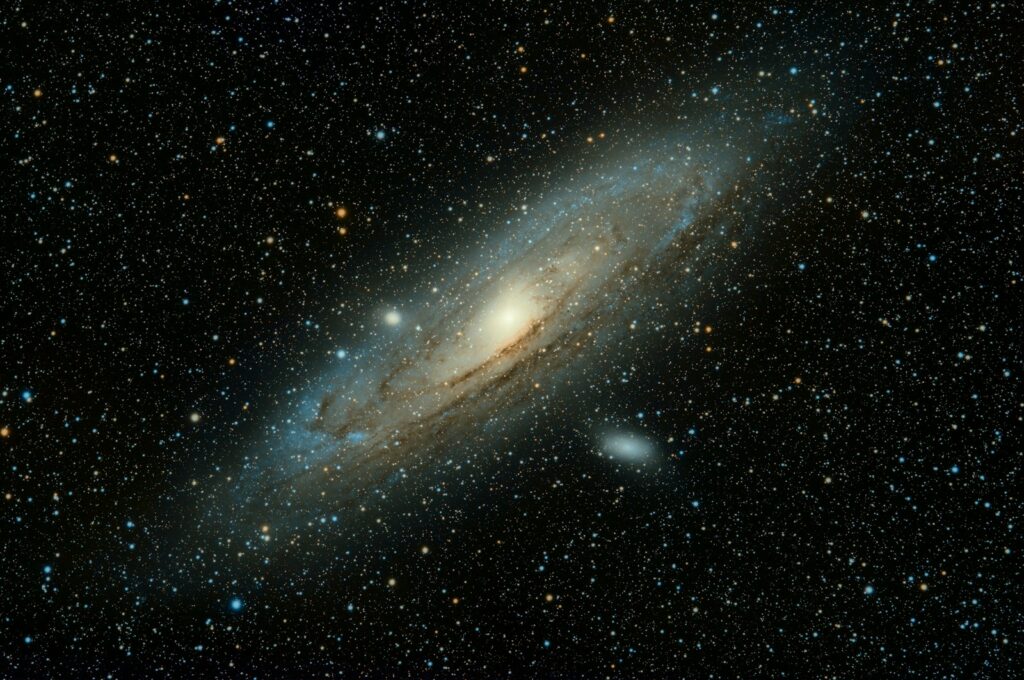
Medieval Islamic astronomers made significant contributions, bestowing Arabic names upon numerous stars that persist in modern nomenclature. They innovated a multitude of astronomical instruments designed to compute stellar positions and established the first large observatory research institutes primarily for producing detailed Zij star catalogues. A notable example is “The Book of Fixed Stars” (964) by the Persian astronomer Abd al-Rahman al-Sufi, who documented various stars, star clusters like Omicron Velorum and Brocchi’s Clusters, and even galaxies such as the Andromeda Galaxy. Scholars like Abu Rayhan Biruni and Ibn Bajjah further advanced cosmological understanding, describing the Milky Way as a collection of nebulous stars or a continuous image formed by many closely packed stars, respectively, supported by their meticulous observations.
Early European astronomers, including Tycho Brahe, similarly identified new stars (novae), reinforcing the idea that the heavens were not static. In 1584, Giordano Bruno proposed that stars were akin to our Sun, possibly orbited by other planets, even Earth-like ones—an idea echoed by ancient Greek philosophers Democritus and Epicurus, and medieval Islamic cosmologists like Fakhr al-Din al-Razi. By the 17th century, the consensus among astronomers leaned towards stars being analogous to the Sun. Isaac Newton, prompted by theologian Richard Bentley, suggested an equal distribution of stars in every direction to explain their lack of net gravitational pull on the Solar System. Observational pioneers like Geminiano Montanari (variations in Algol’s luminosity in 1667) and Edmond Halley (first proper motion measurements) further refined our understanding, demonstrating changes in stellar positions over time. William Herschel spearheaded efforts to map stellar distribution, observing an increase in star density towards the Milky Way core, a finding confirmed by his son John Herschel in the southern hemisphere. William also notably discovered physical binary star systems, not merely stars aligned by chance along the same line of sight. The pioneering work of Joseph von Fraunhofer and Angelo Secchi in stellar spectroscopy laid the groundwork for classifying stars based on their absorption lines, with Annie J. Cannon developing the modern stellar classification scheme in the early 1900s. Friedrich Bessel achieved the first direct measurement of a star’s distance (61 Cygni) in 1838 using the parallax technique, revealing the immense separations between stars. The 19th and 20th centuries saw rapid advancements, including the use of photography as an astronomical tool, the development of the Hertzsprung-Russell diagram, and crucial theoretical work on stellar interiors and evolution, notably Cecilia Payne-Gaposchkin’s 1925 thesis proposing stars are primarily composed of hydrogen and helium. These developments, coupled with quantum physics, allowed for the determination of stellar atmospheric chemical composition, bringing us closer to a profound understanding of these cosmic entities. In the present day, with the aid of gravitational lensing, a single star, Icarus, has been observed at an astonishing distance of 9 billion light-years, pushing the boundaries of what is observable.
Read more about: Inside Chris Pine’s Very Private Love Life: Unpacking the Romance and Reactions with Keana Sky Wenger
2. **Stellar Designations and Naming Conventions**The concept of constellations, prominent arrangements of stars forming recognizable patterns, has roots in the Babylonian period. Ancient sky watchers associated these patterns with aspects of nature or their mythologies. A significant twelve of these formations lay along the band of the ecliptic, forming the foundational basis for astrology. Many of the more conspicuous individual stars were given specific names, often with Arabic or Latin origins, and like certain constellations and the Sun itself, these individual stars became interwoven with unique myths and cultural narratives.
To the Ancient Greeks, certain “stars” were distinct from the fixed background; these were the “planets” (from the Greek “planētēs,” meaning “wanderer”). These wandering stars represented various important deities, from whom the names of Mercury, Venus, Mars, Jupiter, and Saturn were derived. Uranus and Neptune, though named after Greek and Roman gods, were not known in antiquity due to their low brightness, and their names were assigned by later astronomers as telescopic observations expanded our planetary knowledge.
Around 1600, a more systematic approach to stellar nomenclature began to emerge, utilizing the names of constellations to designate stars within their respective regions. The German astronomer Johann Bayer pioneered this method by creating a series of star maps and applying Greek letters as designations to the stars within each constellation, typically assigning alpha to the brightest star, beta to the second brightest, and so on. This system provided a standardized way to refer to stars based on their apparent brightness within a constellation.
Subsequently, a numbering system based on a star’s right ascension was introduced and added to John Flamsteed’s star catalogue in his 1712 edition of “Historia coelestis Britannica.” This numbering system became known as the Flamsteed designation or Flamsteed numbering, offering an alternative and often more precise method for cataloging stars, particularly those not easily distinguished by the Bayer designation or lacking proper names. These early systematic approaches were crucial for advancing astronomical research and communication.
Today, the International Astronomical Union (IAU) stands as the internationally recognized authority for naming celestial bodies, ensuring standardization and preventing ambiguity in astronomical discourse. The IAU maintains the Working Group on Star Names (WGSN), which diligently catalogs and standardizes proper names for stars, providing a definitive list for professional astronomers and the global scientific community. This centralized authority is vital for coherent research and consistent communication within astronomy.
It is important to note a distinction between scientifically recognized names and those offered by commercial entities. A number of private companies offer to “sell” or “name” stars for individuals, often providing a certificate and coordinating a star’s position. However, these names are not recognized by the IAU, professional astronomers, or the broader amateur astronomy community. The British Library describes this practice as an “unregulated commercial enterprise,” and regulatory bodies, such as the New York City Department of Consumer and Worker Protection, have issued violations against such companies for engaging in deceptive trade practices, underscoring the importance of adhering to the official, scientifically established naming conventions for celestial objects.
Read more about: Revving Up History: Unearthing the Forgotten Engines That Forged American Muscle Legends
3. **Units of Measurement in Stellar Astronomy**While fundamental physical parameters of stars can certainly be expressed using standard International System (SI) units or Gaussian units, astronomers frequently find it more practical and intuitive to express mass, luminosity, and radii in “solar units.” This convention leverages the characteristics of our own Sun as a natural benchmark, making it easier to conceptualize the vast scales involved in stellar physics. For instance, stating a star is 10 times the mass of the Sun provides a more immediate understanding than quoting its mass in kilograms, a number that would be astronomically large and unwieldy.
In 2015, the International Astronomical Union (IAU) took a crucial step towards standardizing these comparative measurements by defining a specific set of “nominal solar values.” These values are established as SI constants, meaning they are defined without uncertainties, and are intended for use when quoting stellar parameters. Specifically, the IAU defined the nominal solar luminosity (L☉) as 3.828 × 10^26 W and the nominal solar radius (R☉) as 6.957 × 10^8 m. These nominal constants provide a stable reference point, allowing for consistent comparisons across different studies and observations.
The solar mass (M☉), a critical parameter, was not explicitly defined by the IAU in the same way, primarily due to the relatively large uncertainty (10^-4) associated with the Newtonian constant of gravitation (G). However, the product of the Newtonian constant of gravitation and the solar mass together (G M☉) has been determined with much greater precision. Consequently, the IAU defined the “nominal solar mass parameter” as G M☉ = 1.327 1244 × 10^20 m^3/s^2. This highly precise parameter can then be combined with the most recent (2014) CODATA estimate of the Newtonian constant of gravitation G to derive the solar mass, which is approximately 1.9885 × 10^30 kg.
It is important to recognize that while the exact values for the Sun’s luminosity, radius, mass parameter, and mass might undergo minor adjustments in the future as observational uncertainties are reduced, the 2015 IAU nominal constants will retain their defined SI values. These nominal constants remain highly valuable as consistent measures for quoting stellar parameters, ensuring that scientific communications about stellar properties are clear, precise, and universally understood within the astronomical community. This framework allows for both scientific rigor and practical utility in describing the immense scale of stars.
For exceptionally large distances, such as the radius of a giant star or the semi-major axis of a binary star system, astronomers often employ the astronomical unit (AU). This unit is approximately equivalent to the mean distance between the Earth and the Sun, which is about 150 million kilometers or approximately 93 million miles. The astronomical unit provides a more manageable scale for expressing vast interplanetary or intra-system distances compared to using kilometers or meters. In 2012, the IAU further refined this by defining the astronomical constant as an exact length in meters: precisely 149,597,870,700 m, thus embedding this widely used unit within the SI framework with absolute precision.
Read more about: Stellar Genesis to Galactic Finale: An Industry Deep Dive into the Dramatic Lives of Cosmic Stars
4. **The Genesis of Stars: Formation from Molecular Clouds**The birth of a star, a process that underpins the very existence of galaxies and all the elements within them, begins in regions of space known as molecular clouds. Counterintuitively, these regions, despite being where stars condense from higher matter density, are still less dense than what we might consider a vacuum chamber on Earth. These sprawling cosmic nurseries are primarily composed of hydrogen, accounting for the vast majority of their mass, with a significant proportion of helium—approximately 23 to 28 percent—and only a few percent of heavier elements, which astronomers refer to collectively as “metals.”
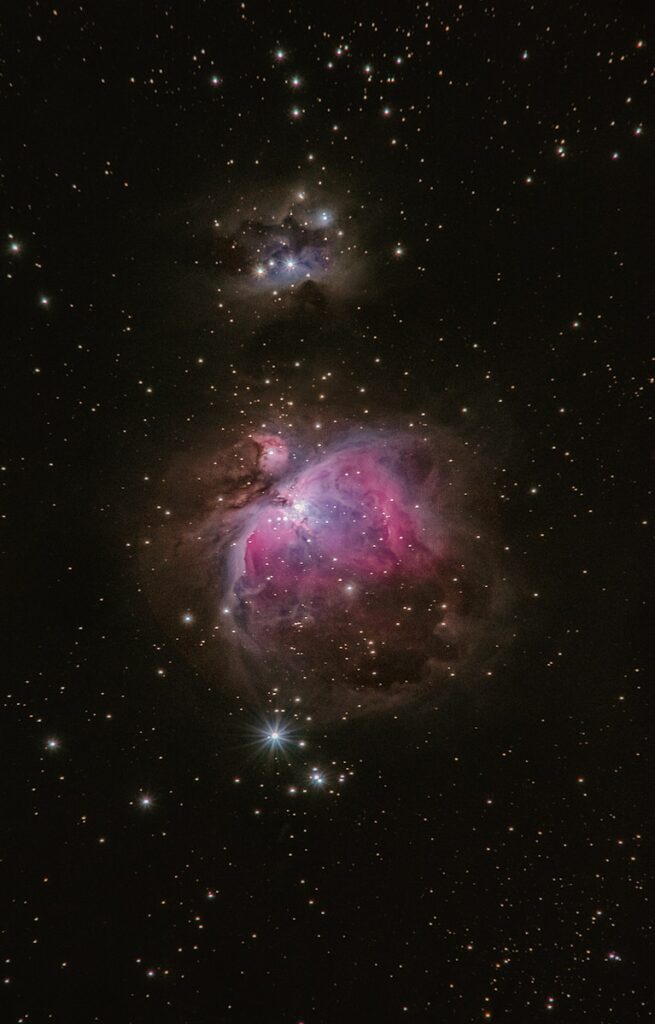
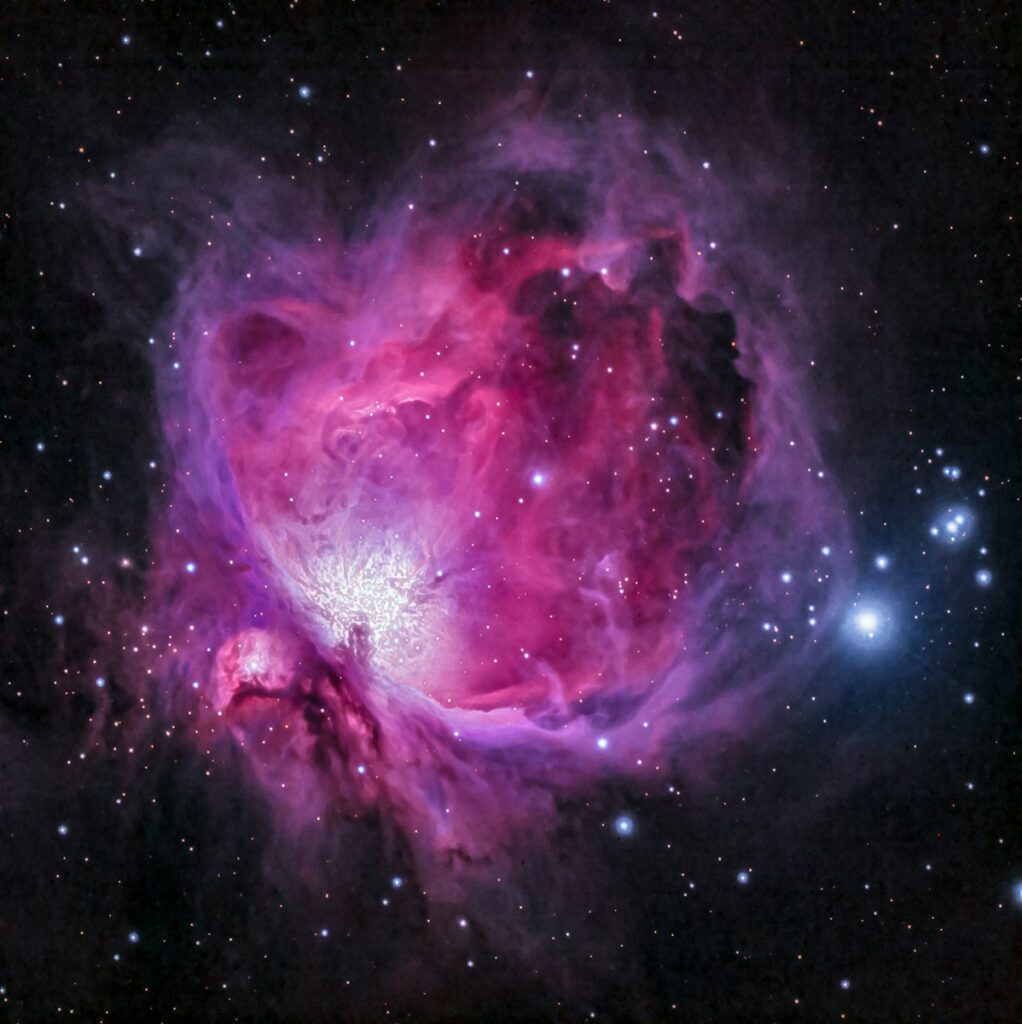
One of the most famous and visually stunning examples of such a star-forming region is the Orion Nebula, a luminous cloud of gas and dust where new stars are actively taking shape. Most stars do not form in isolation; instead, they are typically born in groups, ranging in size from a few dozens to hundreds of thousands of stars. Within these newly formed clusters, massive stars play a pivotal role in shaping their environment. Their powerful radiation can intensely illuminate the surrounding clouds, ionizing the hydrogen gas and creating what are known as H II regions. Such “feedback effects” from the star formation process can, paradoxically, ultimately disrupt the molecular cloud, potentially preventing further star formation within that specific region by dispersing the necessary raw material.
The initial spark for star formation is a gravitational instability within a molecular cloud. This instability is often triggered by the presence of regions with higher density, which can be induced by various cosmic events. These triggers include compression of clouds by radiation emanating from existing massive stars, expanding bubbles in the interstellar medium created by stellar winds or supernova remnants, the collision of different molecular clouds, or even the grand collision of entire galaxies, as observed in a phenomenon known as a starburst galaxy. These external forces provide the initial impetus for a cloud to overcome its internal pressure and begin its journey of collapse.
Once a region within the molecular cloud achieves a sufficient density of matter to satisfy the criteria for Jeans instability, it becomes gravitationally bound and commences a collapse under its own self-gravity. As the cloud material continues to collapse, individual pockets of dense dust and gas begin to coalesce, forming distinct structures known as “Bok globules.” Within these collapsing globules, as the density rapidly increases, the immense gravitational potential energy is converted into thermal energy, causing the temperature within the core to rise dramatically. This inward collapse persists until the protostellar cloud reaches a stable condition of hydrostatic equilibrium, at which point a protostar is officially formed at its core.
These nascent, pre-main-sequence stars are frequently enveloped by a swirling disk of gas and dust known as a protoplanetary disk, the very birthplace of planets. During this early phase, the protostar is primarily powered by the ongoing conversion of gravitational energy as it continues to contract. For a star similar in mass to our Sun, this period of gravitational contraction typically spans about 10 million years, while for smaller red dwarfs, this process can extend significantly, lasting up to 100 million years. The precise duration depends heavily on the star’s initial mass and composition.
Young stars with masses less than 2 M☉ are categorized as T Tauri stars, characterized by their strong stellar winds and variability, while those with greater mass are known as Herbig Ae/Be stars. A remarkable feature of these newly formed stars is their emission of powerful jets of gas along their axes of rotation. These jets are believed to play a crucial role in reducing the angular momentum of the collapsing star, preventing it from spinning apart, and they often manifest as small, glowing patches of nebulosity known as Herbig–Haro objects. These energetic jets, in conjunction with the intense radiation streaming from nearby massive stars, are instrumental in dispersing the surrounding molecular cloud from which the star was born, effectively clearing its immediate vicinity and allowing it to become fully visible.
During their early development, T Tauri stars follow what is known as the Hayashi track on the Hertzsprung-Russell diagram, a path characterized by contraction and a decrease in luminosity while their surface temperature remains relatively constant. Less massive T Tauri stars continue along this track until they reach the main sequence. More massive stars, however, diverge onto the Henyey track, where they also contract but maintain a more constant luminosity while heating up, eventually settling onto the main sequence. It is also a striking observation that most stars appear to be members of binary or multi-star systems, with the specific properties of these binaries being a direct outcome of the conditions prevalent during their formation. A gas cloud must effectively shed its angular momentum to collapse and form a star, and the fragmentation of a cloud into multiple stars provides a mechanism for distributing some of this angular momentum, making the formation of binary systems a natural consequence of stellar birth. Furthermore, primordial binaries can transfer angular momentum through gravitational interactions during close encounters with other stars in young stellar clusters, contributing to the observed distribution of binary separations, where widely separated (soft) binaries tend to split apart, and tightly bound (hard) binaries become even more so.
Read more about: Beyond the Blink: Unpacking the Multibillion-Year Epic That Costs the Universe Everything – The Life and Times of Stars
5. **The Main Sequence: A Star’s Enduring Epoch**The main sequence represents the longest and most stable phase in a star’s life, an enduring epoch during which it generates energy primarily through the nuclear fusion of hydrogen into helium within its core. This vital process occurs under conditions of immense temperature and pressure, which are sustained for billions of years. Stars in this phase are commonly referred to as dwarf stars, encompassing a wide range of sizes and luminosities, from the tiny, dim red dwarfs to our own Sun, a G-type main-sequence star, and up to much larger, brighter blue-white dwarfs.
As a star embarks on its main-sequence journey, starting at what astronomers call the “zero-age main sequence,” the proportion of helium within its core gradually increases as hydrogen is consumed. This steady accumulation of helium has several profound effects. Firstly, the rate of nuclear fusion within the core slowly intensifies, compensating for the changing composition. Secondly, the star’s internal temperature and external luminosity progressively rise over time. Our Sun, for example, is estimated to have experienced an increase in its luminosity by approximately 40% since it first reached the main sequence an estimated 4.6 billion (4.6 × 10^9) years ago, a testament to this gradual but significant evolution.
Throughout its main-sequence lifetime, every star emits a constant outflow of particles known as a stellar wind, which causes a continuous loss of gas into the surrounding space. For the vast majority of stars, this mass loss is largely negligible in terms of its overall impact on their evolution. The Sun, for instance, loses a mere 10^-14 M☉ (solar masses) each year, which translates to only about 0.01% of its total mass over its entire lifespan. However, for extremely massive stars, the rate of mass loss is significantly higher, often ranging from 10^-7 to 10^-5 M☉ annually. Such substantial mass depletion can profoundly affect their evolutionary paths, altering their eventual fates and impacting the surrounding interstellar medium. Some stars that begin with more than 50 M☉ can shed over half their total mass while still residing on the main sequence, transforming their character profoundly.
An essential factor determining the duration a star spends on the main sequence is a delicate balance between the amount of nuclear fuel it possesses and the rate at which it consumes that fuel through fusion. Our Sun, a star of moderate mass, is expected to maintain its main-sequence phase for approximately 10 billion (10^10) years. In stark contrast, massive stars, with their intense gravitational pressures and scorching core temperatures, consume their hydrogen fuel at an incredibly rapid pace, leading to relatively short and brilliant lives, often lasting only a few million years. Conversely, low-mass stars, particularly red dwarfs, conserve their fuel with remarkable efficiency.
Stars less massive than 0.25 M☉, known as red dwarfs, are exceptionally long-lived because they are fully convective. This means they can efficiently mix their internal material, effectively fusing nearly all of their hydrogen fuel throughout the entire star, unlike more massive stars that only fuse hydrogen in a central core. Stars with a mass comparable to the Sun (about 1 M☉) can only fuse approximately 10% of their total mass. The combination of slow fuel consumption and a relatively large usable fuel supply allows low-mass stars to endure for truly astronomical timescales, estimated to be around one trillion (10^12) years. The most extreme red dwarfs, with masses as low as 0.08 M☉, are projected to shine for an astounding 12 trillion years, far exceeding the current age of the universe. As they slowly accumulate helium in their cores, red dwarfs become hotter and slightly more luminous. When their hydrogen fuel is finally exhausted, they simply contract into a white dwarf and slowly fade in temperature, without undergoing the dramatic giant phases of more massive stars. Given that the lifespan of such stars vastly exceeds the current age of the universe (estimated at 13.8 billion years), no stars with masses under approximately 0.85 M☉ are expected to have yet transitioned off the main sequence, meaning they will continue to shine as stable dwarfs for eons to come.
Beyond mass, the presence of elements heavier than helium—which astronomers collectively term “metals”—plays a significant role in stellar evolution. The chemical concentration of these elements in a star is referred to as its metallicity. A star’s metallicity can influence the rate at which it burns its fuel, thereby affecting its main-sequence lifetime. Furthermore, metallicity controls the formation and strength of a star’s magnetic fields, which in turn impact the intensity of its stellar wind. Older, “population II” stars typically exhibit substantially lower metallicity compared to younger, “population I” stars. This difference arises from the composition of the molecular clouds from which they formed; over cosmic time, these clouds become increasingly enriched in heavier elements as older stars complete their lives, shedding portions of their chemically processed atmospheres back into the interstellar medium, which then provides the raw material for new generations of stars, leading to a gradual increase in average stellar metallicity across the universe.
Read more about: Cosmic Dramas: Unveiling the Profound Forces That Transform a Star’s ‘Dream House’ Across Billions of Years

6. **Post-Main Sequence Evolution: The Red Giant Transformation**Once stars with at least 0.4 M☉ exhaust the primary supply of hydrogen fuel in their core, their long, stable main-sequence life concludes, initiating a dramatic transformation into a red giant. This phase begins as the hydrogen fusion ceases in the core, causing the core to contract under gravity. As the core shrinks and heats up, it ignites hydrogen fusion in a shell surrounding the inert helium core. This shell burning generates a tremendous amount of energy, pushing the star’s outer layers outward, causing them to expand enormously and cool significantly, leading to the characteristic red hue and immense size of a red giant. Our Sun, for instance, in about 5 billion years, will enter this helium-burning phase, expanding to a maximum radius of approximately 1 astronomical unit (150 million kilometers), roughly 250 times its current size, and losing about 30% of its current mass in the process.
In some cases, as the core continues to contract and heat further, the star may begin to fuse heavier elements, either in the core itself or in additional shells surrounding the core. As these stars swell to colossal sizes, they undergo significant mass loss, shedding part of their outer envelopes into the interstellar environment. This ejected material is enriched with the heavier elements that have been synthesized within the star’s core, such as carbon and oxygen. These enriched elements are then recycled, becoming the raw material for the formation of future generations of stars, planets, and potentially, life. This cyclical process highlights the star’s role as a cosmic alchemist.
As the hydrogen-burning shell continuously produces more helium, the inert helium core steadily increases in mass and temperature. For red giants with masses up to about 2.25 M☉, the helium core eventually becomes degenerate, meaning its electrons are packed so densely that quantum mechanical effects prevent further collapse, even as temperature rises. Finally, when the temperature within this degenerate core reaches a critical threshold, helium fusion ignites explosively in an event known as a “helium flash.” This sudden burst of energy causes the star to rapidly shrink in radius and significantly increase its surface temperature, moving it to a new region on the Hertzsprung-Russell (HR) diagram called the horizontal branch, where it stabilizes again, now fusing helium in its core.
For more massive stars, the evolutionary path differs slightly. In these stars, helium core fusion commences before the core becomes degenerate, avoiding the explosive helium flash. Instead, these stars spend an extended period in what is called the “red clump” phase, steadily burning helium in their cores. During this phase, their outer convective envelope may still be expanding, but the onset of stable core helium fusion provides a temporary period of stability. Following this, the outer convective envelope eventually collapses, and the star then transitions to the horizontal branch, similar to its lower-mass counterparts, albeit through a less dramatic ignition process. These distinctions underscore how a star’s initial mass profoundly influences its post-main sequence journey.
After a star has exhausted the helium in its core, it embarks on another significant evolutionary stage, following an evolutionary path known as the asymptotic giant branch (AGB). This phase parallels the earlier red-giant phase but is characterized by even higher luminosity. During the AGB phase, the star begins fusing helium along a shell surrounding a hot, inert carbon-oxygen core, and may also have an outer hydrogen-fusing shell. More massive AGB stars might even undergo a brief period of carbon fusion before their core becomes degenerate, pushing the boundaries of elemental synthesis within the star. This phase is marked by intense thermal pulses, which are instabilities in the star’s core that cause its luminosity to vary dramatically and trigger significant episodes of mass ejection from its atmosphere, ultimately leading to the formation of a beautiful and transient planetary nebula. As much as 50 to 70% of a star’s initial mass can be shed during this mass loss process, enriching the surrounding interstellar medium with the products of fusion dredged up from the core. Therefore, the dispersing planetary nebula is rich in elements like carbon and oxygen, becoming part of the cosmic material from which future stars and planetary systems will form, emphasizing that all future generations of stars are indeed made of the “star stuff” from past stellar lives.

7. **The Destinies of Massive Stars: From Supergiants to Explosions**The evolutionary paths of massive stars, those generally possessing a minimum mass of approximately 8 M☉ (solar masses) or more, diverge significantly from their less massive counterparts, leading to some of the most spectacular and violent phenomena in the universe. During their helium-burning phase, a star with more than 9 solar masses will expand dramatically, initially forming a blue supergiant, characterized by immense size and high surface temperature, before transitioning into an even larger and cooler red supergiant. These are among the largest stars in the universe by volume, overshadowing even our Sun many hundreds of times over.
However, exceptionally massive stars, those exceeding 40 solar masses (such as Alnilam, the central blue supergiant in Orion’s Belt), often do not become red supergiants. This deviation is attributed to their incredibly high rates of mass loss, driven by intense stellar winds and radiation pressure. Instead, these giants may evolve into a Wolf–Rayet star, a rare class of luminous, hot stars characterized by spectra dominated by broad emission lines of elements heavier than hydrogen. These heavy elements reach the surface due to strong convection within the star and intense mass loss, or sometimes from the stripping away of their outer hydrogen layers, revealing the processed material beneath. These stars are true cosmic behemoths, living fast and dying young.
Once helium is exhausted in the core of a massive star, the core continues to contract, and the immense gravitational pressure causes the temperature and density to rise further, reaching conditions sufficient to ignite the fusion of progressively heavier elements. The carbon-burning process begins, followed by the neon-burning process, the oxygen-burning process, and finally, the silicon-burning process. This sequential fusion creates an ‘onion-like’ layered structure within the star’s core, with each concentric shell fusing a different element. The outermost shell continues to fuse hydrogen, followed by a helium-fusing shell, then carbon, neon, oxygen, and silicon, progressively inward towards the core. This intricate layering represents the star’s desperate attempt to maintain hydrostatic equilibrium against the relentless pull of gravity by burning increasingly heavier fuels.
The ultimate and most critical stage of this elemental fusion sequence occurs when a massive star begins producing iron in its innermost core. Iron nuclei are unique in that they are more tightly bound than any heavier nuclei. This means that any fusion reactions involving iron do not release a net amount of energy; instead, they consume energy. Once the core becomes predominantly iron, the star reaches an existential crisis. It can no longer generate the outward pressure needed from fusion to counteract its own immense gravity, setting the stage for an inevitable and catastrophic collapse.
Some massive stars, particularly luminous blue variables, exhibit extreme instability. They can violently shed vast amounts of their mass into space in events known as supernova impostors, temporarily becoming significantly brighter in the process. A famous example is Eta Carinae, which underwent the “Great Eruption” in the 19th century, a spectacular event that saw it briefly become one of the brightest objects in the night sky, illustrating the highly volatile nature of these stellar giants. These pre-supernova outbursts underscore the immense energies at play in the final stages of a massive star’s life before its ultimate demise in a cosmic firework.”
Read more about: Beyond the Blink: Unpacking the Multibillion-Year Epic That Costs the Universe Everything – The Life and Times of Stars

8. **Stellar Collapse: From Planetary Nebulae to Supernovae**The final stages of a star’s life are marked by dramatic transformations after nuclear fuel exhaustion. As a star’s core shrinks, the intensity of radiation from its surface increases. This creates immense pressure, pushing the outer gas layers away to form a planetary nebula.
A planetary nebula is a shell of ionized gas expelled by a dying star, enriching the interstellar medium with synthesized elements like carbon and oxygen. These become raw material for future stars and planetary systems. The core’s ultimate fate depends on its remaining mass.
If the remnant core possesses less than approximately 1.4 solar masses (M☉), it shrinks to form a tiny, Earth-sized white dwarf. This is a common endpoint for low-to-intermediate mass stars.
Read more about: Stellar Genesis to Galactic Finale: An Industry Deep Dive into the Dramatic Lives of Cosmic Stars
9. **White Dwarfs: The Fading Embers of Low-Mass Stars**White dwarfs are remarkable stellar remnants, characterized by incredible density and unique internal matter. Within, matter exists as electron-degenerate matter, where packed electrons prevent further gravitational compression, supporting the star against collapse.
Lacking mass for further fusion, a white dwarf slowly radiates residual heat over immense timescales. These objects represent the final evolutionary stage for stars up to about 8 M☉, which shed outer layers as planetary nebulae, leaving a degenerate carbon-oxygen core.
Over eons, white dwarfs are expected to gradually cool, eventually fading into hypothetical “black dwarfs.” The universe is not yet old enough for black dwarfs to exist, making white dwarfs a profound testament to the ultimate destiny of most stars.
10. **Neutron Stars and Black Holes: The Extreme Endpoints of Massive Stellar Collapse**For stars significantly more massive than the Sun (exceeding ~8 M☉), evolution culminates dramatically. Fusion progresses through heavier elements until an iron core forms. Iron nuclei are unique: fusion beyond them consumes, rather than releases, energy. Once predominantly iron, the core can no longer generate outward pressure against gravity, leading to catastrophic collapse.
This causes a sudden core collapse. As the iron core shrinks, electrons are driven into protons, forming neutrons, neutrinos, and gamma rays. The rebound generates an enormous shockwave, causing the star to explode in a spectacular supernova.
Supernovae are among the universe’s most energetic phenomena, briefly outshining entire galaxies. Historically, events in the Milky Way were observed as “new stars.” The explosion blasts away outer layers, leaving a profound remnant.
The remnant’s nature depends on the collapsed core’s mass. If between ~1.4 M☉ and ~4 M☉, it compresses into a neutron star (sometimes a pulsar or X-ray burster). If the largest stars’ core exceeds ~4 M☉, gravitational collapse forms a black hole, an object with gravity so intense nothing can escape.
11. **Binary Star Systems: Gravitational Dances and Evolutionary Influences**Star evolution is often not solitary; a significant proportion exist within binary or multi-star systems. Here, gravitationally bound stars orbit a common center. A companion profoundly alters a star’s evolutionary path, diverging significantly from single stars, making this interplay a crucial area of research.
Close binary interaction can cause a star to expand into a red giant, potentially overflowing its Roche lobe. If stars are close enough, material transfers to the companion. This mass transfer gives rise to phenomena like contact binaries, common-envelope binaries, cataclysmic variables, novae, and certain supernovae.
Such mass transfer leads to puzzles like the “Algol paradox,” where the more evolved star is paradoxically less massive. This occurs when the initially more massive star evolved faster, expanded, and transferred mass. Gravitational interactions also transfer angular momentum, influencing binary separation.
Binary and higher-order star systems are intensely studied for their influence on cosmic phenomena. They are implicated in specific star types, space enrichment with nucleosynthesis products, and progenitors of certain supernovae. Mass transfer through gravitational stripping is even considered essential to explain evolved massive stars and supernovae.

12. **The Distribution of Stars: From Galaxies to Clusters**Stars are not uniformly spread, but grouped into galaxies with interstellar gas and dust. A typical large galaxy, like the Milky Way, contains hundreds of billions of stars. Over 2 trillion (10^12) galaxies exist, though most are smaller.
Between 10^22 and 10^24 stars likely populate the cosmos—more than all Earth’s sand grains. Most stars reside within galaxies, yet 10-50% of starlight in large galaxy clusters may originate from stars outside any defined galaxy.
Multi-star systems consist of two or more gravitationally bound stars orbiting each other; binary stars are simplest and most common. For stability, these often organize into hierarchical arrangements. Larger groups are called star clusters.
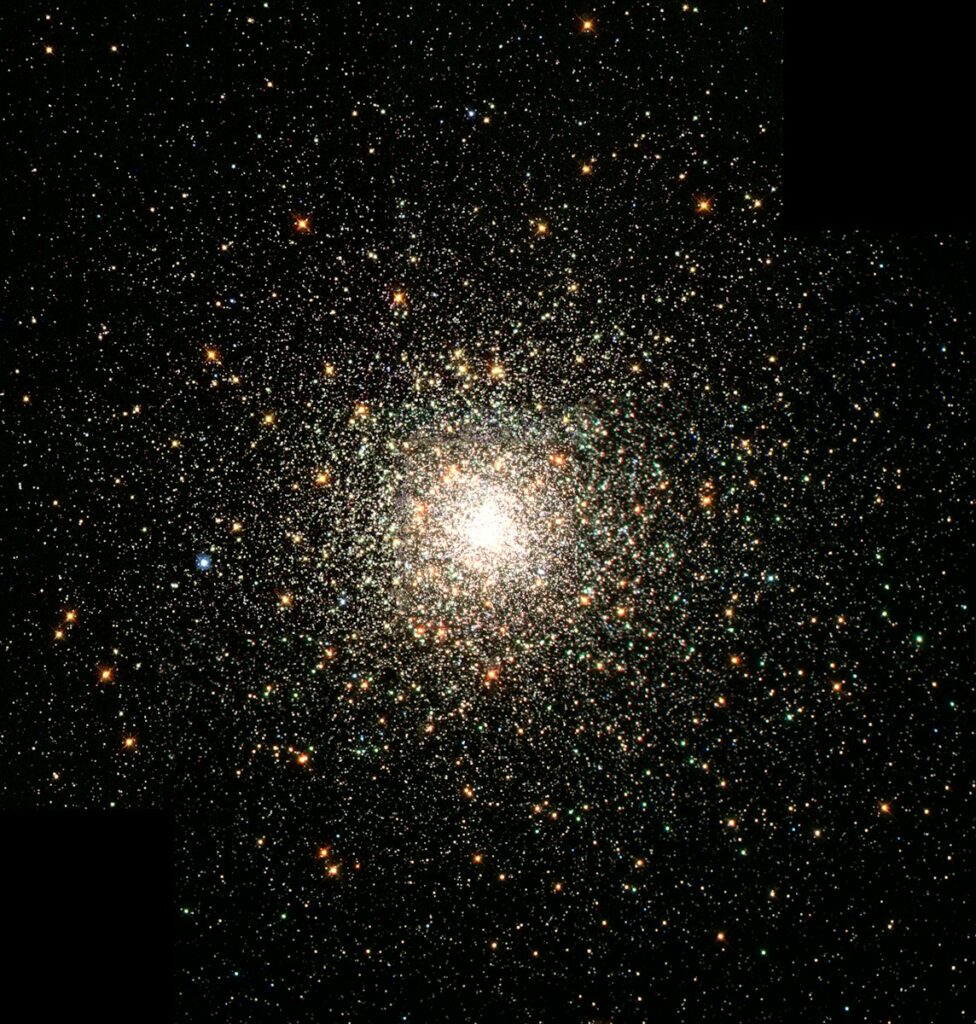
Clusters range from loose stellar associations to open clusters (dozens to thousands), culminating in immense globular clusters (hundreds of thousands). Cluster stars share a common origin, exhibiting similar ages and compositions. Most stars, especially massive O and B class (up to 80%), likely originated in multiple systems. The proportion of single stars increases with decreasing mass; over two-thirds of Milky Way stars are likely single red dwarfs.
Read more about: Beyond the Blink: Unpacking the Multibillion-Year Epic That Costs the Universe Everything – The Life and Times of Stars
13. **Defining Stellar Attributes: Characteristics of Celestial Bodies**Understanding a star involves a comprehensive grasp of its intrinsic properties, defining its nature and evolutionary stage. Astronomers determine characteristics including mass, age, metallicity, variability, distance, and motion through space. These are inferred from observations of a star’s apparent brightness, spectrum, and changes in its sky position over time.
Each characteristic provides vital clues about a star’s past, present, and future. Mass is the single most dominant factor dictating a star’s entire lifecycle. Age is estimated by comparing observed properties to theoretical models. Metallicity reveals insights into its formation environment and cosmic timeline, with older “population II” stars having lower metallicity than younger “population I” stars.
Distances are measured using parallax; motion (kinematics) by celestial position changes and spectroscopic analysis. Other properties like diameter, rotation rate, magnetic field strength, and surface temperature are also crucial. These attributes paint a holistic portrait, allowing scientists to unravel complex processes governing stellar existence and cosmic role.
14. **Radiation, Classification, and Variability: Unveiling Stellar Secrets**The light emitted by stars, observed as apparent brightness, is a powerful conduit for understanding their fundamental physics. This radiation, across the electromagnetic spectrum, carries vast information about a star’s surface temperature, chemical composition, and internal structure. Stellar spectra, in particular, have revolutionized classification.
Pioneered by Fraunhofer and Secchi, stellar spectroscopy analyzes dark absorption lines in a star’s spectrum, caused by atmospheric elements. Annie J. Cannon developed the modern classification system (early 1900s), categorizing stars by temperature and color into types like O, B, A, F, G, K, and M. Our Sun is a G-type main-sequence star.
Beyond static characteristics, many stars exhibit luminosity variability, known as variable stars. They undergo periodic or irregular brightness changes due to pulsations, eclipses, or eruptive events. Examples include Cepheid variables (crucial for cosmic distances) and Algol. Hipparchus is credited with the first recorded “nova.”
The study of variable stars provides critical insights into stellar interiors, evolutionary stages, and dynamic processes. Supernovae, explosive deaths of massive stars, represent the most extreme stellar variability, briefly outshining entire galaxies. These phenomena underscore the dynamic universe, revealing secrets through light fluctuations across vast cosmic distances.
As we conclude this profound journey, it’s clear these celestial beacons are far more than mere points of light. From genesis to dramatic finales, stars are the universe’s architects. They forge elements essential for life, sculpt the interstellar medium, and serve as cosmic clocks. Our ongoing scientific endeavors deepen our appreciation for their intricate roles and breathtaking beauty, reminding us of our profound connection to “star stuff.”