
Alright, listen up, movie buffs and casual viewers alike! We all know that making a film is a colossal undertaking. It’s a journey filled with passion, countless hours of dedication, and often, millions of dollars. From the first flicker of an idea in a script to the grand premiere on the silver screen, cast and crew pour years of their lives into bringing a singular vision to life. You’d think, after all that, every director would stand proudly by their cinematic creation, wouldn’t you?
Well, buckle up, because today we’re diving deep into the fascinating, and frankly, sometimes hilarious, world of directors who ended up hating their own movies! It’s not always about box office flops, either. Sometimes, it’s deep-seated creative differences, relentless studio interference, or simply a feeling of regret over an early artistic decision. These are the moments when a filmmaker, the very person who arguably spends the most time shaping a project, looks at the final cut and thinks, “Nope, that’s not it.”
We’re talking about an exclusive club of visionary artists who, despite their incredible talents, found themselves so disillusioned with their own work that they’ve disowned it, trashed it in interviews, or even tried to scrub their names from the credits! It’s a wild ride through Hollywood’s most surprising creative conflicts, proving that even the most celebrated filmmakers aren’t immune to a serious case of cinematic buyer’s remorse. Let’s peel back the curtain and see which legendary directors wanted a do-over!
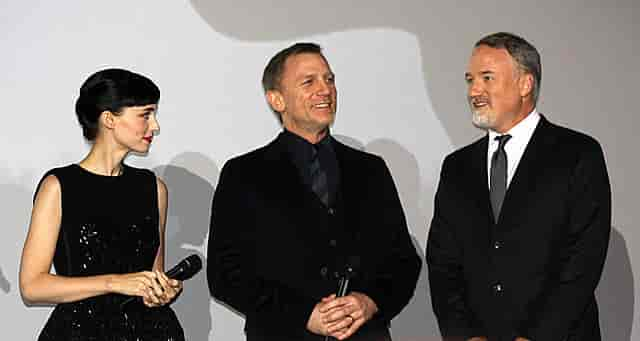
1. **David Fincher – Alien 3 (1992)**Imagine this: you’re just starting out, fresh-faced and eager, and you land the directorial gig for a sequel in one of cinema’s most iconic sci-fi franchises. Sounds like a dream, right? Not for David Fincher. His experience with “Alien 3” was, to put it mildly, a nightmare. He walked into the project with a mere five weeks of preparation, an unfinished script, and frankly, not enough industry clout to truly call the shots. The production was, from all accounts, deeply troubled.
Fincher, who would later become renowned for masterpieces like “Seven” and “Fight Club,” has been incredibly vocal about his disdain for “Alien 3.” He famously described the experience as “a prison sentence” and unequivocally stated that he was never proud of the film. The theatrical cut was ultimately taken out of his hands, meaning the final product that audiences saw didn’t truly reflect his artistic vision. It’s a painful reminder of what happens when a director loses control.
His frustration runs so deep that even years later, promoting other acclaimed films, Fincher continued to express his profound regret. In 2009, while discussing “The Curious Case of Benjamin Button,” he elaborated, “I had to work on it for two years, got fired off it three times and I had to fight for every single thing. No one hated it more than me; to this day, no one hates it more than me.” That’s a pretty strong statement from someone known for his meticulous perfectionism, isn’t it?
Fincher has largely disowned the project, often refusing to discuss it in detail. Even an “Assembly Cut” released years later, which aimed to restore some of his original intentions, didn’t change his opinion. For him, it remains an early stumble, a film he wished he could erase from his impressive filmography. It’s a classic tale of a promising director clashing with a studio, resulting in a film neither side truly loved.
Read more about: Beyond the Hype: 14 Critically Panned Sci-Fi Gems You Absolutely Need to See Right Now
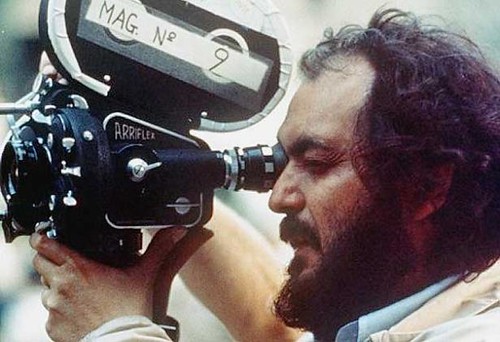
2. **Stanley Kubrick – Fear and Desire (1953)**When you hear the name Stanley Kubrick, you probably think of cinematic genius: “2001: A Space Odyssey,” “The Shining,” “Dr. Strangelove.” Masterpieces, all of them. But even the most renowned perfectionists have skeletons in their closets, or in Kubrick’s case, a film he wished had never seen the light of day. That blotch on his otherwise spotless filmography was his cinematic debut, “Fear and Desire.”
Kubrick was so profoundly embarrassed by this low-budget war film, made for under $10,000, that he spent years actively trying to suppress it. The film, which featured abstract ideas and surrealist storytelling, was seen by Kubrick himself as utterly amateurish. He wasn’t just mildly displeased; he considered it a serious effort, ineptly done.
His disdain was so intense that reports emerged in the 1960s that Kubrick had actually destroyed the original negative print, hoping to eradicate all leftover copies. He described it as “a bumbling amateur film exercise” and refused to allow it to be widely distributed for decades. Imagine having the power to make your own work disappear, and using it for your debut!
While some critics have since attributed historical significance to the film, Kubrick himself viewed it as an early mistake, best left unseen. Even as his stature as a director grew and his later films became undeniable masterpieces, “Fear and Desire” remained a stain in his own eyes. It just goes to show that even the greatest artists have humble, and sometimes regrettable, beginnings.
Read more about: Beyond the Big Screen: 14 Visionary Directors Who Revolutionized Filmmaking Forever

3. **Josh Trank – Fantastic Four (2015)**Here’s a story that went viral before the film even hit theaters! Josh Trank’s “Fantastic Four” reboot was supposed to be a big deal. With some of Hollywood’s most promising actors – Michael B Jordan, Miles Teller, Kate Mara, and Jamie Bell – and Trank himself fresh off the runaway success of “Chronicle,” everything looked good on paper. But then, during post-production, everything just… fell apart.
Trank made headlines when he dramatically disowned his own film on Twitter just a month before its premiere. He claimed that the studio, Fox, had utterly ruined what could have been “a fantastic version” of “Fantastic Four.” The production was plagued by extensive reshoots and rewrites, and the resulting film was widely criticized as confusing and joyless, a far cry from what Trank had envisioned.
His infamous tweet read, “A year ago I had a fantastic version of this. And it would’ve received great reviews. You’ll probably never see it. That’s reality though.” The tweet was quickly deleted, but the damage was done, not just to the film, which tanked at the box office (making between $5m and $10m), but also to Trank’s burgeoning career. It’s a stark example of a director losing a creative battle and publicly expressing his pain.
For many, Trank’s public condemnation of his own film remains one of the most dramatic in recent memory, highlighting the intense struggles filmmakers can face when their vision clashes with studio demands. You can even tell which scenes were reshot because, as the context points out, Kate Mara’s wig looked awful and Miles Teller had varying lengths of stubble. Details, people, details! It’s clear that Trank felt robbed of his artistic integrity.

4. **Alan Taylor – Thor: The Dark World (2013)**Coming off the immense critical acclaim of television hits like “Game of Thrones” and “The Sopranos,” Alan Taylor seemed like a perfect fit to direct “Thor: The Dark World.” Marvel was a powerhouse, and Taylor had a knack for epic storytelling. However, his experience in the Marvel Cinematic Universe turned out to be creatively stifling, leaving him deeply frustrated with the final product.
Taylor later criticized the project, admitting that his directorial vision was heavily reshaped during post-production. He expressed his disappointment, saying, “The Marvel experience was particularly wrenching because I was sort of given absolute freedom while we were shooting, and then in post it turned into a different movie.” This divergence between his on-set freedom and the final edited version was a huge source of discontent.
Despite being part of the wildly successful Marvel Cinematic Universe, “Thor: The Dark World” didn’t quite sit well with many fans, and certainly not with Taylor himself. He has since expressed deep regret, stating, “So, that is something I hope never to repeat and don’t wish upon anybody else.” That’s a powerful warning from a director about the perils of losing creative control.
Marvel’s famously tight control over its overarching storytelling and narrative left Taylor feeling more like a hired hand than a true auteur. The experience was so jarring that he openly acknowledged the movie didn’t reflect his true intentions. It’s a fascinating look at how even within a successful franchise, individual artistic visions can be sidelined, leading to a director’s profound dissatisfaction.

5. **David Lynch – Dune (1984)**Ah, David Lynch. The name itself conjures images of surrealism, mystery, and brilliant, unsettling cinema. After the undeniable success of his Oscar Best Picture winner, “The Elephant Man,” Lynch could have had his pick of projects. In a surprising turn, he agreed to adapt Frank Herbert’s epic sci-fi novel, “Dune,” even choosing it over directing “Return of the Jedi.” What a choice, right?
However, this decision would become one of his biggest professional regrets. Despite turning in over five drafts of the screenplay and considerable preparation, the final results were far from satisfactory for the director. Lynch himself admitted, “I started selling out on Dune. Looking back, it’s no one’s fault but my own. I probably shouldn’t have done that picture, but I saw tons and tons of possibilities for things I loved, and this was the structure to do them in.”
“Dune” became a critical and commercial failure, and what made it even worse for Lynch was the fact that he never had final cut. That crucial lack of control meant the film released to audiences was one he didn’t even recognize as his own. It’s the ultimate artistic heartbreak when your name is on a project that doesn’t embody your vision.
Lynch fans often, perhaps purposely, ignore his involvement with “Dune.” Over the years, he has repeatedly declined offers to revisit or re-cut the film, often claiming he doesn’t even want to think about it. In his mind, “Dune” never truly belonged to him. It’s a powerful testament to how creative ownership, or the lack thereof, can deeply impact a director’s feelings towards their own work. Talk about a missed opportunity that still stings!
Alright, movie lovers, we’ve already taken a deep dive into some wild tales of directors who just couldn’t stand their own cinematic creations. From legendary auteurs to blockbuster hitmakers, the struggle for artistic integrity is real! But the story doesn’t end there. Sometimes, it’s not just about a director getting a rough start or battling a mega-studio on a tentpole film. Sometimes, it’s about walking away entirely, making compromises, or simply losing the plot thanks to unforeseen circumstances.
We’re about to peel back another layer of Hollywood’s creative conflicts, showcasing more visionary artists who, for various reasons, ended up looking at their finished films and thinking, “Nope, this just isn’t me.” Get ready for Part 2, where we explore even more fascinating instances of filmmakers distancing themselves from the very projects they brought to life!
Read more about: Beyond the Blockbusters: 14 Forgotten Sci-Fi Gems Every Fan Needs to Discover Now!

6. **Tony Kaye – American History X (1998)**Now, this one is a head-scratcher for many, because “American History X” is, by all accounts, a critically acclaimed film! It even nabbed an Oscar nomination for Edward Norton. So, why would a director want to distance himself from such a powerful and impactful movie? Well, prepare yourself, because Tony Kaye’s story is one of the most dramatic and public battles between a director, his star, and the studio.
Kaye was in an intense clash with actor Edward Norton and New Line Cinema over the final cut of the film. He felt so strongly that the studio’s version didn’t reflect his true vision that he went to extraordinary lengths to reject it. This wasn’t just a quiet disagreement behind closed doors; Kaye took his fight public in a massive way.
He famously demanded his name be removed from the film’s credits. When that wasn’t granted, he even tried to replace his official director credit with the utterly unforgettable pseudonym, “Humpty Dumpty”! The Directors Guild of America, however, wasn’t having any of it, refusing to allow him to change his name. Kaye even wrote multiple open letters, published in the trade press, telling people to actively avoid watching the final version of his own film, and had it pulled from the Toronto International Film Festival. Talk about conviction! Even years later, in an interview, he recounted, “I had tried to get my name taken off it, and replaced with various pseudonyms. One was ‘Humpty Dumpty’. Another was ‘Ralph Coates’, who played for Tottenham in the 1970s.” That level of bitterness over a film’s final cut is almost unheard of, especially when the movie is hailed as a masterpiece by many.
Read more about: The Director’s Chair: Unpacking the High-Stakes World of Hollywood Firings and How Creative Differences Reshaped Cinematic History
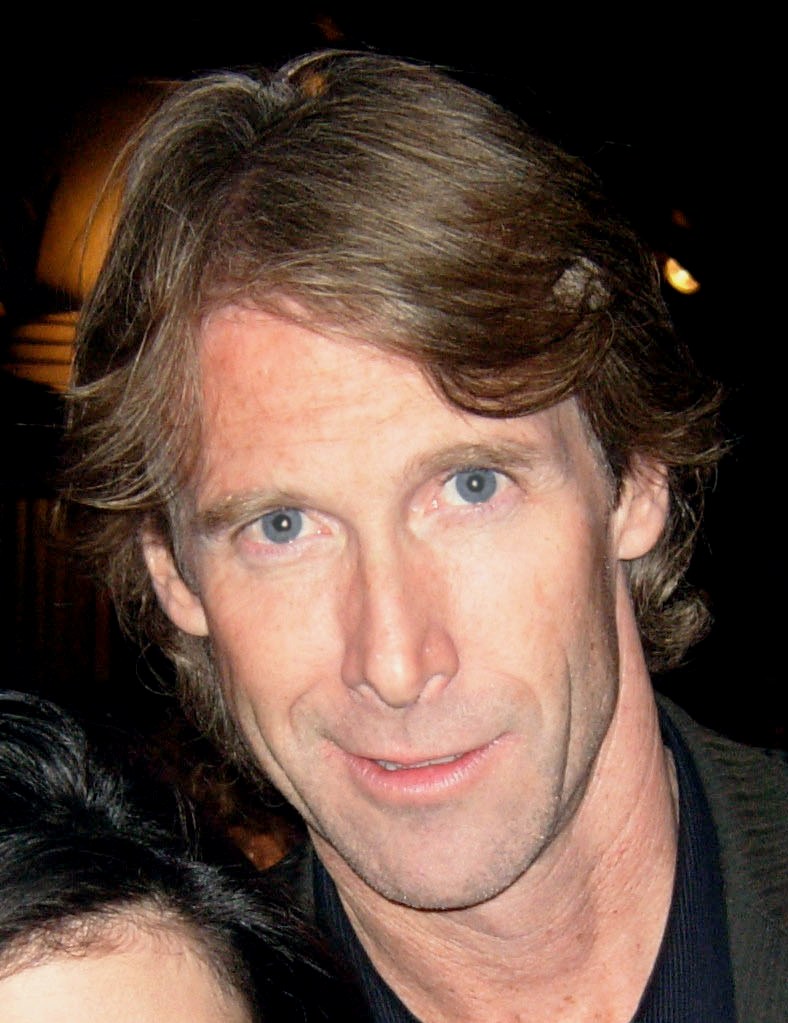
7. **Michael Bay – Transformers: Revenge of the Fallen (2009)**Here’s a director who knows a thing or two about making movies that rake in colossal amounts of cash, even if critics aren’t always on board. Michael Bay is synonymous with explosive blockbusters, and his “Transformers” franchise is a prime example. Yet, when it came to “Transformers: Revenge of the Fallen,” even Bay himself couldn’t sugarcoat his feelings about the final product. Despite its monumental box office success, he’s openly admitted that, creatively, it was a colossal mess.
So, what went wrong with a film that made a ton of money? Blame the unfortunate timing of the 2007-2008 Writers Guild strike. Bay and his team were left scrambling to cobble together a coherent script in an incredibly tight timeframe, a situation he clearly resented. This rushed process resulted in what he himself called a “bloated, chaotic blockbuster” that lacked substance and clear storytelling.
He wasn’t shy about his disdain, stating in 2011, “When I look back at it, that was crap.” He further elaborated, “The writers’ strike was coming hard and fast. It was just terrible to do a movie where you’ve got to have a story in three weeks. I was prepping a movie for months where I only had 14 pages of some idea of what the movie was. It’s a BS way to make a movie.” It’s a rare and honestly, pretty refreshing, moment when a director of such high-grossing films so candidly critiques his own billion-dollar baby. Bay’s honesty highlights that even for films that hit big financially, creative satisfaction isn’t always part of the package.
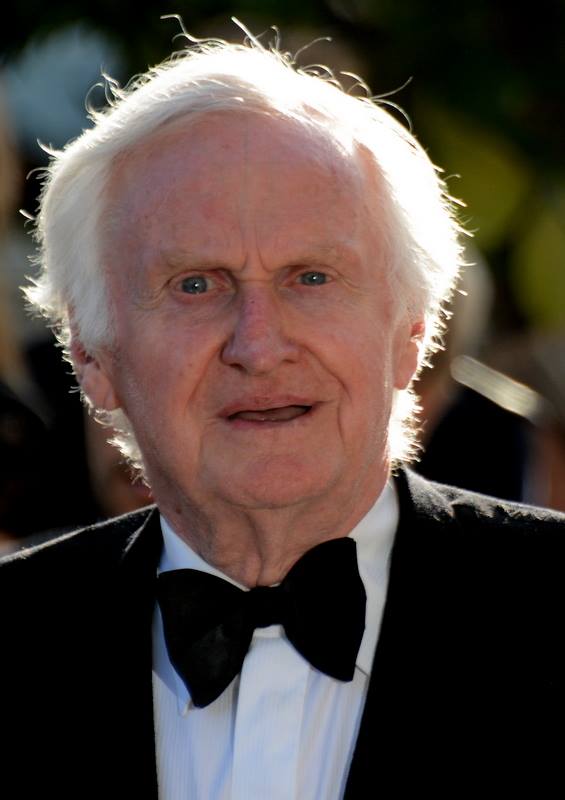
8. **John Boorman – Exorcist II: The Heretic (1977)**Following up on a masterpiece is arguably one of the toughest gigs in Hollywood, and John Boorman learned this the hard way with “Exorcist II: The Heretic.” How do you create a sequel to a film as universally revered and terrifying as “The Exorcist”? It turns out, you don’t always succeed, and Boorman himself admitted that taking on the project “was a terrible mistake.” He openly wished he had never taken it on, which is quite the statement from a director.
Boorman’s approach was distinctly more abstract and dreamlike than the grounded terror of the original, a stylistic choice that ultimately confused and alienated audiences. He later acknowledged that he profoundly misjudged what fans were looking for in a follow-up to such a genre-defining film. The backlash was immediate and severe, with critics and viewers alike struggling to connect with his vision.
Despite some later attempts by a small cult following to reappraise the film, Boorman himself has remained resolute. He has made it abundantly clear that “Exorcist II” is not a film he looks back on fondly. It stands as a testament to the immense pressure of living up to a beloved original and the director’s ultimate disappointment with his own contribution.
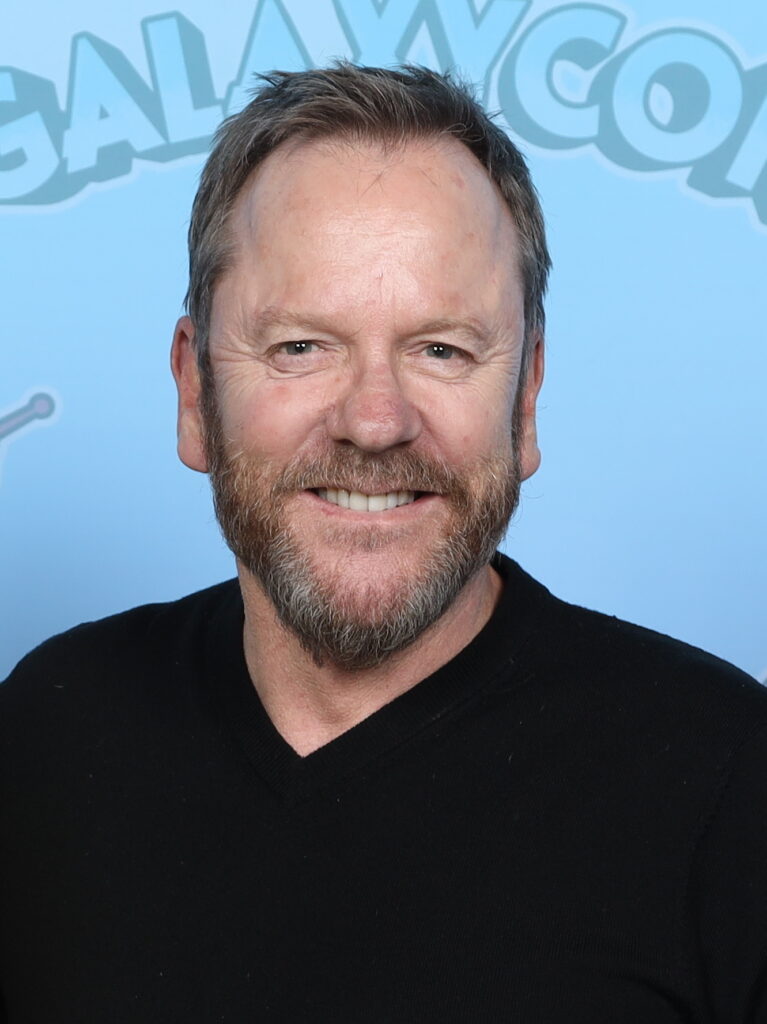
9. **Kiefer Sutherland – Woman Wanted (1999)**Rounding out our list is an intriguing case that almost slipped through the cracks of film history! We all know Kiefer Sutherland as an incredible actor, but back in the 1990s, he harbored ambitions of directing. While his feature-film debut, “Truth or Consequences” in 1997, didn’t exactly set the world on fire, he gave it another shot with the 2000 flick “Woman Wanted.” And let’s just say, it didn’t go well.
Sutherland was so utterly dissatisfied with the final product of this little-known drama that he took the ultimate step of disownment: he asked to have his director credit replaced with the aforementioned “Alan Smithee” pseudonym. This move effectively erased his name from the film in terms of directorial responsibility, a clear signal that he wanted nothing to do with the finished movie.
While “Woman Wanted” wasn’t a high-profile failure, the experience clearly soured Sutherland on directing for years. In a fascinating historical footnote, he became the *last person ever* to officially use the famed Alan Smithee alias, as the Directors Guild of America retired the pseudonym shortly after. He has not directed a feature film since, making “Woman Wanted” a truly forgotten oddity that its own director wanted to forget—permanently.
Read more about: 12 Shameless ’90s Comedies That Just Didn’t Care if You Were Offended: A Deep Dive into Fearless Humor
And there you have it, folks! From creative clashes to studio showdowns, these directors’ stories prove that making a movie is never a straightforward journey. Even the most celebrated filmmakers, the visionaries whose names we know and love, can find themselves utterly disillusioned with their own creations. It’s a wild, often frustrating, but always fascinating peek behind the curtain of Hollywood. So next time you’re watching a film, remember, there’s always a chance the person who brought it to life might just secretly wish they hadn’t!