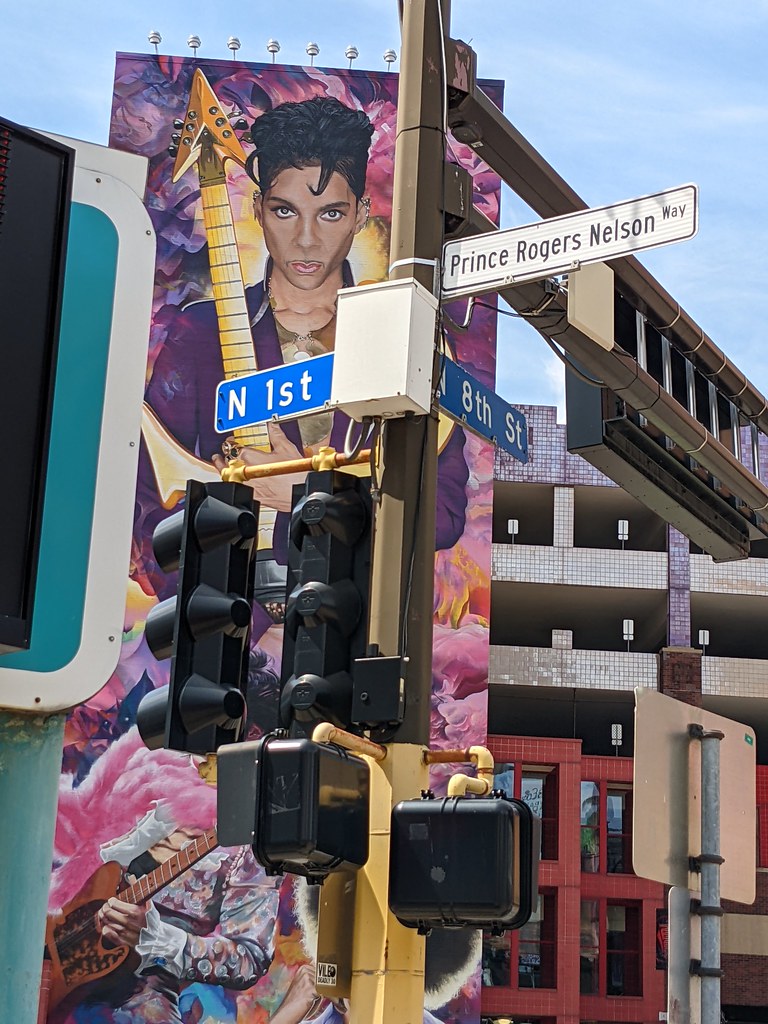
The world of music was forever changed by an artist of unparalleled talent and enigmatic charisma: Prince Rogers Nelson. From the vibrant streets of Minneapolis, Minnesota, emerged a phenomenon who would redefine genres, challenge conventions, and capture the hearts of millions with his innovative sound and magnetic stage presence. He was a force of nature, a virtuoso who could play virtually every instrument required for his recordings, blurring the lines between funk, soul, rock, and pop to create a sound uniquely his own. His journey from a gifted prodigy to a global icon is a testament to his boundless creativity and unwavering dedication to his art.
Prince’s career, spanning decades, was a kaleidoscope of artistic brilliance, marked by groundbreaking albums, unforgettable performances, and a relentless pursuit of creative autonomy. His lyrical prowess, often weaving together themes of uality, spirituality, and social commentary, resonated deeply, while his visual aesthetic became as iconic as his music. Every note he played, every lyric he sang, and every move he made on stage was imbued with a passion that few artists could ever hope to emulate. He didn’t just make music; he created worlds, inviting listeners into a vibrant, audacious universe that was distinctly Prince.
As we look back at the incredible life of this musical genius, we’re reminded of the sheer impact he had on popular culture and the enduring power of his artistry. His story is one of relentless innovation, fierce independence, and a profound connection to the emotional core of human experience. From his early struggles and rise to international fame to his later battles with the music industry and his untimely passing, Prince’s narrative is as compelling and complex as the man himself, leaving behind a discography that continues to inspire and mesmerize new generations.
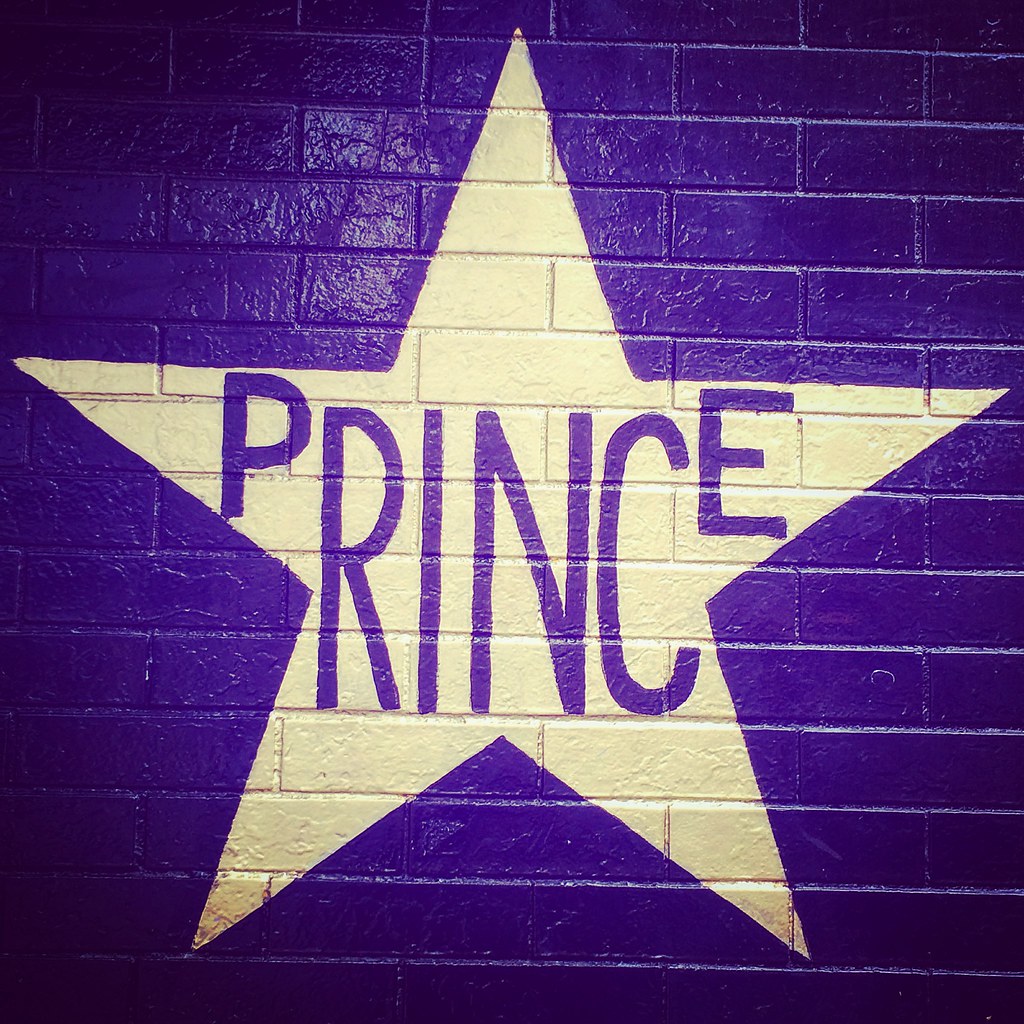
1. **Early Life and Formative Musical Journey**Born Prince Rogers Nelson on June 7, 1958, in Minneapolis, Minnesota, his destiny in music seemed almost preordained. His father, John Nelson, was a jazz musician who performed under the stage name Prince Rogers, and his mother, Mattie Shaw, was a jazz singer. This rich musical heritage provided the backdrop for a childhood that would quickly reveal his prodigious talents. Young Prince took an early interest in music, beginning with the piano at age 7 and quickly mastering the guitar and drums, demonstrating a multi-instrumental aptitude that would become a hallmark of his career.
Despite growing up in Minneapolis, a city with very few African American residents, Prince’s talent and charisma were undeniable. He led other local musicians, including Jimmy Jam and Terry Lewis, to significant success, establishing himself as a formidable presence even in his youth. His early bands, such as Grand Central (later Champagne) with André Anderson (André Cymone) and Morris Day, were foundational, honing his performance skills and songwriting abilities. These early experiences were crucial in shaping the artist he would become, laying the groundwork for his future innovations.
Prince’s childhood was not without its challenges. His parents separated when he was around 10, and he and his sister divided their time between homes, eventually leading him to move in with neighbors, the Anderson family. In a 2009 interview with Tavis Smiley, Prince candidly shared that he suffered from epileptic seizures as a child and was often teased at school. He revealed, “Early in my career I tried to compensate by being as flashy and as noisy as I could,” an insight that perhaps explains some of his later audacious stage persona and drive for perfection. It was through music that he found his voice, turning personal struggles into creative fuel.

2. **The Ascent to Stardom: “1999” and Early Hits**Prince’s recording career officially began with his signing to Warner Bros. Records in 1978. His debut album, “For You,” released that same year, showcased his remarkable self-sufficiency, as he played virtually all the instruments on the record. This was quickly followed by his self-titled album “Prince” in 1979, which delivered his first Top 20 pop hit, the easygoing “I Wanna Be Your Lover.” These early efforts began to establish his unique blend of funk and soul, initially marketed to a Black audience, but his innovative approach soon transcended genre boundaries.
The critically acclaimed “Dirty Mind,” released in 1980, marked a significant turning point, garnering attention for its raw, graphic exploration of uality and fantasy. This album boldly pushed the envelope, setting a precedent for his fearless lyrical content and cementing his reputation as an artist unafraid to tackle provocative themes. Following this, “Controversy” (1981) continued to delve into similar themes, with its dance-oriented title track reaching No. 3 on the R&B charts, alongside songs like “Sexuality” and “Do Me Baby.” It was clear Prince was not just a musician, but a provocateur, challenging societal norms through his art.
International success truly arrived with the release of his fifth album, “1999,” in 1982. This groundbreaking record solidified his superstar status, featuring the iconic Top 20 title track—an exquisite synth-funk ode about nuclear doomsday. The album also spawned two Top 10 hits: “Little Red Corvette” and “Delirious,” which showcased his versatility and appeal to a broader audience. “Little Red Corvette” notably became Prince’s first big crossover hit, gaining crucial airplay on MTV at a time when virtually no Black artists appeared on the influential new medium, breaking barriers and expanding his reach beyond expectation.
Read more about: Beyond the Purple Rain: Unpacking the Enduring Legacy of Prince Rogers Nelson

3. **The Global Phenomenon of “Purple Rain”**If “1999” launched Prince into mainstream consciousness, “Purple Rain” (1984) propelled him into the stratosphere of global superstardom, making him one of the defining artists of the 1980s. This massively successful album, which remains his biggest-selling to date, was not just a musical masterpiece but also the Academy Award-winning soundtrack to a semi-autobiographical film of the same name. The movie, co-starring Apollonia Kotero and Day, grossed almost $70 million at the U.S. box office, turning Prince into a well-known visual icon with his trademark curls, flowing jackets, and ruffled attire with punk embellishments.
The “Purple Rain” soundtrack was a veritable hit factory, producing three singles that dominated the charts. The frenetic “Let’s Go Crazy” and the introspective “When Doves Cry” both reached No. 1, with “When Doves Cry” displaying an otherworldly meld of electronic and funk elements without a traditional chorus, showcasing Prince’s unique compositional genius. The melancholy title track itself reached No. 2 on the Billboard Hot 100, while two other hits, “I Would Die 4 U” and “Take Me With U,” further cemented the album’s legendary status. Its profound impact extended beyond sales, earning Prince a Grammy Award for the soundtrack.
Beyond its commercial and critical acclaim, “Purple Rain” also stirred cultural conversations. One particular tune, “Darling Nikki,” incited controversy due to its explicit visuals and lyrics. After Senator Al Gore’s wife, Tipper Gore, purchased the album for their daughter and listened to the track, she became a driving force behind the movement to have albums sport labels warning parents of graphic content. This event highlights the album’s powerful and sometimes provocative nature, showcasing Prince’s willingness to push boundaries and ignite discussions, solidifying his place not just as a musician, but as a cultural icon.
Read more about: The King’s Ransom: Unraveling the Tumultuous Life, Reign, and Enduring Legacy of Elvis Presley

4. **Exploring Themes of Sexuality and Spirituality**One of the most captivating aspects of Prince’s artistry was his fearless and imaginative exploration of uality and desire in his lyrics, mirrored by correspondingly intense music. Much of his work, in its lyrics and imagery, grappled with the constriction of social conventions and categories. This candid approach to sexuality, often intertwined with a profound sense of self-expression, set him apart from many of his contemporaries and challenged listeners to confront their own perceptions of identity and desire. His songs often depicted a liberation from societal constraints, celebrating intimacy with an unapologetic fervor.
Running parallel to his explicit lyrical themes was a strong religious impulse present in some of his music. This spirituality was often fused into a kind of sacred erotic experience, finding roots in African American churches and gospel traditions. Prince’s music frequently navigated this complex terrain, suggesting that physical and spiritual love were not mutually exclusive but rather deeply interconnected. This duality created a rich tapestry of meaning in his work, allowing for multiple layers of interpretation and resonating with audiences on both visceral and spiritual levels. His ability to synthesize these seemingly disparate elements was a testament to his unique artistic vision.
As one of his biographers aptly put it, “The whole thrust of Prince’s art can be understood in terms of a desire to escape the social identities thrust upon him by simple virtue of his being small, black, and male.” This quest for liberation from imposed categories extended to his use of typographical oddities in song titles and lyrics, another method he employed to evade conventional norms. Through his bold thematic choices, Prince consistently encouraged listeners to transcend limitations, embrace individuality, and find freedom in both the earthly and the divine, proving himself to be an artist of profound depth and intellectual curiosity.
Read more about: Beyond Blockbusters: 10 Visionary Directors Who Redefined Cinema in the 1970s, And Whose Films Still Captivate Audiences Today.

5. **The Clash for Creative Control with Warner Bros.**Throughout a significant portion of his career, Prince’s prolific inventiveness as a songwriter found itself at odds with his record company, Warner Records. The label’s policy of releasing only a single album each year created immense frustration for an artist whose creative output was virtually ceaseless. Prince was a whirlwind of new ideas and completed recordings, and the backlog of unreleased material grew to an unsustainable degree, leading to a profound sense of artistic imprisonment despite his commercial success and critical acclaim. This tension would eventually escalate into one of the most public and dramatic battles for artistic freedom in music history.
To circumvent Warner’s restrictive release schedule, Prince began to give songs to other performers, some of whom recorded at and for Paisley Park, the studio and label he had established in suburban Minneapolis. He also organized ostensibly independent groups, such as the Time, to record his material, allowing his creative overflow to find an audience through alternative channels. This demonstrated his entrepreneurial spirit and his unwavering commitment to getting his music out into the world, even if it meant working outside the traditional structures of his primary record deal. These collaborations not only showcased his generosity as a mentor but also highlighted the immense pressure he felt under his contract.
The friction reached its peak in the early 1990s, despite Prince having signed a record $100 million dollar deal with Warner Bros. in the fall of 1992—a contract considered “the largest recording and music publishing contract in history” at the time. This massive deal was meant to grant him freedom to pursue TV, film, book, and merchandising deals separately, unlike the all-inclusive contracts of contemporaries like Michael Jackson and Madonna. However, the perceived lack of artistic control and the backlog of unreleased music continued to fuel his discontent, ultimately leading to a very public and symbolic protest against what he viewed as corporate ownership of his art.
Read more about: Beyond a Single Scene: Unpacking the Monumental Investment and Unprecedented Impact of the MCU’s Avengers Saga

6. **Embracing the Symbol: “The Artist Formerly Known As Prince”**The growing tension and Prince’s deep-seated frustration with his record label, Warner Bros., culminated in one of the most iconic and puzzling rebrandings in music history. Feeling controlled and disrespected by his label, he decided to make a radical statement about ownership and identity. In 1993, Prince famously changed his name to an unpronounceable glyph, a fusion of male and female astrological symbols (O(+>). This unprecedented move was a powerful, if bewildering, act of defiance against a system he felt was enslaving his creative spirit.
During this period, from 1993 until 2000, as the symbol was impossible to pronounce, he became widely known as “the Artist Formerly Known as Prince.” This moniker, while sometimes humorous, underscored the seriousness of his protest. He made public appearances with the word “SLAVE” drawn on the side of his face, a stark visual representation of his profound disdain for his contractual obligations and the perceived ownership of his identity by the record company. This bold, confrontational stance brought the issue of artist rights and control squarely into the public spotlight.
Despite the controversy and the unusual nature of his new name, Prince continued to produce music. During this challenging time, he released the 1995 album “The Gold Experience,” which included the Top 5 song “The Most Beautiful Girl in the World,” proving that his creativity remained undiminished even amidst his personal and professional struggles. His 1996 album, “Emancipation,” fittingly celebrated the forthcoming end of his Warner Brothers contract, allowing him to release as much music as he liked on his NPG label. This period, marked by the symbol, stands as a powerful testament to Prince’s unwavering commitment to artistic freedom, no matter the personal or commercial cost.

7. **Extensive Collaborations and Talent Promotion**Prince wasn’t just a singular force; he was a prolific creative wellspring, generously sharing his genius. His boundless output often exceeded his label’s release schedule, creating golden opportunities for performers who benefited immensely from his songwriting and mentorship.
He became a “talent promoter,” nurturing acts like Sheila E., Carmen Electra, The Time, and Vanity 6. Many recorded at Paisley Park, his innovative studio. He organized ostensibly independent groups like The Time to release his material, showcasing his versatility as a producer and songwriter.
These collaborations often led to chart-topping successes. Who could forget Chaka Khan’s ebullient “I Feel For You” or Sinead O’Connor’s poignant “Nothing Compares 2 U”? Even The Bangles, with “Manic Monday,” reached No. 2, proving his melodic genius transcended genres.
Prince’s influence extended to creating tracks for Madonna, Tevin Campbell, and Janelle Monae. He was behind Vanity 6 and their No. 1 dance hit “Nasty Girl.” His generosity ensured his music reached millions, cementing his legacy not just as a performer, but as a pivotal architect of sound.
Read more about: The Director Who Mastered Time: An In-depth Look at Christopher Nolan’s ‘Tenet’ and Its Monumental Cinematic Ambition

8. **Later Career Resurgence: “Musicology” and Beyond**After a period away from intense media glare, Prince made a triumphant return in 2004, signaling a powerful career resurgence. This new chapter demonstrated his enduring relevance, as he exploded back onto the scene with undeniable dynamism.
That spring, he released *Musicology*, an album lauded by critics and a commercial success. Its tour became the top concert draw in the U.S., a testament to his magnetic stage presence. *Musicology* earned two Grammys, adding “Call My Name” to the Prince canon.
2004 was also momentous: Prince was inducted into the Rock and Roll Hall of Fame. His legendary Grammy performance with Beyoncé showcased his intergenerational appeal, a clear declaration that Prince was back, potent and innovative as ever.
His later albums continued his diverse explorations: *3121* (2006), *Planet Earth* (2007), *Lotusflow3r* (2009), and *20Ten* (2010). In 2014, he returned to Warner Brothers, releasing *Art Official Age* and *PlectrumElectrum* with 3rdEyeGirl, demonstrating his evolution.
Read more about: The Iconic Legacy of Prince: A Curated Journey Through the Master Musician’s Revolutionary Career

9. **Legendary Performances: Super Bowl XLI and Live Magic**While studio albums were masterpieces, Prince’s live performances were transcendental, showcasing virtuosity and charisma. His Super Bowl XLI halftime show in 2007 remains one of history’s most iconic performances, a true artistic statement.
Picture this: a massive stage shaped as his symbol, amid pouring rain, creating a mythical atmosphere. Prince, dressed impeccably, commanded the stage, delivering hits and covers, shredding his guitar passionately. The rain became integral, adding dramatic, cinematic quality. It was pure magic.
Watched by 140 million fans, the performance solidified his status as an unparalleled entertainer. Images of Prince, guitar in hand, silhouetted against the downpour during “Purple Rain” became legendary. Billboard.com aptly lauded him as the “greatest Super Bowl performer ever.”
Beyond the Super Bowl, Prince consistently delivered unforgettable moments, from his Grammy performance with Beyoncé to his intimate ‘Piano & A Microphone’ tour. Each show was a testament to his boundless energy, spontaneous creativity, and commitment to musical ecstasy.

10. **Principled Stance Against Industry Changes (Internet, Ownership)**Prince stood as a defiant, principled figure, taking a strong stance against digital distribution and free music sharing. He understood implications for artists’ rights early, acting not from Luddism, but deep conviction about artistic value and fair payment.
He consistently railed against providing songs to online platforms without proper compensation. This led to his catalog residing almost exclusively on Tidal, which aligned with his principles of artist ownership and equitable revenue.
What set Prince apart was full ownership of his masters. This gave him leverage, and he diligently employed “Web Sheriff” to remove unauthorized music, believing his work was intellectual property to be protected.
His uncompromising stance led to the *Lenz v. Universal Musical Group* case, pushing for YouTube removal of a baby dancing to “Let’s Go Crazy.” This highlighted his relentless pursuit of artistic control, inspiring artists protecting their output.

11. **Activism and Social Commentary**Beyond musical innovations, Prince was a thoughtful artist using his platform for social issues. His music, even early on, grappled with social conventions, evolving into powerful acts of musical activism.
A poignant example came in 2015, responding to Freddie Gray’s tragic death in Baltimore. Prince, deeply moved, penned and released “Baltimore,” a heartfelt tribute and anthem for activists seeking justice.
This wasn’t just a studio release; Prince amplified his message through action. On May 2, 2015, he staged a “Dance Rally 4 Peace” at Paisley Park, inviting fans to pay tribute and show solidarity. With 3RDEYEGIRL, he performed a 41-minute concert featuring “Baltimore,” transforming his estate into a forum for social justice.
Prince’s activism was a consistent thread, reflecting his empathy. His music, blending erotic, spiritual, and social themes, was a testament to art as a vehicle for liberation and uplift. He demonstrated that artistry extends to speaking truth to power, inspiring dialogue, and leaving an indelible mark.
Read more about: Beyond the Spotlight: Exploring Musicians Whose Legacies Deepened After Their Time
12. **Enduring Legacy and Impact**The world mourned on April 21, 2016, with Prince’s unexpected passing at Paisley Park. An autopsy revealed accidental fentanyl overdose—a tragic end. Though untimely, his impact ensures his legacy will forever resonate, inspiring generations.
Even after death, Prince offered new insights. His posthumous memoir, *The Beautiful Ones* (2019), provided an intimate glimpse into his thoughts and journey through text, photographs, and lyrics—a final, poignant gift to fans.
Prince’s towering achievements were recognized with an astonishing array of honors. He won seven Grammys, a Golden Globe, and an Academy Award. His revolutionary artistry earned four MTV Video Music Awards and induction into the Rock and Roll Hall of Fame in 2004.
Further testaments include an Image Award (1984) and a BET Lifetime Achievement Award (2010). Posthumously, the University of Minnesota awarded him an honorary doctoral degree in 2016. These honors underscore a multifaceted, groundbreaking career.
Read more about: When the Mic Stays On: How Public Outbursts and Controversial Remarks Topple Prominent Careers
Prince Rogers Nelson was a musical polymath: singer, songwriter, guitarist, producer, dancer, and master of instruments. He blended funk, soul, rock, pop, jazz, and hip-hop into his unique sound. His fearless exploration of identity and artistic freedom solidified his place as one of the most influential musicians. His music lives on, a vibrant universe that continues to mesmerize, ensuring his royal reign.