
In the high-stakes world of automotive performance and diagnostics, precision in language is as critical as the torque settings on an engine bolt. Whether you’re a seasoned mechanic troubleshooting a complex diesel powertrain or an enthusiast comparing the merits of different pickup trucks, the words we choose profoundly impact clarity and understanding. Miscommunications can lead to costly errors, flawed assessments, or simply an inability to accurately convey the gravity of a situation. It’s not enough to simply say something is “bad”; the true measure of expert communication lies in distinguishing between shades of deficiency.
This deep dive into the often-confused realm of “worse” and “worst” isn’t merely an academic exercise in grammar; it’s a vital training manual for sharpening your descriptive toolkit. Much like understanding the subtle differences between various octane ratings, mastering these linguistic nuances ensures that when you’re describing a component’s condition or a truck’s performance, your message is unequivocally clear. We’re here to demystify these powerful indicators, transforming potential pitfalls into pillars of clear, authoritative communication within the automotive sphere and beyond.
Through an expert-driven lens, we’ll meticulously unpack the fundamental grammatical distinctions that separate these terms, illustrate their proper application in comparative and superlative contexts, and reveal the linguistic history that explains their unique forms. This foundational understanding will equip you to precisely articulate observations, from a slightly degraded fuel efficiency that is “worse” than last year’s model, to a catastrophic transmission failure representing the “worst” possible outcome. Prepare to fine-tune your vocabulary and elevate your discourse to an entirely new level of analytical accuracy.

1. **The Fundamental Distinction: Worse vs. Worst as Forms of ‘Bad’**At the heart of the confusion surrounding “worse” and “worst” lies their shared origin as forms of the adjective “bad.” Understanding this lineage is the first step toward mastering their individual roles. Imagine “bad” as the base model, the entry-level description of an undesirable quality. From this foundation, we then branch out into degrees of negativity, much like a manufacturer offers different trim levels to denote escalating features or capabilities.
“Worse” steps in as the comparative form, essentially signifying “more bad.” It’s invoked when you’re placing two elements side-by-side and determining which one exhibits a higher degree of an undesirable trait. For instance, if you’re evaluating two different fuel injectors, and one shows a greater leakage rate than the other, you’d accurately describe its performance as “worse.” This comparison is inherently binary, focusing on a direct, one-on-one appraisal.
Conversely, “worst” holds the title of the superlative form, fundamentally meaning “most bad.” This term is reserved for situations where you’re comparing an item or condition against an entire group of more than two possibilities, or when you wish to convey the absolute extreme of negative quality. If you’ve tested a fleet of ten diesel trucks and one consistently delivers the lowest horsepower and highest emissions, it embodies “the worst” performance among the group. It declares a definitive, unparalleled degree of inferiority.
The differentiation, therefore, is not merely semantic; it dictates the scope of your comparison. Using “worse” implies a direct competitor in a two-way race to the bottom, while “worst” crowns an undisputed champion of poor quality among a field of contenders. This precise application of each word allows for a highly nuanced and accurate description of flaws, a skill invaluable in technical assessments where every detail matters.
Read more about: Navigating ‘Worse’ vs. ‘Worst’: A Comprehensive Consumer Guide to Mastering These Tricky Superlatives

2. **Understanding Comparative Adjectives: When to Use ‘Worse’**The role of a comparative adjective is straightforward yet often mishandled, particularly with irregular forms like “worse.” Its primary function is to draw a direct line of comparison between two distinct entities, highlighting which one possesses a particular quality to a greater or lesser degree. In the realm of automotive analysis, this might involve contrasting the efficacy of two different braking systems, or the wear patterns observed on two sets of tires. When comparing, “worse” clearly signals that one item’s condition or performance has deteriorated further or is inherently more problematic than the other’s.
Consider a scenario where a mechanic assesses two different makes of aftermarket turbochargers. If one consistently exhibits higher boost lag and poorer spool-up times than the other, the mechanic would aptly conclude that its performance is “worse.” The comparison is confined to these two specific units, without reference to any other turbochargers on the market. This binary evaluation is a cornerstone of troubleshooting, where isolating and comparing individual components helps pinpoint the source of a fault.
The common method for forming comparative adjectives usually involves adding “-er” to the end of a shorter word—think “faster,” “smarter,” or “bigger” when discussing engine displacement or vehicle speed. For longer adjectives, “more” or “less” precedes the word, such as “more impressive” or “less powerful” when describing a vehicle’s features. However, “worse” is an irregular comparative, meaning it doesn’t follow these conventional patterns. It is an exception, much like certain proprietary engine designs that deviate from industry standards.
Despite its irregularity, the core principle remains: “worse” is exclusively employed when weighing two subjects against each other. For instance, “My brother is bad at basketball, but honestly I’m worse” perfectly illustrates this two-way comparison. The phrase “The situation was bad and it just got worse” indicates a comparison of the current state against its previous state, essentially treating it as a comparison between two temporal points. This clarity in comparison is what makes “worse” an indispensable tool for precise diagnostic reporting and performance analysis.
Read more about: Decoding ‘Worst’: A Consumer Guide to Understanding Reliability Ratings for 2025 Pickup Trucks
3. **Mastering Superlative Adjectives: When to Employ ‘Worst’**When the objective is to identify the absolute pinnacle of negative performance or the most extreme degree of a flaw within a broader spectrum, the superlative adjective “worst” becomes your essential descriptive term. Unlike its comparative counterpart, “worst” extends the comparison beyond just two items, encompassing an entire group or proclaiming an ultimate, unparalleled status. This is the language used when an issue transcends mere degradation and truly represents the absolute nadir of quality or functionality.
Imagine a fleet manager evaluating the long-term reliability of several diesel engines across various brands. After compiling extensive maintenance records and repair costs for each, a particular engine model emerges with consistently the highest failure rates, the most complex and expensive repairs, and the shortest operational lifespan. In this comprehensive comparison of more than two engine types, that specific model would unequivocally be designated “the worst.” It stands alone as the supreme example of poor engineering or reliability within that entire collection.
The application of “worst” also extends to situations where something is deemed the most extreme out of every conceivable option, even if an explicit group isn’t itemized. For example, “That was the worst idea I have ever heard” doesn’t necessarily compare it to a specific list of other ideas; it asserts its absolute bottom-tier status among all ideas the speaker has encountered. This declaration of ultimate deficiency is powerful and leaves no room for ambiguity regarding the severity of the assessment, mirroring the definitive conclusion reached after exhaustive testing.
Just as with “worse,” “worst” is an irregular superlative. While most superlatives are formed by adding “-est” (fastest, smartest, biggest) or preceding the adjective with “most” or “least” (most impressive, least powerful), “worst” deviates from this rule. However, its “-st” ending can serve as a subtle mnemonic, a remnant of the “-est” that marks it as a superlative. This distinction is crucial for automotive professionals, ensuring that when they declare something as “the worst,” there’s no misunderstanding about its utterly inferior standing within its class.
Read more about: Decoding ‘Worst’: A Consumer Guide to Understanding Reliability Ratings for 2025 Pickup Trucks

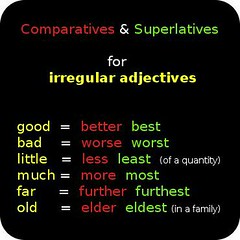
4. **The Analogous Path: Learning from ‘Better’ and ‘Best’**To truly grasp the distinction between “worse” and “worst,” one of the most effective pedagogical tools is drawing a parallel to their positive counterparts: “better” and “best.” These words serve as a mirror, reflecting the exact same grammatical structure and comparative/superlative logic, but applied to attributes of excellence rather than deficiency. By understanding how we instinctively use “better” and “best” to convey degrees of “good,” we can solidify our comprehension of “worse” and “worst” as forms of “bad.”
Think of “good” as the baseline for acceptable performance, much like a manufacturer’s standard specification. When a component exceeds this standard, even slightly, or is demonstrably superior to another, we employ “better.” If a new engine design improves fuel economy compared to its predecessor, it is “better.” This is a direct, often two-way, comparison. Similarly, if two different brands of synthetic oil are tested and one provides superior lubrication and reduced engine wear, it is deemed “better” than the other in that specific regard.
Extending this, “best” is reserved for the absolute zenith of quality or performance, the ultimate achievement within a given category. When a particular tire compound delivers unmatched grip, longevity, and quietness across all tested conditions and against every competitor, it is declared the “best” tire available. This isn’t just a comparison between two options; it’s a declaration of supreme quality relative to all alternatives, or the highest possible standard. The superlative “best” signifies that no other option surpasses it, establishing a clear leader in the field.
The grammatical evolution of “good,” “better,” and “best” mirrors that of “bad,” “worse,” and “worst” as irregular adjectives. They all forgo the typical “-er” and “-est” endings for their comparative and superlative forms, a testament to their long history in the English language. Recognizing this parallel simplifies the learning process: if you understand when to use “better” and “best,” you already possess the intuitive framework for correctly applying “worse” and “worst.” It’s about applying the same logic to different ends of the quality spectrum.
5. **Navigating Irregularities: Why ‘Worse’ and ‘Worst’ Defy Standard Rules**One of the characteristics that often trips up even seasoned communicators is the irregular nature of “worse” and “worst.” In the vast majority of cases, English adjectives follow predictable patterns for forming their comparative and superlative versions. As noted, shorter adjectives typically gain an “-er” for comparison and an “-est” for superlative declarations. Consider “fast,” which becomes “faster” and “fastest,” or “big,” which transforms into “bigger” and “biggest.” These rules provide a reliable framework for describing incremental differences and ultimate extremes.
One of the characteristics that often trips up even seasoned communicators is the irregular nature of “worse” and “worst.” In the vast majority of cases, English adjectives follow predictable patterns for forming their comparative and superlative versions. As noted, shorter adjectives typically gain an “-er” for comparison and an “-est” for superlative declarations. Consider “fast,” which becomes “faster” and “fastest,” or “big,” which transforms into “bigger” and “biggest.” These rules provide a reliable framework for describing incremental differences and ultimate extremes.
For longer, polysyllabic adjectives, the convention shifts to using “more” or “less” for comparative forms and “most” or “least” for superlatives. An “impressive” engine might be “more impressive” than another, and among many, one might be the “most impressive.” This systematic approach to adjective modification generally keeps the language consistent and relatively easy to master. These regular patterns are the linguistic equivalent of standardized parts in an engine, making assembly and understanding straightforward.
However, “bad,” along with a select few other adjectives like “good” and “ill,” stands as an exception to these rules. It does not become “badder” or “baddest,” nor does it require “more bad” or “most bad” in modern usage. Instead, it adopts the entirely different stems of “worse” and “worst.” This irregularity is a remnant of Old English, where these forms evolved from distinct roots before becoming associated with “bad.” They are linguistic fossils, demonstrating the dynamic history of our language.
While they don’t follow the rules, a helpful visual cue exists: the “st” ending in “worst” and “best.” This subtle echo of the regular “-est” superlative ending can act as a mental anchor, reminding us that these irregular forms are indeed superlatives. For the meticulous automotive enthusiast or professional, appreciating these historical linguistic quirks enhances one’s mastery of the English language, ensuring that even the most irregular terms are deployed with unwavering precision.

6. **Tracking Decline: The Idiom ‘From Bad to Worse’**Beyond their primary roles as comparative and superlative adjectives, “worse” also plays a crucial part in specific idiomatic expressions that are deeply ingrained in everyday English. One such phrase, “from bad to worse,” serves as a potent descriptor for a deteriorating situation, a condition that has not merely stayed undesirable but has actively degraded further. This idiom succinctly captures a trajectory of negative progression, making it an invaluable tool for concisely reporting on a worsening state of affairs.
When a vehicle’s engine develops an intermittent knocking sound, and then later that sound becomes constant and accompanied by a loss of power, a mechanic might accurately state that the engine’s condition has gone “from bad to worse.” It implies an initial state that was already problematic, followed by a subsequent decline into an even more severe or critical condition. There’s an implied narrative of negative escalation, where each successive stage is increasingly undesirable compared to the last.
The phrase is particularly effective because it bypasses the need for lengthy explanations of the decline. The listener or reader immediately understands that the situation has not just remained stagnant in its negativity, but has actively slid down a slippery slope towards greater trouble. It communicates a sense of escalating urgency or gravity, much like a rapidly dropping oil pressure gauge. The progression is clear: an already undesirable baseline has been surpassed by an even more undesirable current reality.
The provided context offers a relatable example: “My handwriting has gone from bad to worse since I graduated high school.” This perfectly illustrates how something that was already considered deficient has further deteriorated over time. In an automotive context, this could apply to a vehicle’s rust progression, a component’s wear, or a diagnostic issue that initially presented mildly but has since intensified. This idiom provides a concise and universally understood way to convey such undesirable trends, making it an essential part of an expert’s linguistic arsenal.

7. **Strategic Forecasting: The ‘Worst Case’ and ‘Worst-Case Scenario’**In the meticulous world of engineering and operational planning, anticipating potential failures is as crucial as optimizing peak performance. Just as mechanics predict component lifespan or system vulnerabilities, precise language is required to delineate the absolute extreme of negative possibilities. This is where the idiomatic expressions “worst case” and “worst-case scenario” become indispensable tools, signifying a situation that is unequivocally the most dire imaginable, relative to all other potential outcomes.
These phrases aren’t merely casual descriptors; they are formal constructs in risk assessment and contingency planning. The use of the superlative form “worst” within these idioms is fundamentally important. It clearly communicates that the situation being described is not merely bad, or even “worse” than another specific event, but rather it represents the absolute nadir of all conceivable possibilities. It stands as the ultimate benchmark for catastrophe, ensuring that preparations account for the most extreme eventualities.
It’s vital to differentiate these established idioms from a simple pairing of the word “worse” and “case.” While it’s grammatically sound to say someone had a “worse case of the flu” than another individual, this construction describes a comparative severity between two instances. It lacks the definitive, all-encompassing implication of the “worst-case scenario,” which posits the single, most undesirable outcome within a broader spectrum of possibilities. The distinction is subtle but critical for clear communication in high-stakes fields.
Consider the implications in structural integrity analysis: “In the worst case, the beams will collapse instantly.” This statement, provided in our source material, doesn’t compare the collapse to a minor sag; it forecasts the most severe, immediate structural failure. Similarly, if engineers discuss a “worst-case scenario,” they are envisioning a confluence of adverse factors leading to the most catastrophic outcome, not merely a marginally suboptimal result. This precision ensures that safety protocols and emergency responses are developed with the utmost foresight.
8. **Navigating Contingencies: ‘If Worse Comes to Worst’ vs. ‘If Worst Comes to Worst’**When faced with uncertain circumstances, the ability to articulate a plan for even the most dire possibilities is a hallmark of strategic thinking. English offers a unique pair of idioms to address such contingencies: “if worse comes to worst” and “if worst comes to worst.” Both phrases serve to introduce a consideration of the absolute lowest point of a developing situation, implying a readiness to adapt should circumstances deteriorate to their most extreme.
Despite their similar meanings, an intriguing linguistic preference has emerged. Our analysis indicates that “if worst comes to worst” is the significantly more prevalent form, even with the acknowledgement that it “arguably makes less sense” from a strictly grammatical standpoint. This highlights how language evolves through common usage, where conventional understanding often supersedes rigid adherence to literal interpretation. It’s a testament to the dynamic nature of idioms in conveying complex ideas succinctly.
Regardless of the chosen phrasing, the core utility of this expression remains constant: it signals preparedness for the most unfavorable outcome. It implies a recognition that an already problematic situation might plunge into its deepest depths, necessitating an alternative course of action. This idiom is not about conceding defeat but rather about demonstrating foresight and a proactive mindset in the face of potential escalation.
Crucially, these expressions are almost invariably accompanied by a proposed solution or a backup plan. For example, the context provided illustrates this perfectly: “If worse comes to worst and every door is locked, we’ll get in by opening a window.” Another example notes, “If worst comes to worst, I’ll at least have my umbrella with me.” This structure underscores the practical application of the idiom, transforming a grim prospect into an opportunity for demonstrating resilience and strategic contingency planning.
9. **Practical Application: Illustrative Sentences for Clarity**Theoretical understanding, however comprehensive, only fully translates into mastery through practical application. To solidify the distinctions between “worse” and “worst” and their nuanced usage, examining them within diverse sentence structures provides invaluable clarity. These examples function as real-world stress tests for your linguistic toolkit, demonstrating how precision in word choice profoundly impacts the accuracy and authority of your communication.
Consider instances where “worse” functions as a comparative. The provided example, “I think the pink paint looks worse on the wall than the red paint did,” clearly contrasts two distinct elements—pink paint versus red paint—in terms of aesthetic appeal. Similarly, “Debra Deer had a worse finishing time than Charlie Cheetah” directly compares the performance of two individuals. These sentences underscore the binary nature of “worse,” always implying a direct comparison between two subjects.
When transitioning to “worst,” the scope of comparison expands to a group of three or more, or to an absolute extreme. For instance, “Out of all of us, Tom had the worst case of poison ivy” identifies Tom’s condition as the most severe within a defined group. The declaration, “Debra Deer had a worse finishing time than Charlie Cheetah, but Sam Sloth had the worst time by far,” further distinguishes “worst” as the ultimate low point in a multi-competitor scenario, solidifying its superlative function.
The power of these terms also extends into idiomatic expressions. The sentence, “My grades went from bad to worse after I missed a few classes,” vividly illustrates a trajectory of deterioration, an already problematic situation worsening further. For proactive contingency planning, phrases like “If worst comes to worst and we miss the bus, we’ll just hail a cab,” or “the company is doing everything it can to avoid this worst-case scenario,” demonstrate how “worst” frames the most extreme undesirable outcomes within strategic discussions.
These varied examples underscore that “worse” and “worst” are not interchangeable; their correct deployment depends entirely on the comparative scope and the degree of negativity being conveyed. Mastering these applications ensures that your assessments, whether evaluating engine performance or project risks, carry the undeniable weight of accuracy and expert judgment, leaving no room for misinterpretation.
Read more about: Unpacking ‘Lady’: A Deep Dive into the Linguistic Engineering and Performance of a Storied English Term

10. **’Worst’ as a Multifaceted Adjective: Exploring its Nuances**Beyond its primary definition as “most bad,” the adjective “worst” possesses a rich tapestry of nuanced meanings, allowing for highly specific and impactful descriptions of inferiority. This linguistic versatility makes it an invaluable tool for precise articulation, enabling an expert to convey not just a general sense of poor quality, but the exact nature of that deficiency, be it in performance, condition, or skill.
“Worst” can denote something as “most faulty or unsatisfactory.” This is exemplified in the phrase, “the worst job I’ve ever seen,” which clearly implies a superior degree of defectiveness or inadequacy in workmanship. In an automotive context, this could refer to a repair job performed with the lowest standards, or a manufacturing process leading to the highest defect rate among its peers. The adjective zeroes in on the operational and quality shortcomings.
Further expanding its descriptive power, “worst” also encompasses qualities like being “most unpleasant, unattractive, or disagreeable.” This captures subjective yet universally understood extremes of negative perception, such as “the worst personality I’ve ever known” or a vehicle design deemed “most unattractive.” These interpretations broaden the scope of “worst” beyond purely technical failures to encompass aspects of user experience and aesthetic judgment.
A particularly significant nuance for technical fields is its use to signify “least efficient or skilled.” The classic example, “The worst drivers in the country come from that state,” speaks to a profound lack of proficiency. Similarly, labeling someone “the worst typist in the group” directly quantifies their lowest level of skill. This specific application allows for critical evaluations of competency and operational efficacy within any professional domain.
Moreover, “worst” can describe conditions as “most unfavorable or injurious” or “in the poorest condition,” as in “the worst house on the block.” This depth of meaning provides precise terminology for assessing environmental factors, physical states, or cumulative degradation. Understanding these distinct facets of “worst” as an adjective empowers communicators to apply the term with surgical accuracy, ensuring their insights are not only informative but meticulously detailed.

11. **The Substance of ‘Worst’: Understanding it as a Noun and Adverb**The word “worst” transcends its primary function as an adjective, demonstrating remarkable grammatical flexibility by effectively serving as both a noun and an adverb. This adaptability allows for concise and potent expressions that convey ultimate negativity or the most extreme degree of an action, adding considerable depth to one’s descriptive repertoire. Recognizing these distinct roles is key to fully harnessing the word’s expressive power.
As a noun, “worst” typically refers to “something that is worst,” often preceded by the definite article “the.” A quintessential example from our context is the phrase, “Prepare for the worst.” Here, “the worst” acts as a collective noun, encapsulating the entire spectrum of the most unfavorable outcomes or conditions, prompting a readiness for whatever ultimate challenge may arise. It converts the abstract notion of extreme negativity into a tangible entity that can be acted upon.
Furthermore, “worst” can function as an adverb, modifying verbs, adjectives, or other adverbs to indicate an action performed “in the worst manner” or to the “greatest degree.” This adverbial application intensifies the negative quality of the action being described, signifying the absolute nadir of execution or intensity. For instance, if a component fails “worst” under extreme stress, it implies the most catastrophic mode of failure possible.
Beyond these direct applications, “worst” as a noun is embedded in crucial idiomatic expressions that offer concise ways to describe ultimate conditions. Phrases like “at worst” or “at the worst” (meaning “under the worst conditions”) provide a precise boundary for expectations, as in “He will be expelled from school, at worst.” Similarly, to “get the worst of something” implies being utterly defeated or experiencing the greatest disadvantage, encapsulating a complete negative outcome.
These diverse grammatical roles underscore “worst” as a remarkably robust and versatile word. Whether denoting the most extreme object, condition, or manner, its precise application as a noun or adverb empowers communicators to articulate complex negative concepts with economy and impactful clarity, essential for authoritative reporting in any technical discipline.

12. **Beyond Grammar: ‘Worst’ as an Action Verb and its Historical Footprint**While primarily recognized for its superlative adjective, noun, and adverbial forms, the word “worst” holds a fascinating, albeit less common, identity as an action verb. This particular usage speaks to its deep linguistic roots and its capacity to convey a decisive act of overcoming or prevailing over an adversary. Uncovering this historical dimension reveals the full breadth of “worst’s” expressive capability, demonstrating its evolution within the English lexicon.
When employed as a transitive verb, “worst” means “to defeat” or “to beat.” This usage, while archaic in common parlance, carries a powerful and definitive connotation of absolute victory in a contest or struggle. The provided example, “He worsted him easily,” perfectly illustrates this meaning, portraying a clear and decisive outcome where one party completely outmatches another. It’s a testament to the word’s inherent connection to ultimate inferiority and superiority.
The etymological journey of “worst” is a compelling narrative of linguistic endurance. Its origins stretch back to Old English, predating 1150, where forms like “wur(re)sta” were already in use as adjectives and adverbs. This deep historical footprint, with cognates in Old Norse, underscores its ancient lineage within the Germanic language family. Such roots highlight how fundamental the concept of ultimate “badness” or defeat has been to human expression across millennia.
This historical perspective reveals that “worst” has been a multifaceted linguistic tool for centuries, seamlessly transitioning between roles as an adjective, adverb, noun, and even a verb. Its capacity to define the utmost negative degree in various grammatical forms speaks to the dynamism of language and the way words adapt and retain elements of their core meaning across different applications. For those who appreciate the intricacies of language, recognizing “worst” as a verb offers a rare glimpse into its rich, evolving past.
Understanding “worst” not just as a descriptor of quality but also as an active verb meaning “to overcome” enriches our appreciation for its historical and semantic depth. It allows us to view this seemingly simple word through a more complex lens, acknowledging its enduring power to articulate both states of being and decisive actions within the vast landscape of English expression.
As we conclude this comprehensive exploration of “worse” and “worst,” it becomes abundantly clear that these aren’t merely interchangeable synonyms for negativity. They are precision instruments in the linguistic toolbox, each designed for specific applications, much like different gauges or specialized tools in a mechanic’s chest. From drawing a direct comparison between two struggling components to defining the absolute rock-bottom of performance within an entire fleet, the accurate deployment of “worse” and “worst” elevates communication from merely descriptive to definitively authoritative. In any field demanding clarity, from automotive diagnostics to strategic forecasting, mastering these nuanced forms of “bad” is not just about grammatical correctness; it is about cultivating an unwavering commitment to accuracy, ensuring every assessment is precisely calibrated and every message unequivocally understood. This linguistic dexterity is ultimately what separates casual observation from expert analysis, cementing your position as a true master of your craft.