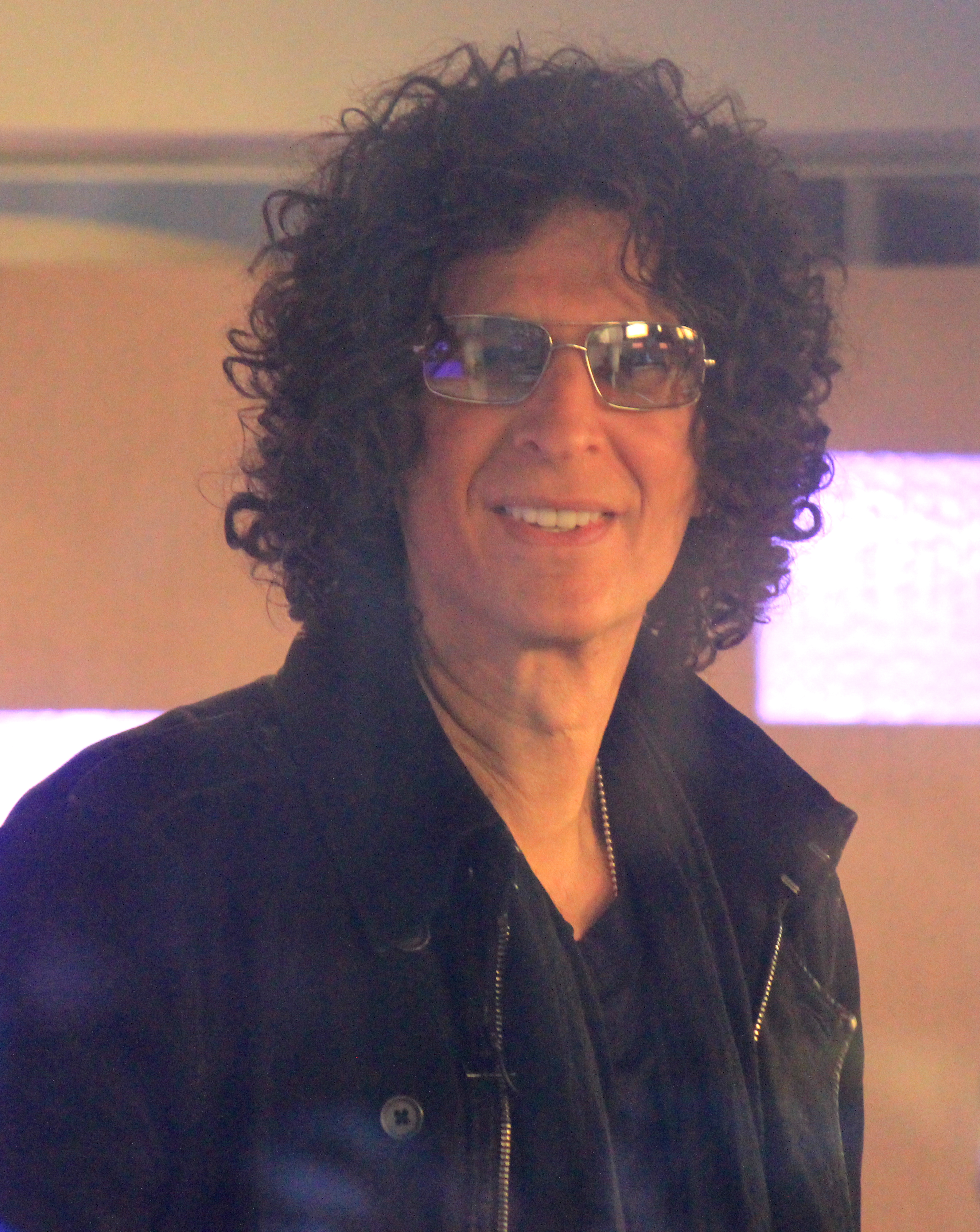
Howard Stern, the iconic “shock jock” known for pushing boundaries and fiercely defending free speech, has once again positioned himself at the center of a national debate. Breaking a self-imposed vow of political silence, his recent declaration, “I can no longer keep my mouth shut,” underscores a profound personal and professional conviction. This was ignited by the indefinite suspension of his longtime friend and fellow broadcaster, Jimmy Kimmel, from ABC. Stern’s bold statement, delivered with the gravity of a seasoned media veteran, signals more than just a personal grievance; it serves as a potent warning about political influence over independent media.
Stern’s passionate protest is not merely a defense of a colleague but reflects a deeper concern regarding democratic discourse and private media autonomy. He frames Kimmel’s sidelining not as a network decision based on performance, but as a direct consequence of governmental pressure and intimidation tactics. This perspective places the incident squarely within a larger narrative of free speech under siege, drawing unsettling parallels to Stern’s own tumultuous past encounters with federal regulators. He fought against what he perceived as systematic efforts to silence his voice.
What unfolds is a complex tapestry woven with threads of personal loyalty, constitutional principles, corporate governance, and modern media demands. Stern’s intervention forces a critical examination of accountability, corporate responsibility, and the fundamental right to speak freely, even when controversial. His voice, once notoriously raunchy, now carries the weight of a defender of constitutional liberties, challenging both governmental overreach and corporate capitulation in a critical moment for American media.
1. **Howard Stern’s Fiery Declaration**Howard Stern initiated his SiriusXM show on Monday with an unambiguous and deeply personal declaration: “I can no longer keep my mouth shut.” This statement marked a significant departure from his recent commitment to avoid political commentary, a vow maintained since the most recent presidential election. His decision to speak out was driven by a powerful sense of obligation, as he expressed, “I feel obligated to say something, because s–t’s getting outta control.”
The impetus for Stern’s breaking of silence was the indefinite suspension of Jimmy Kimmel’s late-night show from ABC. Stern emphatically denounced this move as “government-backed censorship.” His language was strong and unreserved: “This involves the network ABC. They did something really dumb and f–kin’ horrible.” His immediate reaction was not just verbal condemnation; he concretely protested by canceling his Disney+ streaming service, sending a clear message to ABC’s parent company.
For Stern, this was a deeply felt alarm, amplified by his personal connection to Kimmel, whom he called a “dear dear friend.” He emphasized that while “everyone knows what happened with Jimmy Kimmel,” he felt his voice was crucial. His passionate re-engagement with political discourse underscores his long-standing commitment to free speech, viewing current events as an alarming precedent threatening open expression in the country.
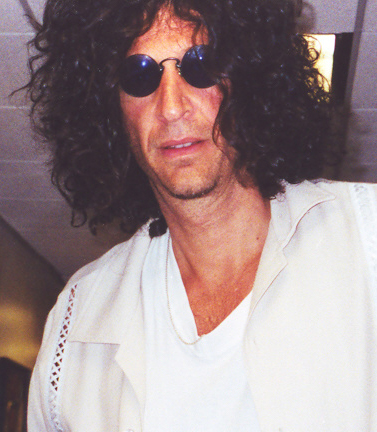
2. **Accusation of Government-Backed Censorship**At the core of Howard Stern’s impassioned critique is the assertion that ABC’s decision to suspend Jimmy Kimmel was not an independent editorial choice but a direct result of governmental intimidation. Stern explicitly accused ABC of “caving to pressure” exerted by FCC Chairman Brendan Carr. Carr had publicly warned Disney over Kimmel’s controversial remarks, and Stern viewed this as a clear instance of a federal entity leveraging its power to silence a broadcaster.
Stern articulated his deep concern: “I just know when the government begins to interfere … when the government says, ‘I’m not pleased with you, so we’re going to orchestrate a way to silence you,’ it’s the wrong direction for the country. It isn’t good, and I should know.” This perspective casts the network’s action as a dangerous precedent, suggesting corporate entities are “bending the knee” to political threats rather than upholding independence. He believes someone needs to stand firm against such coercion.
He further elaborated on the gravity of the situation, emphasizing it extended beyond a single network host. “It’s about freedom of speech,” Stern declared, underscoring his belief that if a network is pressured by the government into sidelining a talent, it undermines democracy. He urged companies “have to say f–k you” to such pressures, highlighting media’s crucial role in an unconstrained society, regardless of broadcasters’ political leanings.
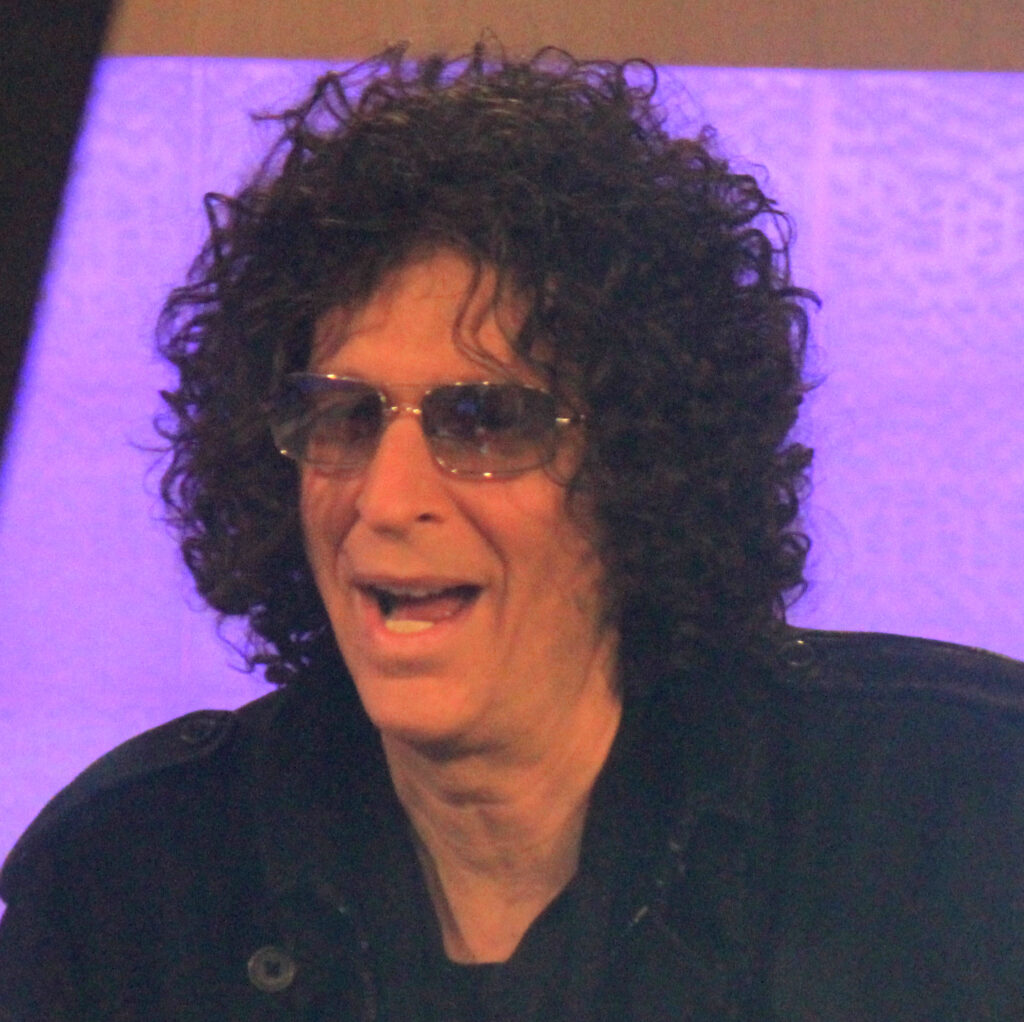
3. **The Kimmel Controversy Trigger**The immediate catalyst for Jimmy Kimmel’s indefinite suspension was his controversial remarks concerning the killing of conservative activist Charlie Kirk. During his late-night show, Kimmel explicitly linked Kirk’s alleged killer, Tyler Robinson, to the MAGA movement. This assertion quickly became a profound point of contention, especially as subsequent reports described Robinson as steeped in “far-left ideology,” citing texts where he admitted targeting Kirk due to “hatred” for the conservative activist.
Kimmel’s comments, broadcast on September 15, stirred significant backlash, prompting accusations of spreading misinformation on national television without sufficient evidence. The perceived fabrication of a connection between the alleged killer and a specific political movement, without subsequent correction, fueled a fierce debate about the responsibility of late-night hosts when venturing into serious political commentary. This incident marked a flashpoint, demonstrating rapid escalation of controversy in the polarized media landscape.
The aftermath saw “Jimmy Kimmel Live!” pulled indefinitely the following week, a decision “applauded” by the White House. President Trump urged NBC to sideline Jimmy Fallon and Seth Meyers similarly. This transformed Kimmel’s on-air commentary into a national political incident, bringing immediate and severe consequences. Disney CEO Bob Iger and content chief Dana Walden reportedly made the call to sideline Kimmel to manage escalating tensions.
Read more about: Navigating the Airwaves: Unpacking the FCC’s Regulatory Influence on Children’s Programming and Free Speech in Broadcast Media
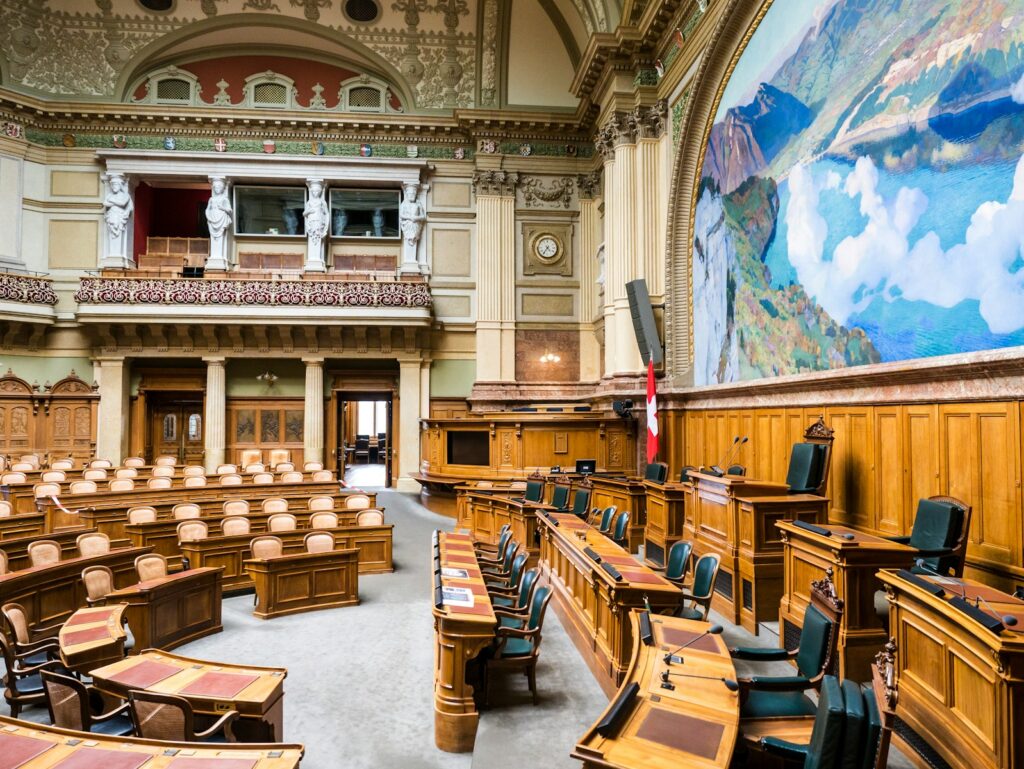
4. **FCC Chairman Brendan Carr’s Controversial Warning**Central to Howard Stern’s allegations of government interference were public statements by FCC Chairman Brendan Carr. Prior to ABC sidelining Kimmel, Carr appeared on a right-wing podcast, issuing a stark warning many interpreted as a direct threat. Carr stated, “We can do this the easy way or the hard way … take action, frankly, on Kimmel, or, you know, there’s going to be additional work for the FCC ahead.”
This declaration was widely perceived as an attempt to strong-arm private entities through regulatory pressure. Legal experts referred to this tactic as “jawboning”—an illegal method where officials influence private entities through threatened government action. The veiled threat of “additional work for the FCC ahead” implied potential investigations and regulatory actions against licensed broadcasters airing Kimmel’s program, creating an immediate chilling effect.
Carr, however, subsequently rejected accusations that the government forced Disney to sideline Kimmel. Speaking in New York on Monday, he insisted, “Jimmy Kimmel is in the situation that he is in because of his ratings, not because of anything that’s happened at the federal government level.” He firmly maintained the government played no role, shifting the narrative entirely towards Kimmel’s declining viewership and disavowing any connection between his warning and the network’s action.
Read more about: The Shocking Truth Behind Late-Night TV’s Free Speech Showdowns: 14 Untold Tales of Executive Pressure and Comedian Crackdowns
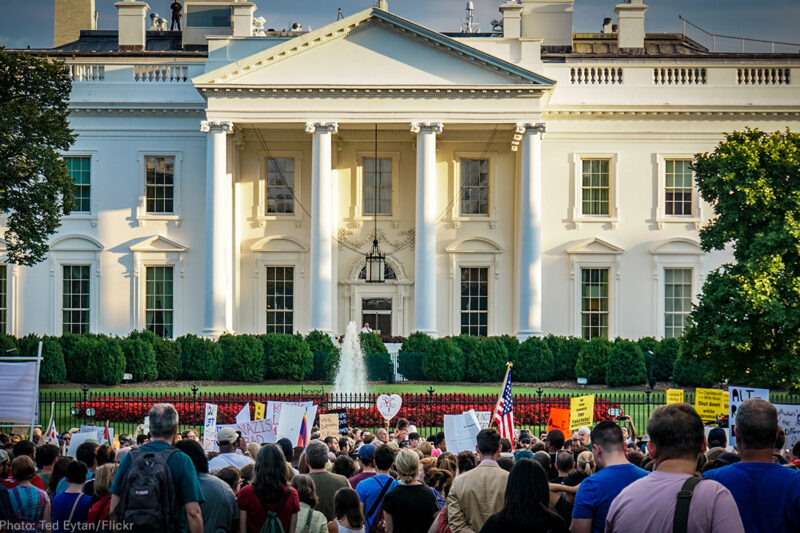
5. **The White House’s Rebuttal and Ratings Argument**The White House quickly entered the fray, applauding Jimmy Kimmel’s suspension and offering a starkly different narrative regarding its cause. White House spokeswoman Abigail Jackson directly pushed back on Stern’s insistence that Kimmel was subjected to government censorship. Her statement was unequivocal: “This has nothing to do with free speech; low-ratings loser Kimmel is free to make whatever bad jokes he wants, but a private company is under no obligation to lose money producing unpopular shows.”
Jackson further supported this with specific data, highlighting Kimmel’s declining viewership. She noted “Kimmel’s ratings have declined over 63 percent since his show moved to its current time slot and he has lost over 43 percent of his audience since President Trump returned to office.” For the White House, the suspension was not censorship, but a pragmatic business decision by a private company reacting to a “talent problem” and dwindling commercial viability.
Spokesperson Steven Cheung reiterated this stance, characterizing Kimmel as a “no-talent loser who has beclowned himself with tanking ratings and by spewing disgusting lies to his audience.” He added, “That’s why the network kicked him to the curb like a used empty beer can.” This aggressive perspective reframed the controversy, shifting focus from governmental overreach to economic realities of broadcasting, presenting a direct counter-argument to Stern’s claims.
6. **Stern’s Deep Personal History with FCC Scrutiny**Howard Stern’s fervent reaction to Kimmel’s suspension is deeply rooted in his extensive and contentious history with federal regulators. Throughout the 1990s, Stern’s “raunchy morning show” became the nation’s top radio program, but simultaneously, a primary target for the Federal Communications Commission. This period saw his syndication partner, Infinity Broadcasting, subjected to repeated and substantial fines for content aired, transforming his career into a prolonged battle for expressive freedom.
The financial penalties were severe and unprecedented. At one point, Infinity Broadcasting paid $600,000 in a single case related to racial jokes. Between 1990 and 2004, cumulative fines against Stern’s affiliates surpassed $2.5 million, marking the largest indecency tab ever levied against a single broadcaster. These relentless pressures culminated in a $1.7 million settlement in 1995, aimed at resolving dozens of pending cases, which Stern famously described as “the biggest shakedown in history.”
The crackdown intensified after the 2004 Super Bowl “wardrobe malfunction.” Clear Channel, another syndication partner, yanked Stern’s show from six major markets and incurred nearly half a million dollars in penalties tied to his broadcasts. This prolonged, costly battle with the FCC profoundly shaped Stern’s view on governmental interference in media, instilling deep skepticism about regulatory motives and solidifying his identity as a champion of unfettered speech.
7. **The Exodus to Satellite Radio: A Quest for Uncensored Speech**The ceaseless barrage of fines and suspensions from the FCC ultimately propelled Howard Stern to make a revolutionary career move: abandoning terrestrial radio altogether for the nascent world of satellite broadcasting. This bold transition in 2006 was not merely a career pivot but a strategic escape from the regulatory clutches of the FCC, which holds no jurisdiction over satellite radio content. This decision underscored Stern’s unwavering commitment to broadcasting without the constant threat of censorship.
His move to Sirius Satellite Radio was monumental, marked by a groundbreaking half-billion-dollar deal. This contract cemented his status as “the most powerful uncensored voice in broadcasting.” Freed from the strictures that had plagued his terrestrial career, Stern found the liberty to express himself without fear of federal intervention, transforming the landscape of radio and setting a precedent for media figures seeking refuge from content restrictions.
On Monday, Stern explicitly drew parallels between his past struggles and the current pressure campaign against ABC. He stated that the circumstances surrounding Kimmel’s suspension carried “the same hallmarks as the FCC attacks that drove him off the public airwaves.” He commented on how “they all bent the knee and they all cower,” referring to broadcasters yielding to political pressure, emphasizing his own past refusal to capitulate.
8. **Bipartisan Political Backlash Against FCC Chairman Carr**FCC Chairman Brendan Carr’s public statements regarding Jimmy Kimmel’s future on ABC ignited a significant bipartisan outcry, particularly from Capitol Hill. His controversial remark on a right-wing podcast, “We can do this the easy way or the hard way… take action, frankly, on Kimmel, or, you know, there’s going to be additional work for the FCC ahead,” was widely seen as an explicit threat, drawing condemnation even from unexpected quarters.
Leading Republicans, typically aligned with the administration’s policy stances, expressed strong disapproval of Carr’s rhetoric. Senator Ted Cruz (R-Texas), who presides over the committee overseeing the FCC, likened Carr’s words to a scene from a gangster film, stating, “That’s right out of a mafioso coming into a bar going, ‘Nice bar you have here. It would be a shame if something happened to it.’” This powerful analogy underscored the perception of intimidation rather than legitimate regulatory oversight.
Similarly, Senator Rand Paul (R-Ky.) did not mince words, labeling Carr’s comments as “absolutely inappropriate.” Appearing on NBC’s “Meet the Press,” Paul asserted that the FCC Chairman “has got no business weighing in on this,” further emphasizing that “any attempt by the government to get involved with speech — I will fight.” This bipartisan rejection highlights a broad consensus among lawmakers against perceived governmental overreach into media content decisions, irrespective of political leanings.
The widespread criticism of Carr’s remarks suggests a deep-seated concern within the political establishment about the potential for federal agencies to exert undue pressure on private media entities. It indicates that while political disagreements are common, the principle of governmental non-interference in editorial decisions remains a sensitive and jealously guarded aspect of democratic discourse, even when the content itself is controversial.
Read more about: Jimmy Kimmel’s Resilient Return: Navigating Suspension, Political Pressure, and the Enduring Fight for Free Speech in Hollywood
9. **Legal Analyses of ‘Jawboning’ and FCC Authority**Beyond the political condemnations, legal experts swiftly weighed in on FCC Chairman Brendan Carr’s statements, identifying his approach as a problematic legal maneuver known as “jawboning.” This term refers to an illegal tactic where government officials attempt to influence private entities through implied threats of government action, rather than through formal legal or regulatory processes. The consensus among legal scholars was that such tactics exceed the legitimate bounds of federal authority.
Experts emphasized that the FCC fundamentally lacks the legal authority to censor programming content. Its mandate is primarily focused on regulating broadcasting licenses and ensuring adherence to technical standards and public interest obligations, not dictating the specific content aired. Carr’s implicit threat of “additional work for the FCC ahead” if networks did not “take action, frankly, on Kimmel” was thus interpreted as an attempt to circumvent these legal limitations by leveraging regulatory power improperly.
This legal analysis underscores a critical distinction in media regulation. While the FCC can impose fines for indecency or other violations of broadcast standards after content has aired, it cannot proactively dictate or demand the removal of content, nor can it coerce networks into suspending talent based on political preferences. The concept of “jawboning” directly challenges the separation of powers and the protection of free speech in a regulated industry, highlighting the fragility of these principles when faced with governmental pressure.
The legal community’s swift and unified response served as a crucial check on governmental power, reinforcing the principle that even powerful federal agencies must operate within the strict confines of their statutory authority. It underscored that the proper functioning of a free press relies not only on constitutional protections but also on the diligent enforcement of laws preventing regulatory bodies from exceeding their legal mandates.

10. **Former Disney CEO Michael Eisner’s Condemnation**The controversy surrounding Jimmy Kimmel’s suspension drew sharp criticism from within the media industry itself, most notably from former Disney CEO Michael Eisner. His condemnation carried particular weight due to his intimate understanding of corporate dynamics at the highest levels of media conglomerates, offering an insider’s perspective on the decision-making process within ABC’s parent company.
Eisner minced no words, publicly denouncing the suspension as “out-of-control intimidation.” His statement went beyond mere disagreement, questioning the underlying motivations of the executives who yielded to FCC Chairman Carr’s warnings. He explicitly raised concerns about the “political or financial self-interest” that might have influenced Disney’s compliance, suggesting that the decision was not solely based on creative or business imperatives.
Coming from a figure of Eisner’s stature, this critique implied a significant departure from principles of independent media governance. His remarks suggested that internal corporate leadership might have prioritized avoiding political friction or safeguarding financial interests over defending a host against what he perceived as undue external pressure. Such an assessment from a former chief executive highlighted the potential for complex pressures to compromise journalistic and entertainment autonomy.
Eisner’s intervention underscored the intricate balance that media companies must strike between commercial viability, regulatory compliance, and creative freedom. His willingness to speak out against his former company’s actions signaled a profound concern about the implications of the Kimmel suspension for the broader media landscape and the integrity of corporate decision-making in the face of governmental scrutiny.

11. **Internal Corporate Decisions at Disney: Iger and Walden’s Role**Behind the public discourse and external pressures, the decision to indefinitely suspend “Jimmy Kimmel Live!” ultimately rested with Disney’s top executives. Reports indicate that CEO Bob Iger and content chief Dana Walden personally made the critical call. This direct involvement of the highest echelons of Disney leadership underscores the gravity of the situation and the perceived necessity to manage escalating tensions surrounding Kimmel’s controversial remarks.
The immediate trigger for their intervention was Kimmel’s planned monologue following the initial controversy. Insiders revealed that after reviewing his next scheduled broadcast, Iger and Walden feared it “could escalate tensions” further. This apprehension suggests a strategic assessment that continued on-air commentary could exacerbate political backlash, alienate affiliates, or draw further scrutiny from federal regulators, prompting a preemptive measure to contain the fallout.
While the White House narrative framed the suspension as a response to declining ratings, the direct involvement of Iger and Walden, coupled with their review of specific content, points to a more complex calculation. It suggests a corporate decision aimed at crisis management and damage control in a highly charged political environment, rather than a routine assessment of viewership figures. The move was likely intended to de-escalate the situation and buy time to assess the political and commercial landscape.
The repercussions of this high-level corporate decision extend beyond Kimmel himself. Disney has not provided a timetable for his return, with sources indicating that the hiatus could “stretch for weeks” as executives meticulously gauge the ongoing political fallout. This uncertainty reflects the delicate balance the media giant must maintain between protecting its brand, navigating governmental scrutiny, and supporting its high-profile talent in an increasingly polarized public sphere.

12. **The Pivotal Role of Affiliate Networks in Preemption**The suspension of “Jimmy Kimmel Live!” was not solely a top-down decision from Disney; it was significantly influenced by the immediate actions of local affiliate networks. Owners of dozens of ABC affiliate stations, including major players like Nexstar and Sinclair, swiftly moved to preempt Kimmel’s program. This decentralized action created an immediate and tangible crisis for Disney, demonstrating the considerable power wielded by these local broadcasters.
These affiliates, responsible for airing ABC’s national programming in their respective markets, effectively signaled their refusal to broadcast “Jimmy Kimmel Live!” unless a decisive action was taken by the network. Their collective preemption, occurring shortly after FCC Chairman Brendan Carr’s warnings, highlighted the commercial and political sensitivities at the local level. It became evident that airing the controversial content posed a risk to their own operations and relationships with local audiences and advertisers.
The immediate consequence of these preemptions was that Disney found itself “scrambling to fill the late-night slot” across numerous markets. This logistical challenge, coupled with the implicit threat of a sustained boycott from key distribution partners, undoubtedly exerted immense pressure on Disney executives. It underscored that even a media conglomerate like Disney is reliant on its network of affiliates for national reach and cannot operate independently of their commercial considerations and local political sensitivities.
In essence, the affiliates’ preemptions acted as a crucial accelerant in the chain of events leading to Kimmel’s suspension. Their collective decision to pull the show from their airwaves not only demonstrated their own capacity for independent action but also forced Disney’s hand, making a network-level intervention an unavoidable necessity to restore stability to its broadcast schedule and mitigate further commercial and reputational damage.
Read more about: Beyond the Broadcast: The Controversial Comments That Rocked News Anchors and Exposed Media’s Fault Lines

13. **Howard Stern’s Personal Act of Protest and its Symbolic Weight**Amidst the corporate maneuvers and political machinations, Howard Stern underscored his unwavering commitment to free speech through a deeply personal act of protest: canceling his Disney+ streaming service. While seemingly a small gesture in the grand scheme of a multi-billion-dollar media empire, Stern framed it as a powerful symbolic message directed at ABC’s parent company, Disney.
Stern explained his decision by stating, “I’m trying to say with the pocketbook that I do not support what they’re doing with Jimmy.” This action, for Stern, represented a direct, albeit individual, challenge to corporate capitulation. He clarified that he was “not calling for boycotts” but emphasized the importance of individual accountability and sending a clear signal of disapproval when principles of free expression are perceived to be compromised.
For a figure like Stern, who has built a career on defying conventional norms and battling censorship, this act was more than just a consumer choice; it was a reaffirmation of his identity as a defender of uncensored voices. He urged listeners to consider their own roles, stating, “Someone’s got to step up and be f–kin’ saying, ‘Hey, enough, we’re not gonna bow.’” This rhetoric positioned his cancellation as a call for broader resistance against perceived political intimidation.
Stern’s protest served to personalize a complex national debate, transforming abstract principles of free speech into a tangible consumer action. It highlighted his belief that every individual, regardless of their platform, holds a responsibility to act as a “watchdog for each other’s rights and freedoms,” and that silence or inaction in the face of what he deemed governmental interference was not an option for those committed to democratic values.

14. **Free Speech Principles vs. Commercial Viability: The Broader Debate**The suspension of Jimmy Kimmel, and Howard Stern’s emphatic response, crystallized a fundamental and ongoing tension within the media landscape: the balance between free speech principles and commercial viability. This incident forced a critical examination of when controversial content transitions from protected expression to an untenable business liability, sparking a robust national debate on the subject.
Howard Stern, rooted in his own history of battles with regulators, unequivocally positioned the issue as one of free speech. He asserted that if a network is pressured by the government into sidelining a talent, it fundamentally undermines democracy. For Stern, it’s not a question of whether one agrees with Kimmel’s remarks, but whether the government should dictate what is aired on private platforms. He emphasized that companies “have to say f–k you” to such governmental pressures to uphold a free society.
In stark contrast, the White House, through spokeswomen Abigail Jackson and Steven Cheung, framed the controversy as purely a business decision. Jackson stated that “This has nothing to do with free speech; low-ratings loser Kimmel is free to make whatever bad jokes he wants, but a private company is under no obligation to lose money producing unpopular shows.” This perspective explicitly discounted any notion of censorship, attributing the suspension to Kimmel’s “talent problem” and declining viewership.
This dichotomy presents a challenging dilemma for media organizations. On one hand, there is a societal expectation for media to serve as a platform for diverse voices and robust public discourse, often protected by free speech tenets. On the other hand, media companies are commercial enterprises driven by ratings, advertising revenue, and shareholder value. The Kimmel incident vividly illustrates how these two imperatives can collide, particularly in a highly polarized political climate.
Ultimately, the enduring question remains: at what point do the commercial pressures on a media company, exacerbated by political backlash, begin to infringe upon the core principles of free expression? The debate ignited by Kimmel’s suspension underscores that this is not merely a legal or philosophical inquiry, but a practical challenge constantly navigated by broadcasters, regulators, and the public alike, shaping the future of media in a democratic society. Howard Stern’s impassioned warning serves as a stark reminder that these freedoms are not self-sustaining; they require constant vigilance and, occasionally, bold acts of defiance from those who believe in their inviolable nature.