The Super Bowl halftime show has evolved into one of the most significant cultural events in the United States, transcending sports to become a global spectacle where music, performance, and often, societal discussions converge. The announcement of Puerto Rican music sensation Bad Bunny as the headliner for the 2026 Super Bowl LX halftime show at Levi’s Stadium in Santa Clara, California, was met with widespread attention, given his immense global popularity and cultural influence. However, this high-profile selection quickly became embroiled in a contentious political debate, illuminating the ongoing intersections of entertainment, immigration policy, and partisan divides.
The controversy escalated sharply with statements from Corey Lewandowski, a former Trump campaign manager and current Department of Homeland Security adviser, who declared that federal immigration agents would be present at the event. These remarks immediately ignited a firestorm, casting a shadow over the festive anticipation typically associated with the Super Bowl and introducing a new dimension of political tension to an event traditionally celebrated for its broad appeal and unifying power. The statements have drawn criticism and concern, prompting questions about the role of federal agencies at public gatherings and the implications for both attendees and performers.
This article aims to provide an in-depth examination of the events surrounding Bad Bunny’s Super Bowl halftime announcement and the subsequent pledge of increased immigration enforcement. It will explore the various perspectives involved, from the official pronouncements of government advisers to the artistic motivations of the performer and the fervent reactions from both his supporters and critics. By meticulously dissecting these intertwined narratives, we seek to illuminate the complexities of this cultural flashpoint and its broader significance within the contemporary American landscape.
1. **Corey Lewandowski’s Announcement on ICE Presence**In a development that quickly captured national attention, Corey Lewandowski, a prominent adviser to the Department of Homeland Security and a former campaign manager for President Donald Trump, publicly affirmed that Immigration and Customs Enforcement (ICE) agents would be present at the upcoming Super Bowl. Speaking during an interview with Benny Johnson’s ‘The Benny Show,’ Lewandowski’s remarks were direct and unequivocal, signaling a heightened level of federal enforcement at one of the nation’s most watched annual events. His statement unequivocally linked the presence of immigration agents to a broader policy of stringent immigration enforcement.
Lewandowski’s exact words left little room for misinterpretation regarding the administration’s intent. He stated, “There is nowhere that you can provide safe haven to people who are in this country illegally. Not the Super Bowl and nowhere else.” This assertion set a confrontational tone, directly addressing individuals residing in the United States without authorization and emphasizing the widespread reach of enforcement operations under the current administration. The implication was clear: no location, however public or celebratory, would be exempt from federal scrutiny.
He further elaborated on the consequences for those found to be in the country illegally, asserting, “We will find you. We will apprehend you. We will put you in a detention facility, and we will deport you.” These stern warnings were presented as a “very real situation under this administration,” explicitly contrasting it with past approaches to immigration enforcement. The comments, aired on a Wednesday, immediately followed the weekend announcement of Bad Bunny as the halftime performer, suggesting a direct connection between the artist’s selection and the intensified rhetoric around immigration.
2. **The Rationale Behind Enhanced Immigration Enforcement**Lewandowski’s announcement was not merely a statement of intent but also included a clear articulation of the rationale underpinning the intensified immigration enforcement efforts. His explanations were framed within a discourse of national security and adherence to legal mandates, presenting the measures as a necessary component of the administration’s broader immigration policy. The emphasis was placed on the principle that legal status dictates one’s presence in the country, with no exceptions for any venue or event.
The core of Lewandowski’s argument rested on the premise that undocumented individuals have no legal right to reside in the United States, and therefore, federal agencies are obligated to enforce existing immigration laws wherever such individuals may be present. He underscored this by stating, “There is no safe haven for violent criminal illegal aliens in the United States,” a phrase a DHS spokesperson also relayed to The Independent when questioned about agents at the game. While the spokesperson specifically mentioned “violent criminal illegal aliens,” Lewandowski’s broader comments implied a more generalized approach to enforcement.
He concluded his directive with an overarching message: “I don’t care if it’s a concert for Johnny Smith or Bad Bunny or anybody else. We’re going to do enforcement everywhere. We are going to make Americans safe. That is a directive from the president. If you’re in this country illegally, do yourself a favor: go home.” This statement positioned the enforcement efforts as a direct order from the highest office, prioritizing what was termed American safety through comprehensive immigration crackdowns, regardless of the individual or the setting.
Read more about: U.S. Navy’s Caribbean Operations: An In-Depth Look at Vessel Interdictions, Escalating Tensions with Venezuela, and Legal Scrutiny
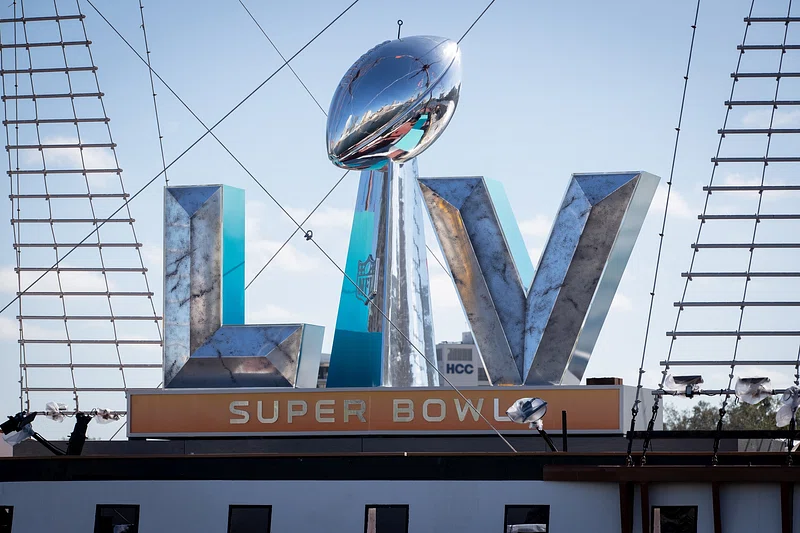
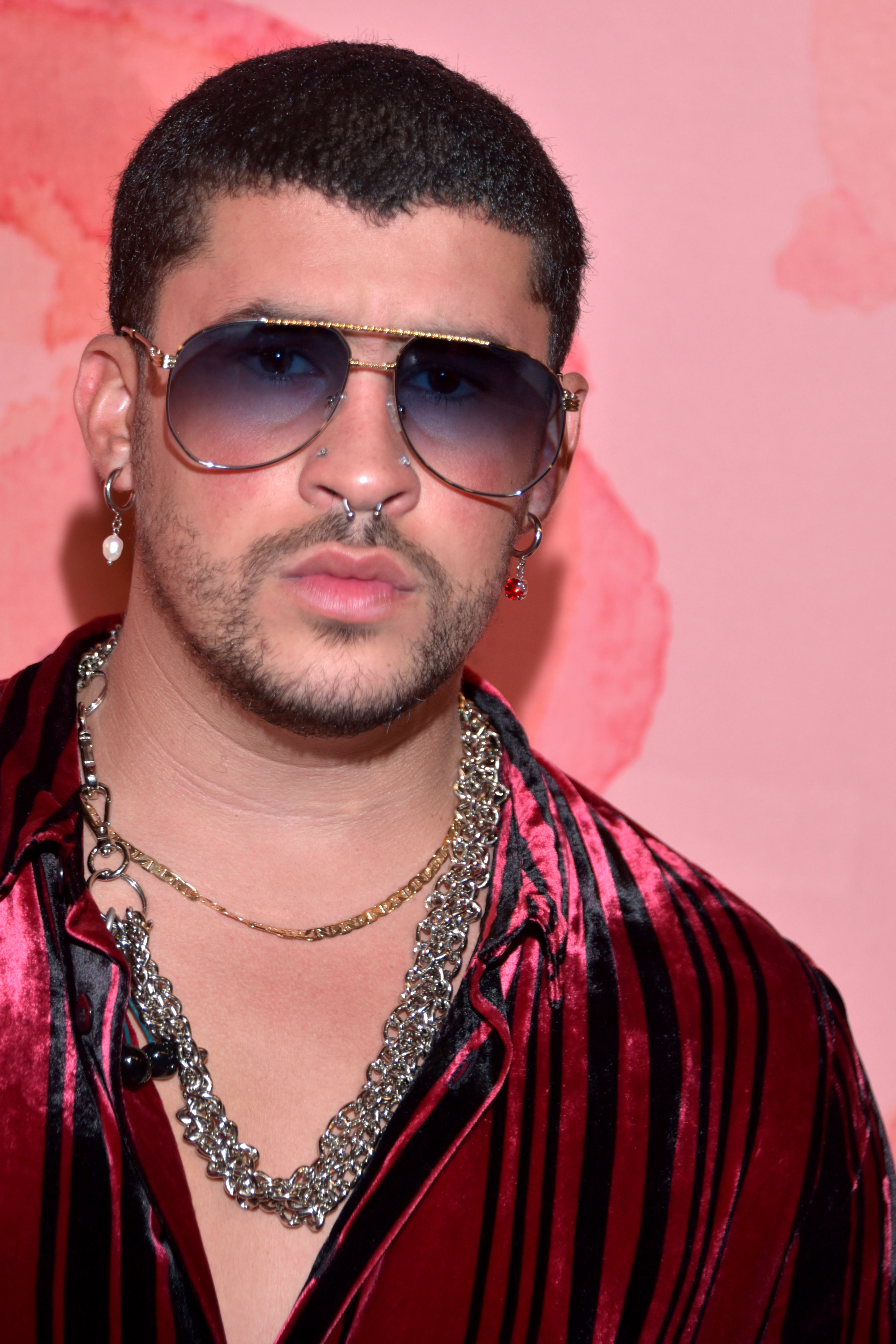
3. **Bad Bunny’s Selection as Super Bowl Halftime Performer**Bad Bunny, whose real name is Benito Antonio Martínez Ocasio, was officially announced as the headliner for the Super Bowl LX halftime show on Sunday, September 28, 2025. This highly anticipated news, confirmed by Bad Bunny himself, signified a momentous occasion, marking him as the first Latin performer to solo headline the much-watched, Apple-sponsored event. The performance is slated for February 8, 2026, at Levi’s Stadium in Santa Clara, California, promising a global audience for the Puerto Rican star.
The selection of Bad Bunny is undeniably a testament to his immense global popularity and groundbreaking success in the music industry. As one of the most streamed artists worldwide, with multiple Grammy Awards under his belt, his appeal spans across diverse demographics, making him a compelling choice for an event that seeks to draw maximum viewership. His ability to consistently top charts and attract millions of listeners worldwide positions him as a significant cultural force capable of commanding the enormous platform that the Super Bowl provides.
In his statement announcing the performance, Bad Bunny articulated a profound personal and cultural significance for the show. He said the performance would be “for my people, my culture and our history,” adding, “What I’m feeling goes beyond myself. It’s for those who came before me and ran countless yards so I could come in and score a touchdown. … This is for my people, my culture and our history.” These words underscore his intention to use the global stage not just for entertainment, but as a celebration and representation of his heritage and community.
4. **Bad Bunny’s Prior Concerns Regarding ICE Operations**Prior to the Super Bowl halftime show announcement and Lewandowski’s subsequent statements, Bad Bunny had openly expressed profound concerns about the potential actions of Immigration and Customs Enforcement (ICE) agents at his concerts within the United States. These concerns were significant enough to influence his touring decisions, notably leading him to avoid U.S. stops on a recent world tour. The artist articulated a genuine fear that his fanbase, which includes many from immigrant communities, could be targeted by federal agents.
In an interview with i-D magazine, Bad Bunny delved into the reasons behind his decision to skip U.S. dates, stating, “There were many reasons why I didn’t show up in the US, and none of them were out of hate—I’ve performed there many times.” He clarified that his absence was not due to animosity towards the country, where he has historically enjoyed successful performances and a strong connection with Latino audiences. Instead, the overriding concern was the perceived threat of immigration enforcement.
The artist specifically stated, “But there was the issue of—like, f***ing ICE could be outside [my concert]. And it’s something that we were talking about and very concerned about.” This candid admission highlighted the palpable anxiety felt by Bad Bunny and his team regarding the potential for raids or other enforcement actions at his venues, potentially impacting his fans. His previous statements also included calling ICE agents “motherf—ers” and “sons of bitches” in an Instagram post from June, further illustrating his strong anti-ICE activism.
5. **Initial Department of Homeland Security Response to Bad Bunny’s Fears**At the time Bad Bunny initially voiced his concerns about ICE operations potentially targeting his concerts, the response from Homeland Security officials was notably dismissive and contrasting with the more recent, assertive stance. These earlier statements sought to downplay the artist’s fears, suggesting they were either misinformed or strategically exaggerated. This prior position underscores a shift in how such fears are being addressed by elements within the Department of Homeland Security.
A DHS official, speaking to NPR in response to Bad Bunny’s comments about avoiding U.S. tour dates, stated, “Bad Bunny is either seriously misinformed about ICE operations or is using law enforcement as an excuse because he won’t be able to sell tickets in the United States.” This response directly challenged the veracity of Bad Bunny’s claims, implying that his concerns were either baseless or a cynical marketing ploy, rather than a genuine apprehension about immigration enforcement.
The official further contended that “ICE is not raiding concert venues. Pop stars choosing to fearmonger and demonize ICE law enforcement are contributing to the nearly 1,000% increase in assaults on ICE officers.” This earlier DHS narrative portrayed Bad Bunny’s statements as not only incorrect but also as actively detrimental to law enforcement, accusing him of inciting hostility. This starkly contrasts with Corey Lewandowski’s recent pledge to have ICE agents present, indicating either a change in policy, a differing interpretation of operations, or an escalation of rhetoric within the administration.

6. **The Broader Outcry from Prominent Trump Supporters**Upon the announcement of Bad Bunny as the Super Bowl halftime performer, a significant wave of outrage emanated from prominent Trump supporters and the “MAGA right.” This backlash was swift and intense, articulating strong disapproval of the NFL’s choice and framing the artist’s selection as a divisive and politically charged decision. The collective sentiment expressed a belief that the NFL was aligning itself with what they perceived as anti-American sentiment and progressive political agendas.
Conservative personalities and figures quickly took to various platforms, including social media and podcasts, to voice their objections. Benny Johnson, a right-wing podcaster and personality, was among the most vocal critics, asserting that the NFL was “self-destructing” by selecting Bad Bunny. This type of reaction indicated a perception among this demographic that the NFL, through its choice of performer, was deviating from its perceived role as a unifying national institution and instead embracing controversial political stances.
Robbie Starbuck of the conservative Heritage Foundation further amplified this critique, accusing the NFL of “pushing left-wing social issues.” He questioned the rationale behind the selection, asking, “Is it that hard to pick a unifying music act who doesn’t want to peddle woke propaganda? Does this guy really scream American football to anyone? Be for real with me.” These statements highlight a prevailing sentiment among Trump supporters that the NFL’s decision was a deliberate endorsement of an ideology they oppose, rather than a purely entertainment-driven choice.
Read more about: The Shocking Truth Behind Late-Night TV’s Free Speech Showdowns: 14 Untold Tales of Executive Pressure and Comedian Crackdowns
7. **Specific Criticisms: Political Stance and Language**The outrage from conservative circles against Bad Bunny’s selection was fueled by several specific criticisms, chief among them his outspoken political stance and his predominantly Spanish-language musical output. These elements were frequently cited by critics as reasons why he was an inappropriate choice for an event as nationally significant as the Super Bowl halftime show, reflecting a broader cultural and political divide. His past critiques of Donald Trump were particularly highlighted as a point of contention.
Benny Johnson, for instance, specifically labeled Bad Bunny a “Massive Trump hater” and an “anti-ICE activist,” drawing a direct link between the artist’s political views and his suitability for the halftime stage. Johnson’s X post further criticized the rapper for having “no songs in English,” suggesting that his Spanish-language performances somehow rendered him less suitable for a widely televised American event. This critique touched upon linguistic nationalism, implying that English-language music is more appropriate for such a platform.
Bad Bunny’s criticism of Trump and his administration has been publicly documented. One of his songs, “NUEVAYol,” reportedly pokes fun at the former president, featuring a Trump-like voice saying, “this country is nothing without the immigrants.” These artistic expressions of political commentary, along with his strong stance against ICE, were interpreted by his conservative critics as clear indications of his perceived animosity towards American political figures and institutions, making him a divisive figure in their eyes.
8. **Challenges to Gender Norms and ‘Woke Propaganda’ Accusations**Beyond the criticisms directed at Bad Bunny’s political leanings and linguistic choices, a significant portion of the conservative backlash centered on his perceived defiance of traditional gender norms and accusations of promoting ‘woke propaganda.’ This particular line of critique highlights a cultural clash, where the artist’s personal expression is interpreted through a highly politicized lens by certain segments of the audience and media. The intersection of fashion, identity, and public performance became a flashpoint in this debate, drawing considerable attention.
Critics from the right specifically pointed to Bad Bunny’s fashion choices, which often challenge conventional masculinity, as an example of what they termed ‘left-wing social issues.’ This perspective views such artistic expressions as an intentional pushing of progressive ideologies rather than mere personal style. The implication made by some conservative commentators was that the NFL, by selecting Bad Bunny, was implicitly endorsing these social stances, thereby alienating a portion of its traditional fanbase.
Robbie Starbuck of the conservative Heritage Foundation articulated this sentiment by questioning the NFL’s choice, stating, “Is it that hard to pick a unifying music act who doesn’t want to peddle woke propaganda? Does this guy really scream American football to anyone? Be for real with me.” This question underscored a belief among critics that Bad Bunny’s image and messaging were inherently divisive and incongruent with the perceived values of American football and its audience, thus linking his artistic presentation directly to broader cultural and political agendas.
9. **Bad Bunny’s Vision for the Halftime Performance and Cultural Roots**Amidst the swirling controversy, Bad Bunny articulated a clear and profound vision for his Super Bowl halftime performance, emphasizing its deep personal and cultural significance. His statements underscored an intention to leverage the global stage not merely for entertainment, but as a powerful platform for representation and celebration of his heritage. This perspective stands in stark contrast to the political accusations leveled against him, recasting the performance as an act of cultural affirmation.
In his initial announcement, Bad Bunny declared the performance would be “for my people, my culture and our history,” highlighting a dedication that transcends individual fame. He further elaborated, “What I’m feeling goes beyond myself. It’s for those who came before me and ran countless yards so I could come in and score a touchdown. … This is for my people, my culture and our history.” These remarks frame his participation as a tribute to ancestral struggles and achievements, connecting his musical success to the broader narrative of his community.
Bad Bunny’s commitment to his cultural roots is not new, having previously defended his homeland, Puerto Rico, against derogatory remarks. Following a comedian’s characterization of Puerto Rico as a “floating island of garbage,” Bad Bunny posted a video celebrating Puerto Rican culture, explicitly captioning it “garbage” and asserting, “Puerto Ricans have been fighting since day one of our existence, we are the definition of heart and resistance.” This historical context reinforces his stated intention to utilize the Super Bowl stage to amplify Puerto Rican identity and resilience.
Speaking about the upcoming event, he expressed his excitement: “I’m going to enjoy. I’m going to embrace the moment. I’m going to show what we have, our music, our culture. I’m just going to the stage to enjoy and have fun.” This statement conveys a sense of purpose beyond mere spectacle, aiming to share the vibrancy and richness of his artistic and cultural identity with a massive international audience, thus transforming a singular performance into a collective cultural statement.
10. **Global Popularity and Commercial Success**Bad Bunny’s selection as the Super Bowl halftime headliner is a direct reflection of his unparalleled global popularity and monumental commercial success within the contemporary music industry. His rise to prominence has been swift and sustained, cementing his status as one of the most streamed and recognized artists worldwide. This widespread appeal extends across diverse demographics, making him a compelling choice for an event that seeks to maximize viewership and cultural impact.
Throughout several consecutive years, Bad Bunny has consistently ranked among the top streamed artists globally, demonstrating a consistent ability to capture and retain massive audiences. From 2020 to 2022, he held the title of Spotify’s most-streamed artist, maintaining a position within the top three in every subsequent year. These metrics underscore his sustained relevance and the profound connection he has forged with millions of listeners around the globe, transcending linguistic and cultural barriers.
His discography boasts multiple Grammy Awards, validating his critical acclaim alongside his commercial triumphs. His most recent album, ‘Debí Tirar Más Fotos,’ currently holds the No. 1 position on Billboard’s Independent Albums chart, further attesting to his continued artistic and market dominance. These achievements highlight an artist operating at the pinnacle of his career, consistently producing work that resonates widely.
Beyond music sales and streams, Bad Bunny’s influence permeates other facets of popular culture, including appearances in professional wrestling and popular films, such as Adam Sandler and Netflix’s ‘Happy Gilmore 2.’ His engagement across various entertainment platforms solidifies his brand and broadens his reach, illustrating his pervasive impact on contemporary media and entertainment landscapes. The Super Bowl stage offers yet another testament to his extensive and undeniable appeal.
Read more about: When the Mic Stays On: How Public Outbursts and Controversial Remarks Topple Prominent Careers

11. **The NFL’s Implicit Stance and Pursuit of Inclusivity**The National Football League’s decision to select Bad Bunny as the solo headliner for the Super Bowl LX halftime show carries an implicit message regarding the organization’s evolving approach to inclusivity and cultural representation. This choice, particularly given the political and cultural discussions it ignited, suggests a deliberate move to embrace a wider array of artistic and demographic influences, even if it entails navigating contentious public discourse.
As the first Latin performer to solo headline this Apple-sponsored event, Bad Bunny’s presence on such a prominent global stage is a significant moment for representation. It signals the NFL’s recognition of the immense cultural impact of Latin music and its broad appeal to diverse audiences, particularly within the United States, where Latino viewership constitutes a substantial segment of the population. The NFL, in conjunction with Roc Nation, which manages the Super Bowl halftime show, appears to be aligning itself with contemporary cultural currents.
The selection can be interpreted as an effort to foster a more inclusive brand image, aiming to resonate with younger, more diverse audiences who identify with artists like Bad Bunny. This strategy potentially seeks to broaden the Super Bowl’s appeal beyond traditional fan bases, reflecting changing demographics and cultural tastes. By featuring an artist who openly embraces his Puerto Rican heritage and addresses social issues, the NFL implicitly, if not explicitly, signals a commitment to a more expansive definition of American culture and entertainment.
While Corey Lewandowski criticized the NFL for selecting an artist he claimed would be “separating” people rather than “bringing people together,” the league’s choice suggests a different metric of unity. It indicates a willingness to present an artist who authentically represents a significant cultural movement, even if that representation challenges certain established conservative viewpoints. This reflects an evolving understanding of what constitutes a “unifying” act in a diverse nation.
12. **Legal and Logistical Framework of Immigration Enforcement at Public Events**The prospect of Immigration and Customs Enforcement (ICE) agents actively operating at a mass public gathering such as the Super Bowl introduces complex legal and logistical considerations regarding federal authority, individual rights, and the practicalities of large-scale event security. Corey Lewandowski’s explicit statements about pervasive enforcement highlight a directive that aims to extend immigration law beyond conventional borders, directly into civilian public spaces. This raises questions about the scope and method of such operations.
Lewandowski’s assertion that “there is nowhere that you can provide safe haven to people who are in this country illegally. Not the Super Bowl and nowhere else,” underscores a federal intent to conduct enforcement universally. His further clarification, “We will find you. We will apprehend you. We will put you in a detention facility, and we will deport you,” outlines the specific consequences of encountering undocumented individuals. These statements, framed as a “very real situation under this administration,” mark a departure from previous approaches to immigration enforcement at public venues.
While a DHS spokesperson, when questioned about agents at the game, specifically mentioned the targeting of “violent criminal illegal aliens,” Lewandowski’s broader comments implied a more generalized approach. This discrepancy between targeted enforcement and widespread presence raises concerns about potential profiling and the impact on diverse communities attending the event, regardless of individual legal status. The practical implementation of such a directive at an event drawing hundreds of thousands, if not millions, of attendees poses significant logistical challenges for federal agencies.
Furthermore, the legal landscape in California, where the Super Bowl will be held, adds another layer of complexity. Reports indicate that “California’s recent no-mask and identification laws will be in effect by the time of the Super Bowl (they kick in fully on January 1).” These local regulations, potentially affecting how federal agents can interact with individuals regarding identification, could influence the actual “show of strength” that Lewandowski suggested, potentially complicating federal enforcement actions in a state often at odds with federal immigration policies.
Read more about: United States Immigration and Customs Enforcement: An Overview of Mission, Structure, and Evolution
13. **Surge in Bad Bunny’s Streaming Numbers Post-Announcement**Following the announcement of Bad Bunny’s selection as the Super Bowl LX halftime performer, the artist experienced a notable and immediate surge in his music streaming numbers. This commercial response highlights the immense power of the Super Bowl platform and the heightened public interest generated by the accompanying controversy. The data illustrates how a high-profile cultural event, even one embroiled in political debate, can translate directly into increased engagement with an artist’s work.
According to Billboard, on the Monday immediately following the Sunday announcement, Bad Bunny’s music received 18 million streams. This figure represented a substantial 31% week-over-week increase in his streaming activity, demonstrating a direct correlation between the halftime show news and a renewed or intensified listenership. Such a significant spike underscores the artist’s robust fanbase and the broader public’s reaction to his elevated profile.
The commercial uplift extended beyond simple streaming numbers, as reports indicated that the Super Bowl announcement, combined with the finale of his live residency, contributed to “millions of extra streams.” This suggests a cumulative effect, where multiple high-visibility events converged to amplify his market presence and reach. The data serves as tangible evidence of the economic impact of the Super Bowl’s cultural spotlight, irrespective of the political discussions it provoked.
This immediate commercial success, occurring concurrently with the declarations from Corey Lewandowski regarding ICE presence, illustrates a dichotomy. While some segments of the public reacted with outrage, another, larger segment responded with increased engagement with Bad Bunny’s artistic output. It indicates that the controversy, far from diminishing his appeal, may have inadvertently broadened his audience or deepened his existing fanbase’s commitment.
14. **Broader Cultural and Political Implications of the Controversy**The controversy surrounding Bad Bunny’s Super Bowl halftime performance and the subsequent federal immigration enforcement threats illuminates profound cultural and political implications within contemporary American society. The event has transcended a mere sporting and entertainment spectacle, becoming a highly visible arena where complex issues of immigration, national identity, artistic freedom, and partisan divides are intensely debated. This confluence of factors reveals the enduring fault lines in the American public sphere.
The Super Bowl halftime show, traditionally a moment of national unity and shared entertainment, has been transformed into a microcosm of the nation’s ongoing struggles with its multicultural identity and immigration policies. The impassioned reactions from both critics and supporters of Bad Bunny underscore deeply held, often conflicting, views on what constitutes “American” culture and who should represent it on a global stage. This debate highlights the political weaponization of cultural events, making them proxies for larger ideological battles.
Corey Lewandowski’s statements, particularly his characterization of Bad Bunny as someone who “seems to hate America so much” and his advice for undocumented individuals to “go home,” inject a potent nationalist and exclusionary rhetoric into the discussion. This narrative positions certain artists and communities as antithetical to American values, thereby deepening partisan polarization. The insistence on “making Americans safe” through pervasive enforcement, regardless of the venue, reflects a broader policy agenda that prioritizes stringent immigration control above all else.
The overall episode signifies how deeply intertwined entertainment, identity, and politics have become. It illustrates that cultural figures and events are no longer solely judged on artistic merit or entertainment value but are increasingly subjected to political scrutiny and leveraged for ideological messaging. This shift has broader implications for how major cultural institutions navigate an increasingly divided public, demonstrating the challenges in presenting unifying content in a highly politicized landscape.
Read more about: The Unprecedented Freeze: How Hollywood’s Strikes Reshaped Film Production and Promotion in 2023
In the intricate tapestry of American society, where cultural phenomena often intersect with profound political discussions, the Super Bowl has emerged as an unexpected, yet potent, battleground. The discourse surrounding Bad Bunny’s performance and the accompanying immigration enforcement debate does not merely reflect existing divisions; it actively shapes and amplifies them. This ongoing narrative underscores the critical importance of understanding these complex intersections, for they define the very fabric of our national conversation and the trajectory of our shared future.”