The silent guardian of your driving experience, your vehicle’s windshield, is far more than just a pane of glass. It serves as a crucial structural component, safeguarding you from the elements and providing essential support during accidents. Yet, a surprising number of drivers remain unaware of the simple, yet profound, steps they can take to both prevent initial damage and effectively halt the progression of minor chips and cracks. This oversight often leads to compromised safety and significantly higher repair costs down the line.
While it might feel as though windshield damage strikes without warning, the truth is that a vast majority of issues are preventable, often stemming from easily avoidable habits or a lack of proactive maintenance. From failing to observe adequate following distances to neglecting proper de-icing protocols, the list of factors contributing to auto glass vulnerability is extensive. The good news is that you don’t need to possess advanced automotive knowledge to become a master of windshield preservation. Simple, actionable strategies can make all the difference.
In this comprehensive guide, we channel the spirit of practical mechanics to provide you with an authoritative roadmap for protecting your windshield. We will meticulously detail the critical techniques and immediate interventions that not only shield your auto glass from daily wear and tear but also empower you to confidently manage and mitigate existing damage before it escalates. Embracing these straightforward solutions is key to ensuring your windshield maintains its integrity, bolstering your vehicle’s safety, and ultimately saving you from unnecessary expenses and roadside worries. Let’s explore how to keep your view clear and your drive secure.
**1. Prioritize Prompt Chip Repairs: Don’t Let a Chip Become a Catastrophe**
Ignoring a small chip in your windshield is akin to overlooking a flickering warning light on your dashboard – it’s a gamble that rarely pays off. Far too many drivers underestimate the exponential risk posed by even minor auto glass damage, thinking it’s merely a cosmetic blemish that can wait. This common oversight is a primary reason why minor chips so frequently transform into extensive cracks, necessitating far more invasive and expensive repairs. The moment you spot a chip, prompt action is not just advisable; it’s absolutely essential.
The vulnerability of a chipped windshield intensifies dramatically when subjected to environmental extremes. Consider the relentless forces of nature: scorching summer heat causes glass to expand, while frigid winter temperatures induce contraction. This continuous cycle of expansion and contraction exerts immense internal stress on the point of impact. What was once a contained chip, a minor imperfection, can rapidly spread outwards, creating a sprawling network of cracks as the glass succumbs to these thermal pressures. This phenomenon is especially pronounced, transforming tiny damage into a significant issue with surprising speed.
Beyond temperature fluctuations, everyday actions can also accelerate crack propagation. Imagine the simple necessity of clearing ice from your windshield on a frosty morning. The act of scraping, even with the gentlest plastic tool, applies localized pressure to the glass. If that pressure coincides with an existing chip, it provides the perfect catalyst for the crack to extend. The mechanical stress, combined with the inherent weakness of the damaged area, means that a routine de-icing task can inadvertently force a chip to grow into a major structural compromise, making it clear why quick intervention is non-negotiable.
Understanding the potential for a small chip to become a “moderate or large crack” underscores the critical importance of immediate auto glass repair. These aren’t just aesthetic concerns; they represent a tangible threat to your vehicle’s structural integrity and your overall safety. A compromised windshield is less capable of withstanding impacts and, crucially, less effective in supporting the vehicle’s roof during a rollover accident. Therefore, taking swift action to repair a chip is a fundamental investment in both the longevity of your vehicle and the safety of its occupants, preventing a minor nuisance from evolving into a critical hazard.
**2. Practice Safe Following Distances with the Three-Second Rule: Your Shield Against Road Debris**
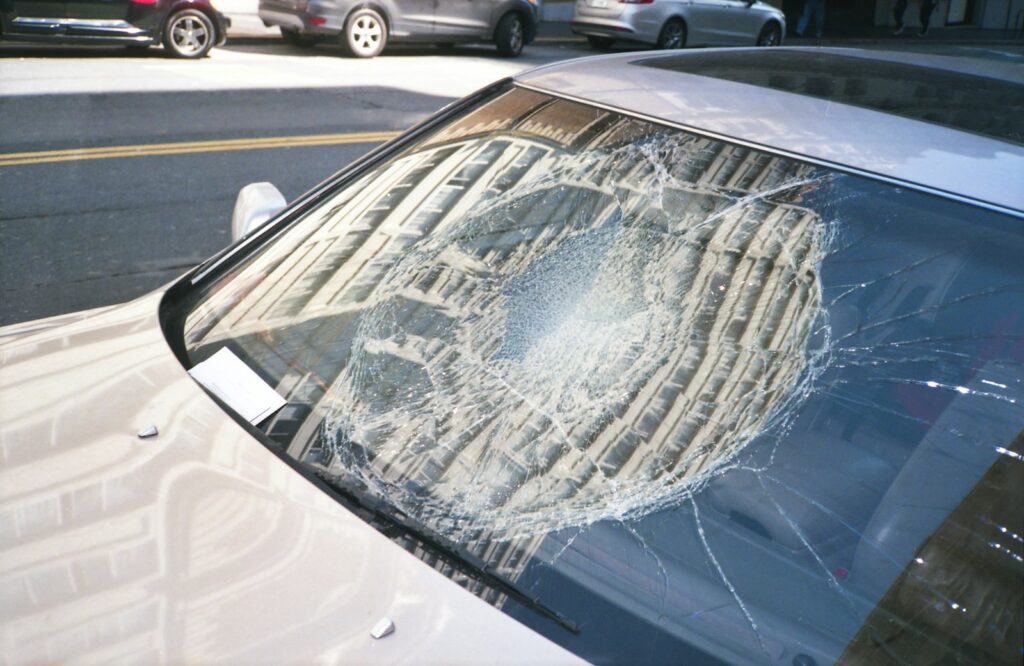
Reacquainting yourself with the three-second rule, a cornerstone of safe driving learned in high school driver’s education, offers a dual benefit that extends far beyond accident prevention. While primarily designed to safeguard against front or rear-end collisions, this ingenious trick also serves as a highly effective, yet often overlooked, defense mechanism for your windshield. By consistently applying this simple principle, you can dramatically reduce your auto glass’s exposure to one of its most prevalent threats: projectiles launched from the road by other vehicles.
Implementing the three-second rule is straightforward and requires no special equipment, just focused attention. Begin by identifying a fixed landmark in the distance—perhaps a bridge, a signpost, or a mile marker—that the vehicle directly in front of you is about to pass. As the rear of their vehicle crosses this chosen point, initiate your count, enunciating “one-thousand-one, one-thousand-two, one-thousand-three.” Maintain an accurate pace, as counting too quickly will undermine the effectiveness of this monitoring technique.
The moment the front of your own vehicle reaches the same landmark, you stop counting. If you successfully completed the “one-thousand-three” count before arriving at the marker, you’ve achieved a safe following distance, leaving approximately three seconds of travel time between your car and the one ahead. Should your vehicle reach the landmark before you’ve finished counting, it’s a clear signal to ease off the accelerator, increase your buffer, and repeat the process until you consistently achieve at least a three-second gap.
The genius of the three-second rule, in the context of windshield protection, lies in its ability to create a significant safety zone. This expanded space allows road debris—stones, gravel, or other small objects inadvertently kicked up by the tires of the vehicle in front—to lose much of their momentum or simply fall back to the road before reaching your windshield. Without this buffer, these projectiles can strike your auto glass with surprising force, often resulting in chips, dings, or even substantial cracks that compromise both aesthetics and structural integrity.
It is important to remember that while three seconds is a good baseline for ideal road conditions, vigilance requires adaptation. When encountering adverse weather, such as rain, snow, or icy patches, or when driving on less-than-perfect roads, extend your following distance to at least five seconds. This increased buffer provides an even greater margin of safety, not only for braking but also for allowing airborne debris more time to dissipate its energy, offering superior protection for your windshield against the unexpected hazards of the road.

**3. Strategically Avoid Gravel and Construction Areas: Mitigating Impact Risks**
While not the absolute worst antagonist for your windshield, patches of loose gravel and the frequent presence of construction vehicles undoubtedly rank high among the leading causes of auto glass damage. For drivers, particularly those in regions where road maintenance is ongoing or rural routes are common, understanding how to navigate these environments is crucial. Making conscious decisions to avoid or adapt to these conditions can significantly reduce your vulnerability to chips and cracks caused by flying projectiles.
The primary threat from gravel lies in its propensity to become airborne. The rotation of tires, especially on vehicles ahead of you, acts as a powerful catapult, flinging small, hard pieces of rock upwards. These stones, propelled by kinetic energy, can strike your windshield with enough force to cause significant damage, ranging from minor dings to substantial star breaks or bull’s eyes. It’s an instantaneous event that can quickly escalate into a repair necessity, reinforcing why proactive avoidance strategies are so important.
Construction zones amplify this risk considerably. These areas are often characterized by active machinery, ongoing excavation, and a greater likelihood of loose materials such as fresh asphalt aggregate, dirt, and gravel. Trucks and heavy equipment working in these environments are constantly stirring up debris. Attempting to drive directly behind these vehicles, even for a short distance, exposes your windshield to an elevated and unpredictable barrage of potential impacts. You simply cannot know what might be dislodged and sent flying backward towards your vehicle.
For individuals whose daily commute or lifestyle involves unavoidable exposure to gravel-laden roads, such as those living on rural routes, a complete avoidance strategy might not be practical. In such scenarios, implementing defensive driving techniques becomes paramount. The most effective adjustments include significantly reducing your speed to lessen the impact force of any kicked-up stones, and, as previously mentioned, substantially increasing your following distance from any vehicle ahead. These measures collectively diminish the energy of potential projectiles, offering your windshield a better chance of emerging unscathed.
**4. Utilize Covered Parking Whenever Possible: Your First Line of Defense**
The simple act of choosing where to park your vehicle carries profound implications for the health and longevity of your windshield. When cars are left in open, unprotected environments, their auto glass becomes a prime target for a wide array of unforeseen impacts. From the capricious whims of weather to accidental human activity, an exposed windshield is a vulnerable component, susceptible to damage that can be both immediate and costly. Prioritizing covered parking is a remarkably effective, yet often underestimated, preventive strategy.
Nature itself presents numerous threats to an uncovered windshield. Consider the destructive potential of hail, which can descend rapidly and pummel your vehicle with ice projectiles, resulting in numerous impact points or even catastrophic shattering. Strong gusts of wind can transform everyday objects—be they small branches, loose signage, or stray litter—into formidable airborne hazards. Even during winter thaws, falling icicles, dislodged from rooftops or tree limbs, can strike your auto glass with surprising force, creating significant chips or cracks. These environmental assaults are difficult to predict, but their impact can be readily mitigated by providing overhead protection.
Beyond natural elements, parking in unfamiliar or publicly accessible open areas can inadvertently expose your vehicle to heightened risks of vandalism or accidental damage from passersby. While such incidents are distinct from typical road hazards, the unfortunate consequence for your windshield remains the same: potential for breakage and the subsequent need for repair or replacement. A covered parking solution, therefore, acts as a critical physical barrier, deflecting potential threats and providing a secure envelope for your vehicle’s most vulnerable transparent surface.
Fortunately, implementing a “covered parking” strategy doesn’t necessarily demand access to a private, enclosed garage. Even more accessible options offer substantial protection. A simple carport, a dedicated vehicle tent, or even strategically parking under a robust overhang from a building can provide a crucial shield. These structures are instrumental in deflecting falling debris, dampening the force of hailstones, and guarding against wind-driven projectiles. By employing these measures, you significantly reduce the likelihood of impact damage, thereby preserving your auto glass and avoiding the inconvenience and expense of unexpected windshield repairs.

**5. Master Safe De-Icing Techniques: Preserving Integrity in Winter**
For those who brave the colder climates, the daily ritual of de-icing a frozen windshield is a fact of life. However, this seemingly mundane task holds hidden dangers for your auto glass if not performed with care and foresight. Improper de-icing techniques are a common, yet entirely avoidable, cause of accidental damage, capable of turning a perfectly intact windshield into a cracked liability, or significantly worsening any pre-existing chips. Learning and consistently applying safe de-icing methods is an absolute necessity for protecting your windshield throughout the winter season.
The cardinal rule of safe de-icing revolves around tool selection. Resist the temptation to use anything other than purpose-designed plastic ice scrapers for clearing your auto glass. Metal tools, the sharp edges of household items, or even overly abrasive brushes can easily scratch, gouge, or chip the delicate surface of the glass. Such damage, even if initially minor, compromises the glass’s integrity, creating stress points that are highly susceptible to developing into larger cracks, especially under continued pressure or subsequent temperature fluctuations. The correct tool is your windshield’s best friend in icy conditions.
Equally vital is the avoidance of thermal shock. It’s a tempting shortcut: pouring hot or boiling water directly onto a windshield encased in ice. However, this drastic difference in temperature—the rapid application of intense heat to supercooled glass—induces immediate and extreme thermal stress. The glass surface will attempt to expand far too quickly and unevenly, a process that frequently results in spontaneous cracking or even shattering. Instead, prioritize gradual warming; utilize your vehicle’s defroster system, allowing it ample time to gently raise the glass temperature, which facilitates much safer and easier ice removal without risking catastrophic damage.
To further enhance your de-icing strategy and minimize physical stress on the glass, consider integrating specialized de-icing sprays or windshield washer fluids formulated with ice-melting properties into your routine. These chemical solutions work to break down the bond between ice and glass, making it considerably easier to scrape away the residue with minimal effort and pressure. By combining the right tools, a patient approach to temperature management, and the assistance of effective chemical agents, you can confidently clear your windshield while meticulously safeguarding its structural resilience against the challenging demands of winter weather.

**6. Drive with Caution When Damage Exists: Protecting a Compromised Windshield**
When your windshield has already incurred any form of minor damage, be it a small chip or a nascent crack, your driving behavior takes on heightened importance. These imperfections are not merely superficial; they represent vulnerable points that can, with surprising swiftness, propagate into extensive, vision-impairing fissures if subjected to undue stress or vibration. While securing prompt professional auto glass repair remains the gold standard, there are inevitable scenarios where immediate access to a service center isn’t possible. In such instances, adopting a meticulously cautious driving style becomes your most effective interim strategy to prevent further escalation.
The overarching principle here is to rigorously minimize any external or internal forces that could exert additional strain on the already compromised glass. This translates directly into a proactive avoidance of common road hazards. Potholes, for example, are notorious for transmitting sharp, abrupt jolts throughout your vehicle’s chassis. These powerful impacts resonate directly through the vehicle structure to the windshield, providing the precise kind of sudden stress that can easily extend an existing crack. Similarly, the habit of following other vehicles too closely, as previously detailed, magnifies the risk of additional debris impacts, which can exploit existing weaknesses and accelerate crack propagation dramatically.
Furthermore, practicing deliberate and smooth driving maneuvers is absolutely crucial. Any sudden, aggressive actions behind the wheel—such as abrupt braking, rapid acceleration, or sharp, hurried turns—can induce significant torsion and flex within your vehicle’s frame. These dynamic forces are invariably transferred to the windshield, potentially creating stress concentrations around the damaged area. Even subtle, repetitive stresses can accumulate, pushing a small, manageable crack past its critical threshold, initiating rapid expansion that could quickly necessitate a comprehensive windshield replacement rather than a more straightforward, economical repair.
Particular vigilance is warranted on gravel-laden roads if your windshield is already chipped or cracked. While a resilient windshield might tolerate these surfaces relatively well, an already compromised one is far more susceptible to further harm. The impact of even a minor stone on a weakened area can be catastrophic, leading to immediate and extensive damage. By embracing a defensive and measured driving approach when your auto glass is already flawed, you not only preserve its current state but also actively prevent a minor inconvenience from transforming into a significant safety hazard, buying crucial time until professional intervention can restore its integrity.
**7. Regulate Your Vehicle’s Environment: Mastering Temperature Control**
An often-underestimated threat to a damaged windshield comes from temperature fluctuations. Auto glass constantly expands and contracts with changes in heat and cold. When a crack is present, these natural movements exert immense internal stress, transforming a minor imperfection into a rapidly spreading fissure. Managing your vehicle’s immediate environment is crucial for halting crack progression.
The danger increases with abrupt temperature shifts. On a scorching day, your windshield expands. Washing it with cold water immediately after can shock the glass, causing rapid contraction that a weakened crack cannot withstand, guaranteeing worsening damage. Similarly, blasting hot defrost air onto a frozen, cracked windshield induces rapid expansion. Extreme, sudden changes are a primary catalyst for crack propagation.
To mitigate this, prioritize gradual temperature changes and seek protection. Park in covered areas like a garage or shaded spot to buffer against extreme swings. If washing your car on a hot day, let the windshield cool naturally first. In winter, use your defroster for gentle warming, avoiding boiling water. These conscious actions dramatically reduce thermal stress, buying valuable time until professional repair.

**8. Navigate Smoothly: Minimize Vibrations to Halt Crack Growth**
Beyond environmental factors, driving dynamics itself can be a relentless adversary to a chipped or cracked windshield. Minor road imperfections or aggressive habits generate vibrations and stresses directly targeting existing auto glass damage. Navigating with heightened caution is a specific, vital tactic for preventing a minor crack from expanding into a serious, visibility-impairing problem.
A cracked windshield inherently possesses compromised structural integrity. When your vehicle hits a pothole or speed bump, the resulting jolt sends shockwaves throughout. These abrupt impacts provide precisely the kind of sudden stress that can easily extend an existing crack, pushing it beyond its breaking point. Additionally, aggressive maneuvers—like abrupt braking or sharp turns—induce significant torsion, transferring stress to the windshield.
Therefore, making deliberate choices about routes and driving style is paramount. Prioritize smooth, well-maintained roads over rough, potholed streets whenever possible. If unavoidable bumps are encountered, approach them slowly and carefully. By adopting this measured approach, you proactively preserve your compromised windshield, reducing cumulative stress and offering a critical interim solution until professional repair restores its strength and ensures a clearer view.
**9. Maintain Pristine Clarity: The Role of a Clean Windshield**
While seemingly minor, maintaining a clean windshield, especially with existing damage, plays a significant role in preventing crack spread. Dirt, dust, and grime aren’t just cosmetic issues; they actively contribute to weakening and exacerbating existing cracks. A clean windshield isn’t merely about visibility; it’s a vital component of proactive damage control, impacting your auto glass’s integrity.
The mechanism is simple: chips and cracks create tiny crevices where microscopic debris can settle. Once lodged, these foreign particles exert additional, localized stress on the glass edges. This constant pressure, combined with temperature changes or driving vibrations, acts like a wedge, gradually forcing the crack to extend. It’s a subtle, ongoing assault that can compromise the glass’s integrity over time.
Integrating regular windshield cleaning is a simple, powerful measure. Use appropriate auto glass cleaner and soft microfiber cloths to gently remove grime, avoiding abrasive materials. Pay close attention to areas around any existing damage, ensuring no particles are left to exacerbate the problem. This meticulous approach ensures optimal visibility and removes a key contributor to crack propagation, preserving windshield resilience until professional intervention.

**10. Deploy a Windshield Repair Kit: Your DIY First Aid**
Immediately after discovering a small chip or crack, a DIY windshield repair kit can be invaluable. These kits offer an affordable, accessible temporary solution, effectively halting minor damage spread and buying crucial time before professional repairs. Consider them vital first-aid for your auto glass, stabilizing the injury and preventing it from worsening.
Their effectiveness stems from specialized resin. The process involves cleaning the damaged area, then positioning an applicator to inject clear resin into the chip or crack. This resin fills the void, displaces air, and creates a strong bond that strengthens the glass at the impact point. Once cured by sunlight or UV light, the resin dries clear, making the repair virtually invisible and preventing further spread.
However, using kits requires caution and realistic expectations. Incorrect application can worsen damage or distort visibility. DIY solutions are provisional, not a substitute for professional expertise, especially for larger cracks or those impacting your line of sight. While excellent for small imperfections, a properly applied kit is a temporary fix, extending lifespan but not providing definitive, long-term integrity.
**11. Nail Polish or Superglue: Quick Fixes for Small Imperfections**
When a dedicated windshield repair kit isn’t available, or for truly tiny, isolated chips, household items like clear nail polish or superglue offer an emergency, temporary solution. They act as an impromptu sealant, providing a quick fix to prevent a minuscule imperfection from rapidly escalating. This serves as an ultimate ‘break glass in case of emergency’ measure, establishing a fragile barrier.
These substances fill the crack’s tiny void, similar to repair kit resin, preventing dirt and moisture ingress while stabilizing compromised glass. For application, ensure the crack surface is thoroughly cleaned and dried. Carefully apply a small amount into the fissure, allowing it to seep in. Let your car sit in the sun for several hours to aid drying and curing, achieving its temporary sealing effect.
Understand these are strictly provisional, offering only short-term results. They lack specialized durability and refractive properties, potentially causing visual distortion. Critically, avoid using windshield wipers over treated areas. Mechanical stress and chemical interaction with wiper fluid can easily dislodge the sealant or even exacerbate original damage. This quick fix is for emergencies only, not a long-term solution.
**12. Know When to Call the Pros: Securing Lasting Solutions**
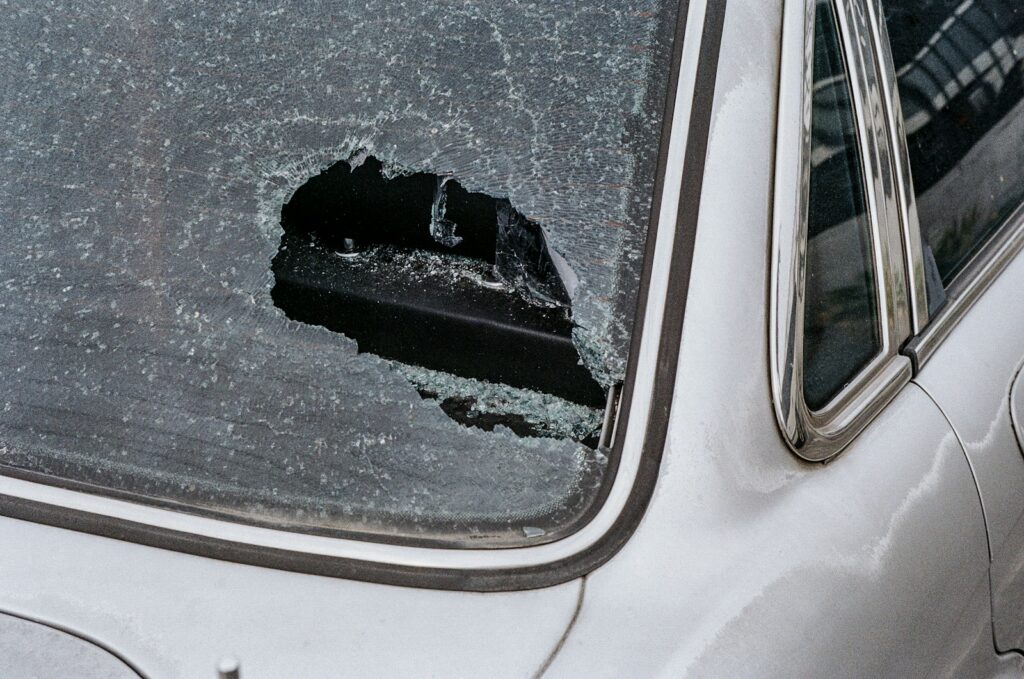
While proactive habits and DIY fixes offer valuable temporary management for windshield damage, a point arrives where professional intervention becomes absolutely essential. Understanding this transition from “do-it-yourself” to expert help is critical for safeguarding your vehicle’s integrity and safety. Temporary measures bridge a gap, not provide definitive, lasting repair.
The threshold for professional repair is defined by key factors. A crack longer than 12 inches, or one significantly impairing driver vision, demands immediate professional attention. Cracks near the windshield’s edge or directly in the driver’s primary line of sight often cannot be safely repaired with DIY kits and require expert assessment, possibly full replacement. If a crack continues to spread, it signals damage beyond temporary solutions.
Entrusting your windshield to certified professionals yields undeniable benefits. They use specialized equipment and high-quality resins for durable, virtually invisible repairs, ensuring a strong bond and minimal distortion. Their expertise guarantees structural stability, crucial for occupant safety, especially during accidents. This level of quality and assurance surpasses anything a household item or generic kit can deliver.
Moreover, the misconception that professional repair is always expensive isn’t true. Many insurance policies cover windshield repair, often without a deductible, making it economical. Managing significant cracks with inadequate DIY methods risks further damage and costly replacement. Professional care ensures aesthetic appeal, safety, and structural integrity, proving an investment in long-term peace of mind.
Ultimately, the journey to a crack-free windshield is a combination of vigilant awareness and smart, timely action. From adopting preventative driving habits and choosing sensible parking, to understanding the nuances of temperature control and knowing how to apply temporary fixes, every step contributes to the longevity and safety of your auto glass. While DIY solutions can offer crucial interim relief, the wisdom truly lies in recognizing when to defer to the seasoned hands of a professional. By embracing these practical mechanics, you’re not just maintaining a piece of glass; you’re actively preserving a critical safety component of your vehicle, ensuring a clear view and a secure drive for countless miles ahead. Don’t let a small chip become a monumental headache – empower yourself with knowledge and act decisively!