

The interplay of light and shadow on a stage is more than just an aesthetic choice; it is a profound narrative force, capable of evoking deep emotions, establishing the mood, and fundamentally driving the story of a performance. In the hands of a skilled lighting designer, this subtle yet powerful tool becomes an instrument of transformation, painting the stage with nuance and depth. To truly unlock the transformative potential of light, however, the lighting designer must work in seamless harmony with the director, who serves as the visionary architect behind the entire production.
This collaborative relationship, often described as a delicate dance, hinges on mutual respect, open communication, and a shared understanding of the production’s overarching goals. The lighting designer, bringing their unique blend of technical expertise and creative flair, undertakes the intricate task of translating the director’s conceptual vision into a tangible, illuminated reality. It is a partnership that, when meticulously nurtured and executed, culminates in a visual symphony that elevates the entire theatrical experience, imbuing every scene with palpable atmosphere and meaning.
This in-depth exploration delves into the essential nuances of this critical collaboration, offering practical insights and actionable strategies to ensure a smooth, productive, and ultimately fruitful partnership. Whether one is a seasoned lighting professional with decades of experience or an emerging designer embarking on their first major production, the principles outlined here are designed to empower practitioners to collaborate effectively with directors, creating lighting designs that are not only visually stunning but also dramatically impactful, speaking volumes without uttering a single word, even when communication extends beyond verbal exchanges to encompass every subtle cue and shared understanding.

1. **Understanding the Director’s Vision**The inaugural and arguably most critical step in establishing a truly collaborative relationship between a lighting designer and a director is the profound and comprehensive understanding of the director’s vision for the production. This is not merely about grasping surface-level desires but delving into the deeper artistic intentions: What fundamental story is the director striving to convey to the audience? What specific emotions are they keen to elicit, aiming to resonate within the hearts and minds of those watching? What precise atmosphere or ambiance are they determined to create, ensuring every moment on stage contributes to the overall narrative and emotional landscape?
The inaugural and arguably most critical step in establishing a truly collaborative relationship between a lighting designer and a director is the profound and comprehensive understanding of the director’s vision for the production. This is not merely about grasping surface-level desires but delving into the deeper artistic intentions: What fundamental story is the director striving to convey to the audience? What specific emotions are they keen to elicit, aiming to resonate within the hearts and minds of those watching? What precise atmosphere or ambiance are they determined to create, ensuring every moment on stage contributes to the overall narrative and emotional landscape?
Achieving this level of understanding necessitates a sophisticated approach involving both active listening and the art of asking probing questions. A lighting designer must pay meticulous attention not only to the director’s explicit words but also to their often-revealing non-verbal cues. The subtle shifts in their tone of voice, the nuanced expressions on their facial features, and the unconscious gestures they employ can often betray a deeper layer of meaning and reveal critical nuances about their artistic vision that words alone might not fully articulate. Such observations are vital conduits for grasping the unspoken texture of a director’s conceptual framework.
When ambiguities inevitably arise, the ability to ask incisive, clarifying questions becomes indispensable. For instance, if a director expresses a desire for a ‘dreamy’ atmosphere within a particular scene, it is insufficient to simply accept this term at face value. A truly engaged lighting designer will probe further, respectfully asking the director to elaborate on what ‘dreamy’ signifies to them personally. Does it connote an ethereal softness, a gentle luminescence that hovers delicately above the stage? Or might it suggest a hazy, perhaps even mysterious quality, where forms are indistinct and light feels diffused, creating an unsettling yet captivating visual?
Beyond direct communication, a deep immersion in the script and all other pertinent production materials is non-negotiable. The lighting designer should read the script not once, but multiple times, allowing its narrative layers to unfold, focusing intently on the characters’ arcs, their intricate relationships, and the overall trajectory of the plot. Concurrently, it is crucial to familiarize oneself thoroughly with supplementary production elements, including the set design, the costume design, and the sound design. These components are inextricably linked to the lighting, each influencing and being influenced by the others, thereby enabling the creation of a truly cohesive and unified visual aesthetic that underscores the director’s unique interpretation.
Consider, for example, a director who envisions a production of Shakespeare’s “Macbeth” as an intensely “dark and brooding” commentary on power and corruption. In this scenario, a lighting designer might strategically explore the use of low-key lighting, characterized by significant contrast between areas of light and deep shadow. This deliberate choice would not merely be decorative; it would actively work to forge an atmosphere heavy with suspense and foreboding, visually mirroring the play’s central themes of unchecked ambition and inevitable betrayal, thus making the lighting an active participant in the storytelling.
Read more about: The Unbearable Weight of Regret: Deconstructing James Cameron’s Singular Apology for a Pivotal ‘Titanic’ Scene

2. **Open and Honest Communication**At the very core of any successful artistic collaboration, particularly within the demanding realm of theatrical production, lies the indispensable principle of open and honest communication. It transcends mere information exchange, evolving into the very bedrock upon which mutual understanding, trust, and shared creative purpose are built. Establishing a genuine rapport with the director is paramount, cultivating an environment where both individuals feel not only comfortable but actively encouraged to share their nascent ideas, explore challenging concepts, and offer candid feedback without apprehension or reservation. This psychological safety allows for the free flow of creativity and problem-solving.
To foster this continuous dialogue, regular meetings and scheduled check-ins are not just advisable, they are essential touchstones throughout the entire production process. These formalized gatherings provide invaluable opportunities to discuss ongoing progress, to proactively address any emerging concerns, and, crucially, to consistently verify that the evolving lighting design remains perfectly aligned with the director’s overarching artistic vision. Furthermore, the capacity for impromptu check-ins, initiated whenever a question arises or a point of clarification is needed, can prevent minor misunderstandings from escalating into significant creative divergences, ensuring agility and responsiveness.
When the time comes to articulate and present lighting design ideas, clarity and conciseness are virtues of the highest order. It is imperative to explain complex design concepts in language that is straightforward and easily digestible, consciously sidestepping technical jargon or specialized terminology that the director, or any non-technical stakeholder, might not readily comprehend. The goal is to illuminate the idea, not to obscure it with professional argot. In aid of this, the judicious use of visual aids becomes an exceptionally powerful tool. Sketches, meticulously crafted mood boards, or detailed lighting plots can transform abstract concepts into tangible realities, making the design ideas more accessible, comprehensible, and ultimately, more compelling.
Equally vital is the capacity to be genuinely receptive to feedback from the director, even when that feedback might appear critical or challenge deeply held design choices. It is crucial to internalize the understanding that the ultimate objective is not personal validation, but rather the creation of the finest possible lighting design for the production as a whole. Feedback, therefore, should be embraced as an integral and invaluable component of that iterative creative process. Should a disagreement arise concerning a piece of feedback, the lighting designer must express their concerns respectfully and professionally, always being prepared to offer well-reasoned alternative solutions that address the director’s core intent while preserving the integrity of the design.
Consider a scenario where the director suggests a lighting change that, in the designer’s expert opinion, would regrettably “detract from the scene’s impact.” Instead of simply rejecting the idea, the lighting designer would carefully articulate their concerns, explaining precisely why the proposed alteration might undermine the established emotional or narrative intent. Following this, they would offer a thoughtfully conceived alternative solution – perhaps a subtle modification of color temperature or a strategic re-angling of a key light – that not only achieves the director’s desired effect but also impeccably maintains the scene’s delicate integrity and artistic coherence, demonstrating both respect and expertise.
Read more about: Hollywood’s Hard Truths: 15 Critical Mistakes That Can Ruin Your Movie Pitch, According to Studio Insiders
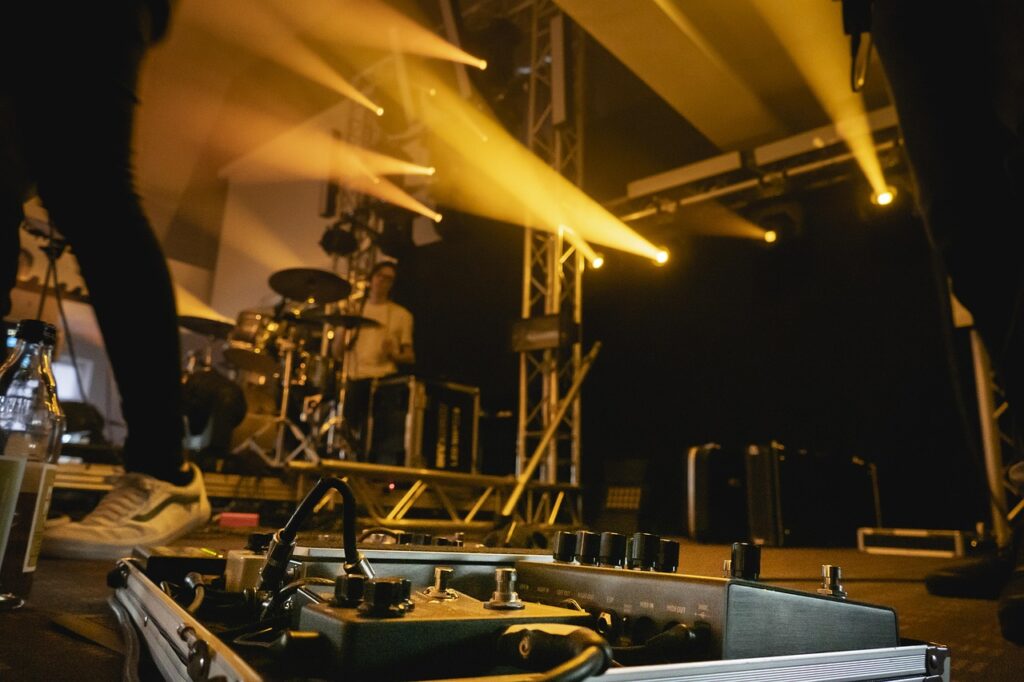
3. **Flexibility and Adaptability**In the vibrant yet often unpredictable ecosystem of live theater, the landscape is inherently dynamic, and realities rarely adhere strictly to meticulously drawn plans. Directors might, with valid reason, adjust their vision for a scene; an actor might deliver a pivotal line with an unexpected nuance; or, as is inevitably the case in any complex technical endeavor, an unforeseen technical glitch might surface at the most inopportune moment. As such, the lighting designer must cultivate an almost preternatural sense of flexibility and adaptability, maintaining a readiness to adjust their intricate designs and cues on the fly, responding with swiftness and precision to the evolving demands of the stage.
Being thoroughly prepared for changes is a testament to professionalism and foresight. This includes having robust contingency plans in place, anticipating potential alterations or unexpected situations that could impact the lighting scheme. Beyond pre-planning, there is a crucial need to cultivate the ability to improvise and “think on your feet.” Rehearsal spaces are often laboratories of fluid ideas, and the capacity to swiftly adapt light levels, modify color palettes, or adjust focus points in real-time, based on new blocking or performance choices, is an invaluable skill that significantly contributes to the overall seamlessness of the production process.
Maintaining an unequivocally positive attitude, even amidst the high-pressure environment and often-grueling hours of theatrical production, can profoundly influence the collaborative atmosphere. A sense of humor, strategically deployed, can act as a powerful stress reliever and team unifier, helping to navigate the myriad challenges inherent in bringing a complex vision to life. Remembering that all members of the team—director, designers, cast, and crew—are diligently working towards a singular, common goal fosters a spirit of unity and shared purpose, making the intense journey more manageable and enjoyable for everyone involved.
Consider a common scenario: a scene’s blocking, meticulously planned and rehearsed, undergoes a significant change during a late-stage rehearsal. In this instance, the lighting designer must be instantaneously prepared to “adjust [their] lighting cues” to ensure that the actors are properly illuminated in their new positions, maintaining the dramatic focus and visual balance. This could involve quickly reprogramming a spotlight to track a new path, altering the intensity of an area wash to compensate for a shifted key moment, or even adapting color cues to reflect a newly discovered emotional emphasis in the re-blocked action, all executed with a clear head and a steady hand.
Read more about: The Dawn of Algorithmic Soundscapes: Navigating AI’s Transformative Role and Practical Application in Modern Film Scoring

4. **Technical Expertise and Creativity**While a profound understanding of a director’s artistic vision, coupled with open communication and unwavering flexibility, forms the essential bedrock of successful theatrical collaboration, these foundational elements find their ultimate expression through the lighting designer’s rigorous technical expertise and innate creative flair. It is this sophisticated mastery of their craft that transforms abstract conceptualizations into powerful, impactful illumination, enabling light to transcend mere utility and become a profound narrative instrument. Without this precise technical grounding, even the most brilliant artistic impulses risk remaining unrealized, highlighting the symbiotic relationship between technical prowess and creative achievement.
Operating within the technologically rich and continuously evolving landscape of modern theatrical production, the discerning lighting designer must possess a deep and current understanding of an expansive array of specialized equipment, intricate control systems, and advanced software. This comprehensive grasp encompasses everything from precise LED luminaire calibration and nuanced programming of complex lighting consoles to adept use of 3D visualization tools for pre-production rendering. Staying meticulously abreast of the latest advancements and innovative techniques is an imperative, ensuring the designer deploys the most sophisticated tools to realize the director’s exacting aesthetic and thematic requirements.
Armed with comprehensive technical proficiency, the lighting designer is uniquely empowered to venture beyond conventional approaches, fostering an environment of experimentation and innovation. This judicious application of advanced techniques allows for creative exploration that pushes the very boundaries of what light can achieve on stage, transforming familiar spaces and moments. Such creative daring, firmly grounded in meticulous expertise, enables the designer to utilize light in truly imaginative ways, enriching the production’s visual storytelling with layers of emotional resonance and narrative depth, creating unparalleled visual impact.
Crucially, the overarching objective is to forge a seamless and harmonious synthesis between uncompromising technical precision and compelling artistic expression. Every design must be meticulously planned, rigorously documented, and flawlessly executed to ensure its practical achievability within the often-stringent constraints of a production, encompassing budgetary limitations, venue specifications, and operational timelines. Yet, alongside this technical exactitude, the design must also be infused with a distinctive artistic vision, elevating light from a simple functional necessity into a powerful vehicle for profound beauty, atmospheric immersion, and dramatic impact, creating a memorable experience for the audience.
For instance, when a pivotal scene demands a dramatic reveal—a moment where a character or plot point is suddenly brought into sharp focus—a skilled designer might orchestrate an intricate interplay of gobos to project custom textures, specific color filters to evoke a particular mood, and dynamically programmed moving lights to guide the audience’s gaze. Each element is meticulously timed and calibrated, culminating in a stunning visual effect that not only highlights the moment but actively amplifies the scene’s emotional intensity and narrative significance. This exemplifies how technical virtuosity can directly serve and enhance the core artistic intent.
Read more about: The Dawn of Algorithmic Soundscapes: Navigating AI’s Transformative Role and Practical Application in Modern Film Scoring

5. **Building Trust and Mutual Respect**Beyond technical skill and creative ideation, the sustained triumph of any collaboration, particularly between a director and a lighting designer, is fundamentally anchored in unshakeable trust and mutual respect. This essential foundation is not spontaneous; rather, it is meticulously constructed through consistent professional conduct, unwavering reliability, and palpable dedication to the shared artistic vision. Through these tangible actions, a true partnership flourishes, enabling bolder creative risks and smoother problem-solving.
At the vanguard of professionalism resides unwavering punctuality and comprehensive preparation. Consistently arriving promptly for all scheduled meetings, demanding rehearsals, and critical technical sessions, equipped with meticulously organized lighting plots, comprehensive cue sheets, and pertinent, readily accessible materials, sends an unequivocal signal of profound respect. This respect extends not only to the production’s rigorous schedule but also to the valuable time and efforts of every individual involved. Such diligent adherence to professional standards streamlines workflow and instills profound confidence in the designer’s organizational capacity and commitment to effective collaboration.
Equally vital for cultivating trust is a steadfast commitment to accountability and diligent fulfillment of promises. When specific commitments are made—whether delivering a revised lighting plot by deadline or integrating new cues—it is imperative to honor these assurances consistently. Should unforeseen circumstances arise that threaten a deadline, transparent, immediate, and articulate communication with the director is an absolute obligation. This proactive approach facilitates timely adjustments, fosters shared problem-solving, and ultimately safeguards the integrity of the production timeline.
While the lighting designer’s specialized creative insights and informed technical opinions are invaluable contributions, it is equally paramount to acknowledge and respect the director’s singular and ultimate authority over the production’s overarching creative direction. This profound understanding of the hierarchical yet deeply collaborative structure forms a crucial aspect of professional decorum, ensuring discussions remain constructive and consistently focused on achieving the collective artistic outcome. The designer’s role, even in moments of divergent perspective, remains one of supportive expertise, diligently working to realize the director’s final vision to its fullest potential.
This fundamental principle of respect and professional trust is perhaps most clearly illustrated when a director proposes a change to the lighting design with which the designer might initially harbor reservations. Rather than overt resistance, the professional approach mandates articulating concerns thoughtfully and substantiating them with clear rationale. If the director’s decision ultimately stands, the subsequent action must be to implement the requested change with the utmost professionalism, technical precision, and to the highest possible standard. Such a nuanced approach not only demonstrates unwavering commitment but profoundly reinforces the critical trust that underpins the entire artistic partnership, showcasing adaptability within boundaries.
Read more about: From Arranged Alliances to Unforgettable Romances: 15 Royal Marriages That Still Sparkle Today

6. **Going the Extra Mile**To truly elevate a collaborative partnership from merely effective to profoundly impactful, a lighting designer must consistently demonstrate proactive initiative—a willingness to go beyond stipulated requirements and anticipate evolving needs. This steadfast commitment to exceeding baseline expectations not only strengthens the director relationship, fostering reliance and appreciation, but often contributes immeasurably to the overall artistic and logistical triumph. It marks the distinction between a competent technician and an indispensable artistic partner.
One compelling manifestation of this proactive spirit lies in the capacity to offer innovative, inventive solutions when the production encounters unforeseen challenges. Faced with stringent budget constraints, unexpected technical limitations, or sudden artistic shifts, the designer who instinctively thinks ‘outside the box’ and proposes resourceful, alternative approaches becomes an indispensable asset. Such ingenuity not only surmounts immediate hurdles but also injects fresh, brilliant perspectives, profoundly enriching the final aesthetic and demonstrating invaluable creative leadership.
Furthermore, a lighting designer’s comprehensive impact extends significantly beyond direct interactions with the director to encompass the entire intricate tapestry of the production team. Operating as a dedicated team player, collaborating effectively with the set designer, costume designer, sound designer, and stage management, ensures a cohesive artistic vision across all departments. Fostering a positive, supportive, and openly communicative environment among all stakeholders transforms the demanding atmosphere of theatrical production into a more harmonious, efficient, and productive collective enterprise.
The commitment to artistic excellence and personal investment is profoundly demonstrated through consistent, active presence at rehearsals and, whenever feasible, at actual performances. This invaluable attendance allows the designer to witness their intricate work in action, observing precisely how the designed lighting interacts with live performances, evolving blocking, and nuanced emotional arcs. Such engagement enables crucial, real-time adjustments as the production evolves. More significantly, it signals unwavering dedication to the detailed realization of the director’s vision, showcasing a willingness to invest personal time and effort beyond minimum expectations.
A particularly compelling example of this ‘extra mile’ initiative can manifest when a production faces unexpected difficulties in sourcing a specific prop crucial to a scene’s aesthetic. In such a predicament, a proactive and resourceful lighting designer might step forward with an ingenious solution: employing sophisticated lighting techniques—perhaps precise beam shaping, specialized gobos, or dynamic shifts in intensity—to skillfully create the compelling *illusion* of the missing prop. This creative intervention not only deftly solves an immediate practical problem but vividly showcases the designer’s profound ability to leverage artistry and technical acumen to overcome significant challenges, deeply impressing the director and team.
***
Read more about: Navigating the Future of Road Funding: An In-Depth Look at the Controversial Per-Mile Charge Proposal
The intricate journey of translating a director’s conceptual vision into a palpable, illuminated theatrical reality is, at its core, a profound testament to multifaceted collaboration. As this extensive exploration has illuminated, sustained success hinges not merely on a foundational understanding of artistic intent, agile communication, and inherent adaptability, but equally upon the unwavering application of sophisticated technical mastery, the cultivation of deep professional trust, and a proactive pursuit of comprehensive excellence. When these diverse elements coalesce with precision and artistry, a lighting designer transcends the mere manipulation of luminaires, transforming light itself into a dynamic, evocative narrative force. This sophisticated synergy ultimately ensures that every production, regardless of its specific artistic demands, achieves its fullest expressive potential, delivering an immersive and unforgettable experience to audiences, and thereby reaffirming the vital, often unseen, artistry that fundamentally underpins theatrical triumph.