
Tax laws are a fundamental component of societal structure, ensuring the funding of public services and infrastructure that benefit everyone. Navigating these regulations can be complex, and for high-profile individuals, the stakes are significantly higher. The Internal Revenue Service (IRS) maintains a vigilant watch over all taxpayers, and a failure to comply with tax obligations, whether intentional or accidental, can lead to severe repercussions, as history has repeatedly shown for well-known personalities.
The glare of public scrutiny often amplifies the consequences for celebrities who run afoul of the tax system, turning private financial mistakes into public spectacles. Beyond hefty monetary fines and public embarrassment, some figures have faced the ultimate legal penalty: jail time. Their stories serve as stark reminders that fame offers no shield against the law, and that financial accountability is a universal mandate. These instances highlight the unwavering commitment of federal authorities to enforce tax compliance with impartiality.
This article will explore the cases of six prominent individuals who, despite their public success, found themselves entangled in serious tax disputes, with several ultimately serving time behind bars. From the highly unusual circumstance of personal spiritual beliefs leading to profound tax neglect, to deliberate and intricate schemes of evasion, their respective journeys offer critical insights. These narratives underscore the severe, real-world impact of neglecting one’s fundamental financial duties to the government, affecting not only personal freedom but also reputation and livelihood.

1. **Sherri Shepherd**Sherri Shepherd, the acclaimed comedian and talk show host, recently revealed a truly extraordinary and deeply personal reason for her past stint in jail. Her candid account, shared on her self-titled talk show, unveiled a unique intersection of fervent spiritual belief and severe financial neglect. Shepherd explained how a profound religious upbringing had instilled in her a conviction that the Rapture, a biblical event signifying the end of the world, was imminent. This belief led her to make drastically unconventional financial decisions, creating a highly unusual scenario where deeply held personal convictions directly led to legal entanglement and incarceration.
During her revelation, Shepherd openly admitted to a series of critical financial omissions. She stated, “I didn’t pay my bills. I didn’t pay my taxes. I did not pay my traffic tickets because why would I pay anything when the world’s about to end?” This powerful statement provides a stark window into her mindset at the time. She genuinely reasoned that worldly possessions, along with all associated financial obligations and legal requirements, would become entirely irrelevant in the face of an anticipated divine ascent to Heaven. While her actions were rooted in this deeply personal conviction, they fundamentally contravened established legal requirements, most notably her obligation to pay taxes.
The implications of her all-encompassing belief system extended far beyond just the non-payment of taxes and routine household bills. Her car registration had been conspicuously expired for an astounding two years, and she had accumulated a staggering “$10,000 worth of unpaid moving violations.” Her logical framework was disarmingly simple: “Why would I show up to court when the world is about to end and I’m about to get taken up to heaven? Jesus don’t care about no parking tickets!” This perspective illustrates a complete and absolute disregard for both civil laws and fundamental financial duties, all stemming from her literal interpretation of a prophetic end-of-days event.
As fate would have it, the Rapture did not occur on the predicted timeline, leaving Shepherd to confront the rather abrupt realities of her choices. She recounted the moment of reckoning: “I went to jail. I was on my way to perform at the Comedy Store in Hollywood and I didn’t know, so they picked me up.” This unexpected arrest served as a profoundly stark awakening, forcibly bringing her back to the secular legal consequences of her prolonged financial negligence and disregard for the law. Ultimately, Shepherd served “eight days” behind bars, a direct consequence of her actions fueled by an extraordinary belief system. Her personal narrative is a peculiar blend of deep personal conviction meeting harsh legal accountability, serving as a reminder that the rules of the secular world — including tax laws — unequivocally persist.
Read more about: The Billionaire’s Blueprint: Tyler Perry on Financial Independence, Tough Love, and Why Generosity Isn’t Always a Handout

2. **Mike “The Situation” Sorrentino**Mike “The Situation” Sorrentino, a name inextricably linked with the early 2010s phenomenon of reality television through his starring role in MTV’s “Jersey Shore,” emerged as another high-profile celebrity to confront the severe and unyielding consequences of tax evasion. His legal battles, extensively covered by the media, culminated in a significant prison sentence, which served as a potent public message about the uncompromising enforcement of tax laws. Even for individuals accustomed to living their entire lives under the constant glare of public attention, financial malfeasance carries profound legal risks, as Sorrentino’s widely publicized case clearly illustrated.
The definitive moment in Sorrentino’s legal saga arrived on October 5, 2018, when he was formally “sentenced to eight months in prison” by a federal court. This punitive conviction was the direct result of his earlier decision to plead guilty to charges of tax evasion, an admission that acknowledged his deliberate attempts to defraud the government. The legal allegations against him and his brother were substantial, asserting that they had intentionally concealed significant portions of income generated from lucrative promotional activities and merchandise sales, all designed to avoid their rightful tax burden.
The charges leveled against Sorrentino were far from minor; they encompassed grave allegations of systematically concealing income and knowingly making false statements to his tax preparers, a particularly egregious offense that undermines the entire tax filing process. His formal plea to tax evasion underscored the undeniable severity and deliberate nature of his financial misconduct. The protracted legal process, which encompassed thorough investigations and subsequent court appearances, meticulously uncovered the intricate details of his multifaceted attempts to bypass his financial responsibilities to the IRS. This rigorous scrutiny demonstrated the resources and determination that the IRS dedicates to uncovering and prosecuting complex tax fraud cases, regardless of the defendant’s celebrity or public influence.
Sorrentino’s subsequent prison sentence was more than just a personal setback; it became a stark, inescapable public lesson for many. It powerfully demonstrated that even reality television stars are unequivocally not immune to the serious, life-altering penalties associated with committing federal financial crimes. His time spent behind federal bars was a direct and unavoidable consequence of his deliberate and calculated actions to evade tax payments, thereby unequivocally emphasizing that the legal system operates with strict impartiality, treating all individuals equally when it comes to upholding the foundational principles of federal tax laws.
Read more about: Oh, Honey, No: 13 Times Entitled Celebrities Learned the Law Doesn’t Care Who You Are

3. **Teresa Giudice**Teresa Giudice, a central and often controversial figure from the massively popular “Real Housewives of New Jersey” reality television franchise, found herself at the epicenter of a highly publicized legal saga alongside her then-husband, Joe Giudice. This extensive legal entanglement centered on a myriad of serious financial misconduct charges. Their dramatic case, unfolding under the intense glare of reality television cameras and widespread media attention, brought the intricate, often confusing, and ultimately harsh realities of federal tax and fraud charges directly into the living rooms of millions of viewers, highlighting the profound impact such severe legal troubles can inflict upon an entire family.
The turning point in their legal battle arrived in 2014, when both Teresa and Joe Giudice formally “pled guilty to charges of conspiracy to commit fraud along with his failure to pay income tax.” This joint plea represented a significant and unambiguous admission of guilt, acknowledging their direct involvement in complex schemes explicitly designed to misrepresent their true financial status for considerable personal gain. The specific charges meticulously detailed a pervasive pattern of financial deception that ultimately led to their public downfall, encompassing various forms of fraud in addition to significant tax-related offenses.
The immediate and tangible consequences for Teresa were swift and profoundly severe, marking a dramatic and undeniable shift in her public and private life. She was the first to “reported to prison first in January 2015, serving 11 months.” Her incarceration marked a seismic and highly public transition from her previously glamorous reality TV persona, characterized by lavish displays of wealth and social events, to the stark, unembellished realities of the federal correctional system. The significant period she spent behind bars not only imposed a painful separation from her four daughters but also served as an extremely public demonstration of the legal system’s unwavering and zero-tolerance stance against serious financial crimes.
Her time in prison was not merely a period of confinement but a profound and transformative experience, forcing her to confront the profound implications of her past actions. The details of her conviction, as publicly disclosed, included her personal involvement in hiding assets and income, providing false information on loan applications, and engaging in bankruptcy fraud. These actions collectively demonstrated a deliberate strategy to deceive financial institutions and the IRS, ultimately leading to the loss of her personal freedom. While her release in December 2015 marked the physical end of her personal sentence, it did not signify the conclusion of the family’s broader legal and personal ordeal. Teresa Giudice’s experience served as an exceptionally potent example of how profound financial mismanagement, coupled with deliberate fraudulent activities, can lead directly to the devastating loss of personal freedom.
Read more about: Reality TV’s Reckoning: The Legal and Financial Disasters That Threaten Dynasties

4. **Joe Giudice**Joe Giudice’s legal challenges were deeply intertwined with those of his then-wife, Teresa Giudice, forming a complex narrative of financial impropriety that captivated public attention, particularly given their visibility on reality television. Their joint legal battle culminated in 2014, when both individuals formally “pled guilty to charges of conspiracy to commit fraud along with his failure to pay income tax.” This admission of guilt underscored a systemic pattern of financial misrepresentation, deliberately orchestrated to conceal substantial assets and income from federal tax authorities and various lending institutions, ultimately triggering severe legal and personal consequences for their entire family and public image.
The specifics of Joe Giudice’s involvement in the fraudulent schemes were particularly pronounced, extending beyond general tax non-compliance to encompass deliberate acts of deception. The formal charge of his “failure to pay income tax,” coupled with the broader “conspiracy to commit fraud,” highlighted a conscious and sustained effort to circumvent established financial regulations and evade his legitimate responsibilities to the government. Federal investigations meticulously uncovered a comprehensive strategy of deceptive practices, demonstrating that his actions constituted more than simple financial oversight, but rather intentional maneuvers designed to manipulate the system and avoid substantial tax burdens. Such offenses are viewed with extreme seriousness by the justice system.
Following his wife Teresa’s widely publicized 11-month incarceration, Joe Giudice himself “reported to prison in March 2016.” His period of confinement, which lasted until his release in 2019, served as a stark and undeniable demonstration of the legal system’s unwavering commitment to enforcing compliance, irrespective of an individual’s celebrity status. The duration of his incarceration further highlighted the profound seriousness with which the courts regarded his offenses, reinforcing the principle that all citizens must adhere to federal financial mandates to avoid such severe personal disruption.
However, the repercussions for Joe Giudice extended far beyond the immediate confines of his prison sentence, introducing an additional, profoundly life-altering dimension to his legal ordeal: the threat and eventual reality of deportation. As he was explicitly noted to be “not a U.S. citizen,” his federal criminal convictions triggered a stringent immigration review process that ultimately led to his removal from the United States following his release from federal custody. This severe outcome dramatically reshaped the dynamics of his family life, imposing a geographical separation from his four daughters and marking an undeniable end to his life within the United States, thereby illustrating the exceptionally profound and far-reaching implications that federal financial crimes can have, particularly for non-citizens.
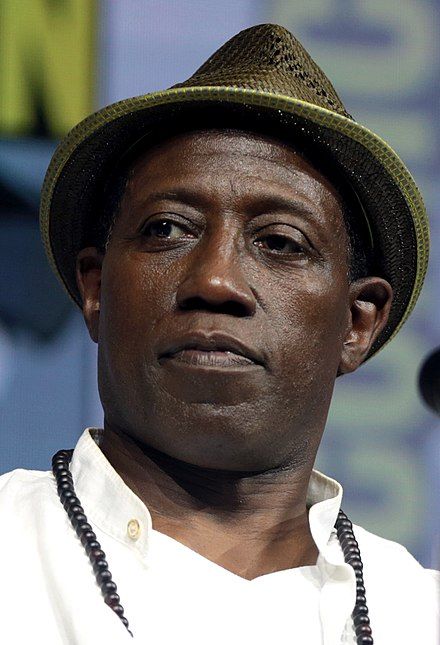
5. **Wesley Snipes**Actor Wesley Snipes, widely celebrated for his dynamic roles in the “Blade” movie series and a diverse array of other significant Hollywood productions, found himself at the center of a highly publicized and protracted legal battle with the Internal Revenue Service. This confrontation ultimately culminated in a substantial federal prison sentence, serving as an unequivocal illustration that even individuals possessing considerable public recognition and significant financial earnings are fully subject to the strict enforcement of tax laws. The judicial proceedings against Snipes vividly underscored the unwavering resolve of federal authorities to pursue and prosecute tax evaders, demonstrating that celebrity status or professional accomplishments offer absolutely no immunity from legal accountability.
Snipes’ critical legal difficulties stemmed directly from his deliberate and repeated failure to file income tax returns for a substantial period, specifically encompassing the years “1999-2001.” This egregious omission amounted to an evasion of an astonishing “$7 million in taxes,” a sum that unequivocally highlighted the gravity and scale of his financial non-compliance. His conviction in 2008 for these serious offenses unequivocally demonstrated a conscious and sustained disregard for fundamental civic duties and financial responsibilities. The federal court’s finding of guilt made it abundantly clear that even the absence of filing, rather than complex or overt fraudulent schemes, could still lead to severe and punitive penalties when the amounts involved are as substantial as in his case.
The sentencing phase of Snipes’ trial attracted considerable national attention, particularly because “U.S. prosecutors had recommended” the “maximum under the law.” This strong recommendation reflected the profound seriousness with which his tax evasion was viewed by federal authorities and the legal system. In alignment with this stance, he was ultimately “sentenced to three years in federal prison,” a significant term that firmly emphasized the judicial system’s zero-tolerance policy for such severe financial transgressions. The imposition of the maximum sentence underscored the court’s explicit view of the deliberate and profoundly impactful nature of his prolonged failure to comply with established tax statutes, sending a powerful deterrent message to others across the nation.
Snipes’ period of incarceration commenced, marking a profound and undeniable shift from his previously glamorous existence in Hollywood to the stark, unembellished confines of a federal correctional facility. His release finally occurred on “April 2, 2013,” bringing a definitive end to what was undoubtedly a challenging and career-defining chapter in his professional and personal life. The extensive legal battle and subsequent time behind bars profoundly impacted both his public image and his acting career, providing a somber, irrefutable reminder to his peers and the wider public alike that the consequences of evading tax obligations are not only real but also tangible, severe, and far-reaching, regardless of one’s artistic contributions.
Read more about: The $20 Million Celebrity App Scam and 13 Other High-Stakes Financial Downfalls That Rocked the Stars

6. **Lauryn Hill**Lauryn Hill, the highly acclaimed Fugees singer and distinguished Grammy award-winning solo artist, also faced formidable legal repercussions stemming from her failure to pay federal taxes, a situation that ultimately resulted in a period of federal incarceration. Her high-profile case added yet another prominent name to the growing list of public figures who have directly confronted the stark and undeniable realities of tax non-compliance, unequivocally demonstrating that exceptional artistic success and widespread critical acclaim offer absolutely no immunity from the fundamental legal obligations of citizenship. The federal government’s determined pursuit of her substantial unpaid taxes underscored its consistent and impartial approach to enforcing financial accountability across all sectors of society.
The core of Hill’s legal entanglement revolved around her significant and prolonged unpaid tax liabilities, which accumulated over several years. She was specifically found to have neglected her critical tax obligations “on approximately $2 million in earnings,” a substantial sum that immediately drew the vigilant attention of federal authorities. This considerable amount unequivocally highlighted a prolonged period of non-compliance, indicating a consistent failure to meet her financial duties. The charges meticulously documented a clear pattern of failing to accurately report and subsequently remit the taxes due on her considerable professional income, which constitutes a serious federal offense carrying well-defined and often severe legal consequences, irrespective of the individual’s artistic contributions.
In 2013, the judicial system formally rendered its verdict in Hill’s case, resulting in her being “sentenced to three months in federal prison” for these tax offenses. The imposition of a prison sentence, even one for a relatively shorter duration when compared to some other high-profile tax evasion cases, served as an unambiguous and powerful affirmation of the serious nature of her financial misconduct. Her incarceration, though brief, sent an unequivocal and potent message to the public and her peers: deliberate evasion or consistent neglect of tax duties, irrespective of one’s level of fame, artistic genius, or public admiration, carries direct, tangible, and unavoidable penalties under federal law, emphasizing universal accountability.
Ultimately, Lauryn Hill’s journey through the legal system underscored a fundamental truth about civic duty. It highlighted that the privilege of earning substantial income comes with the inherent responsibility of contributing one’s fair share to the public good. Her case served as a poignant reminder that even the most talented and revered figures are held to the same standards of legal accountability as every other citizen, reinforcing the principle that financial integrity is paramount and that the justice system is designed to uphold this standard impartially across all strata of society, fostering trust and equity.
Read more about: Understanding the Unseen Demands: Why Adele’s Vegas Residency Defines Her Weekly Commitments
The collective narratives of Sherri Shepherd, Mike Sorrentino, Teresa and Joe Giudice, Wesley Snipes, and Lauryn Hill compellingly illustrate the formidable and unwavering commitment of federal authorities to uphold tax compliance. These cases, many of which unfolded dramatically in the unforgiving glare of public scrutiny, serve as potent and unequivocal evidence that the rule of law applies to every individual without exception, regardless of their celebrity or societal influence. From unique personal beliefs leading to profound financial neglect, to deliberate and intricate schemes of evasion, the diverse paths that led these prominent figures to incarceration were varied, yet the ultimate message emanating from each remains remarkably consistent: adherence to tax laws is an absolute and non-negotiable aspect of civic duty. Their collective experiences powerfully underscore the profound and often life-altering consequences that inevitably arise from neglecting these fundamental obligations, thus reinforcing the critical importance of robust financial accountability for all citizens, irrespective of their fame, fortune, or public standing.