
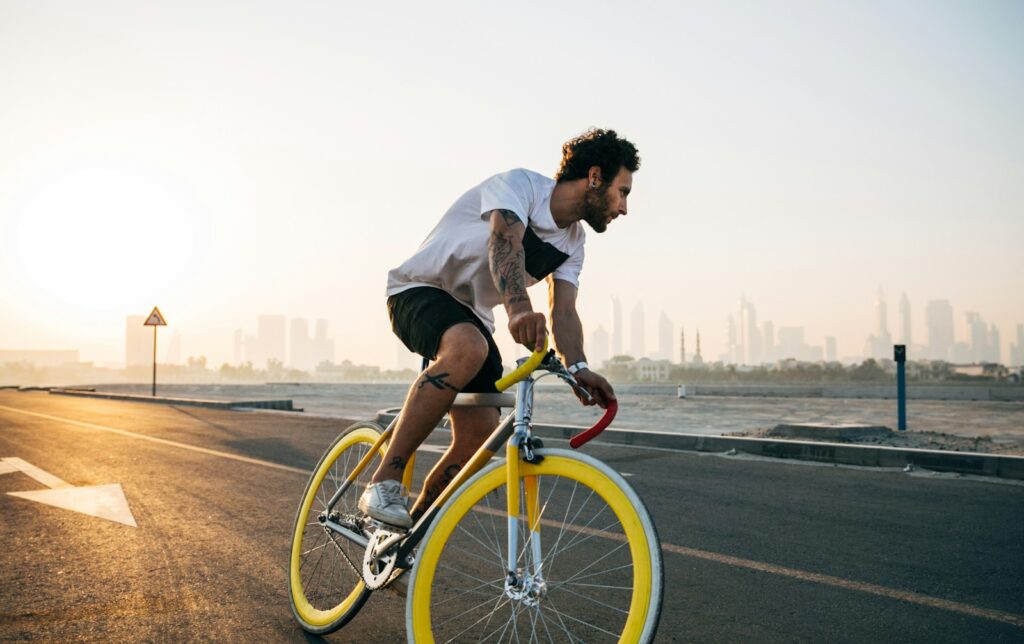
In our fast-paced modern lives, the daily commute often stands as a significant source of stress and lost time. A 2018 study published in Transport Reviews highlighted how traffic unpredictability, a low sense of control, and the sheer frustration of valuable minutes ticking away contribute to spiking stress levels. This pervasive stress can then ripple into our job performance, general mood, and even our home lives, painting a rather grim picture of the journey to work. Yet, amidst these common frustrations, a refreshing alternative emerges, offering not just a way to get from point A to point B, but a profound transformation of daily routines and overall well-being.
What if your commute could be transformed from a daily drag into a powerful opportunity for health, happiness, and efficiency? Research from the same 2018 findings indicated that individuals who choose to bike to work often bypass this stress entirely, reporting higher levels of well-being and satisfaction throughout their day. This positive shift is, in large part, attributed directly to the bike commute itself. While concerns about distance or infrastructure might seem daunting, experts like Anna Tang, Bicycle Friendly America Program Specialist at The League of American Bicyclists, assure us that practical solutions exist, such as multimodal trip planning where you bike part of the way.
Cycling for transportation, commonly known as active commuting, offers a wealth of benefits that extend far beyond simply reaching your destination. It’s a low-impact activity suitable for all ages, a versatile exercise that can be enjoyed solo or with a group, indoors or out. By integrating physical activity into your everyday life, cycling addresses multiple facets of health and lifestyle. Let’s delve into the remarkable advantages that await those who choose to embrace the power of the pedal, discovering how making time for cycling can truly give a significant part of your life back.

1. **A Full-Body Wellness Boost: Cycling as Your Ultimate Workout**Cycling, also referred to as biking or bicycling, stands out as an exceptional form of physical activity that offers a holistic approach to wellness. It is not merely a mode of transport; it’s a comprehensive workout that engages various muscle groups, improving strength and fostering greater coordination and general mobility. This versatile activity can significantly contribute to reduced body fat, making it an excellent choice for overall fitness and body composition.
According to John Solle, a National Association of Sports Medicine (NASM) Certified Personal Trainer & Corrective Exercise Specialist and coach at Noom, cycling provides a great all-around workout. He emphasizes that biking actively improves strength, balance, and coordination, essential components of physical fitness. Even a casual ride can result in a significant calorie burn, typically ranging from 200 to 400 calories, depending on intensity and duration.
One of the most appealing aspects of cycling is its low-impact nature, which sets it apart from higher-impact activities like jogging or running. This characteristic means it places less stress on crucial joints such as the hips, knees, and feet, making it accessible to a wider demographic. People who might be unable to perform high-impact exercises due to joint issues or other physical limitations can often comfortably engage in cycling.
Solle further elaborates that as a low-impact exercise, cycling allows many individuals to more easily elevate their heart rate and increase their level of physical exertion. This can be particularly beneficial for those who find pushing themselves during high-impact activities challenging. The gentler demands on the body enable sustained effort, leading to improved cardiovascular fitness and overall endurance without the associated wear and tear on joints, fostering a more enjoyable and sustainable exercise routine.

2. **Heart Health Hero: Cycling’s Power for Cardiovascular Wellness**Active commuting through cycling offers powerful benefits for heart health, significantly reducing the risk of cardiovascular disease (CVD). Extensive research, much of which focuses on integrating physical activity into daily travel, consistently demonstrates a positive association between cycling and a healthier heart. This makes cycling a prime candidate for meeting daily exercise recommendations and protecting against chronic heart conditions.
A meta-analysis of 23 prospective studies, examining participants who actively commuted by cycling or walking to work, found a significantly lower risk of cardiovascular disease among them. This robust finding underscores the substantial protective effect that regular cycling can have on the heart. It’s an accessible and effective way to bolster cardiovascular resilience.
Further reinforcing these findings, a large Swedish study followed over 23,000 men and women for a decade. The study revealed that individuals who commuted to work by bicycle, in contrast to those who drove or used public transportation, experienced a decreased risk of several key cardiovascular risk factors. These included obesity, high blood pressure, elevated triglycerides, and high blood glucose, all critical indicators of heart health.
Dr. Sonia Tolani, a cardiologist specializing in sports cardiology and co-director of the Women’s Heart Center at NewYork-Presbyterian/Columbia University Irving Medical Center, highlights the practical application. She recommends 150 minutes of moderate aerobic exercise per week for improved heart health. For many with busy schedules, biking to work becomes an excellent strategy to meet these cardio goals, turning commute time into health-boosting activity. Starting with 10-minute increments and gradually building up, aiming for a level where it’s hard to sing, is her actionable advice for a safe and effective progression.
3. **Achieve a Healthier Weight: The Impact of Cycling on Body Composition**Cycling is a powerful ally in the battle against weight gain and obesity, offering a consistent and effective way to manage body weight. Studies consistently show that incorporating cycling into daily life, especially for commuting, can lead to positive changes in body composition and help maintain a healthy weight. This makes it an invaluable tool for long-term health and well-being.
One compelling piece of evidence comes from a cohort study of over 18,000 premenopausal women in the Nurses’ Health Study II. After a remarkable 16-year follow-up, the findings revealed significantly less weight gain in women who regularly walked briskly or cycled. Even those who hadn’t cycled at the study’s outset but increased their cycling time by as little as five minutes a day gained less weight than their sedentary counterparts, showcasing the profound impact of even modest increases in activity.
A large observational study, encompassing more than 72,000 men and 82,000 women, further solidified the link between active commuting and healthier body metrics. This research demonstrated a significant association between active commuting—such as cycling to work—and a lower body mass index (BMI) and percentage of body fat, particularly when compared to those who primarily drove or utilized public transportation. These findings underscore cycling’s role in promoting a leaner physique.
The benefits extend beyond just preventing weight gain. A study conducted by the Minnesota Department of Transportation highlighted that commuting by bike just three times a week was associated with a substantial 32% lower risk of obesity. This statistic powerfully illustrates how regular, integrated cycling can be a critical factor in maintaining a healthy weight and reducing the risk of obesity, contributing to a healthier population overall through simple, consistent choices.

4. **Boost Your Brain and Mood: Cycling’s Mental Health Advantages**Beyond the physical, cycling offers a profound array of mental health benefits, acting as a natural antidote to stress and a powerful enhancer of mood and cognitive function. The simple act of pedaling can significantly contribute to a greater sense of well-being, making it a compelling activity for nurturing both body and mind.
As with other forms of exercise, cycling actively works to improve mental health by effectively lowering stress levels. This happens through the stimulation of feel-good endorphins, natural chemicals in the brain that produce feelings of pleasure and well-being. This immediate physiological response provides a noticeable lift in mood, helping to combat daily anxieties and mental fatigue, thereby offering a natural pathway to a more positive outlook.
Studies of older adults have highlighted that cycling can provide enhanced opportunities for socialization, allowing individuals to connect with others and reduce feelings of isolation. Moreover, it offers the joy of enjoying the outdoors, increases self-confidence as one masters a skill, and can even rekindle a cherished sense of childhood freedom. Beyond these enriching experiences, reported benefits also include increased energy levels, an improved mood, and better sleep quality, all crucial components of robust mental health.
A 2021 study published in Transportation Research demonstrated that consistent bicycling actively helps to reduce psychological distress, fosters improved life satisfaction, and enhances cognitive function. John Solle, a NASM Certified Personal Trainer, observes that many cyclists experience a strong sense of accomplishment and satisfaction when logging long miles and commuting under their own power. This powerful sense of achievement, combined with the outdoor stimuli and physical exertion, serves as a significant mental boost and contributes to a healthier brain.

5. **Save Big: How Cycling Cuts Commuting and Healthcare Costs**Opting for a bicycle commute offers significant financial advantages, extending beyond just the immediate savings on transportation costs to impact long-term healthcare expenses. The economic benefits of cycling are substantial and can contribute meaningfully to a healthier personal budget, making it an attractive choice for the financially savvy individual.
One of the most direct benefits is the reduction in costs associated with driving a car or using public transportation. A study from Ecological Economics in 2015, a time when gas prices were considerably lower than today, suggested that driving to work was six times more expensive for the average person than biking. These savings accumulate rapidly, impacting fuel, parking fees, and vehicle maintenance expenses.
Furthermore, the financial benefits of an active lifestyle extend to healthcare. The health insurance company Blue Cross Blue Shield discovered that physically active individuals spend an impressive $4,438 less on medical expenses over a four-year period compared to those who do not exercise regularly. This demonstrates a clear link between consistent physical activity, such as cycling, and reduced medical expenditures, solidifying cycling as a preventative investment in one’s health and wallet.
These savings are not merely short-term; they can continue well into retirement, as highlighted by a 2021 study in the British Medical Journal (BMJ) Open Sport & Exercise Medicine. This research indicated that people who began exercising before or during middle age could save between $824 and $1,874 annually on healthcare costs even after they retired. Even the rise of e-bikes, despite their higher initial cost, offers savings on weekly car expenses like parking and fuel, further illustrating the diverse financial advantages of cycling for commuting.

6. **A Breath of Fresh Air: Cycling for a Greener Environment**Choosing to cycle for transportation offers substantial environmental benefits, contributing directly to a cleaner, quieter, and more sustainable urban landscape. By making a simple shift in how we commute, individuals can play a vital role in addressing pressing environmental challenges and fostering healthier communities.
One of the most immediate impacts of increased cycling is the reduction in road congestion. As more people choose bicycles over cars, there are fewer vehicles on the road, leading to smoother traffic flow and less time spent idling. This not only benefits commuters by reducing travel times but also alleviates the collective stress associated with heavy traffic, enhancing the overall urban experience for everyone.
Beyond congestion, cycling significantly lessens air and noise pollution, particularly noticeable in urban areas. Motorized vehicles are major contributors to harmful emissions that degrade air quality and generate constant noise. Bicycles, being emission-free and virtually silent, offer a refreshing alternative, helping to purify the air we breathe and creating more peaceful environments in our neighborhoods and along our commuting routes.
This shift towards sustainable modes of transportation is a critical focus for many governments and cities worldwide. There’s a growing commitment to making a modal shift from car use towards walking and cycling to cut carbon and pollutant emissions, ultimately aiming to improve livability in urban centers. Active travel, including cycling, is recognized as a key strategy in achieving these environmental goals, making every bike ride a contribution to a healthier planet.

7. **Embrace a Longer, Healthier Life: Cycling’s Impact on Longevity and Disease Prevention**Beyond the immediate improvements to daily well-being, cycling offers profound long-term advantages that significantly contribute to increased longevity and a reduced risk of various chronic diseases. Integrating bicycling into your routine is an investment in your future, helping to build a resilient body capable of warding off severe health challenges. This sustained engagement with physical activity shapes a healthier trajectory for your life, moving you towards more vibrant years.
Remarkably, studies demonstrate a clear link between regular cycling and a lower risk of premature death, even for individuals with pre-existing conditions. For example, an observational study tracking 7,459 adults with diabetes revealed that cycling was associated with a significant 35% lower risk of deaths from any cause when compared to non-cyclists. This finding underscores cycling’s powerful protective effect, extending its benefits to those already managing chronic health issues.
Further reinforcing these life-extending benefits, a meta-analysis encompassing 17 different studies found that cyclists experienced a 21% lower risk of deaths from any cause. Even more specifically, the risk of cardiovascular deaths was reduced by an impressive 33% among those who regularly cycled. These robust findings highlight how consistent cycling helps fortify the body against the leading causes of mortality, making it a critical component of a proactive health strategy.
A comprehensive study conducted in Scotland further illuminated the broader health spectrum impacted by active commuting. Compared to non-active commuters, cyclists showed a substantial 47% lower risk of death from any cause. They also experienced a 24% lower risk of cardiovascular disease hospitalization and a 51% lower risk of cancer death, alongside reduced risks for other health outcomes. These results paint a compelling picture of cycling’s comprehensive role in fostering long-term health and vitality.

8. **Beyond the Physical: Cycling’s Social and Cognitive Superpowers**While the physical benefits of cycling are widely recognized, the activity also serves as a potent catalyst for enhancing mental acuity and fostering robust social connections. Engaging with the world on two wheels can lead to significant improvements in both cognitive function and overall psychological well-being, making it a truly holistic practice for personal growth and happiness. It encourages us to step outside our comfort zones and discover new capacities.
For older adults, in particular, cycling provides enhanced opportunities for socialization, offering a wonderful way to connect with others and reduce feelings of isolation. This activity also brings the distinct joy of experiencing the outdoors, boosting self-confidence as new skills are mastered, and often recapturing a cherished sense of childhood freedom. These enriching experiences collectively contribute to increased energy levels, improved mood, and better sleep quality, all vital elements of thriving mental health.
Indeed, recent research further substantiates these cognitive advantages. A 2021 study published in Transportation Research demonstrated that consistent bicycling actively helps to reduce psychological distress, fosters improved life satisfaction, and significantly enhances cognitive function. This suggests that the rhythmic motion of pedaling, combined with outdoor stimuli, actively works to keep the brain healthy and sharp across all ages, supporting mental clarity and focus.
John Solle, a NASM Certified Personal Trainer, observes that many cyclists gain a powerful sense of accomplishment and satisfaction when they log long miles and commute under their own power. This strong feeling of achievement, coupled with the immersive outdoor environment and physical exertion, provides a substantial mental boost. Moreover, cycling offers an invaluable opportunity to join a community of like-minded individuals, fostering social relationships that are recognized as among the most effective stress reducers.

9. **Navigating the Ride: Prioritizing Bicycling Safety and Modern Infrastructure**While the benefits of cycling are vast, safety remains a paramount concern for many, and this apprehension is not unfounded. In the U.S., bicycle riders face significantly higher fatality and serious injury rates compared to similar high-income countries. Statistics from the Centers for Disease Control and Prevention reveal that approximately 1,000 bicyclists die annually in crashes involving motor vehicles, with over 130,000 suffering injuries on the roads. These incidents often occur in urban areas with heavy traffic, where high speeds and alcohol use are identified as major risk factors for accidents.
Recognizing these challenges, many cities are actively investing in improving bicycling infrastructure to create safer environments for cyclists. A key development is the construction of cycle tracks, also known as protected bike lanes. These facilities are strategically placed between sidewalks and the road, providing dedicated, separate spaces for pedestrians, cyclists, and automobiles. This clear delineation of pathways is crucial for minimizing conflicts and enhancing overall safety for all road users.
The effectiveness of these infrastructure improvements is well-documented. A study in Montreal, Canada, showed that cycle tracks led to a 28% lower injury rate and attracted 2.5 times more bicyclists compared to parallel roads without these dedicated facilities. Similarly, additional research across 19 cycle tracks in the U.S. found a lower risk of bicycle-vehicle crashes than on roadways. Cities like Boston, through programs such as “Boston Bikes,” have seen a reduction in cycling injuries and an increase in ridership following the installation of new bicycle lanes, improved signage, and enhanced parking.
Internationally, countries like the Netherlands and Denmark offer inspiring models with innovations such as traffic signals specifically for bicycles, special precautions at intersections, and even express superhighways for long-distance commuters. Beyond physical infrastructure, comprehensive motorist training and traffic safety education in schools can further reduce accidents. While financial constraints and a resistance from “car culture” to share road space persist, creative solutions like sidewalk-level cycle tracks and strategically planted trees can offer win-win scenarios, enhancing safety, aesthetics, and environmental benefits simultaneously.

10. **Know the Road: Essential Cycling Rules and Etiquette**For the safety of all road users, both cyclists and car drivers must be acutely aware of the rules governing bicycling on public thoroughfares. Familiarizing yourself with these regulations, particularly your local state and municipal biking laws, is the first step towards a safe and enjoyable commute. Adhering to these guidelines ensures predictability and helps prevent accidents, fostering a harmonious environment for everyone sharing the road.
Generally, cyclists are permitted on any public roads and sidewalks, unless specifically prohibited, such as on express state highways or private roads. It is crucial to always ride in the same direction as traffic, maintaining a predictable flow and visibility for motorists. Cyclists are also required to obey the same automobile road rules, including stopping at red lights and stop signs, and slowing down at traffic intersections, even if the light is green. A common exception allows cyclists to pass cars on the right side when safe to do so.
When riding on sidewalks outside of business districts, cyclists must prioritize pedestrian safety. This means yielding to pedestrians and signaling audibly, perhaps with a bell or horn, when passing them. In certain states, cyclists are required to use hand signals for turns, unless removing hands from the handlebars would be unsafe, though at least one hand should always remain on the handlebars for control.
Helmet use is a critical safety measure; cyclists 16 years or younger must wear a helmet with a chin strap that meets U.S. Consumer Product Safety Commission requirements, with exceptions for children in enclosed trailers. Regardless of age or legal requirement, wearing a helmet substantially reduces the risk of brain and head injuries for all riders. Additionally, bikes can be parked on sidewalks, but never in a way that obstructs crosswalks, bus stops, fire hydrants, parking spaces, or pedestrian access, requiring at least four feet of clearance. Theft is common, so secure your bike with a sturdy lock to a bike rack, ensuring the frame and wheels are protected.
For night riding, some states require bike lights and reflectors, and these are highly recommended even where not mandated. Display a white light on the front of your bicycle and a red light or reflector on the back, and consider wearing ankle reflectors if your pedals lack them. Most importantly, remain vigilant at all times, constantly scanning for pedestrians, cars, other cyclists, animals, and any changes in the road terrain. Your alertness is your best defense against unforeseen hazards.

11. **Electrifying Your Commute: The Rise of E-Bikes**The landscape of cycling is continually evolving, and electric bicycles, or e-bikes, represent a significant advancement, offering a compelling alternative for commuters. An e-bike integrates a small electric motor that assists the rider, either through pedaling or by engaging a handlebar switch. Unlike fully motorized scooters, e-bikes still require the rider to pedal, though with significantly reduced effort compared to a traditional bicycle, making them an accessible option for a wider range of individuals.
One of the primary advantages of an e-bike is the invaluable extra power it provides, particularly when tackling challenging hills or when fatigue sets in after a long distance. This assist feature enables longer rides and allows cyclists to navigate different types of terrain with greater ease, opening up new possibilities for commuting routes and recreational rides. E-bikes typically achieve speeds of up to 20 miles per hour, which aligns closely with the average speed of an amateur cyclist on flat roads, making them efficient for urban travel.
E-bikes have become increasingly popular with consumers seeking to replace car commutes, offering substantial savings on weekly car expenses such as parking and fuel, while also mitigating the hassles of traffic. While their initial cost is typically $1000-$2000 more than a conventional bicycle, the long-term savings can be considerable. Most states now permit e-bikes on the same roads as traditional bicycles, though some classify them similarly to scooters or mopeds, with specific regulations that vary by locale.
Regarding safety, some international studies have reported an increase in injuries associated with e-bikes compared to conventional bicycles, often requiring hospitalization. These more serious injuries are likely attributed to the greater speed and weight of many e-bikes. In the U.S., data analysis from the National Electronic Injury Surveillance System revealed that e-bike injuries, predominantly in men, were twice as likely to involve a collision with a motor vehicle and three times more likely to involve a collision with a pedestrian, compared to standard bikes.
Furthermore, head trauma accidents involving e-bikes have been found to affect older adult riders more frequently, possibly due to slower reaction times and reduced control when operating these faster, heavier machines. Therefore, the use of bike helmets is an exceptionally important safety precaution for all e-bike riders. While state regulations on helmet use for e-bikes vary by age and type, wearing a helmet is strongly encouraged universally, as it can substantially reduce the risk of severe brain injuries.
It is important to note that because e-bikes do not provide the same level of physical exertion, they may not offer the exact same health benefits as traditional cycling. Given their association with similar or increased risks from crashes, their use is best reserved for situations where traditional bicycle riding is not a practical or reasonable option, such as for longer distances or individuals with physical limitations that prevent unassisted cycling.

12. **Pedal Towards a Brighter Future: Embracing Cycling for a Holistic Lifestyle**As we’ve explored the multifaceted benefits of cycling, from boosting physical health and mental well-being to offering significant financial and environmental advantages, it’s clear that the humble bicycle holds immense power to transform our daily lives. It’s more than just a mode of transport; it’s a pathway to a more engaged, healthier, and sustainable existence. Integrating cycling isn’t about rigid adherence, but about finding practical, enjoyable ways to incorporate movement into your everyday rhythm.
The global shift towards more sustainable transportation is gaining momentum, with governments and cities worldwide committing to promoting active travel like cycling. This commitment isn’t merely about cutting carbon emissions and reducing pollution; it’s fundamentally about improving the livability of urban centers and fostering healthier populations. The clear and compelling evidence of cycling’s extensive health benefits provides an undeniable rationale for continued investment in active travel infrastructure and initiatives.
Ultimately, making time for cycling means reclaiming a significant part of your life – your health, your finances, your mental clarity, and your contribution to a healthier planet. Whether you choose to cycle the entire commute, embrace multimodal trip planning, or simply enjoy a leisurely ride, every pedal stroke counts. So, consider dusting off that bike, investing in a new one, or exploring the world of e-bikes, and embark on a journey that truly gives back, transforming your commute from a daily drag into a vibrant opportunity for well-being. Your adventure on two wheels awaits!