The Academy Awards, arguably the pinnacle of cinematic recognition, is an event steeped in tradition, glamour, and, often, meticulously managed chaos. Every year, millions tune in globally to witness history unfold, see their favorite stars, and, of course, celebrate the triumphs of moviemaking. From the red carpet spectacle to the poignant acceptance speeches, every moment is scrutinized, analyzed, and often, forever etched into pop culture lore. Yet, beneath the veneer of spontaneous celebration lies a highly orchestrated production, constantly battling the clock.
One of the most talked-about, and often frustrating, elements for producers is the sheer volume of content to pack into a live broadcast. With 24 categories to honor, musical performances, comedic bits, and heartfelt tributes, time is the ultimate currency. This constant pressure to keep the show moving, to prevent it from sprawling into the wee hours of the morning, creates an invisible hand that guides much of the evening’s pacing, including the segments helmed by the evening’s host.
While much attention is given to the strictures placed upon winners delivering their acceptance speeches, the host’s opening monologue, a crucial tone-setter for the entire event, is similarly subject to powerful, albeit often unwritten, forces that dictate its length. It’s not always about a hard-and-fast rule explicitly stated in a contract, but rather an imperative born from the complex interplay of broadcast demands, advertiser expectations, and the fickle attention spans of a global audience. Understanding this dynamic reveals the true “rule” that shapes the very start of the Oscars night.

1. **The Overriding Three-Hour Broadcast Goal**The ultimate benchmark for a successful Academy Awards telecast, as often articulated by its producers, is a precise and punctual runtime. “They asked us for a three hour show, and we’re going to try,” producer Donna Gigliotti remarked in the lead-up to a past ceremony. This isn’t merely a suggestion; it’s a mandate from the network, a core expectation that ripples through every decision made during the planning and execution of the broadcast. The entire evening’s schedule, from red carpet arrival times to the final Best Picture announcement, is meticulously crafted to meet this critical deadline.
This three-hour target serves as the foundational “rule” that, indirectly, places limitations on every segment, including the host’s monologue. When producers talk about ensuring “everybody will go to bed at a reasonable hour,” it underscores a recognition that viewer fatigue is a real concern. A show that runs significantly over schedule risks losing audience engagement, a cardinal sin in live television, particularly for an event of this magnitude that commands prime-time global attention.

2. **The Impact of Lengthy Host Monologues**Within the tightly choreographed dance of the Oscars broadcast, the host’s opening monologue occupies a unique and powerful position. It’s the first major spoken segment, designed to inject humor, set the tone, and often, provide a satirical take on the year in film and current events. However, its prominence also means its length carries significant weight, directly affecting the feasibility of the overall three-hour goal. A striking example of this impact was highlighted by producer Donna Gigliotti when discussing a host-less ceremony.
Gigliotti famously quipped, “Jimmy’s monologue last year was 18 minutes so do the math,” referencing comedian Jimmy Kimmel’s lengthy opening segment. This wasn’t just an offhand remark; it was a clear articulation of how a single extended segment, even one as integral as the host’s monologue, can consume a substantial portion of the precious broadcast time. An 18-minute monologue represents a significant chunk of the show, especially when considering the need to honor 24 categories, each with its own presenters, clips, and acceptance speeches.
When the decision was made to go host-less for a particular year, a key justification offered by producers was that “the show is going to move” and “it’s going to have an entertainment pace throughout it.” This implicitly acknowledges that the removal of a traditional host, and by extension, a lengthy opening monologue, was seen as a direct way to gain control over the show’s pacing and ensure it stayed within its time constraints. It highlights that even without an explicit “rule” akin to those for acceptance speeches, the desire for a manageable show length exerts immense pressure on hosts to be concise and impactful, making every minute count.
Read more about: Behind the Mic: Unpacking the Industry Shake-Ups That Silenced Prominent Talk Show Hosts
3. **The “45-Second Rule” for Acceptance Speeches: A Historical Precedent**While the discussion around host monologues often revolves around implicit pressures, the Academy has a much more explicit history of enforcing time limits for acceptance speeches, a practice that directly informs the broader culture of brevity at the Oscars. The “45-second rule” emerged as a direct response to a particularly memorable, and lengthy, moment in Academy history. This stricture aimed to rein in the often-sprawling thank-yous that had become a hallmark of the ceremony.
This historical precedent establishes a clear framework for how the Academy views the allocation of time on its biggest night. Even if applied directly to acceptance speeches, the existence of such a precise, institutionally mandated limit sends a powerful message about the value of conciseness across the entire show. It telegraphs to everyone involved, from winners to presenters and, crucially, to hosts, that the clock is a constant, unyielding presence, shaping expectations for all spoken contributions.
The impetus for this rule is widely attributed to Greer Garson’s remarkable acceptance speech in March 1943. After winning Best Actress for her role in “Mrs. Miniver,” Garson delivered an oration that reportedly spanned “more than five minutes,” making it the longest acceptance speech on record at the time. Her heartfelt, yet exhaustive, gratitude proved to be a turning point, prompting the Academy to implement the 45-second limit to prevent such extended moments from becoming the norm.
4. **The Evolution to a “90-Second Rule” for Acceptance Speeches: A Modern Compromise**The strict 45-second rule, while foundational, has seen adjustments over time, reflecting an ongoing dialogue between the Academy’s need for efficiency and the winners’ desire for a moment to truly express themselves. More recently, producers have communicated a slightly more generous, but still firm, “90-second rule” for acceptance speeches. This updated guideline serves as another concrete example of the Academy’s unwavering commitment to maintaining a controlled and punctual broadcast, a principle that extends by implication to the host’s role.
As producer Donna Gigliotti explained regarding this updated approach, “we’ve asked the people to stick to the 90 second rule from the time the name of call to the time they exit the stage they have 90 seconds.” This clear instruction highlights that the clock starts ticking the moment a winner’s name is called, encompassing the walk to the stage, the collection of the statuette, and the entirety of their spoken words. The rationale provided for this limit is equally significant: “We are asking them to do that because it is a kindness to the people that are following them, so everybody else is going to fall into the same pattern.”
This emphasis on “kindness” and “pattern” reveals a broader philosophy of collaborative time management. It’s not just about individual speeches; it’s about the collective responsibility to ensure that all 24 categories can be presented effectively and that the show flows smoothly. This principle of collective responsibility for pacing, enforced so explicitly for winners, is arguably the strongest unwritten “rule” for the host. If individual award recipients are expected to adhere to such tight constraints for the benefit of the overall broadcast, it logically follows that the host, as the orchestrator of the evening, is under even greater pressure to exemplify conciseness and set a brisk pace from the outset, particularly with their opening monologue.

5. **Advertiser Influence and the “Payer Calls the Tune” Principle**Beneath the glitz and glamour of Hollywood’s biggest night lies a fundamental economic reality: the Academy Awards broadcast is a massive advertising platform, and advertisers hold considerable sway over its structure and timing. This commercial imperative is, perhaps, the most powerful “rule” dictating the overall length of the show, and consequently, the duration of all its segments, including the host’s monologue. The context explicitly states, “advertisers share that view [that lengthy speeches are tedious and boring]. And, they pay the bills for the ceremony effectively. So, it’s certainly a case of he who pays the piper calls the tune.”
This adage perfectly encapsulates the relationship between the Academy, the broadcast network, and the advertisers. Billions of dollars are tied to the ad spots during the Oscars, and these spots are scheduled with meticulous precision. Any significant deviation from the planned runtime, particularly an overrun, can disrupt subsequent programming, devalue scheduled commercials, and ultimately, lead to financial penalties or disgruntlement from the very entities funding the spectacle. It’s a high-stakes game where every minute of unplanned broadcast time can translate into significant losses.
Therefore, the “rule” imposed by advertiser influence isn’t a written directive to a host regarding their monologue length, but rather an overarching commercial pressure for a perfectly timed show. This pressure trickles down from the executive suites to the producers, and from the producers to every individual who steps onto that stage, including, and perhaps especially, the host. The host, as the master of ceremonies, is implicitly tasked with setting a tone of efficiency and maintaining momentum, ensuring that the show adheres to its planned schedule to satisfy the commercial partners whose investments make the entire event possible. This financial imperative serves as a potent, undeniable force in shaping all aspects of the broadcast’s duration.

6. **The Delicate Balance: Audience Engagement vs. Tedium**The Academy Awards broadcast is a behemoth of live television, a global spectacle where millions tune in, hoping for moments of genuine magic, unexpected humor, or profound sentiment. Yet, underlying this desire for spectacle is a pervasive dread of tedium. The perennial struggle between captivating an audience and boring them into submission is a critical factor in how the entire show, and especially the host’s monologue, is constructed. As the context notes, “lengthy speeches aren’t good viewing, typically,” proving “tedious and boring” to the world’s TV viewers.
This isn’t merely an artistic preference; it’s a cold, hard truth of broadcast economics and viewer psychology. In an era of shrinking attention spans and abundant entertainment options, a show that sags, that drags, risks losing its audience to other channels or devices. A host’s opening monologue, intended to kick off the night with a bang, can inadvertently set a tone of lethargy if it overstays its welcome. It becomes a litmus test for the evening’s pace, a crucial early indicator of whether the next few hours will be a lively celebration or an endurance test.
Indeed, even a show without a host, as producer Glenn Weiss remarked, was designed to “move” and “have an entertainment pace throughout it.” This speaks volumes about the Academy’s understanding that dynamism is paramount. While some extended moments can become iconic – think Roberto Benigni’s joyful ascent over seats or Cuba Gooding Jr.’s triumphant dancing – these are typically spontaneous bursts of emotion, not meticulously crafted comedic routines that run long. The host’s challenge is to deliver a monologue that is sharp, witty, and timely without becoming a source of fatigue, thereby keeping the audience firmly engaged from the first laugh.
7. **The Art of Brevity: Why Concise Speeches Resonate**The conversation around Oscar timing often centers on the practicalities of fitting everything in, but there’s a deeper, more artistic dimension to conciseness. As the old adage goes, “brevity is the soul of wit,” and for some Oscar winners, just a few well-chosen words have proven more memorable than minutes of rambling thanks. The contrast between short, impactful speeches and those that meander endlessly highlights a critical lesson for hosts: less can often be much, much more.
The context provides compelling examples of extreme brevity. Patty Duke’s two-word “Thank you” in 1963 for ‘The Miracle Worker’ is legendary. Similarly, Joe Pesci’s five-word acceptance for ‘Goodfellas’ in 1991 – “It’s my privilege. Thank you” – stands as a masterclass in understated power. These instances demonstrate that the essence of gratitude, or indeed, any message, can be conveyed with profound effect without consuming precious broadcast minutes. They cut through the noise, leaving a sharp, indelible impression that resonates far longer than an exhaustive list of names.
Consider the insightful critiques from publications like The New Yorker, which has graded Oscar speeches, praising Christoph Waltz’s “short and classy speech” with an “A minus,” while lambasting Quentin Tarantino’s “rubber-faced self-mythologizing” with a “C.” This kind of analytical scrutiny underscores that quality, not quantity, is the ultimate measure of success for any spoken segment on the Oscar stage. A concise monologue, therefore, isn’t just about saving time; it’s about delivering maximum impact with elegant efficiency, setting a high bar for the rest of the evening’s spoken performances.
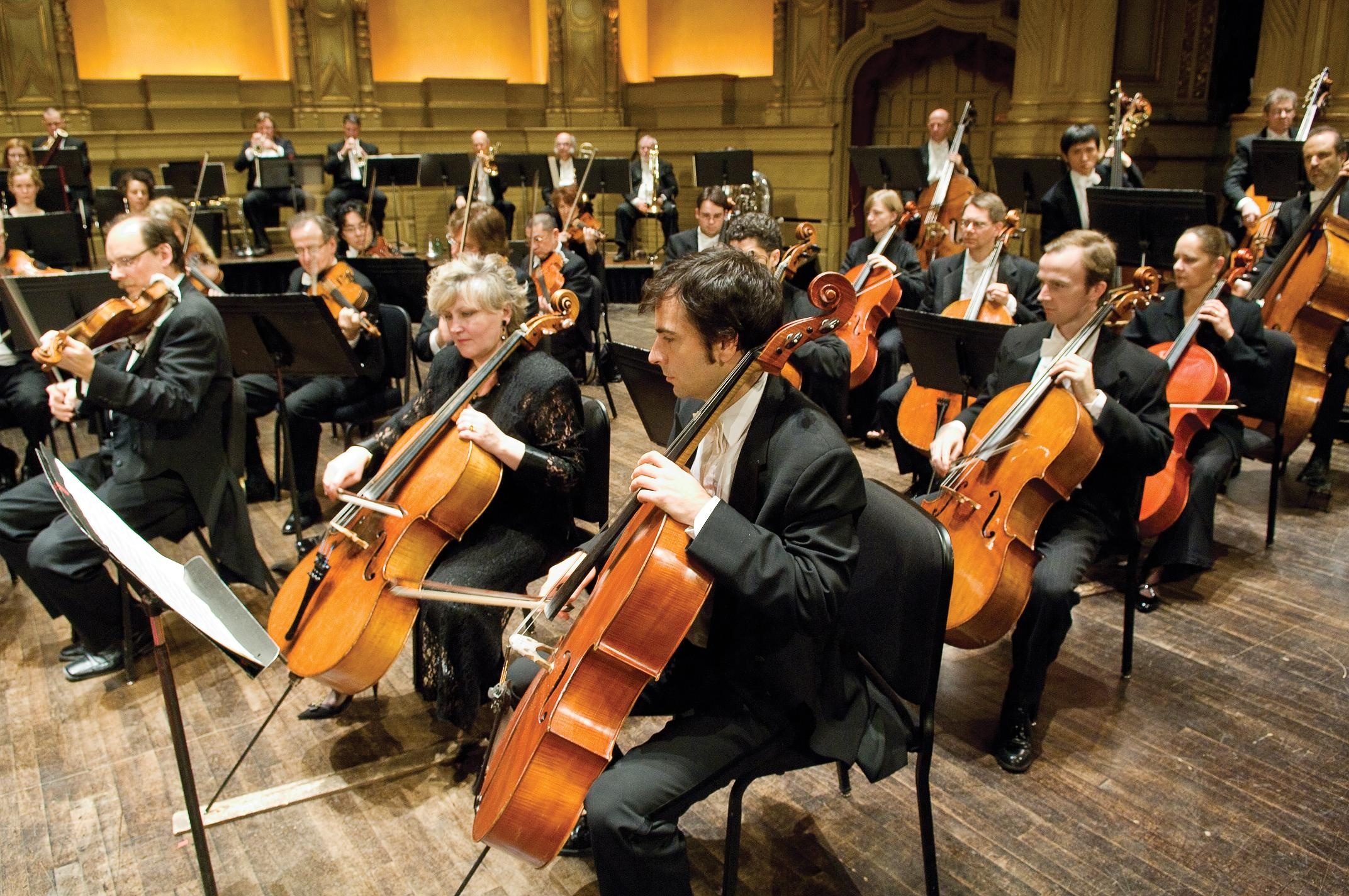
8. **The Orchestra Strikes Back: Mechanisms of Enforcement**While the host’s monologue doesn’t typically face a direct, audible musical cutoff like acceptance speeches, the mechanisms in place to enforce time limits for winners are a stark reminder of the Academy’s ironclad commitment to schedule. These enforcement tools create a pervasive atmosphere where brevity is not just encouraged but actively mandated, indirectly shaping the expectations for every person who speaks on that stage, including the host.
The infamous play-off music is perhaps the most iconic symbol of this enforcement. As the context plainly states, “Once your time is up, the music starts playing.” For those who persist, “If they take too long, the microphone cuts out.” Beyond the music, there are more subtle cues, such as “reminders on the teleprompter.” These are not mere suggestions; they are tangible, real-time interventions designed to keep the show on track, ensuring that no single individual, regardless of their star power, can derail the meticulously planned broadcast schedule.
This system, while effective, isn’t without its moments of drama and defiance. Julia Roberts famously told the orchestra conductor to “put his stick down” because she “planned to speak for much longer than her allotted time.” Such moments, while rare and often forgiven for A-list stars, highlight the inherent tension between a winner’s desire to savor their moment and the show’s uncompromising need for efficiency. This tension, observed year after year, sends an unmistakable message to the host: manage your time, or face the consequences of a system designed to keep the entire enterprise moving forward, even if it means interrupting a cherished moment.

9. **The 24-Category Conundrum: A Logistical Tightrope**At its core, the Academy Awards ceremony is a recognition of excellence across the vast tapestry of filmmaking. This mission translates into a hefty logistical challenge: honoring all 24 categories within a tightly constrained three-hour broadcast window. The context notes that the Oscars honor “23 different categories” or “24 categories” (depending on the year’s specific breakdown), alongside musical performances, comedic bits, and heartfelt tributes. This sheer volume of content is the most compelling practical driver behind the pressure for brevity, particularly for the opening monologue.
Every minute that the host’s monologue extends beyond its optimal length is a minute that must be shaved from elsewhere – perhaps from a musical number, a presenter’s introduction, or, most controversially, from the recognition of an entire category. The backlash against a past decision to “axing four awards categories from the broadcast, including cinematography, editing, live action short as well as makeup and hair” underscores just how fiercely the industry protects the opportunity to honor every aspect of filmmaking. Producer Donna Gigliotti admitted surprise at the “kind of backlash,” highlighting the deep-seated importance of each award.
This means that the host’s monologue isn’t just a standalone performance; it’s a vital component of a larger, incredibly intricate puzzle. Its length has direct, measurable consequences for the rest of the show. If the host can set a brisk pace from the outset, delivering a sharp, efficient opening, it creates breathing room for the myriad other elements that demand time. This is the “kindness to the people that are following them” and the “same pattern” that Gigliotti mentioned in relation to acceptance speeches, a principle that applies with even greater weight to the evening’s primary orchestrator.

10. **The Unspoken Mandate: Shaping the Host’s Performance**Ultimately, the “1 Rule That Forces All Oscar Hosts to Limit Their Monologue Length” isn’t a single, bullet-pointed directive found in a contract. Instead, it’s a sophisticated interplay of commercial imperatives, logistical realities, historical precedents, and the fickle nature of audience attention. This unwritten mandate coalesces into an immense, undeniable pressure on the host, transforming their opening monologue from a mere performance into a critical act of broadcast management.
As the night’s master of ceremonies, the host sets the initial tempo and tone, a pace that influences every subsequent segment. An overlong monologue signals a lack of control, jeopardizing the precious three-hour goal, irking advertisers who pay the bills for precisely scheduled spots, and risking the engagement of a global viewership. It’s a high-wire act where the host must balance entertainment with absolute efficiency, humor with punctuality, and charisma with conciseness.
This nuanced understanding of the host’s role requires a look beyond the surface, recognizing that the “rule” isn’t about arbitrary limits but about the very viability and success of the entire telecast. It’s an analytical insight that challenges conventional wisdom, acknowledging that the most powerful constraints are often those woven into the fabric of the event itself. The host, therefore, doesn’t just deliver a monologue; they are the initial manifestation of the Academy’s relentless pursuit of a perfectly timed, globally engaging, and commercially viable show.
In the grand scheme of the Academy Awards, where every minute is counted and every second holds sway, the host’s opening monologue stands as a testament to the intricate dance between art and commerce, tradition and modern broadcast demands. As the 97th Academy Awards prepare to unfold on Sunday, March 2, 2025, from the Dolby Theatre, the anticipation isn’t just for the winners, but for the delicate balancing act performed by its host – a performance shaped by the invisible hand of a rule more powerful than any written decree, ensuring the show moves, entertains, and, crucially, finishes on time.
-N952CA.JPG "Red Hot Revelations: These 13 Celebrities Are All Natural Redheads and Absolutely Owning Their Fiery Manes!")