The cosmos above us has captivated humanity since time immemorial, a vast expanse dotted with countless points of light. These celestial bodies, known as stars, are not merely distant specks but colossal engines of creation, fundamental to the fabric of the universe as we know it. From guiding ancient mariners to forging the very elements that constitute our world, stars represent the enduring narrative of cosmic evolution.
At their heart, stars are luminous spheroids of plasma, held together by the immense force of their own self-gravity. They are dynamic entities, undergoing complex life cycles that span billions of years, transforming from diffuse clouds of gas and dust into some of the most exotic objects in the universe. Understanding these stellar giants offers profound insights into our cosmic origins and the intricate processes that shape galaxies.
This in-depth exploration will delve into the multifaceted world of stars, drawing upon centuries of astronomical discovery and cutting-edge scientific understanding. We will embark on a journey from their fundamental nature and life cycles to their historical observation, the methods by which their secrets are unveiled, and their pivotal role as the universe’s cosmic foundries.

1. **The Fundamental Nature of Stars**A star, at its most basic definition, is a luminous spheroid of plasma held together by self-gravity. This seemingly simple statement encapsulates a phenomenon of immense complexity and power. The closest star to Earth, our Sun, serves as a quintessential example of these celestial bodies, providing the light and heat essential for life on our planet. Beyond our solar system, countless other stars populate the night sky, their immense distances rendering them as mere fixed points of light to the eye.
The primary constituents of a star are hydrogen and helium, with only trace amounts of heavier elements. It is the thermonuclear fusion of hydrogen into helium in a star’s core that powers its brilliance for the majority of its active life. This process releases vast amounts of energy, which then traverses the star’s interior, ultimately radiating into outer space. This continuous release of energy is what makes stars shine, providing the light we observe across vast cosmic distances.
The total mass of a star is the most critical factor determining its evolution and eventual fate. It dictates the intensity of the gravitational forces, the rate of nuclear reactions, and consequently, the star’s luminosity and lifespan. From the smallest red dwarfs to the most colossal supergiants, the mass sets the stage for a star’s entire existence, influencing every phase from its birth to its dramatic demise.
Read more about: When the Mic Stays On: How Public Outbursts and Controversial Remarks Topple Prominent Careers
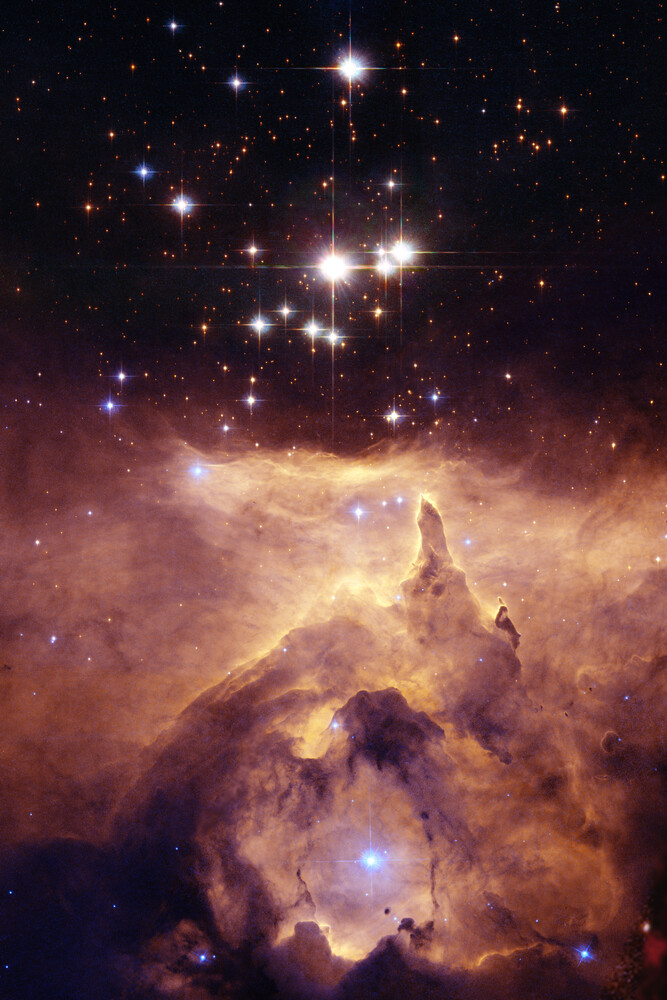
2. **A Star’s Grand Journey**The life of a star is a grand cosmic drama, beginning with the gentle gravitational collapse of a gaseous nebula. These vast clouds, largely comprising hydrogen and helium with traces of heavier elements, are the nurseries where stars are born. As the material within these nebulae draws inward, driven by gravity, it heats up, eventually forming a protostar at its core. This initial phase marks the embryonic stage of a star’s existence, a period of gravitational contraction that can last millions of years.
For most of its active life, a star exists in a stable state, fusing hydrogen into helium in its core. This is known as the main sequence phase, during which the outward pressure from fusion balances the inward pull of gravity. However, this fuel supply is finite. Once the hydrogen in the core is depleted, the star embarks on a series of profound transformations, expanding and often changing color as it begins to fuse heavier elements in its core or in shells around it.
The final act in a star’s life is determined by its initial mass. When fusion ceases, the star’s core becomes a stellar remnant. Less massive stars like our Sun eventually shed their outer layers to form beautiful planetary nebulae, leaving behind a dense, cooling white dwarf. More massive stars meet a far more dramatic end, exploding as supernovae, leaving behind either a neutron star or, if sufficiently massive, collapsing into the ultimate cosmic enigma: a black hole.
Read more about: The Unprecedented Freeze: How Hollywood’s Strikes Reshaped Film Production and Promotion in 2023
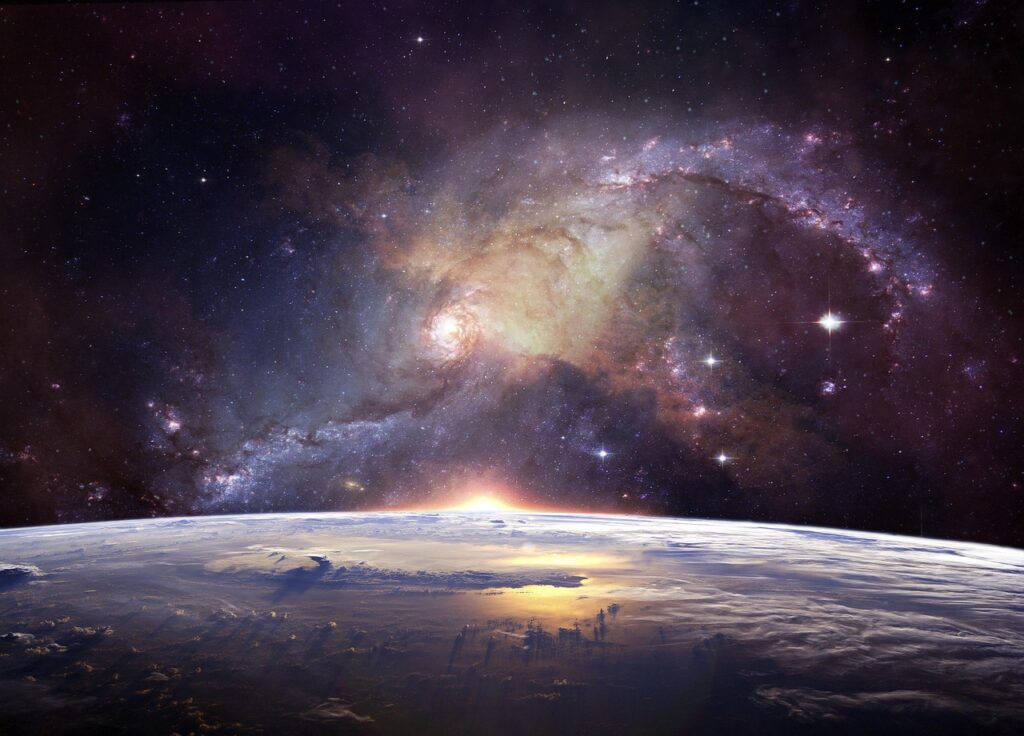
3. **Celestial Cartography**From ancient times, humans have looked to the night sky and found patterns among the myriad points of light. These prominent arrangements of stars were imagined to form distinct figures, leading to the concept of constellations and asterisms. These groupings were often associated with specific aspects of nature, mythological figures, or cultural narratives, providing a framework for understanding and remembering the celestial sphere. Twelve of these formations, lying along the band of the ecliptic, became the basis of early astrological systems.
Beyond these broader patterns, many of the brightest individual stars were given proper names. These designations, often derived from Arabic or Latin, continue to be used today, bearing witness to centuries of observation and cultural exchange. Astronomers throughout history have painstakingly assembled star catalogues to identify known stars and provide standardized stellar designations, creating an enduring legacy of celestial mapping and classification.
The sheer scale of stars in the observable universe is staggering, estimated to contain between 10^22 and 10^24 stars. Yet, despite this astronomical number, only about 4,000 of these are visible to the eye from Earth. All of these visible stars reside within our own Milky Way galaxy, underscoring the immense distances that separate us from the vast majority of cosmic light sources. The act of categorizing and naming these distant suns represents humanity’s continuous effort to bring order and understanding to the boundless cosmos.
Read more about: Unbelievable Truths About Stars: From Fiery Birth to Cosmic Demise, Unpacking the Universe’s Luminous Wonders
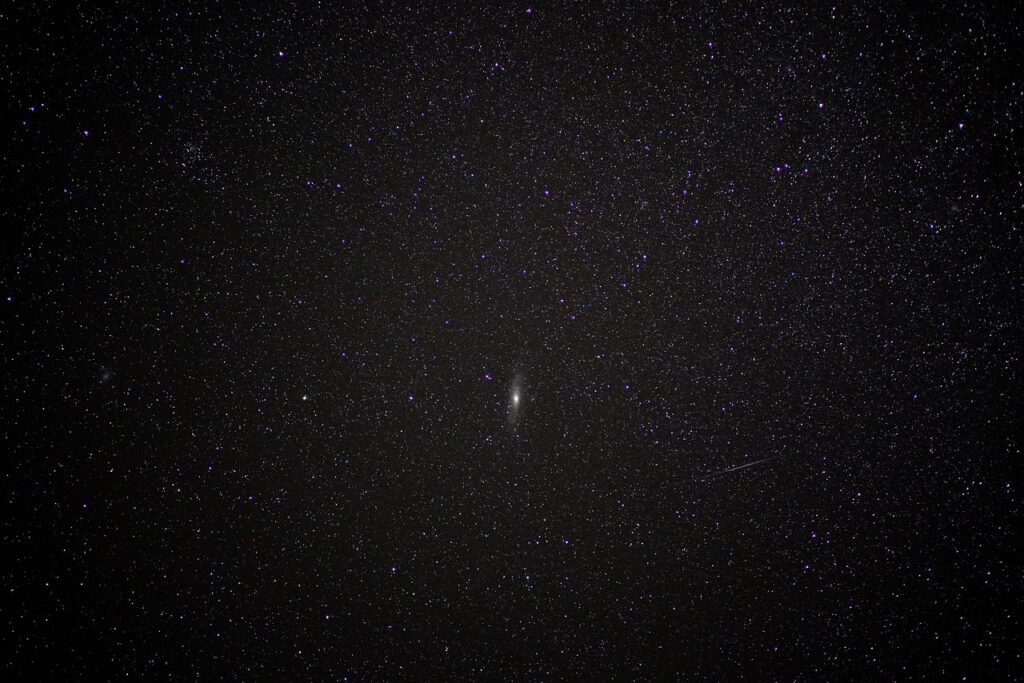
4. **Ancient Wisdom, Celestial Guides**Historically, stars have held profound importance for civilizations across the globe, serving far more than mere aesthetic wonder. They were intricately woven into the fabric of human societies, influencing religious practices, divination rituals, and the rich tapestry of mythology. The predictable movements of stars across the night sky provided a celestial clock and compass, becoming indispensable tools for human endeavors.
One of the most critical applications of stellar observation was celestial navigation and orientation. Ancient mariners and travelers relied on the fixed points of light to chart their courses across vast oceans and desolate lands. Furthermore, the changing positions of stars relative to the horizon and other celestial bodies were used to mark the passage of seasons, directly influencing agricultural practices and the timing of harvests. This fundamental understanding allowed societies to develop and regulate their calendars, with the Gregorian calendar used today still being a solar calendar based on the Earth’s rotational axis relative to the Sun.
Early astronomers recognized a clear distinction between “fixed stars,” whose positions on the celestial sphere appeared immutable, and “wandering stars,” or planets, which moved noticeably over days or weeks. While many ancient observers believed stars were permanently affixed to a heavenly sphere, this distinction laid the groundwork for deeper astronomical inquiry. The grouping of prominent stars into asterisms and constellations, in particular, aided in tracking the motions of the planets and inferring the Sun’s position, cementing stars as foundational elements of both practical knowledge and spiritual belief.
Read more about: Decoding the Universal Quartet: An In-Depth Journey Through the Enduring Significance of the Number Four Across Science, Culture, and History
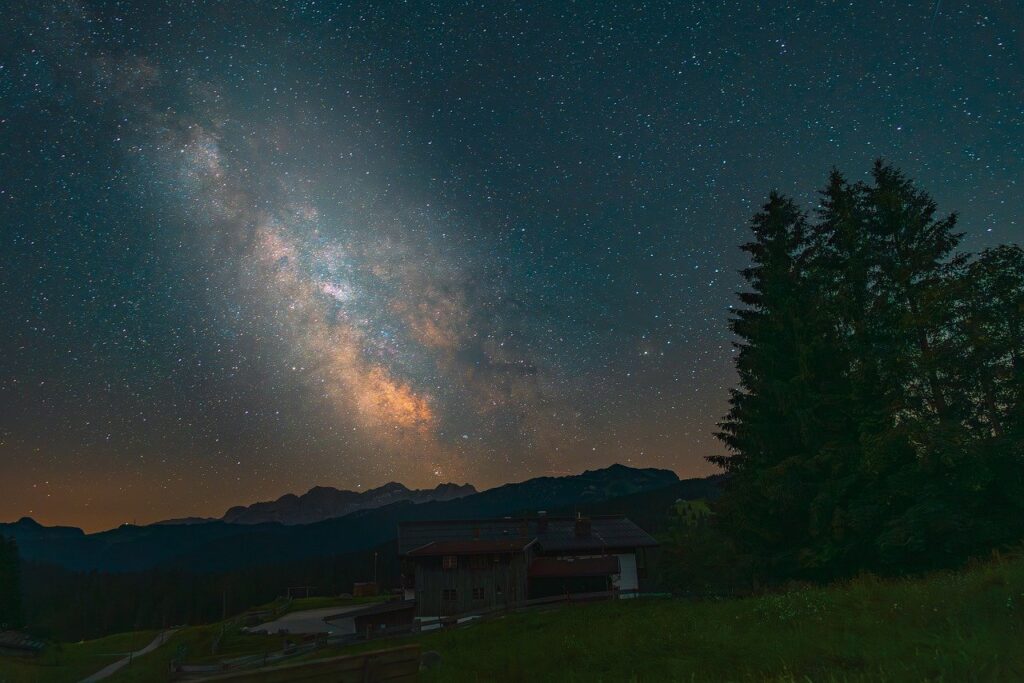
5. **Unveiling Stellar Secrets**Astronomers today possess an impressive array of tools and techniques to determine the intricate properties of stars, providing insights into their mass, age, chemical composition (metallicity), variability, distance, and motion through space. This scientific endeavor is largely accomplished by meticulously carrying out observations of a star’s apparent brightness, analyzing its spectrum, and tracking changes in its position in the sky over extended periods. Each of these observational avenues provides a unique piece of the stellar puzzle.
The science of stellar spectroscopy, pioneered by Joseph von Fraunhofer and Angelo Secchi, revolutionized our understanding of stellar composition. By comparing the spectra of stars like Sirius to that of our Sun, these early pioneers discovered crucial differences in the strength and number of their absorption lines. These dark lines within stellar spectra are caused by the star’s atmosphere absorbing specific frequencies of light, acting as a unique chemical fingerprint. In 1865, Secchi began classifying stars into spectral types, a system later refined by Annie J. Cannon into the modern stellar classification scheme of the early 1900s.
The determination of stellar distance, a monumental challenge, was first achieved in 1838 by Friedrich Bessel, who measured the distance to 61 Cygni (11.4 light-years) using the parallax technique. Parallax measurements, which detect the apparent shift in a star’s position as Earth orbits the Sun, conclusively demonstrated the vast separations of stars in the heavens. Coupled with the development of instruments like the photoelectric photometer for precise magnitude measurements and interferometers like the one Albert A. Michelson used in 1921 to measure a stellar diameter, these advancements continue to unveil the hidden secrets of these distant suns.
Read more about: The Celestial Affair: Two Stars’ Secret Five-Year Dance Before Their Cosmic Parting
6. **The Cosmic Foundry**Stars are not merely sources of light and heat; they are the universe’s ultimate foundries, responsible for creating almost all naturally occurring chemical elements heavier than lithium. This process, known as stellar nucleosynthesis, occurs within the high-temperature and high-pressure environments of stellar cores or during their explosive end-of-life stages. Without stars, the universe would be a far simpler place, devoid of the complex elements necessary for planets, water, and life itself.
As stars evolve and eventually die, they return chemically enriched material to the interstellar medium through various processes, including stellar mass loss and cataclysmic supernova explosions. These ejected elements—ranging from carbon and oxygen forged in smaller stars to the heavier elements created in the hearts of massive stars and supernovae—then become the raw ingredients for future generations of stars. This cosmic recycling ensures that the universe progressively becomes richer in complex elements over billions of years.
The material ejected from dying stars mixes with existing gas and dust, contributing to the formation of new molecular clouds. These enriched clouds then give birth to new stars, planetary systems, and potentially, new life. Therefore, the very atoms that constitute our bodies, our planet, and indeed, everything around us, were once forged in the fiery hearts of ancient stars. As the context states, “future generations of stars are made of the ‘star stuff’ from past stars,” a profound testament to the interconnectedness of cosmic evolution.
The preceding discussion offered a broad overview of stars, from their fundamental nature to their profound cosmic significance and the historical lens through which humanity has viewed them. Now, we delve deeper into the specific stages of a star’s existence, exploring the intricate processes that govern their birth, prime, dramatic transformations, and eventual demise, along with their interactions within complex cosmic architectures. This detailed journey through stellar evolution offers a complete picture of these celestial engines.

7. **From Gas Clouds to Protostars**The genesis of a star is an intricate process initiated by gravitational instability within vast molecular clouds, which are regions of elevated matter density, though still less dense than a vacuum chamber. These clouds, predominantly composed of hydrogen and helium with trace amounts of heavier elements, can be prompted to collapse by various triggers. These include compression from radiation emanating from massive stars, the expansion of bubbles within the interstellar medium, collisions between different molecular clouds, or even the grander collision of galaxies, as observed in starburst galaxies. When a specific region within such a cloud achieves a sufficient density to meet the criteria for Jeans instability, it begins an inexorable collapse under its own immense gravitational force.
As the molecular cloud undergoes this gravitational collapse, localized conglomerations of dense dust and gas begin to form, known scientifically as Bok globules. With the ongoing collapse of a globule, its density escalates, leading to the conversion of gravitational potential energy into heat, causing the temperature within to rise significantly. This initial phase of gravitational contraction is crucial, persisting for millions of years as the nascent star gathers mass and heats up. Eventually, when the protostellar cloud approaches a stable state of hydrostatic equilibrium—where the inward pull of gravity is balanced by the outward pressure—a protostar ignites at its core.
These embryonic, pre-main-sequence stars are often encircled by a protoplanetary disk, a swirling disc of material from which planets may eventually form. During this early developmental stage, the protostar’s luminosity is primarily fueled by the continuous conversion of gravitational energy. The duration of this gravitational contraction varies considerably with the star’s mass; for a star akin to our Sun, this period spans approximately 10 million years, while for a smaller red dwarf, it can extend to a remarkable 100 million years.
Newly formed stars of less than two solar masses are classified as T Tauri stars, characterized by their irregular variability and strong stellar winds. Conversely, those with greater mass are known as Herbig Ae/Be stars. Both types of these nascent stars are observed to emit powerful jets of gas along their axis of rotation. These jets play a vital role in the star’s formation by reducing the angular momentum of the collapsing material, a process that can also create small, luminous patches of nebulosity known as Herbig–Haro objects. Such jets, combined with the intense radiation emanating from nearby massive stars, are instrumental in dispersing the surrounding molecular cloud, allowing the newly formed star to emerge clearly.
Early in their evolution, T Tauri stars typically follow what is known as the Hayashi track, a phase where they contract and decrease in luminosity while maintaining a relatively stable surface temperature. Less massive T Tauri stars continue along this track until they reach the main sequence. More massive stars, however, transition onto the Henyey track, a different evolutionary path marked by a period of increasing temperature and luminosity as they approach the main sequence. This complex initial phase sets the stage for the star’s prolonged main sequence life.
Read more about: The Celestial Affair: Two Stars’ Secret Five-Year Dance Before Their Cosmic Parting
8. **The Main Sequence: A Star’s Prime of Life**The main sequence phase constitutes approximately 90% of a star’s entire lifetime, a period of remarkable stability where the star’s primary energy source is the thermonuclear fusion of hydrogen into helium within its high-temperature and high-pressure core. Stars in this phase are commonly referred to as dwarf stars. From the moment they reach the zero-age main sequence, the proportion of helium within a star’s core steadily increases. This chemical transformation leads to a gradual enhancement in the rate of nuclear fusion, which in turn causes the star’s core temperature and overall luminosity to slowly but consistently rise. Our own Sun, for instance, is estimated to have increased its luminosity by approximately 40% since it first joined the main sequence some 4.6 billion years ago.
Throughout its main sequence existence, every star continuously generates a stellar wind, an outflow of particles comprising gas that escapes into space. For the vast majority of stars, including our Sun, the amount of mass lost through this stellar wind is relatively negligible. The Sun, for example, sheds about 10^-14 solar masses annually, which translates to roughly 0.01% of its total mass over its entire anticipated lifespan. However, for extremely massive stars, this mass loss can be profoundly significant, ranging from 10^-7 to 10^-5 solar masses each year. Such substantial rates of mass loss can dramatically alter their evolutionary trajectory, with stars initially exceeding 50 solar masses potentially losing over half of their total mass while still on the main sequence.
The duration a star spends on the main sequence is fundamentally governed by two key factors: the total amount of nuclear fuel it possesses and the rate at which it consumes this fuel through fusion. Our Sun is projected to remain on the main sequence for approximately 10 billion years. In stark contrast, highly massive stars consume their fuel at an exceptionally rapid pace, resulting in significantly shorter lifespans. Conversely, low-mass stars, often referred to as red dwarfs, consume their fuel at an exceedingly slow rate.
Red dwarfs, which are stars less massive than 0.25 solar masses, possess the unique ability to fuse nearly all of their mass throughout their extended lifetimes. This contrasts with stars around one solar mass, which can typically fuse only about 10% of their total mass. The combination of their slow fuel consumption and their comparatively large usable fuel supply allows low-mass stars to endure for an astonishing period, often about one trillion years. The most extreme examples, such as stars with 0.08 solar masses, are predicted to sustain fusion for approximately 12 trillion years. These red dwarfs gradually become hotter and more luminous as they accumulate helium within their cores. Eventually, once their hydrogen fuel is exhausted, they contract into a white dwarf, subsequently declining in temperature over immense timescales.
Given that the theoretical lifespan of such low-mass stars far exceeds the current age of the universe, which is estimated at 13.8 billion years, no stars with masses under approximately 0.85 solar masses are expected to have yet transitioned off the main sequence. Beyond mass, the presence of elements heavier than helium, which astronomers collectively term “metals,” plays a crucial role in stellar evolution. A star’s metallicity—the chemical concentration of these heavier elements—can influence the speed at which it consumes its fuel, and it also dictates the formation of its magnetic fields. These magnetic fields, in turn, affect the strength and characteristics of the stellar wind. Older, Population II stars exhibit substantially lower metallicity compared to younger, Population I stars, a difference attributed to the varying composition of the molecular clouds from which they originally formed. Over cosmic timescales, these molecular clouds become progressively enriched with heavier elements as older generations of stars conclude their lives and shed portions of their atmospheres back into the interstellar medium.
Read more about: Stellar Genesis to Galactic Finale: An Industry Deep Dive into the Dramatic Lives of Cosmic Stars
9. **Beyond the Main Sequence: The Dramatic Transformations**As stars of at least 0.4 solar masses deplete the supply of hydrogen fuel in their cores, they initiate a profound transformation by commencing the fusion of hydrogen in a shell encircling the inert helium core. This shift in energy generation causes the star’s outer layers to undergo a significant expansion and a substantial cooling, signaling its transition into the red giant phase. Within these evolving stars, depending on their mass, fusion processes may then begin for heavier elements either within the core or in subsequent shells surrounding it. As stars expand during this phase, they shed a considerable portion of their mass, enriched with these newly fused heavier elements, back into the interstellar environment. This ejected material is then recycled, becoming the raw ingredients for the formation of future generations of stars.
A compelling future illustration of this process will be our own Sun, which, in approximately 5 billion years, is destined to enter its helium burning phase. During this dramatic expansion, the Sun will reach a maximum radius roughly equivalent to one astronomical unit, or about 150 million kilometers, making it 250 times its current size. Concurrently, it will experience a mass loss equivalent to 30% of its current total mass. This expansion will engulf the inner planets, fundamentally altering the architecture of our solar system.
As the hydrogen-burning shell surrounding the core continues to produce more helium, the core itself progressively increases in both mass and temperature. For a red giant with an initial mass of up to 2.25 solar masses, the helium core achieves a degenerate state before helium fusion commences. When the core temperature eventually rises sufficiently, helium fusion begins explosively in an event termed a helium flash, an uncontrolled thermonuclear runaway. Following this flash, the star rapidly contracts in radius, its surface temperature increases, and it moves to the horizontal branch on the Hertzsprung-Russell (HR) diagram, a pivotal stage of its evolution.
For stars of more substantial mass, the conditions are different; helium core fusion initiates before the core becomes degenerate. These more massive stars then spend an extended period in what is known as the red clump, slowly fusing helium in their cores. Subsequently, their outer convective envelope eventually collapses, propelling the star to the horizontal branch, similar to their lower-mass counterparts but with a distinct pathway to reach this stage. The complexities of core degeneracy significantly dictate these divergent evolutionary paths.
Following the complete fusion of helium in its core, a star begins fusing helium in a shell that surrounds its now hot carbon core. This marks the onset of an evolutionary trajectory known as the asymptotic giant branch (AGB), a phase that, in some respects, parallels the earlier red-giant stage but is characterized by a notably higher luminosity. More massive AGB stars may even undergo a brief period of carbon fusion before their core becomes degenerate. During the AGB phase, stars experience profound thermal pulses, which are instabilities in the star’s core. These thermal pulses cause the star’s luminosity to vary considerably and lead to the vigorous ejection of matter from its atmosphere, ultimately forming a beautiful and often intricate planetary nebula.
In this intense mass loss process, a star can shed as much as 50% to 70% of its initial mass. Crucially, because energy transport within an AGB star is primarily driven by convection, this ejected material is highly enriched with the fusion products that have been dredged up from the core. Consequently, the expanding planetary nebula becomes a fertile repository, enriched with vital elements such as carbon and oxygen. Eventually, the planetary nebula disperses, distributing these chemically enriched materials throughout the general interstellar medium. This continuous process beautifully illustrates the cosmic cycle: as the context states, “future generations of stars are made of the ‘star stuff’ from past stars,” highlighting the profound interconnectedness of all cosmic evolution.
Read more about: Unearthing the Truth: The Compelling Saga of Nicolas Cage’s $276,000 T-Rex Skull and the Philosophical Quest It Ignited
10. **Massive Star Spectacles: Sequential Fusion and Dramatic Ends**During their helium-burning phase, stars with an initial mass exceeding nine solar masses embark on a distinct evolutionary path, expanding first to form a blue supergiant and subsequently a red supergiant. However, exceptionally massive stars, those surpassing approximately 40 solar masses—such as Alnilam, the prominent central blue supergiant in Orion’s Belt—do not transition into red supergiants. This divergence is attributed to their incredibly high rates of mass loss, which prevent them from reaching that specific evolutionary stage.
Instead, these highly massive stars may evolve into Wolf-Rayet stars, a rare and luminous class characterized by spectra that are dominated by broad emission lines of elements heavier than hydrogen. These heavier elements are brought to the surface due to strong convection within the star and intense mass loss, or sometimes as a result of the stripping away of their outer hydrogen layers. Wolf-Rayet stars represent a transient but powerful phase in the lives of the most massive stellar objects.
Once helium is exhausted at the core of a massive star, the core undergoes further contraction, leading to an increase in both temperature and pressure sufficient to ignite the fusion of carbon, a process known as carbon-burning. This sequential fusion process continues, with successive stages being fueled by progressively heavier elements, including neon through the neon-burning process, followed by oxygen in the oxygen-burning process, and finally silicon in the silicon-burning process. Near the very end of such a star’s life, fusion reactions occur along a series of distinct, onion-layer shells within its interior. The outermost shell continues to fuse hydrogen, the next shell inward fuses helium, and so forth, creating a complex internal structure.
The ultimate stage in this stellar nucleosynthesis cascade within massive stars occurs when the star begins to produce iron in its core. At this critical juncture, a fundamental energetic barrier is encountered: iron nuclei are more tightly bound than any heavier nuclei. Consequently, any attempt at fusion beyond iron does not result in a net release of energy; instead, it consumes energy. This inability to generate energy through further fusion marks the impending catastrophic collapse of the star’s core.
Furthermore, some massive stars, particularly those known as luminous blue variables, exhibit extreme instability. This instability can lead to events where they violently shed enormous amounts of their mass into space, phenomena termed supernova impostors. During these episodes, the star can become significantly brighter, rivaling the luminosity of a true supernova for a temporary period. A notable historical example is Eta Carinae, which famously underwent a supernova impostor event, dubbed the Great Eruption, during the 19th century, dramatically altering its appearance and shedding vast quantities of material.

11. **The Cataclysmic End: Supernovae, Neutron Stars, and Black Holes**As the core of a star shrinks at the end of its life, the intensity of radiation emanating from its surface dramatically increases. This surge in radiation creates such immense pressure on the star’s outer gaseous layers that it begins to push them away from the core, leading to the formation of a luminous and expanding shell of gas known as a planetary nebula. This process represents a relatively gentle expulsion of material for less massive stars, marking their transition towards a final state.
If the stellar remnant remaining after the outer atmosphere has been shed is less than approximately 1.4 solar masses, it undergoes further contraction to become a remarkably dense yet comparatively tiny object, roughly the size of Earth. This stellar corpse is known as a white dwarf. White dwarfs lack the necessary mass for further gravitational compression to initiate additional fusion reactions. The matter inside a white dwarf exists in a unique state known as electron-degenerate matter, which is no longer a plasma. Over an incredibly protracted period of time, white dwarfs are theoretically expected to cool down and eventually fade into unseen black dwarfs.
The fate of massive stars, however, is far more dramatic. In these colossal stars, fusion continues relentlessly until their iron core grows to such an extent that it exceeds the critical mass of approximately 1.4 solar masses. At this point, the core can no longer withstand the immense inward pull of its own gravity. It undergoes an abrupt and catastrophic collapse, a process driven by electrons being forced into protons, leading to the rapid formation of neutrons, neutrinos, and gamma rays in a violent burst of electron capture and inverse beta decay. This rapid implosion generates a powerful shockwave.
This shockwave then propagates outward through the star, causing the remaining outer layers of the star to explode with unimaginable ferocity in an event known as a supernova. Supernovae are so incredibly bright that, for a brief period, they can collectively outshine the entire galaxy in which they reside. When such events have occurred within our own Milky Way galaxy, they have historically been observed by -eye observers as “new stars” suddenly appearing in the night sky where none seemed to exist before, such as the famous SN 1006. The supernova explosion blasts away the star’s outer layers, leaving behind a beautiful but transient remnant, such as the Crab Nebula, which is the result of the SN 1054 supernova.
The fate of the collapsed core depends entirely on its remaining mass. The core is compressed into an extraordinarily dense object known as a neutron star, which can sometimes manifest itself as a pulsar (a rapidly rotating neutron star emitting beams of radiation) or an X-ray burster. In the case of the very largest stars, if the remnant core exceeds approximately four solar masses after the supernova, it collapses further, inevitably forming the ultimate cosmic enigma: a black hole, a region of spacetime where gravity is so strong that nothing, not even light, can escape. Within a neutron star, matter exists in a state known as neutron-degenerate matter, with the possibility of an even more exotic form, QCD matter, residing in its innermost core. The heavy elements blown off from these dying stars are crucially recycled during the formation of new stars, and it is these elements that facilitate the formation of rocky planets. Thus, the powerful outflows from supernovae and the stellar winds of large stars play a vital role in shaping and enriching the interstellar medium, perpetuating the cosmic cycle of creation.
Read more about: Celestial Luminaries: An In-Depth Journey Through the Extraordinary Lives of Stars
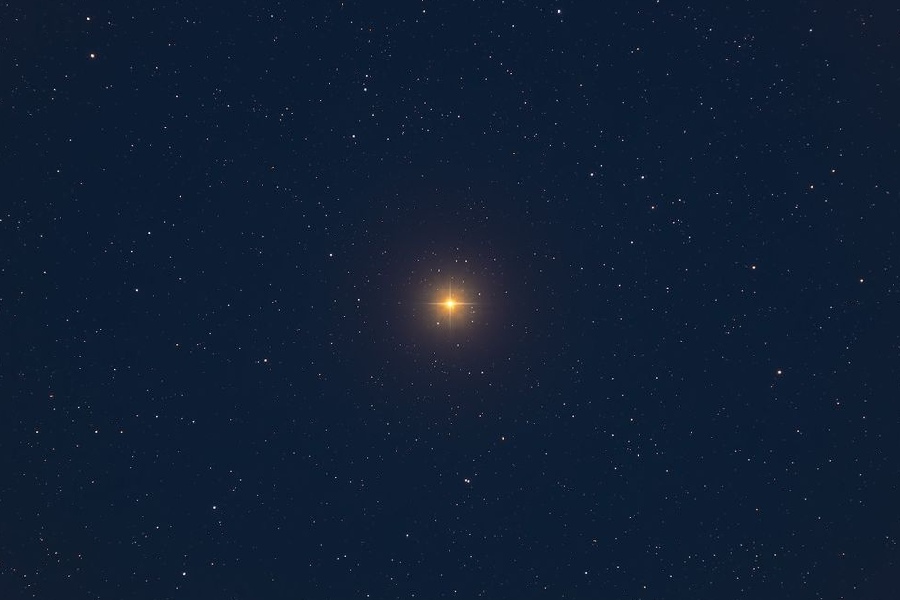
12. **Star Systems and Galactic Dance**Stars are not always solitary entities; they frequently form intricate orbital systems with other astronomical objects. These include planetary systems, where planets orbit a central star, and even more complex star systems involving two or more stars. When two or more stars orbit closely around a common center of mass, their profound gravitational interactions can significantly impact their individual evolutionary paths, leading to outcomes quite different from those of single stars. These gravitational bonds are a fundamental aspect of how stars interact across the cosmos.
Beyond individual or small multiple star systems, stars can also constitute a part of much larger gravitationally bound structures, such as star clusters or entire galaxies. The formation of these complex systems often begins in the same vast molecular clouds where single stars are born. The context reveals that most stars are observed to be members of binary star systems, and the specific properties of these binaries are a direct outcome of the conditions prevalent during their formation. A crucial aspect of star formation is the requirement for a collapsing gas cloud to shed its angular momentum, a process significantly aided by the fragmentation of the cloud into multiple stars, thereby distributing some of that angular momentum among the forming stellar bodies.
Within young stellar clusters, the gravitational ballet continues as primordial binary systems engage in dynamic interactions. These initial binaries can transfer angular momentum through close gravitational encounters with other stars in the cluster. This process tends to have a dual effect: more widely separated, or “soft,” binaries are often split apart by these interactions, while “hard” binaries, which are more tightly bound, tend to become even more gravitationally intertwined. Such gravitational dynamics are instrumental in shaping the observed distributions of binary star populations, influencing their separations and orbital characteristics.
The evolutionary trajectories of binary stars can indeed differ markedly from those of single stars of equivalent mass, a testament to the profound influence of mutual gravitational forces. For instance, when a star in a binary system expands to become a red giant, its enlarged outer layers may overflow a region known as its Roche Lobe. This phenomenon, where material from one star flows onto its companion, can drastically alter the evolutionary paths of both stars, potentially leading to diverse and spectacular stellar events not observed in isolated stars. The interplay of gravity, mass transfer, and orbital mechanics within these systems ensures a cosmic dance of continuous transformation and intricate evolution.
From their fiery birth within dense cosmic clouds to their grand, often cataclysmic, conclusions, stars are ceaselessly transforming the universe. They are the crucibles where the elements of life are forged, the beacons that illuminate galaxies, and the gravitational anchors around which planetary systems coalesce. This journey through stellar evolution reveals not just the incredible diversity of these celestial objects but also their fundamental role in the cosmic tapestry, ensuring that the universe remains a dynamic, evolving realm of unimaginable power and beauty, forever recycling the ‘star stuff’ that makes up everything we know.”
Read more about: The Celestial Affair: Two Stars’ Secret Five-Year Dance Before Their Cosmic Parting
, “_words_section2”: “1948