The wars of the 20th century were undeniably transformative for the United States, leaving an indelible mark on the nation. Just as the country itself evolved, so too did the veterans who fought those wars. These brave men and women, generation after generation, left military service only to continue shaping the ways we live, work, and interact with the world around us. Their dedication extended far beyond the battlefield, influencing culture, politics, and industry in profound ways.
While not every individual veteran gets the chance to change the country as a whole, some exceptional figures do. The people we’re about to highlight have touched the lives of countless Americans, impacting us in ways both grand and subtle. Their journeys from military service to public prominence offer compelling narratives of resilience, vision, and an unwavering commitment to making a difference, often drawing directly from the lessons learned while wearing a uniform.
Join us as we take a closer look at 12 famous faces whose time in the military wasn’t just a chapter in their lives, but a foundational experience that redefined their paths and left an enduring legacy. These are the stories of individuals who answered the call of duty, both in uniform and in their subsequent careers, demonstrating how service can truly change a person forever, and in turn, change the world around them.

1. **Alan Alda: Actor, Director, Screenwriter**For many younger readers, the concept of having only three television channels might be difficult to grasp, but that was the reality for a significant portion of television history, making competition for viewership incredibly fierce. In this landscape, becoming the star, writer, producer, and sometimes director of one of the biggest shows on TV was an immense achievement. Alan Alda, a household name, brought a unique depth to his work, significantly influenced by his service as an artillery officer in the Korean War.
Alda masterfully integrated his firsthand military experience into the long-running, iconic series “M*A*S*H.” The show, which famously depicted a three-year war, remarkably ran for 11 years. Its critical stance on war resonated deeply with audiences, especially during a time when the United States was still actively engaged in the Vietnam War, making its commentary particularly poignant and relevant to contemporary society.
“M*A*S*H” captivated an extraordinary number of viewers; its final episode drew an astonishing 125 million people, representing more than half of the entire U.S. population at the time. The fact that the series continues to be seen in syndication decades later is a powerful testament to its enduring quality, its profound cultural impact, and the lasting effect it has had on American culture, largely thanks to Alda’s authentic contributions rooted in his own service.
Military equipment: Alan Alda
Name: Alan Alda
Caption: Alda in 2015
Birthname: Alphonso Joseph D’Abruzzo
BirthDate: [object Object]
BirthPlace: New York City, U.S.
Spouse: [object Object]
Education: Fordham University
Awards: List of awards and nominations received by Alan Alda
Occupation: Actor,comedian,director,screenwriter
YearsActive: 1955–present
Father: Robert Alda
Relatives: Antony Alda
Children: Beatrice Alda
Categories: 1936 births, 20th-century American male actors, 20th-century American male writers, 20th-century American non-fiction writers, 20th-century American screenwriters
Summary: Alan Alda (; born Alphonso Joseph D’Abruzzo; January 28, 1936) is an American actor. A six-time Emmy Award and Golden Globe Award winner and a three-time Tony Award nominee, he portrayed Captain Benjamin Franklin “Hawkeye” Pierce in the CBS wartime sitcom M*A*S*H (1972–1983). He also wrote and directed numerous episodes of the series.
After starring in the films Same Time, Next Year (1978), California Suite (1978), and The Seduction of Joe Tynan (1979), he made his directorial debut with The Four Seasons (1981). Alda was nominated for the Academy Award for Best Supporting Actor for his portrayal of Owen Brewster in Martin Scorsese’s The Aviator (2004). Other notable film roles include Crimes and Misdemeanors (1989), Manhattan Murder Mystery (1993), Everyone Says I Love You (1996), Flirting with Disaster (1996), Tower Heist (2011), Bridge of Spies (2015), and Marriage Story (2019).
Alda won the Primetime Emmy Award for Outstanding Supporting Actor in a Drama Series for his role as Senator Arnold Vinick in the NBC series The West Wing. Other Emmy-nominated roles include in And the Band Played On in 1993, ER in 2000, 30 Rock in 2009, and The Blacklist in 2015. He also had recurring roles in The Big C (2011–2013), Horace and Pete (2016), Ray Donovan (2018–2020), and The Good Fight (2018–2019).
Alda is also known for his roles on Broadway acting in Purlie Victorious (1961) and receiving three Tony Award nominations for his performances in The Apple Tree (1967), Jake’s Women (1992), and Glengarry Glen Ross (2005). In 2008 he received a Grammy Award for Best Audio Book, Narration & Storytelling Recording nomination for Things I Overheard While Talking to Myself. In 2019, Alda received the Screen Actors Guild Life Achievement Award. He hosts the podcast Clear+Vivid with Alan Alda and previously hosted Science Clear+Vivid.
Get more information about: Alan Alda
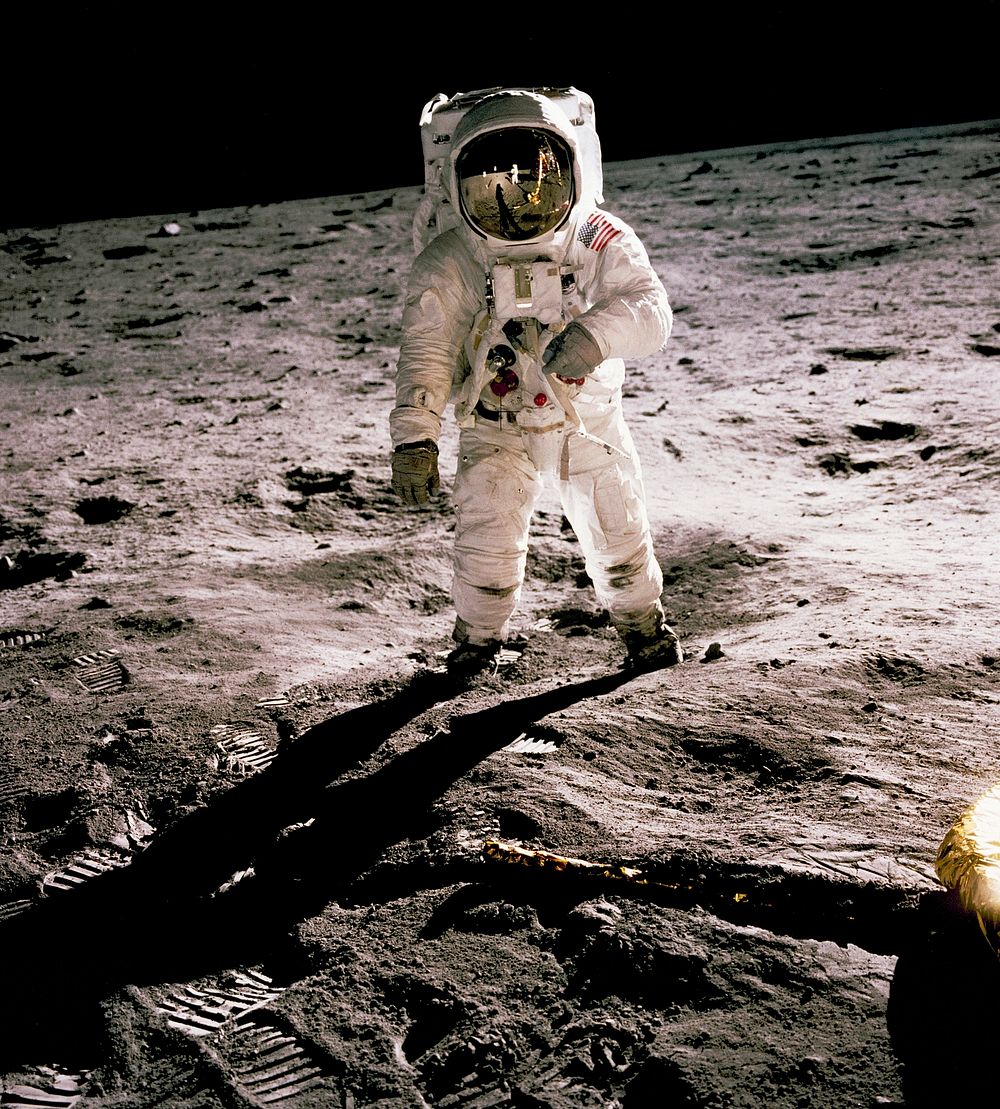
2. **Neil Armstrong: Astronaut**Neil Armstrong, a figure synonymous with human achievement, brought the United States together during one of its most turbulent periods. His distinguished background as a naval aviator and Korean War veteran laid a foundation for an even greater feat: becoming a NASA astronaut and the first man to walk on the moon. This momentous event provided a rare moment of unity for a nation grappling with significant internal strife.
The late 1960s were characterized by intense social upheaval, including widespread fighting and protests against the Vietnam War, the powerful Civil Rights Movement, the Sexual Revolution, and the tragic assassinations of crucial historical and cultural figures. Amidst this backdrop of division and unrest, millions of Americans, alongside 650 million people worldwide, watched in awe as Armstrong stepped onto the lunar surface, a singular event that transcended earthly conflicts.
While humanity had received images from space before, this was an unprecedented occasion where so many people globally witnessed such imagery as it unfolded, witnessing humans achieve what was once considered impossible. Armstrong’s immortal phrase, “one giant leap for mankind,” resonated deeply, imbuing humanity with a cosmic perspective—a collective realization that, despite our differences, we all originate from the same small place in the vast universe.
Military equipment: Neil Armstrong
Name: Neil Armstrong
Alt: Armstrong posing in his spacesuit, with his helmet on the table in front of him. Behind him is a large photograph of the lunar surface.
Caption: Armstrong in 1969
BirthName: Neil Alden Armstrong
BirthDate: [object Object]
BirthPlace: Washington Township, Auglaize County, Ohio
DeathDate: [object Object]
DeathPlace: Fairfield, Ohio
Spouse: [object Object],[object Object]
Children: 3
Education: Purdue University
Awards: item_style={{longitem
Type: Man in Space Soonest
Rank: Lieutenant (junior grade),United States Navy
Time: 8d 14h 12m
Selection: item_style={{longitem
Eva1: 1
Eva2: 2h 31m
Mission: Gemini 8,Apollo 11
Insignia: File:Gemini 8 patch.png,File:Apollo 11 insignia.png
Signature: Neil Armstrong Signature.svg
Categories: 1930 births, 1966 in spaceflight, 1969 in spaceflight, 2012 deaths, 20th-century American engineers
Summary: Neil Alden Armstrong (August 5, 1930 – August 25, 2012) was an American astronaut and aeronautical engineer who, as the commander of the 1969 Apollo 11 mission, became the first person to walk on the Moon. He was also a naval aviator, test pilot and university professor.
Armstrong was born and raised near Wapakoneta, Ohio. He entered Purdue University, studying aeronautical engineering, with the United States Navy paying his tuition under the Holloway Plan. He became a midshipman in 1949 and a naval aviator the following year. He saw action in the Korean War, flying the Grumman F9F Panther from the aircraft carrier USS Essex. After the war, he completed his bachelor’s degree at Purdue and became a test pilot at the National Advisory Committee for Aeronautics (NACA) High-Speed Flight Station at Edwards Air Force Base in California. He was the project pilot on Century Series fighters and flew the North American X-15 seven times. He was also a participant in the U.S. Air Force’s Man in Space Soonest and X-20 Dyna-Soar human spaceflight programs.
Armstrong joined the NASA Astronaut Corps in the second group, which was selected in 1962. He made his first spaceflight as command pilot of Gemini 8 in March 1966, becoming NASA’s first civilian astronaut to fly in space. During this mission with pilot David Scott, he performed the first docking of two spacecraft; the mission was aborted after Armstrong used some of his re-entry control fuel to stabilize a dangerous roll caused by a stuck thruster. During training for Armstrong’s second and last spaceflight as commander of Apollo 11, he had to eject from the Lunar Landing Research Vehicle moments before a crash.
On July 20, 1969, Armstrong and Apollo 11 Lunar Module (LM) pilot Buzz Aldrin became the first people to land on the Moon, and the next day they spent two and a half hours outside the Lunar Module Eagle spacecraft while Michael Collins remained in lunar orbit in the Apollo Command Module Columbia. When Armstrong first stepped onto the lunar surface, he famously said: “That’s one small step for [a] man, one giant leap for mankind.” It was broadcast live to an estimated 530 million viewers worldwide. Apollo 11 was a major U.S. victory in the Space Race, by fulfilling a national goal proposed in 1961 by President John F. Kennedy “of landing a man on the Moon and returning him safely to the Earth” before the end of the decade. Along with Collins and Aldrin, Armstrong was awarded the Presidential Medal of Freedom by President Richard Nixon and received the 1969 Collier Trophy. President Jimmy Carter presented him with the Congressional Space Medal of Honor in 1978, he was inducted into the National Aviation Hall of Fame in 1979, and with his former crewmates received the Congressional Gold Medal in 2009.
After he resigned from NASA in 1971, Armstrong taught in the Department of Aerospace Engineering at the University of Cincinnati until 1979. He served on the Apollo 13 accident investigation and on the Rogers Commission, which investigated the Space Shuttle Challenger disaster. In 2012, Armstrong died due to complications resulting from coronary bypass surgery, at the age of 82.
Get more information about: Neil Armstrong

3. **Bea Arthur: Actress**Many of us know Bea Arthur best from her beloved role as Dorothy Zbornak on “The Golden Girls,” a series that has found renewed popularity on platforms like Instagram and TikTok. However, Arthur’s career spanned much further back, commencing long before the award-winning show. Her journey of service and trailblazing began much earlier, rooted in a pivotal decision during World War II.
In 1943, Arthur enlisted in the Marine Corps Women’s Reserve as a typist, a role that was crucial to the war effort. Demonstrating her adventurous spirit and desire for more active involvement, she soon requested a transfer to become a truck driver and dispatcher, showcasing an early inclination to challenge conventional roles. Her nearly six-decade acting career subsequently began in 1947, almost immediately seeing Arthur infuse her work with powerful feminist issues and a bold, progressive voice.
Following a groundbreaking appearance as Maude Findlay on the critically acclaimed “All In The Family,” television executives recognized her unique talent and gave Arthur her own show, “Maude,” in 1972. This series fearlessly tackled subjects that were otherwise considered taboo on television at the time, including divorce, menopause, mental illness, and gay rights, pushing the boundaries of what could be discussed in mainstream media. Famously, “Maude” made headlines by addressing a late-life pregnancy in which the character ultimately opted to have an abortion, a remarkably progressive and controversial storyline in a pre-Roe v. Wade era, solidifying Arthur’s legacy as a true pioneer.
Military equipment: Bea Arthur
Name: Bea Arthur
Caption: Maude Findlay
BirthName: Bernice Frankel
BirthDate: [object Object]
BirthPlace: New York City, U.S.
DeathDate: [object Object]
DeathPlace: Los Angeles, California, U.S.
Alias: Beatrice Arthur
Education: Franklin School of Science and Arts,The New School
Occupation: Actress,comedian,singer
YearsActive: 1947–2009
Spouse: [object Object],[object Object]
Children: 2
Module: Infobox military person
Embed: true
EmbedTitle: Military service
Allegiance: United States
Branch: United States Marine Corps
Unit: United States Marine Corps Women’s Reserve
Serviceyears: 1943–1945
Rank: Staff sergeant#United States
Categories: 1922 births, 2009 deaths, 20th-century American Jews, 20th-century American actresses, 20th-century American comedians
Summary: Beatrice Arthur (born Bernice Frankel; May 13, 1922 – April 25, 2009) was an American actress, comedienne, and singer. She began her career on stage in 1947, attracting critical acclaim before achieving worldwide recognition for her work on television beginning in the 1970s as Maude Findlay in the popular sitcoms All in the Family (1971–1972) and Maude (1972–1978) and later in the 1980s and 1990s as Dorothy Zbornak on The Golden Girls (1985–1992).
Arthur won several accolades throughout her career, beginning with the 1966 Tony Award for Best Featured Actress in a Musical for playing Vera Charles in Mame. She won Emmy Awards for Outstanding Lead Actress in a Comedy Series in 1977 for Maude and 1988 for The Golden Girls. Arthur has received the third most nominations for the Primetime Emmy Award for Outstanding Lead Actress in a Comedy Series with nine; after Julia Louis-Dreyfus (12) and Mary Tyler Moore (10). Arthur was inducted into the academy’s Television Hall of Fame in 2008.
Arthur’s film appearances include Lovers and Other Strangers (1970) and the film version of Mame (1974). In 2002, she starred in the one-woman show Bea Arthur on Broadway: Just Between Friends. An obituary described Arthur as “the tall, deep-voiced actress whose razor-sharp delivery of comedy lines made her a TV star.”
Get more information about: Bea Arthur
Read more about: The Lost Luminaries: Unearthing 15 Unsung Stars of 1960s Cinema and What Became of Them

4. **Ben Bradlee: Famous Newspaper Editor**Ben Bradlee’s distinguished career as the executive editor of The Washington Post, spanning from 1968 to 1991, was underpinned by a formidable sense of resilience and determination, qualities undoubtedly forged during his service in World War II. Fighting as a Navy officer in some of the war’s most intense battles instilled in him the “intestinal fortitude” that would become a hallmark of his journalistic leadership in the tumultuous decades that followed.
Bradlee meticulously worked his way up in the newspaper world, starting as a reporter in New Hampshire before eventually joining The Washington Post. After a period that included writing a book and several years at Newsweek, he returned to the Post as editor. Under his guidance, the newspaper, and indeed the country, would never be the same, as he spearheaded some of the most crucial moments in American journalism.
Bradlee, alongside The Washington Post and The New York Times, courageously fought the government for the First Amendment right to publish the Pentagon Papers. This government-funded report sensationally revealed that the military and successive presidential administrations had been misleading the public about the scope and events of the Vietnam War. Later, Bradlee steadfastly supported reporters Bob Woodward and Carl Bernstein as they uncovered the Watergate break-in scandal, an exposé that ultimately led to the resignation of President Richard Nixon, forever cementing Bradlee’s reputation as a titan of fearless and ethical journalism.
Military equipment: Sally Quinn
Name: Sally Quinn
Caption: Quinn in 2011
BirthDate: [object Object]
BirthPlace: Savannah, Georgia
AlmaMater: Smith College
Occupation: Author, journalist
Spouse: [object Object]
Children: Quinn Bradlee
Parents: William Wilson Quinn
Categories: 1941 births, 20th-century American non-fiction writers, 20th-century American women writers, 21st-century American non-fiction writers, 21st-century American women writers
Summary: Sally Sterling Quinn (born July 1, 1941) is an American author and journalist. She writes about religion for a blog at The Washington Post.
Get more information about: Sally Quinn

5. **Bob Feller: Major-League Pitcher**Bob Feller was already a prominent name in the world of baseball when the devastating attack on Pearl Harbor occurred. His commitment to his country was immediate and unwavering. Instead of renewing his contract with the Cleveland Indians just two days after the attack, Feller made the selfless decision to enlist in the Navy, setting aside his burgeoning sports career to serve in a time of national crisis.
Once in the Navy, Feller didn’t seek a safe assignment; he demanded combat duty. He served with distinction as a gun captain in both the Atlantic and Pacific Theaters, facing the dangers of war directly. His dedication to service exemplified a generation of athletes who put country before personal ambition, showcasing immense bravery and patriotism on a global stage.
Upon his return to Cleveland, baseball was still affectionately known as “America’s Pastime,” and Feller quickly re-established his dominance, setting remarkable career records for himself, his team, and Major League Baseball. In a truly incredible and progressive move for the era, in 1946, he organized a barnstorming baseball roadshow. This innovative initiative saw a selected group of white MLB greats compete against Negro League teams, and with the invaluable help of baseball legend Satchel Paige, the tour significantly advanced the integration of baseball, breaking down racial barriers through the power of sport.
Military equipment: Bob Feller
Caption: 40 mm gun captain during World War II
Position: Pitcher
Bats: Right
Throws: Right
BirthDate: [object Object]
BirthPlace: Van Meter, Iowa
DeathDate: [object Object]
DeathPlace: Cleveland
Debutleague: MLB
Debutdate: Thu Jul 19 2001 00:00:00 GMT-0700 (Pacific Daylight Time)
Debutyear: 1936
Debutteam: Cleveland Indians
Finalleague: MLB
Finaldate: Sun Sep 30 2001 00:00:00 GMT-0700 (Pacific Daylight Time)
Finalyear: 1956
Finalteam: Cleveland Indians
Statleague: MLB
Stat1label: Win–loss record (pitching)
Stat1value: 266–162
Stat2label: Earned run average
Stat2value: 3.25
Stat3label: Strikeout
Stat3value: 2,581
Teams: Cleveland Indians
Highlights: Major League Baseball All-Star Game,World Series champion,Triple Crown (baseball),List of Major League Baseball annual wins leaders,List of Major League Baseball annual ERA leaders,List of Major League Baseball annual strikeout leaders,no-hitter,Cleveland Guardians#Retired numbers,Cleveland Guardians Hall of Fame
Hoflink: National Baseball Hall of Fame and Museum
Hoftype: National
Hofdate: 1962 Baseball Hall of Fame balloting
Hofvote: 93.8% (first ballot)
Module: Infobox military person
Embed: true
Name: Bob Feller
Allegiance: United States
Branch: United States Navy
Serviceyears: 1941–1945
Rank: Chief Petty Officer (United States)
Unit: [object Object]
Battles: Battle of the Atlantic
Spouse: unbulleted list
Categories: 1918 births, 2010 deaths, 20th-century American sportsmen, American League All-Stars, American League ERA champions
Summary: Robert William Andrew Feller (November 3, 1918 – December 15, 2010), nicknamed “the Heater from Van Meter”, “Bullet Bob”, and “Rapid Robert”, was an American baseball player who was a pitcher for 18 seasons in Major League Baseball (MLB) for the Cleveland Indians between 1936 and 1956. In a career spanning 570 games, Feller pitched 3,827 innings and posted a win–loss record of 266–162, with 279 complete games, 44 shutouts, and a 3.25 earned run average (ERA). His career 2,581 strikeouts were third all-time upon his retirement.
A prodigy who bypassed baseball’s minor leagues, Feller made his debut with the Indians at the age of 17. His career was interrupted by four years of military service (1942–1945) as a United States Navy Chief Petty Officer aboard USS Alabama during World War II. Feller became the first pitcher to win 24 games in a season before the age of 21. He threw no-hitters in 1940, 1946, and 1951, and 12 one-hitters, both records at his retirement. He helped the Indians win a World Series title in 1948 and an American League-record 111 wins and the pennant in 1954. Feller led the American League in wins six times and in strikeouts seven times. In 1946 he recorded 348 strikeouts, the most since 1904 and then believed to be a record.
An eight-time All-Star, Feller was ranked 36th on Sporting News’s 1999 list of the 100 Greatest Baseball Players and was named the publication’s “greatest pitcher of his time”. He was a finalist for the Major League Baseball All-Century Team in 1999. Baseball Hall of Fame member Ted Williams called Feller “the fastest and best pitcher I ever saw during my career.” Hall of Famer Stan Musial believed he was “probably the greatest pitcher of our era.” He was elected into the Baseball Hall of Fame in 1962 in his first year of eligibility, with the then fourth highest percentage of votes. He was elected the inaugural President of the Major League Baseball Players’ Association and both organized and participated in barnstorm exhibition games which featured players from both the Major and Negro leagues. Feller died at the age of 92 in 2010.
Get more information about: Bob Feller
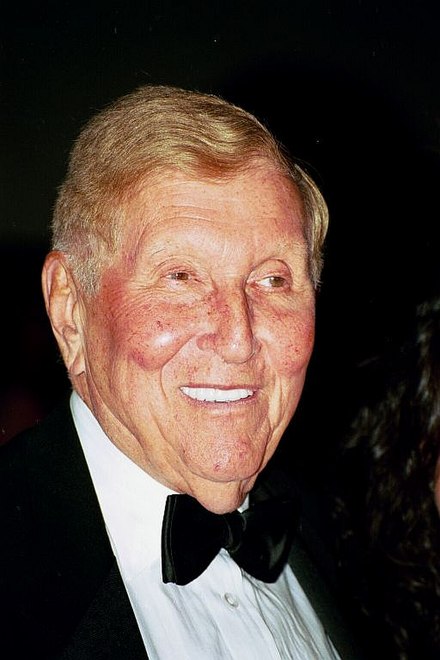
6. **Sumner Redstone: Media Giant**Sumner Redstone’s journey into the world of influence began not in Hollywood boardrooms, but on the intellectual battlefield of World War II. Even as a student at Harvard, he was already engaged in critical work, decrypting coded Japanese messages. Upon graduating in 1944, he continued this vital work as a first lieutenant in the Army’s Signal Intelligence Service, honing a strategic mind that would later revolutionize the media landscape.
After the war, Redstone initially joined his father’s business, which involved owning a chain of theaters. However, his astute business sense led him to a profound realization: the content of film and television was fundamentally more important and valuable than merely the mechanisms through which that content was distributed. This insight became the cornerstone of his future media empire, demonstrating a visionary understanding of the entertainment industry’s evolving dynamics.
Acting on this conviction, Redstone began strategically investing in the very film and TV studios that produced the content, acquiring stakes in major players like Columbia Pictures and 20th Century Fox. When he eventually took control of Viacom, it was already a significant force, recognized as one of the largest producers of syndicated television shows and the owner of highly lucrative cable networks such as MTV and Nickelodeon. His audacious acquisitions didn’t stop there; he went on to purchase Paramount, CBS, and the vast array of networks, films, and shows they encompassed, creating a media conglomerate that produced some of the most transformative and successful shows and movies of his lifetime, cementing his legacy as a true media titan.
Beyond the initial stories of service shaping destiny, we delve deeper into how the uniform profoundly altered the trajectory and public identity of even more celebrated figures. Their experiences in the military weren’t just footnotes; they were pivotal chapters that defined their character, fueled their artistic expressions, and left an indelible mark on popular culture, forever changing who they were and how we perceive them.
Military equipment: Shari Redstone
Name: Shari Redstone
Caption: Redstone in 2022
BirthDate: [object Object]
BirthPlace: Washington, D.C., U.S.
Parents: Sumner Redstone,(father)
Children: 3
Relatives: Michael Redstone,(grandfather),Brent Redstone,(brother)
BirthName: Shari Ellin Redstone
Education: Juris Doctor,Master of Laws
Spouse: [object Object]
Categories: 1954 births, 20th-century American Jews, 20th-century American businesspeople, 20th-century American businesswomen, 21st-century American Jews
Summary: Shari Ellin Redstone (born April 14, 1954) is an American heiress, businesswoman, and media executive. She was the non-executive chairwoman of Paramount Global (predeccesor of Paramount Skydance Corporation) and chairwoman, president and CEO of National Amusements, and a former vice chair of CBS Corporation and Viacom. Through National Amusements, Redstone and her family held majority voting power over Paramount Global and its subsidiaries – CBS, Comedy Central, BET, Showtime Networks, Nickelodeon, MTV and the film studio Paramount Pictures.
In 2020, Redstone was named on Time’s list of the 100 most influential people in the world. In 2023, she ranked 37th in Forbes list of “World’s 100 most powerful women”.
Get more information about: Shari Redstone

7. **Tom Ridge: Former Secretary of Homeland Security**Tom Ridge’s journey of service began with a profound choice. Drafted during the Vietnam War while still in college, he could have sought deferment. Instead, he made the selfless decision to join the Army, deploying to Vietnam and earning a Bronze Star for his valor. This early commitment to duty, far from diminishing his future ambitions, laid a powerful foundation for a lifetime of public service.
His dedication to country continued long after his boots left Vietnam. In 1982, Ridge achieved another significant milestone, becoming the first enlisted Vietnam veteran to be elected to Congress. He then rose through the political ranks, serving as the governor of Pennsylvania from 1995, always carrying the lessons of leadership and responsibility learned during his military days.
But it was in the crucible of national crisis that Ridge’s military-honed resolve truly shone. Following the devastating attacks of September 11th, he resigned from his governorship to answer an urgent call, becoming the United States’ first-ever Secretary of Homeland Security. This monumental role tasked him with developing a comprehensive anti-terrorism plan for the entire country, a feat that required a significant reorganization of the federal government itself.
Ridge’s transformation from a young soldier to a national security architect perfectly illustrates how military service can instill the unique blend of courage, strategic thinking, and unwavering resolve needed to navigate the most complex challenges, leaving an enduring legacy of national security.
Military equipment: Tom Ridge
Name: Tom Ridge
Alt: Official portrait as Secretary
Caption: Official portrait, 2001
Office: United States Secretary of Homeland Security
President: George W. Bush
Deputy: Gordon R. England
TermStart: January 24, 2003
TermEnd: February 1, 2005
Predecessor: Position established
Successor: James Loy
Office1: United States Homeland Security Advisor
President1: George W. Bush
TermStart1: October 8, 2001
TermEnd1: January 24, 2003
Predecessor1: Position established
Successor1: John A. Gordon
Order2: Governor of Pennsylvania
Lieutenant2: Mark Schweiker
TermStart2: January 17, 1995
TermEnd2: October 5, 2001
Predecessor2: Bob Casey Sr.
Successor2: Mark Schweiker
State3: Pennsylvania
District3: ushr
TermStart3: January 3, 1983
TermEnd3: January 3, 1995
Predecessor3: Donald A. Bailey
Successor3: Phil English
BirthName: Thomas Joseph Ridge
BirthDate: [object Object]
BirthPlace: Munhall, Pennsylvania
Party: Republican Party (United States)
Spouse: [object Object]
Children: 2
Education: Harvard University
Allegiance: United States
Branch: United States Army
Serviceyears: 1969-1970
Rank: Staff sergeant#United States
Unit: 20th Infantry Regiment (United States),11th Infantry Brigade (United States),23rd Infantry Division (United States)
Battles: Vietnam War
Mawards: Bronze Star Medal,Vietnam Gallantry Cross
Categories: 1945 births, 20th-century members of the United States House of Representatives, 21st-century Pennsylvania politicians, All BLP articles lacking sources, All articles with dead external links
Summary: Thomas Joseph Ridge (born August 26, 1945) is an American politician and author who served in the George W. Bush administration as the Assistant to the President for Homeland Security from 2001 to 2003 and as the United States secretary of homeland security from 2003 to 2005. He was the first person to hold either office. A member of the Republican Party, he previously served in the United States House of Representatives from 1983 to 1995 and as the 43rd governor of Pennsylvania from 1995 to 2001.
Ridge was born in Munhall, Pennsylvania, and raised in veterans’ public housing in Erie, Pennsylvania. After graduating from Harvard University with honors, he served in the U.S. Army during the Vietnam War where he was awarded the Bronze Star. He then returned to Pennsylvania and completed his Juris Doctor (J.D.) degree at the Dickinson School of Law, graduating in 1972, and entered private practice.
As assistant district attorney in Erie, Ridge ran for Congress in his district, where he served six terms. He then ran for governor in 1994, despite being little-known outside of northwest Pennsylvania. He won the election, and was reelected in 1998 with the most votes for a Republican governor in Pennsylvania (where Democrats outnumbered Republicans by almost 500,000) in more than half a century. As Governor of Pennsylvania, he is credited for statewide advances in economic development, education, health care and the environment. As of 2025, he is the last Republican to win reelection as Pennsylvania’s governor.
Following the September 11, 2001 terrorist attacks, U.S. President George W. Bush named Ridge the first director of the newly created Office of Homeland Security. In January 2003, the Office of Homeland Security became an official Cabinet-level Department, the Department of Homeland Security, and Ridge became the first Secretary of Homeland Security. He served in these roles for Bush’s first term as president, then retired and returned to the private sector.
Since reentering the private sector, Ridge has served on the boards of The Home Depot, The Hershey Company and Exelon Corporation and as a senior advisor to Deloitte & Touche and TechRadium. He is also the founder and chairman of Ridge Global, a Washington, D.C.–based security consulting firm. He spent time campaigning with Senator John McCain during his 2008 presidential bid and was believed by some to have been on the short list of potential running mates.
Get more information about: Tom Ridge

8. **Fred Smith: CEO and Founder of FedEx**Before revolutionizing global logistics, Frederick Smith proved his mettle on the battlefield. He served two intense tours of duty as a Marine Corps officer during the Vietnam War, distinguishing himself with exceptional bravery that earned him a Silver Star, a Bronze Star, and two Purple Hearts. These experiences forged a resilience and resourcefulness that would be critical in his entrepreneurial ventures.
Upon his discharge from the Marines, Smith wasted no time in translating his disciplined approach to the civilian world. Just a year later, he purchased an aircraft maintenance company, swiftly transforming it into a dynamic used jet service. It was from this foundation, fueled by an inheritance, that he launched Federal Express, aiming to provide express deliveries to businesses across America’s biggest cities.
However, the path to building a global corporation was anything but smooth. Smith courageously took on a staggering $91 million in investments to serve 25 cities, but the nascent company frequently teetered on the brink of collapse. In a legendary display of a Marine’s ‘make do’ spirit, after being denied a crucial business loan, Smith famously took the company’s last $5,000 to Las Vegas. There, he won $27,000 at blackjack, just enough to pay a critical $24,000 fuel bill, keeping FedEx airborne.
Today, FedEx stands as a global powerhouse, serving 220 countries and territories and boasting a value exceeding $40 billion. Smith’s unwavering leadership, directly informed by his military tenacity and problem-solving under pressure, continues to guide the company as its executive chairman, a testament to how combat-tested grit can lead to unparalleled business innovation.
Military equipment: Frederick W. Smith
Name: Frederick W. Smith
Caption: Smith in 2025
BirthName: Frederick Wallace Smith
BirthDate: [object Object]
BirthPlace: Marks, Mississippi
DeathDate: [object Object]
DeathPlace: Memphis, Tennessee
Education: Yale University
KnownFor: FedEx Corporation
Party: Republican Party (United States)
Spouse: [object Object],[object Object]
Occupation: Business magnate,investor,philanthropist
YearsActive: 1971–2022
Children: Arthur Smith (American football, born 1982),Windland Smith Rice
Parents: Dixie Greyhound Lines,Sally Wallace
Module: Infobox military person
Embed: true
Allegiance: United States
Branch: flag country
BranchLabel: Branch
Rank: Captain (United States O-3)
Serviceyears: 1966–1969
Battles: Vietnam War
BattlesLabel: Conflict
Awards: Silver Star,Bronze Star Medal,Purple Heart
Categories: 1944 births, 2025 deaths, 20th-century American businesspeople, 21st-century American businesspeople, American billionaires
Summary: Frederick Wallace Smith (August 11, 1944 – June 21, 2025) was an American business magnate and investor. He was the founder and chairman of FedEx Corporation, the world’s largest express transportation company. Smith stepped down as CEO in June 2022 and was succeeded by Raj Subramaniam. He was considered one of the most successful transportation entrepreneurs in the world. At the time of his death, he had an estimated net worth of $5.3 billion according to Forbes.
Get more information about: Frederick W. Smith

9. **Paul Newman: Actor**Paul Newman, revered for his piercing blue eyes and iconic roles, had his own compelling chapter of service during World War II. In 1943, he enlisted in the Navy, driven by a desire to become a pilot through the V-12 pilot training program. His aspirations took an unexpected turn when he was diagnosed with color blindness, rerouting his path away from the cockpit.
Instead of flying, Newman was stationed at Barber’s Point in Hawaii, serving as a radio operator and a rear gunner in a torpedo bomber squadron. Reflecting on this period later, he candidly admitted, “I thought it would be a big adventure. I was really dumb. I never considered that it might be dangerous.” This honest appraisal reveals a young man confronting the stark realities of war that differed from his romanticized notions.
While he didn’t directly engage in combat, an incident during his service speaks volumes about the raw human experiences forged in wartime. Newman, who was half-Jewish, recounted a brawl in his autobiography, “The Extraordinary Life of an Ordinary Man,” after an antisemitic slur was hurled his way. He detailed, “A big brawl ensued. I landed on his guy, he had his arm under his hip and tore everything out of his elbow. When he got off the floor he could only move one hand. No one ever bothered me again.” This moment, a testament to his innate strength and moral conviction, offered a different kind of battlefield lesson.
Newman’s time in the Navy, though not on the traditional front lines, undoubtedly contributed to the quiet intensity and profound authenticity he brought to his legendary acting career. The discipline, the unexpected turns, and the moments of personal confrontation likely shaped the depth and gravitas that made him one of Hollywood’s most enduring and respected figures, leading to a public persona imbued with integrity and a deep commitment to social causes later in life.
Military equipment: Paul Newman
Name: Paul Newman
Caption: Newman in 1958
BirthName: Paul Leonard Newman
BirthDate: [object Object]
BirthPlace: Cleveland Heights, Ohio
DeathDate: [object Object]
DeathPlace: Westport, Connecticut
Occupation: Actor,film director,racing car driver,philanthropist,entrepreneur
Works: Paul Newman on screen and stage
YearsActive: 1949–2008
Organizations: SeriousFun Children’s Network,Safe Water Network
Spouse: [object Object]
Children: Scott Newman (actor),Nell Newman
Education: Kenyon College
Module: Infobox military person
Embed: true
Allegiance: United States
Branch: United States Navy
Serviceyears: 1943–1946
Rank: Petty officer third class#United States
Battles: Asiatic-Pacific Theater
Awards: Navy Good Conduct Medal
Categories: 1925 births, 2008 deaths, 20th-century American Jews, 20th-century American businesspeople, 20th-century American male actors
Summary: Paul Leonard Newman (January 26, 1925 – September 26, 2008) was an American actor, film director, racing car driver, philanthropist, and entrepreneur. He was the recipient of numerous awards, including an Academy Award, a BAFTA Award, seven Golden Globe Awards, a Screen Actors Guild Award, a Primetime Emmy Award, a Silver Bear for Best Actor, a Cannes Film Festival Award for Best Actor, and nominations for two Grammy Awards and a Tony Award. Along with his Best Actor Academy Award win, Newman also received the Academy Honorary Award and the Jean Hersholt Humanitarian Award.
Born in Cleveland Heights, Ohio, and raised in Shaker Heights, the eastern suburbs of Cleveland, Newman showed an interest in theater as a child and at age 10 performed in a stage production of Saint George and the Dragon at the Cleveland Play House. He received his Bachelor of Arts degree in drama and economics from Kenyon College in 1949. After touring with several summer stock companies including the Belfry Players, Newman attended the Yale School of Drama for a year before studying at the Actors Studio under Lee Strasberg. His first starring Broadway role was in William Inge’s Picnic in 1953 and his final was in Thornton Wilder’s Our Town in 2003.
Newman won the Academy Award for Best Actor for his performance in The Color of Money (1986). His other Oscar-nominated performances were in
Cat on a Hot Tin Roof (1958), The Hustler (1961), Hud (1963), Cool Hand Luke (1967), Absence of Malice (1981), The Verdict (1982), Nobody’s Fool (1994), and Road to Perdition (2002). He also starred in such films as Somebody Up There Likes Me (1956), The Long, Hot Summer (1958), Harper (1966), Torn Curtain (1966), Hombre (1967), Butch Cassidy and the Sundance Kid (1969), The Sting (1973), The Towering Inferno (1974), Slap Shot (1977), and Fort Apache, The Bronx (1981). He also voiced Doc Hudson in Cars (2006).
Newman won several national championships as a driver in Sports Car Club of America road racing. He co-founded Newman’s Own, a food company that donated all post-tax profits and royalties to charity. As of May 2021, these donations totaled over US$570 million.
Newman continued to found charitable organizations, such as the SeriousFun Children’s Network in 1988 and the Safe Water Network in 2006. Newman was married twice and fathered six children. His second wife was actress Joanne Woodward, with whom he had a screen partnership in directing and/or acting together throughout their lifetime.
Get more information about: Paul Newman
Read more about: Hollywood’s Pantheon: We’re Debating the 12 Most Beloved Male Actors of All Time – Is Your Fave Here?

10. **Bob Ross: Artist and Television Personality**Before he was famously teaching us how to paint “happy little trees,” Bob Ross was shaping a very different kind of world. His military career saw him serve as a First Sergeant of the U.S. Air Force Clinic at Eielson Air Force Base in Alaska. This period, characterized by strict military discipline and the vast, often stark, Alaskan landscape, was an unexpected but profound precursor to his future artistic endeavors.
It was, remarkably, the breathtaking views from his base that sparked his creative transformation. With “nothing to see but miles and miles of trees, mountains and running water,” the rugged beauty of Alaska directly inspired Ross to begin drawing and, eventually, painting. The stark contrast between military rigidity and the organic freedom of nature must have been a powerful catalyst for his artistic awakening.
Upon transitioning from his military service, Ross deliberately embraced a persona that was a complete antithesis to his past. He decided he would never raise his voice again, a direct reaction to the harshness he experienced in the military. This commitment to gentle instruction and soothing presence became his trademark, captivating millions and making art accessible to all.
His hit show, “The Joy of Painting,” transcended mere art instruction, becoming a cultural phenomenon. Ross’s calm demeanor and infectious optimism created a haven for viewers, profoundly impacting popular culture by bringing a sense of peace and creative empowerment into homes worldwide. His military foundation unexpectedly blossomed into a global symbol of tranquility and artistic expression.
Military equipment: Jonathan Ross
Name: Jonathan Ross
HonorificSuffix: postnom
Caption: Ross in 2017
BirthName: Jonathan Stephen Ross
BirthDate: [object Object]
BirthPlace: London, England
AlmaMater: School of Slavonic and Eastern European Studies,University College London
Occupation: Broadcaster,film critic,actor,comedian,writer,producer
YearsActive: 1987–present
Employer: BBC
NotableWorks: Friday Night with Jonathan Ross,Film… (TV programme),The Jonathan Ross Show,The Masked Singer (British TV series),The Masked Dancer (British TV series)
Spouse: [object Object]
Children: 3
Mother: Martha Ross
Relatives: Paul Ross
Categories: 1960 births, 20th-century English male actors, 21st-century English male actors, 21st-century English screenwriters, 21st-century English writers
Summary: Jonathan Stephen Ross (born 17 November 1960) is an English broadcaster, film critic, comedian, actor, writer, and producer. He presented the BBC One chat show Friday Night with Jonathan Ross during the 2000s and early 2010s, hosted his own radio show on BBC Radio 2 from 1999 to 2010, and served as film critic and presenter of the Film programme.
After leaving the BBC in 2010, Ross began hosting his comedy chat show The Jonathan Ross Show on ITV. Other regular roles have included being a panellist on the comedy sports quiz They Think It’s All Over (1999–2005), being a presenter of the British Comedy Awards (1991–2007, 2009–2014), and being a judge on the musical competition show The Masked Singer (2020–present) and its spin-off series The Masked Dancer (2021–2022).
Ross began his television career as a TV researcher, before débuting as a presenter for The Last Resort with Jonathan Ross on Channel 4 in 1987. Over the next decade, he presented numerous radio and television programmes, many through his own production company, Channel X. In 1995, he sold his stake in Channel X, and embarked on a career with the BBC in 1997. In 1999, Ross took over presenting the Film programme from Barry Norman, and also began presenting his own radio show, while two years later he began hosting Friday Night with Jonathan Ross. For the chat show, Ross won three British Academy Television Awards for Best Entertainment Performance, in 2004, 2006 and 2007.
In 2005, Ross was made an Officer of the Order of the British Empire (OBE) for services to broadcasting. Ross has been involved in controversies throughout his broadcasting career. In 2008, he wrote a semi-autobiographical work titled Why Do I Say These Things?, detailing some of his life experiences. He has also written his own comic books, Turf and America’s Got Powers.
Get more information about: Jonathan Ross
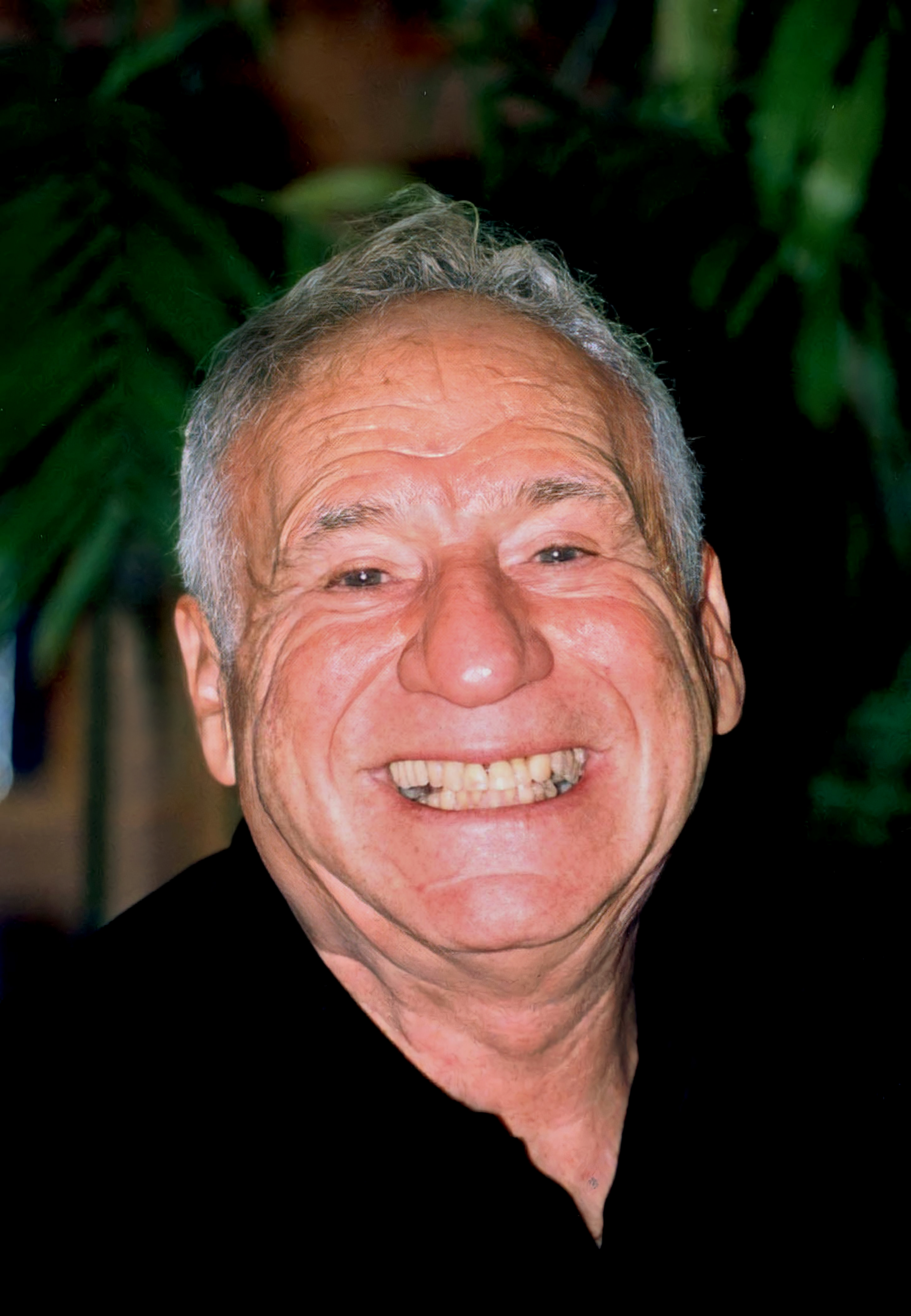
11. **Mel Brooks: Comedian, Writer, Director**Mel Brooks, the comedic genius behind some of Hollywood’s most irreverent and beloved films, began his adult life in the grim realities of World War II. At the tender age of 17, in 1944, he enlisted in the Army. Demonstrating an early brilliance, he ranked high in intelligence testing, which led him to enroll in the elite Army Specialized Training Program, a path usually reserved for college students.
Not long after, Brooks shipped off to Europe, assigned to the 1104th Engineer Combat Group. He served in the harrowing Battle of the Bulge, one of the war’s most brutal and pivotal conflicts, an experience that undoubtedly left an indelible mark on the young corporal. The juxtaposition of this intense wartime service with his future career in comedy is a striking testament to human resilience and the power of humor.
After being honorably discharged as a corporal, Brooks channeled his experiences and keen observations into the world of comedy writing. His unparalleled ability to satirize authority, human folly, and even the darkest moments of history, as seen in classics like “Blazing Saddles” and “The Producers,” may well have been informed by the absurdities and profound lessons he witnessed during the war.
Brooks’s military background provided a unique lens through which to view the world, allowing him to craft stories that were not only hilarious but often carried a subversive depth. His enduring cultural legacy as a master of parody and irreverence continues to shape comedic storytelling, proving that even from the crucible of conflict, profound and transformative art can emerge, changing our collective sense of humor forever.
Military equipment: Mel Brooks on screen and stage
Categories: American filmographies, Articles with short description, Mel Brooks, Short description is different from Wikidata, Use mdy dates from April 2025
Summary: Mel Brooks is an actor, comedian, and filmmaker of the stage, television, and screen. He started his work as a comedy writer, actor, and then director of 11 feature films including The Producers (1967), Young Frankenstein (1974), and Blazing Saddles (1974). He is also known for his work on Broadway, including The Producers (2001).
Get more information about: Mel Brooks on screen and stage
Read more about: Beyond the Lens: 12 Plus-Size Actresses Who Are Redefining Beauty, Owning the Spotlight, and Inspiring a Movement
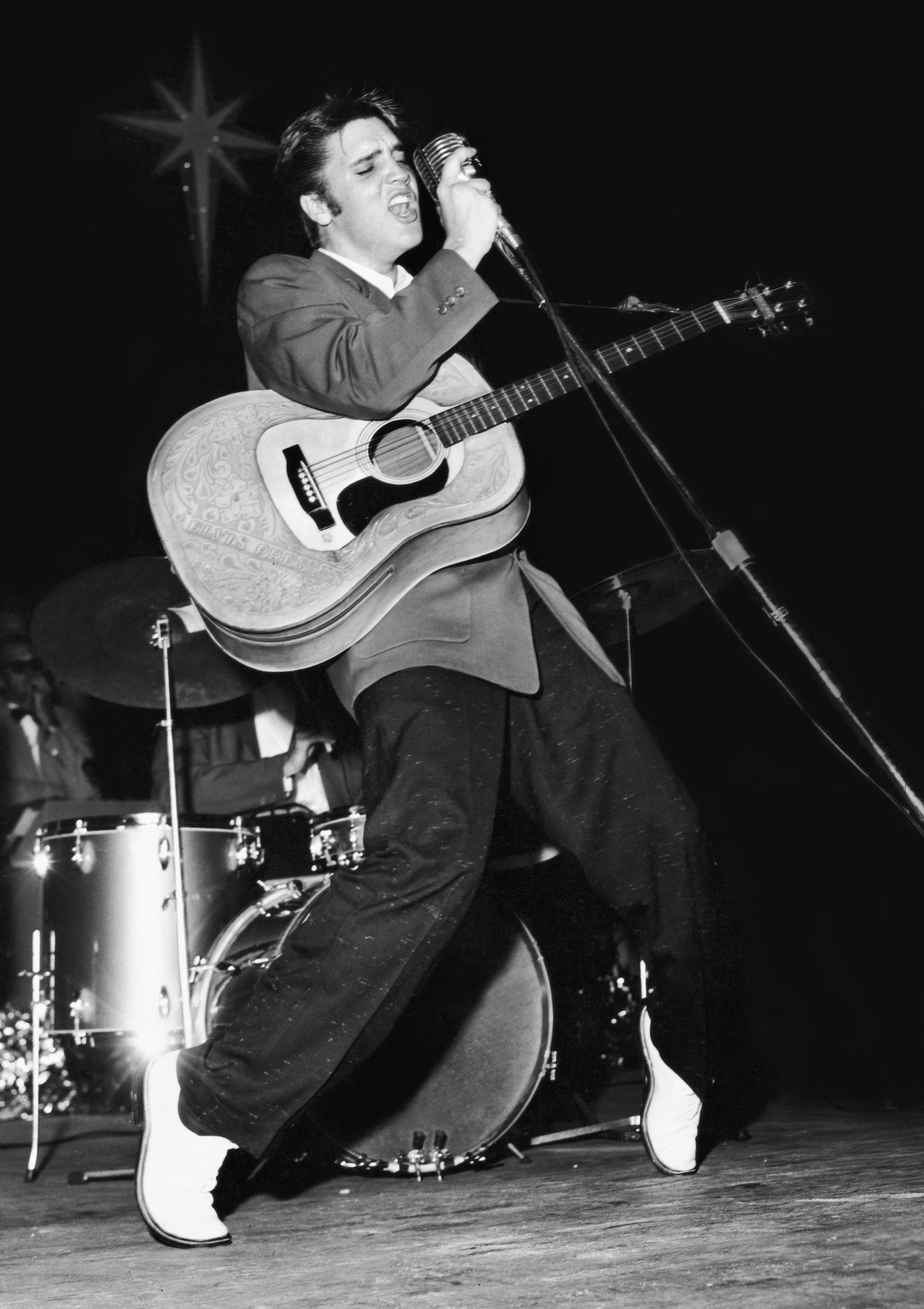
12. **Elvis Presley: The King of Rock and Roll**Elvis Presley’s military service stands as a unique chapter in celebrity history, as he was drafted into the Army in 1957, not before his rise to fame, but at the absolute zenith of his career. “The King” was an international superstar, and his conscription sparked widespread public debate and speculation about how he would serve, with many expecting him to receive preferential treatment.
However, Presley made a deliberate and impactful choice: he opted to serve as a regular soldier, turning down numerous cushy assignments that would have kept him out of harm’s way or allowed him to perform exclusively for the troops. His reasoning was clear, as he stated, “People were expecting me to mess up, to goof up in one way or another. They thought I couldn’t take it and so forth, and I was determined to go to any limits to prove otherwise.”
This decision resonated deeply with the American public, enhancing his already monumental appeal. By choosing to stand shoulder-to-shoulder with ordinary servicemen, Elvis demonstrated a profound sense of humility, patriotism, and character that transcended his musical talent. His time in uniform solidified his image not just as a rock and roll sensation, but as a true American icon, adding layers of relatability and respect to his public persona.
His military service undoubtedly impacted his enduring cultural legacy, cementing his place in the hearts of millions beyond just his musical prowess. Elvis’s journey from a superstar performing for screaming fans to a disciplined soldier serving his country remains a powerful narrative, illustrating how a profound commitment to duty can reshape a public figure’s identity and amplify their impact on popular culture for generations to come.
Military equipment: Elvis Presley (album)
Name: Elvis Presley
Type: Studio
Artist: Elvis Presley
Cover: Elvis_Presley_LPM-1254_Album_Cover.jpg
Released: March 23, 1956
Recorded: July 5, 1954sndJanuary 31, 1956
Studio: RCA Studio B,RCA Studios New York#24th St,Sun Studio
Genre: Rock and roll,rockabilly
Length: 28:03
Label: RCA Victor
Producer: Sam Phillips
NextTitle: Elvis (1956 album)
NextYear: 1956
Misc: Singles
Single1: Blue Suede Shoes
Single1date: Fri Aug 31 1956 00:00:00 GMT-0700 (Pacific Daylight Time)
Single2: I Got a Woman
Single2date: Fri Aug 31 1956 00:00:00 GMT-0700 (Pacific Daylight Time)
Single3: I’ll Never Let You Go (Little Darlin’)
Single3date: Fri Aug 31 1956 00:00:00 GMT-0700 (Pacific Daylight Time)
Single4: I Love You Because (song)
Single4date: Fri Aug 31 1956 00:00:00 GMT-0700 (Pacific Daylight Time)
Single5: Just Because (Nelstone’s Hawaiians song)
Single5date: Fri Aug 31 1956 00:00:00 GMT-0700 (Pacific Daylight Time)
Single6: Money Honey (Clyde McPhatter and The Drifters song)
Single6date: Fri Aug 31 1956 00:00:00 GMT-0700 (Pacific Daylight Time)
Categories: 1950s covers albums, 1956 debut albums, Album articles lacking alt text for covers, Album chart usages for Billboard200, Album chart usages for Norway
Summary: Elvis Presley (released in the UK as Elvis Presley Rock n’ Roll) is the debut studio album by American rock and roll singer Elvis Presley. It was released by RCA Victor, on March 23, 1956 (catalog number LPM-1254). The recording sessions took place on January 10 and January 11 at the RCA Victor Studios in Nashville, Tennessee, and on January 30 and January 31 at the RCA Victor studios in New York. Additional material originated from sessions at Sun Studio in Memphis, Tennessee, on July 5, August 19 and September 10, 1954, and on July 11, 1955.
The album spent ten weeks at number one on the Billboard Top Pop Albums chart in 1956, the first rock and roll album ever to make it to the top of the charts, and the first million-selling album of that genre. In 2003 and 2012, it was ranked number 56 on Rolling Stone’s list of the 500 greatest albums of all time, and at number 332 in a 2020 revised list. Elvis Presley was also one of three Presley albums to receive accolades in the reference book 1001 Albums You Must Hear Before You Die. It was certified gold on November 1, 1966, and platinum on August 8, 2011, by the Recording Industry Association of America.
The original 1956 UK release called Rock n’ Roll on His Master’s Voice Catalog Number: CLP 1093 has five different tracks.
Get more information about: Elvis Presley (album)
Read more about: Maestros Beyond the Melody: Unpacking the Diverse Legacies of America’s Most Influential Musicians
These remarkable individuals, each touched by the crucible of military service, emerged not just as veterans, but as architects of culture, industry, and national spirit. Their journeys from the structured world of uniform to the dazzling lights of public life are powerful testaments to the enduring human capacity for transformation, purpose, and impact. They remind us that the lessons learned in service—resilience, discipline, vision, and a deep understanding of human nature—are truly universal, echoing through their legendary careers and continuing to inspire us all.