The media loves celebrating the meteoric rise of millionaires and billionaires, doesn’t it? We’re constantly bombarded with feel-good stories of lavish lifestyles and business triumphs, sometimes making it seem like everyone is doing fabulously well, and we’re missing out. But let’s be real, not everyone has a happy ever after story. The truth is, those who amassed vast fortunes only to lose some or all of their wealth are far less frequently told.
These aren’t just obscure financial footnotes; these are incredible, sometimes shocking, tales of financial downfall. Driven by poor investments, outright fraud, devastating economic crises, or personal missteps, these stories offer invaluable lessons about just how fragile wealth can be. No matter how high you climb, the ground can disappear beneath your feet quicker than you can say “billionaire.”
So, buckle up, because we’re about to take a deep dive into the lives of some formerly prominent individuals who seemingly had it all, only to watch their empires crumble. These are the powerful cautionary tales for investors at every level, proving that wealth, no matter how vast, is never invincible. Get ready to explore the stunning collapses of 15 billionaires who lost everything—or nearly everything—after one major misstep.

1. **Sam Bankman-Fried: The Crypto King’s Catastrophic Implosion**
Sam Bankman-Fried, or SBF as he was widely known, was once hailed as a crypto wunderkind, a visionary who amassed a staggering fortune through his ventures, FTX and Alameda Research. Fresh out of MIT with a physics degree in 2014, he quickly moved from a quantitative trading firm to the burgeoning world of cryptocurrency in 2017, founding Alameda Research. By exploiting Bitcoin arbitrage opportunities, such as price differences between Japan and the U.S., Alameda reportedly generated daily profits up to $1 million, laying the groundwork for his meteoric rise.
The launch of FTX in 2019 was the real game-changer that catapulted SBF’s wealth into the stratosphere. As CEO and majority owner, he personally benefited immensely from FTX’s rapid ascension. By 2021, FTX had successfully raised $900 million at an impressive $18 billion valuation, followed by another $400 million in January 2022 at an even more astounding $32 billion valuation. SBF’s net worth peaked at an incredible $26.5 billion in early 2022, with the bulk of it tied to his substantial FTX stake, FTT tokens, and a notable 7.6% Robinhood stake valued at $648 million, which was later seized.
However, the illusion of his empire was shattered in November 2022. The collapse of FTX, amid a furious customer withdrawal frenzy, obliterated SBF’s fortune, marking one of history’s largest wealth destructions. On November 6, 2022, his net worth stood at a staggering $15.6 billion, according to Bloomberg’s Billionaires Index. But by November 11, as FTX plunged into bankruptcy, his fortune plummeted to zero, a shocking downfall Bloomberg described as “one of history’s greatest-ever destructions of wealth.”
His downfall wasn’t merely a financial one. SBF was ultimately convicted for fraud and related crimes in November 2023, and later sentenced to 25 years in prison in March 2024, alongside an $11 billion forfeiture order. His career trajectory, from a high-flying billionaire to a convicted felon with absolutely nothing, offers a chilling cautionary tale of unchecked ambition, egregious mismanagement, and a brazen flaunting of the laws. It’s a stark reminder that even the most innovative ventures can be built on shaky, unethical foundations.

2. **Elizabeth Holmes: The Theranos Mirage and Its Bitter End**
Elizabeth Holmes, once revered as the youngest self-made female billionaire, captivated Silicon Valley and the world with her audacious promise: to revolutionize blood testing. Her company, Theranos, claimed it could perform hundreds of tests from a single drop of blood using a revolutionary device. At its zenith in 2015, Theranos commanded a staggering valuation of $9 billion, and Holmes’s own 50% stake in the company was valued at approximately $4.5 billion, placing her at the pinnacle of entrepreneurial success.
She was initially praised as the CEO of Theranos, an exciting start-up that promised to revolutionise medical testing with inexpensive blood tests. Her 50% stake in the company was worth an estimated $4.5 billion. At the time, then-19-year-old Holmes was named by Forbes as America’s richest self-made woman. She became a symbol of innovation and female empowerment, gracing magazine covers and attracting powerful investors, all eager to be part of her vision to democratize healthcare.
However, the entire edifice was built on a foundation of deception. Rigorous investigations, notably by The Wall Street Journal, alongside scrutiny from regulators, peeled back the layers to expose a devastating truth: Theranos’s technology was fraudulent. It was incapable of performing the promised tests accurately and, worse, was producing unreliable results that actively endangered patients. By 2016, the monumental fraud was undeniable, leading to the company’s swift and ignominious collapse.
With the company’s fall, Holmes’s personal net worth plummeted to zero. The fairytale ended with severe legal repercussions. In 2022, she was convicted of fraud and sentenced to 11 years in prison, with her 135-month term later reduced for good behavior, making her an infamous example of ambition gone terribly wrong. Her story is a profound underscore of the immense risks associated with overhyping unproven technology and the catastrophic consequences that inevitably follow deceptive practices, serving as a powerful cautionary tale for the entire tech industry, highlighting how unchecked ambition can lead to both financial and legal ruin.
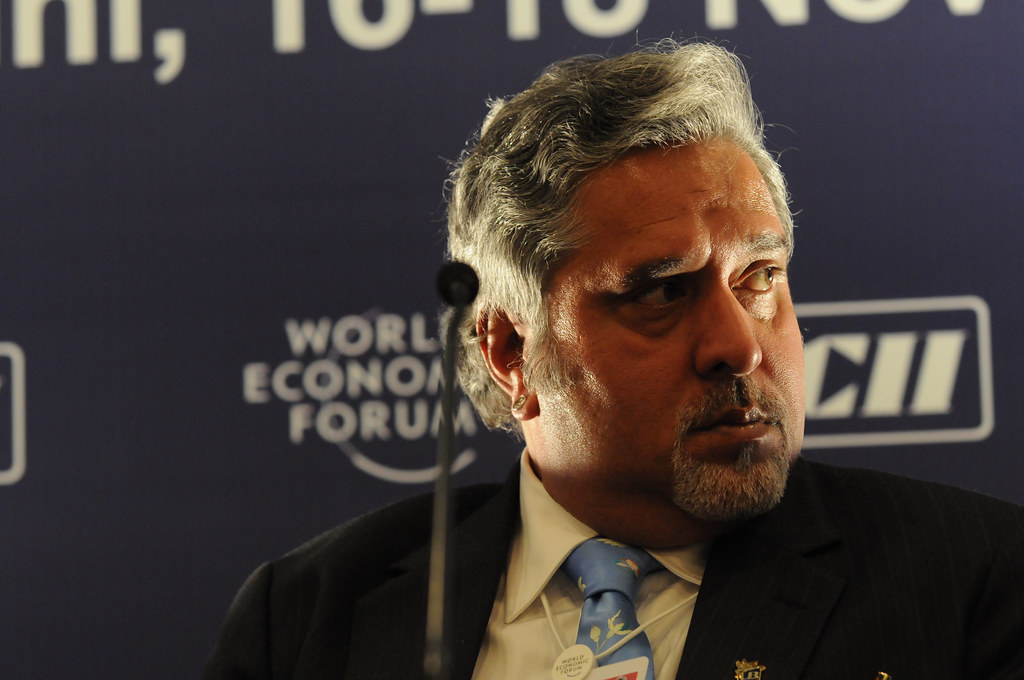
3. **Vijay Mallya: The “King of Good Times” Faces a Royal Collapse**
Vijay Mallya, famously dubbed India’s “King of Good Times,” curated an extravagant public persona, amassing a $1.5 billion fortune primarily as a liquor baron and the flamboyant owner of Kingfisher Airlines. His lifestyle was nothing short of legendary, characterized by private jets, luxurious yachts, and a global party circuit, all contributing to an image of untouchable success and opulence. His name became synonymous with lavish spending and unbridled celebration.
Yet, beneath this glittering facade, significant financial troubles were brewing. By 2012, Kingfisher Airlines, his flagship venture, had accumulated over $1 billion in crushing debt, signaling a deep and intractable crisis. Mallya, once celebrated for his business acumen, began defaulting on substantial loans from various Indian banks, a clear indication that his empire was beginning to crack under the weight of its financial burdens. The lavish spending and expansion, it turned out, were unsustainable.
As the financial noose tightened, Mallya found himself facing serious charges of money laundering and fraud in India. Rather than confront these allegations, he controversially fled to the UK in 2016, where he has since been embroiled in a protracted legal battle, fighting extradition back to India. This dramatic escape further cemented his image as a fugitive from justice, a far cry from the “King of Good Times.”
His assets in India were subsequently seized by authorities, and his once-grand net worth effectively dwindled to nothing, a stark contrast to his former billionaire status. Mallya’s case stands as a potent illustration of how unchecked lavish spending, coupled with severely mismanaged ventures and a distinct failure to diversify investments—especially an over-reliance on a failing airline—can utterly erode even the most immense wealth. It serves as a grim reminder that even the most charismatic figures cannot outrun financial reality.

4. **Bernie Madoff: The Architect of the World’s Biggest Ponzi Scheme**
Bernie Madoff wasn’t just another Wall Street player; he was the master of the world’s biggest Ponzi scheme, a deception that spanned decades and defrauded investors out of an estimated $65 billion. For years, Madoff operated a seemingly legitimate securities firm, Bernard L. Madoff Investment Securities, promising impossible returns that attracted a who’s who of wealthy individuals, charities, and institutions. His firm was considered an exclusive, trusted investment house, and his consistent, albeit suspiciously steady, returns were seen as a sign of genius.
More than a Wall Street player, Bernie Madoff was the master of the world’s biggest Ponzi scheme. For decades, he duped investors out of $65 billion with promises of impossible returns. His reputation as a financial wizard grew, fueled by an air of exclusivity and the allure of consistent profits that seemed immune to market volatility. Investors clamored to get into his funds, trusting him with their life savings and legacies, completely unaware that their money wasn’t being invested but rather used to pay off earlier investors in a classic pyramid scheme.
The house of cards, meticulously constructed over at least two decades, finally collapsed in December 2008, amid the global financial crisis. Madoff confessed his massive fraud to his sons, who then reported him to authorities. The unraveling sent shockwaves through the financial world, exposing the depths of his deceit and the sheer scale of the losses. Madoff pleaded guilty to 11 federal felonies and, in 2009, was sentenced to a staggering 150 years in a maximum-security prison.
When his house of cards collapsed in 2008, Bernie’s legacy became a 150-year sentence. He died behind bars in April 2021, aged 82. His story remains an unparalleled cautionary tale, not just about the dangers of blind trust and the allure of guaranteed high returns, but also about the insidious nature of fraud that can destroy countless lives and obliterate fortunes beyond comprehension. Madoff’s spectacular fall serves as a permanent scar on the face of financial integrity.

5. **Eike Batista: Brazil’s Overleveraged Dream Turned Nightmare**
No story of lost billions is more dramatic than that of Brazilian industrialist Eike Batista. In 2012, he stood as the seventh-richest person in the world, boasting a colossal net worth exceeding $30 billion. His sprawling empire, consolidated under the EBX Group, encompassed a diverse portfolio spanning mining, energy, and logistics, all ambitiously tied to the glittering promise of Brazil’s booming future. Batista was the epitome of a national success story, a charismatic figure who convinced investors of his Midas touch.
Batista’s strategy, however, was precariously built on a mountain of debt and a torrent of bold promises. He skillfully raised billions from eager investors, primarily by projecting immense oil discoveries from his company, OGX, a venture that fueled much of his wealth. He leveraged his immense charisma and powerful political connections to sell a grand vision that, in hindsight, was far more ambition and speculation than it was grounded in reality or proven results. He often bragged about becoming the world’s richest man, a testament to his supreme overconfidence.
The unraveling of Batista’s empire commenced when OGX’s much-hyped offshore oil wells failed to produce anywhere near the projected amounts. The “gusher” he so confidently promised turned out to be merely a trickle, a devastating blow to his core asset. As the company’s production forecasts were drastically slashed, investor confidence evaporated with chilling speed, and the stock price of OGX, along with his other interconnected ventures, plummeted dramatically.
Because Batista’s entire conglomerate was intricately linked through complex cross-shareholdings and heavy debt, the failure of one critical part—OGX—triggered a devastating domino effect across his entire empire. As creditors aggressively called in their loans, he was forced into a desperate fire sale of assets, a move that ultimately wiped out his entire fortune and shockingly left him with a negative net worth of over $1 billion. In 2014, his empire crashed, and five years later he was sentenced to 30 years in prison for bribing his way to state government contracts, cementing his fall as a textbook example of the dangers of excessive leverage and building an empire on speculation rather than concrete, proven results.

6. **Seán Quinn: The Undiversified Patriot’s Catastrophic Gamble**
Seán Quinn, once revered as Ireland’s richest man, forged his initial fortune from humble beginnings in quarrying, shrewdly expanding his interests into cement, plastics, and, most significantly, insurance with Quinn Direct. Known affectionately as the “Cavan Cowboy,” his remarkable rags-to-riches success story was a profound source of national pride, embodying the spirit of Irish entrepreneurship and resilience. His diversified industrial base seemed solid, a testament to his business acumen.
However, his downfall became an acute lesson in the catastrophic risks of extreme concentration and undiversified investments. Quinn made a colossal, leveraged bet on a single company: Anglo Irish Bank. Convinced the bank was significantly undervalued, he employed complex financial instruments known as contracts for difference (CFDs) to aggressively build a massive 28% stake in the institution. This audacious move effectively meant he was staking his entire family fortune on the performance of one stock, within one sector, in one country.
The single point of failure became devastatingly apparent when the 2008 global financial crisis struck with brutal force. Ireland’s rampant property bubble burst spectacularly, and Anglo Irish Bank, already deeply exposed, found itself at the absolute epicenter of this calamitous collapse. The bank’s stock became virtually worthless, wiping out Quinn’s massive, debt-fueled position overnight. The loans he had taken out to acquire these shares were immediately called in by creditors, including the now-nationalized Anglo Irish Bank itself, leading to the seizure of his entire business empire to cover the staggering losses.
Quinn’s story stands as arguably the most powerful argument for diversification ever recorded in modern financial history. By betting everything on a singular outcome, he fundamentally violated the most basic and critical rule of prudent investing. His deeply patriotic belief in an Irish bank, while perhaps noble in sentiment, overrode sound financial judgment, leading directly to one of the largest personal wealth destructions ever chronicled. It’s a sobering reminder that even national pride cannot protect against fundamental investment errors.

7. **Björgólfur Gudmundsson: The Icelandic Meltdown and a Billionaire’s Ruin**
Björgólfur Gudmundsson, alongside his son Thor Bjorgolfsson, soared to prominence as Iceland’s first billionaires during the country’s booming, yet ultimately freewheeling, banking expansion in the early 2000s. Gudmundsson served as the chairman and majority owner of Landsbanki, which was Iceland’s second-largest bank, an institution that pursued aggressive expansion across Europe, heavily fueled by readily available, cheap debt. His fortune was not just significant; it was inextricably tied to the health and stability of Landsbanki and, by direct extension, the entire Icelandic economy.
At the peak of his financial prowess, Gudmundsson’s wealth was estimated to be well over $1.1 billion, a figure that underscored his influence and success. His extravagant ventures extended beyond banking; he was also famously the owner of the English Premier League football club West Ham United, a symbol of his global reach and considerable spending power. His financial empire seemed unshakeable, a testament to Iceland’s newfound economic vibrancy and his own entrepreneurial spirit.
However, the illusion of invincibility shattered when the 2008 global financial crisis delivered a crushing blow. Iceland’s notoriously overleveraged banking system, built on a foundation of precarious debt and rapid expansion, imploded spectacularly. Landsbanki, along with the nation’s other major financial institutions, collapsed and was subsequently taken over by the government in a desperate attempt to stabilize the economy. This systemic failure had immediate and devastating consequences for Gudmundsson.
His substantial shares in Landsbanki became utterly worthless overnight, wiping out the vast majority of his fortune. The collapse culminated in his being declared personally bankrupt in 2009, burdened with debts reportedly approaching $1 billion. Gudmundsson’s story serves as a stark warning about the perils of systemic risk, illustrating how a colossal fortune built on a single, highly leveraged sector can vanish almost instantaneously during a national economic crisis, leaving behind nothing but ruin.
Ready to dive into even more wild rides of financial fortunes that went from billions to zilch? We’ve seen some seriously shocking collapses already, but believe it or not, the cautionary tales keep coming! These next eight stories are just as jaw-dropping, reminding us that even the most seemingly untouchable empires can crumble in an instant. Get ready, because these lessons are gold, even if the fortunes aren’t anymore.
8. **Jordan Belfort: The Wolf of Wall Street’s Epic Crash**
If you’ve heard of the ‘Wolf of Wall Street,’ you know Jordan Belfort’s story is the stuff of legends – and nightmares. Back in the 1990s, he built a multi-million-dollar empire with his stockbroking firm, Stratton Oakmont. He was reportedly raking in $250 million annually by age 25, living a life of yachts, drugs, and truly epic parties.
But here’s the kicker: his fortune was built on a notorious ‘pump-and-dump’ scheme, manipulating stock prices for his own gain. The party abruptly ended when the FBI came knocking, charging him with securities fraud and money laundering. Talk about a buzzkill!
After serving his time in prison and being ordered to pay a whopping $100 million in restitution, Belfort was left with practically nothing. He’s since managed to rebuild a modest fortune through writing and motivational speaking. His story remains a stark, Hollywood-level reminder of just how fast illegal financial practices can bring down a seemingly invincible kingpin.
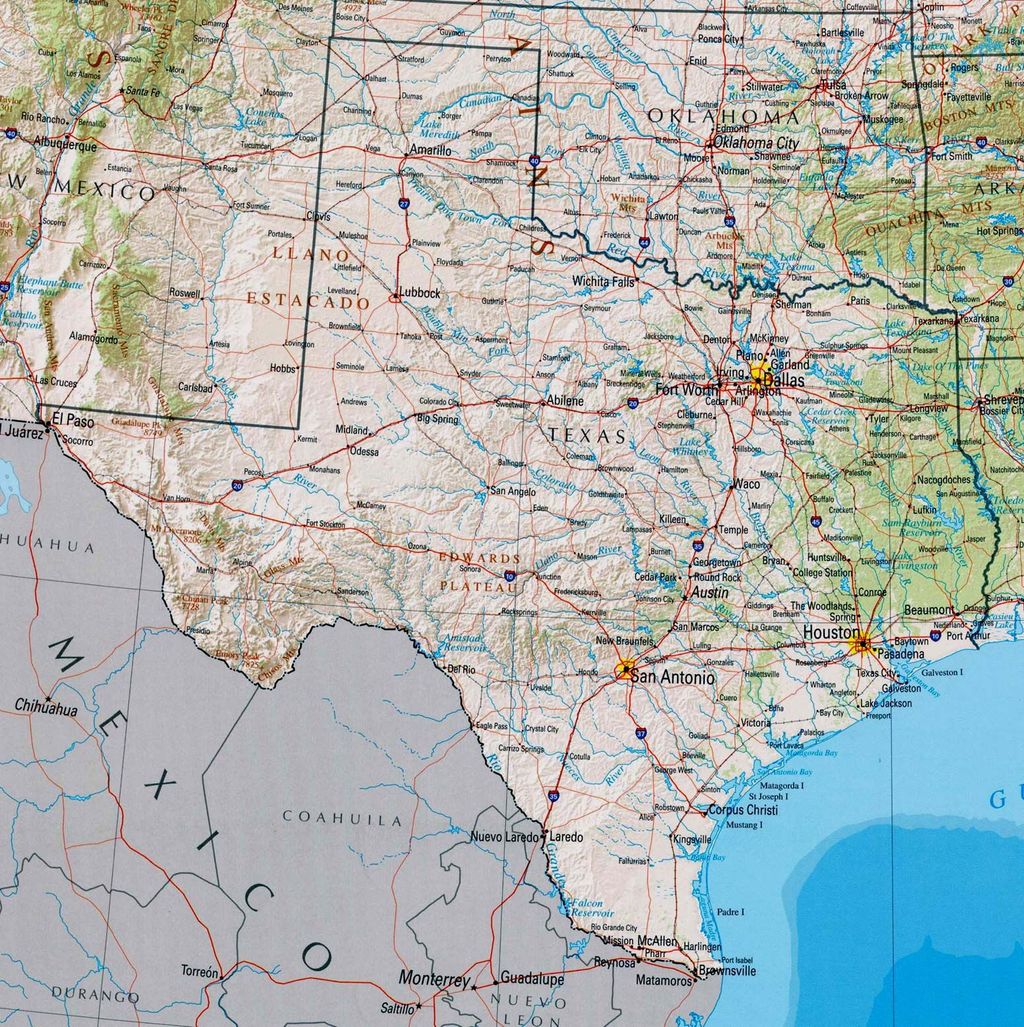
V9. **Robert Allen Stanford: The Fake Billionaire’s 100-Year Sentence**
Remember that whole ‘Texan billionaire with a golden touch’ vibe? That was Robert Allen Stanford, a man who curated an image of immense wealth and influence. He absolutely loved indulging in the high life, complete with private planes and lavish yachts, during his peak as an American financier and sports sponsor. His estimated $2.2 billion fortune seemed untouchable.
But, plot twist! In 2009, the illusion shattered. It was revealed that Stanford’s entire empire was based on the second-largest Ponzi scheme in history, defrauding investors out of a staggering $7 billion. All that ‘golden touch’ was actually just a touch of pure fraud.
When his scheme unraveled, investors lost everything. Stanford, once the picture of opulence, ended up penniless and behind bars. He was sentenced to a jaw-dropping 110-year jail term in 2012, proving that some vacations are definitely not worth the price.

10. **Aubrey McClendon: The Reckless Fracking Pioneer’s Tragic End**
Aubrey McClendon was a true titan in the natural gas industry, co-founding Chesapeake Energy and pioneering new technologies. By 2011, he was worth a cool $1.2 billion, riding high on the energy boom he helped create. He built Chesapeake into an absolute juggernaut.
However, his approach was a bit, shall we say, aggressive. He became notorious for risky land-leasing deals and managed to accumulate a personal debt of over $1 billion. Five years later, Forbes didn’t mince words, naming him ‘America’s Most Reckless Billionaire.’
His downfall came swiftly and tragically. In March 2016, he was indicted on charges of conspiring to rig bids for oil and gas leases. The very next day, he died in a high-speed car accident, leaving behind an empire that went up in flames, much like his personal fortune. It’s a stark reminder of the dangerous tightrope walked by those who push the limits.

11. **Bernie Ebbers: WorldCom’s $11 Billion Accounting Scandal**
Bernie Ebbers was the quintessential self-made man, starting as a hotel manager and then transforming into a powerful telecom titan. He ran WorldCom with an undeniable swagger and a sharp eye for spreadsheets, seemingly building an unshakeable empire through aggressive expansion and acquisitions.
But beneath the surface of his confident leadership, a monumental deception was brewing. There was absolutely no need for him to orchestrate an $11 billion accounting scandal – the largest in U.S. history at the time. Yet, he did it, inflating assets and cooking the books on an epic scale.
His billions, once a symbol of his prowess, vanished from boardroom to bust. Ebbers was sentenced to 25 years in prison, where he died. His story is a chilling lesson in how corporate greed and fraudulent practices can lead to not only the collapse of a company but also the complete destruction of a personal legacy and freedom.

12. **Richard S. Fuld Jr.: Lehman Brothers’ $639 Billion Implosion**
Richard S. Fuld Jr. was at the helm of Lehman Brothers, a Wall Street institution that had weathered storms for over 150 years. His decisions, however, were about to seal its fate. He was known for his aggressive, no-holds-barred approach, but it ultimately proved to be his undoing.
Fuld famously ignored the looming disaster, betting big on unsafe mortgage assets and making a series of poor management decisions. He repeatedly dismissed warnings and failed to negotiate effectively as the financial storm gathered strength. This unwavering confidence in a failing strategy became a catastrophic flaw.
In 2008, the investment bank’s $639 billion insolvency didn’t just shatter Lehman Brothers; it sent shockwaves through global markets, costing the world economy an estimated $10 trillion. Fuld’s actions are forever linked to one of the biggest and most painful losses in financial history, a stark symbol of hubris in the face of an economic tsunami.
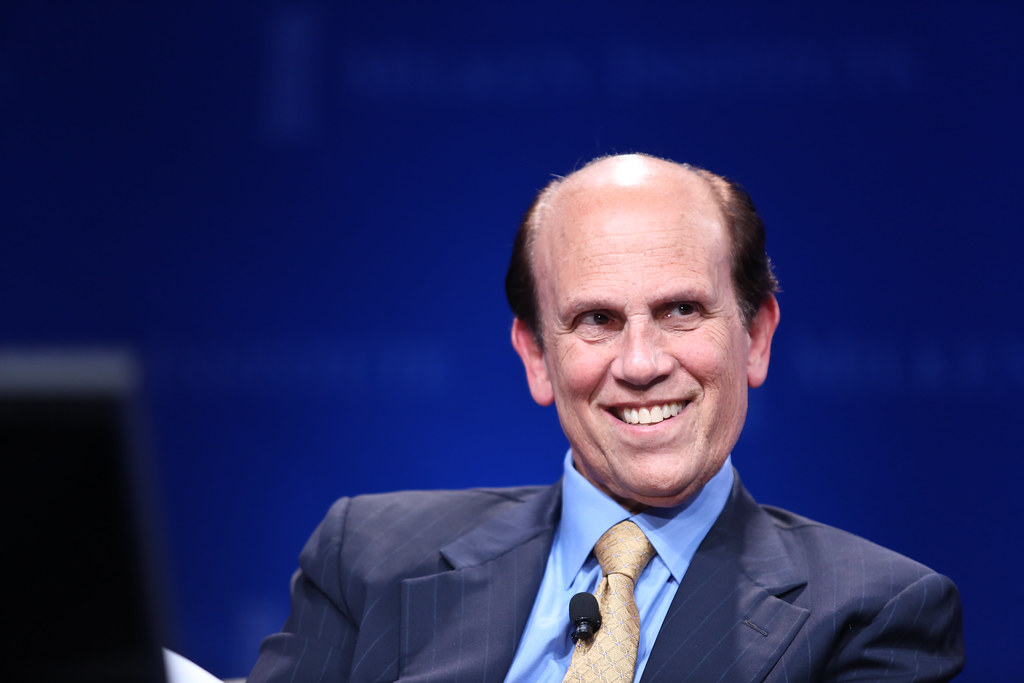
13. **Michael Milken: The Junk Bond King’s Fall from Grace**
Back in the roaring 1980s, Michael Milken was *the* guy on Wall Street, earning himself the legendary title of the ‘Junk Bond King.’ He commanded billions, revolutionized corporate finance, and built an empire by popularizing high-yield, high-risk bonds that fueled many corporate takeovers and expansions.
His aggressive tactics, while initially lucrative, eventually drew the unwelcome attention of regulators. His high-yield empire came crumbling down under a barrage of securities violations charges, including insider trading and fraud. The very strategies that made him a king ultimately led to his downfall.
Milken faced the music, paying a staggering $600 million in fines and serving time in jail. Once considered a financial genius, he became a classic cautionary tale of how unchecked greed can lead to a spectacular fall from grace. It just goes to show, even kings can lose their crowns.
So, what do these incredible, sometimes terrifying, stories teach us? From crypto kings to Wall Street titans, the lessons are crystal clear: wealth is incredibly fragile. Whether it’s the allure of quick riches, the hubris of overconfidence, or just plain shady dealings, the path to losing it all can be shockingly swift. So, diversify, stay humble, and definitely keep your investments above board. Your wallet (and your peace of mind) will thank you!