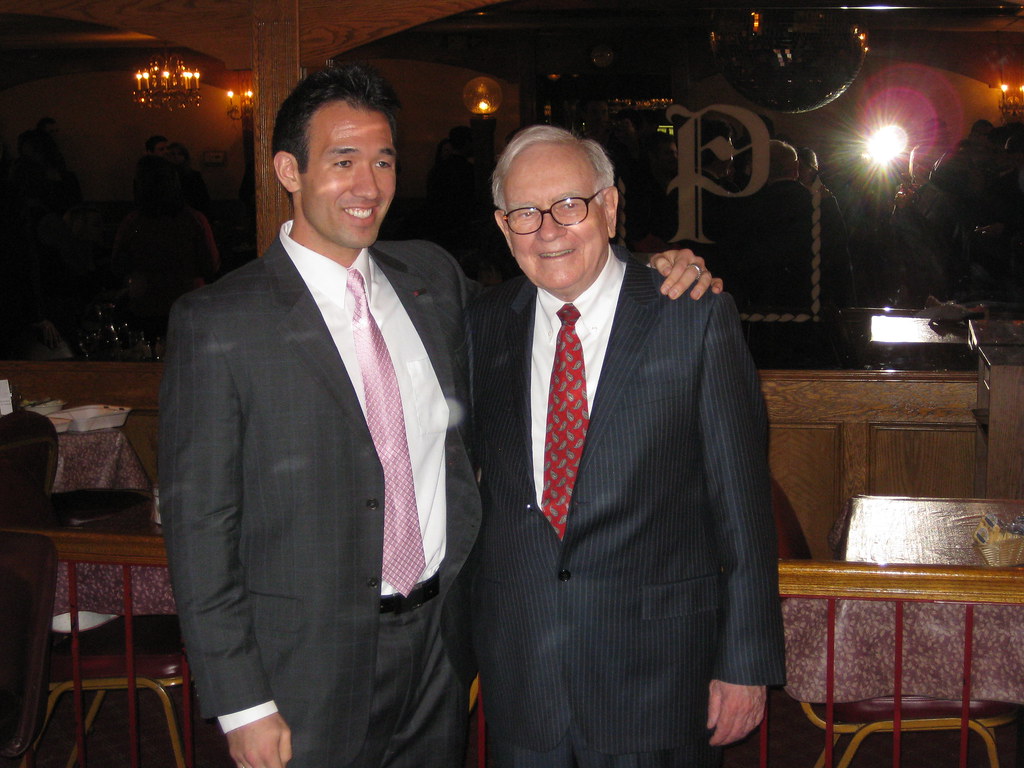
Warren Buffett, the legendary Oracle of Omaha, is a name synonymous with unparalleled investment genius and business acumen. While his pronouncements on stock picking and market trends often make headlines, his most profound wisdom extends far beyond the ticker tape, offering invaluable guidance for young entrepreneurs and aspiring leaders charting their own path to success. His journey, marked by entrepreneurial experiments and a voracious appetite for learning, laid the groundwork for a career that inspires millions.
Buffett’s insights aren’t just for Wall Street titans; they’re universal principles honed over decades of experience, shared directly with small-business owners, college students, and those with an entrepreneurial spirit. He believes in fostering a strong foundation, not just chasing quick profits, and his advice emphasizes character, integrity, and a deep understanding of human nature as much as financial metrics. These lessons serve as a powerful blueprint for anyone looking to build lasting wealth and a meaningful career.
We’re about to embark on an illuminating journey through 15 of Warren Buffett’s most profound pieces of advice. In this first part, we’ll uncover seven fundamental tenets that form the bedrock of his success, guiding young entrepreneurs to cultivate a mindset geared for long-term achievement and true professional fulfillment. Get ready to transform your approach to business and life, inspired by one of the greatest minds of our time.

1. **Delight Your Customer: The Heart of Enduring Business**Warren Buffett’s number-one tip for business success is remarkably simple yet profoundly impactful: “Delight your customer.” He shared this crucial advice at both the Goldman Sachs 10,000 Small Businesses program graduation and the White House’s United State of Women Summit, emphasizing its universal applicability. This isn’t just about satisfying needs; it’s about creating an experience so positive that customers feel truly valued and eager to return.
Buffett underscores that the cost of a product often matters less than the quality of service provided. “If you’ve been treated well and honestly, if you’ve been delighted by the person you’re doing business with, you’re going to return to that person,” he explains. This focus on cultivating genuine delight builds enduring loyalty, turning casual buyers into steadfast advocates for your brand, a cornerstone of sustainable growth.
Crucially, this philosophy extends beyond the direct customer interaction. Buffett also stresses the importance of treating employees exceptionally well, recognizing them as “your intermediaries many times to that customer.” When your team feels valued and respected, they naturally become better ambassadors for your business, mirroring the positive treatment they receive in their interactions with customers. This creates a virtuous cycle of positive engagement that can differentiate any business in a competitive landscape.
Ultimately, delighting customers and empowering employees forms an unbreakable bond that no competitor can easily replicate. It’s an investment in goodwill that pays dividends far beyond immediate sales figures, fostering a reputation for excellence and a loyal customer base that champions your business for years to come. This wisdom proves that true business success is built on the foundation of genuine human connection and exceptional service.
Read more about: The Unraveling Value: 12 Restaurant Chains Where Diners Say the Price Just Isn’t Right Anymore

2. **Find and Follow Your Passion: Tap-Dancing to Work**For Warren Buffett, work is not merely a means to an end; it’s a source of profound joy and fulfillment. At 85, he famously declares, “I tap dance to work every day.” This isn’t because of financial necessity, but because he gets “to do what I love with people I love, and it doesn’t get any better than that.” This encapsulates a vital lesson for young entrepreneurs: aligning your career with your deepest passions.
Buffett consistently advises college students to “find your passion, find the job that you would hold if you didn’t need to have a job, so that every day is fun.” The pursuit of work that genuinely excites you transforms daily tasks into opportunities for growth and enjoyment, making the entrepreneurial journey far more sustainable and rewarding. When you love what you do, challenges become less daunting and successes more profound.
This intrinsic motivation, rather than just the pursuit of lucrative outcomes, is what Buffett believes defines true professional success. He urges people to seek a profession they would “stick around for, whether you need the money,” suggesting that internal drive is a more powerful motivator than external rewards. The joy derived from meaningful work contributes significantly to overall well-being and long-term commitment.
The emphasis on passion also ties into surrounding yourself with people who share your enthusiasm and drive. When you are deeply engaged in work you love, you naturally attract and collaborate with like-minded individuals, amplifying your collective impact and making the entire experience even more enriching. This creates an environment where personal and professional growth flourish hand-in-hand, making every workday a vibrant and fulfilling experience.
Read more about: Beyond the Red Carpet: 14 Celebrities Who Shockingly Walked Away From the Limelight

3. **Embrace Early Entrepreneurship: Building the Foundation**Warren Buffett’s entrepreneurial journey began remarkably early, demonstrating an innate understanding of business fundamentals from a young age. As a child, he was already selling chewing gum, Coca-Cola, and weekly magazines door-to-door. These early ventures weren’t just about making pocket money; they were formative experiences that taught him the basic principles of salesmanship and customer psychology, lessons that would prove invaluable throughout his career.
This hands-on approach to business from a tender age provided him with a direct understanding of market dynamics. He learned what customers wanted, how to communicate value, and the effort required to earn a sale. For “ImpactWealth Readers,” as the context mentions, this highlights a critical lesson: “The ability to understand customer needs and solve their problems is the cornerstone of any successful venture.” It’s about getting your hands dirty and learning the ropes from the ground up.
These seemingly small, early ventures helped Buffett build a foundational understanding of business far beyond theoretical knowledge. They taught him about profit margins, the importance of reliable supply, and the direct relationship between effort and reward. This isn’t just about selling; it’s about observing, adapting, and innovating in response to real-world feedback, cultivating an entrepreneurial spirit that seeks solutions and creates value.
The beauty of early entrepreneurship lies in its low-risk learning environment. It allows individuals to experiment, make mistakes, and develop crucial business instincts without the pressure of large-scale operations. Buffett’s early hustles were miniature business schools, providing practical lessons that formal education often overlooks, and demonstrating that the drive to create and serve can start at any age with any product.
Read more about: Inside Roger Federer’s Billion-Dollar Blueprint: Unpacking The Strategic Deals That Made A Tennis Legend A Wealth Titan

4. **Understand the Value of Money and Practice Patience in Investing**At just 11 years old, Warren Buffett made his first stock market investment, purchasing three shares of Cities Service Preferred. This pivotal experience taught him a lesson that would define his entire investment philosophy: the importance of patience, informed decision-making, and accepting short-term market volatility for long-term gain. He understood early on that true wealth creation is a marathon, not a sprint.
This foundational experience instilled in him the discipline to look beyond immediate market fluctuations. For aspiring investors, his takeaway is clear: “Start investing early, even with small amounts. Time in the market often beats timing the market.” This principle emphasizes consistent, long-term commitment over speculative, short-term bets, advocating for a steady approach to wealth accumulation.
Buffett’s “golden rule” for investing, “Our favorite holding period is forever,” perfectly encapsulates this patient, long-term perspective. He advises against selling stocks merely because others are doing so, instead advocating for sales only when capital is needed or a demonstrably better investment opportunity arises. This unwavering belief in the intrinsic value of quality companies, held over extended periods, is a hallmark of his success.
Moreover, this lesson extends to financial resilience. Buffett explained in his 2018 annual letter the risks of investing borrowed money, warning that “excessive reliance on debt can lead to stress and poor decision-making.” He believes that “during economic downturns, investors with their own capital are in a stronger position,” emphasizing that “long-term survival in business is more important than chasing quick profits.” This holistic view of money management and investment reflects a profound understanding of risk and sustainability.
Read more about: Decoding the Billions: A Mental Floss Guide to the World’s Richest in 2025

5. **Seize Scalable Opportunities: The Pinball Machine Venture**A remarkable example of Warren Buffett’s early business acumen was his high school pinball machine venture. He and a friend purchased a used pinball machine for $25 and placed it in a local barbershop. The genius wasn’t just in the initial idea, but in its scalability: the profits allowed them to expand the business to multiple locations, demonstrating Buffett’s keen ability to identify opportunities with significant growth potential.
This venture illustrated a practical lesson for entrepreneurs: “Keep an eye out for low-cost investments that offer scalable growth potential.” It wasn’t about a huge initial outlay, but about a small, manageable investment that could generate steady income and be replicated. This approach minimizes risk while maximizing the potential for expansion, a crucial strategy for any budding business owner.
The pinball machine project was a masterclass in passive income generation and business expansion. By identifying a simple need (entertainment in a waiting area) and fulfilling it with an easily replicable asset, Buffett demonstrated how to create multiple income streams from a single, successful model. This laid the groundwork for his later, larger-scale investments, where he would look for companies with strong underlying businesses that could grow and compound over time.
The success of this venture also highlighted the importance of keen observation and understanding local markets. Recognizing where a small investment could yield a disproportionate return, and then having the drive to replicate that success, is a fundamental entrepreneurial skill. It’s about more than just finding an idea; it’s about recognizing its inherent scalability and executing on that potential.

6. **Invest in Yourself and Diversify Income: Building Personal Assets**By the young age of 14, Warren Buffett had saved enough from his newspaper delivery route to make a significant personal investment: he bought a 40-acre farm, which he then rented out to a tenant farmer. This act was not merely about acquiring property; it was a profound demonstration of his belief in long-term asset building and the power of diversifying income streams, a crucial lesson for financial independence.
This decision showcases an advanced financial understanding for someone so young. It wasn’t just about saving money, but about putting that money to work to generate passive income. The lesson here for “ImpactWealth Readers” is unequivocal: “Diversify your income streams and prioritize investments that generate passive income.” This strategy builds a robust financial foundation, reducing reliance on a single source of earnings.
Investing in assets that generate returns, whether it’s real estate, stocks, or even unique ventures like his pinball machines, is a recurring theme in Buffett’s early life. It underscores the importance of growing your capital actively rather than letting it sit idle. This foresight allowed him to compound his wealth significantly over time, creating a buffer and providing financial freedom to pursue larger opportunities.
Furthermore, this “investment in self” extended beyond financial assets. Buffett’s commitment to continuous learning, from voraciously reading books to spending time at stock brokerage lounges, was another form of self-investment. He understood that building knowledge and skills was as critical as building a diversified portfolio. Both forms of investment pay immense dividends throughout an individual’s career, creating lasting value.

7. **Value Hands-On Learning and Master the Art of Negotiation**Warren Buffett’s early exposure to the business world provided him with invaluable hands-on lessons that transcended theoretical knowledge. Working in his grandfather’s grocery store, for instance, offered practical insights into profit margins, customer service, and inventory management. This direct experience allowed him to test his skills and understand the intricate mechanics of a real business, highlighting that “hands-on experience is invaluable.”
This practical learning formed the bedrock of his business acumen. It taught him the nuances of daily operations, the importance of efficiency, and the direct impact of operational decisions on the bottom line. The advice here is clear: “Before diving into large-scale ventures, test your skills on smaller projects.” This iterative approach allows entrepreneurs to refine their methods and build confidence in a less risky environment.
Alongside this experiential learning, Buffett also mastered the critical skill of negotiation. His ability to persuade barbershop owners to host his pinball machines wasn’t just about selling; it was about creating “mutually beneficial agreements.” He learned to craft win-win deals, a hallmark that would later define his sophisticated investment strategies and partnerships.
For entrepreneurs, strong negotiation skills are not merely a bonus; they are a necessity. “ImpactWealth Advice” points out that “strong negotiation skills can turn an average deal into a profitable one.” It’s about effectively communicating the value of your proposition and finding common ground that benefits all parties. This blend of practical experience and astute negotiation became a powerful combination in Buffett’s journey to becoming a financial titan.
Warren Buffett’s enduring legacy is not merely built on a foundation of early success; it is sustained by a sophisticated understanding of advanced strategies that transcend simple financial mechanics. Having explored the bedrock principles, we now pivot to the advanced tactics and philosophical underpinnings that enable prolonged achievement. These insights, honed over decades, provide a blueprint for maintaining momentum, adapting to change, and navigating the complexities of high-stakes business and investment. From financial discipline to emotional mastery, Buffett’s advanced wisdom offers actionable strategies for entrepreneurs seeking to build and secure lasting success.
Read more about: Beyond the Force: The Real, Multifaceted Story Behind George Lucas’s Decision to Sell Star Wars to Disney

8. **Financial Discipline: The Power of Compound Interest**Warren Buffett’s ability to save and reinvest his earnings from a young age laid the unwavering foundation for his financial success. He understood early the immense potential of compounding returns, a principle he famously champions today as an essential component of wealth accumulation. This isn’t just a theoretical concept; it’s a practical strategy for sustained financial growth.
For budding entrepreneurs and investors, Buffett’s key takeaway is clear: “Save consistently, no matter how small the amount, and let compound interest work its magic.” A simplified example underscores this power: consistently saving $100 per month at an 8% annual interest rate can accumulate to approximately $18,294 in 10 years, and a remarkable $59,295 over 20 years.
Beyond saving, Buffett emphasizes financial resilience, particularly in how capital is acquired. In his 2018 annual letter, he meticulously explained the risks associated with investing borrowed money. He warned that “excessive reliance on debt can lead to stress and poor decision-making,” advocating instead for the use of one’s own capital.
Buffett firmly believes that “during economic downturns, investors with their own capital are in a stronger position,” enabling them to capitalize on opportunities when others are forced to retreat. This philosophy highlights that “long-term survival in business is more important than chasing quick profits,” underscoring that disciplined financial management is the cornerstone of enduring entrepreneurial success.
Read more about: Decomposition and Discovery: The Complex Investigation into a Body Found in a US Rapper’s Tesla

9. **Lifelong Learning: A Non-Negotiable Habit**Warren Buffett’s success is deeply rooted in his insatiable commitment to continuous learning, a habit that began in his youth. His childhood love for books, such as *One Thousand Ways to Make $1,000*, and his regular visits to stock brokerage lounges reflect a lifelong dedication to acquiring knowledge. This voracious appetite for learning has remained a non-negotiable pillar throughout his illustrious career.
Buffett consistently emphasizes that success is not an overnight phenomenon; rather, it is the result of consistent, daily accumulation of knowledge. He believes that “learning something new every day and applying it in business leads to sustainable growth.” Even today, he maintains the habit of reading newspapers daily, integrating current events and new information into his decision-making process.
He eloquently describes the power of knowledge, stating, “That’s how knowledge works. It builds up, like compound interest.” This perspective encourages entrepreneurs to stay perpetually curious, understanding that every piece of information acquired compounds, opening doors to new opportunities and deeper insights. The advice for readers is simple yet profound: “Stay curious and keep learning. The knowledge you acquire today can open doors to opportunities tomorrow.”
Moreover, Buffett stresses that true professional fulfillment comes from work that is intrinsically motivating, not solely lucrative. He advises that curiosity, continuous learning, and thoughtful career choices ultimately matter more than merely chasing a high salary. This holistic view of learning extends beyond financial theory, encompassing a broader personal and professional enrichment.

10. **Admit Your Mistakes: A Catalyst for Change**Warren Buffett’s candor in acknowledging missteps offers a powerful lesson for entrepreneurs. When questioned about Kraft-Heinz’s challenging quarter, Buffett notably admitted that he had underestimated the impact of private-label brands on branded food sales. This contrasts sharply with many who hesitate to concede errors publicly, showcasing his profound humility and commitment to factual assessment.
For entrepreneurs, this provides a critical insight: understanding the impact of emerging trends is paramount. These trends are not merely shifts but create both opportunities for nimble entrepreneurs and potential disadvantages for entrenched corporations. The ability to identify and react to these movements is a significant competitive differentiator.
More fundamentally, admitting a mistake is the essential first step toward meaningful change. Buffett’s approach highlights that self-correction is impossible without first acknowledging the error. It empowers a business leader to objectively decide whether a course of action needs adjustment, preventing further resource allocation to a flawed strategy.
This willingness to cut losses and pivot also aligns with lessons from Buffett’s early life. He once learned the hard way about chasing losses after a horse race, a painful experience that taught him to avoid emotional investing and not to throw good money after bad. Recognizing when to pivot or exit a failing venture is crucial for preserving long-term financial health and fostering resilience in entrepreneurial pursuits.

11. **Know Your Limits: The Wisdom of Self-Awareness**Warren Buffett’s investment decisions are famously characterized by a deep understanding of what he knows and, crucially, what he doesn’t. His candid admission regarding his exit from Oracle’s stock serves as a stark example: he stated that he “did not understand the cloud.” This self-awareness, even after an initial investment, underscores a vital principle for all business leaders.
For entrepreneurs, this translates into a clear directive: “It’s important to know what you don’t know. And what you know.” This principle emphasizes a realistic and honest assessment of one’s own competence and knowledge base. Operating within a defined “circle of competence” mitigates risk and enhances the likelihood of success, preventing ventures into unfamiliar and potentially hazardous territories.
Buffett’s investment philosophy consistently reflects this self-imposed boundary. He makes it a practice to only invest in companies he understands well and personally believes in. This approach reinforces the strategic importance of operating within one’s areas of expertise, rather than making speculative bets based on incomplete knowledge or fleeting trends.
Cultivating this wisdom of self-awareness means continuously evaluating one’s strengths and weaknesses. It means having the discipline to walk away from opportunities that fall outside one’s core understanding, regardless of their perceived allure. This strategic humility is a powerful asset, safeguarding against costly errors born of overconfidence or insufficient insight.
Read more about: Long-Haul Driver’s Lifesaver: Stay Awake for Hours—No Energy Drinks Required

12. **Persistence is Key: Navigating Short-Term Hurdles**Warren Buffett’s long-term success is a testament to his unwavering persistence and remarkable ability to view short-term issues within a larger, enduring perspective. He famously states that transient problems “do not seem to bother Buffett.” Instead of being derailed, he approaches challenges with a strategic mindset, advising entrepreneurs to “expect problems and plan for them.”
This proactive stance transforms potential setbacks into opportunities. By anticipating obstacles, businesses can prepare adequately, making it “easier to profit from opportunities as they emerge.” Such foresight allows for a more stable and resilient operational framework, one that can withstand market fluctuations and unexpected challenges.
Buffett’s philosophy also resonates with the idea that “Wealth is built over time, not overnight. Trust the process.” This patient, long-term perspective is a cornerstone of his investment strategy, encapsulated by his mantra of a “forever” holding period for quality assets. It discourages impulsive reactions to market volatility, favoring instead a steady, consistent approach to growth.
Furthermore, this persistence is intrinsically linked to focusing on future potential rather than dwelling on past performance. Buffett himself wrote in 1951, “Investors will not profit in the present simply by relying on past improvements.” He consistently warns against making decisions solely on historical data, emphasizing that “business conditions change constantly, so it is essential to focus on future growth potential.” This forward-looking persistence allows entrepreneurs to adapt and evolve, securing their place in dynamic markets.

13. **Do Your Due Diligence: Beyond Instinct**Warren Buffett’s deep analytical rigor is legendary, standing in stark contrast to reliance on mere intuition. Observing him discuss companies reveals an astonishing command of facts and figures, with numbers about his key investments and portfolio companies flowing “so smoothly from his brain.” This demonstrates that he has meticulously “done his homework” and does not rely on instinct alone for critical decisions.
For entrepreneurs, this offers a crucial lesson: the importance of reducing the role of instinct in favor of thorough analysis. “Entrepreneurs need to learn how to reduce the role of instinct and use their analysis.” If time for detailed analysis seems scarce, Buffett’s approach suggests making time, as “instinctive entrepreneurs are gamblers. Sometimes they win. Mostly they lose.” He also notes the media’s unfortunate tendency to “hype the entrepreneurs who like to talk about their brilliant instincts,” often overlooking the systematic work behind true success.
Beyond just numbers, due diligence also involves acquiring the necessary foundational skills. Buffett clearly possesses the skills required to value companies accurately, a competence many entrepreneurs might underestimate. While entrepreneurial education often focuses on identifying opportunities and securing financing, Buffett’s career suggests a need for emphasizing practical business skills that are vital for starting and developing new ventures.
This rigorous analytical approach ensures that decisions are based on data and deep understanding, not fleeting hunches. By cultivating a habit of diligent analysis and continuous skill development, entrepreneurs can build a more robust and sustainable path to success, mirroring the systematic precision that defines Buffett’s own investment prowess.

14. **Build Strong Relationships and Great Teams**Warren Buffett consistently emphasizes that while products and services can be replicated by competitors, truly strong relationships are an invaluable, irreplicable asset. During a discussion at Iowa State University, he stressed that “maintaining strong relationships with customers, partners, and suppliers provides a competitive advantage,” affirming that building trust and loyalty is absolutely “essential for long-term success.”
Buffett also possesses an uncanny knack for identifying and collaborating with exceptional individuals, recognizing the profound impact of working with “great people.” He often speaks about sensing integrity, pondering how he manages to separate “crooks and pretenders from the real thing,” and consistently finds individuals who are not only competent but also align with his values. This ability to spot and empower talented, trustworthy individuals is a hallmark of his management style.
His advice on who to associate with extends beyond professional circles: “Who you associate with is just enormously important… You’re going to have your life progress in the general direction of the people that you work with, that you admire, that become your friends.” He encourages seeking out individuals who are “better than you are” in character and knowledge, stating, “There are people that make you want to be better than you are, and you want to hang out with people that are better than you are.”
This deliberate cultivation of positive relationships creates a virtuous cycle. Buffett notes, “So you get a compounding of good intentions and good behavior,” warning that the reverse can also unfortunately happen. By prioritizing strong, ethical relationships and building teams with individuals of high character, entrepreneurs lay the groundwork for mutual support, shared growth, and enduring success that far outlasts market fluctuations.
Read more about: Level Up Your Night: 12 Iconic Adult Animated Shows That Are Rocking Our Screens Right Now!

15. **Master Emotional Intelligence in Business and Investing**Warren Buffett’s unparalleled success is deeply intertwined with his extraordinary ability to master emotional impulses in the high-stakes world of business and investing. He appears to have a unique control over fundamental investing emotions such as greed and fear, leading one to question whether this mastery is innate or cultivated through disciplined practice.
This emotional discipline is evident in his advice against both panic selling and indefinite hoarding of investments. Buffett wisely counsels entrepreneurs and investors to “Be fearful when others are greedy, and be greedy when others are fearful.” This counter-intuitive approach leverages market sentiment, turning widespread emotional reactions into strategic opportunities for those who remain rational.
Buffett learned the perils of emotional decision-making early in his life. He once lost money in a horse race and, in an attempt to recoup his losses, only ended up losing more. This pivotal experience taught him to avoid emotional investing and the common pitfall of throwing “good money after bad investments.” For young entrepreneurs, this lesson is particularly vital: recognizing when to pivot or exit a failing venture, rather than letting emotional attachment dictate decisions, is crucial for long-term financial health and business viability.
Beyond investment, Buffett also highlights the emotional and relational aspects of true success. He believes that financial achievement is not solely about accumulating wealth but also about “recognizing and appreciating the people who helped you along the way.” His counsel to “never forget your roots” and always remember those who supported your journey underscores that a holistic view of success integrates both financial acumen and profound emotional intelligence in valuing human connections.
Read more about: Unmasking Retail’s Hidden Truths: 15 Essential Buys You Should Always Order Online (And What to Skip In-Store) to Save Big
Warren Buffett’s enduring wisdom, stretching from his earliest entrepreneurial ventures to his advanced investment strategies, provides a comprehensive blueprint for sustainable success. His insights emphasize that financial acumen alone is insufficient; true achievement intertwines discipline, continuous learning, humility, and the cultivation of strong relationships. By internalizing these profound lessons — from understanding the power of compounding to mastering emotional intelligence — young entrepreneurs are equipped not just to navigate the complexities of the business world, but to build legacies of lasting value and integrity. The Oracle of Omaha consistently reminds us that the journey to impact and wealth is a marathon, built on a foundation of sound principles, disciplined action, and an unwavering commitment to both personal and professional growth. Embrace these strategies, and carve your own path to an impactful future, just as Buffett has done for nearly a century.