Ever felt like your favorite TV show just reached out, grabbed your brain, and gave it a good shake? That’s the magic (or sometimes, the mayhem!) of a truly epic plot twist. Nothing, and we mean *nothing*, gets an audience fired up quite like an incredible plot twist or a cliffhanger that pulls the rug out from under you. These aren’t just little surprises; they’re narrative earthquakes that make you question everything you thought you knew, sending fan bases into a frenzy of speculation, outrage, and endless discussion.
We’re talking about those moments so divisive, so utterly unexpected, that they lead fans to talk about them for years, even decades. They’re the kind of reveals that make you hit pause, rewind, and then call up all your friends to scream, “Did you just SEE that?!” Seriously, these aren’t just twists; they’re cultural touchstones that reveal just how deeply we invest in the fictional worlds and characters we love. And let’s be real, a good twist makes us feel like super-sleuths, trying to find those breadcrumbs we totally missed the first time around.
So, grab your popcorn, maybe a comfy blanket (you might need it for emotional support), because we’re about to dive deep into some of the most controversial, talked-about, and downright mind-blowing television twists that completely split fan bases. Spoiler alert, obviously! If you haven’t caught up on these iconic shows, now might be the time to binge, because you’re about to get a serious dose of what made these moments unforgettable.

1. **Fake Serial Killer (The Wire)**When we talk about revolutionary television, Ed Burns and David Simon’s *The Wire* is almost always at the top of the list. This isn’t just a crime drama; it’s an epic saga that truly changed the game, blending incredible acting, long-form storytelling, and the kind of gritty, true-to-life narrative that felt ripped straight from the streets of Baltimore. The show meticulously focused on institutional traditions and the individual’s place within them, often becoming quite abstract, yet always anchored by a powerful sense of realism. That’s why, when season five rolled around, fans were absolutely floored.
The twist involved Detectives McNulty and Lester, who, in a desperate bid to secure more funding for their cases, fabricated a spate of serial killings. Yes, you read that right. They *faked* serial killings. On one hand, this move was arguably consistent with the show’s overarching interest in individual desires clashing with institutional bureaucracy, highlighting the lengths people will go to achieve their goals within a broken system. On the other hand, for many viewers, it felt like a fundamental betrayal of characters they had grown to understand and respect.
Fans, myself included, grappled with the implications. Lester, in particular, had always been portrayed as a cautious, methodical, and by the show’s own definition, “good police.” To watch him go along with McNulty’s increasingly wild plan was nothing short of baffling for a lot of people. It pushed the boundaries of what fans believed these characters were capable of, not just morally, but also logically. Was it a stroke of genius commentary on systemic corruption, or did it stretch credibility just a bit too far for characters who had been so carefully constructed over previous seasons? The debate still rages on, proving that even in a show lauded for its realism, a twist can still leave you scratching your head.
2. **We Have To Go Back (Lost)**Remember when *Lost* was, like, *the* show everyone was talking about? If you weren’t there, it’s hard to convey just how massive this series was in its heyday. It followed the survivors of a plane crash stranded on a deserted island, encountering everything from quasi-mystical threats and polar bears to a mysterious “smoke monster.” J.J. Abrams got a huge career boost from this show, and it pretty much redefined the narrative style of modern-day prestige television. The series finale was so highly anticipated that rumors even swirled that President Obama changed the time of his State of the Union speech to avoid conflicting with it!
Fan fervor hit an absolute fever pitch at the end of season 3, culminating in a scene where Jack, looking haggard and desperate, tells Kate that they “have to go back to the island.” Up until that point, viewers had always assumed Jack’s troubled, alcoholic scenes were flashbacks to his life *before* the island, a familiar narrative device for the show. But then, *boom*! The twist hit us like a tidal wave: these weren’t flashbacks at all. Jack’s supposed recollections of a past life were actually flash-forwards to a time *after* he’d gotten off the island.
This single revelation was absolutely momentous, completely upending the entire storytelling norm of *Lost*. Suddenly, fans no longer had the guarantee that they were watching flashbacks, which encouraged everyone to question literally everything and take nothing for granted. More than that, it signaled that *Lost* wasn’t going to content itself with an unending, *Gilligan’s Island*-esque purgatory of trying to escape the island for years and years. It showed that the show had a trajectory, a future beyond the beach, and it blew everyone’s minds wide open. It solidified *Lost*’s reputation for delivering truly shocking, game-changing narrative shifts that redefined what a TV mystery could be.
Read more about: Talk About a Plot Twist! 14 Stars Who Walked Away From Their Hit Shows & Major Movie Sequels
3. **Humans Are Angels (Battlestar Galactica)**The 2004 reboot of *Battlestar Galactica* was a phenomenon, updating its cult classic source material with sleek production design, sharp writing, and an underlying structure that served as a vicious allegory, especially for the Iraq war. The intense, years-long battle between a small band of surviving humans and the evil robotic race known as Cylons kept viewers rapt and deeply invested. But then, the series finale dropped a twist that left many fans, myself included, scratching their heads in utter confusion.
The finale revealed that the human protagonists weren’t just survivors; they were actually the ancient predecessors of modern mankind. They had visited primitive, ape-like Homo Erectus on Earth, passing on their superior genes “like angels.” While the series had always dabbed in religious allegory, incorporating elements of destiny and prophecy into its sci-fi framework, the ending’s explicit religiosity came as a genuine shock. It was a leap that many viewers felt came out of left field, fundamentally altering the nature of the conflict they had been following so closely.
Even years later, it’s genuinely hard to find any two *Battlestar Galactica* fans who completely agree on this ending. Some hail it as a bold, philosophical twist that challenged fan expectations and added a profound, cyclical layer to the human-Cylon conflict. They argue it brought a deeper meaning to the struggle for survival. Others, however, felt it was a half-baked, shoe-horned ending that ultimately betrayed the gritty, political, and character-driven core of the show. It remains one of those truly polarizing moments in television history, proving that even a critically acclaimed series can divide its audience right down the middle with a single, audacious reveal.

4. **Glenn and Abraham Die (The Walking Dead)**AMC’s horror-drama *The Walking Dead* is often jokingly (and sometimes not so jokingly) summed up as “a zombie movie that never ends.” This comes with both positives and negatives; while some might grumble about cyclical storytelling and repetitive conflicts, the sheer charisma of fan-favorites like Rick, Michonne, and especially Glenn, kept millions of fans absolutely glued to their screens season after season. For those who wondered if the show would just meander forever, the original comic book source material offered a loose trajectory, though the series always diverged just enough to keep even comic fans on their toes.
Then came the arrival of newest big-bad, Negan, in the season 6 finale. He lined up our heroes and played the world’s most deadly game of Eeny, Meeny, Miny, Moe, promising to bludgeon one of them to death. Fan concern was through the roof, and everyone was terrified about who he might pick. Instead of showing us the horrific deed, the show cut to black, ending on one of the most agonizing cliffhangers in TV history, promising to reveal the morbid answer months later in the season 7 opener. Many fans saw this sudden cliffhanger as a cheap tactic to boost ratings, even though the show’s ratings were already incredibly strong, and cliffhangers are a TV staple.
But the true controversy came with the reveal in the season 7 premiere. In the comic books, it was Glenn who met his brutal end at Negan’s Lucille. However, Abraham, another beloved character, had died much earlier in the comics. Fans debated endlessly whether the show would stick to the comic, swerve to Abraham, or even choose a completely different character. Negan, we learned, first killed Abraham, and then, in a shocking secondary blow, brutally killed Glenn right in front of everyone, as punishment for Daryl’s defiance. Some fans felt utterly cheated by the double-death surprise, seeing it as gratuitous, while others felt it perfectly encapsulated the “no one is safe” mantra the creators had preached for years. It was a gut-punch that cemented Negan as a truly terrifying villain and left a permanent scar on the show’s fan base.

5. **The Red Wedding (Game of Thrones)**If there’s one show infamous for its ruthless treatment of main characters, it’s got to be *Game of Thrones*. This isn’t a series where the good guys always win or even survive; characters who would typically be the moral compass or the heroic protagonist in any other show – like the sadly doomed Ned Stark – are summarily and regularly beaten, betrayed, or killed by the villainous wretches populating Westeros. Yet, despite two full seasons of evidence, viewers somehow hadn’t quite learned their lesson by the time the third season reached its penultimate episode.
This utter lack of preparedness for the show’s brutality was exemplified, of course, by the infamous “Red Wedding.” King of the North, Robb Stark, fresh off marrying his blushing bride (who was carrying their unborn son, no less!), along with his mother Catelyn and many of their loyal followers, were horrifically massacred by the Lannisters and their allies in the middle of a celebratory wedding feast. Fans’ jaws dropped to the floor as one possible savior after another failed to halt the grisly, morbid ending. The scene was a masterclass in tension, culminating in an outpouring of grief and shock that few shows have ever managed to replicate.
By the end of that scene, the only people screaming louder than Lyanna Stark were the viewers at home, watching in collective horror. It completely upended the classic hero’s journey, as Robb had all the makings of a protagonist on a noble mission to avenge his father, only to be stabbed in the heart before he could even come close to achieving his goals. “The Red Wedding” didn’t just kill characters; it traumatized an entire global audience, permanently altering expectations for what a fantasy series could, or *would*, do to its beloved figures. It remains one of the most brutal and effective plot twists ever, and a moment that still sends shivers down the spines of viewers.

6. **Don’t Stop Believin’ (The Sopranos)**Oh, how could we even begin a list of controversial TV twists without mentioning the ending of *The Sopranos*? This show is arguably the genesis for the entire wave of prestige television series that followed, focusing on complicated, often awful but undeniably charismatic men and the deeply embittered relationships they have with their families. *The Sopranos* took victory laps around its contemporaries for years, collecting Emmy Award after Emmy Award, and rightfully so. James Gandolfini’s lead performance as the murderous, conflicted Tony Soprano is hailed as brilliant, and series creator David Chase’s tight control packaged the mob man’s story into something fans couldn’t stop praising.
That is, until the finale. Oh boy, the finale! The final scene shows Tony at a diner table with his family, as Journey’s “Don’t Stop Believin'” plays from the jukebox. The atmosphere is tense, Tony looks up, and then, without warning, the screen suddenly cuts to black. Viewers were left in stunned silence, feeling a severe lack of clarity on whether Tony dies, lives, or just continues on with his incredibly complicated life. Was he whacked? Did he get away? What did it all mean? The ambiguity was, for many, infuriating.
Even years later, David Chase steadfastly refuses to explain the scene’s significance, which has only fueled the eternal flame of fan arguments. Was it the best, most artistic finale ever made, a perfect encapsulation of the show’s themes about the uncertainty of life and death? Or was it the absolute worst, a cop-out that robbed loyal viewers of the closure they felt they deserved after years of investment? (And let’s be honest, that song doesn’t get played in New Jersey without someone singing the chorus!) The ending remains a Rorschach test for viewers, a truly divisive moment that guarantees *The Sopranos* will forever be discussed, analyzed, and furiously debated in the annals of television history.
7. **Who Killed Laura Palmer (Twin Peaks)**What is there left to say about *Twin Peaks* that hasn’t already been said? It was a mesmerizing synthesis of David Lynch’s surreal sensibilities and Mark Frost’s seasoned plotting and unforgettable characters, creating a show that was (and continues to be) a genuine cultural icon. The only thing odder than the show’s cast of eccentrics was just how wildly popular it became during its original two-season heyday. Almost 35 million people tuned in for the premiere, eager for all the backwards talking and dream communicating that the show would soon become known for. A huge part of its massive appeal was the central mystery: in the seemingly idyllic, small logging town in Washington, who tragically killed beloved homecoming queen, Laura Palmer?
Viewers were desperate for answers, and the show’s unique blend of quirky humor, terrifying darkness, and deep mythology kept everyone guessing. The answer to the question, however, when it was finally revealed midway through season two (reportedly against co-creator David Lynch’s initial wishes), truly rocked the boat. It was Laura’s own father, Leland Palmer, apparently under the malevolent influence of a terrifying entity named Bob. The reveal was shocking, disturbing, and profoundly sad, changing the entire dynamic of the show and its central mystery.
Fans were, understandably, torn. The show had introduced dreamscapes and intuition as narrative elements, but real, demonic presences felt like a significant shift. Did it ruin the quirky, small-town vibe of *Twin Peaks* by introducing something so overtly supernatural and explicitly evil into its grounded strangeness? Other fans, however, hailed Lynch as a genius for taking a set dresser and transforming him into one of the most terrifying villains fans had ever seen. Even the long-awaited third season on Showtime didn’t alleviate the back-and-forth debate about whether the reveal of Laura’s killer was an exceptional, bold choice, or just something that had to be accepted as part of the *Twin Peaks* lore. It remains a twist that defines the show’s legacy and its polarizing allure.
Okay, are you still reeling from those first seven mind-blowers? Good! Because we’re not done yet. We’ve got more jaw-dropping, fan-splitting, and conversation-starting moments that redefined what we thought TV could do. Seriously, these next twists didn’t just bend the narrative; they completely *shattered* our expectations and forced us to question everything we knew about our favorite shows! Grab another snack, because you’re in for a wild ride.

8. **The Good Place’s Afterlife Deception**When *The Good Place* first graced our screens, it felt like a breath of fresh air—a quirky, smart comedy about what happens after you shuffle off this mortal coil. We were introduced to Eleanor, Chidi, Tahani, and Jason navigating what seemed to be the idyllic, comfortable ‘Good Place’ in a procedural afterlife setting. It was all about ethical dilemmas and the hilarious hijinks that ensued in this seemingly perfect paradise.
But then, midway through its first season, the show dropped a bombshell that had everyone collectively gasping: our beloved characters weren’t actually in ‘The Good Place’ at all! Nope, they’d been stuck in ‘The Bad Place’ the entire time, and Michael, the seemingly bumbling architect, was actually a demon orchestrating their very personalized torment. Talk about a bait-and-switch!
This twist, famously revealed in the finale ‘Michael’s Gambit,’ didn’t just alter the plot; it completely transformed the show’s entire premise. All those earlier personalized annoyances and convenient memory wipes were retrofitted as parts of an intentional design, suddenly making perfect (and perfectly evil) sense. It was so clever, with the truth literally hiding in plain sight, even in the neighborhood’s actual name: “Neighborhood 12358W ‘The Good Place’.”
The brilliance extended behind the scenes too, with production keeping scripts and shooting schedules tightly controlled to preserve the reveal. This move reoriented the premise from a static paradise to a series of iterative moral experiments, directly leading to a reboot gambit and fundamentally changing how later arcs used moral philosophy lessons within shifting afterlife systems. It made us rewatch with new eyes, spotting clues we completely missed!

9. **Westworld: William and the Man in Black are the Same Person Across Timelines***Westworld* quickly became a must-watch for its intricate narratives and mind-bending questions about consciousness, identity, and what it truly means to be human (or a host!). The show masterfully crafted multiple storylines, each rich with its own mysteries, making viewers feel like detectives piecing together a grand puzzle set within a futuristic, immersive theme park. The shifts between character perspectives and timelines were a constant source of speculation.
Then came the mind-blowing reveal in the first season’s ‘The Bicameral Mind,’ confirming what some eagle-eyed fans had suspected: the seemingly distinct storyline of the idealistic new park guest, William, had actually been unfolding decades earlier than the cynical, violent Man in Black’s present-day arc. They were, in fact, the same character at different ages, a shocking transformation that redefined both characters entirely.
The show cleverly utilized a variety of subtle visual cues to pull off this grand illusion. Things like park logos, slight variations in wardrobe, and even the looping memories of the park’s hosts were meticulously placed to align scenes into two distinct timelines. Writers and editors worked their magic, planting repeat locations and mirrored dialogue as structural breadcrumbs, leading us right to the truth without us even realizing it.
This reveal wasn’t just a shock; it completely reframed Dolores’s journey, transforming it into a looped relationship history that spanned decades. It also grounded the show’s recurring interest in memory reliability, corporate archives, and the versioned narratives that persist across host resets, proving that *Westworld* was playing a much longer, more complex game than anyone initially imagined.
10. **Mr. Robot: Elliot’s Dissociative Identity**When *Mr. Robot* premiered, it immediately drew comparisons to *Fight Club*, captivating audiences with its story of a mentally ill protagonist, Elliot Alderson, battling against a consumerist society under the watchful eye of a charismatic cult leader. The show’s tech-nightmare plot kept fans absolutely guessing, with its gritty realism and hacking accuracy drawing praise from tech enthusiasts and casual viewers alike. But the real game-changer came near the end of season one.
The big controversial reveal was that Mr. Robot, who had been presented as the external leader of fsociety, was actually a manifestation of Elliot Alderson’s own dissociative identity. Yes, you heard that right! Elliot was simultaneously the mastermind and a pawn in his own anti-capitalist terrorist group. It was a twist that literally turned the protagonist inside out, making him both the hero and the unseen villain, or at least, a major part of the internal conflict.
Confirmation of this twist landed after earlier episodes had subtly seeded inconsistencies: sudden blackouts, conflicting witness accounts, and inconsistent POV shots around Elliot’s actions and whereabouts. The show’s mechanics heavily relied on unreliable narration and diegetic editing, using glitches, hard cuts, and missing scenes. These elements, paired with careful character histories, explained why other figures in Elliot’s life unwittingly enabled or went along with the illusion.
This identity link didn’t just blow fans’ minds in the first season; it also expertly set up later seasons’ identity frameworks. It culminated in additional partitioning of Elliot’s selves and explored the specifics of who controls core memories within his fractured mind. This made *Mr. Robot* a deep dive into psychological complexity that few shows have ever dared to attempt.

11. **Game of Thrones: Daenerys Destroys King’s Landing**Okay, so we’ve already covered the sheer brutality of the Red Wedding, proving *Game of Thrones* was never afraid to be merciless with its main characters. But even after years of watching beloved figures meet gruesome ends, the series managed to deliver another jaw-dropping, fan-dividing moment in its final season that sparked an entirely different kind of outrage: Daenerys Targaryen’s descent into madness.
In the penultimate episode, ‘The Bells,’ after the city’s surrender was already signaled, Daenerys ordered Drogon to continue burning King’s Landing. This wasn’t just a tactical move; it was a rapid and devastating alteration of endgame alliances, a complete pivot from the liberator queen to the Mad Queen that many fans found hard to swallow. The sheer scale of destruction was breathtaking, but for many, it felt like a betrayal of her character arc.
However, the show had been laying groundwork for this for a while, if you were looking closely! Setup for her volatile decision appeared in earlier visions, her increasingly ruthless battlefield decisions, and swift executions. The immediate triggers were concentrated in the run-up to the attack: the death of her dragon, Rhaegal, Missandei’s tragic execution, and Varys’s betrayal, all pushing her further to the brink.
This catastrophic event completely changed the succession logistics for Westeros, annihilating strategic assets and setting characters like Jon Snow and Tyrion Lannister on an unavoidable collision course with Daenerys’s claim. The aftermath utterly defined the finale’s political map, from the Unsullied’s negotiating position to the council that eventually had to select a new ruler. It was a polarizing, but undeniably impactful, shift.
12. **Breaking Bad: Walt Orchestrates Brock’s Poisoning***Breaking Bad* gave us one of television’s most compelling transformations, watching Walter White morph from a timid high school chemistry teacher into the ruthless drug lord, Heisenberg. While many of his actions pushed boundaries, one particular moment solidified his monstrous turn and left viewers utterly horrified, showcasing just how far he’d fallen down the moral rabbit hole.
At the end of Season 4, we got the truly disturbing confirmation that Walt had poisoned Brock, the innocent young son of Jesse’s girlfriend. His motive? To manipulate Jesse Pinkman into turning against Gus Fring, creating a cunning and cruel misdirection that had us all fooled. This wasn’t just a dark move; it was a defining checkpoint in Walt’s chilling evolution.
The reveal was meticulously staged across episodes like ‘End Times’ and ‘Face Off,’ with subtle on-screen plant inserts—specifically, the lily of the valley—and careful timeline analysis tying Walt’s movements to the opportunity. The show had masterfully misdirected us into thinking Gus was behind Brock’s illness, making that lingering camera shot of the poisonous plant in Walt’s backyard absolutely chilling in retrospect.
This twist clarified Walt’s operational methods with terrifying precision: his control over information flow, his exploitation of caregiver habits, and his weaponization of plausible deniability. It established a chilling template for later maneuvers, where misdirection and even domestic spaces became tools in his broader criminal strategy, influencing how allies and adversaries evaluated cause-and-effect around Walt’s increasingly dark decisions.
13. **Sherlock: Sherlock’s Staged Death**BBC’s *Sherlock* became an instant global phenomenon, a modern-day reimagining of fiction’s most famous detective that catapulted stars Benedict Cumberbatch and Martin Freeman to superstardom. Fans were utterly enamored by the clever twists on classic Holmes stories, the easy chemistry between Watson and Sherlock, and the overarching mystery of what the villainous Moriarty, played to twitchy perfection by Andrew Scott, was planning.
Then came ‘The Reichenbach Fall,’ the Season 2 finale that left everyone on the edge of their seats. Moriarty trapped Sherlock in an impossible situation, forcing him to either jump off a building, killing himself, or watch Watson die. Sherlock made the leap, seemingly plummeting to his death just as Moriarty had wanted. The collective gasp from fans was audible across the globe, leaving us in stunned silence.
However, right before the credits rolled, a quick glimpse of Sherlock watching Watson visit his ‘grave’ revealed he’d faked his death all along! The wait for Season 3 was agonizing, as fans theorized endlessly about *how* he did it. ‘The Empty Hearse’ then cataloged a dizzying array of possible methods, showcasing the show’s use of ambiguity to study myth-making itself.
But the real controversy hit in the Season 3 premiere, when Sherlock, instead of revealing his brilliant plan, actually *mocked* a group of dedicated investigators (sound familiar?) for being so invested in how he managed to fake his death. For many, it felt like the show was directly mocking its own fans for being invested, leaving a bad taste in some mouths. Still, for others, it cleverly preserved Holmes’s legend while maintaining continuity across forensic evidence and witness perspective, proving how a single twist can divide an entire fandom.
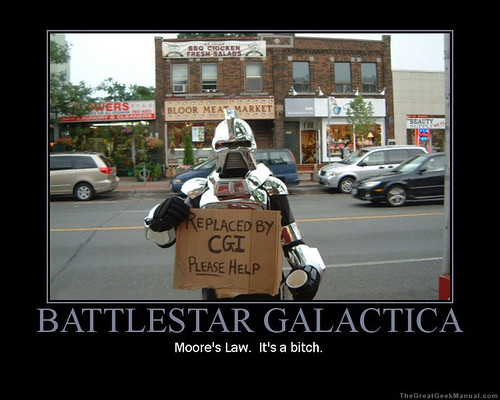
14. **Battlestar Galactica: The Final Five Cylons Revealed**We’ve already touched on *Battlestar Galactica*’s genius for combining sleek production design and sharp writing with a powerful allegorical structure. The intense, years-long battle between a small band of surviving humans and the formidable robotic Cylons kept viewers utterly rapt and deeply invested in the fate of humanity. The lore was rich, the characters complex, and the stakes incredibly high. But the show wasn’t done with its twists!
Building on the earlier ‘humans are angels’ reveal, the series delivered another massive bombshell in episodes like ‘Crossroads’ and subsequent installments: the identification of the ‘Final Five’ Cylons. These weren’t just any Cylons; they were revealed to be Saul Tigh, Galen Tyrol, Tory Foster, Samuel Anders, and Ellen Tigh – characters who had been central to the human fleet for years. This completely contradicted prior assumptions about Cylon models and numbering, turning trusted figures into the very enemy they were fighting.
Their awakening was incredibly dramatic, cued by a shared auditory trigger and a sudden, overwhelming memory recall that fundamentally recast their earlier behavior as latent programming rather than purely human choice. It was a profound and unsettling moment, forcing both the characters and the audience to grapple with deeply ingrained prejudices and the true nature of their conflict.
These revelations had immense political consequences, immediately reframing political legitimacy aboard the fleet and changing the legal status of mixed crews. It reset the map of alliances and supplied technical backstory for resurrection technology, explaining why certain models lacked backups and how older lines related to the Thirteenth Colony. This twist was a masterclass in challenging identity and allegiance, leaving fans debating its implications long after the credits rolled.
And just like that, we’ve journeyed through 14 of the most mind-blowing, fan-dividing, and conversation-starting plot twists in television history! These moments don’t just happen; they are meticulously crafted, often laying breadcrumbs that only become clear in hindsight, inviting endless rewatches and furious online debates. They remind us just how deeply we connect with fictional worlds and how much we love to be shocked, surprised, and utterly floored by the stories unfolding on our screens. So, which ones did you see coming, and which ones completely pulled the rug out from under you? The best twists stick with us, making us question, analyze, and sometimes, even scream at our TVs. And that, dear friends, is the beautiful, chaotic magic of television!