The annals of Hollywood are replete with tales of dazzling ascents and precipitous falls, narratives that capture the imagination and stir the soul. Among these, the story of Amanda Peterson stands as a particularly poignant example, a vibrant trajectory that began with the bright promise of childhood stardom and, sadly, concluded in a quieter, more challenging reality. Her radiant smile, once synonymous with the romantic comedies of the 1980s, belied a life that would later grapple with profound personal battles, creating a narrative far more complex than the fairytale roles she often portrayed.
Peterson was, for a fleeting yet unforgettable period, the quintessential teen idol, her presence on screen imbued with an irresistible blend of charm and authenticity. Yet, as with many who achieve such early fame, her journey beyond the glare of the spotlight unfolded with a series of twists and turns, revealing the often-unseen pressures and vulnerabilities that accompany a life lived in public. This in-depth exploration delves into her remarkable career, her defining moments in film and television, and the foundational experiences that shaped the young woman who would become a beloved figure of a bygone era.
From her earliest artistic endeavors in her hometown of Greeley, Colorado, to the bustling sets of Los Angeles, Peterson carved out a memorable path, leaving an indelible mark on a generation of viewers. We embark on a journey through her cinematic evolution, celebrating the talents that captivated audiences and tracing the pivotal steps that led her from precocious child performer to the captivating lead in one of the decade’s most cherished films. Her story is not merely a chronicle of roles played, but a narrative of potential, impact, and the intricate dance between public persona and private reality.
1. Her Formative Years in Greeley and Early Artistic Leanings
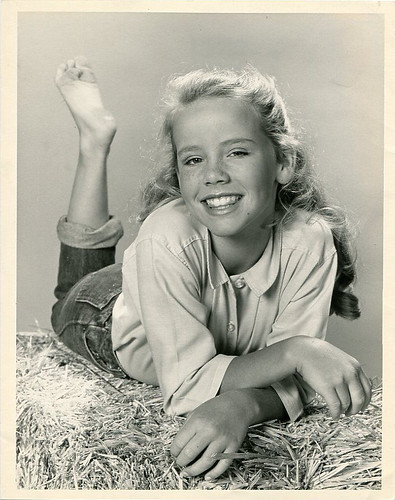
Phyllis Amanda Peterson was born on July 8, 1971, in the quiet city of Greeley, Colorado, the youngest of three children. Her upbringing was rooted in a sense of normalcy, a stark contrast to the extraordinary life that awaited her in the entertainment industry. Her father, James Peterson, was an ear, nose, and throat specialist, providing a stable foundation for young Amanda and her older siblings, Anne Marie and James Jr.
Known affectionately as “Mandy” by her friends and relatives, a name she sometimes used professionally early in her career, Peterson’s early life in Colorado fostered a keen interest in the arts. This local immersion in creativity would soon blossom into a burgeoning career, setting the stage for her eventual departure to Hollywood’s more demanding landscape. Her childhood, spent far from the flashing lights, offered a grounding that would later become a source of comfort amidst the turbulence of fame.
Her family’s support and her early exposure to local theater were instrumental in nurturing her budding talent. It was this foundation that provided the initial spark, a curiosity about performance that would quickly propel her towards professional endeavors. The blend of a grounded childhood with an innate artistic inclination laid the groundwork for the remarkable journey that was to come.
2. Her First Forays into Acting, from Stage to TV Commercials
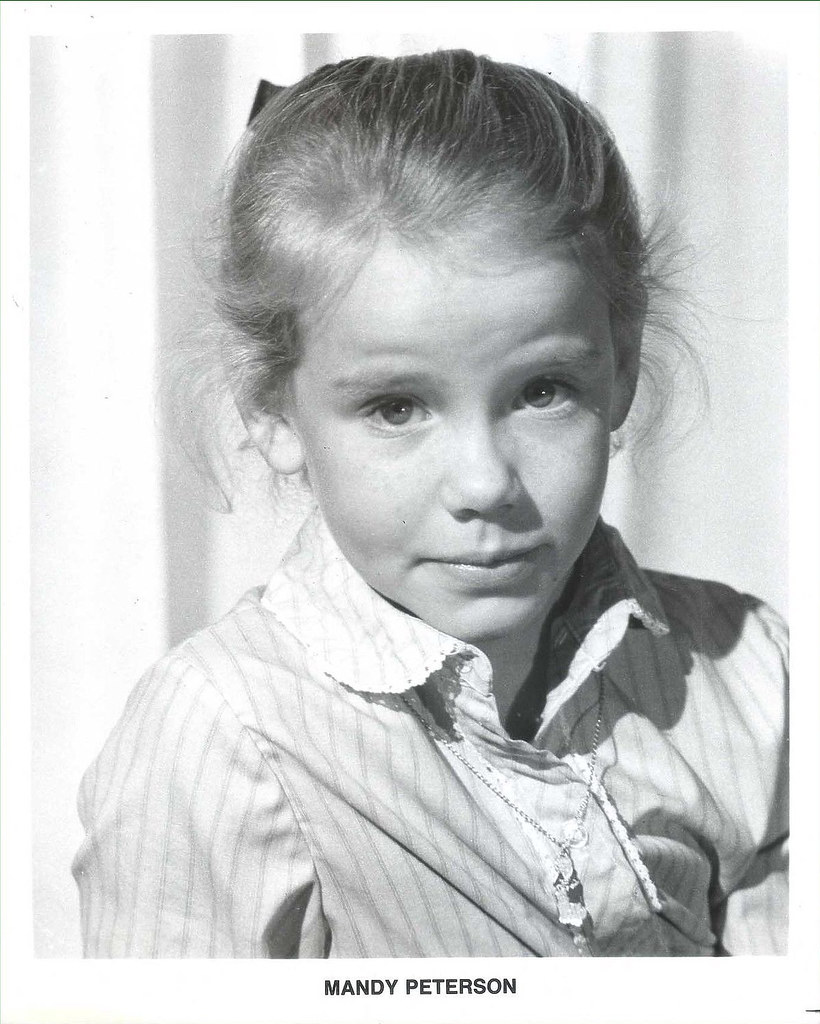
Amanda Peterson’s theatrical debut arrived at the tender age of seven, where she graced the stage as Gretl von Trapp in a University of Northern Colorado production of ‘The Sound of Music.’ This early experience ignited a passion that would swiftly lead her to larger platforms, demonstrating her innate aptitude for performance from a very young age. Her natural stage presence was evident, even in such a youthful role.
By the age of 11, she secured a role as a dancing extra in the musical film ‘Annie,’ a critically acclaimed production directed by the esteemed John Huston. Though initially a minor part, Peterson garnered attention for her delivery of a single line during the film’s popular song, ‘Sandy.’ This early visibility in a major film project signaled her potential, proving that even small roles could become significant stepping stones.
Her childhood was not only marked by film and stage work but also by a prolific career in television commercials, appearing in more than 50 of them by the time she was 14. These early experiences provided invaluable training and exposure, honing her craft across various media. Additionally, she landed guest spots on popular television shows such as ‘Father Murphy’ and ‘Silver Spoons,’ further cementing her presence in the burgeoning television landscape of the early 1980s.
Between 1983 and 1984, Peterson co-starred as Squirt Sawyer on the NBC drama series ‘Boone.’ While the series was canceled after just one season, it offered her a sustained role and further developed her acting capabilities, allowing her to gain experience in a more serialized format. Her tireless work ethic and versatility in these formative years were undeniable, laying a solid groundwork for the greater successes that were soon to follow.
Read more about: Talking Tom & Friends: The Global Mobile Entertainment Franchise Explored
3. Her Significant Film Debut in ‘Explorers’ and Working with Future Stars
In 1985, Amanda Peterson achieved a significant milestone in her young career, landing her first major film role as Lori Swenson in the sci-fi fantasy ‘Explorers.’ This Joe Dante-directed feature, despite performing averagely at the box office upon its initial release, would later go on to secure a fervent cult following, a testament to its enduring imaginative appeal. The film showcased her ability to hold her own in a more complex narrative.
‘Explorers’ provided Peterson with a unique opportunity to work alongside two young actors who would also go on to achieve considerable fame and critical acclaim: River Phoenix and Ethan Hawke. This shared early experience with burgeoning talents placed her squarely in a cohort of promising young Hollywood stars, hinting at the bright future that lay ahead. The collaboration with such peers added a certain gravity and excitement to the project.
Her portrayal of Lori Swenson demonstrated a maturity and screen presence that belied her young age, marking her as an actress capable of more than just lighthearted roles. The film’s blend of science fiction, adventure, and coming-of-age themes allowed Peterson to display a range that was both engaging and memorable. It was a crucial stepping stone, showcasing her dramatic potential to a wider audience and industry professionals alike.
The film’s eventual cult status further solidified its place in cinema history, ensuring that Peterson’s role in it would be remembered long after its initial run. For many, ‘Explorers’ remains a beloved classic, and Peterson’s performance within it is often cited as a standout, further cementing her early impact in the demanding world of feature films.
Read more about: Sigourney Weaver, 74 and Glowing: A Red Carpet Reignition and Her Enduring Legacy at the Venice Film Festival!

4. The Emmy-Winning Miniseries ‘A Year in the Life’ and Subsequent Series
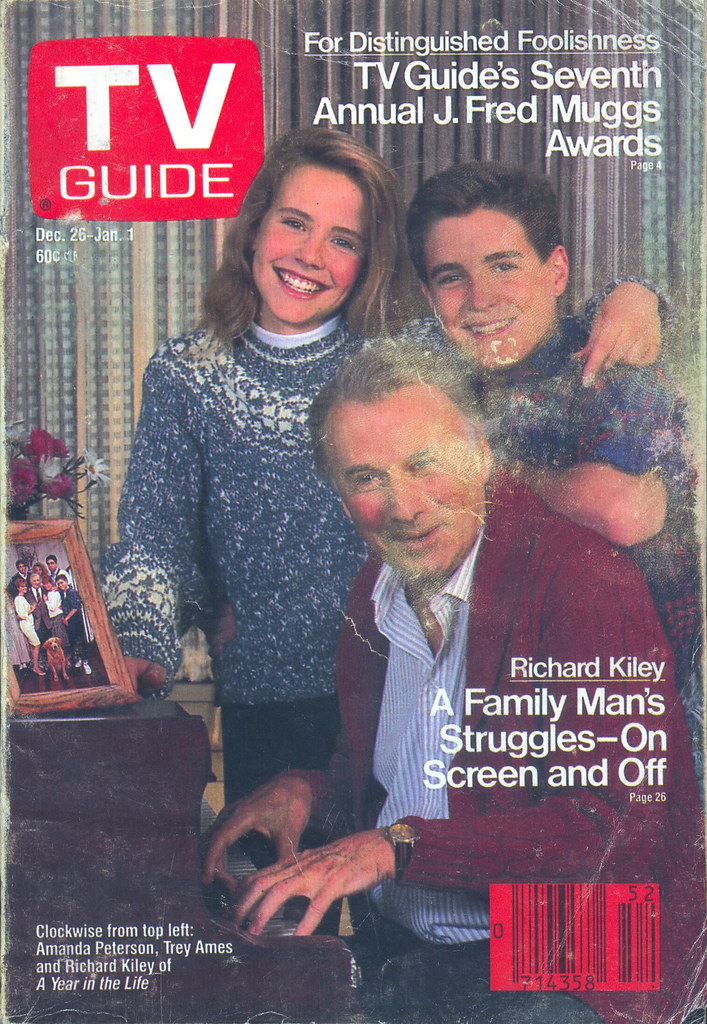
Following her notable role in ‘Explorers,’ Amanda Peterson continued her impressive ascent by co-starring as Sunny Sisk in the Emmy Award-winning miniseries ‘A Year in the Life’ in 1986. This acclaimed production proved to be a significant success, ranking as the third highest-rated miniseries of the 1986–87 U.S. television season, captivating a vast audience with its compelling narrative and ensemble cast. It demonstrated her capability to engage viewers in a serialized drama.
The popularity and critical reception of the miniseries were such that it was subsequently adapted into a full series, airing on NBC from 1987 to 1988. Peterson reprised her role as Sunny Sisk, the granddaughter of a successful businessman, a character that allowed her to delve deeper into the complexities of family dynamics and personal growth. This continuity in a prominent role was a clear indicator of her rising star power.
For her compelling work as Sunny Sisk on the show, Peterson was deservingly honored with a Young Artist Award. This accolade served as formal recognition of her talent and dedication, cementing her status as one of the most promising young actresses of her generation. Her performance in ‘A Year in the Life’ highlighted her versatility and ability to connect with audiences in a dramatic context, distinct from her comedic turns.
Despite its initial positive reception and critical praise, including Peterson’s award, the full ‘A Year in the Life’ series was, unfortunately, canceled after just one season. This outcome, though disappointing, was a harsh reality of the television industry, a lesson in the often-unpredictable nature of show business, even for a talent as bright as hers. The experience, however, further enriched her acting résumé and public profile.
Read more about: Still Burning Bright: A Look at The Towering Inferno’s Main Actors Who Are Still With Us

5. The Defining Role of Cindy Mancini in ‘Can’t Buy Me Love’ and Achieving Teen Idol Status
In 1986, at the age of 15, Amanda Peterson was cast in what would become her most iconic and defining role: Cindy Mancini in the Buena Vista romantic comedy, ‘Boy Rents Girl.’ The film’s title was later changed to ‘Can’t Buy Me Love’ after producers successfully secured the rights to The Beatles’ 1964 song of the same name, which memorably featured on the soundtrack, imbuing the film with an instant classic sensibility.
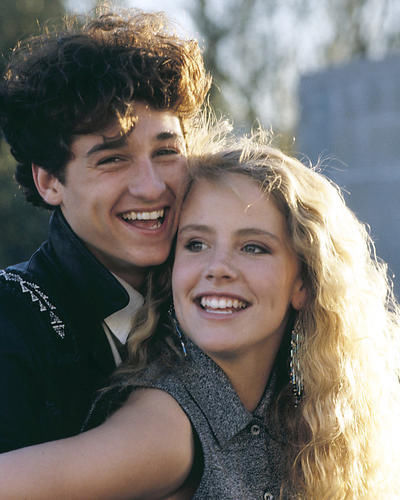
Released in August 1987, ‘Can’t Buy Me Love’ received mixed reviews but quickly blossomed into the sleeper hit of the summer. The film’s charm, combined with its relatable high school storyline, resonated deeply with audiences, particularly teenagers. As the sophisticated and popular cheerleader Cindy Mancini, Peterson captivated hearts and cemented her status as a teen idol, a symbol of 80s youth culture and aspiration.
Critics lauded her performance, with The New York Times finding Peterson’s portrayal of Mancini to be “appealing,” and specifically highlighting her undeniable chemistry with co-star Patrick Dempsey. This on-screen dynamic was crucial to the film’s success, making the improbable romance feel both authentic and endearing to viewers. Her ability to convey both vulnerability and strength in the role made Cindy Mancini a truly memorable character.
‘Can’t Buy Me Love’ quickly became an instant classic among teenagers, akin to the beloved John Hughes movies of the same era. It propelled Peterson to a level of widespread recognition she hadn’t experienced before, making her face instantly recognizable to millions. For her unforgettable performance, she was nominated for a Young Artist Award for Best Young Actress in a Motion Picture – Comedy, further solidifying her impact on the youth demographic.
6. Her Diverse Film Roles Immediately Following Her Biggest Hit
Following the massive success of ‘Can’t Buy Me Love,’ Amanda Peterson embarked on a series of diverse film roles, showcasing her versatility beyond the romantic comedy genre. In 1988, she starred in a Roger Corman production, the post-apocalyptic adventure film ‘The Lawless Land,’ portraying Diana. This marked a significant departure from her sweet-natured teen roles, allowing her to explore more dramatic and gritty themes.
The year 1989 saw her in a co-starring role in the ensemble drama ‘Listen to Me,’ where she played Donna Lumis. This film further demonstrated her range, as she navigated a more character-driven narrative alongside a varied cast. These projects, while perhaps not reaching the widespread commercial heights of ‘Can’t Buy Me Love,’ allowed her to broaden her artistic horizons and challenge herself as an actress.
Amidst her acting commitments, Peterson made the admirable decision to return to her hometown of Greeley that same year to graduate from University High School. This period highlights her commitment to a semblance of normalcy, having been privately tutored while working in Los Angeles. It underscored a desire to maintain a connection to her roots, even as her professional life pulled her towards Hollywood.
Shortly afterward, she starred in the straight-to-video thriller ‘Fatal Charm’ in 1990, playing Valerie, a naïve high schooler who forms a dangerous bond with a serial killer. This role, again, pushed her into a darker genre, showcasing a willingness to take on more intense and suspenseful material. These varied choices in her immediate post-‘Can’t Buy Me Love’ career illustrate a young actress actively seeking to grow and define her artistic identity beyond the teen idol label.
Read more about: Tina Turner: An In-Depth Chronicle of the Queen of Rock ‘n’ Roll’s Enduring Legacy
7. **Her Transition to TV Series in the Early 90s, Including ‘Doogie Howser, M.D.’ and ‘Jack’s Place’**
As the 1990s dawned, Amanda Peterson continued to diversify her portfolio, making appearances in television series while also pursuing academic interests. That fall, after graduating from high school, she enrolled at Middlebury College, demonstrating a commitment to education alongside her acting career. During her time there, she even appeared in a black box production of the Sarah Daniels play, ‘Masterpieces,’ highlighting her continued passion for live theater.
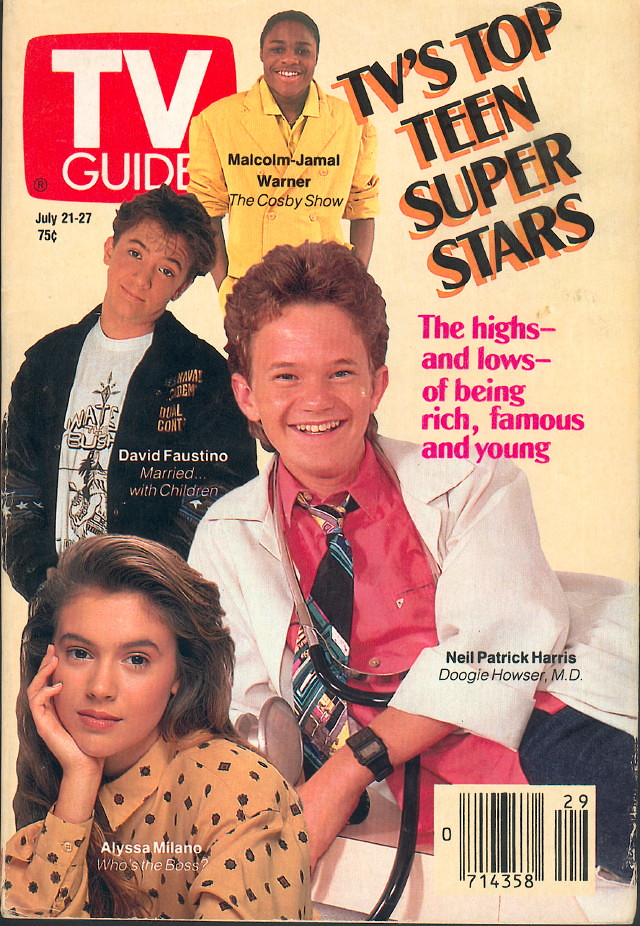
While on semester break from Middlebury College in 1990, Peterson made a notable guest appearance on the popular ABC drama ‘Doogie Howser, M.D.,’ where she played Bernadette Callen. This role offered her a chance to be part of a beloved show that introduced the world to Neil Patrick Harris, connecting her with another iconic figure of television. Such guest spots allowed her to maintain her visibility in the industry without committing to full-time projects.
Her television work continued with a recurring spot on the ABC drama series ‘Jack’s Place’ in 1993, where she appeared in four episodes as Elodie Rayburn. These roles, while not leading, provided consistent acting opportunities and kept her engaged with the craft. They also represented a period where her career was slowly shifting, perhaps signaling a gradual move away from the intense spotlight she had experienced earlier.
Peterson’s appearances in these television series, interspersed with her academic pursuits, illustrate a period of transition in her life and career. These roles would ultimately lead up to her final on-screen appearance in 1994, marking the end of a significant chapter in her professional life before she made the conscious decision to step away from the demanding world of entertainment. This era was a quiet conclusion to her active acting career, preceding her return to Colorado and a more private existence.

8. Her Retreat from Hollywood and Embracing a Private Life
After more than a decade spent navigating the demanding landscape of Hollywood, Amanda Peterson made a profound decision in 1994: she retired from the entertainment industry entirely. It was a choice that signaled a distinct shift in priorities, a deliberate turning away from the glare of the spotlight that had defined much of her young life. According to her father, James Peterson, this departure was an effort to “choose a new path in her life,” one that prioritized personal growth over professional accolades.
Her return to Greeley, Colorado, her quiet hometown, marked the beginning of this new chapter. This was not a tentative step but a definitive re-establishment of roots in a place far removed from the pressures of Los Angeles. Even earlier in her career, Peterson had expressed a preference for this separation, noting in a 1987 interview, “I separate both of those lives also because I’m from Colorado, so I have two different lives basically.” This sentiment revealed a deeply ingrained desire for a balanced existence, one that Hollywood’s relentless demands often precluded.
Initially, Peterson pursued academic interests, briefly attending Middlebury College before enrolling at Colorado State University for a year. Later, she continued her studies at the University of Northern Colorado, demonstrating a commitment to intellectual engagement outside the acting world. These pursuits offered a semblance of normalcy and a different kind of challenge, allowing her to explore an identity beyond the roles she had famously embodied. This quiet dedication to education underscored her ambition to carve out a meaningful life away from public scrutiny, a stark contrast to the tumultuous fame she had known.
Read more about: The King’s Ransom: Unraveling the Tumultuous Life, Reign, and Enduring Legacy of Elvis Presley

9. Seeking Stability: Marriage, Motherhood, and Personal Identity
In her quest for a life grounded in personal fulfillment, Amanda Peterson embraced the roles of wife and mother, experiences that offered her a profound sense of purpose away from her cinematic past. She was married twice, first to Joseph Robert Skutvik, a union that eventually ended in divorce. Later, she married David Hartley, and together they had two children, a journey that placed her squarely in the embrace of family life.
The decision to focus on her family was a deliberate pivot from her public persona, allowing her to experience the joys and complexities of private domesticity. This period, though largely shielded from public view, was undoubtedly central to her evolving identity, providing a much-needed anchor in a life that had often felt transient and observed. Her children became a primary focus, embodying the new path she had sought after leaving Hollywood.
Yet, even within this more private existence, life presented its own set of challenges and transformations. While she immersed herself in motherhood, the narrative of her personal life suggests a continuous search for stability. At the time of her passing, Peterson and David Hartley were reportedly divorced, and for the last three years of her life, she lived alone in an apartment in Greeley, receiving disability benefits. This trajectory paints a complex portrait of a woman striving for peace and connection amidst personal changes.
Read more about: Beyond the Spotlight: Unveiling the Unseen Truths and Troubled Soul of Marilyn Monroe’s Private Life

10. The Emerging Shadow: Initial Legal Troubles and Public Scrutiny
The early 2000s marked a troubling turn in Amanda Peterson’s life, as she began to contend with a series of legal issues that cast a stark shadow over her once-radiant image. Between October 2000 and May 2012, Peterson was arrested five times, a distressing pattern that revealed a life spiraling into unforeseen difficulties. These arrests encompassed a range of offenses, including third-degree assault, harassment, DUI, and possession of drug paraphernalia, alongside suspicion of distributing a Schedule 2 controlled substance.
These encounters with the law painted a dramatically different picture from the effervescent teen idol of the 1980s. The public, accustomed to her glamorous on-screen persona, was confronted with mugshots that tragically displayed a “nearly unrecognizable persona,” a harrowing visual testament to her profound struggles. One image, in particular, showing Peterson with a black eye, underscored the harsh realities she was facing, far removed from the fairytale narratives of her films.
The repercussions of these legal challenges were not merely abstract; they involved tangible consequences. From September to December 2005, Peterson spent nearly three months in jail, a stark and difficult period that further highlighted the severity of her situation. This incarceration was a poignant demonstration of how far her life had diverged from the glittering expectations of her youth, revealing the intense pressures and personal battles she was enduring outside the public eye.
Read more about: Beyond the Spotlight: 14 Child Stars Whose Dreams Turned into Tragic Realities

11. A Deepening Crisis: Escalating Legal Issues and Underlying Struggles
As the years progressed, Amanda Peterson’s battles with legal and personal demons seemed to intensify, signaling a deepening crisis in her life. The pattern of arrests continued, reflecting a persistent struggle with substance abuse and other challenging behaviors. On March 10, 2010, she was arrested for third-degree assault following a fight with another woman in Fort Collins, Colorado, an incident that further underscored the turmoil she was experiencing.
Just two years later, in May 2012, another arrest occurred in Greeley for a DUI and possessing narcotic equipment, indicating a continued engagement with illicit substances. Disturbingly, that same month, she faced a suspicion of child abuse charge, though this particular allegation was later dropped. These recurring legal entanglements were not isolated incidents but rather symptoms of profound underlying issues, painting a grim picture of a life increasingly consumed by its difficulties.
Her father, acknowledging these struggles, confirmed that Peterson had “previously struggled with drug issues.” However, he also expressed a belief that she was “drug-free at the time of her death” and had become “quite religious,” suggesting a late-life attempt at spiritual solace and recovery. This poignant detail offers a glimpse into her ongoing fight for sobriety and inner peace, even as her life was besieged by external and internal conflicts.

12. Unveiling a Buried Trauma: The Impact of a Teenage Rape
Months after Amanda Peterson’s passing, a heartbreaking revelation emerged from her family, shedding critical light on the origins of some of her deepest struggles. In a September 2015 interview with the talk show *The Doctors*, her family bravely disclosed that Peterson had been raped at the tender age of 15. This devastating incident, kept hidden even from her own sister at the time, was a profoundly impactful trauma that reshaped her adolescent years and, arguably, her entire adult life.
This undisclosed assault left an indelible mark, leading to significant trust issues that fundamentally altered her relationships and perceptions of the world. It’s a tragic irony that the very year she achieved widespread fame as the romantic lead in “Can’t Buy Me Love,” a film celebrating youthful innocence and first love, she was grappling with such a profound and violating personal experience. The contrast between her public image and private pain could not have been starker.
Some family members candidly stated that this traumatic event ultimately led to her later drug use, suggesting a form of self-medication to cope with the immense emotional wounds. This posthumous disclosure offered a critical, albeit painful, context to Peterson’s later struggles, transforming them from mere legal infractions into a more complex narrative of trauma and its long-lasting, devastating consequences. It provided a key to understanding the deeper currents of her retreat and subsequent challenges.

13. A Body Under Siege: Compounding Health Issues in Later Years
Beyond her legal and emotional battles, Amanda Peterson quietly contended with a series of significant health issues that further compounded the challenges of her later years. Her father revealed that in recent years, she had suffered from sleep apnea, a condition known to severely disrupt rest and overall well-being. This was accompanied by recurrent bouts of pneumonia and sinusitis, persistent illnesses that undoubtedly took a toll on her physical health and resilience.
These health struggles were not minor afflictions but serious impediments to her quality of life, often forcing her into quiet battle away from any public acknowledgment. Reports indicated she had been prescribed multiple medications for lung and heart disease, pointing to a broader spectrum of chronic conditions that she was managing. Her mother also mentioned her daughter had “some medical problems with her heart,” further underscoring the severity of her physical decline.
Adding to this complex health profile, Peterson had recently undergone a hysterectomy and was prescribed Gabapentin for pain management, suggesting a recent surgical intervention and ongoing discomfort. Her father had speculated that sleep apnea and other medical problems “may have contributed” to her death, indicating that these health woes were more than just background noise, but potentially significant factors in her tragic final chapter. These compounding health issues paint a poignant picture of a body increasingly under siege.

14. The Unraveling: Her Final Days and the Tragic Discovery
The final days of Amanda Peterson’s life were marked by a disquieting silence, culminating in a discovery that shocked her family and saddened her devoted fans. On July 3, 2015, just five days before what would have been her 44th birthday, Peterson was reported missing after failing to attend a planned dinner with her family. This missed appointment, a seemingly small detail, quickly escalated into growing concern among those who loved her, hinting at an unfolding tragedy.
Two days later, on July 5, the grim reality materialized. Greeley police, responding to a well-being call, found Amanda Peterson deceased at her home. Her apartment door was unlocked, yet authorities found no evidence of foul play, ruling out any external criminal action. The scene, undisturbed in its quiet solitude, conveyed a sense of profound personal isolation, a stark contrast to the lively, public life she had once led.
Her mother, Sylvia Peterson, initially communicated to Fox News that her daughter had passed away on Friday morning, July 3, two days before her body was found. While grappling with their grief, her mother also initially believed her daughter’s death was not drug-related, stating, “it was not in any way a drug thing,” and mentioning “medical problems with her heart.” These initial statements from a heartbroken family highlighted the immediate shock and the initial uncertainty surrounding the precise cause of her untimely passing.

15. The Coroner’s Verdict and a Legacy Defined by Empathy
The mystery surrounding Amanda Peterson’s sudden passing was finally brought to light with the release of the Weld County coroner’s autopsy results on September 2, 2015. The examination unequivocally revealed that Peterson’s death resulted from an accidental drug overdose. This official verdict painted a clearer, albeit heartbreaking, picture of the immediate cause, detailing the substances found in her system that ultimately led to her demise.
The autopsy further elaborated that she had recently undergone a hysterectomy and was prescribed Gabapentin for pain management. Crucially, she had also been taking morphine, obtained from a friend a week prior. The coroner’s report attributed her death to respiratory failure, explicitly triggered by a “morphine effect.” It also noted the presence of marijuana and alarmingly high levels of Gabapentin – six times the normal – leading the coroner to theorize that Peterson “was attempting to self-medicate her pain at the time of death.” This detailed, clinical assessment revealed a complex interplay of physical pain, medication, and perhaps a desperate attempt to find relief.
In the wake of this tragic news, a wave of tributes from Hollywood peers and fans poured forth, cementing her enduring legacy. Patrick Dempsey, her co-star from “Can’t Buy Me Love,” posted a touching message, remembering her as “vibrant and young. Gone too soon.” Photographer Ryan Hartsock, who captured her in her final photoshoot, described her as “kindhearted” with “the greatest smile,” noting how much fan mail brightened her day. Celebrities like Sarah Michelle Gellar, Donald Faison, and Scott Foley shared their heartfelt condolences, recalling her iconic roles and the indelible mark she left on a generation. Amanda Peterson’s story, though ending tragically, continues to resonate, a poignant reminder of the vulnerabilities that can lie beneath the brightest of stars, ensuring her memory lives on, cherished and understood with newfound empathy.
Amanda Peterson’s journey, from the bright promise of childhood stardom to the quiet, complex battles of her later years, offers a powerful, indeed, a searing narrative on the human experience. Her radiant smile and effortless charm, immortalized in films like “Can’t Buy Me Love,” remain a beacon of 1980s cinematic joy. Yet, the story of her retreat, her personal struggles, and her ultimate, tragic end compels us to look beyond the surface of celebrity, to acknowledge the unseen pressures and profound vulnerabilities that often accompany a life lived in the public eye. Her legacy is not merely one of iconic roles, but a testament to the intricate tapestry of human resilience, trauma, and the enduring quest for peace, leaving an indelible imprint on the hearts of those who remember her, prompting reflection on the true cost of fame and the fragility of life.