Get ready to have your mind absolutely blown, because we’re diving deep into the intricate, time-bending world of “Dark,” Netflix’s groundbreaking German science fiction mystery series that kept us all guessing from 2017 to 2020. This show isn’t just another binge-watch; it’s a meticulously crafted puzzle, a philosophical journey that explores the very fabric of time and human nature. Its unique blend of science fiction, thriller, mystery, and tragedy genres earned it immense critical acclaim.
From the moment children start vanishing in the sleepy German town of Winden, “Dark” pulls you into a labyrinth of fractured relationships, double lives, and dark pasts, connecting four estranged families across generations. Its slow-burn pacing, atmospheric visuals, and deeply philosophical themes elevate it far beyond typical genre fare, earning praise for its acting, direction, writing, tone, visuals, themes, and musical score. Many lauded the show for its “complex narrative structure, which required viewers to pay close attention to detail in order to understand the intricate connections between characters and timelines.”
So, grab your Geiger counter (just kidding, mostly!), because we’re about to peel back the layers of Winden’s most guarded secrets. We’ve compiled a list of 10 mind-bending insights that are integral to understanding “Dark”‘s brilliance. These aren’t just plot points; they’re the foundational pillars and intricate twists that define this modern masterpiece, proving why it’s been hailed as the 58th greatest TV series of the 21st century by the BBC in 2021. Let’s unravel some of the most captivating aspects of this German masterpiece.
1. Netflix’s Groundbreaking German Original
Before “Dark” graced our screens, many might not have expected Netflix’s first German-language original series to become a global phenomenon, but that’s precisely what happened. Debuting on 1 December 2017, the series quickly captivated audiences worldwide, proving that compelling storytelling transcends linguistic barriers. Its success paved the way for a new era of international content on streaming platforms, demonstrating the universal appeal of a well-executed mystery.
The show ran for three critically acclaimed seasons, concluding on 27 June 2020, solidifying its place in television history. Its very existence marked a significant milestone for Netflix, expanding its global footprint with high-quality, non-English programming. This pioneering status added another layer to its appeal, showcasing that innovative narratives could emerge from diverse creative landscapes and resonate deeply with viewers across different cultures.
“Dark” received widespread critical acclaim right from its debut, not just for being an original German series, but for its intrinsic quality. Its acting, direction, writing, tone, visuals, themes, and musical score were all lauded. This foundational success as Netflix’s first German original is a testament to the vision of its creators, Baran bo Odar and Jantje Friese, and set a new standard for international productions.
The ambition and complexity of its narrative were particularly singled out for praise. The ability to craft such a detailed and intricate story, especially in a non-English language production, showcased Netflix’s commitment to diverse storytelling. “Dark” proved that genre television from anywhere in the world could capture the imagination of millions, making it a true landmark in streaming content.
Read more about: Unraveling the Labyrinth: 14 Dark and Gritty Mysteries of Netflix’s ‘Dark’ Series
2. The Town of Winden’s Dark Heart
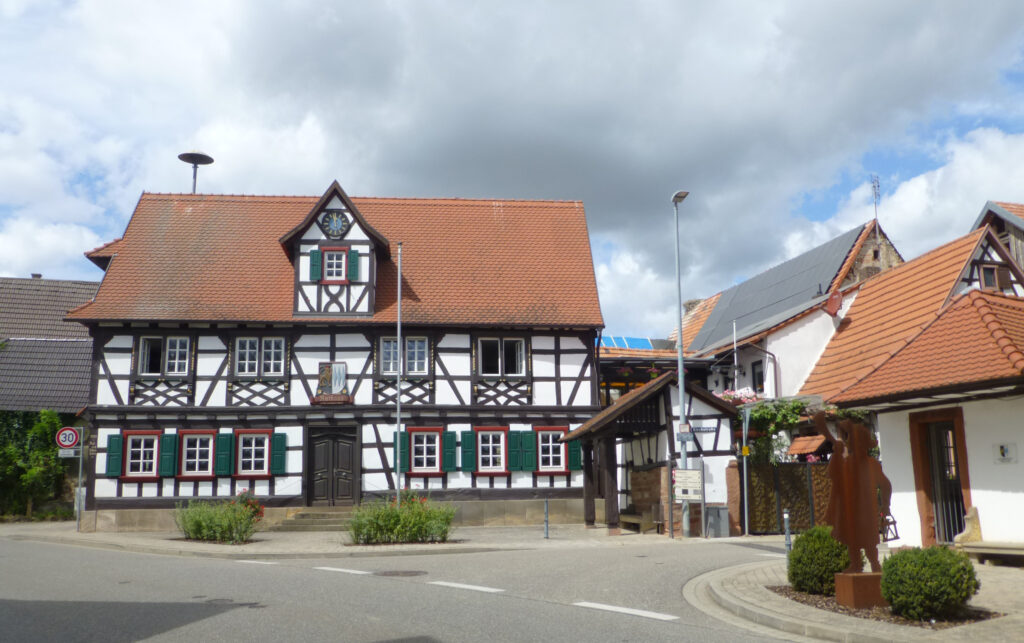
At the very core of “Dark”‘s intricate web lies the fictional German town of Winden, a place that is anything but ordinary. It’s here that the story truly begins, as “children start vanishing,” a terrifying event that “bringing to light the fractured relationships, double lives, and dark pasts of four families living there.” Winden isn’t just a backdrop; it’s a character in itself, breathing secrets and shadows into every corner of the narrative.
The town is inextricably linked to the central mystery, a “sinister time travel conspiracy that spans several generations.” Every disappearance, every strange occurrence, and every hidden truth seems to emanate from Winden, particularly from the “cave system beneath the local nuclear power plant.” This specific location becomes the epicenter of the time travel phenomenon, making the town’s geography as crucial as its inhabitants’ histories.
The lives of the Kahnwald, Nielsen, Doppler, and Tiedemann families are deeply rooted in Winden, with their “ties are exposed” and their “lives begin crumbling” as the conspiracy unravels. The town’s seemingly placid exterior hides a multitude of dark pasts and interconnected fates, proving that sometimes, the greatest mysteries are found not in distant lands, but in the seemingly mundane corners of our own worlds.
Throughout the series, Winden’s landscape itself reflects the show’s dark tone. The “eerie, tension-filled atmosphere” created by Baran bo Odar’s direction often highlights the town’s secluded nature and the ominous presence of the nuclear power plant. This constant visual reinforcement ensures that Winden remains central to the mystery, a silent, brooding witness to the unfolding tragedy and paradoxes that engulf its residents.
Read more about: Unraveling the Labyrinth: 14 Dark and Gritty Mysteries of Netflix’s ‘Dark’ Series
3. The Enigma of Time Travel
“Dark” masterfully introduces and develops its central concept of time travel, not as a whimsical plot device, but as an existential force with profound implications. The mechanism for this temporal displacement is a “wormhole in the cave system beneath the local nuclear power plant” in Winden. This wormhole is not arbitrary; it allows “people to travel into the past or future though only in 33 year increments,” establishing a rigid and cyclical nature to the time jumps.
The series explores the “existential implications of time and its effect on human nature and life,” using this fixed 33-year cycle to build a narrative where past, present, and future are not linear but eternally intertwined. Characters frequently find themselves grappling with paradoxes, struggling to change what appears to be an unalterable fate. The constraint of 33-year increments means that certain events are destined to repeat or echo across generations, creating a haunting sense of determinism.
Throughout the seasons, the understanding of this time travel mechanism deepens, moving from a mysterious occurrence to a tool wielded by different factions. The “God Particle,” a “floating amorphous black blob inside” the reactor in 2053, is revealed to be “usable as a portal for time travel.” This evolving comprehension underscores the scientific and philosophical ambition of the show, making the enigma of time travel its very heartbeat.
We first witness this phenomenon in action when Mikkel disappears, transporting from 2019 to 1986. Later, characters like Ulrich also attempt to use this portal, traveling from 2019 to 1953. The idea that time is a loop, not a line, is further reinforced by the “brass machine” that H. G. Tannhaus works on, a device capable of interacting with the wormhole. This intricate system of temporal mechanics makes the very act of travel a central enigma to be unraveled.
Read more about: Beyond the Buzz: Unpacking the Vision and Impact of Jeff Bezos’s Billion-Dollar Ventures Shaping Our Future

4. Intertwined Families, Fractured Lives
At the heart of “Dark”‘s complex narrative are four primary families: the Kahnwald, Nielsen, Doppler, and Tiedemann clans. Their fates are so deeply “intertwined” that to understand one, you must understand all. The show meticulously traces their genealogies and relationships across different time periods, revealing how their actions in one era dramatically impact those in another. This generational tapestry is what makes the show’s character web so rich and compelling.
“Children start vanishing” from Winden, and these disappearances serve as the catalyst for exposing the “fractured relationships, double lives, and dark pasts” within these families. Secrets are not just personal; they are inherited, passed down through bloodlines and time loops, creating a collective burden. The context states that “secrets are revealed concerning the Kahnwald, Nielsen, Doppler, and Tiedemann families, and their lives begin crumbling as their ties are exposed,” highlighting the devastating consequences of these long-held secrets coming to light.
The interconnectedness is further complicated by the time travel, which literally puts different generations of the same family in direct contact, often without their knowledge. This leads to shocking revelations about parentage, betrayals, and unforeseen alliances that defy conventional understanding of family trees. The “List of characters in Dark” section further illustrates this complexity, showing how characters from these families are portrayed at “various ages by multiple actors,” visually reinforcing their deep, time-spanning connections.
Consider, for example, the Nielsen family, specifically Ulrich, Katharina, Magnus, Martha, and Mikkel. Mikkel’s disappearance is the initial ripple that sends shockwaves through his family and connects them irrevocably to the Kahnwald line. Similarly, the Tiedemanns, with figures like Egon and Claudia, become deeply involved in the power plant’s secrets and the time travel conspiracy, linking them directly to the Dopplers through characters like Charlotte. These deep, often tragic, connections underscore the cyclical nature of Winden’s cursed history.
Read more about: Unraveling the Labyrinth: 14 Dark and Gritty Mysteries of Netflix’s ‘Dark’ Series
5. The Paradox of Mikkel Nielsen/Michael Kahnwald
One of the most profound and emotionally resonant paradoxes in “Dark” revolves around the character of Mikkel Nielsen, whose disappearance in 2019 sets off the entire chain of events. As the story unfolds, a shocking truth is revealed: Mikkel, a child from 2019, travels back to 1986 through the wormhole. This isn’t just a temporary visit; “he stayed and grew up, raised by Ines, eventually marrying Hannah and fathering Jonas.”
This means that “Mikkel Nielsen became Michael Kahnwald,” the man who is Jonas Kahnwald’s father and who tragically commits suicide at the very beginning of the series in 2019. This self-fulfilling loop is a cornerstone of the show’s narrative ambition, establishing a cyclical nature where Jonas’s own existence is a direct result of his father’s temporal displacement. The “suicide letter” left by Michael explains this mind-bending sequence of events to Jonas, shattering his understanding of his own family.
The revelation that Jonas’s father *is* the missing Mikkel Nielsen from his own time creates an immense emotional weight and a seemingly unbreakable causal loop. It’s a paradox that makes Jonas question his entire reality and drives much of his quest throughout the series, as he grapples with the impossible task of trying to change a past that has already happened and shaped his present. The Stranger, revealed to be the adult Jonas, later confirms the importance of this loop.
This fundamental twist encapsulates “Dark”‘s genius in weaving personal drama with complex science fiction, creating a deeply human story within an extraordinary, non-linear framework. It presents a “bootstrap paradox” where Mikkel’s disappearance causes Michael’s existence, which in turn causes Jonas’s birth, ultimately leading to Jonas’s actions that ensure Mikkel’s initial disappearance. This circular logic is not only heartbreaking for the characters but also a brilliant piece of narrative construction that left audiences spellbound.

6. The Eternal Conflict: Adam vs. Eva
Just when you thought you had a handle on Winden’s tangled web, ‘Dark’ throws us into an epic, age-old battle that transcends mere human drama: the eternal conflict between Adam and Eva. These aren’t just biblical figures, but the ultimate, future versions of Jonas Kahnwald and Martha Nielsen, respectively. Their struggle forms the philosophical and physical backbone of the series’ later seasons, driving the narrative towards its breathtaking conclusion and revealing the true stakes of time travel.
Adam, as the disfigured and mysterious leader of Sic Mundus Creatus Est, believes that only by destroying both worlds can the cycle of suffering be broken. He’s convinced that he’s working towards an ultimate ‘paradise’ where free will exists beyond the deterministic loops. This faction, Sic Mundus, is first explicitly introduced in the second season, quickly establishing itself as a major player in the ongoing battle for the ultimate fate of Winden’s inhabitants and, indeed, the entire world. His journey from the earnest Jonas to the hardened Adam is one of the show’s most poignant transformations.
Opposing Adam is Eva, the leader of Erit Lux, who is revealed to be the older Martha. Her faction’s aim is to preserve the knot, believing that maintaining the existing cycles is the only way to save her child, ‘The Unknown.’ This creates a devastating, deeply personal conflict where the love of their younger selves is twisted into a grand cosmic war, each convinced their path is the only way to salvation. Their battle isn’t just about good versus evil; it’s a profound debate on fate, free will, and the very nature of existence itself.
This high-stakes ideological war is complex, to say the least. Both Adam and Eva are driven by their own experiences and losses, convinced they are making the right choices to either end or preserve the loops. Their motivations are deeply rooted in their personal histories and the paradoxical events that shaped their lives. It’s a testament to ‘Dark”s storytelling that it manages to make such grand, abstract concepts feel incredibly personal and emotionally resonant.
7. A Tapestry of Timelines: Unraveling the Narrative
If you thought keeping track of who’s who in Winden was tough, try juggling the sheer number of timelines ‘Dark’ effortlessly weaves together! The show masterfully constructs a narrative that spans not just decades, but centuries, forcing viewers to pay close attention to every detail. It’s like a temporal jigsaw puzzle, with each piece from different eras clicking into place to form a complete, albeit terrifying, picture.
Season one primarily focused on 2019, 1986, and 1953, introducing us to the core concept of 33-year increments in time travel. But as the mystery deepens, so do the timelines! The second season expanded our temporal playground to include 2020, 1987, 1954, and threw us even further into the past and future with storylines set in 2053 and 1921. Talk about a serious commitment to chronological complexity!
The third and final season really pulled out all the stops, continuing the existing storylines in 1954, 1987, 2020, and 2053, while also adding an entirely new 1888 storyline. And just when you thought your brain couldn’t handle any more, it introduced a parallel world with its own 2019 and 2052 storylines! This intricate web of intersecting periods isn’t just for show; it’s crucial for revealing how events echo and repeat, solidifying the idea that past, present, and future are not linear but eternally entangled.
The genius lies in how the series uses these multiple timelines to develop its characters and plot. Watching different versions of the same character interact across time, or seeing the ripple effects of an action from 1953 play out in 2020, is what makes ‘Dark’ so uniquely captivating. It’s a narrative marvel that consistently challenges and rewards attentive viewers, demonstrating an unparalleled ambition in its storytelling.
8. The Devastating Apocalypse of Winden
Brace yourselves, because Winden isn’t just a town with a dark past; it’s a town destined for a cataclysmic future! The build-up to the apocalypse is a central tension throughout ‘Dark,’ particularly in season two, which dramatically counts down to this fateful event. It’s not a question of *if* it will happen, but *when* and *how* everyone will navigate its devastating aftermath.
The apocalypse, a pivotal moment in the series, is slated to occur on 27 June 2020. This event isn’t some random natural disaster; it’s deeply intertwined with the time travel conspiracy, the nuclear power plant, and the actions of characters trying to either prevent or ensure its occurrence. The presence of the “God Particle” – the “floating amorphous black blob inside” the reactor in 2053 that is “usable as a portal for time travel” – hints at the energy and forces at play.
The series shows us the immediate impact, with Jonas awakening in a “post-apocalyptic Winden in 2052” at the end of season one, setting the stage for the desolate future scenes. By season two, we see the adult Elisabeth leading a group of survivors in this ravaged landscape, highlighting the stark reality of life after the event. The apocalypse reshapes Winden, turning familiar landmarks into eerie, dangerous zones and profoundly altering the lives of those who managed to survive.
This apocalyptic event serves as more than just a plot device; it’s a crucible for the characters, forcing them to confront their deepest fears and make impossible choices. It underscores the profound consequences of tampering with time and the cyclical nature of destruction and rebirth that defines the very essence of ‘Dark.’ It’s a stark reminder that in Winden, no one truly escapes their fate.
Read more about: Unraveling the Labyrinth: 14 Dark and Gritty Mysteries of Netflix’s ‘Dark’ Series
9. The Enigma of ‘The Unknown’
Just when you thought you had a handle on Winden’s family trees and time loops, ‘Dark’ introduces an enigma wrapped in a paradox: ‘The Unknown.’ This mysterious figure is actually a trio, representing the same individual at child, adult, and elder stages, and they play a crucial, often chilling, role in perpetuating the cycle of events that plague Winden.
‘The Unknown’ is identified as the son of Jonas and Martha – yes, the Jonas and Martha! This mind-bending parentage firmly places them at the very heart of the time travel paradox, making them an embodiment of the show’s intricate, self-fulfilling prophecies. They are described as “a member of Erit Lux,” aligning them with Eva’s faction, and are “believed to be the origin of the disruptions in time.” Talk about a complicated family history!
What makes ‘The Unknown’ particularly unsettling is their collective purpose: “The three Unknowns operate together to ensure the apocalypse occurs in both Adam and Eva’s worlds.” They are a force of deterministic continuity, often appearing at critical junctures to manipulate events and push characters towards their preordained fates. Their silent, methodical actions are key to maintaining the knot of causality that binds Winden.
Their existence reinforces the show’s philosophical themes about fate versus free will. Are they merely instruments of a predestined future, or do their actions, born of their own paradoxical origins, actively *create* that future? ‘The Unknown’ serves as a constant, eerie reminder that in ‘Dark,’ every beginning is intrinsically linked to an end, and every character is a piece of a larger, inescapable cosmic design.
Read more about: Leonardo da Vinci: A Comprehensive Examination of the Renaissance Polymath’s Life, Art, and Enduring Influence
10. A Legacy Cemented: Critical Acclaim and Cultural Impact
From being Netflix’s first German-language original, ‘Dark’ didn’t just break new ground; it absolutely smashed expectations and cemented its place in television history as a critically acclaimed masterpiece. The show was an instant hit, quickly captivating global audiences and proving that compelling storytelling truly knows no linguistic barriers. This isn’t just another binge-worthy show; it’s a cultural phenomenon!
The praise for ‘Dark’ was widespread and enthusiastic, touching on almost every aspect of its production. Critics universally lauded its “acting, direction, writing, tone, visuals, themes, musical score,” highlighting how these elements combined to create an immersive and unforgettable experience. It was hailed for its “ambition and complexity of its narrative,” which truly set it apart from other genre offerings.
Many viewers and critics particularly appreciated the show’s “complex narrative structure, which required viewers to pay close attention to detail in order to understand the intricate connections between characters and timelines.” This wasn’t a show you could half-watch; it demanded your full attention, rewarding diligence with profound revelations. Its “slow-burn pacing, atmospheric visuals, and philosophical themes were also lauded for elevating it beyond typical genre fare,” transforming it into something truly special.
Baran bo Odar’s direction received specific accolades, praised for his “careful attention to detail, mood, and tone, creating an eerie, tension-filled atmosphere that contributed to the show’s success.” The show’s ability to consistently deliver a chilling, thought-provoking experience, all while maintaining its intricate plot, is a testament to the creators’ vision. It’s no wonder ‘Dark’ was “recognized for its ambitious storytelling and has been nominated for and won several awards.”
To top it all off, in 2021, the BBC ranked ‘Dark’ as an astonishing “58th greatest TV series of the 21st century.” That’s a massive achievement for any series, let alone a non-English language original. ‘Dark’ didn’t just entertain us; it redefined what science fiction television could be, leaving an indelible mark on pop culture and proving that the darkest secrets often hold the most brilliant stories.”
So there you have it, fellow Winden explorers! A deep dive into the time-bending, mind-frazzling, and utterly brilliant world of ‘Dark.’ Whether you’re Team Adam or Team Eva, one thing’s for sure: this show isn’t just about unraveling a mystery; it’s about grappling with destiny, love, loss, and the eternal questions that haunt us all. Now go forth, and perhaps re-watch, because as we all know, the beginning is the end, and the end is the beginning!