Pranks, in their everyday form, often manifest as harmless jests, like changing a friend’s Facebook status or a lighthearted stunt with shaving cream. Yet, the human inclination for deception sometimes escalates far beyond these benign boundaries, venturing into realms where the stakes are considerably higher. When this enterprise of ‘getting one over’ is directed at science itself, the consequences can be profound, shaking the very foundations of knowledge and trust that research is built upon.
Indeed, the annals of scientific history are not merely filled with brilliant discoveries and groundbreaking theories; they also contain captivating narratives of ingenious fraud, audacious fakery, and moments of astonishing gullibility. These stories, while perhaps embarrassing in retrospect, offer invaluable lessons about critical thinking, the peer-review process, and the persistent human desire to believe, sometimes against all evidence. They remind us that even the most rigorous disciplines can be susceptible to the cunning machinations of individuals seeking fame, fortune, or simply a good laugh.
Join us on an enthralling journey through some of the most spectacular scientific deceptions ever exposed, cases that captivated the public and challenged experts for years, even decades. From ancient myths brought to life to elaborate modern-day cons, these tales of scientific trickery are as much a reflection of human nature as they are a testament to the ultimate triumph of truth. Let’s peel back the layers of deceit and explore the fascinating stories behind these monumental hoaxes.

1. The Piltdown Man: Humanity’s Missing Link, Fabricated
Imagine a world on the cusp of understanding human evolution, eagerly searching for the definitive ‘missing link’ that would bridge the gap between our primate ancestors and modern Homo sapiens. In this fervent intellectual climate, between 1911 and 1912, amateur archaeologist Charles Dawson made a series of breathtaking discoveries in the U.K. These were jaw and skull fragments, heralded as pieces of this very ‘missing link,’ quickly dubbed the Piltdown Man, and the findings sent ripples of excitement through the scientific community, seemingly placing England at the heart of human origins.
However, as archaeologists continued their work, unearthing more and more early human fossils primarily in Africa, the Piltdown Man’s singular existence in England began to raise eyebrows. The pieces simply didn’t fit the evolving puzzle of human ancestry, sparking growing skepticism within the scientific establishment. The absence of corroborating evidence for such an ape-like missing link in England, while other discoveries accumulated elsewhere, started to erode confidence in the initial claims.
The truth, as it often does, eventually emerged with undeniable clarity. In 1953, Time magazine officially declared the Piltdown Man a fraud, citing numerous lines of evidence that had been collated over time. Crucial fluorine tests on the Piltdown Man’s teeth revealed that the fossils were less than 50,000 years old, a timeline far too recent for the proposed ‘missing link.’ Further examination uncovered deliberate alterations: someone had meticulously filed down the teeth to mimic human wear patterns and artificially stained the fossils to make them appear ancient.
This monumental hoax was a masterful blend of disparate biological components. The ‘missing link’ was, in fact, a cunning assemblage constructed from the skull of a medieval human, ingeniously combined with the lower jaw of an orangutan and fossil chimpanzee teeth. The meticulous effort to deceive was astonishing. While Charles Dawson, the amateur archaeologist who initially unearthed the fragments, remains a prime suspect alongside his team members, other intriguing figures have been implicated. Among the most unusual suggestions is Arthur Conan Doyle, the renowned creator of Sherlock Holmes, who lived near the excavation site and possessed the anatomical knowledge that could have been instrumental in crafting such a sophisticated fake. The Piltdown Man stands as a stark reminder of how easily scientific desire can be exploited.
2. The Fiji Mermaid: Barnum’s Aquatic Enigma
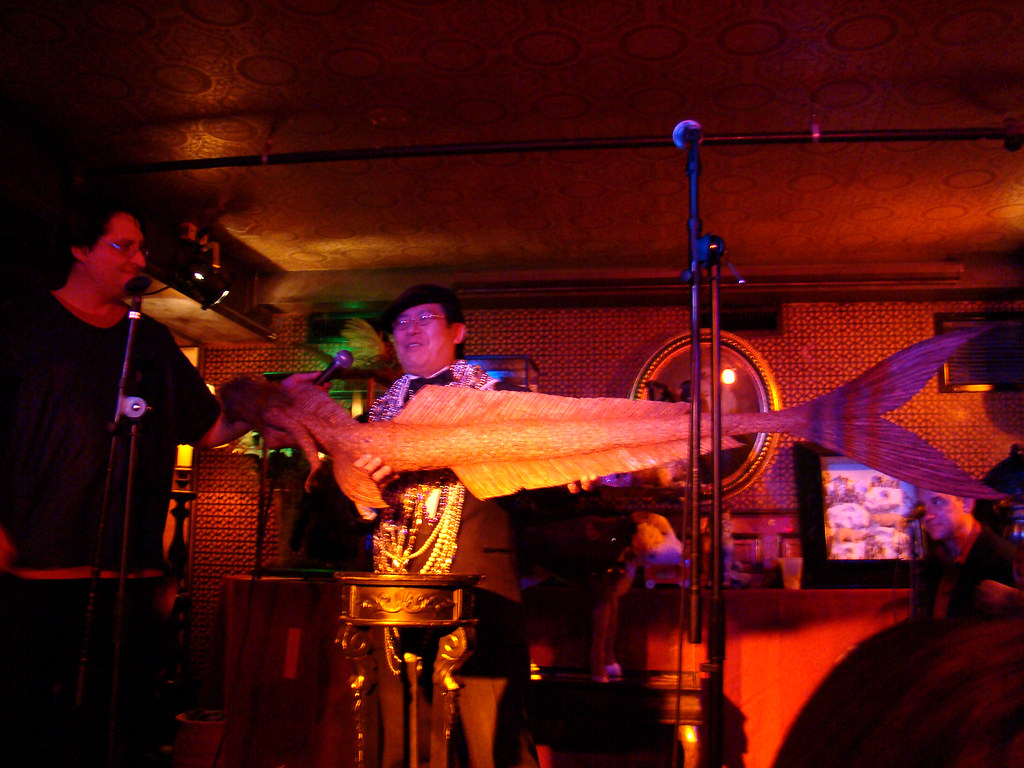
Before the sophisticated anatomical trickery of the Piltdown Man captured the world’s attention, the public was enthralled by a different kind of biological marvel: the Fiji mermaid. In 1842, the bustling metropolis of New York City found itself captivated by the pronouncements of an English gentleman named Dr. J. Griffin. He presented to the press the purported body of a ‘mermaid,’ claiming it had been caught in the mysterious depths of the South Pacific, a creature that seemed to defy the known boundaries of natural history.
Dr. Griffin quickly became a sensation, drawing packed crowds to his lectures where he expounded upon his elaborate theories of natural history. He passionately argued for the existence of seagoing counterparts to all land creatures, positing that just as there were lions and sea lions, there must surely be merpeople to complement regular humans. His compelling rhetoric and the exotic nature of his ‘discovery’ proved irresistible, with both the press and the public eagerly consuming every detail of his fantastic claims.
However, the charming Dr. Griffin was not who he seemed. He was, in fact, Levi Lyman, a clever accomplice of the legendary circus showman P.T. Barnum. This entire spectacle was a brilliantly orchestrated publicity stunt, designed by Barnum to generate immense public interest and draw crowds to his burgeoning empire of wonders. Barnum, a master of theatrical exaggeration, understood the power of a good story and the public’s appetite for the extraordinary, even if it bordered on the unbelievable.
The ‘mermaid’ itself was a testament to ingenious, if macabre, craftsmanship. Far from a mythical ocean dweller, it was a grotesque yet compelling art piece, thought to have been meticulously crafted by a Japanese fisherman. This bizarre creation was a seamless, if unsettling, fusion: the torso and head of an ape expertly sewn onto the body of a fish. The Fiji mermaid, though a clear fraud, became an iconic symbol of 19th-century sensationalism, showcasing Barnum’s unparalleled ability to create a spectacle and reminding us that seeing isn’t always believing.

3. The Cardiff Giant: A Petrified Man for the Ages
P.T. Barnum, ever the impresario of the unusual, also played a small yet significant supporting role in another famous 19th-century deception: the Cardiff giant. While Barnum’s involvement was peripheral to its creation, this particular scheme was masterminded by George Hull, a shrewd tobacco dealer hailing from Binghamton, New York. Hull’s inspiration for this grand hoax stemmed from an unlikely source, purportedly after overhearing evangelical preachers discussing the existence of giants on Earth, a concept that sparked a remarkable idea within him.
Hull, acquainted with a gypsum quarry that produced stone with distinctive blue streaks resembling human veins, saw an opportunity. He secretly commissioned a Chicago stonecutter to carve a colossal statue from a giant slab of this gypsum, meticulously crafting it with astonishing detail, from lifelike fingernails to realistic skin pores. This monumental ‘giant’ was then surreptitiously buried on his cousin’s farm, left to ‘petrify’ for a period of half a year, awaiting its grand unveiling.
The stage for discovery was set after some fossils were purportedly dug up on a neighboring farm. Hull then strategically directed his cousin to hire laborers to dig a well on his property, a task that, by convenient ‘coincidence,’ led them to unearth the magnificent 10-foot-tall ‘petrified man.’ Crowds immediately thronged to witness this astounding find, convinced they were looking at a relic of primeval history. Hull, ever the entrepreneur, shrewdly sold the majority interest in his burgeoning fraud to a syndicate led by a prominent banker named David Hannum.
Barnum, predictably, sought to acquire the sensation for his own exhibitions but was rebuffed by Hannum’s syndicate. Undeterred, the enterprising showman simply commissioned sculptors to create an exact copy of the giant, ensuring he too could capitalize on the public’s fascination. It was in the newspaper accounts chronicling the rivalry between the two giants that Hannum was quoted uttering a phrase that would eventually, and famously, be attributed to Barnum himself: “there’s a sucker born every minute.” This incident remains a classic example of how easily belief can be manipulated when presented with a compelling narrative and an awe-inspiring ‘artifact.’

4. Archaeoraptor: The Feathered Dinosaur That Wasn’t
In an age of advanced scientific inquiry and ubiquitous information, one might assume that modern society is far less susceptible to elaborate scientific deceptions. Yet, the tale of ‘Archaeoraptor’ serves as a humbling reminder that even the enlightened among us can be fooled. This purported ‘missing link’ between birds and dinosaurs, unearthed in China in the 1990s, captured the imagination of many, appearing to provide a crucial piece of the evolutionary puzzle.
Despite never being formally authenticated in a peer-reviewed scientific paper, ‘Archaeoraptor’ received a truly splashy and prominent treatment in a 1999 issue of National Geographic, elevating its status and solidifying its image in the public consciousness. This widespread publicity, fueled by the excitement of linking two monumental branches of the tree of life, created a powerful narrative around the fossil, even before it had passed rigorous scientific scrutiny.
However, the scientific community’s diligent work soon unveiled the truth behind the dramatic discovery. Experts quickly ascertained that ‘Archaeoraptor’ was, in fact, an ingenious fabrication, meticulously cobbled together from disparate fossil fragments. The tail and hind legs belonged to a small, known dinosaur called Microraptor zhaoianus, while the head and the remainder of the body were derived from an ancient bird identified as Yanornis martini. This Frankenstein-like assembly was a testament to a desperate attempt at increasing the value of a find.
It is widely believed that a Chinese farmer, likely motivated by the prospect of financial gain, meticulously glued these various fossils together to create a more complete and seemingly spectacular specimen, hoping to command a higher price for his discovery. The exposure of ‘Archaeoraptor’ as a fraud carried significant implications, particularly because the connection between birds and dinosaurs was still a relatively new concept to the public at the time. The deception threatened to cast an unfair shadow of suspicion over the substantial and legitimate scientific evidence supporting the evolution of feathered dinosaurs, highlighting the damage a single hoax can inflict on public trust in scientific progress.

5. Zero G Day: Gravity-Defying Alignment or April Fool’s Legacy?
In a fascinating testament to persistent rumors and the internet’s amplifying effect, a significant number of Twitter users eagerly anticipated a truly extraordinary event on April 4 of a recent year. The buzz was about ‘Zero G Day,’ a supposed planetary alignment that would, according to the rumor, temporarily negate Earth’s gravity, allowing people to float freely. This fantastic claim spread rapidly, capturing the imaginations of those yearning for a moment of effortless levitation.
However, this enticing prospect received a resounding ‘zero’ on the accuracy scale, long before the anticipated date. Astronomer Phil Plait, a voice of scientific reason, meticulously pointed out the glaring inaccuracies of the claim well in advance. As he groused in his debunking over at Slate, the planets weren’t even going to be remotely aligned on April 4, making the premise immediately fallacious. Furthermore, even if they were perfectly aligned, the planets’ combined gravitational pull would amount to only about 2 percent of the Moon’s. Plait aptly questioned, “It’s not like the Moon can fling you around the room uncontrollably when it’s up in the sky.”
Despite the immense masses of other planets in our solar system, their colossal distances from Earth effectively negate any significant gravitational effects they might have on us. Consider Jupiter, which is an astonishing 318 times more massive than Earth, yet it lies a staggering 410 million miles away. When NASA crunched the numbers, the calculations revealed that the Earth’s downward pull on an individual is an astounding 34 million times stronger than any potential upward tug from Jupiter. The physics simply didn’t, and couldn’t, add up to a gravity-negating alignment.
Intriguingly, the original ‘Zero-G Day’ rumor has its roots in a classic April Fool’s Day prank perpetrated by the late Patrick Moore, a revered British astronomer who hosted BBC radio and television shows for decades. On April 1, 1976, Moore mischievously informed his listeners that a conjunction of Jupiter and Pluto would perturb Earth’s gravity, suggesting that if they jumped into the air at precisely 9:47 that morning, they would experience a floating sensation. Despite the prank being as scientifically false in the 1970s as it is today, the BBC was inundated with calls from delighted individuals who genuinely claimed to have floated around their homes, illustrating the enduring power of a compelling, if fictional, narrative.

6. Mary Toft: The Curious Case of the Bunny Mama
The year 1726 saw the English gossip mill spinning furiously, captivated by the truly bizarre case of Mary Toft. This 25-year-old woman gained instant notoriety by supposedly giving birth to an astonishing series of nine dead baby rabbits. The extraordinary claims didn’t stop there; she also allegedly delivered other unsettling biological detritus, including parts of a dead cat and a hog’s bladder. Mary Toft rapidly ascended to celebrity status, her supposed ability to produce subsequent litters of rabbits cementing her peculiar fame across the nation.
However, as the claims grew more sensational, a crucial segment of the medical establishment began to harbor serious skepticism regarding Mary Toft’s miraculous, albeit grotesque, deliveries. German surgeon Cyriacus Ahlers was among those who meticulously examined one of Mary’s rabbit specimens. His findings were telling: inside the rabbit, he discovered dung pellets that contained traces of corn, straw, and hay. These were substances that, quite logically, would not have been available within Mary Toft’s womb, immediately raising red flags about the authenticity of her claims.
The elaborate fraud began to unravel completely when a servant was caught in the act, attempting to surreptitiously sneak a rabbit into Mary Toft’s room. This crucial piece of evidence shattered the illusion. Faced with undeniable proof, Toft soon confessed to the audacious deception. She admitted that her method involved the physical insertion of rabbits into herself by hand, a shocking revelation that exposed the full extent of her cunning and the gullibility of those who believed her extraordinary tale. The case of Mary Toft stands as a bizarre and memorable footnote in the history of medical hoaxes, a testament to how far individuals might go for attention and how easily sensational stories can override common sense.

7. The Mechanical Turk: A Robot That Bested Minds, With a Secret
Long before the advent of modern artificial intelligence or sophisticated robotics, the 18th century witnessed the emergence of one of the first truly popular ‘robots,’ a marvel of engineering and deception known as the Mechanical Turk. Built by the ingenious inventor Wolfgang von Kempelen in 1770, this chess-playing machine was an immediate sensation. It featured a mannequin, resplendent in traditional Turkish robes and a turban, seated behind a large cabinet, upon which rested a chessboard, poised for intellectual combat.
The Mechanical Turk made its grand debut at the court of Empress Maria Theresa of Austria, where it quickly established its formidable reputation. With a swift, aggressive, and seemingly infallible style of play, the Turk systematically defeated courtier after courtier. Its prowess was such that it even managed to best some of the greatest minds of its era, including none other than the American polymath Benjamin Franklin and the formidable military genius Napoleon Bonaparte, solidifying its legend as an unbeatable automaton.
Yet, for all its mechanical brilliance, the Turk was not, in fact, an automaton in the true sense. Even during its heyday, rumors and theories abounded regarding the secret to its uncanny abilities. People speculated wildly: perhaps the Turk’s surprisingly small cabinet concealed a child, or a dwarf, or even an exceptionally clever chess-playing monkey. Some theories even suggested a double leg amputee might be hidden within, controlling the moves. The mystery only added to its allure and the public’s fascination.
The truth, while less fantastical, was equally ingenious. The cabinet was meticulously and cleverly constructed with a series of hidden compartments and sliding panels, allowing a full-sized adult chess master to comfortably fit inside. This concealed operator then used a sophisticated system of magnets and strings to subtly control the Turk’s arm and hand, guiding its pieces across the chessboard. The Mechanical Turk remains a legendary example of how human ingenuity, combined with a touch of theatrical misdirection, could create an illusion so powerful that it convinced some of the most intelligent people of its time that they were witnessing a truly revolutionary piece of autonomous technology, rather than a clever human-operated machine.” , “_words_section1”: “1994
Our journey into the annals of scientific deception continues, peeling back the layers of more astonishing frauds that have, at various times, captivated public imagination and challenged the very rigor of scientific inquiry. From extraterrestrial encounters to a ludicrous anatomical phenomenon, these next seven cases underscore humanity’s enduring susceptibility to the sensational, reminding us that even in an age of reason, the lure of the extraordinary can sometimes override critical judgment. Let’s delve into the cunning minds behind these deceptions and examine the lasting ripples they sent through the world of research and public trust.

8. Secrets of an Alien Autopsy: Roswell’s Fictional Footage
In 1995, the Fox television network aired a special that sent shockwaves through the UFO community and captivated millions of viewers worldwide. Titled *Alien Autopsy: Fact or Fiction?*, and hosted by *Star Trek: The Next Generation* actor Jonathan Frakes, the program presented what was purported to be authentic footage of an alien dissection. This startling video was allegedly taken in the aftermath of the legendary UFO crash near Roswell, New Mexico, an event already deeply embedded in modern mythos.
The footage, provided by a British producer named Ray Santilli, quickly became a focal point of debate and intense scrutiny. Skeptics immediately highlighted numerous inconsistencies and glaring flaws within the video itself. The alien body, for instance, possessed an unmistakably rubbery appearance, hardly suggesting an otherworldly biological entity. Furthermore, the camera work was notably erratic, conveniently losing focus whenever it approached critical anatomical details of the supposed extraterrestrial.
Perhaps most tellingly, the depicted autopsy itself appeared astonishingly rushed and unprofessional for what would undoubtedly have been the most monumental scientific discovery in human history. Such a groundbreaking event would surely demand meticulous documentation and the utmost care, rather than the hurried and almost cavalier manner portrayed in the film. These glaring red flags fueled suspicions that the entire spectacle was nothing more than an elaborate fabrication designed to capitalize on public fascination with the unknown.
Indeed, the truth eventually surfaced over a decade later. In 2006, Santilli himself publicly admitted to journalists that the footage was, in fact, faked. His rather perplexing explanation was that while he did possess genuine alien autopsy footage, it simply wasn’t “good enough for broadcast,” thus necessitating the creation of a more dramatic, albeit entirely fabricated, version. This admission solidified the ‘alien autopsy’ as a prime example of how readily sensational claims can be manufactured and consumed by a public eager for extraordinary revelations.

9. Blondes: Hunted to Extinction? The Myth of a Vanishing Trait
The year 2002 saw a flurry of worried headlines and news reports predicting a truly unique environmental crisis: the impending extinction of blonde-haired humans. According to these widely circulated stories, a study supposedly funded by the prestigious World Health Organization (WHO) had definitively projected that the gene responsible for natural blonde hair would be entirely eradicated from the human gene pool by the year 2202, marking the end of an iconic hair color.
However, this alarming prophecy received a swift and definitive debunking from the very organization implicated in the research. The WHO was, to put it mildly, as surprised as anyone to hear about the study, as it had absolutely no knowledge of conducting any such research on the subject of hair color or genetic extinction. The organization quickly issued a statement clarifying that it had no opinion on the future existence of blondes, effectively disavowing the entire premise of the news reports.
Beyond the WHO’s clear denial, the scientific premise that blonde hair is somehow “doomed to disappear” from the face of the Earth is inherently flawed and highly unlikely. As Jonathan Rees, a distinguished dermatologist at the University of Edinburgh, succinctly explained to the BBC at the time, “Genes don’t die out unless there is a disadvantage of having that gene or by chance. They don’t disappear.” There’s no inherent biological disadvantage to blonde hair that would naturally select it out of existence.
Furthermore, the notion relies on a simplistic understanding of human genetics. There isn’t a single, solitary gene that dictates light-colored hair in humans; in fact, the trait is thought to have evolved independently on multiple occasions. For example, while commonly associated with Europeans, a significant population of blondes exists in the Solomon Islands, attributed to a specific change in a particular protein. This genetic diversity suggests that even if some catastrophic event were to somehow eradicate blonde hair in one population, there’s no biological reason the trait couldn’t evolve again in other populations, proving this “extinction” to be nothing more than a curious hoax.

10. Cello Scrotum: The Orchestrated Medical Hoax
In 1974, the esteemed *British Medical Journal* (BMJ), a bastion of medical peer review, published a rather peculiar letter that would later be revealed as an ingenious academic prank. The letter, penned by a certain John Murphy, was a response to an earlier article in the journal where a Dr. Curtis had reported three unusual cases of “guitar nipple,” described as a slight inflamed swelling in the breasts of young girls who were diligently training on classical guitar.
Murphy’s response elevated the absurdity, claiming, “Though I have not come across ‘guitar nipple’ as reported by Dr. P. Curtis… I did once come across a case of ‘cello scrotum’ caused by irritation from the body of the cello.” He elaborated on this supposed ailment, stating, “The patient in question was a professional musician and played in rehearsal, practice, or concert for several hours each day,” lending an air of credibility to the fantastical condition. For decades, the anecdote remained in the periphery of medical curiosities.
However, the truth, as with many clever deceptions, eventually emerged. It wasn’t until 2009, a full 35 years later, that John Murphy, who was not a doctor but rather the chairman of St. Peter’s Brewery, and his wife, Dr. Elaine Murphy, a distinguished physician and then a member of the U.K.’s House of Lords, finally came clean in the very pages of the BMJ. They confessed that they had entirely fabricated the “cello scrotum” case.
Their motivation, they explained, stemmed partly from their belief that the original “guitar nipple” case report was itself a hoax, and they sought to highlight the journal’s susceptibility to such submissions. In their decidedly unapologetic mea culpa, they pointed out the inherent ludicrousness of their creation: “Anyone who has ever watched a cello being played would realize the physical impossibility of our claim.” This lighthearted yet pointed deception served as a memorable, self-inflicted lesson on the importance of critical review, even for publications as respected as the BMJ.

11. Fusion, President Perón? Ronald Richter’s Atomic Mirage
After the tumultuous events of the Second World War, a scientist named Ronald Richter, who had worked in Nazi Germany, found his way to Argentina. This was a nation under the leadership of President Juan Perón, who harbored grand ambitions for a bold and empowered Argentina, eager to establish its prominence on the global stage. It was into this atmosphere of nationalistic fervor that Richter stepped, presenting an irresistible proposition: he claimed he possessed the knowledge to produce endless energy through nuclear fusion.
President Perón, eager for a scientific breakthrough that would cement Argentina’s future and global standing, embraced Richter’s claims with open arms. He lavished Richter with colossal amounts of money and granted him unprecedented free rein to construct his fusion facility, choosing a picturesque lake island for this supposedly groundbreaking research. This seemingly limitless support allowed Richter to operate with minimal oversight, fueling speculation about the secrecy surrounding his work.
For a few years, Richter conducted his “secret experiments” on the isolated island, maintaining an air of profound scientific endeavor. Then, dramatically, he announced that he had successfully achieved his ambitious goal of nuclear fusion. President Perón, in turn, wasted no time in making a grandstanding announcement to the world’s media, proclaiming a staggering scientific achievement that promised an era of limitless energy for Argentina and beyond.
However, as history eventually revealed, this was a magnificent and costly illusion. Richter’s claims were ultimately exposed as a profound hoax, his “fusion” nothing more than a sophisticated deception built upon a foundation of false promises and the unchecked ambitions of a national leader. The saga of Ronald Richter and President Perón stands as a cautionary tale, illustrating how readily political desires for national prestige can be exploited by cunning individuals peddling scientific fantasies, and the immense financial and reputational damage such deceptions can inflict.

12. CRAP Paper Accepted: A Nonsensical Critique of Peer Review
In a particularly insightful and amusing demonstration of the potential vulnerabilities within scientific publishing, a graduate student from Cornell University in Ithaca, New York, managed to expose a notable flaw in the peer-review system. Philip Davis, the ingenious mind behind this particular hoax, deliberately crafted a computer-generated paper that was, by all scientific standards, entirely nonsensical. His goal was not malicious, but rather to make a serious and compelling point about the communication and vetting of scientific information.
Davis submitted this purposefully incoherent paper to a peer-reviewed journal, a publication gatekeeper that is supposed to uphold rigorous standards of academic quality and accuracy. To the surprise, and perhaps embarrassment, of many in the academic world, the paper was subsequently accepted for publication. This acceptance of a clearly nonsensical submission highlighted a disturbing chink in the armor of peer review, suggesting that some journals might be more concerned with quantity or niche appeal than genuine scientific merit.
The success of the “CRAP paper” (Computer-Generated Research Abstract Parser, perhaps?) served as a stark, if humorous, wake-up call. It raised significant questions about the robustness of the editorial process in certain academic circles and the pressures that might lead to the acceptance of questionable research. It underscored the fact that while peer review is a cornerstone of scientific integrity, it is not infallible and can be bypassed by ingenious, if ethically grey, tactics.
This incident, while not involving a direct scientific claim about the natural world, nonetheless falls squarely into the category of scientific hoaxes due to its profound implications for research integrity. It revealed that the structures designed to ensure the quality and validity of scientific output could, on occasion, be duped. Philip Davis’s clever stunt sparked crucial debates about how science is communicated, evaluated, and the ethical responsibilities of both authors and publishers, leaving a lasting impact on how we perceive the rigorousness of scholarly journals.

13. Get Gold from the Sea: Prescott Jernegan’s Salty Scam
The year 1872 brought with it an intoxicating prospect: the purported discovery of gold in seawater. This tantalizing notion quickly sparked what could only be described as a “gold slosh,” as newspapers across the globe enthusiastically crowed, “The ocean is a goldmine!” While estimates suggested a modest gold content of less than one grain per tonne of water, the sheer volume of the world’s oceans meant that, theoretically, an unimaginable quantity of precious metal was just waiting to be harvested.
Enter Prescott Jernegan, a visionary entrepreneur who seized upon this burgeoning excitement with the establishment of his Electrolytic Marine Salts Company. Jernegan promised to deliver on the seemingly impossible: extracting vast fortunes of gold directly from the briny depths of the sea. His claims, backed by compelling demonstrations and the lure of immense wealth, quickly drew investors and dreamers alike.
The town of Lubec, Maine, became the epicenter of this modern-day gold rush, experiencing an economic boom as Jernegan’s company set up operations. According to reports, the company’s “gold-accumulating machines” were purportedly very successful, churning out precious metal and fueling the hopes of those who had invested their trust and capital in the enterprise. The narrative of success was carefully crafted, drawing more people into the promising venture.
However, the predictable trajectory of such audacious claims soon followed. As is often the case with promises too good to be true, Jernegan’s enterprise eventually collapsed, leaving behind a trail of disillusioned investors and the stark realization that the gold from the sea was little more than an elaborate illusion. While the specific mechanics of his deception are not detailed, it serves as a classic example of how the promise of unimaginable wealth, even from a seemingly scientific method, can lead to widespread fraud and a devastating loss of public and financial trust.

14. Beringer’s Fraudulent Fossils: The Botanist’s Deception
In the quiet academic circles of Wurzburg, Germany, in 1725, physician Johann Beringer found himself at the center of a truly astonishing paleontological discovery. He was presented with a collection of fossils unearthed locally, which depicted the most incredible and ornate scenes. These weren’t mere bone fragments or plant impressions; they showed the forms of birds, bees, snails, lizards, plants with flowers, and even intimate scenes like frogs mating and insects feeding. Most remarkably, some depicted celestial bodies like comets, moons, and suns.
Beringer, a man of science, was utterly amazed by these finds. He meticulously studied them, convinced he had stumbled upon an unprecedented glimpse into ancient life and geological processes. So profound was his conviction that he dedicated himself to documenting these extraordinary ‘Lügensteine’ or ‘lying stones,’ believing them to be genuine relics. His excitement led him to publish a comprehensive book, intending to share these groundbreaking discoveries with the wider scientific community and the world.
However, Beringer was not the fortunate discoverer he believed himself to be; rather, he was the unsuspecting victim of a cruelly elaborate plot. The perpetrators of this deception were none other than his envious colleagues, who, driven by professional jealousy or a desire to discredit him, had meticulously planted the fabricated fossils for him to “find.” The detailed and fantastical nature of the carvings ensured that they would be convincing enough to ensnare a curious and earnest scholar.
The ultimate irony, and tragedy, of the Beringer hoax lies in his unwavering belief. He championed these fakes in print, unknowingly making himself a figure of ridicule. Rumor has it that once Beringer finally realized the extent of the deception, the shame and mortification were so profound that he desperately attempted to buy up any unsold copies of his book, hoping to erase his unwitting role in one of history’s most creative academic frauds. This tale vividly illustrates how personal animosity can undermine scientific truth, leaving a lasting scar on an individual’s reputation and the integrity of research.
As we conclude our enthralling exploration into the most embarrassing scientific hoaxes, it becomes strikingly clear that the pursuit of truth is not always a linear path. These captivating narratives, spanning centuries and methodologies, serve as powerful reminders of the complex interplay between human ingenuity, ambition, gullibility, and the unwavering commitment of science to self-correction. From the theatrical showmanship of Barnum to the subtle manipulations of academic rivals, each hoax, once exposed, fortified the scientific method and underscored the vital importance of critical thinking, rigorous peer review, and an unyielding skepticism. While the desire to believe in the extraordinary may always be a part of the human condition, these tales teach us that true wonder lies not in manufactured marvels, but in the patient, meticulous unraveling of the universe’s genuine mysteries, one verifiable discovery at a time. They are not merely embarrassing footnotes; they are indelible lessons etched into the very fabric of scientific progress.” ,