
Alright, gearheads and language lovers, gather ’round! Today, we’re taking a high-octane dive into a pair of words that, despite their apparent simplicity, often throw even the most seasoned communicators off track: *worse* and *worst*. Forget about those mundane grammar lessons; we’re about to peel back the layers on these tricky terms with the precision of a master mechanic tuning a finely-engineered engine. This isn’t just about syntax; it’s about power and clarity in your linguistic output.
You see, in the vast, winding roads of the English language, few distinctions cause as much confusion as the one between these two forms of ‘bad.’ They sound similar, they look similar, and they both point towards something being, well, less than ideal. But just like knowing the difference between a minor fender bender and a total write-off, understanding their precise application is absolutely crucial for clear, authoritative communication. Misusing them is a grammatical misfire, an unforced error that can undermine your message.
So, strap in, because we’re about to navigate the intricate mechanics of comparative and superlative adjectives, dissect irregular forms, and pull apart some common expressions that often leave folks scratching their heads. By the time we’re done, you’ll be wielding ‘worse’ and ‘worst’ with the confidence and precision of a rally driver hitting a perfect apex. Let’s get into it – no pit stops for confusion allowed!
1. **The Fundamental Distinction: Worse vs. Worst**The most critical starting point for mastering these words lies in grasping their core definitions as forms of ‘bad.’ The context provides an excellent quick summary that cuts right to the chase: ” Quick summary Worse and worst are both forms of the word bad. Worse is what’s called the comparative form, basically meaning ‘more bad.’ Worst is the superlative form, basically meaning ‘most bad.'” This isn’t just a simple definition; it’s the bedrock of accurate expression for these terms.
When we talk about ‘worse,’ we’re engaging in a direct, binary comparison. It is explicitly used “when making a comparison to only one other thing.” Think of it as a head-to-head matchup. If a situation was bad, and then it escalated, it simply “got worse.” Your performance on a test might be bad, but someone else’s could be ‘worse,’ signifying a decline or a lower quality when measured against a single point of reference. It’s like comparing the performance of your daily driver today versus yesterday; if it’s lagging, it’s ‘worse,’ a direct, one-on-one evaluation of deterioration.
Conversely, ‘worst’ operates in an entirely different league. This isn’t a two-horse race; ‘worst’ steps onto a podium where there are three or more contenders, declaring the absolute champion of undesirability. As the context states, “Worst is used in comparisons of more than two things: Yours is bad, mine is worse, but his is the worst or That was the worst meal I’ve ever eaten.” It signifies the absolute lowest quality or most negative state within an entire group, implying an ultimate degree of negativity.
Understanding that both ‘worse’ and ‘worst’ are simply different expressions of the adjective ‘bad’ is your foundational knowledge. It’s the chassis upon which all further comprehension is built. Without this core understanding of comparative versus superlative degrees, you’re driving blind, likely to take a wrong turn in your grammar. It’s a nuanced but absolutely essential distinction for precise communication.
Read more about: Beyond Bad: Unraveling the Precision of ‘Worse’ and ‘Worst’ in Automotive Evaluation
2. **Comparative and Superlative Adjectives: The Broader Picture**To truly appreciate the unique nature of ‘worse’ and ‘worst,’ it’s helpful to understand the broader landscape of comparative and superlative adjectives. A comparative adjective, at its heart, serves to compare two distinct entities, highlighting how one possesses a certain quality to a greater or lesser degree than the other. The text succinctly defines this, noting: “A comparative adjective is typically used to compare two things.” This mechanism is fundamental to describing nuances in qualities, like declaring, “My brother is bad at basketball, but honestly I’m worse.”
On the other side of the linguistic track, we have superlative adjectives. These powerful descriptors are deployed when you’re evaluating a minimum of three items or, even more definitively, asserting that something stands at the absolute pinnacle—or nadir—of a particular quality across all conceivable options. The definition confirms this, stating, “A superlative adjective is used to compare more than two things (as in Out of the five exam I have today, this one is going to be the worst) or state that something is the most extreme out of every possible option (as in That was the worst idea I have ever heard).” This form is about identifying the undisputed leader in a given characteristic, whether good or bad.
For the vast majority of adjectives in English, forming these comparative and superlative degrees follows a fairly predictable blueprint. The comparative form is usually created by simply appending ‘-er’ to the end of the word, as seen in ‘faster,’ ‘smarter,’ or ‘bigger.’ Alternatively, for longer adjectives, we precede them with ‘more’ or ‘less,’ giving us constructions like ‘more impressive’ or ‘less powerful.’ These are the standard gear shifts in the English language, intuitive and reliable.
Similarly, to construct superlatives, the common approach is to add ‘-est’ to the adjective’s tail—think ‘fastest,’ ‘smartest,’ or ‘biggest.’ Or, for those lengthier words, we prepend ‘most’ or ‘least,’ resulting in phrases such as ‘most impressive’ or ‘least powerful.’ These are the linguistic high gears, designed for maximal impact. However, and this is where our focus intensifies, ‘worse’ and ‘worst’ don’t conform to these neat patterns. They’re the unique, custom-built engines of grammar, demanding special attention.
Read more about: Decoding ‘Worst’: A Consumer Guide to Understanding Reliability Ratings for 2025 Pickup Trucks
3. **The Irregularity Factor: Why ‘Worse’ and ‘Worst’ Break the Mold**Now, here’s where the grammar textbook takes a detour. While most adjectives follow those clear ‘-er’ and ‘-est’ rules for comparative and superlative forms, ‘worse’ and ‘worst’ are charmingly rebellious. They “don’t follow these rules,” standing out as irregular forms. This isn’t a flaw; it’s a feature, a testament to the organic, sometimes unpredictable, evolution of language. They are, in essence, the custom hot rods of the adjective world, built differently but packing a punch.
Interestingly, this irregularity isn’t an isolated incident. Our context reminds us that “Worse and worst are just like the words better and best, which are the comparative and superlative forms of the word good.” This parallelism is incredibly helpful. Just as ‘good’ doesn’t become ‘gooder’ or ‘goodest,’ ‘bad’ doesn’t morph into ‘bader’ or ‘badest.’ These pairs represent foundational, ancient forms in the language that have resisted the modern, more systematic rule-making. Recognizing this lineage connects ‘bad,’ ‘worse,’ and ‘worst’ to a venerable grammatical family.
For those who appreciate a linguistic Easter egg, the context points out a subtle mnemonic: “you can see a remnant of the superlative ending -est at the end of worst and best, which can help you remember that they are superlatives.” It’s a faint echo of the standard rule, a linguistic fossil, if you will, that serves as a helpful hint. While they may not adhere to the typical formation, this subtle ‘-est’ tag at the end of ‘worst’ offers a small, guiding beacon in the often-confusing world of irregular adjectives. This detail, small as it is, can be the difference between a smooth grammatical ride and a bumpy one.
4. **From Bad to Worse: Charting a Course Through Deterioration**Moving beyond individual word definitions, let’s look at how ‘worse’ drives some of our most common and evocative idioms. One of the most frequently used is “from bad to worse.” This phrase isn’t just a casual observation; it’s a vivid narrative of decline, meaning “that something started bad and has only deteriorated in quality or condition.” It paints a picture of a situation on a downward spiral, where each subsequent state is more unfavorable than the last. It’s the verbal equivalent of a warning light flashing on your dashboard, indicating a steady, unsettling decline in performance.
The context provides a relatable example that many can unfortunately identify with: “My handwriting has gone from bad to worse since I graduated high school.” This isn’t just saying your handwriting is bad; it’s meticulously detailing a trajectory where its quality has progressively worsened over time, becoming ‘more bad’ than it previously was. It encapsulates a continuous deterioration, where the current state isn’t just poor, but demonstrably inferior to a prior, also-unfavorable, condition.
The genius of this idiom lies in its comparative nature. The use of ‘worse’ here is deliberate and precise, emphasizing that the situation isn’t merely stagnant in its negativity but actively worsening. It highlights a measurable, observable decline, signifying a continuous journey down a slippery slope. Understanding this phrase reinforces the core function of ‘worse’—to indicate a negative change or a lower quality when measured against an earlier point, making it a critical tool for describing a deteriorating reality.
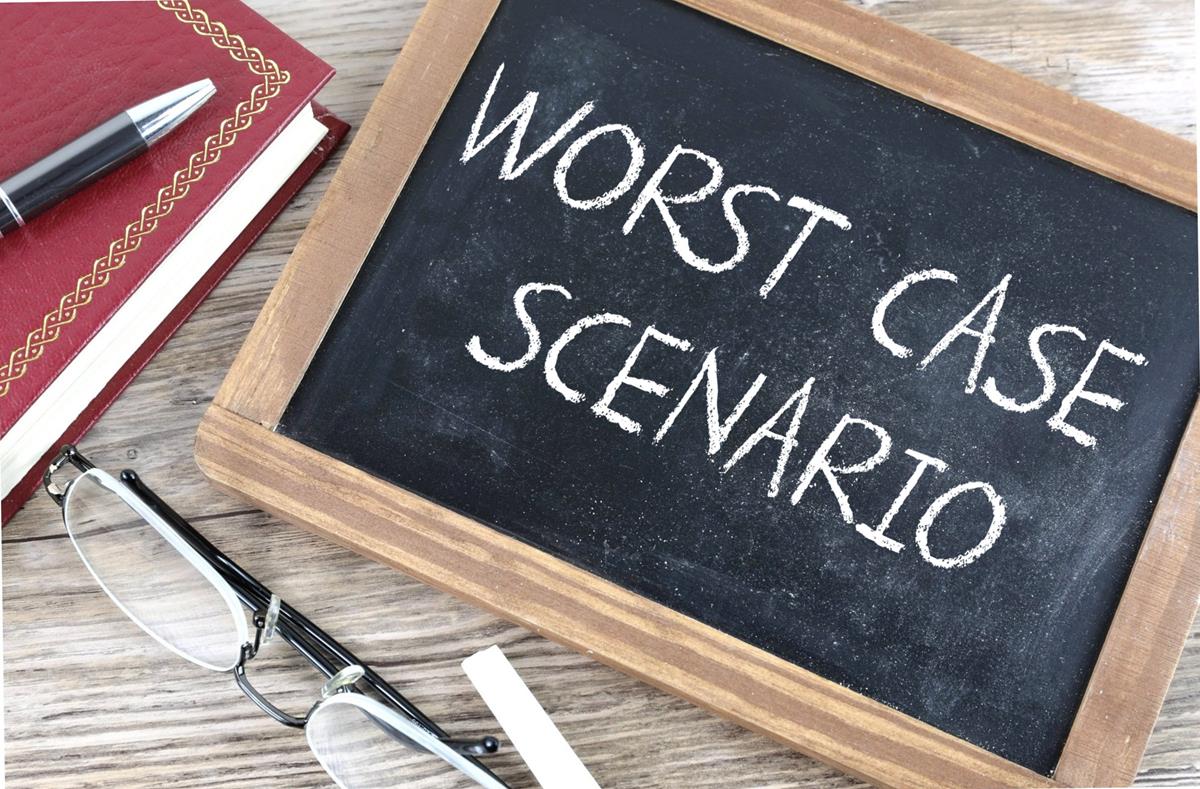
5. **Worst-Case Scenario: Preparing for the Absolute Extreme**Shifting gears, let’s tackle another robust idiom that prominently features ‘worst’: the widely understood “worst case” and its more verbose sibling, “worst-case scenario.” These aren’t just arbitrary pairings of words; they are “two idiomatic expressions” firmly established in our lexicon, specifically designed to conjure images of ultimate peril. They’re the linguistic equivalent of planning for total engine failure, hoping it doesn’t happen, but being prepared to articulate it if it does.
The reason ‘worst’ is indispensable in these expressions is directly tied to its superlative power. Both phrases unequivocally “refer to a situation that is as bad as possible compared to any other possible situation, which is why it uses the superlative form worst.” We’re not talking about something merely ‘bad’ or even ‘worse’ than one other option; we’re describing the absolute nadir, the ultimate rock bottom. It’s about envisioning the catastrophe that outstrips all other potential disasters.
The context offers crystal-clear illustrations of this grim concept. Consider the stark warning, “In the worst case, the beams will collapse instantly.” This isn’t just a concern about a beam being weak; it’s a terrifying projection of the most catastrophic outcome conceivable. Similarly, the statement “This isn’t what we expect to happen—it’s just the worst-case scenario” perfectly captures the essence of contemplating the most undesirable possibility while still hoping for a better reality. These are not minor inconveniences but the apex of potential problems.
It’s crucial to distinguish these idiomatic uses from casual word pairings. While it’s grammatically sound for “worse and case to be paired together in a sentence (as in Jacob had a worse case of bronchitis than Melanie did), it’s not a set expression like worst case is.” This subtle but significant difference underscores the power of idiom: sometimes, words together take on a meaning far beyond their individual components, especially when ‘worst’ is involved in painting the grimmest picture imaginable. You wouldn’t swap out ‘worst’ for ‘worse’ here, just as you wouldn’t use regular pump gas in a high-performance racing engine.
Read more about: Mastering ‘Worst’: Your Essential Guide to Deciphering Quality and Avoiding the Absolute Least Desirable Outcomes
6. **The ‘Worst Comes to Worst’ Conundrum: Unpacking a Linguistic Knot**Now, for a truly fascinating linguistic puzzle, we turn to the expression that means “if the worst possible outcome happens.” Interestingly, “There are actually two very similar versions…: if worse comes to worst or if worst comes to worst.” This is where the English language throws a curveball, offering a choice that, upon closer inspection, can spark considerable debate among grammarians. It’s like having two slightly different, yet widely accepted, methods for tuning an engine; both get the job done, but one might seem more intuitively correct.
What makes this particularly intriguing is the context’s observation: “However, if worst comes to worst is much more commonly used (even though it arguably makes less sense).” This is a prime example of usage trumping strict logical adherence. While ‘worse’ (comparative) coming to ‘worst’ (superlative) might seem to chart a logical progression of decline, the more prevalent form opts for ‘worst’ to ‘worst.’ This linguistic phenomenon highlights how idioms often evolve through common acceptance rather than rigid grammatical rules.
Regardless of which variation one employs, the underlying purpose remains consistent. “Whatever form is used, the expression is usually accompanied by a proposed solution to the problem.” It’s not just about predicting disaster; it’s about pragmatic contingency planning, preparing for the absolute maximum level of adversity and having a fallback strategy. This idiom is the linguistic equivalent of having a contingency plan for a major vehicle breakdown, accepting the possibility of the ultimate failure, but always having a way forward.
The context provides compelling examples that illustrate both forms. We see, “If worse comes to worst and every door is locked, we’ll get in by opening a window,” clearly demonstrating the logical progression from a bad state to the ultimate bad state. Then, the more common variant: “I’m going to try to make it to the store before the storm starts, but if worst comes to worst, I’ll at least have my umbrella with me.” Both examples, despite their subtle difference in wording, convey the same essential message: anticipating the most severe negative outcome and preparing a response. This idiom is a powerful testament to our innate drive to plan for the unpredictable, even when the grammar itself is a bit of a linguistic mystery box.

7. **’Worse’ in Action: Crafting Clearer Comparisons**Alright, gearheads, now that we’ve got the core mechanics down, let’s take ‘worse’ out for a spin and see how it truly performs in the real world of comparative statements. This isn’t just about theory; it’s about precision driving in your communication, ensuring every comparison you make is as crisp and undeniable as a fresh set of tires gripping the asphalt. ‘Worse’ is your go-to word when you’re contrasting two distinct entities or situations, explicitly stating that one is a notch down, a step back, or simply ‘more bad’ than the other.
The context makes it brilliantly clear: ‘Worse is used when making a comparison to only one other thing.’ Think of it as a head-to-head drag race where you’re evaluating performance. If the situation was merely ‘bad,’ and then, unexpectedly, it took a turn for the worse, it implies a demonstrable decline. We see this in everyday observations like, ‘My brother is bad at basketball, but honestly I’m worse,’ a direct, unapologetic comparison of two skill levels, with one clearly underperforming the other. It’s about charting a trajectory of deterioration, where the quality or condition is measurably lower.
This isn’t just for abstract concepts. ‘Worse’ is incredibly versatile for illustrating tangible declines. Consider that moment when you regret a decision: ‘The recipe tasted worse after I added vinegar,’ a clear, two-point comparison where the addition of an ingredient actively diminished the dish’s appeal. Or the common experience of ‘My handwriting has gone from bad to worse since I graduated high school,’ vividly detailing a continuous slide in penmanship. From judging aesthetic choices—’I think the pink paint looks worse on the wall than the red paint did’—to medical conditions—’Jacob had a worse case of bronchitis than Melanie did’—’worse’ precisely communicates a negative shift or inferior state relative to a single point of comparison.
8. **’Worst’ in Practice: Emphasizing the Apex of Negativity**If ‘worse’ is about a negative comparison between two points, ‘worst’ is about hitting the absolute redline of undesirability. This isn’t a subtle shift; it’s a declaration of ultimate, unparalleled negativity within a given set. When you deploy ‘worst,’ you’re identifying the undisputed champion of ‘bad,’ the item that stands alone at the bottom of the heap, with no close contenders. It’s the linguistic equivalent of proclaiming a vehicle the least efficient, the most unreliable, or frankly, the most regrettable among all options.
The definition is uncompromising: ‘Worst is used in comparisons of more than two things: Yours is bad, mine is worse, but his is the worst or That was the worst meal I’ve ever eaten.’ This highlights its role as a superlative, meaning ‘most bad,’ asserting an ultimate degree of inferiority or unpleasantness across a group. It’s not just a little off; it’s the absolute worst you’ve encountered, the pinnacle of poor quality or experience. This is the word you use when you want to leave no doubt about the bottom-tier performance.
Think about those subjective yet universally understood declarations: ‘Everybody has a movie that they think is the worst (poorest quality or most unpleasant to watch) movie ever made.’ It’s a personal judgment, yes, but it places that film firmly at the very bottom of the cinematic barrel for that individual. Similarly, in a competitive setting, ‘A runner who records the worst time in a race is the one who ran the slowest,’ unambiguously identifies the lowest performer. ‘Worst’ cuts through ambiguity, providing definitive negative classification.
This superlative power extends to more nuanced assessments of character or performance. ‘The worst student in a class could be the one who scores the lowest on tests or the one who misbehaves the most,’ showing how the criteria for ‘worst’ can vary, but the absolute nature of the judgment remains. Or, consider interpersonal dynamics: ‘The worst person you know might be the one with the most unpleasant personality or who treats you the most poorly.’ In all these scenarios, ‘worst’ serves as the ultimate identifier of the most extreme negative attribute, leaving no room for argument about its position on the scale of undesirability.
9. **The Broader Lexical Family: Connecting ‘Bad,’ ‘Badly,’ and ‘Ill’**While we’ve been deeply dissecting ‘worse’ and ‘worst’ as the comparative and superlative forms of ‘bad,’ it’s crucial to understand that their family tree extends a bit further. These powerful forms aren’t just limited to the adjective ‘bad’; they also serve the same function for the adverb ‘badly’ and the adjective/adverb ‘ill.’ It’s like discovering that a high-performance engine series shares components across different vehicle types, all engineered for degrees of unfavorability.
Let’s start with ‘badly.’ As an adverb, ‘badly’ describes *how* something is done or the *extent* of a condition. For instance, ‘speaks French badly’ or ‘a marriage that turned out badly’ illustrate actions or outcomes that are undesirable in their execution or result. Just as ‘good’ has ‘well’ as its adverbial counterpart, ‘bad’ has ‘badly.’ And when you need to compare degrees of ‘badly,’ you reach for ‘worse’ and ‘worst.’ Someone can perform ‘badly,’ another can perform ‘worse,’ and a third can perform ‘worst’ among the group. This applies whether you’re describing behavior—’behaved badly in front of the guests’—or intensity—’wants the job badly.’
Then there’s ‘ill.’ This word, often interchangeable with ‘sick’ as an adjective, carries multiple shades of negativity, from health—’She’s ill and won’t be in today’—to disposition—’ill feeling’ or ‘ill deeds.’ It also functions as an adverb, meaning unsatisfactorily or poorly, as in ‘It ill befits a person to betray friends’ or ‘an expense we can ill afford.’ For every negative nuance conveyed by ‘ill,’ its comparative and superlative degrees are, you guessed it, ‘worse’ and ‘worst.’ This linguistic efficiency means a single pair of irregular forms covers a broad spectrum of negative expression.
Understanding this broader lexical family is key to truly mastering these terms. It’s not just about an adjective changing form; it’s about a core concept of negativity—stemming from ‘bad,’ ‘badly,’ or ‘ill’—being expressed across different grammatical roles with the consistent ‘worse’ and ‘worst’ as its benchmarks for comparison. This interwoven structure allows for profound precision in describing declines, failures, and ultimate low points, regardless of whether you’re modifying a noun, a verb, or even another adverb.
10. **Beyond Adjectives: When ‘Worst’ Takes on Other Roles**Just when you think you’ve got ‘worst’ pinned down as the ultimate adjective of negativity, it decides to shift gears and show off its incredible versatility. This word isn’t just a one-trick pony; it can actually function as a noun, an adverb, and even a verb in specific contexts. It’s like a chassis designed for multiple purposes, capable of far more than its primary designation might suggest. Neglecting these alternate roles would be like only ever using your performance car for grocery runs – you’d be missing out on its true potential.
As a noun, ‘worst’ refers to ‘that which is worst’ or ‘something that is worst.’ The classic idiom, ‘Prepare for the worst,’ perfectly encapsulates this. Here, ‘the worst’ is a singular, looming entity – the absolute most negative outcome or scenario for which one must brace. We also see this in the powerful statement, ‘He brings out the worst in her,’ where ‘the worst’ refers to the most unpleasant or undesirable aspects of a person’s character. This noun form allows us to discuss ultimate negativity as a concrete concept, a singular point of extreme inferiority or distress.
But wait, there’s more. ‘Worst’ can also step into the adverbial lane. While ‘badly’ has ‘worse’ and ‘worst’ for its comparative and superlative forms, ‘worst’ as an adverb directly means ‘in the worst manner’ or ‘in the greatest degree.’ Think of it as pushing the accelerator all the way down on the scale of poor performance. While less common than its adjectival or noun forms, this usage underscores its pervasive nature across different parts of speech, always signaling the absolute peak of unfavorability in how an action is performed or to what extent a condition exists.
And for a truly rare sighting, ‘worst’ can even appear as a verb. Yes, you read that right. In its verbal form, ‘to worst’ means ‘to defeat’ or ‘to beat.’ The context offers a concise example: ‘He worsted him easily.’ This isn’t something you’ll encounter in everyday conversation often, but its existence reveals the deep linguistic roots and power embedded within this word. It’s a testament to English’s dynamic nature, where words can take on unexpected roles, transforming from a descriptor of ultimate negativity into an action that imposes that very state upon another, firmly establishing its dominance.
Read more about: Beyond Bad: Unraveling the Precision of ‘Worse’ and ‘Worst’ in Automotive Evaluation

11. **Real-Life ‘Worst’ Moments: Contextualizing Extreme Negativity**Beyond definitions and grammatical roles, ‘worst’ truly comes alive in the context of our daily lives, giving voice to those moments when things genuinely hit rock bottom. It’s the word we instinctively reach for when we need to articulate the absolute nadir of an experience, a performance, or a personal characteristic. These aren’t just abstract concepts; they’re visceral reactions, the ultimate pronouncements of dissatisfaction that resonate with everyone who’s ever felt the sting of profound disappointment or failure. Every driver has had a ‘worst’ commute, and every mechanic has faced a ‘worst’ repair job.
Consider the realm of entertainment. The context points out, ‘Everybody has a movie that they think is the worst (poorest quality or most unpleasant to watch) movie ever made.’ This isn’t just a bad movie; it’s *the worst*. It’s the film that stands out from all others as the most poorly conceived, executed, or simply unbearable. This superlative allows for deeply personal, yet universally understood, judgments of quality. It’s about singling out the absolute failure among a multitude of options, a critical assessment that often sparks lively debate among enthusiasts.
In the competitive arena, ‘worst’ is a stark, unambiguous descriptor. ‘A runner who records the worst time in a race is the one who ran the slowest,’ a factual statement that leaves no room for interpretation. But ‘worst’ also delves into the subjective, especially when it comes to human traits. ‘The worst student in a class could be the one who scores the lowest on tests or the one who misbehaves the most.’ This highlights that the criteria for ‘worst’ can be varied, yet the word itself still identifies the lowest point within that chosen criterion. Similarly, ‘The worst person you know might be the one with the most unpleasant personality or who treats you the most poorly,’ speaks to the deeply personal and often emotionally charged application of ‘worst’ to character.
Ultimately, ‘worst’ is more than just a grammatical superlative; it’s a powerful tool for conveying the height of negative experience and outcome. It’s crucial for setting benchmarks, for expressing extreme dissatisfaction, and for outlining critical scenarios like the ‘worst-case scenario’ we discussed earlier. It allows us to articulate those profound lows, ensuring that when we describe something as truly awful, there’s no doubt that it’s reached the very bottom of the scale.

12. **Demystifying FAQs: Quick Answers to Common Confusion**Alright, let’s bring it home with a rapid-fire Q&A, a quick pit stop to solidify your understanding and clear up any lingering confusion about ‘worse’ and ‘worst.’ This section is your final tune-up, ensuring you’re ready to hit the linguistic highway with absolute confidence. The goal here is clarity, making sure these words are as intuitive to you as knowing when to shift gears.
So, what exactly is the meaning of ‘worse’? In a nutshell, ‘worse’ is an adjective primarily used to compare two things. Its core function is to indicate a decline in quality, a dip in desirability, or a deterioration in condition. Think ‘more bad.’ As the context states, ‘Worse suggests a negative change or deterioration.’ It’s that subtle, yet significant, step down from one point to another, always involving just two items or situations in comparison. If your car’s fuel economy is bad today, but it was even worse yesterday, you’re making a direct, two-point comparison of decline.
And ‘worst’? Ah, ‘worst’ is the ultimate declaration. It’s an adjective reserved for when you’re comparing three or more things, or an entire group, and you need to point out the absolute bottom. It signifies the lowest possible quality or the most negative condition among all options. ‘Worst conveys a sense of extreme inferiority,’ as our reference material eloquently puts it. It’s ‘most bad,’ the undisputed last place in the race of negativity. If, out of all the cars on the lot, one stands out as the absolute least reliable, you’re looking at the ‘worst’ option.
To give you a final, crystal-clear mental image, let’s revisit some classic examples. ‘Worse’ is your comparative, as in, ‘The pain in my foot is worse today than yesterday,’ or ‘The sequel to the book was worse than the debut.’ You’ve got two things, and one is simply more negative than the other. ‘Worst,’ on the other hand, is your superlative champion of negativity: ‘He is the worst runner on the team,’ or ‘That was the worst wildfire in the region’s history.’ It’s about the absolute, unequivocal bottom in a group. Master these distinctions, and your communication will be as finely tuned as a high-performance engine.
Read more about: No More Waiting! Your Ultimate Buzz-Worthy Guide to Getting PSA Certificates Online & In-Person, Fast!
And there you have it, folks! We’ve navigated the tricky terrain of ‘worse’ and ‘worst’ with the precision of a seasoned rally driver. From their fundamental definitions as comparative and superlative forms of ‘bad,’ through their irregular quirks, and into their many applications in common idioms and alternative grammatical roles, you’re now equipped to wield these words with unparalleled confidence and clarity. No longer will you suffer a grammatical misfire; instead, you’ll be driving home your points with power, accuracy, and an authority that would make any language enthusiast nod in approval. Keep those linguistic engines purring, and always strive for the best – not the worst – in your communication!