
In the fast-paced world of business, precision in language is not merely a nicety; it is a critical asset that underpins clear communication, effective decision-making, and professional credibility. Misunderstandings, even subtle ones, can lead to significant misinterpretations, impacting everything from project outcomes to stakeholder relations. Therefore, mastering the nuances of English grammar becomes an indispensable skill for any professional aiming for impactful and unambiguous discourse.
Among the many grammatical distinctions that can trip up even seasoned communicators, the pair ‘worse’ and ‘worst’ stands out. These two words, derived from the same root — ‘bad’ — are frequently interchanged, yet they carry fundamentally different meanings based on the degree of negativity they express. Their misuse can subtly shift the entire implication of a statement, potentially leading to confusion or an unintended emphasis in critical business discussions.
This article delves deep into the essential distinctions between ‘worse’ and ‘worst,’ providing a clear, factual, and analytical guide designed for the business professional. We will dissect their definitions, explore their specific applications in various comparative contexts, and illuminate their roles in common expressions. By the end of this comprehensive exploration, you will possess the clarity needed to wield these powerful words with unwavering accuracy, ensuring your professional communications are always precise and impactful.

1. **Defining ‘Worse’: The Comparative Degree of ‘Bad’**To begin our journey into these often-confused terms, we first establish the core identity of ‘worse.’ At its heart, ‘worse’ is fundamentally a comparative adjective. The context explicitly states, “Worse is what’s called the comparative form, basically meaning “more bad.”” This straightforward definition immediately positions ‘worse’ as a tool for evaluating and contrasting the quality, condition, or desirability of one thing against another, indicating a decline or a lower standard.
A comparative adjective, by its nature, serves the purpose of drawing a direct comparison between two entities. When something is described as ‘worse,’ it inherently implies a baseline — an initial state or another item — against which its deteriorated or inferior condition is being measured. It is not about the absolute lowest point, but rather a relative step down on a scale of negativity.
Consider the practical application in a business scenario: a project’s timeline might be bad, but unexpected delays could make it ‘worse.’ Here, we are comparing the initial ‘bad’ state to a subsequent, more negative state. The comparison is confined to just these two points, highlighting a negative progression or a less favorable outcome when juxtaposed with a single alternative.
The emphasis here is on the evolution of a situation or the direct contrast between two distinct elements. Understanding ‘worse’ as signifying ‘more bad’ or a state of deterioration relative to a single point is the foundational step in mastering its correct usage in professional communication, ensuring that comparisons of decline are articulated with precision.
Read more about: Navigating the Grammar Highway: Avoiding the Worst Mistakes with ‘Worse’ and ‘Worst’

2. **Defining ‘Worst’: The Superlative Degree of ‘Bad’**Shifting our focus, ‘worst’ operates on an entirely different level of comparison, representing the absolute extreme of negativity. The provided context clearly defines it, stating, “Worst is the superlative form, basically meaning “most bad.”” This designation immediately conveys that ‘worst’ is not merely comparing two things; it is identifying the singular entity that stands at the very bottom of a scale, among a group of three or more.
A superlative adjective like ‘worst’ is employed to single out one item, situation, or condition as possessing the highest degree of a particular quality—in this case, ‘badness’—when measured against all others in a defined set. It signifies the ultimate low, the most undesirable outcome, or the most inferior characteristic. There is no lower point within the comparison set when ‘worst’ is correctly applied.
In a professional context, this means that labeling something as the ‘worst’ implies a comprehensive evaluation of multiple options or factors, culminating in the identification of a single, unequivocally inferior choice or scenario. For instance, if a company evaluates several investment strategies, one might be deemed the ‘worst’ if it presents the highest risk or lowest potential return compared to all other considered strategies.
Therefore, ‘worst’ is reserved for statements of definitive extremes, signifying that no other alternative in the group reaches a lower level of quality or desirability. Grasping this distinction is crucial for business professionals who must frequently rank, evaluate, and describe outcomes in clear, unambiguous terms.
Read more about: Beyond Bad: Unraveling the Precision of ‘Worse’ and ‘Worst’ in Automotive Evaluation

3. **The Two-Thing Rule: When to Employ ‘Worse’**One of the most fundamental rules for correctly applying ‘worse’ lies in the number of items being compared. The guidance is unequivocal: “Worse is used when making a comparison to only one other thing.” This principle is a cornerstone of accurate usage and provides a clear demarcation between ‘worse’ and its superlative counterpart.
When a situation, object, or condition is described as ‘worse,’ it invariably indicates a negative change or a lower quality *in relation to a singular point of comparison*. This could be a prior state of the same entity, or it could be a different but solitary alternative. The essence of ‘worse’ is its role in highlighting a negative shift or a relative inferiority within a confined, two-element comparison.
The context provides an excellent illustration: “Your breath is bad, but mine is worse.” Here, the comparison is strictly between ‘your breath’ and ‘mine’ — two distinct entities. Similarly, “The situation was bad and it just got worse” compares the initial ‘bad’ situation to its deteriorated subsequent state. Both examples adhere to the rule of comparing only two things or states.
Furthermore, the text offers another insightful example: “If an item of clothing, for example, has been washed a thousand times and looks worn down, its quality is worse than when you first bought it, showing a decline in condition.” This clearly illustrates a comparison between two points in time for the same item. Therefore, when you are evaluating a negative trajectory between two specific points or contrasting one negative attribute against another, ‘worse’ is the precise term to convey that comparative decline or inferiority.
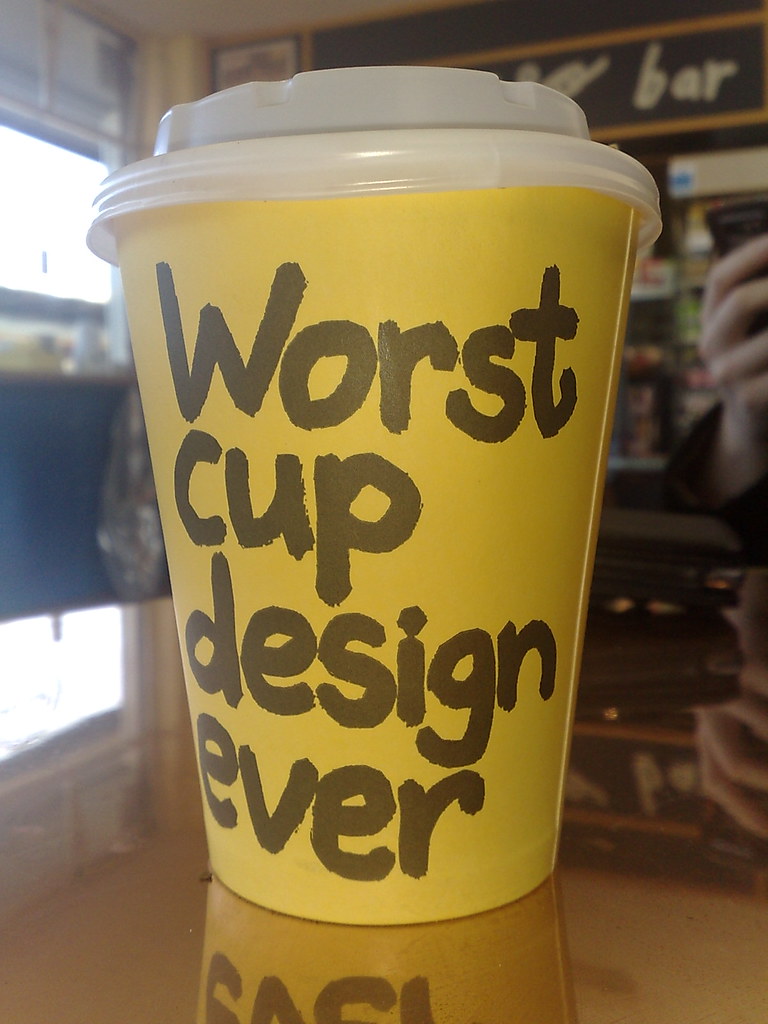
4. **The Group Rule: When ‘Worst’ Reigns Supreme**Conversely, the application of ‘worst’ is dictated by a different numerical criterion, specifically when a comparison involves multiple entities. The rule is explicit: “Worst is used in comparisons of more than two things (as in Out of the five exam I have today, this one is going to be the worst) or state that something is the most extreme out of every possible option (as in That was the worst idea I have ever heard).”
This rule clarifies that ‘worst’ is the definitive choice when identifying the absolute nadir within a collective group or across all conceivable possibilities. It serves to pinpoint the single, most inferior, or most negatively impactful element among three or more alternatives. The term ‘worst’ conveys a sense of finality in ranking, signifying the bottom position on a scale of desirability or quality.
Consider the example provided in the context: “Yours is bad, mine is worse, but his is the worst.” In this sequence, ‘his’ is singled out as being at the lowest end of the spectrum among three distinct options. This demonstrates how ‘worst’ functions to crown the ultimate loser, or the one with the most severe degree of ‘badness’ within the evaluated group.
The distinction is critical for clear reporting and analysis. When presenting findings from a market analysis that involved numerous competitors, or evaluating a range of operational failures, designating one as the ‘worst’ immediately communicates its unparalleled severity or negative impact relative to all others. This makes ‘worst’ an indispensable tool for prioritizing and conveying critical assessments in professional settings.

5. **An Intuitive Parallel: ‘Better’ and ‘Best’ as a Guide**For those grappling with the distinction between ‘worse’ and ‘worst,’ an incredibly helpful linguistic analogy exists, readily available within the English language itself. The context points out this elegant parallel, stating, “Worse and worst are just like the words better and best, which are the comparative and superlative forms of the word good.”
This analogy provides a direct, intuitive roadmap for understanding the grammatical functions of ‘worse’ and ‘worst.’ Just as ‘good’ is the base adjective, ‘better’ is its comparative form (meaning ‘more good,’ comparing two things), and ‘best’ is its superlative form (meaning ‘most good,’ comparing three or more things or the absolute extreme), ‘bad,’ ‘worse,’ and ‘worst’ follow an identical structure, albeit in the negative.
By internalizing the well-understood progression of ‘good, better, best,’ one can easily map it to ‘bad, worse, worst.’ If you intuitively know to use ‘better’ when comparing two positive outcomes and ‘best’ when selecting the top positive outcome from many, then the same logic applies in the negative sphere. ‘Worse’ is for comparing two negative things or states, while ‘worst’ is for identifying the most negative among a larger group.
Leveraging this parallel is a powerful memory aid, especially in high-pressure business communication. It provides a consistent framework for applying the correct term, reducing the likelihood of grammatical errors and ensuring that your comparisons, whether positive or negative, are consistently accurate and professionally sound. This mental model demystifies the seemingly complex irregularity of ‘bad’ and its forms.

6. **The Irregularity of ‘Worse’ and ‘Worst’: A Linguistic Anomaly**While the ‘better’ and ‘best’ analogy offers clarity on function, it also brings to light an interesting linguistic characteristic: the irregularity of ‘bad,’ ‘worse,’ and ‘worst.’ Unlike many adjectives that follow predictable patterns for forming their comparative and superlative degrees, these words deviate from the standard rules. The text explicitly notes, “Worse and worst don’t follow these rules.”
Typically, comparative adjectives are formed by either adding ‘-er’ to the end of a short adjective (e.g., ‘fast’ becomes ‘faster’) or by preceding longer adjectives with ‘more’ or ‘less’ (e.g., ‘impressive’ becomes ‘more impressive’). Superlatives typically add ‘-est’ (e.g., ‘fastest’) or ‘most’/’least’ (e.g., ‘most impressive’). ‘Bad,’ ‘worse,’ and ‘worst’ are exceptions, stemming from older linguistic roots.
However, even within this irregularity, there’s a subtle clue that can aid recall. The context highlights, “you can see a remnant of the superlative ending -est at the end of worst and best, which can help you remember that they are superlatives.” This small linguistic echo serves as a valuable mnemonic, reminding us that ‘worst’ (like ‘best’) is indeed the superlative form, indicating the highest degree of the negative quality.
Understanding that ‘worse’ and ‘worst’ are irregular forms is not just a point of academic interest; it’s vital for avoiding common pitfalls. These words are not formed by adding ‘-er’ or ‘-est’ to ‘bad.’ Their unique structure demands direct memorization and careful application, reinforcing the need for diligent attention to grammatical detail to maintain clarity and professionalism in all forms of business communication.
Read more about: Mastering the ‘Worst’: Your Ultimate Guide to Precision and Power in English Grammar

7. **Navigating the Idiom “From Bad to Worse”: Understanding Negative Trajectories**In the dynamic and often challenging landscape of business, situations can unfortunately deteriorate. English provides a powerful idiomatic expression to perfectly capture this downward spiral: “from bad to worse.” This phrase is more than just a casual remark; it encapsulates a clear progression where an already undesirable situation continues to decline in quality or condition.
The context illuminates this, stating, “Worse is used in the expression from bad to worse, which means that something started bad and has only deteriorated in quality or condition.” This idiom is a common fixture in professional discourse, allowing communicators to succinctly describe a negative trend without needing extensive explanation. It immediately signals a serious escalation of an existing problem.
Consider a scenario where a project initially faces minor delays. If these delays then compound due to unforeseen technical issues or resource shortages, the project’s status has indeed gone “from bad to worse.” Here, the phrase effectively conveys the increasing severity and the ongoing negative impact, alerting stakeholders to worsening circumstances that demand urgent attention and strategic intervention.
The nuanced understanding of this idiom reinforces the importance of using ‘worse’ correctly. It underscores its role as a comparative term, marking a shift to a more negative state *relative to a previous bad state*. Employing “from bad to worse” accurately demonstrates a command of idiomatic English, crucial for clear and impactful reporting in high-stakes business environments.

8. **Demystifying “Worst Case” and “Worst-Case Scenario”: Preparing for Extremes**Few phrases are as vital in strategic planning and risk management as “worst case” and “worst-case scenario.” These expressions are indispensable tools for business professionals who must anticipate and mitigate potential disasters. They force us to confront the most extreme negative outcomes, ensuring that contingency plans are robust and comprehensive.
The provided context explicitly defines these phrases, noting that “The phrase worst case is used in the two idiomatic expressions: in the worst case and worst-case scenario. Both of these phrases refer to a situation that is as bad as possible compared to any other possible situation, which is why it uses the superlative form worst.” This highlights their fundamental purpose: to pinpoint the absolute nadir of possibilities within a given context.
In business, understanding the “worst-case scenario” is not about dwelling on negativity but about proactive preparedness. It means identifying the outcome with the highest possible negative impact, such as “In the worst case, the beams will collapse instantly” or “This isn’t what we expect to happen—it’s just the worst-case scenario.” By considering these extremes, companies can develop strategies to either prevent them or effectively respond should they materialize.
It is important to recognize that while the words ‘worse’ and ‘case’ can certainly appear together in a sentence, as in “Jacob had a worse case of bronchitis than Melanie did,” this is not the fixed idiom. The superlative ‘worst’ is integral to the established expressions “in the worst case” and “worst-case scenario,” emphasizing the utmost degree of potential adversity.

9. **The Lingering Debate: “If Worse Comes to Worst” vs. “If Worst Comes to Worst”**Among the most intriguing grammatical puzzles involving these words is the common idiom signifying a last resort: “if worse comes to worst” or “if worst comes to worst.” While both versions are understood, one holds significantly more prevalence, despite what logic might initially suggest to some. This particular expression tests our intuition about comparative and superlative usage.
The context addresses this directly, stating, “There are actually two very similar versions of the expression that means ‘if the worst possible outcome happens’: if worse comes to worst or if worst comes to worst. However, if worst comes to worst is much more commonly used (even though it arguably makes less sense).” This acknowledges the linguistic anomaly where common usage often trumps strict grammatical derivation.
While “if worse comes to worst” might seem more grammatically consistent, implying a progression from a bad situation to the *most* bad one, the version featuring “worst” twice has gained dominant cultural acceptance. This illustrates how language evolves, with established idioms sometimes diverging from literal interpretations. For instance, “If worse comes to worst and every door is locked, we’ll get in by opening a window” demonstrates the intent of addressing a dire outcome.
Regardless of the version chosen, the expression consistently serves to introduce a contingency plan for the most challenging circumstances. As the text notes, “Whatever form is used, the expression is usually accompanied by a proposed solution to the problem.” Whether you prefer “if worse comes to worst” or “if worst comes to worst,” the critical element is the subsequent plan of action, as in, “I’m going to try to make it to the store before the storm starts, but if worst comes to worst, I’ll at least have my umbrella with me.”

10. **’Worse’ Beyond an Adjective: Exploring its Adverbial Utility**Often, our focus on ‘worse’ centers on its role as a comparative adjective, describing one noun as “more bad” than another. However, its versatility extends beyond this, allowing it to function effectively as an adverb. This grammatical flexibility enables a more nuanced expression of comparative decline, not just of nouns but also of verbs and other adverbs.
The definitions provided in the context confirm this dual functionality, explicitly stating that ‘worse’ can be “From badly (adv): worse adv comparative worst adv superlative.” This means ‘worse’ can modify a verb, indicating that an action is performed in a “more bad” or less satisfactory manner than another. This expands its utility in describing how something is done or how it progresses.
Consider a scenario in a project review. One might say, “The team performed badly on the first sprint, but they performed even worse on the second, missing more deadlines.” Here, ‘worse’ modifies the verb “performed,” indicating a decline in the *manner* of execution, not just the quality of a noun. This adverbial use allows for precise feedback on performance.
Understanding ‘worse’ as an adverb is crucial for crafting sophisticated and accurate professional communications. It allows for detailed comparisons of actions, processes, and conditions, moving beyond simple qualitative descriptions. This command of different parts of speech enhances clarity and reflects a higher level of linguistic proficiency in any business setting.
Read more about: Beyond Bad: Unraveling the Precision of ‘Worse’ and ‘Worst’ in Automotive Evaluation
11. **’Worst’ as a Multifaceted Word: Noun, Adverb, and Even a Verb**Just as ‘worse’ possesses versatility, ‘worst’ showcases an even broader range of grammatical functions, transcending its primary role as a superlative adjective. It can seamlessly transition into a noun, an adverb, and, in some contexts, even a verb, enriching the precision and expressiveness of business language. Recognizing these varied applications is key to fully harnessing its power.
The comprehensive definitions within the context highlight this adaptability. As a noun, ‘worst’ often appears with “the,” referring to “something that is worst: Prepare for the worst.” This noun form is incredibly useful in risk assessment and strategic planning, allowing for the direct naming of the most challenging outcome, urging preparedness for it.
Furthermore, ‘worst’ serves as an adverb, representing the superlative of ‘badly’ or ‘ill.’ The context defines it as “in the worst manner” or “in the greatest degree.” This adverbial function enables speakers to describe an action as being performed in the most unsatisfactory or least skilled way possible. For example, “He performed worst of all the candidates during the negotiation simulation.”
Intriguingly, the context also notes ‘worst’ as a transitive verb, meaning “to defeat; beat.” While less common in contemporary business jargon, this historical usage underscores the word’s profound capacity to convey utter defeat or overcoming an opponent. “He worsted him easily” is an archaic yet powerful example, demonstrating the word’s full lexical spectrum. Mastering these multifaceted applications of ‘worst’ adds significant depth to a professional’s linguistic toolkit.

12. **The Subjectivity of “Worst”: Real-World Interpretations and Contextual Nuances**While grammar provides clear rules for comparative and superlative forms, the *meaning* of “worst” in real-world applications often carries a significant degree of subjectivity. What constitutes the “worst” is rarely an objective absolute but rather a judgment influenced by individual perspectives, criteria, and the specific context of a situation. This subjective layer adds complexity to its usage in business.
The context explicitly acknowledges this, stating, “What someone thinks of as the worst something depends on what they’re judging that thing on. As with bad, worst is often a person’s opinion.” This is crucial in professional discourse, where differing priorities can lead to varying assessments of what is truly “worst.” For example, the “worst student” could be the one with the lowest scores or the one who causes the most disruption, depending on the evaluator’s focus.
Consider real-life examples provided: “Everybody has a movie that they think is the worst (poorest quality or most unpleasant to watch) movie ever made.” Or “A runner who records the worst time in a race is the one who ran the slowest.” These illustrations underscore that the definition of “worst” is deeply tied to the specific metric or standard being applied. In business, this could mean that the “worst investment” might be defined by highest risk, lowest return, or longest recovery period.
Therefore, when labeling something as the “worst” in a business context, it is often beneficial to clarify the criteria underlying that judgment. This helps prevent misunderstandings and ensures that all parties are operating under the same set of evaluative principles. Recognizing this inherent subjectivity is key to precise and transparent communication, especially when making critical assessments or recommendations.

13. **Achieving Linguistic Precision: Strategies for Business Communication**In the professional arena, the accurate deployment of words like ‘worse’ and ‘worst’ is not merely an exercise in grammatical correctness; it is a fundamental aspect of effective communication that directly impacts clarity, credibility, and decision-making. Mastering these distinctions allows business professionals to articulate complex situations, evaluations, and prognoses with unwavering precision.
The entire journey through ‘worse’ and ‘worst’ culminates in the understanding that intentional word choice empowers more impactful discourse. From comparing two scenarios with ‘worse’ (e.g., “Our current quarter’s performance is worse than the last”) to identifying the ultimate challenge with ‘worst’ (e.g., “This market downturn represents the worst economic climate in decades”), the correct usage conveys authority and analytical rigor.
To reinforce this linguistic precision, actively applying the “two-thing” rule for ‘worse’ and the “group” rule for ‘worst’ is paramount. Furthermore, being mindful of their roles in idiomatic expressions—like the definitive “worst-case scenario” versus the evolutionary “from bad to worse”—ensures that your message is not only understood but resonates with the intended severity or progression.
Ultimately, consistent practice and a commitment to grammatical excellence will elevate any business professional’s communication. By distinguishing these crucial terms, you avoid ambiguity and foster a reputation for meticulous detail, ensuring that your insights, analyses, and strategic proposals are always presented with clarity and conviction. This dedication to precision underpins all successful professional interactions.
Read more about: Think You Know ‘Inappropriate’? Prepare to Be Schooled (and Amused!) on This Tricky Word
As we conclude this deep dive into the often-misunderstood pair of ‘worse’ and ‘worst,’ it becomes abundantly clear that these words are far more than simple forms of ‘bad.’ They are potent linguistic tools, each with a specific function crucial for conveying precise degrees of negativity. In the fast-paced, high-stakes environment of business, such precision isn’t just an advantage; it’s a necessity. By embracing the distinctions, understanding their multifaceted roles, and applying them judiciously, you empower your professional communication to be clear, impactful, and undeniably authoritative. May your language always be at its best, never at its worst.