Sometimes I’m just baffled. You’d think with all the collective brainpower, all the engineering prowess, and all the market research money floating around the automotive industry, every single vehicle that rolls off the assembly line would be a stroke of genius, or at the very least, a competently designed piece of machinery. Yet, here we are, staring down the barrel of some of the most egregious, head-scratching, and utterly baffling design flops in history. It’s almost as if some of these ideas bypassed every sensible checkpoint and went straight from a fever dream to mass production.
Even the biggest names in the automotive industry have had their share of design missteps. These aren’t just minor blemishes; we’re talking full-blown aesthetic catastrophes that left a lasting, often negative, impression. These flops, often a result of bold risks or misguided trends, serve as stark reminders that not every innovation hits the mark, and sometimes, a brilliant concept on paper translates into a visual nightmare on the road.
But fear not, gearheads and casual observers alike, because these failures aren’t just punchlines. They’re crucial lessons etched into the annals of car manufacturing, illuminating the perilous tightrope designers and engineers walk. In this article, we’re taking a deep dive into some of the most notable automotive design flops from major manufacturers, exploring precisely what went wrong and why these vehicles failed so spectacularly to resonate with consumers. Buckle up, because we’re about to explore the automotive Hall of Shame, and trust us, it’s a wild ride.
1. **Pontiac Aztek (2001-2005)**Oh, the Pontiac Aztek. Where do we even begin with this absolute legend of automotive ugliness? Introduced in 2001, this beast was meant to be Pontiac’s adventurous answer to the burgeoning youth market, aiming for a demographic hungry for versatility. It even came equipped with innovative features like a built-in cooler and an optional tent package, amenities that, on paper, sounded quite appealing for the weekend warrior. A truly ambitious concept, designed to cater to a lifestyle rather than just transportation.
But then you actually *looked* at it, and the collective groan from the automotive world was almost deafening. Its bizarre, angular design, those utterly awkward proportions, and a rear end that looked like it was pieced together from a haphazard collection of spare parts quickly turned off any potential buyers. The Aztek wasn’t just unappealing; it was aggressively unappealing, a rolling question mark that seemed to defy every conventional notion of aesthetic appeal. It was a visual assault, a statement piece for all the wrong reasons, making even its practical features an afterthought.
The criticism was widespread and brutally effective, culminating in what can only be described as abysmal sales figures and an embarrassingly early discontinuation in 2005. This is a tragic tale of practicality being completely overshadowed by design flaws so profound they rendered any redeeming features invisible. The Aztek stands as a monumental symbol of just how critically important aesthetics are in the cutthroat automotive market, a lesson Pontiac learned the hard way—a design misstep that still makes us wince every time we see one on the road.
Car Model Information: 2003 Pontiac Aztek FWD
Name: Pontiac Aztek
Manufacturer: General Motors
Production: July 2000 – December 2004
Assembly: Ramos Arizpe
Designer: Tom Peters (chief designer: 1997)
Class: Mid-size crossover SUV
BodyStyle: SUV
Platform: GM U platform
Related: Buick Rendezvous
Layout: Front-engine, front-wheel-drive layout
Engine: General Motors 60° V6 engine#LA1,V6
Transmission: GM 4T65-E transmission,Automatic transmission
Wheelbase: 108.3 in (2,751 mm)
Length: 182.1 in (4,625 mm)
Width: 73.7 in (1,872 mm)
Height: 66.7 in (1,694 mm)
Weight: 3,779–4,043 lb (1,714–1,834 kg)
Predecessor: Pontiac Sunrunner
Successor: Pontiac Torrent
ModelYears: 2001–2005
Categories: All-wheel-drive vehicles, All articles needing additional references, All articles with unsourced statements, Articles needing additional references from October 2013, Articles with short description
Summary: The Pontiac Aztek is a mid-size crossover SUV marketed by General Motors introduced in 2000 for the model years 2001 through 2005. As a four-door crossover with front-wheel drive and optional all-wheel drive, the Aztek featured a four-speed automatic transmission with a V6 engine. Marketed by Pontiac as a “sport recreational vehicle,” the Aztek used a shortened platform shared with GM’s minivans (e.g., the Pontiac Montana) featuring 94 cubic feet of cargo room with its rear seats removed. The design employed conventional rear outswing doors rather than sliding doors, and a split rear tailgate, the lower section formed with seat indentations and cupholders. Other features included a front center console that doubled as a removable cooler, optional rear stereo controls in the cargo area, optional sliding cargo floor with grocery compartments, and optional camping package with an attachable tent and air mattress.
Get more information about: Pontiac Aztek
Buying a high-performing used car >>>
Brand: Pontiac Model: Aztek
Price: $4,200 Mileage: 91,955 mi.
Read more about: Beyond Glare: Unpacking the Most Controversial Car Design Features and Their Unforeseen Impacts on the Road and Culture

2. **Ford Edsel (1958-1960)**Ah, the Ford Edsel. If there’s one name synonymous with automotive failure, it’s this magnificent blunder from the late 1950s. Launched in 1958 with immense fanfare, the Edsel was envisioned as the car of the future, a bold new marque to sit between Ford and Lincoln. However, its unconventional design, most notably that infamous “horse-collar” grille, was widely disliked from the moment it debuted. It was a styling choice that simply missed the mark, proving to be far too ambitious and out of sync with consumer tastes.
The ambition behind the Edsel’s design was admirable, but the execution was, to put it mildly, a disaster. The car’s overall aesthetic was perceived as overly ornate and clumsy, failing to capture the elegance or modernity it aimed for. Coupled with a host of mechanical issues, a bewildering marketing campaign, and a price tag that felt utterly unjustified for what was delivered, the Edsel struggled profoundly to attract buyers. It became clear very quickly that Ford had a lemon on its hands.
The lack of consumer interest led to its swift discontinuation after a mere two years, making it one of the most infamous failures in automotive history. The name “Edsel” has since become a cautionary tale, synonymous with grand plans gone horribly wrong and a stark reminder that even with immense resources, you can still produce a vehicle that nobody wants. It’s a bitter pill to swallow for any manufacturer, especially for a giant like Ford.
Car Model Information: 1958 Edsel Citation
BirthName: Edsel Bryant Ford
Caption: Ford in 1921
BirthDate: [object Object]
BirthPlace: Detroit, Michigan
DeathDate: [object Object]
DeathPlace: Grosse Pointe Shores, Michigan
Occupation: Automobile executive
Title: Ford Motor Company
Spouse: [object Object]
Parents: Henry Ford,Clara Bryant Ford
Relations: Edsel Ford II
Children: Henry Ford II,Benson Ford,Josephine Ford,William Clay Ford Sr.
Categories: 1893 births, 1943 deaths, 20th-century American businesspeople, All Wikipedia articles written in American English, All articles with dead external links
Summary: Edsel Bryant Ford (November 6, 1893 – May 26, 1943) was an American business executive and philanthropist, who was the only child of pioneering industrialist Henry Ford and his wife, Clara Jane Bryant Ford. He was the president of the Ford Motor Company from 1919 until his death in 1943.
He worked closely with his father, as sole heir to the business, but was keen to develop cars more exciting than the Model T (“Tin Lizzie”), in line with his personal tastes. Even as president, he had trouble persuading his father to allow any departure from this formula. Only a change in market conditions enabled him to develop the more fashionable Model A in 1927. Edsel also founded the Mercury division and was responsible for the Lincoln-Zephyr and Lincoln Continental. He introduced important features, such as hydraulic brakes, and greatly strengthened the company’s overseas production.
Ford was a major art benefactor in Detroit and also financed Admiral Richard Byrd’s polar explorations. He died of stomach cancer aged 49. Henry Ford temporarily reassumed the presidency of Ford Motor Company on Edsel’s death, then Edsel’s eldest son, Henry Ford II, succeeded Henry as president of the company in 1945.
He was also a member of the board of directors of American IG, the American subsidiary of the German chemical conglomerate IG Farben.
Get more information about: Edsel Ford
Buying a high-performing used car >>>
Brand: Ford Model: Edsel
Price: Not Priced Mileage: 68,904 mi.
Read more about: Beyond Glare: Unpacking the Most Controversial Car Design Features and Their Unforeseen Impacts on the Road and Culture
3. **AMC Pacer (1975-1980)**Stepping into the mid-70s, we encounter the AMC Pacer, a car that certainly wasn’t shy about making a visual statement, whether good or bad. Introduced in 1975, the Pacer was touted as a futuristic compact car, designed to carve out a niche in the burgeoning subcompact market. Its signature wide, bulbous shape and expansive glass area were so distinctive that it quickly earned it the unforgettable nickname, “the fishbowl.” There’s no denying it, the Pacer looked like nothing else on the road.
While the Pacer was undeniably innovative in some aspects, particularly its wide track that offered surprising stability for its size, its polarizing design proved to be its ultimate undoing. The car’s quirky aesthetics were simply too unconventional, too “out there” for the mainstream tastes of the era, making it unattractive to a significant portion of potential buyers. It was a design that screamed individuality, but unfortunately, that individuality didn’t translate into widespread appeal.
Adding to its woes, the Pacer was plagued by an underpowered and notoriously inefficient engine, a critical flaw during the tumultuous fuel crisis of the 1970s. Despite a brief surge of initial curiosity, sales rapidly dwindled, cementing the Pacer’s legacy as a symbol of quirky yet ultimately failed automotive design. It stands as a testament to the idea that sometimes, being truly unique isn’t enough to guarantee success in a market driven by both form and function.
Read more about: Beyond the Hype: 15 Classic Cars That Will Break Your Heart (and Wallet) – A Jalopnik Guide for Enthusiasts
4. **Cadillac Cimarron (1982-1988)**The Cadillac Cimarron, a vehicle often whispered about in hushed tones of regret, is widely regarded as one of the biggest missteps in the illustrious history of Cadillac. Launched in 1982, the Cimarron was a desperate attempt to compete in the burgeoning luxury compact segment. However, in a move that still baffles purists, it was essentially a rebadged Chevrolet Cavalier, albeit with a significantly inflated price tag. This was not merely badge engineering; it was brand dilution on an epic scale.
Despite carrying the venerable Cadillac crest, the Cimarron offered precious little to genuinely distinguish itself from the humble economy car upon which it was so transparently based. The design was bland, utterly unremarkable, and conspicuously lacked the luxurious features, refined performance, or distinctive styling that consumers had come to expect from a Cadillac. It simply couldn’t shake its commoner roots, no matter how much chrome or leather was thrown at it.
Consumers, ever perceptive, quickly recognized the Cimarron for what it truly was: an overpriced, underwhelming, and frankly embarrassing offering. This led to predictably poor sales and, perhaps more damagingly, a severe tarnishing of Cadillac’s prestigious brand image. The Cimarron remains a textbook example of how not to enter a new market segment, a cautionary tale illustrating the perils of blatant badge engineering and the catastrophic impact it can have on a luxury brand’s credibility.
Read more about: Beyond the Hype: 15 Classic Cars That Will Break Your Heart (and Wallet) – A Jalopnik Guide for Enthusiasts

5. **Aston Martin Lagonda (1976-1990)**Ah, the Aston Martin Lagonda – a car that was either decades ahead of its time or wildly off the mark, depending on who you ask. This ambitious luxury sedan, introduced in 1976, was a genuine attempt to push boundaries, but it ultimately became one of Aston Martin’s most notorious design flops. It featured a strikingly radical wedge-shaped design that certainly turned heads, and a truly groundbreaking digital dashboard complete with futuristic touch-sensitive controls. It was a vision of the future, delivered today.
However, that future proved to be a technological nightmare. The Lagonda’s complex electronics were notoriously unreliable, leading to frequent and frustrating breakdowns that would make even the most patient owner tear their hair out. While its innovative design aimed for avant-garde sophistication, it ended up being deeply polarizing; many found it simply too unconventional, too jarring for a luxury vehicle expected to exude timeless elegance. It was a high-tech marvel that just couldn’t deliver on reliability or widespread aesthetic appeal.
Between its sky-high price, its reputation for persistent electrical maladies, and a design that felt like a love-it-or-hate-it proposition, the Lagonda achieved only limited sales throughout its unusually long production run. It remains a stark cautionary tale in the annals of automotive design, highlighting the extreme risks inherent in overreaching for innovation without a solid foundation of reliability and broad aesthetic acceptance. It’s a car that dared greatly, and, in many ways, failed spectacularly.
Car Model Information: 2021 Maserati Ghibli S Q4 GranSport
Caption: Aston Martin Lagonda Series 2
Name: Aston Martin Lagonda
Manufacturer: Aston Martin
Designer: William Towns
Production: 1974–1990,645 produced
Assembly: Newport Pagnell,Buckinghamshire,England
Predecessor: Lagonda Rapide
Successor: Lagonda Taraf
Class: Full-size,luxury car
BodyStyle: sedan (car)
Layout: Front-engine, rear-wheel-drive layout
Engine: cvt,V8 engine
Transmission: Torqueflite,automatic transmission
Wheelbase: 2916 mm
Abbr: on
Length: 5282 mm
Width: 1816 mm
Height: 1302 mm
Categories: 1980s cars, 1990s cars, All Wikipedia articles written in British English, All articles with unsourced statements, Articles with short description
Summary: The Aston Martin Lagonda is a full-size luxury four-door saloon manufactured by British manufacturer Aston Martin between 1974 and 1990. A total of 645 were produced. The name was derived from the Lagonda marque that Aston Martin had purchased in 1947. There are two distinct generations: the original, short-lived 1974 design based on a lengthened Aston Martin V8, and the entirely redesigned, wedge-shaped Series 2 model introduced in 1976.
In 2014, Aston Martin confirmed it would launch a new Lagonda model called the Taraf for the Middle-East market, sold on an invitation-only basis as a successor to this saloon. As of 2022, 113 remain registered in the United Kingdom, though 82 are SORN (unregistered for routine road use).
Get more information about: Aston Martin Lagonda
Buying a high-performing used car >>>
Brand: Aston Martin Model: Lagonda
Price: $33,440 Mileage: 24,509 mi.
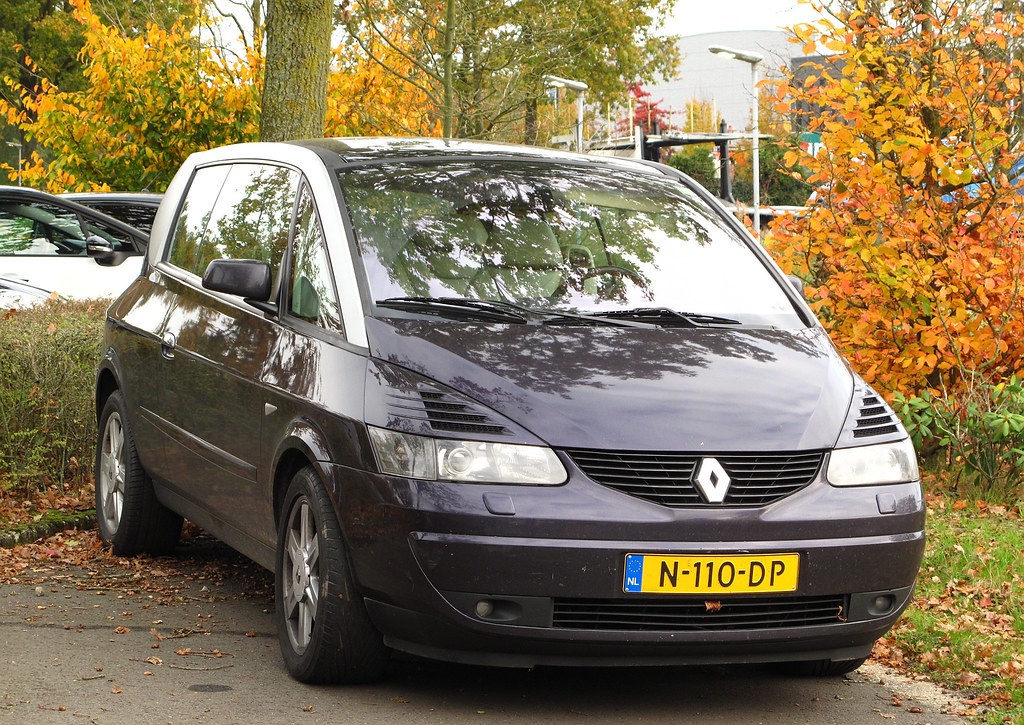
6. **Renault Avantime (2001-2003)**Here we have the Renault Avantime, a truly audacious experiment that dared to blend the seemingly disparate attributes of a minivan, a coupe, and a luxury car into a single, genre-defying package. Introduced in 2001, the Avantime was nothing if not unique. It boasted a distinctive, almost boxy design, complemented by a massive glass roof and truly pillarless doors, creating an incredibly airy and open cabin. The concept was innovative, a true outside-the-box thinker for automotive design.
However, as is often the case with such radical departures, the execution was, shall we say, flawed. The Avantime’s design was simply too unconventional for the tastes of most mainstream buyers. It struggled to find its identity, lacking the practical utility of a true minivan, the sleek, understated elegance expected of a coupe, or the universal appeal of a traditional luxury vehicle. It occupied an awkward middle ground that few understood or desired.
Consequently, sales figures were dismal, and the Avantime’s bold journey was cut tragically short after just two years on the market. It now stands as a poignant example of how radical design choices, no matter how innovative or conceptually brilliant, can backfire spectacularly in the unpredictable automotive marketplace. The Avantime proves that sometimes, trying to be everything to everyone results in being nothing to no one.

7. **Chrysler PT Cruiser Convertible (2005-2008)**The original Chrysler PT Cruiser started life as a surprising hit, thanks to its charmingly retro-inspired design that perfectly captured a nostalgic vibe. But then, in 2005, Chrysler decided to lop off its top and introduce a convertible variant, and that’s where things went decidedly downhill. The PT Cruiser Convertible emerged with an immediately awkward, top-heavy design, characterized by a high beltline and a surprisingly narrow rear end. It looked ungainly and frankly, a bit ridiculous, especially with the soft top folded down.
This open-air iteration utterly failed to capture the unique charm and appealing aesthetic that had made the hardtop PT Cruiser so popular. Instead of enhancing its appeal, the convertible styling exacerbated its design quirks, turning what was once quirky-cool into just… odd. The compromised proportions were only part of the problem; it was further hampered by poor handling dynamics that never inspired confidence and a lackluster engine lineup that felt underwhelming for a supposedly fun, open-top cruiser.
The initial success of the hardtop simply couldn’t translate to its convertible sibling. Sales of the PT Cruiser Convertible never came close to matching those of the original model, and it was quietly—and perhaps mercifully—discontinued in 2008. The convertible quickly faded into obscurity, a forgotten chapter in Chrysler’s history, serving as a reminder that not every successful design needs an open-top version, especially when the conversion strips away its original appeal.”
Car Model Information: 2021 Maserati Ghibli S Q4 GranSport
Name: Chrysler PT Cruiser
Manufacturer: Chrysler
ModelCode: PT,PG
Production: 2000–2010
ModelYears: 2001–2010
Assembly: Toluca, Mexico State
Designer: Bryan Nesbitt
Class: Compact car
BodyStyle: convertible
Platform: Chrysler PT platform
Related: Dodge SRT4,Dodge Neon
Predecessor: Dodge Neon
Successor: Lancia Delta#Third generation
Layout: Front-engine, front-wheel-drive layout
Engine: ubl
Transmission: Ultradrive#40TE
Wheelbase: 103 in
Abbr: on
Length: 168.8 in
Width: 67.1 in
Height: 63 in
Weight: 3123 lb
Categories: 2010s cars, All articles with unsourced statements, Articles with short description, Articles with unsourced statements from March 2018, Cars discontinued in 2010
Summary: The Chrysler PT Cruiser is a compact car that was built by the American company Chrysler from 2001 until 2010. Introduced as a five-door hatchback wagon, a two-door convertible variant was also made from 2005 until 2008.
Originally planned as a Plymouth model, the PT Cruiser was ultimately marketed as a Chrysler when Plymouth was discontinued. Intended to invoke 1930s aesthetics, the exterior of the PT Cruiser was designed by Bryan Nesbitt. The model received an intermediate facelift for the 2006 model year. Interior packaging was noted for its high roof, high h-point seating, and flexible cargo and passenger configurations enabled by a multi-level rear cargo shelf and rear seats a user could fold, tumble, or remove.
The PT Cruiser was produced in Mexico and Austria at the Toluca Car Assembly and Eurostar Automobilwerk factories respectively. By the end of production in July 2010, worldwide production had reached 1.35 million.
In its nameplate, PT stands for “Personal Transport” or “Personal Transportation.” PT was the PT Cruiser’s product code for the Mexican-made units.
Get more information about: Chrysler PT Cruiser
Buying a high-performing used car >>>
Brand: Chrysler Model: PT Cruiser Convertible
Price: $33,440 Mileage: 24,509 mi.
Read more about: Beyond the Garage: Unearthing the Most Practical and Enjoyable Classic Cars for Your Daily Drive
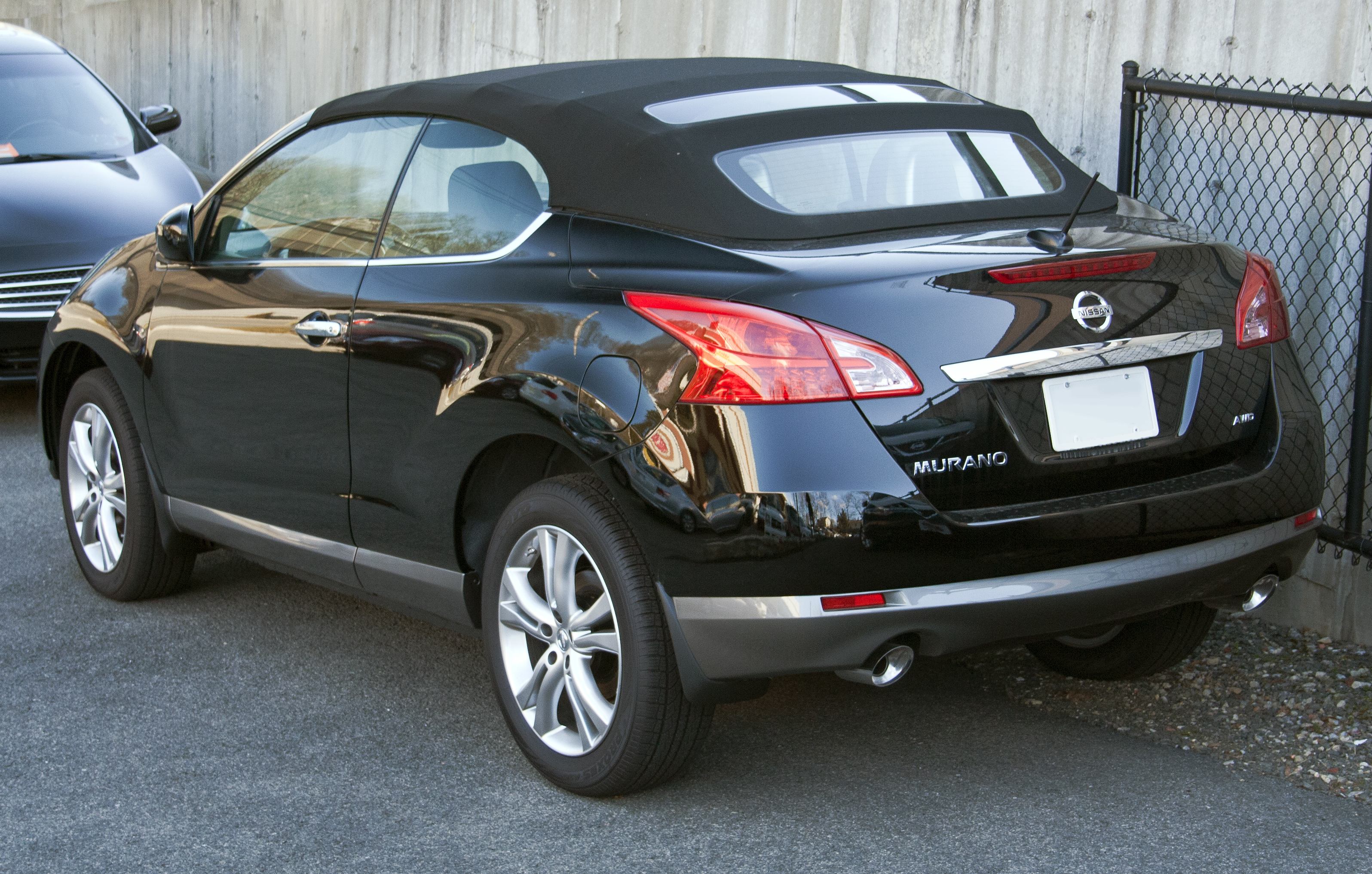
8. **Nissan Murano CrossCabriolet (2011-2014)**Alright, buckle up, because if you thought the PT Cruiser Convertible was a head-scratcher, prepare for a full-on brain aneurysm. Nissan, in its infinite wisdom, decided the world needed a convertible SUV. No, really. They took their perfectly respectable Murano, chopped off two doors, lopped off the roof, and presented the world with the CrossCabriolet in 2011. It was an idea so out there, it almost felt like a dare, a challenge to see just how much weirdness the market could stomach.
The result? A vehicle that looked like a conventional SUV had a particularly bad run-in with a giant guillotine, leaving it with bizarre proportions and a silhouette that screamed “identity crisis.” The bulky profile, the awkwardly high beltline, and the severely compromised rear seat and cargo space made it neither a good SUV nor a compelling convertible. It was a Frankenstein’s monster of automotive design, attempting to blend two genres in a way that satisfied neither.
Naturally, its niche appeal was, shall we say, microscopically small. It was expensive, impractical, and visually challenging from almost every angle. The market, as it often does with such audacious misfires, rendered its verdict swiftly and brutally. After just a few years of sales figures that barely registered a blip, Nissan mercifully put the CrossCabriolet out of its misery in 2014, leaving behind a legacy as one of the most uniquely awkward automotive design flops ever conceived. Sometimes, innovation means knowing what *not* to combine.
**9. Lincoln Blackwood (2002)**
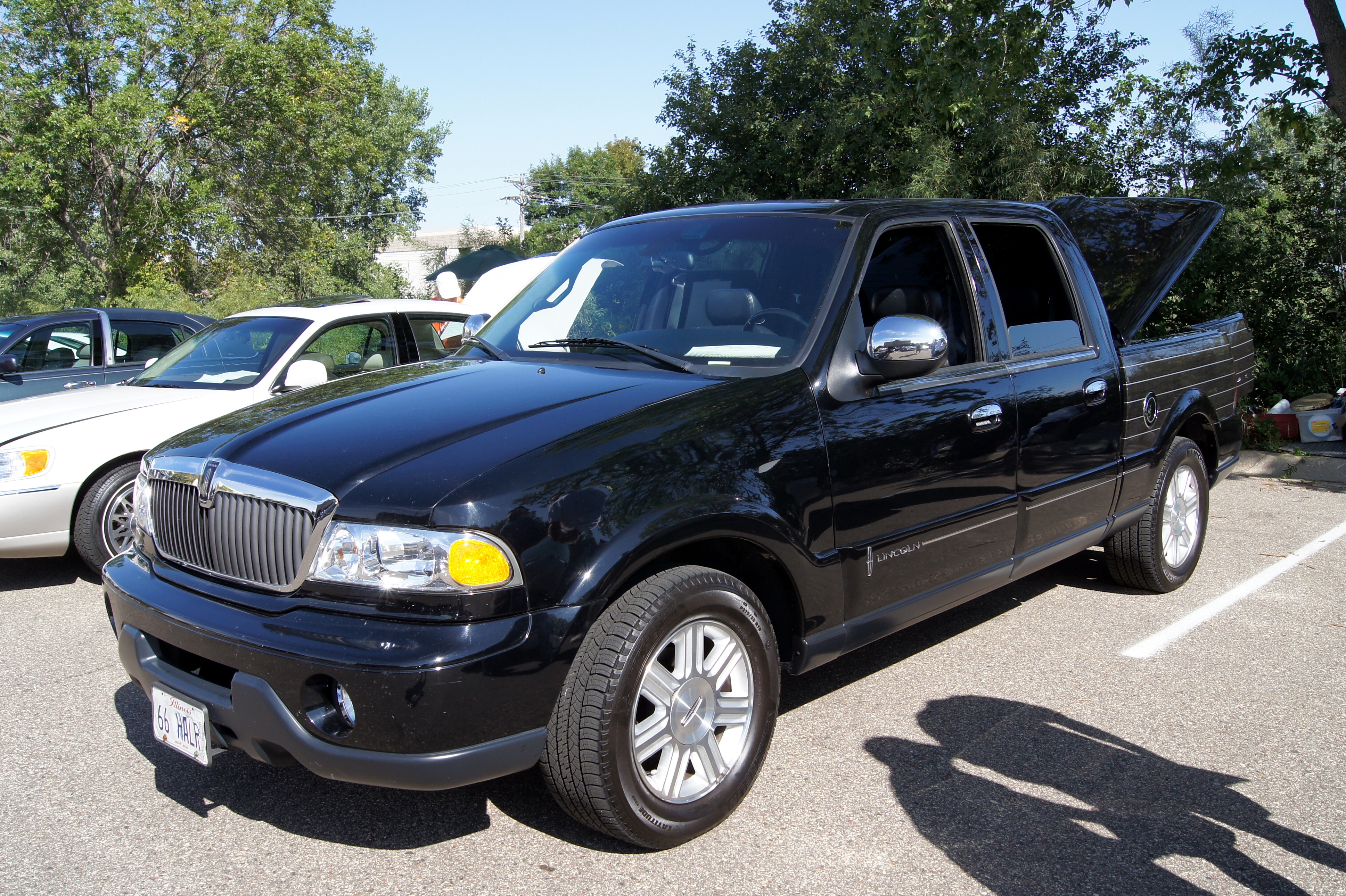
Now, shifting gears from “awkward convertible” to “luxury truck that forgot it was a truck,” we present the Lincoln Blackwood. Back in 2002, Lincoln decided it wanted a piece of the burgeoning luxury SUV market, but with a twist: make it a pickup. On paper, perhaps the idea of a premium pickup with Lincoln panache sounded appealing to a certain demographic, envisioning something that combined rugged utility with opulent comfort.
Except, well, it spectacularly missed the “utility” part of the equation. The Blackwood featured a power-operated tonneau cover and a cargo bed lavishly lined with carpet. Carpet! In a pickup truck! And to add insult to injury for anyone who actually needed a truck for truck-like things, the cargo bed was laughably small and completely impractical for hauling anything dirty or substantial. Oh, and it was only offered with rear-wheel drive, immediately disqualifying it for any serious work or off-road pretensions. It was a truck that actively discouraged you from using it like a truck.
This monumental miscalculation meant the Blackwood was effectively an oversized, less practical Navigator with an open trunk. Its sky-high price, combined with its profound lack of actual truck utility, ensured its demise was as swift as it was predictable. Lincoln’s first foray into the luxury pickup market lasted a grand total of one model year, cementing its place as a classic example of a concept that looked good on a boardroom whiteboard but utterly failed in the real world. A testament to how not to interpret “luxury utility.”
**10. Chevrolet SSR (2003-2006)**
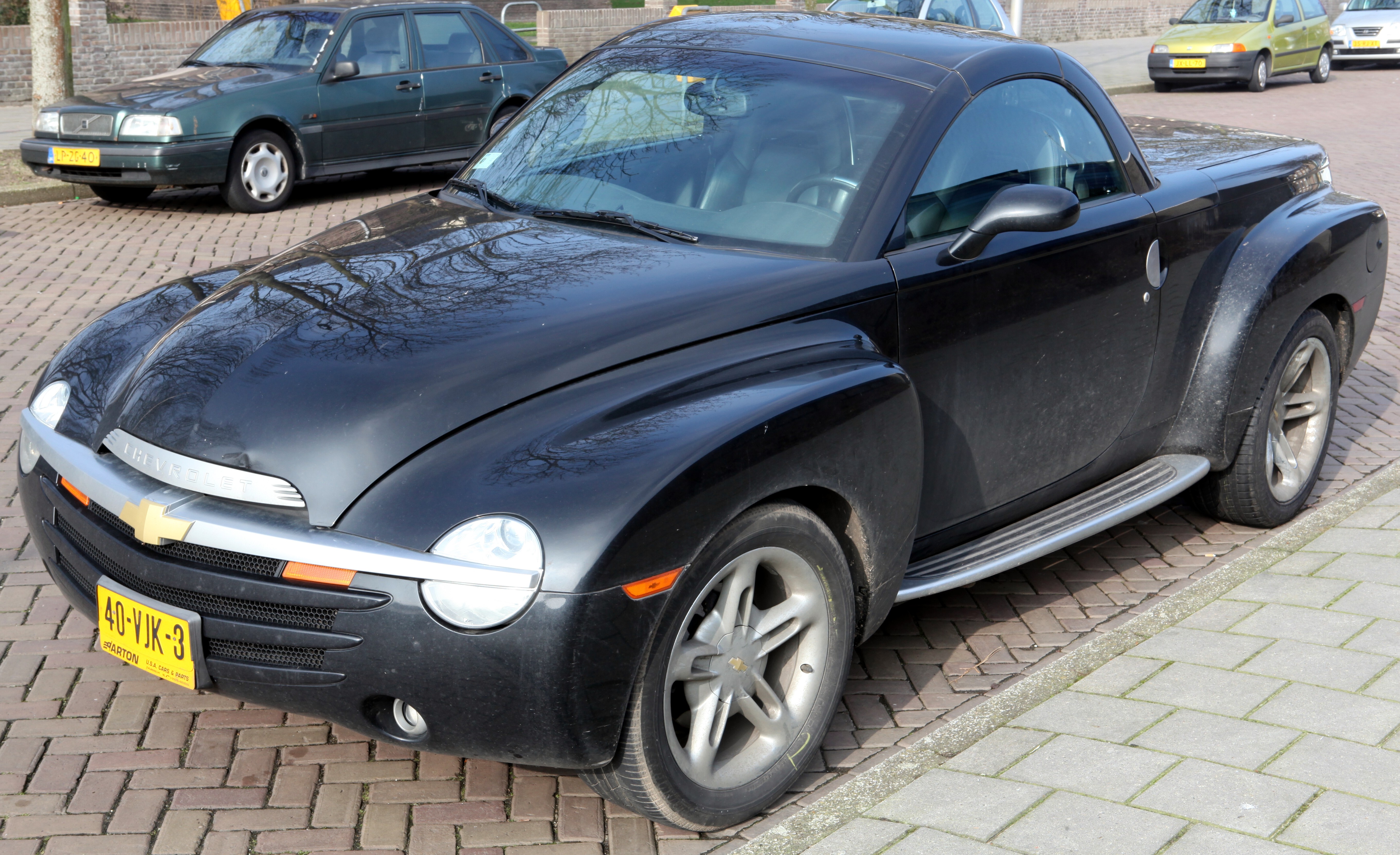
Speaking of vehicles that seemed to emerge from a fever dream, let’s talk about the Chevrolet SSR, or Super Sport Roadster. Launched in 2003, this retro-styled pickup was an undeniable exercise in bold, polarizing design. It married the chunky, curvaceous lines of a 1950s pickup with the utterly unexpected feature of a retractable hardtop convertible roof. It was… a lot. A rolling homage to an era that never quite existed, delivered with a modern twist that confused more than it charmed.
The SSR’s bulbous shape and overt retro cues certainly guaranteed it would stand out, for better or worse. But underneath that undeniably unique exterior, the SSR struggled to deliver a compelling driving experience. It was heavy, and early models were noticeably underpowered, despite packing a a 5.3-liter V8. For a vehicle that screamed “sport,” it often felt more like a ponderous cruiser, lacking the agility or outright grunt that its “Super Sport” moniker promised. It was a show car brought to production, without enough substance to back up the style.
Between its polarizing aesthetics, compromised performance, high asking price, and limited practicality as both a pickup and a convertible, the SSR found itself in an automotive no-man’s-land. Sales were sluggish, and Chevrolet quietly pulled the plug in 2006. While it has since garnered a small, dedicated cult following, the SSR remains a fascinating, if ultimately flawed, example of a manufacturer taking a massive swing for the fences and mostly hitting a foul tip. Sometimes, being distinctive isn’t enough; you still need to be good.
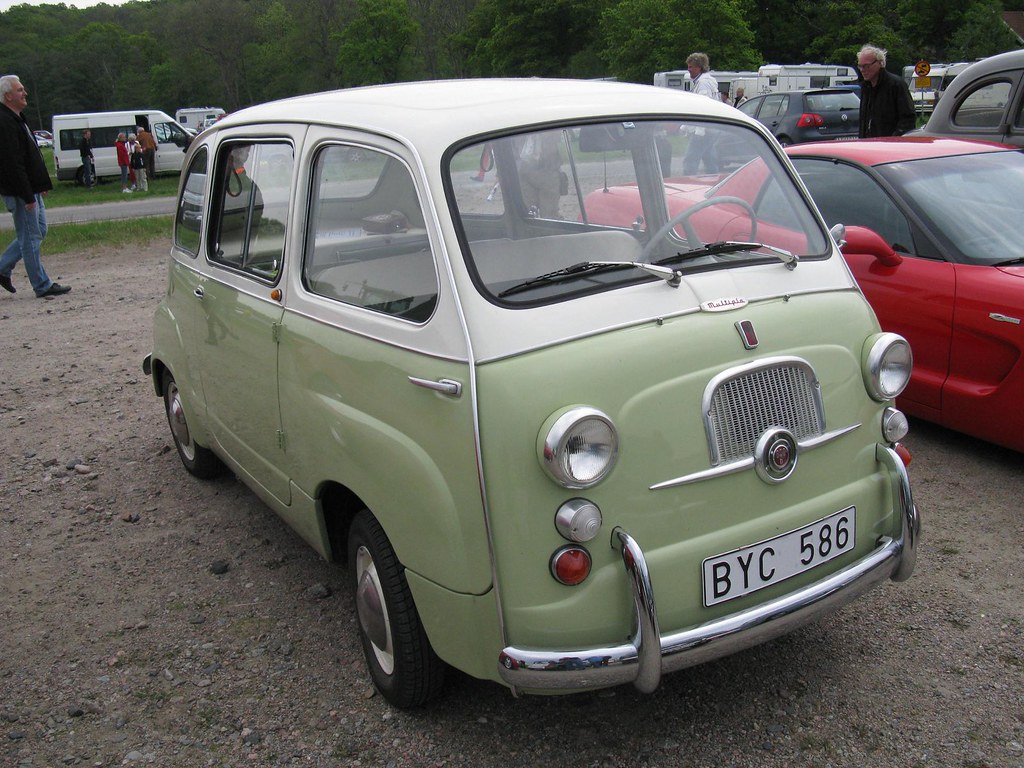
**11. Fiat Multipla (1998-2010)**
Now, if we’re talking about cars whose designs truly baffled the collective automotive consciousness, the Fiat Multipla has to be near the top of any “ugliest cars ever made” list. Introduced in 1998, this compact MPV from Italy was a masterclass in challenging conventional aesthetics. With its famously wide, bulbous front end and a particularly unsettling second set of headlights mounted directly below the windshield, it looked less like a car and more like some sort of curious, wide-eyed marine creature.
Yet, here’s the kicker: beneath that profoundly controversial exterior lay an interior that was genuinely innovative. The Multipla brilliantly offered seating for six adults in two rows of three, providing unparalleled width and a remarkably airy cabin thanks to its expansive glasswork. It was a testament to clever packaging and maximizing internal space in a compact footprint. For sheer practical utility and intelligent use of interior volume, the Multipla was a triumph.
But, as history has repeatedly shown, brilliant functionality can only go so far when the exterior design is so utterly polarizing it actively repels potential buyers. The Multipla’s looks became a punchline, a shorthand for automotive ugliness, completely overshadowing its considerable virtues. Despite its practical brilliance, sales remained stubbornly low, proving once again that in the fickle world of car buying, sometimes you really can’t get past the face. The Multipla teaches us that you only get one chance to make a first impression, and Fiat’s was certainly memorable, but for all the wrong reasons.
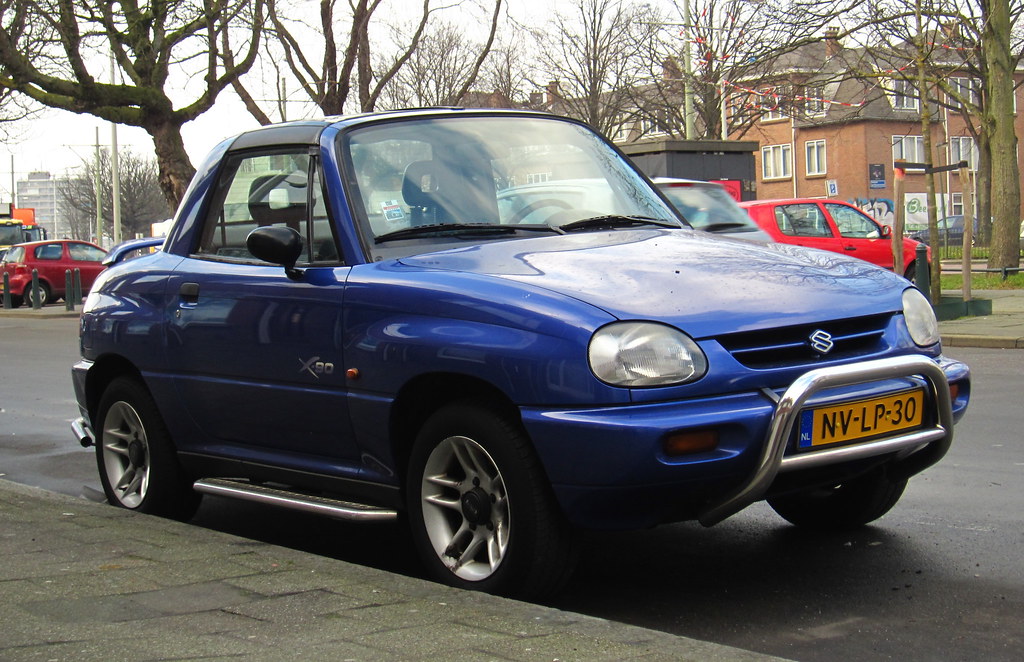
**12. Suzuki X-90 (1995-1997)**
From a design that was practical but ugly, we move to one that was just plain odd: the Suzuki X-90. Released in 1995, the X-90 was Suzuki’s attempt to blend a compact SUV with a two-door coupe and a removable T-top roof. The result was a vehicle that looked less like a serious contender in the automotive market and more like a brightly colored toy car, something you’d find in a Happy Meal rather than a dealership showroom.
The X-90’s design was an exercise in contradictory elements. It had the high riding stance of an SUV, but its two-door coupe body and incredibly limited cargo space rendered any pretense of utility moot. Off-road capability, a Suzuki hallmark, was also severely compromised. Add to that an underpowered four-cylinder engine that struggled to move the vehicle with any real enthusiasm, and you had a recipe for a car that simply couldn’t figure out what it wanted to be, or what its target audience was supposed to be.
Predictably, the X-90’s strange looks and practical shortcomings meant it struggled mightily to attract buyers. It existed in a strange limbo, too small and impractical for SUV buyers, too ungainly for coupe enthusiasts, and too quirky for most mainstream tastes. Suzuki quietly discontinued the X-90 after a paltry two years on the market, leaving it as a bizarre footnote in automotive history and a stark reminder that novelty alone rarely translates into sustained sales success. It was a vehicle that truly defined the term “niche market,” but without enough of a niche to sustain it.
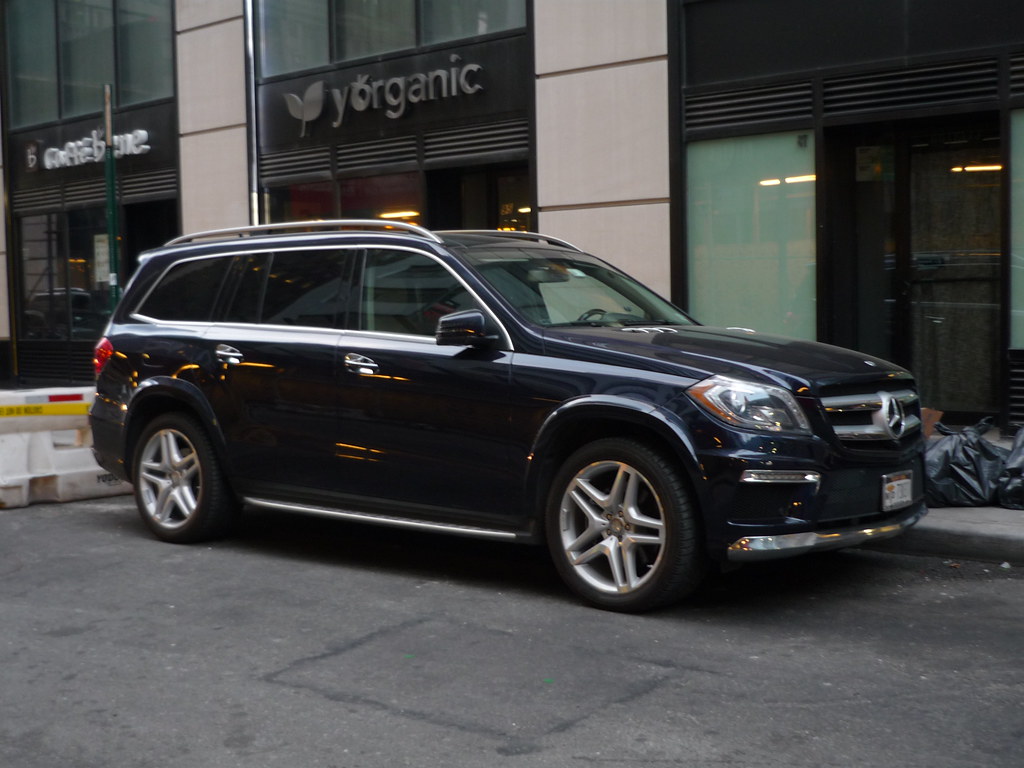
**13. Mercedes-Benz R-Class (2006-2013)**
Now, even a marque as prestigious and consistently elegant as Mercedes-Benz can stumble, and the R-Class is Exhibit A of such a misstep. Launched in 2006, the R-Class was Mercedes’ ambitious attempt to carve out a new luxury segment by blending the attributes of an SUV, a minivan, and a station wagon into one grand, imposing package. The intention was to offer luxurious, spacious family transport that was more refined than a conventional minivan and more elegant than a bulky SUV.
However, the R-Class’s design ended up being a classic case of trying to be everything to everyone and succeeding at being nothing definitive to anyone. Its long, wagon-like shape, coupled with a distinctly minivan-esque profile, failed to ignite the passions of either SUV or wagon buyers. It lacked the rugged appeal of an SUV and the unpretentious practicality of a minivan, leaving it in an awkward stylistic purgatory. Add to that its considerable size, which made it rather unwieldy for urban driving, and you had a vehicle that just didn’t click.
Despite offering a genuinely spacious and well-appointed interior, complete with Mercedes-Benz’s renowned luxury features, the R-Class was consistently criticized for its uninspiring aesthetics and its inability to define its purpose. Sales figures reflected this confusion, remaining stubbornly low throughout its unusually long production run. Mercedes-Benz eventually pulled the plug in 2013, with the R-Class serving as a painful reminder that even the best intentions, backed by a world-class brand, can result in a design flop if the vision isn’t clear and universally appealing.
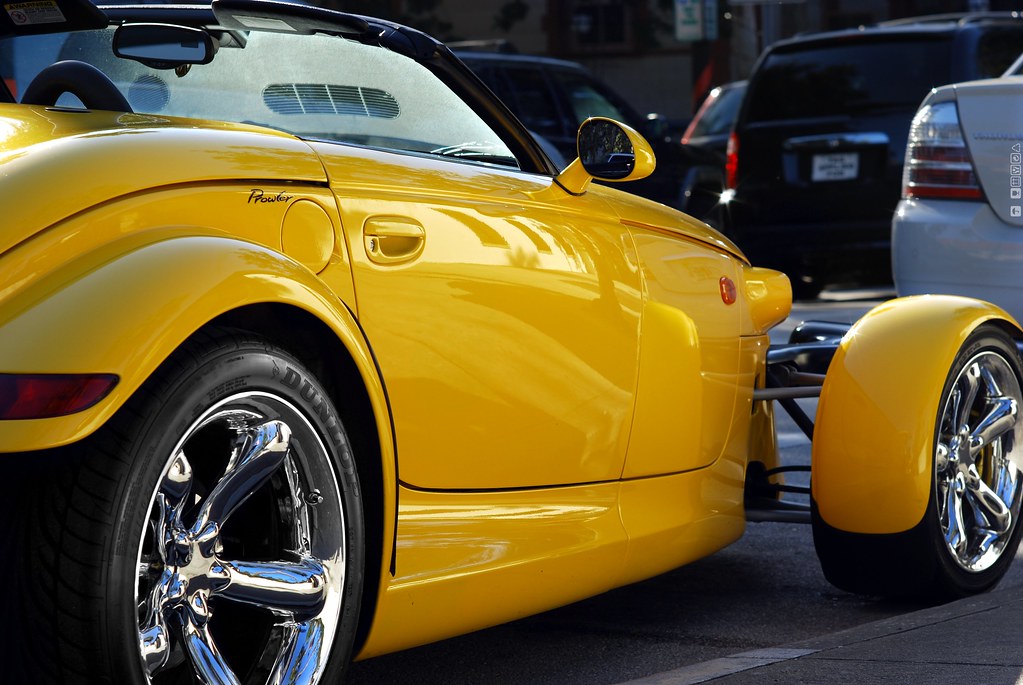
**14. Plymouth Prowler (1997-2002)**
Finally, we arrive at the Plymouth Prowler, a car that perhaps embodies the phrase “style over substance” more completely than any other on this list. Unveiled in 1997, the Prowler was a stunning, audacious concept come to life – a factory-built hot rod with exposed front wheels, a pointed grille, and a body that looked like it rolled straight off a custom builder’s stand at a car show. It was an absolutely eye-catching design, a bold aesthetic statement that promised excitement and rebellion.
The visual spectacle, however, was let down by the driving experience. Under that radical hood lay a 3.5-liter V6 engine, which, while decent for the time, produced a rather underwhelming 214 horsepower in early models. For a car that looked like it should be scorching the pavement, its actual performance was merely adequate. But the real kick in the teeth for enthusiasts was the absence of a manual transmission, a cardinal sin for a vehicle so overtly styled after classic hot rods. The automatic-only offering felt like a betrayal of its very aesthetic promise.
Combine its striking but ultimately compromised performance with its high price tag and limited practicality (it was, after all, a two-seat roadster with almost no cargo space), and the Prowler struggled to find widespread appeal beyond a small group of devoted collectors. Sales were sluggish, and the Prowler was discontinued in 2002, marking the end of Plymouth as a brand, no less. While it has gained a cult following over the years for its sheer audacity, the Prowler stands as a powerful testament to the idea that sometimes, even the most captivating design needs a mechanical soul to truly succeed.
Car Model Information: 2021 Maserati Ghibli S Q4 GranSport
Name: Nissan Murano
Manufacturer: Nissan
Production: 2002–present
ModelYears: 2003–present
Class: Mid-size crossover SUV
Layout: Front-engine, front-wheel-drive layout
Predecessor: Nissan R’nessa
Successor: Nissan Pathfinder#Pathfinder Concept (2023, China)
Caption: 2024 Nissan Murano (Z52)
Categories: 2010s cars, 2020s cars, All-wheel-drive vehicles, All Wikipedia articles written in American English, All articles with dead external links
Summary: The Nissan Murano (Japanese: 日産・ムラーノ, Hepburn: Nissan Murāno) is a mid-size crossover SUV manufactured and marketed by Nissan since May 2002 for the 2003 model year. The fourth generation was revealed in October 2024.
As Nissan’s first crossover SUV for the United States and Canada, the Murano was designed at Nissan America in La Jolla, California, and was based on the Nissan FF-L platform shared with the third generation Altima. The European version of the Murano began sales in 2004.
The Murano was Nissan’s only crossover SUV in the United States until September 2007, when the Rogue went on sale. In Canada, the X-Trail had been on sale as Nissan’s second car based SUV since 2004 as a model for 2005; it was replaced by the 2008 Rogue at the end of 2007. The Murano is sized between the Pathfinder and the discontinued Xterra (which was replaced by the Rogue as a compact SUV). For the model years of 2011 to 2014, a convertible variant, the Murano CrossCabriolet, was available for the second-generation model. As of 2018, the Murano is sized between the X-Trail and the larger Pathfinder.
The nameplate Murano derives from the Italian islands of Murano and the namesake Murano art glass for which the islands are widely known.
Get more information about: Nissan Murano
Buying a high-performing used car >>>
Brand: Nissan Model: Murano CrossCabriolet
Price: $33,440 Mileage: 24,509 mi.
Read more about: The Road to Ruin: 12 High-Performance Cars That Drove Straight into Disaster and Became Automotive Nightmares
So, there you have it: a grand tour through some of the most memorable and, frankly, baffling design failures in automotive history. From the aggressively unappealing Aztek to the head-scratching Murano CrossCabriolet, and the utilitarian-averse Blackwood to the style-over-substance Prowler, these vehicles serve as vivid, sometimes painful, reminders that even the most innovative minds can miscalculate. These aren’t just ugly ducklings; they’re vital case studies, showing us the fine line between daring innovation and absolute commercial disaster. Each one, in its own peculiar way, taught the industry invaluable lessons about balancing vision with market demand, functionality with form, and perhaps most importantly, ensuring that a car’s purpose aligns with its presentation. And for us, the consumers and enthusiasts, they offer endless fodder for discussion, debate, and the occasional shudder – a wild, wonderful testament to the unpredictable journey of automotive design. It just goes to show you, even titans of industry can occasionally build something that makes you ask, “What were they thinking?”