In the fast-paced world of digital communication, precision in language is paramount. Among the most common grammatical pitfalls that trip up even seasoned writers and communicators are the words “worse” and “worst.” These two seemingly similar adjectives, both stemming from the root “bad,” frequently cause confusion due to their close resemblance in sound and appearance. Yet, understanding their distinct roles as comparative and superlative forms is crucial for conveying meaning accurately and maintaining professional credibility.
Indeed, the nuanced difference between “worse” and “worst” isn’t just a matter of grammatical pedantry; it’s about clarity, impact, and effectively communicating degrees of unfavorability. Whether you’re analyzing market trends, describing project outcomes, or simply articulating a personal opinion, using the correct form ensures your message is not only understood but also resonates with the intended level of intensity.
This in-depth guide is designed to demystify “worse” and “worst,” providing a clear, concise, and fact-driven breakdown of their definitions, proper usage, and common idiomatic expressions. By the end of this exploration, you’ll be equipped with the knowledge to wield these powerful words with unwavering confidence, eliminating ambiguity from your writing and enhancing the overall precision of your language.

1. **The Fundamental Definition of “Worse”: Its Role as the Comparative Form**At its core, “worse” functions as the comparative form of the adjective “bad.” This means it is primarily used when you are making a direct comparison between *two* things, situations, or conditions. Think of it as essentially translating to “more bad.” The word “worse” signals a decline, a deterioration, or a state of being less favorable than something else.
For instance, if you are discussing two different scenarios, one might be “bad,” but the other could be “worse.” The context provided clearly states: “Worse is used when making a comparison to only one other thing.” It highlights a negative change or a lower quality when one item is weighed against a single alternative. This clear boundary of comparison is fundamental to its correct application.
Consider the example: “Your breath is bad, but mine is worse.” Here, only two breaths are being compared, and “worse” indicates that one is of a lower quality (more bad) than the other. Similarly, in a scenario like “The situation was bad and it just got worse,” the current state is being compared to a previous state, indicating a decline in its condition. It emphasizes an unfavorable shift from one point to another.
This comparative nature also extends to the adverbial form of “badly” and “ill.” As the context notes, “worse” can also be the comparative form of “badly” and “ill.” This broadens its application to describe actions or states that are less satisfactory or healthy than another, reinforcing its primary role in illustrating a direct, two-point comparison.
Read more about: Beyond Bad: Unraveling the Precision of ‘Worse’ and ‘Worst’ in Automotive Evaluation

2. **The Fundamental Definition of “Worst”: Its Role as the Superlative Form**In contrast to “worse,” the word “worst” takes on the role of the superlative form of “bad.” This means “worst” is employed when you need to identify the absolute lowest quality, the most negative state, or the highest degree of unfavorability within a group of *more than two* things. It effectively conveys the meaning of “most bad” and places something at the very bottom of a scale.
As the provided information clearly defines: “Worst is the superlative form, basically meaning ‘most bad.’” It serves to single out one item or condition as being superior in its negativity when judged against all other possibilities. This absolute nature is what sets it apart and makes it suitable for declarations of ultimate inferiority.
An illustrative example from the context is: “Yours is bad, mine is worse, but his is the worst.” This sentence vividly demonstrates a progression from bad to worse, culminating in “the worst” as the ultimate nadir among three or more entities. When you are assessing multiple options, outcomes, or experiences, “worst” is the definitive term for the least desirable one.
The context further explains that “Worst is used in comparisons of more than two things… or state that something is the most extreme out of every possible option (as in That was the worst idea I have ever heard).” This highlights its power in expressing an unparalleled degree of negativity, not just within a defined group, but also across all conceivable possibilities. It is the definitive marker of extreme dissatisfaction or flaw.
Read more about: Beyond Bad: Unraveling the Precision of ‘Worse’ and ‘Worst’ in Automotive Evaluation

3. **The Core Distinction: Two vs. Multiple Comparisons**The most critical rule to internalize when differentiating between “worse” and “worst” lies in the number of items or conditions being compared. This is the bedrock of accurate usage and the primary source of common errors. “Worse” is strictly reserved for comparisons involving only two distinct entities, while “worst” is mandated for situations where three or more items are being evaluated.
As the initial summary emphatically states: “Worse is used when making a comparison to only one other thing… Worst is used in comparisons of more than two things.” This foundational principle is the key to unlocking confident and correct application of these words. Misapplying this rule leads to grammatical inaccuracies that can undermine the clarity and professionalism of your communication.
Consider a simple scenario: if you are comparing two financial quarters, you might say, “This quarter’s performance was worse than last quarter’s.” Here, only two quarters are in play, making “worse” the appropriate comparative. However, if you are analyzing the performance across four quarters, you would conclude, “The fourth quarter was the worst of the year,” because you are comparing it against a group of three or more.
The context reiterates this distinction by explaining: “A comparative adjective is typically used to compare two things… A superlative adjective is used to compare more than two things… or state that something is the most extreme out of every possible option.” This dual explanation reinforces that “worst” doesn’t just apply to explicit groups but also to generalized extremes, always implying a comparison against multiple (even unstated) alternatives.
Read more about: Mastering ‘Worse’ and ‘Worst’: Your Essential Guide to Avoiding Common Grammar Traps
4. **Beyond “-er” and “-est”: Understanding Irregularity**Many English adjectives follow a predictable pattern when forming their comparative and superlative forms. Typically, one adds “-er” for the comparative (e.g., fast, faster) and “-est” for the superlative (e.g., fast, fastest). Alternatively, for longer adjectives, “more” or “less” precedes the word for the comparative, and “most” or “least” for the superlative. However, “bad,” and consequently its forms “worse” and “worst,” defy these standard rules.
As the provided text explicitly points out, “Worse and worst don’t follow these rules.” This irregularity makes them particularly challenging for learners and even native speakers who rely on the more common patterns. They are exceptions that demand specific memorization rather than rule-based derivation, similar to how “go” becomes “went” and “gone” rather than “goed.”
The context offers a helpful analogy: “Worse and worst are just like the words better and best, which are the comparative and superlative forms of the word good.” This parallel is incredibly useful. Just as you wouldn’t say “gooder” or “goodest,” you shouldn’t invent “bader” or “badest.” Recognizing that these pairs belong to a special class of irregular adjectives is crucial for mastering their usage.
Despite their irregularity, there’s a small mnemonic clue provided: “you can see a remnant of the superlative ending -est at the end of worst and best, which can help you remember that they are superlatives.” This subtle visual cue can serve as a mental anchor, reminding you that these words signify the ultimate degree of their respective qualities, even if their formation doesn’t align with the usual grammatical blueprints.

5. **”From Bad to Worse”: An Idiomatic Deep Dive**Idiomatic expressions often possess unique grammatical structures that, at first glance, might seem counterintuitive. The phrase “from bad to worse” is a prime example of this phenomenon, and it unequivocally uses “worse,” not “worst.” This specific construction denotes a progression where a situation, already negative, deteriorates further, indicating a continuous decline in quality or condition.
The context clearly defines this idiom: “Worse is used in the expression from bad to worse, which means that something started bad and has only deteriorated in quality or condition.” It’s a fixed phrase that describes an ongoing process of decline, where each successive state is incrementally more unfavorable than the last. The comparison is implicit between the initial “bad” state and the subsequent, more undesirable “worse” state.
An example given illustrates this perfectly: “My handwriting has gone from bad to worse since I graduated high school.” This sentence doesn’t imply that the handwriting is the absolute “worst” possible handwriting in the world. Instead, it indicates a negative trajectory where its quality has deteriorated over time, becoming progressively less legible or appealing than it once was.
Using “worst” in this idiom, as in “from bad to worst,” would fundamentally alter its meaning and sound incorrect to a native speaker. The phrase isn’t about reaching the ultimate, absolute lowest point, but rather about a journey of continuous decline. The comparative “worse” is essential here, capturing the incremental nature of the deterioration rather than a final, extreme state.
Read more about: Beyond Bad: Unraveling the Precision of ‘Worse’ and ‘Worst’ in Automotive Evaluation
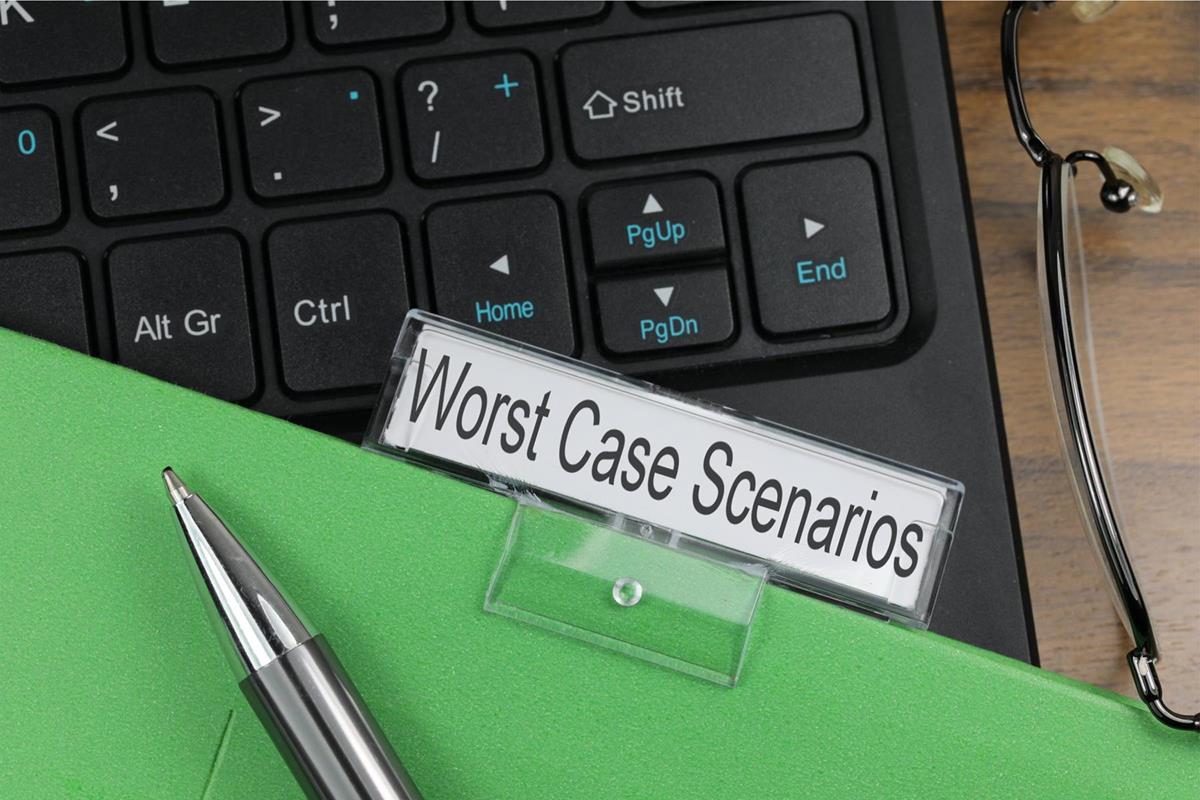
6. **Deconstructing “Worst Case”: The Power of Superlatives in Scenarios**When contemplating the most extreme and undesirable outcome of a situation, the idiomatic expressions “in the worst case” and “worst-case scenario” are consistently used. These phrases invariably employ the superlative “worst,” underscoring the absolute and unmitigated negativity of the potential situation. They refer to the most dire possibility imaginable, not merely one that is somewhat less favorable than another.
As stated in the context, “The phrase worst case is used in the two idiomatic expressions: in the worst case and worst-case scenario. Both of these phrases refer to a situation that is as bad as possible compared to any other possible situation, which is why it uses the superlative form worst.” This definition clearly establishes the absolute nature of these expressions, demanding the superlative form.
Consider the example provided: “In the worst case, the beams will collapse instantly.” This isn’t a comparison between two levels of collapse; it’s a contemplation of the most catastrophic outcome possible. Similarly, “This isn’t what we expect to happen—it’s just the worst-case scenario,” articulates the most extreme and undesirable potential future, acting as a benchmark for severe risk.
It is vital to differentiate this fixed expression from a simple pairing of “worse” and “case.” The context clarifies: “While it’s possible for the words worse and case to be paired together in a sentence (as in Jacob had a worse case of bronchitis than Melanie did), it’s not a set expression like worst case is.” This distinction is crucial; “worst case” is a specific idiom denoting an absolute extreme, while “worse case” is merely a comparative description of the severity of two individual cases.

7. **Navigating “If Worse Comes to Worst” vs. “If Worst Comes to Worst”**Among the more perplexing idiomatic expressions involving these words is the phrase used to signify “if the worst possible outcome happens.” Intriguingly, there are two variations commonly encountered: “if worse comes to worst” and “if worst comes to worst.” Both convey the same meaning, yet their prevalence and logical construction offer a fascinating linguistic insight into evolving usage.
According to the provided information, “However, if worst comes to worst is much more commonly used (even though it arguably makes less sense).” This observation is particularly salient, highlighting that popular usage can sometimes diverge from what might appear to be the more grammatically logical construction. Despite the apparent paradox, the “worst-worst” construction has gained significant traction in everyday language.
The underlying meaning of both phrases remains consistent: they anticipate the most dire potential event or consequence. They are typically employed when one is preparing for or considering a contingency plan for an absolute worst-possible situation. The phrase is a prelude to a proposed solution, acknowledging the severity of a potential problem while offering a pragmatic response.
Examples from the context illustrate this: “If worse comes to worst and every door is locked, we’ll get in by opening a window.” And for the more common version: “I’m going to try to make it to the store before the storm starts, but if worst comes to worst, I’ll at least have my umbrella with me.” While both convey the sense of extreme contingency, the latter’s widespread acceptance underscores the dynamic nature of language and idiom evolution.
Navigating the intricacies of English grammar, especially with seemingly similar words like ‘worse’ and ‘worst,’ is crucial for clear and impactful communication. While the first section laid the groundwork by defining these terms and exploring key idioms, our journey into mastering their usage is far from over. This next segment will delve deeper into their linguistic roots, drawing compelling parallels to familiar grammatical structures, and showcasing their versatile applications as nouns and adverbs, all reinforced by practical, real-world examples.
Indeed, moving beyond mere definitions allows us to appreciate the full spectrum of their utility. We’ll connect ‘worse’ and ‘worst’ directly to their foundational adjectives and adverbs, demonstrating how they evolve to express varying degrees of unfavorability across different parts of speech. This comprehensive approach will solidify your understanding, transforming potential points of confusion into pillars of confident linguistic precision.
Our aim is to empower you with the tools for confident grammatical choices. By the close of this discussion, you’ll not only grasp the subtle distinctions but also confidently deploy ‘worse’ and ‘worst’ with the precision demanded by professional communication, enhancing the clarity and credibility of every message you convey.
Read more about: Beyond Bad: Unraveling the Precision of ‘Worse’ and ‘Worst’ in Automotive Evaluation

8. **Connecting ‘Worse’ and ‘Worst’ to Their Adjective Root: ‘Bad’**The fundamental starting point for understanding ‘worse’ and ‘worst’ is their direct lineage from the adjective ‘bad.’ This irregular family of words signifies a spectrum of negativity, with ‘bad’ establishing the initial, unfavorable state. ‘Worse’ then steps in as the comparative, indicating a decline, while ‘worst’ culminates as the superlative, marking the ultimate nadir.
As the core definition emphasizes, “Worse and worst are different words, but both are forms of the adjective bad.” This means when you describe something as ‘bad,’ you are setting a baseline. If that condition deteriorates when compared to another, it becomes ‘worse.’ If it reaches the lowest possible point within a group or across all possibilities, it is unequivocally ‘worst.’ Consider a scenario where an initial review of a product’s performance might deem it ‘bad,’ but a competitor’s identical product could be judged as ‘worse.’ Ultimately, across all offerings, one might emerge as ‘the worst’ performer overall.
The adjective ‘bad’ itself encompasses a broad range of negative qualities, from being “not good in any manner or degree” to “of low or inferior quality,” “disagreeable,” or “unfortunate.” When we use ‘worse’ or ‘worst,’ we are essentially modifying these inherent negative attributes to express a greater or absolute degree of them. For instance, a ‘bad’ idea can lead to a ‘worse’ outcome than anticipated, and in the most unfortunate scenario, manifest into the ‘worst’ possible crisis.
Therefore, recognizing ‘bad’ as the foundational adjective from which ‘worse’ and ‘worst’ derive is key. This understanding reinforces their roles as expressions of escalating degrees of unfavorability. It is through this direct connection that their grammatical function as comparative and superlative forms becomes most apparent and logically sound, providing a clear framework for their correct application in any communicative context.

9. **Expanding the Roots: ‘Worse’ and ‘Worst’ from ‘Badly’**Beyond their connection to the adjective ‘bad,’ ‘worse’ and ‘worst’ also serve as the comparative and superlative forms of the adverb ‘badly.’ This expands their utility from describing states or qualities to describing actions or manners in which something is done. Just as ‘badly’ describes an action performed in an unsatisfactory or incorrect way, ‘worse’ and ‘worst’ articulate a greater or absolute degree of that negative execution.
The context explicitly states that “worse” can also be the comparative form of “badly,” and by extension, “worst” is its superlative. This means that if someone performs a task ‘badly,’ another might perform it ‘worse’ than them, and a third individual could perform it ‘worst’ of all. Here, the focus shifts from the inherent quality of a thing to the manner in which an action unfolds, allowing for precise degrees of negative performance.
‘Badly’ itself, as an adverb, signifies doing something “in a defective, incorrect, or undesirable way,” “in an unsatisfactory, inadequate, or unskilled manner,” or even “very much” when used for emphasis. So, if a car “runs badly,” its performance might deteriorate to “run worse” after a certain mileage, or in comparison to other cars in its class, it could “run worst” of them all. This distinction is vital for maintaining grammatical accuracy when discussing actions rather than attributes.
Understanding this adverbial lineage broadens the scope of ‘worse’ and ‘worst’ significantly. It highlights their flexibility across different parts of speech while consistently conveying the comparative and superlative degrees of negativity. This dual function, as forms of both ‘bad’ (adjective) and ‘badly’ (adverb), underscores their importance in precisely articulating declining quality or performance in various linguistic contexts.

10. **’Worse’ and ‘Worst’ from ‘Ill’: A Less Common Connection**While ‘bad’ and ‘badly’ are the primary roots, ‘worse’ and ‘worst’ also connect to the word ‘ill,’ serving as its comparative and superlative forms. This usage, though perhaps less frequent in everyday conversation compared to ‘bad,’ is particularly relevant when discussing states of health or unfavorable conditions, emphasizing a decline or an absolute low point in well-being or fortune.
The provided context specifically confirms this relationship: “From ill ( adj ): worse adj comparative worst adj superlative From ill ( adv ): worse adj comparative worst adv comparative.” This highlights that ‘ill’ can function as both an adjective meaning “sick” or “unwell,” and an adverb meaning “unsatisfactorily” or “poorly.” Consequently, if someone is ‘ill,’ their condition might become ‘worse,’ and in a group of patients, one might be deemed ‘the worst’ in terms of their health status.
Historically, ‘ill’ has carried connotations of being “unfavorable” or “adverse,” as in “ill fortune,” or even “evil” and “wicked,” as in “ill deeds.” Therefore, when ‘worse’ and ‘worst’ are used in relation to ‘ill,’ they can subtly echo these broader meanings, describing not just a decline in physical health but also a worsening of circumstances or an intensification of negative intent. For example, an already ‘ill-considered’ plan might become ‘worse’ with additional flawed assumptions, leading to the ‘worst’ possible outcome for a project.
This connection to ‘ill’ enriches the semantic range of ‘worse’ and ‘worst,’ allowing for nuanced expressions concerning health, well-being, and unfortunate events. Recognizing ‘ill’ as another root word provides a deeper appreciation for the flexibility and historical depth of these comparative and superlative forms, solidifying their place in expressing degrees of unfavorability across multiple dimensions.
11. **The ‘Good, Better, Best’ Parallel: A Memory Aid**One of the most effective ways to solidify the correct usage of ‘worse’ and ‘worst’ is by drawing a parallel to a more universally familiar and grammatically regular set of words: ‘good, better, best.’ Just as ‘good’ is the positive form, ‘better’ the comparative, and ‘best’ the superlative, ‘bad,’ ‘worse,’ and ‘worst’ follow an identical pattern, albeit with an irregular formation.
The context directly highlights this analogy, stating, “Worse and worst are just like the words better and best, which are the comparative and superlative forms of the word good.” This comparison is invaluable because it taps into an ingrained understanding of how degrees are expressed in English. No one would say ‘gooder’ or ‘goodest’; similarly, applying ‘bader’ or ‘badest’ is grammatically incorrect. The irregularity of ‘worse’ and ‘worst’ mirrors that of ‘better’ and ‘best,’ making them easier to remember as a paired set.
This parallel extends to their function in sentences. When we compare two things and one is superior, we use ‘better.’ If one is superior among many, we use ‘best.’ The same logic applies inversely to ‘worse’ and ‘worst.’ Comparing two options, if one is less desirable, it is ‘worse.’ If it is the least desirable among several, it is ‘worst.’ This consistent structure, even with irregular word forms, provides a reliable mental shortcut for correct application.
Even a subtle phonetic cue helps, as the text notes: “you can see a remnant of the superlative ending -est at the end of worst and best, which can help you remember that they are superlatives.” This small but significant detail further intertwines the two sets of words, making it easier to recall that ‘worst’ and ‘best’ signify the ultimate degree of their respective qualities. Utilizing this ‘good, better, best’ framework offers an intuitive and robust strategy for confidently navigating the usage of ‘worse’ and ‘worst.’
12. **’Worst’ Beyond an Adjective: Its Role as a Noun and Adverb**While predominantly recognized as the superlative adjective of ‘bad,’ the word ‘worst’ exhibits remarkable versatility, also functioning effectively as a noun and an adverb. Understanding these expanded roles is essential for a comprehensive grasp of its usage and for interpreting its meaning in various contexts.
As a noun, ‘worst’ typically refers to “something that is worst” or “that which is worst.” This usage often appears in phrases like “Prepare for the worst,” where ‘the worst’ denotes the most unfavorable possible event or situation. The context explicitly notes, “Worst can also be used as a noun, as in ‘He brings out the worst in her.’” Here, ‘the worst’ refers to the most negative aspects of a person’s character or behavior. This substantive use allows ‘worst’ to embody the culmination of negativity, making it a powerful term in expressions of dire anticipation or inherent flaws.
Furthermore, ‘worst’ can function as an adverb, particularly as the superlative of ‘badly.’ In this capacity, it describes an action or manner performed “in the worst manner” or “in the greatest degree” of undesirability. For instance, if a team performed ‘badly’ in a game, they might perform ‘worst’ in a crucial championship match, indicating the lowest possible level of execution. The dictionary elaborates on this, stating ‘worst’ as an adverb means “in the most evil, wicked, severe, or disadvantageous manner,” or “with the most severity, intensity, etc.; in the greatest degree.”
This dual capacity as both a noun and an adverb highlights the multifaceted nature of ‘worst.’ It underscores its ability to not only describe the most extreme negative quality but also to represent the absolute lowest point or the most negatively performed action. Recognizing these distinct grammatical functions allows for richer, more precise communication, moving beyond its primary role as an adjective.
Read more about: Beyond Bad: Unraveling the Precision of ‘Worse’ and ‘Worst’ in Automotive Evaluation

13. **Practical Application through Diverse Sentence Examples**Understanding the theoretical distinctions between ‘worse’ and ‘worst’ becomes truly meaningful when applied in practical, real-world sentences. The context provides a rich array of examples that vividly illustrate their correct usage, reinforcing the rules of comparison between two versus multiple entities, and highlighting their roles in various idiomatic expressions.
Consider instances where ‘worse’ is used to compare two specific things: “I think the pink paint looks worse on the wall than the red paint did,” clearly contrasting two paint colors. Similarly, “Debra Deer had a worse finishing time than Charlie Cheetah, but Sam Sloth had the worst time by far” first uses ‘worse’ for a two-person comparison, then transitions to ‘worst’ for the absolute slowest among a larger group. In another example, “Briony’s cold got worse after a few days, so she had to see a doctor,” illustrates a decline in condition over two points in time. “The recipe tasted worse after I added vinegar,” similarly compares two states of taste.
For ‘worst,’ which denotes the ultimate degree of negativity among more than two things or generally: “Out of all of us, Tom had the worst case of poison ivy” identifies the most severe case within a group. “That was the worst inning of baseball I’ve ever seen” asserts an absolute low point across all observed innings. In real-life scenarios, “Jessica got a 50 on the test, making her grade the worst in the class” directly points to the lowest score in a group. Another example, “I have played a lot of bad video games, but that one is the worst of them all,” explicitly states the ultimate inferiority among many experiences. “The worst part about hiking the trail is the steep incline at the beginning” isolates a singular, most unpleasant element within a larger experience.
The idioms also find their place in these examples: “My grades went from bad to worse after I missed a few classes” perfectly showcases continuous deterioration. “If worst comes to worst and we miss the bus, we’ll just hail a cab” and “It’s possible that the losses could lead to bankruptcy, but the company is doing everything it can to avoid this worst-case scenario” demonstrate the usage for extreme contingencies. These diverse examples serve as invaluable guides, translating abstract grammatical rules into concrete, comprehensible applications that solidify confidence in usage.
Read more about: Beyond Bad: Unraveling the Precision of ‘Worse’ and ‘Worst’ in Automotive Evaluation

14. **Essential Takeaways for Grammatical Precision and Broader Nuances**In the dynamic landscape of communication, mastering the nuances of words like ‘worse’ and ‘worst’ is not merely an academic exercise; it’s a cornerstone of clarity and professional credibility. This in-depth exploration has unveiled the distinct roles and rich versatility of these powerful words, transforming them from potential sources of confusion into tools for precise expression.
Our journey has underscored the critical distinction: ‘worse’ is the comparative form, meticulously reserved for situations involving only two items or states, signifying a step down in quality or condition. Conversely, ‘worst’ is the superlative, the definitive declaration of the lowest point among a group of three or more, or the absolute nadir in any conceivable scenario. Remember, the core difference lies in the number of comparisons being made.
Beyond their primary roles as adjectives derived from ‘bad,’ we’ve seen how ‘worse’ and ‘worst’ adeptly extend their reach as forms of ‘badly’ and ‘ill,’ demonstrating their adaptability across different parts of speech. The familiar parallel with ‘good, better, best’ serves as an enduring mental anchor, while understanding ‘worst’ as a noun and an adverb further broadens its expressive power, allowing for richer, more nuanced descriptions of negative extremes.
Ultimately, the goal is to wield these words with unwavering confidence. By internalizing their definitions, recognizing their irregular nature, and applying them judiciously in their idiomatic contexts and diverse sentence structures, you eliminate ambiguity from your writing. Embrace these essential takeaways to enhance your grammatical precision, ensuring your message is not only understood but resonates with the exact degree of intensity you intend, solidifying your command over the English language.
Remember, in the realm of effective communication, precision is paramount. The difference between ‘worse’ and ‘worst’ may seem subtle, but its mastery is a clear indicator of linguistic proficiency and thoughtful articulation. Go forth and write with confidence!”
Read more about: Decoding ‘Worst’: A Consumer Guide to Understanding Reliability Ratings for 2025 Pickup Trucks
, “_words_section2”: “1736