The American automotive industry is a saga of ambition, innovation, and sometimes, a spectacular flameout. It’s a story deeply woven into the fabric of American identity, embodying notions of personal liberty, expression, and the boundless freedom of the open road. At the dawn of the 20th century, as manned flight took to the skies and motion pictures flickered to life, the United States was brimming with a progressive spirit, believing that anything was truly possible. This heady atmosphere saw hundreds of automotive companies spring up across the nation, each fueled by the grand visions of individuals from all walks of life.
Yet, as any seasoned gearhead knows, the road to automotive immortality is paved with good intentions and sometimes, catastrophic missteps. Not every ambitious dream could be realized. Many of these pioneering companies, despite their innovative spirit, ultimately foundered. The reasons were varied, a harsh cocktail of mismanagement, overexpansion beyond sustainable limits, a crucial misjudgment of public taste, and a critical underestimation of supply chain costs. It’s a brutal reminder that even the most brilliant engineering can’t save a business without a solid foundation.
Furthermore, the early decades presented unique challenges. Some companies, bravely venturing into electric vehicles or steam-powered cars, simply couldn’t withstand the onslaught of gas-powered autos. The internal combustion engine offered more power and, crucially, a a cheaper driving experience, making electric and steam options quickly obsolete for the masses. Then came the economic maelstroms: the downturn of the early 1920s and, of course, the cataclysmic Great Depression. These periods of widespread economic distress and dislocation were a death knell for many carmakers, even those with significant prestige. Today, while their cars may no longer cruise our highways, many of these defunct companies left an indelible mark, developing innovations like disc brakes and automatic windshield wipers that are now standard features in our modern rides. We’re about to dive deep into some of these fascinating stories, exploring the legacies of brands that once promised the future, only to fade into history.

1. Aerocar International
If there was ever a concept that perfectly captured that post-war American optimism, it was the flying car. Moulton Taylor, a visionary ahead of his time, launched Aerocar International in the late 1940s, aiming to cash in on the booming interest in civil aviation. He saw a ready market in the legions of pilots who had honed their skills flying combat planes during World War II, dreaming of a future where commuting meant soaring over traffic, not crawling through it. This wasn’t just a flight of fancy; Taylor’s design was a hybrid car/airplane, taking cues from Robert Fulton Jr.’s earlier Airphibian.
The ambition behind the Aerocar was truly something to behold. It wasn’t just a prototype; it was a machine certified by the Civil Aeronautics Administration – a legitimate, government-approved vehicle that could take to the skies. Imagine the pitch: no more airport parking woes, just detach the wings and drive home! This two-seater marvel was powered by a four-cylinder engine, capable of hitting a respectable 110 miles per hour in the air. But what about when it came down to earth?
On the ground, it could still manage a decent 67 miles per hour, making it a perfectly functional, if perhaps slightly bulky, automobile. The real kicker, the genius of Taylor’s vision, was the seamless transition between modes. It took a mere 10 minutes to convert the Aerocar from a road-legal vehicle back into an aircraft, ready for its next aerial adventure. While the dream of a personal flying machine remains elusive for the masses, the Aerocar stands as a testament to the audacious spirit of American innovation, a glimpse into a future that almost was, where the sky truly was just another highway. It’s a shame we don’t see more engineers tackling such wonderfully outlandish ideas today, but the sheer practicality challenges were immense.
Car Model Information: 2025 Subaru Outback Premium
Name: Aerocar
Caption: Museum of Flight
Type: roadable aircraft
Manufacturer: Aerocar International
Designer: Moulton Taylor
FirstFlight: 1949
NumberBuilt: 6
Categories: 1940s United States civil utility aircraft, Aerocar International aircraft, Aircraft first flown in 1949, Articles with short description, CS1: unfit URL
Summary: Aerocar International’s Aerocar (often called the Taylor Aerocar) is an American roadable aircraft designed and built by Moulton Taylor in Longview, Washington in 1949. Although six examples were made, it never entered large-scale production. It is considered one of the first practical flying cars.
Get more information about: Aerocar
Buying a high-performing used car >>>
Brand: Aerocar Model: Flying Car
Price: $32,439 Mileage: 5,116 mi.
2. American Motors Corp.
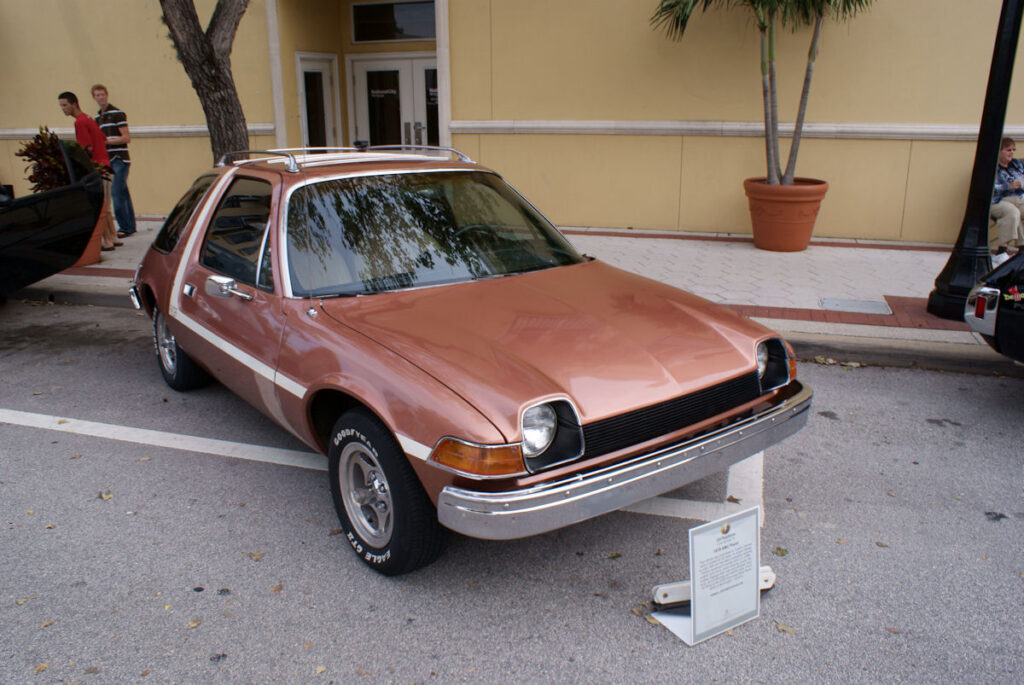
For a significant chunk of the 20th century, specifically from 1954 to 1987, American Motors Corp. — or AMC, as it’s affectionately known to enthusiasts — was a force to be reckoned with in the automotive landscape. Its very genesis was historic, born from what was, at the time, the largest corporate merger the industry had ever seen: the union of Hudson Motor Car and Nash-Kelvinator in 1954. This wasn’t just a blending of two companies; it was a bold play for survival and relevance against the Detroit Big Three.
AMC quickly carved out its niche, often innovating where the giants hesitated. Remember the Rambler? It was a smash hit, earning the coveted ‘Motor Trend Car of the Year’ award in 1963. This proved that a smaller, more practical car could resonate deeply with the American public. But AMC wasn’t just about sensible sedans. They knew how to get down and dirty too, literally. In a savvy move in 1970, AMC acquired Kaiser-Jeep, bringing the legendary Jeep brand into its fold, solidifying its position in the burgeoning SUV market long before it was a mainstream phenomenon.
Beyond the Rambler and the rugged Jeep, AMC also gave us some truly unforgettable vehicles under its own nameplate. Who could forget the Pacer, with its distinctive wide stance and unconventional styling, or the more conservative, yet popular, Concord? And in 1968, they threw their hat into the ring of muscle and style with the Javelin, a genuine contender in the fiercely competitive sports car segment. AMC was always punching above its weight, constantly pushing boundaries and daring to be different.
However, even the most spirited independent eventually faces insurmountable odds. The company’s later years saw a significant stake, 46.1 percent of its stock, fall into the hands of French automaker Renault. This partnership brought new designs and technologies, but the writing was on the wall for an independent AMC. The curtain finally fell in 1987 when Chrysler, recognizing the immense value of brands like Jeep, swooped in and agreed to purchase not just Renault’s shares but also the remaining stock, effectively closing the chapter on American Motors Corp. as we knew it. Yet, the legacy of innovation, particularly with Jeep, lives on.
Read more about: The 11 Best Small Cars for City Driving That Have a Turning Radius Under 30 Feet

3.Apperson Brothers Automobile Co.
When you talk about the pioneering days of American motoring, the Apperson Brothers Automobile Co. deserves a prominent place in the conversation. Hailing from Kokomo, Indiana, Elmer and Edgar Apperson founded their company in 1902, right at the cusp of the automotive revolution. These weren’t just tinkerers in a garage; they were serious engineers who set out to build robust, powerful machines for the nascent upper-class market.
Their initial offerings were impressive touring cars, sophisticated vehicles for their era. These early Apperson models boasted four-cylinder engines, capable of kicking out a formidable 50 horsepower – a significant figure for the early 1900s. But power and prestige came at a price, and Apperson cars were definitely in the luxury segment. Early models commanded a princely sum, ranging from $3,500 to $5,500. In an age when a good horse and buggy might cost a few hundred, these machines were truly for the well-heeled.
Among their stable of impressive automobiles, one name truly stands out: the 1907 Jack Rabbit. This wasn’t just a car; it was a statement. With a staggering 96 horsepower, the Jack Rabbit was built for speed, pushing the boundaries of what was thought possible on early American roads. Contemporary advertisements proudly proclaimed its ability to reach speeds of 75 miles per hour. Imagine seeing that blur of machinery race by on a dusty road in 1907 – it must have been an absolutely breathtaking sight, a true ‘supercar’ of its day.
The Apperson brothers built a reputation for quality and performance, but like many of the early luxury marques, they eventually succumbed to the changing tides of the industry. The market for ultra-expensive, hand-built machines couldn’t sustain the proliferation of new, more affordable manufacturers. While the company itself faded, the legacy of the Jack Rabbit and their commitment to powerful, high-performance vehicles continues to fascinate automotive historians and enthusiasts, a testament to their early contributions to speed and luxury.

4.Auburn Automobile Co.
The story of the Auburn Automobile Co. is a classic tale of American ambition, innovation, and the crushing weight of economic realities. It all began in Auburn, Indiana, when brothers Frank and Morris Eckhart, captivated by the nascent automotive industry at the turn of the 20th century, decided to jump in. They officially incorporated the company in 1903, marking the birth of a brand that would, for a time, become synonymous with style and advanced engineering.
Their very first car, a single-cylinder, water-cooled vehicle, might seem quaint by today’s standards, but it was a marvel of early 20th-century technology. Priced around $1,450, it offered an accessible entry into the world of motoring for a growing segment of the population. From these humble beginnings, Auburn vehicles quickly garnered a reputation for blending technical innovation with genuinely stylish design, a combination that always resonates with car buyers. They weren’t just selling transportation; they were selling a statement.
The Eckhart brothers, despite their pioneering spirit, eventually stepped away from the automotive business in 1918, selling their stake to a group of shrewd investors from Chicago. Under new ownership, Auburn continued to flourish, reaching its absolute zenith in 1931. That year, the company hit a remarkable milestone, producing nearly 33,000 automobiles – a testament to their popularity and the success of their designs in a competitive market. It felt like the sky was the limit for Auburn, a true powerhouse on the rise.
However, this moment of triumph tragically coincided with the deepening shadows of the Great Depression. The economic collapse delivered a devastating blow to car sales across the board, and Auburn, despite its earlier successes, was not immune. Sales plummeted, and the company found itself grappling with a perfect storm of internal conflict and immense market pressures. By 1937, the dream was over, and the Auburn Automobile Co. was sadly forced into bankruptcy. It’s a somber reminder of how even the most beloved brands can be undone by forces far beyond their control, leaving behind only the gleaming ghosts of their once-magnificent machines.
Read more about: 14 Brand Rebrands and Logo Disasters That Had Everyone Talking (and Cringing!)

5. Chalmers Motor Co.
Detroit is, and always has been, the heart of American automotive ingenuity, and for a period in the early 20th century, the Chalmers Motor Co. was a shining example of that spirit. Founded in 1908, Chalmers quickly established itself as a producer of high-end vehicles, aiming for the discerning buyer who appreciated quality and luxury. The company bore the name of its founder, Hugh Chalmers, a man whose entrepreneurial journey is as fascinating as the cars he built.
Chalmers wasn’t originally a car guy; he made his fortune as the chief executive officer of National Cash Register Co. But as the 20th century dawned, the call of the emerging automobile industry proved irresistible. He left NCR, threw his hat into the automotive ring, and leveraged his innate talents as a ‘born salesman.’ What truly set Chalmers apart, however, was his brilliance in marketing and his passion for America’s pastime: baseball.
Hugh Chalmers wasn’t just building cars; he was building a brand with a unique connection to the American psyche. He saw an incredible opportunity to link his company directly to the national sport. In a stroke of marketing genius, he conceived a campaign that would become a legendary piece of sports history. He started giving a brand new Chalmers car to the leading hitter in each baseball league, an innovative concept that would later evolve into the prestigious Most Valuable Player (MVP) award we know today.
This bold marketing strategy undoubtedly boosted the Chalmers name and helped cement its reputation. For 15 years, the company produced its sophisticated automobiles, playing a significant role in the burgeoning luxury car market. However, like many independents, Chalmers eventually found its path converging with larger entities. In 1923, the company merged with Chrysler, marking the end of Chalmers as a standalone marque but integrating its legacy into one of the future automotive giants. It’s a testament to Hugh Chalmers’ vision that his company’s influence extended beyond the cars themselves, deeply impacting the world of sports.
The initial sprint of automotive innovation gave us a thrilling ride through visionary concepts and groundbreaking designs, but the road ahead was just as fascinating, albeit often fraught with peril. As we continue our journey through the annals of automotive history, we uncover five more iconic American brands, each with a unique story of design, cultural impact, and the relentless economic currents that ultimately swept them off the highway. These are the machines that dared to be different, that captured the imagination, and whose legacies, in some cases, resonate even today.

6. Checker Motors Corp.
When you think of an American icon, the Checker cab often rolls right to the forefront, especially if your mind drifts to the bustling streets of New York City. This wasn’t just a car; it was a mobile landmark, a rolling piece of Americana. Founded in Kalamazoo, Michigan, in 1922 by the indomitable Russian immigrant Morris Markin, Checker Motors Corp. wasn’t trying to out-glam the luxury marques or outrun the muscle cars. Its singular purpose was a noble one: to transport people, efficiently and comfortably.
What set a Checker apart wasn’t its speed or its sleek lines, but its sheer practicality and robust construction. The vehicles were legendary for their ‘wide rear doors and spacious rear seats,’ making every passenger feel like they had room to breathe—a true luxury in any taxi. You could spot them from a mile away, not just by their distinctive shape, but by their classic palette of black, maroon, and, of course, the quintessential yellow. Markin was more than a carmaker; he was a shrewd businessman, proving his acumen in 1929 by expanding his empire with the acquisition of the Yellow Cab Co.
The undeniable star of the Checker lineup was the Marathon taxi cab, an automotive workhorse produced from 1956 all the way to 1982. This was the car that solidified Checker’s place in the urban landscape, complete with its ‘signature checkered stripes’ that became instantly recognizable. However, even legends face their kryptonite. The rising tide of ‘increasing fuel-efficiency requirements’ ultimately proved too much for the Marathon’s stout, if thirsty, design. The final Checker taxi left the streets of New York City on a melancholic July 27, 1999, marking the end of an era for a truly beloved and distinctive American automobile.

7. DeLorean Motor Co.
Ah, the DeLorean DMC-12. If ever there was a car that embodied the phrase ‘ahead of its time’ while simultaneously being tragically behind it, this was it. The brainchild of the audacious and undeniably maverick automobile mogul John DeLorean, the DMC-12 wasn’t just a car; it was a statement of intent, an artistic sculpture wrapped in stainless steel. For many, its iconic status was cemented not on the road, but on the silver screen, starring as the titular time machine in the 1985 runaway hit `Back to the Future` starring Michael J. Fox.
DeLorean’s ambition was grand, so grand that he opted to build a state-of-the-art plant in Belfast, Northern Ireland, to bring his dream car to life. The DMC-12 itself was visually stunning, with its distinctive gull-wing doors and brushed stainless steel bodywork that made it look like nothing else on the road, then or now. Yet, beneath that striking exterior, critics often found it lacking. It was ‘criticized for being underpowered,’ a significant drawback for a car that looked like it could break the sound barrier. Adding insult to injury, it was also ‘not as fuel-efficient as advertised,’ hitting it squarely in the gut during a period of increasing environmental awareness and fuel consciousness.
Ultimately, the DeLorean Motor Co. became a fleeting dream, a brilliant flash in the pan. The company ‘ran into money problems’ with alarming speed, and despite the enormous hype, it only managed to produce ‘about 9,000 vehicles’ before the wheels came off the operation. New financing, so desperately needed, ‘failed to materialize,’ and the ambitious venture went ‘bankrupt in 1982,’ just a few short years before its cinematic immortality. It stands as a poignant reminder that sometimes, even the coolest designs and the most visionary founders can’t outrun harsh economic realities.
Car Model Information: 1982 Delorean DMC-12
Name: DMC DeLorean
Alt: 1983 DeLorean
Caption: 1983 DeLorean
Manufacturer: DeLorean Motor Company
Production: January 21, 1981 – December 1982
ModelYears: 1981–1983
Assembly: Dunmurry
Designer: Giorgetto Giugiaro
Class: Sports car
BodyStyle: coupé
Layout: Rear-engine, rear-wheel-drive layout
Doors: Gull-wing doors
Engine: 2.85 L
Abbr: on
Powerout: 130 hp
Transmission: 5-speed manual ,3-speed automatic
Wheelbase: 2413 mm
Length: 4267 mm
Width: 1988 mm
Height: 1140 mm
Weight: 1233 kg
Sp: us
Categories: 1980s cars, All Wikipedia articles written in American English, Articles with short description, Automobiles with backbone chassis, Automobiles with gull-wing doors
Summary: The DMC DeLorean is a rear-engine, two-seat sports car manufactured and marketed by John DeLorean’s DeLorean Motor Company (DMC) for the American market from 1981 until 1983—ultimately the only car brought to market by the fledgling company. The DeLorean is sometimes referred to by its internal DMC pre-production designation, DMC-12, although this was not used in sales or marketing materials for the production model.
Designed by Giorgetto Giugiaro, the DeLorean is noted for its gull-wing doors and brushed stainless-steel outer body panels, as well as its lack of power and performance. Though its production was short-lived, the DeLorean became widely known after it was featured as the time machine in the Back to the Future films.
With the first production car completed on January 21, 1981, the design incorporated numerous minor revisions to the hood, wheels and interior before production ended in late December 1982, shortly after DMC filed for bankruptcy and after total production reached an estimated 9,000 units.
Despite the car having a reputation for poor build quality and an unsatisfactory driving experience, the DeLorean continues to have a strong following, driven in part by the popularity of Back to the Future. 6,500 DeLoreans were estimated to still be on the road as of 2015.
Get more information about: DMC DeLorean
Buying a high-performing used car >>>
Brand: DeLorean Model: DMC-12
Price: $129,950 Mileage: 3,145 mi.
Read more about: Engineering Flaws and Fateful Journeys: Unpacking the Most Dangerous Cars of All Time

8. Dort Motor Car Co.
Steering back to the earlier days of American motoring, we find the Dort Motor Car Co., a name perhaps less shouted from the rooftops today, but one that played a significant role in the burgeoning auto scene. Based in the veritable automotive cradle of Flint, Michigan, Dort operated from 1915 to 1924. Its roots stretched even deeper, tracing back to 1884 when it was founded as the Flint Road Cart Co. by none other than William Crapo Durant—yes, *that* Durant, the same visionary who would later found General Motors—and his partner Josiah Dallas Dort. This company was a foundational piece in the early automotive puzzle, transitioning from horse-drawn conveyances to self-propelled ones.
By 1917, Dort was hitting its stride, offering a diverse lineup for the discerning, yet practical, American consumer. The company presented ‘four models—two sedans, an open tourer, and a roadster—at prices starting from $695.’ This was a respectable offering, providing variety and accessibility in an era when cars were still a luxury for many. The strategy was clear: offer reliable, well-rounded vehicles that could appeal to a growing middle class, providing both utility and a touch of modern convenience.
However, the automotive landscape of the early 20th century was a brutal arena, particularly for independent manufacturers. The ‘rising cost of developing and distributing vehicles’ began to squeeze companies like Dort, making it increasingly difficult for them ‘to compete against larger automotive companies’ that could leverage economies of scale and vast distribution networks. Despite its solid engineering and reputable founders, the pressure proved too great, and Dort sadly ceased making cars in 1924. It’s a stark illustration of how even well-established and respected names could be swallowed by the relentless currents of industrial consolidation.

9. Duesenberg Motors Co.
Now, if you’re talking about automotive royalty, about cars that didn’t just drive but commanded attention, then Duesenberg Motors Co. is a name that instantly conjures images of unbridled luxury and unparalleled performance. Founded in 1913 in St. Paul, Minnesota, by the brilliant brothers August and Frederick Duesenberg, this company was destined for greatness. They quickly relocated to Indianapolis, Indiana, a move that was as symbolic as it was strategic, placing them squarely in the heart of American racing, home of the legendary Indianapolis Motor Speedway. Their initial focus was on ‘racing cars and high-end automobiles,’ a pedigree that would define their entire existence.
Duesenberg vehicles weren’t merely transportation; they were objets d’art, engineering masterpieces for the elite. Their luxury cars were, to put it mildly, extravagant, with a ‘pricey $8,500’ tag during an era when that sum could buy a small house. Owning a Duesenberg wasn’t just a purchase; it was a declaration, a symbol of immense wealth and impeccable taste, and was ‘considered prestigious’ beyond measure. Naturally, this allure extended to the stars of the day, with ‘celebrities’ like the legendary actor ‘Gary Cooper’ famously drawn to these magnificent machines.
Yet, even monuments of luxury and engineering could not withstand the cataclysmic economic forces of the era. The onset of the Great Depression delivered a crippling blow, particularly to ‘the luxury end of the automobile market.’ The discretionary income for such opulent purchases vanished almost overnight. Despite their peerless quality and undeniable appeal, Duesenberg Motors Co. tragically ‘went out of business in 1937,’ leaving behind a legacy of breathtaking cars that remain highly coveted by collectors, a testament to what happens when peak performance meets an economic abyss.
Read more about: Jay Leno’s Garage: Beyond the Hangar Doors – A Deep Dive into Automotive History and Unrivaled Passion

10. Du Pont Motors Inc.
The Du Pont name typically evokes images of chemicals, textiles, and industrial might, but for a brief, glorious period in the early 20th century, this titan of industry also delved into the world of luxury automobiles. Du Pont Motors Inc. began its unexpected automotive journey during World War I, channeling its formidable industrial capabilities to ‘make engines for the Allied war effort.’ This wartime effort laid the groundwork for a post-war pivot that would surprise many.
After the cannons fell silent, the company didn’t just retreat to its chemical labs. Instead, it embarked on a venture into the ultra-exclusive realm of ‘luxury automobiles in Wilmington, Delaware.’ These weren’t mass-produced vehicles; production was ‘limited,’ reflecting a bespoke approach to high-end motoring. Du Pont cars quickly garnered a reputation for their quality and sophisticated engineering, offering an alternative to the established luxury brands with a distinct American flavor.
The pinnacle of Du Pont’s automotive ambition arrived in 1929 with the debut of its largest vehicle, ‘the eight-cylinder Model G.’ This car was an engineering marvel, not just for the road, but for the track. In an astonishing display of performance and reliability, ‘Four of the Model Gs competed in the Grand Prix d’Endurance at Le Mans,’ a grueling test of automotive endurance and speed. The car’s racing exploits resonated deeply with the public, and Du Pont, recognizing its success, wisely ‘made versions of the vehicle for sale to the general public,’ allowing a fortunate few to experience a taste of Le Mans glory on their own drives.
However, even the illustrious Du Pont name and its racing pedigree could not insulate it from the deepening economic crisis. Like so many other esteemed manufacturers, ‘Du Pont Motors halted production in 1931 because of the impact of the Great Depression.’ The market for such high-end vehicles simply evaporated, forcing another formidable player to concede defeat to the harsh realities of a devastated economy. It’s a sobering reminder that even with immense resources and brilliant engineering, sometimes the greatest challenge isn’t building a car, but surviving the world it drives in.
Read more about: Car Shame? 15 Vehicles That Make People Judge You Immediately—What’s the Worst Offender?
As our journey through these once-dominant, now-defunct car brands concludes, it’s clear that the automotive industry is a graveyard of dreams as much as it is a monument to innovation. Each of these companies, whether they flew, hustled, or epitomized luxury, contributed a vital chapter to America’s mechanical narrative. Their stories are a testament to the unyielding spirit of invention, the brutal realities of commerce, and the ever-changing tastes of a nation in love with the open road. While their badges may no longer adorn new vehicles, the echoes of their ambitions and their innovations continue to shape the cars we drive today, reminding us that even in failure, there is an enduring legacy.