
In the realm of effective communication, just as in the world of finely-tuned machinery, precision is paramount. A small misstep, a tiny error in assembly or operation, can lead to significant functional issues. The English language, much like a complex engine, has its own intricate components, and sometimes, two seemingly similar parts can cause unexpected friction if not properly understood and applied. This is precisely the case with ‘worse’ and ‘worst,’ a pair of words that, despite their obvious utility, are frequently—and incorrectly—interchanged, creating semantic static that can derail your message.
These terms are exceptionally useful; they are, in fact, “the main and often best way we can indicate that something is, well, more bad or most bad.” Their similar appearance and sound, however, often lead to confusion, especially when deployed in nuanced expressions. Just as a seasoned mechanic can differentiate between crucial parts that look alike, we’re here to equip you with the knowledge to expertly navigate these linguistic challenges. Our mission is to transform confusion into clarity, enabling you to articulate degrees of negativity with absolute confidence and accuracy.
This in-depth guide is designed to break down the mechanics of ‘worse’ and ‘worst,’ clarify their relationship to comparative and superlative adjectives, and tackle the most common expressions where they cause trouble. Think of this as your essential workshop manual for linguistic precision, providing actionable insights to diagnose and correct errors. By the end of this journey, you’ll be able to precisely apply these powerful words, ensuring your communication is always clear, authoritative, and free from the pitfalls of grammatical misfires. Let’s get started on stopping this common mistake.
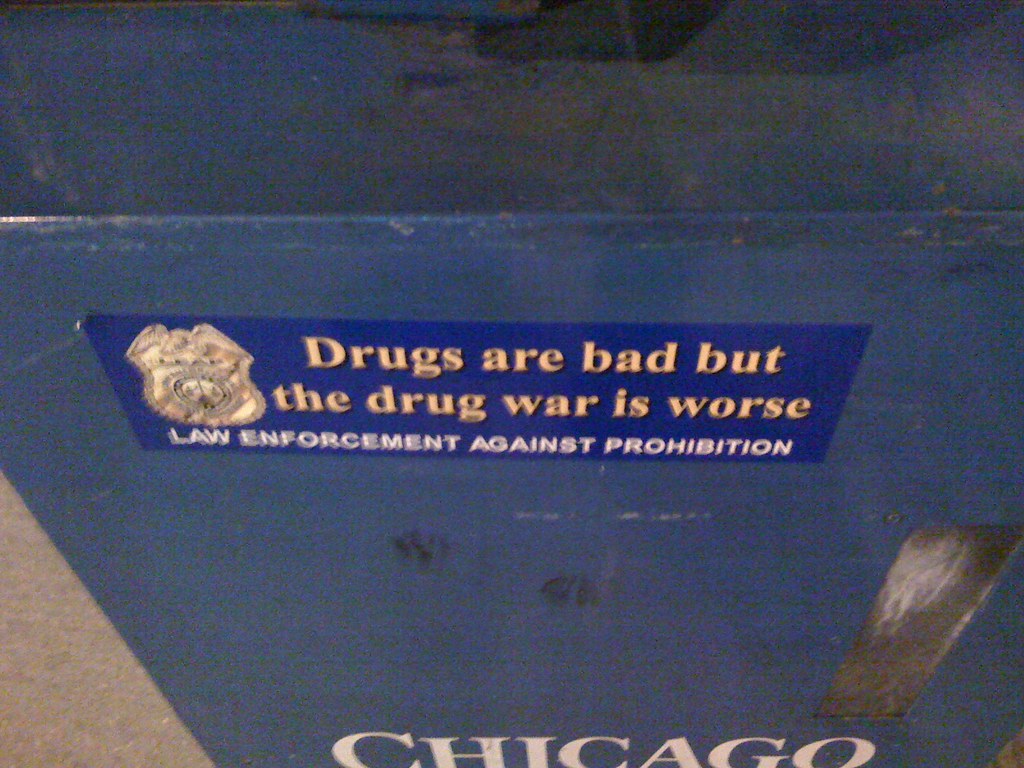
1. **The Core Distinction: Worse as a Comparative**
When we talk about ‘worse,’ we’re dealing with a comparative form, a linguistic tool designed to highlight a negative change or a lower quality between two things. It serves to establish that one item, situation, or state is simply ‘more bad’ than another. The context explicitly states, “Worse is what’s called the comparative form, basically meaning ‘more bad.'” This fundamental definition is the cornerstone of its correct application, ensuring that when you’re weighing two options, conditions, or outcomes, ‘worse’ is your go-to word for indicating inferiority.
Consider a situation where a condition has deteriorated. The pain in your foot isn’t just bad; it’s “worse today than yesterday,” indicating a decline over time. This comparative function is critical for demonstrating a negative shift or a direct comparison where one element falls short of another. The elegance of ‘worse’ lies in its ability to clearly delineate a difference in degree, making it indispensable for precise descriptions of decline or disadvantage when only two points of reference are involved.
To put it into perspective, imagine assessing two different paint colors on a wall. You might observe, “I think the pink paint looks worse on the wall than the red paint did.” Here, the comparison is direct and limited to two distinct visual assessments. Similarly, if you’re tracking performance, “His grades have been getting worse as the term progresses,” implying a continuous, unfavorable comparison to previous performance points, reinforcing the idea of a measurable deterioration over time. The key takeaway for ‘worse’ is its role in a binary comparison—it requires a distinct ‘than’ or an implied second state to make its meaning clear.
This comparative aspect also extends to indicating inferiority in relation to a previously established standard. An item of clothing, for example, after being “washed a thousand times and looks worn down, its quality is worse than when you first bought it.” This illustrates a clear decline in condition. ‘Worse’ always implies a direct or indirect contrast to something else, serving as a vital indicator of a less favorable state or outcome in a two-point comparison, giving your assessments a sharper, more analytical edge.
Read more about: Beyond Bad: Unraveling the Precision of ‘Worse’ and ‘Worst’ in Automotive Evaluation

2. **The Ultimate Degree: Worst as a Superlative**
Moving up the scale of badness, we encounter ‘worst,’ the superlative form. This word isn’t for comparing just two things; it’s reserved for identifying the absolute lowest quality, the most negative state, or the supreme degree of badness among a group of three or more elements, or indeed, out of every possible option. As the context clarifies, “Worst is the superlative form, basically meaning ‘most bad.'” It signifies the pinnacle of unfavorability, the rock bottom of a scale.
When you declare something the ‘worst,’ you’re placing it at the very bottom of the spectrum, leaving no room for a less desirable alternative within the compared group. For instance, if you’re recounting experiences, “That was the worst meal I’ve ever eaten” positions that particular meal as unequivocally inferior to all others consumed. Similarly, if judging multiple ideas, “That was the worst idea I have ever heard” implies its absolute inadequacy compared to every other idea that has ever crossed your path.
This superlative power makes ‘worst’ crucial for making definitive judgments and rankings. Consider a group of job candidates; “Of all the job candidates, Margaret had the worst interview skills but the best résumé.” Here, ‘worst’ decisively ranks her interview skills as the lowest among all candidates. It’s about identifying the extreme, whether it’s the poorest quality, the least desirable condition, or the most negative among a set of options, solidifying its role in expressing ultimate inferiority.
Moreover, ‘worst’ is not limited to explicit groups. It can also refer to the most extreme possibility in an open-ended comparison, as in the example, “But that storm last week was the worst I’ve seen.” This implies a comparison against all storms the speaker has witnessed, positioning that one as the absolute nadir. Understanding ‘worst’ as the zenith of ‘badness’ in any given comparison set empowers you to convey the ultimate degree of negativity with undeniable force and precision.
Read more about: More Than Just Tall: Unpacking the High-Performance, High-Maintenance Complexity of the Word ‘High’

3. **Tracing Roots: Both Stem from ‘Bad’**
To truly grasp the mechanics of ‘worse’ and ‘worst,’ it’s essential to understand their shared lineage. Both words are, at their core, forms of the adjective ‘bad.’ This direct relationship is fundamental to their meaning and usage. The context explicitly states, “Worse and worst are different words, but both are forms of the adjective bad.” This connection means they share the same negative evaluative root, simply expressing varying degrees of it.
Just as a base model of a car can be upgraded to a ‘better’ version and then to the ‘best’ performance variant, ‘bad’ serves as the foundational quality that ‘worse’ and ‘worst’ then modify to a greater extent. ‘Bad’ sets the initial undesirable state; ‘worse’ intensifies it when comparing two elements, and ‘worst’ signifies the ultimate, most intense undesirable state among many. This progression is logical and highlights how a single core concept can be expressed with escalating degrees of impact.
Recognizing this common origin demystifies their function. When you think of something being ‘bad,’ you immediately understand its negative connotation. ‘Worse’ merely takes that negativity up a notch when a comparison is made, and ‘worst’ cranks it all the way to eleven, declaring it the most unfavorable within a specific scope. This conceptual continuity ensures that your audience instantly registers the negative evaluation, irrespective of the degree you’re conveying.
Ultimately, knowing that ‘worse’ and ‘worst’ are simply escalations of ‘bad’ provides a clear mental framework for their application. It reinforces that their purpose is to express increasingly severe levels of undesirability. This understanding is key to using them correctly, ensuring that your descriptions of negative situations or qualities are not only accurate but also intuitively understood by your audience, much like recognizing the base model of an engine and its upgraded variants.
Read more about: Unpacking ‘A’: 14 Unexpected Ways the First Letter Shapes Our World

4. **A Family Resemblance: Parallel to ‘Better’ and ‘Best’**
For those who find the ‘worse’ versus ‘worst’ distinction tricky, a powerful analogy exists in their positive counterparts: ‘better’ and ‘best.’ The relationship between ‘bad,’ ‘worse,’ and ‘worst’ perfectly mirrors that of ‘good,’ ‘better,’ and ‘best.’ As the provided information highlights, “Worse and worst are just like the words better and best, which are the comparative and superlative forms of the word good.” This parallelism offers an intuitive way to remember their distinct grammatical roles.
If you can confidently use ‘better’ to compare two good things and ‘best’ to identify the top choice among many, you already possess the cognitive framework necessary for ‘worse’ and ‘worst.’ For example, just as you’d say, “My car is good, but yours is better,” you would correspondingly say, “My car is bad, but yours is worse.” This direct inverse relationship simplifies the concept considerably, turning a potential point of confusion into a clear, understandable pattern.
Extending the analogy to superlatives, if you determine, “Out of all the cars on the lot, this one is the best,” it directly translates to the negative, “Out of all the cars on the lot, this one is the worst.” The grammatical function remains identical; only the valence (positive or negative) changes. This mental shortcut is invaluable for quick and accurate application, allowing you to cross-reference your understanding of commonly used positive comparatives and superlatives.
Therefore, when you’re in doubt about whether to use ‘worse’ or ‘worst,’ take a moment to consider if you would use ‘better’ or ‘best’ in a similar positive context. If it’s a comparison between two, think ‘better/worse.’ If it’s the ultimate in a group, think ‘best/worst.’ This consistent grammatical structure across both positive and negative degrees provides a robust and reliable tool for mastering these often-misunderstood terms, enhancing your linguistic toolkit significantly.

5. **Breaking the Rules: The Irregularity of Worse and Worst**
While the ‘better’ and ‘best’ analogy is helpful, it’s also important to acknowledge that ‘worse’ and ‘worst’ are linguistic outliers. Most adjectives form their comparative and superlative degrees by following predictable patterns: adding ‘-er’ and ‘-est’ (e.g., fast, faster, fastest) or using ‘more’ and ‘most’ (e.g., impressive, more impressive, most impressive). However, ‘bad’ and its forms do not conform to these standard rules, making them what are known as irregular adjectives.
The context points out, “Worse and worst don’t follow these rules.” This irregularity can be a source of confusion for many speakers and writers, as it deviates from the expected grammatical structure. Instead of ‘bader’ and ‘badest,’ we have the distinctly different ‘worse’ and ‘worst.’ This historical development in the English language means they must be learned as exceptions, rather than through systematic application of suffix rules.
However, there’s a small mnemonic aid embedded within the words themselves. The text notes, “you can see a remnant of the superlative ending -est at the end of worst and best, which can help you remember that they are superlatives.” This subtle echo of the regular superlative ending can serve as a helpful mental hook, reminding you that ‘worst’ signifies the highest degree of badness, much like ‘best’ signifies the highest degree of goodness.
Understanding their irregular nature is not just a matter of grammatical trivia; it’s a practical step towards correct usage. It means you can’t rely on the common suffix rules to deduce their forms. Instead, you must recognize ‘worse’ and ‘worst’ as fixed, unique forms that denote comparative and superlative degrees of ‘bad.’ Embracing this irregularity is key to precise and confident communication, allowing you to wield these powerful words with the authority of an expert.
Read more about: Mastering ‘Worse’ and ‘Worst’: Your Essential Guide to Avoiding Common Grammar Traps

6. **Idiomatic Use: The Expression ‘From Bad to Worse’**
Language isn’t just about individual words; it’s also about how those words combine into established phrases and idioms. One such common expression that utilizes ‘worse’ is “from bad to worse.” This phrase serves a very specific and impactful purpose: to describe a situation that has not only started in an undesirable state but has continued to deteriorate further. The context clearly defines it: “Worse is used in the expression from bad to worse, which means that something started bad and has only deteriorated in quality or condition.”
This idiom perfectly encapsulates a narrative of decline, indicating a negative trajectory where conditions are continually worsening. It’s not just a subtle shift; it’s a clear downward spiral. For instance, if you remark, “My handwriting has gone from bad to worse since I graduated high school,” you’re illustrating a continuous degradation of a skill that was already suboptimal. This expression effectively communicates a sense of ongoing deterioration, painting a vivid picture of a situation spiraling out of control.
The power of ‘from bad to worse’ lies in its immediacy and universal understanding. It signals to your audience that a baseline negative condition has intensified, making it a concise and potent way to convey escalating problems. Whether describing personal circumstances, economic trends, or the condition of a mechanical system, this phrase is an invaluable tool for illustrating a negative progression that has no apparent end in sight within the immediate context.
Therefore, when you need to articulate a situation that is not merely bad but has worsened beyond its initial negative state, ‘from bad to worse’ is the definitive idiom. It leverages the comparative strength of ‘worse’ to convey a clear, unambiguous narrative of decline. Mastering such idiomatic expressions is crucial for nuanced communication, allowing you to tap into the collective understanding of your audience with precision and impact.

7. **Navigating the Worst-Case Scenario**
In contrast to ‘from bad to worse,’ the superlative ‘worst’ finds its home in another set of highly useful idiomatic expressions: ‘in the worst case’ and ‘worst-case scenario.’ These phrases are critical for discussing the most extreme and undesirable possible outcomes of a situation, making them essential tools for planning, risk assessment, and decision-making in any complex endeavor. The context states that “Both of these phrases refer to a situation that is as bad as possible compared to any other possible situation, which is why it uses the superlative form worst.”
Consider an engineering project where potential failures are analyzed. You might state, “In the worst case, the beams will collapse instantly.” This isn’t a prediction; it’s an assessment of the absolute most catastrophic possibility, emphasizing the extreme nature of the potential outcome. Similarly, when discussing contingencies, you might hear, “This isn’t what we expect to happen—it’s just the worst-case scenario.” This phrase helps to frame the absolute apex of negative possibilities, providing a clear benchmark for risk mitigation.
The use of ‘worst’ here is deliberate and precise. It underlines that these scenarios represent the ultimate extreme of negativity, surpassing all other conceivable unfavorable conditions. It’s about contemplating the most severe consequence, the highest degree of badness imaginable within a given framework. This superlative application is vital for communication that needs to convey extreme caution or to outline the boundaries of potential disaster, crucial for practical planning.
While the words ‘worse’ and ‘case’ can certainly appear together in a sentence (e.g., “Jacob had a worse case of bronchitis than Melanie did”), they don’t form a fixed idiom in that instance. The distinction is key: ‘worst case’ (or ‘worst-case scenario’) functions as a singular concept representing the absolute nadir of possibilities. Understanding this critical difference ensures that when you’re discussing potential perils, you’re doing so with the utmost clarity and accuracy, distinguishing between a less favorable situation and the absolute most dreadful one imaginable.
Read more about: From Hollywood’s Strict Sets to Factory Floors: Why Modern Workplaces Are Redrawing the Lines on Personal Cell Phone Use

8. **Disentangling “If Worse Comes to Worst” vs. “If Worst Comes to Worst”**
The English language, with its rich history, sometimes presents us with expressions that have multiple accepted forms, and the phrase dealing with extreme eventualities is a prime example. When contemplating the most undesirable outcome, people often wonder whether to say “if worse comes to worst” or “if worst comes to worst.” The truth is, both versions exist, though one holds a more common standing in contemporary usage.
“There are actually two very similar versions of the expression that means ‘if the worst possible outcome happens’: if worse comes to worst or if worst comes to worst,” the context clarifies. This highlights a fascinating linguistic duality. While “if worst comes to worst” is significantly more prevalent today, the structure of “if worse comes to worst” makes a certain logical sense, implying a progression from a bad state (‘worse’) to the absolute worst possible state (‘worst’).
Regardless of which form is chosen, the core meaning remains consistent: anticipating the most severe possible scenario. This phrase is invariably accompanied by a proposed contingency or a plan for how to cope should that ultimate negative come to pass. It’s about being prepared for the absolute lowest point, mentally or practically, and having a fallback strategy.
For instance, the context provides excellent illustrations: “If worse comes to worst and every door is locked, we’ll get in by opening a window.” This demonstrates a proactive approach to a potential crisis. Similarly, “I’m going to try to make it to the store before the storm starts, but if worst comes to worst, I’ll at least have my umbrella with me” showcases how the phrase sets up a backup plan for an impending challenge. Mastering this expression, in either form, means equipping yourself to discuss worst-case preparedness with confidence.

9. **’Worst’ as a Noun: Preparing for the Ultimate Negative**
While we’ve extensively discussed ‘worst’ as a superlative adjective, its utility isn’t confined to describing other words. ‘Worst’ also functions robustly as a noun, particularly when referring to the absolute lowest quality, condition, or degree of something. This grammatical flexibility allows for a powerful and concise way to refer directly to the nadir of any given situation or collection of items.
The context states, “Worst can also be used as a noun, as in ‘He brings out the worst in her.'” Here, “the worst” refers to the most unpleasant or negative aspects of her character, treating it as a tangible entity. This usage is common when discussing latent negative qualities that someone or something might evoke or represent. It transforms ‘worst’ from a descriptor into a concept itself.
Moreover, when used as a noun, ‘worst’ often appears with the definite article, forming the phrase “the worst.” As the context notes, “As a noun, worst means something is the baddest out of a group. This sense is almost always phrased as ‘the worst.'” This construction is seen in expressions like “Prepare for the worst,” where ‘the worst’ stands in for the most severe or undesirable outcome imaginable, compelling action or preparation.
Understanding ‘worst’ in its nominal form enhances your expressive capabilities, allowing you to not just *describe* something as the most negative but to *refer* directly to that ultimate negative. It’s a grammatical shortcut that carries significant weight, enabling you to distill complex discussions about dire possibilities into a single, impactful term, whether you’re acknowledging an individual’s lowest points or steeling yourself for impending challenges.
Read more about: Navigating the Grammar Highway: Avoiding the Worst Mistakes with ‘Worse’ and ‘Worst’
10. **’Worse’ and ‘Worst’ as Adverbs: Beyond Adjectives**
While our primary focus has been on ‘worse’ and ‘worst’ as adjectives, expressing degrees of ‘bad,’ it’s crucial to acknowledge their versatility as adverbs. Just as ‘bad’ has an adverbial counterpart ‘badly,’ ‘worse’ and ‘worst’ can similarly modify verbs, other adjectives, or other adverbs, indicating actions or conditions in a more negative or most negative manner. This often overlooked aspect unlocks another layer of linguistic precision.
The source material explicitly details this: “From badly (adv): worse adv comparative worst adv superlative.” This confirms that ‘worse’ functions as the comparative adverbial form of ‘badly’, meaning ‘more badly,’ and ‘worst’ acts as the superlative adverbial form, signifying ‘most badly.’ This parallel structure with adjectives ensures a consistent system for expressing degrees of negativity, regardless of the part of speech.
When ‘worse’ is used as an adverb, it describes how an action is performed in a less satisfactory way than another. For instance, if someone is recovering from an injury, they might move “worse today than yesterday,” indicating a decline in their movement quality. This shows a direct comparison of how an action (moving) is carried out with diminishing effectiveness, much like its adjectival counterpart compares qualities.
Similarly, ‘worst’ as an adverb specifies the absolute least satisfactory manner in which an action is performed. The context explains, “As an adverb, worst is the superlative of the word badly and describes something as being done in as bad a manner as possible.” Imagine a scenario where multiple attempts were made at a task; “He performed the task worst of all the candidates.” This highlights the ultimate deficiency in performance, painting a clear picture of unparalleled inadequacy. Recognizing these adverbial roles empowers you to accurately describe the full spectrum of negative actions and their varying intensities.

11. **Real-World Applications: Comparing Two Specifics with ‘Worse’**
To truly embed the distinction between ‘worse’ and ‘worst,’ let’s immerse ourselves in concrete, real-world examples, focusing first on ‘worse’ as the comparative. This is where the word shines, allowing us to highlight a less favorable condition when juxtaposing only two elements. It’s the linguistic tool for drawing direct, negative contrasts with clarity and impact.
Consider a simple aesthetic judgment: “I think the pink paint looks worse on the wall than the red paint did.” This sentence perfectly illustrates ‘worse’ in action. It’s a direct comparison between two specific paint colors, establishing that one is less appealing or suitable than the other. The implied negative quality of ‘bad’ is elevated to ‘worse’ through this comparison, making the speaker’s preference unambiguous.
Another scenario involves tracking performance or health: “Briony’s cold got worse after a few days, so she had to see a doctor.” Here, ‘worse’ compares Briony’s current condition to her previous state, indicating a deterioration. The context also offers, “His grades have been getting worse as the term progresses,” implying a continuous, unfavorable comparison to previous academic performance points. These examples underscore how ‘worse’ is invaluable for describing negative shifts or declines over time or against a single point of reference.
The critical takeaway here is the explicit or implicit presence of a second element for comparison, often introduced by ‘than’. Whether it’s “The recipe tasted worse after I added vinegar” or “Jacob had a worse case of bronchitis than Melanie did,” ‘worse’ invariably functions to establish inferiority between two distinct points. This precise comparative function ensures your audience clearly understands a negative difference, rather than an ultimate negative.

12. **Real-World Applications: Identifying the Absolute Negative with ‘Worst’**
Shifting our focus to ‘worst,’ we engage with the ultimate degree of negativity, the absolute lowest point in any given comparison set. This superlative adjective is deployed when you need to declare something unequivocally inferior to all others, making a definitive statement about its position at the very bottom of the scale. It’s about crowning the champion of “badness.”
One compelling example from the context highlights this definitive power: “That was the worst meal I’ve ever eaten.” This declaration doesn’t just compare; it sweeps aside every other dining experience, placing this particular meal at the absolute nadir of all meals ever consumed by the speaker. There is no other meal that could possibly compete for this title of ultimate culinary disappointment.
Similarly, when evaluating ideas, the context offers, “That was the worst idea I have ever heard.” This isn’t just a bad idea or a worse idea; it is, in the speaker’s experience, the absolute nadir of all ideas. It signifies a complete and utter lack of merit compared to any other concept. Such emphatic use of ‘worst’ leaves no room for ambiguity regarding the extreme level of undesirability.
“Out of all of us, Tom had the worst case of poison ivy” provides another clear illustration. In this group comparison, Tom’s case of poison ivy is singled out as the most severe, surpassing everyone else’s. The inclusion of the phrase “by far” further emphasizes this absolute standing in sentences like “Debra Deer had a worse finishing time than Charlie Cheetah, but Sam Sloth had the worst time by far,” cementing Sam’s performance as definitively the lowest. These examples solidify ‘worst’ as the go-to word for expressing the pinnacle of negative evaluation among multiple options.
13. **Identifying ‘Worst’ in Everyday Scenarios: Beyond Simple Comparisons**
The application of ‘worst’ extends beyond simple sentence structures, permeating our everyday descriptions of extreme negatives in various contexts. It helps us categorize and communicate about things that are, in our opinion, at the absolute bottom of their respective scales, whether we’re discussing entertainment, academics, or human behavior. This widespread utility makes ‘worst’ a powerful tool for conveying definitive judgments.
Consider how we evaluate media: “Everybody has a movie that they think is the worst (poorest quality or most unpleasant to watch) movie ever made.” This highlights the subjective yet universal application of ‘worst’ to rank experiences. It’s not just about a movie being bad; it’s about it being the *absolute* worst, a truly unforgettable cinematic disaster that stands out for its profound lack of merit or enjoyability.
In an academic setting, the concept is equally potent: “The worst student in a class could be the one who scores the lowest on tests or the one who misbehaves the most.” Here, ‘worst’ isn’t tied to a single metric but rather encompasses different criteria that lead to an ultimate negative ranking within a group. It allows for a holistic judgment of absolute inferiority based on various undesirable attributes.
Even in competitive scenarios, ‘worst’ helps us pinpoint the ultimate underperformance: “A runner who records the worst time in a race is the one who ran the slowest.” This is a clear, objective measure of the lowest achievement. And when it comes to character, “The worst person you know might be the one with the most unpleasant personality or who treats you the most poorly.” These examples demonstrate how ‘worst’ serves as a definitive marker for the ultimate low across a diverse range of situations, from personal opinion to measurable outcomes and moral evaluations.

14. **Practical Quick Tips for Immediate Clarity**
To tie everything together and ensure you never again falter when faced with ‘worse’ and ‘worst’, let’s distill our comprehensive exploration into actionable, quick tips. These mnemonic devices and direct rules are your ultimate toolkit for instant clarity, ensuring your communication is always precise and authoritative, whether you’re writing an email or engaging in a spirited debate.
The most fundamental rule, often highlighted in quick summaries, is your guiding star: “Use ‘worse’ when comparing two things.” This is the golden standard for comparative situations. If you are directly contrasting the negative quality or condition of two items, people, or situations, ‘worse’ is the unequivocally correct choice. Think of it as your linguistic scale for two-point assessments of decline or inferiority.
Conversely, when dealing with a broader spectrum, remember: “Use ‘worst’ when comparing three or more things or indicating the most negative degree.” This rule is equally crucial. ‘Worst’ is reserved for those moments when you need to identify the absolute bottom, the undeniable nadir within a larger group or an open-ended comparison to all possibilities. It’s the definitive statement of ultimate inferiority.
To simplify further, always ask yourself: “Am I comparing *two* things, or am I identifying the *single lowest* among *many* (or all)?” This simple question acts as a powerful filter. If your answer points to a two-point comparison, choose ‘worse’. If it points to the absolute lowest in a larger set, then ‘worst’ is your champion. With these practical tips, you are now fully equipped to confidently navigate the nuances of ‘worse’ and ‘worst’, ensuring your language is always sharp, clear, and grammatically impeccable.
Read more about: The Apex of Pickup Luxury: 17 Exclusive Features Only Found on Elite Trims of Top Trucks from Ram, Ford, GMC, and Toyota
Having delved into the intricacies of ‘worse’ and ‘worst’—from their comparative and superlative forms to their nuanced adverbial and nominal roles, and through a multitude of real-world examples and idiomatic expressions—you are now armed with the precision of a seasoned mechanic diagnosing an engine. Just as finely-tuned machinery requires exact components, effective communication demands the right words in their rightful places. By understanding these linguistic gears, you’re not just avoiding a common grammatical trap; you’re elevating your expressive power, ensuring every declaration of negativity, every comparison, and every “worst-case scenario” is articulated with undeniable clarity and impact. Go forth and communicate with absolute confidence!