Ford, the blue oval titan, is a name synonymous with American automotive ingenuity. From the groundbreaking Model T that democratized driving to the iconic Mustang, reigning as the world’s best-selling sports car for nearly six decades, the company has consistently shaped the industry. We’ve seen masterpieces like the Thunderbird, Gran Torino, and RS200 grace our roads, becoming objects of desire and nostalgia.
Yet, even the most legendary of automakers aren’t immune to a few spectacular misfires. For every roaring success, there’s often a head-scratching flop lurking in the archives, a vehicle that, for one reason or another, simply didn’t hit the mark. These aren’t just minor miscalculations; they’re the automotive equivalent of a chef burning the crème brûlée – a significant departure from expected excellence, sometimes with genuinely dire consequences.
Today, we’re not here to celebrate the Mustangs or the F-Series, though we love them dearly. Instead, we’re taking a deep, critical dive into the annals of Ford’s utility vehicle history to unearth the SUVs and trucks that proved to be colossal blunders. These aren’t just forgettable footnotes; they’re case studies in poor design, questionable executive decisions, and, at times, outright corporate negligence. So, buckle up as we explore the six worst Ford trucks and SUVs that arguably should have remained on the drawing board.
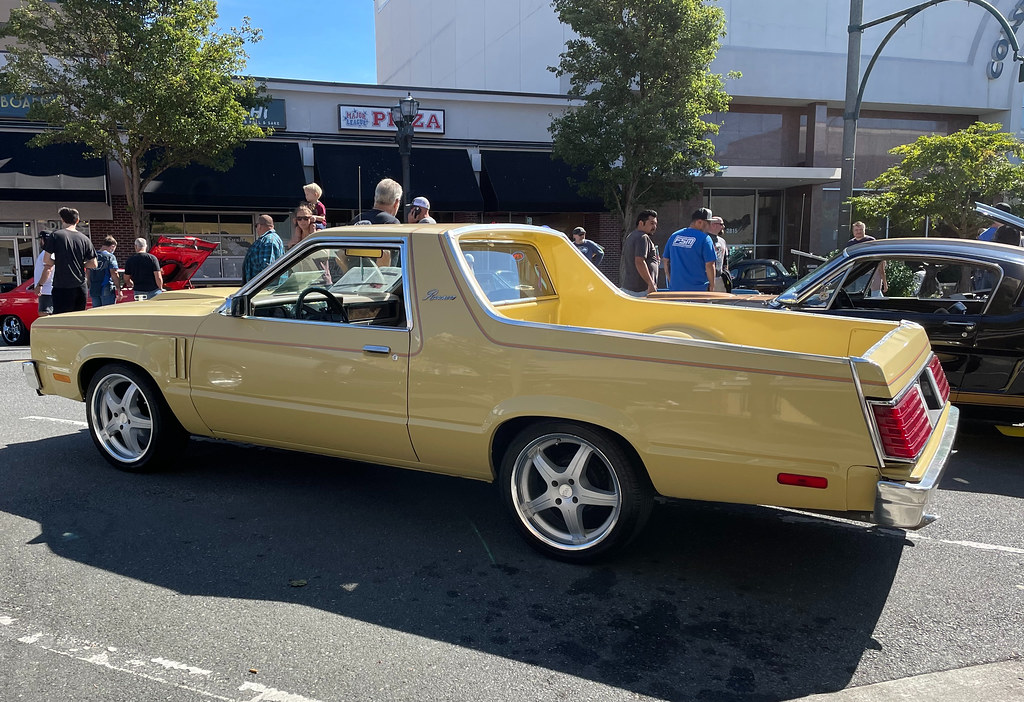
1. **The 1981 Ford Durango: The Unnecessary Car-Truck Hybrid**
Ah, the early 1980s. A time of questionable fashion choices, even more questionable music, and for Ford, an attempt to resurrect a niche segment that perhaps should have stayed buried. The Ranchero, Ford’s answer to Chevy’s El Camino, had withered away by the end of the ’70s, based on the rather uninspiring LTD II. One might think Ford would let sleeping car-trucks lie, but no, the allure of having “the only game in town” for Chevy’s El Camino was simply too much to bear. Thus, the 1981 Ford Durango was born, or rather, cobbled together.
This wasn’t a factory-line masterpiece; it was a joint venture with National Coach Works. Their mission, should they choose to accept it, was to perform vehicular surgery: slice a Ford Fairmont Futura in half and then, with all the precision of a rushed art project, glue on a fiberglass truck bed. The result was intended to be a smaller, nimbler successor to the Ranchero. What they actually created was something of an automotive Frankenstein’s monster, a caruck that struggled to define its purpose, much less fulfill it with any semblance of utility or appeal.
Production numbers tell a stark tale of its failure. Between 1980 and 1982, a mere 200 examples saw the light of day. That’s roughly four vehicles a month, a figure that suggests either extreme exclusivity or, more likely, a profound lack of demand. It was a vehicle that nobody really asked for, built in quantities that confirm nobody really wanted it, a true testament to a solution in search of a problem. It was the vehicular equivalent of a band playing to an empty stadium, only to find out they were playing the wrong stadium in the first place.
Adding insult to injury, the Durango harbored a rather peculiar and utterly impractical design flaw concerning its tailgate. Because the taillights were inconveniently mounted directly on the gate itself, owners were met with a stark warning: do not drive with the tailgate down. Now, imagine needing to haul some standard-length 2x4s or a sheet of plywood – the very raison d’être of a pickup truck. Suddenly, your “truck” becomes a precarious balancing act or, worse, completely useless for its primary function. The Durango was a vehicle of contradictions, a truck that couldn’t truck, a car that was mostly a hack job, and ultimately, a flop that deserved its quick exit from the automotive stage.
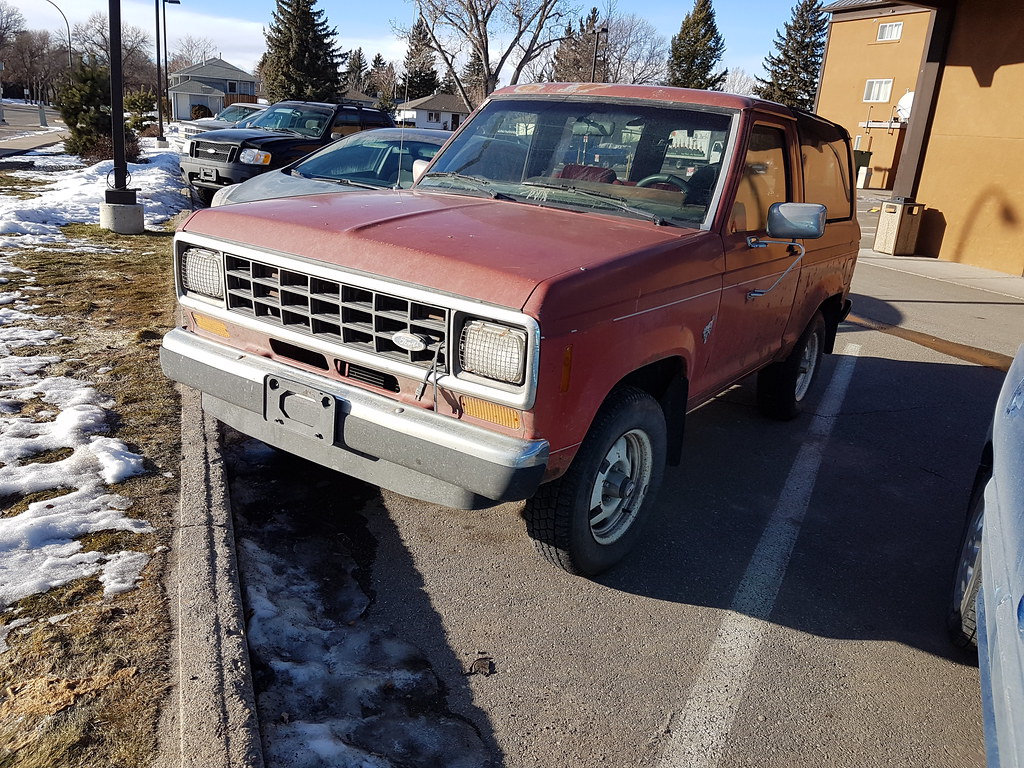
2. **The 1984 Ford Bronco II: The Bucking Bronco with a Deadly Secret**
When the Ford Bronco II debuted in 1984, it was initially met with a rather warm reception. Marketed as a compact, two-door sibling to the full-sized Bronco, and cleverly based on the Ranger pickup, it had all the trappings of a successful small SUV. It was rugged, it was attractive, and it even sported a spirited rodeo horse on its spare tire cover – a powerful image of wild, untamed adventure. Little did buyers know, that bucking horse was a chillingly accurate metaphor for the vehicle’s propensity for, well, bucking its occupants right off the road.
Despite its initial commercial and critical success, the Bronco II harbored a fatal flaw: it was a rolling death trap. Its design featured tall, boxy proportions combined with a narrow track width, making it inherently unstable and notoriously vulnerable to rollovers. This wasn’t a post-market discovery either. It later emerged, much to Ford’s detriment, that the company had uncovered this critical safety issue during its own testing. Engineers, recognizing the danger, bravely suggested a variety of fixes to mitigate the problem. Yet, in a decision that would haunt the automaker for decades, executives consciously decided to release the car in its current, unsafe state, deeming every proposed fix too costly or too time-consuming.
Predictably, reports of fatalities caused by the Bronco II rolling over during accidents soon began to pour in. It wasn’t long before the damning truth came to light: Ford had known about the rollover problem long before the vehicle ever hit showroom floors. The sheer arrogance of prioritizing profit over human lives sparked a slew of lawsuits, reportedly costing the company over $2.4 billion in settlements. The National Highway Traffic Safety Administration (NHTSA) even launched a full-scale investigation, and Consumer Reports slapped it with an unequivocal “Avoid” rating – a rare and damning indictment.
In total, a staggering 260 deaths were officially attributed to these rollovers, cementing the Bronco II’s place as one of the deadliest defects in American automaking history. The Center for Auto Safety even reported an internal employee communication warning about – get this – driving uphill. An SUV, a vehicle designed for rugged terrain, comes with a warning about inclines? It’s almost comically tragic. The Bronco II is a grim reminder that sometimes, the “Junior” version of a beloved classic turns out to be a junior league disaster, an example of corporate hubris that cost far too many lives.
Car Model Information: 2020 Alfa Romeo Stelvio Base
Name: Ford Bronco II
Caption: 1983–1988 Ford Bronco II XLT
Manufacturer: Ford Motor Company
ModelYears: 1984–1990
Production: January 1983 – January 1990
Assembly: Louisville, Kentucky
Class: Compact SUV
Related: Ford Ranger (Americas)
Layout: Front-engine, rear-wheel-drive layout,rear-wheel drive
Engine: Ford Cologne V6 engine#2.8,Ford Cologne V6 engine#2.9,Mitsubishi Motors
Transmission: Manual transmission,Mazda,Mazda,Mazda,Mitsubishi Motors,Mitsubishi Motors,Automatic transmission,Ford C4 transmission#C5,Ford C3 transmission#A4LD
Wheelbase: 94.0 in
Abbr: on
Length: 1983–1988: {{convert,158.3,in,mm,0,abbr=on
Width: 68.0 in
Height: 1983–1988: {{convert,68.2,in,mm,0,abbr=on
Successor: Ford Explorer#Ford Explorer Sport (1991–2003)
BodyStyle: 3-door wagon
Categories: 1990s cars, All-wheel-drive vehicles, Articles with short description, CS1 French-language sources (fr), Cars discontinued in 1990
Summary: The Ford Bronco II is a compact sport utility vehicle (SUV) that was manufactured by the American manufacturer Ford. Closely matching the first-generation Ford Bronco in size, the Bronco II was sold for the 1984 to 1990 model years, alongside the third and fourth generations of Ford’s full-size Bronco. Derived from the Ford Ranger compact pickup truck, the Bronco II was produced in a single generation as a three-door wagon only, competing against the three-door version of the Jeep Cherokee introduced the same year, and the compact Chevrolet S-10 Blazer and GMC S-15 Jimmy which GM had launched as smaller, similar-named SUVs alongside their full-size Blazer and Jimmy a year prior.
For the 1991 model year, Ford replaced the Bronco II with a larger but still Ranger-derived SUV, the mid-size Explorer. Alongside a three-door wagon, a five-door version was also built to better meet consumer demands. Ford’s next compact SUV was the 2001 Escape, available only as a five-door. Ford did not release another three-door SUV until the 2021 mid-size Bronco.
The Bronco II was assembled alongside the Ford Ranger in the Louisville Assembly Plant in Louisville, Kentucky from January 1983 to January 1990.
Get more information about: Ford Bronco II
Buying a high-performing used car >>>
Brand: Ford Model: Bronco II
Price: $16,684 Mileage: 70,086 mi.
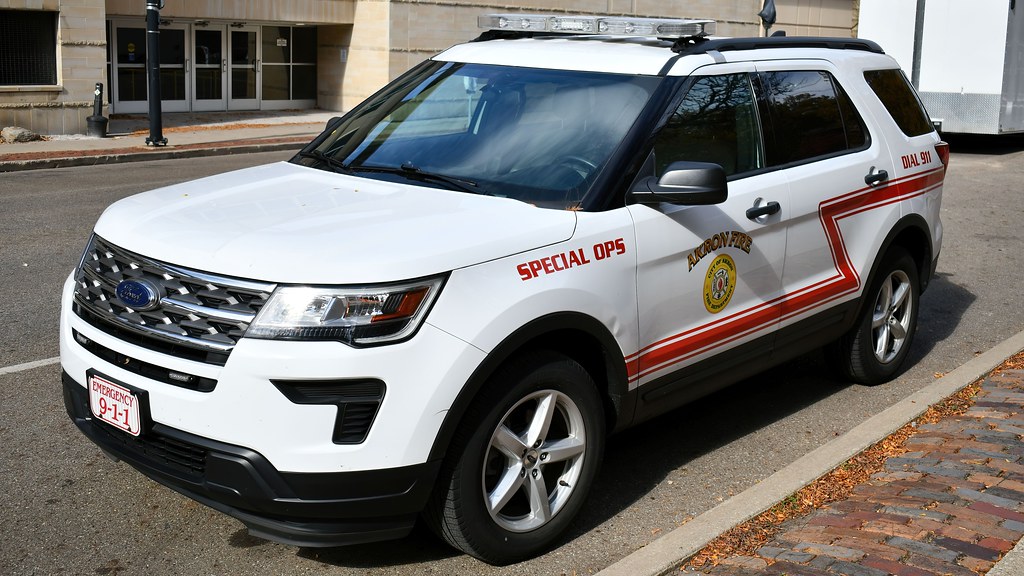
3. **The Early 2000s Ford Explorer: A Reputational Rollover and Tire Treachery**
One might assume that after the catastrophic failures of the Pinto and the Bronco II – vehicles whose design flaws led to countless injuries and deaths – Ford would have learned its painful lessons. One might assume that, but one would be sadly mistaken. Fast forward to the early 2000s, and Ford launched the Explorer, another immensely popular SUV that, astonishingly, came with yet another deadly defect. Engineers, once again, raised concerns about the vehicle’s stability before production, but those warnings, tragically, fell on deaf ears.
Much like its smaller, ill-fated sibling, the Explorer was unusually prone to rollovers. However, the initial public outcry didn’t focus solely on the vehicle’s inherent instability. Instead, reports began to surface, at an alarming rate, about the truck’s Firestone tires failing catastrophically. The narrative quickly devolved into a finger-pointing blame game between two automotive giants. A massive recall was issued, and Ford, initially, attempted to pin the entirety of the blame squarely on Firestone, suggesting their tires were simply defective.
Firestone, naturally, wasn’t about to take that accusation lying down. They fired back with their own set of charges against Ford, suggesting that the Explorer’s design itself was fundamentally flawed. Their argument was compelling: their tires were used on other Ford models without any issues, which pointed a rather accusatory finger back at the Explorer’s engineering. This contentious back-and-forth played out publicly, with both companies trying to deflect responsibility, yet the tragic reality was that lives were being lost in the crossfire.
Ultimately, Firestone ended up shouldering most of the blame in the public eye, but not before a horrific tally of 174 deaths and over 700 serious injuries had been attributed to the combination of the Explorer’s design and the tire failures. These figures, as a report by the NHTSA later indicated, might even have been understated, with hundreds of thousands of defective tires still circulating five years after the initial recall. The early 2000s Explorer crisis stands as a stark testament to Ford’s repeated failure to prioritize safety and the devastating consequences that arise when corporate battles overshadow human lives. It was a dark chapter for both brands, proving that sometimes, the biggest names can make the biggest mistakes, with the highest price.
Car Model Information: 2022 Ford Explorer ST
Name: Ford Explorer
Caption: Sixth-generation Ford Explorer
Manufacturer: Ford Motor Company
Production: 1990–present
ModelYears: 1991–present
Class: unbulleted list
Chassis: unbulleted list
Predecessor: Ford Bronco II
Successor: Ford Territory (Australia)
Categories: 2000s cars, 2010s cars, 2020s cars, All-wheel-drive vehicles, All Wikipedia articles in need of updating
Summary: The Ford Explorer is a range of SUVs manufactured by the Ford Motor Company since the 1991 model year. The first five-door SUV produced by Ford, the Explorer, was introduced as a replacement for the three-door Bronco II. As with the Ford Ranger, the model line derives its name from a trim package previously offered on Ford F-Series pickup trucks. As of 2020, the Explorer became the best-selling SUV in the American market.
Currently in its sixth generation, the Explorer has featured a five-door wagon body style since its 1991 introduction. During the first two generations, the model line included a three-door wagon (directly replacing the Bronco II). The Ford Explorer Sport Trac is a crew-cab mid-size pickup derived from the second-generation Explorer. The fifth and sixth generations of the Explorer have been produced as the Ford Police Interceptor Utility (replacing both the Ford Crown Victoria Police Interceptor and the Ford Police Interceptor Sedan).
The Explorer is slotted between the Ford Edge and Ford Expedition within North America’s current Ford SUV range. The model line has undergone rebadging several times, with Mazda, Mercury, and Lincoln each selling derivative variants. Currently, Lincoln markets a luxury version of the Explorer as the Lincoln Aviator.
For the North American market, the first four generations of the Explorer were produced by Ford at its Louisville Assembly Plant (Louisville, Kentucky) and its now-closed St. Louis Assembly Plant (Hazelwood, Missouri). Ford currently assembles the Explorer alongside the Lincoln Aviator and the Police Interceptor Utility at its Chicago Assembly Plant (Chicago, Illinois).
Get more information about: Ford Explorer
Buying a high-performing used car >>>
Brand: Ford Model: Explorer
Price: $35,998 Mileage: 63,240 mi.
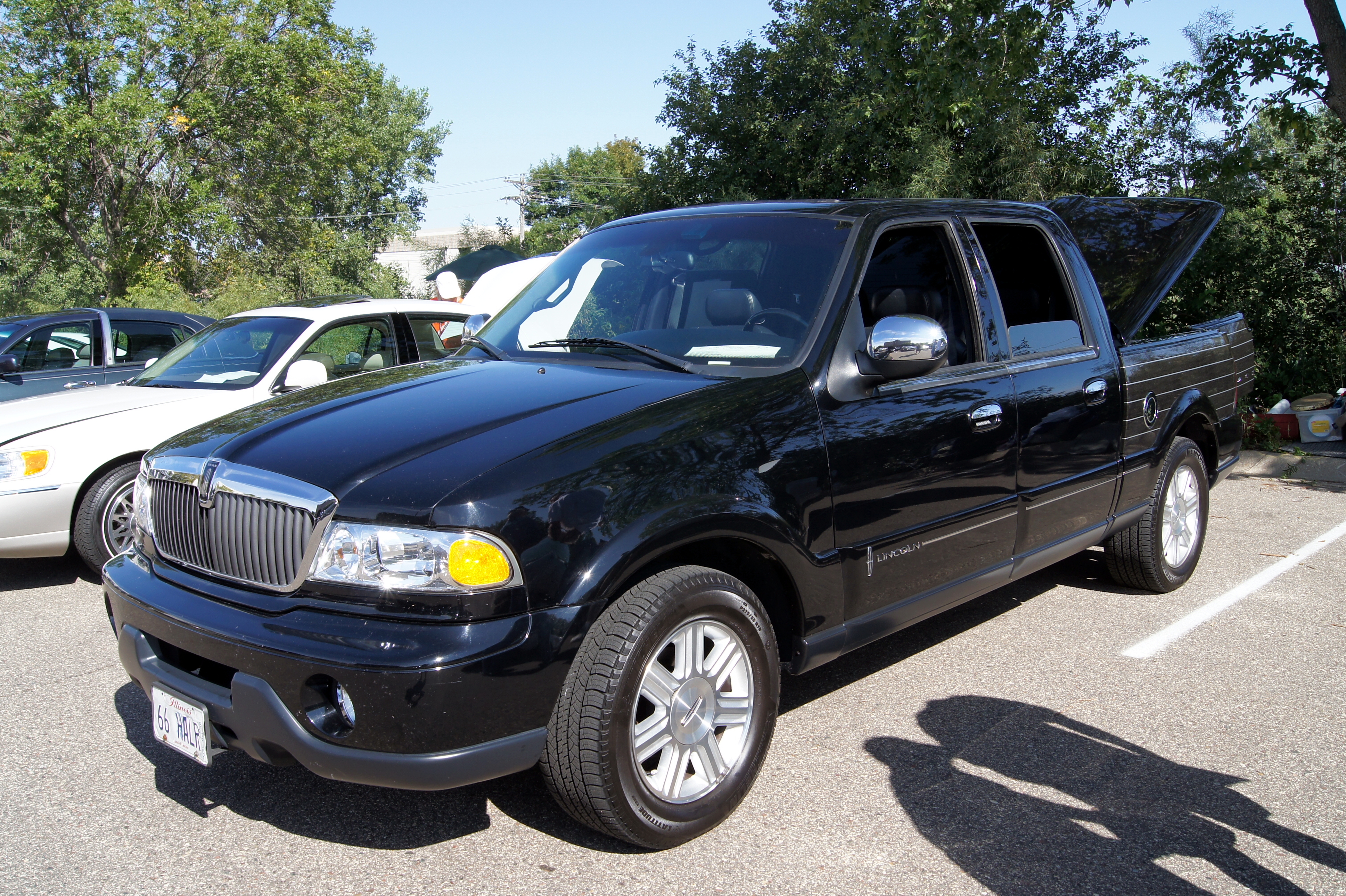
4. **The 2002 Lincoln Blackwood: The Luxe-Barge That Couldn’t Haul**
Imagine the discerning individual who yearns for the rugged utility of a pickup truck but cannot bear to part with the plush trappings of high-end luxury. This mythical creature, Ford executives must have reasoned, was the target audience for the 2002 Lincoln Blackwood. It was an ambitious, albeit utterly misguided, attempt to meld workhorses with opulent limousines. The result? A single, glorious, and ultimately delirious model year of a vehicle that defied definition and delivered on practically none of its promises.
At its core, the Blackwood was a Ford F-150 SuperCrew. Ford then performed rather drastic, and ultimately detrimental, cosmetic surgery. They grafted on a Navigator front end, imbuing it with stately elegance. Inside, the cabin received a full Navigator-grade makeover with leather and wood trim. But then, things took a turn for the bizarre with the cargo bed, transformed into a ‘nearly useless cargo box designed as a carpeted trunk with a power tonneau cover.’ This wasn’t a truck; it was a confused, identity-crisis-ridden luxury cruiser that couldn’t quite decide what it wanted to be.
The design contradictions continued to pile up. This opulent cargo box, meant to evoke utility, was frustratingly ‘useless,’ compounded by its awkward access via a ‘weird split rear tailgate.’ It was as if Ford had deliberately sabotaged any semblance of practicality. Adding to its woes, the Blackwood was rear-wheel drive only, immediately limiting its appeal and capability for anyone genuinely needing a truck in adverse conditions or for serious hauling. To top it all off, it came exclusively in a ‘black-on-black color scheme, with odd silver pinstripes on the bed sides,’ a grim aesthetic that did little to lift its spirits or sales. It truly was ‘the Al Davis of trucks,’ a singular, deeply flawed, and profoundly misunderstood vision.
The sheer audacity of creating a truck that actively refused to be a truck is almost comical. What market research led to the conclusion that affluent buyers wanted a pickup with a luxurious, carpeted, and utterly impractical trunk? A truck’s primary function is to haul, to carry, to be useful. The Blackwood, in its quest for luxury, stripped itself of this fundamental purpose, leaving it a hollow shell of what a utility vehicle should be. It became a monument to executive decisions gone awry, a testament to the perils of designing in a vacuum, detached from real-world needs of vehicle owners.
Ultimately, the Blackwood’s ignominious one-year run before it was mercifully axed speaks volumes about its spectacular failure. It wasn’t just a sales flop; it was a philosophical one. It embodied a profound misjudgment of what luxury truck buyers actually desired—a capable truck with luxury features, not a luxury car awkwardly fused with a crippled cargo bay. The Blackwood serves as a stark reminder: sometimes, trying too hard to be everything results in being nothing useful to anyone. Its brief, perplexing existence remains a fascinating, if painful, chapter in Ford’s history of utility vehicle blunders.
Car Model Information: 2002 Lincoln Blackwood Base 4dr Crew Cab SB 2WD
Name: Lincoln Blackwood
Manufacturer: Lincoln Motor Company
Production: September 25th 2000 – August 8th, 2002
ModelYears: 2002 (United States),2002–2003 (Mexico)
Assembly: Claycomo, Missouri
Successor: Lincoln Mark LT
Class: luxury car,pickup truck
BodyStyle: pickup truck
Layout: Front-engine, rear-wheel drive layout
Related: Ford F-Series (tenth generation),Lincoln Navigator
Engine: Ford Modular engine#5.4 L
Transmission: Automatic transmission
Wheelbase: 138.5 in
Abbr: on
Length: 220.2 in
Width: 78.0 in
Height: 73.6 in
Designer: Patrick Schiavone
Caption: 2002 Lincoln Blackwood
Categories: All articles with unsourced statements, Articles with short description, Articles with unsourced statements from November 2024, Cars discontinued in 2002, Cars introduced in 2001
Summary: The Lincoln Blackwood is a luxury pickup truck that was marketed by the Lincoln division of Ford Motor Company for the 2002 model year. The first pickup truck marketed by Lincoln, the Blackwood was derived from the Ford F-150 SuperCrew and the Lincoln Navigator. Drawing its name from its simulated black woodgrain cargo box, the Blackwood was offered solely with a black-painted exterior.
Although the concept vehicle had a positive public reception, the production Blackwood fell far under sales projections in the United States and Mexico. After the 2002 model year, the Blackwood was discontinued in the United States, with a short run of 2003 models produced for Mexico. In total, only 3,383 units were produced, making it both the rarest and shortest-produced Lincoln model line.
For 2006, Lincoln entered the pickup truck segment for a second time with the Lincoln Mark LT — again based on the Ford F-150 —which, even though it also sold poorly, was more popular than the Blackwood.
The first Lincoln vehicle manufactured exclusively outside of the state of Michigan since 1958, the Blackwood was assembled by Ford at its Kansas City Assembly facility in Claycomo, Missouri, alongside the F-150 from September 2000 to August 2002.
Get more information about: Lincoln Blackwood
Buying a high-performing used car >>>
Brand: Lincoln Model: Blackwood
Price: $19,999 Mileage: 72,905 mi.
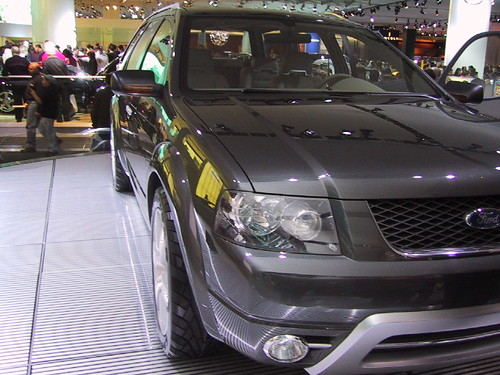
5. **The 2005 to 2008 Ford Freestyle/Taurus X: The Beige Blob of Boredom**
The mid-Noughties were a curious time for Ford, often characterized by a noticeable reluctance to embrace bold design or innovative engineering, particularly within its sedan lineup. The Ford Five Hundred became a poignant symbol of this stagnation—a vehicle so utterly devoid of personality it felt like a deliberate act of automotive beige. Then came the Ford Freestyle, later rebranded as the Taurus X, a vehicle that somehow managed to channel and amplify this spirit of blandness, presenting itself as a crossover that offered none of its supposed advantages.
The Freestyle was a vehicle that simply existed. It wasn’t exciting, daring, or memorable. Reviewers struggled to find anything particularly compelling, often settling for polite descriptors like ‘adequate’ or ‘inoffensive.’ The context even suggests that if Elon Musk were creating a fleet of EVs for ‘the Boring Company,’ he’d populate it with old Freestyles and Taurus Xs, all ‘painted eggshell white, with a beige cloth interior.’ That’s not just a critique; it’s a profound existential statement on its lack of character. It was marketed as a crossover but failed to deliver key benefits, like a higher seating position, essentially remaining ‘a Ford Five Hundred station wagon with chunky styling,’ lacking any real distinction.
Beneath its utterly bland exterior lay a driving experience mirroring its aesthetics. The transmission, a continuously variable unit (CVT), was notorious for ‘choking the life out of the engine.’ This wasn’t a spirited drive; it was a slow, deliberate ‘oozing forward,’ as one reviewer aptly put it. The V6 engine, rather than offering a burst of modern power, was ‘ancient,’ ‘plucked straight from the previous-generation Taurus,’ further cementing its reputation as a rehash. This combination meant that despite ample interior space and reasonable economy, the drive was merely ‘okay (if never enjoyable),’ leaving no lasting impression beyond its sheer forgettability.
This wasn’t an all-out disaster like some of Ford’s more catastrophic failures, but it was a disaster of opportunity. At a time when SUVs were rapidly gaining market share, and Ford desperately needed something to revitalize its passenger car offerings, the Freestyle/Taurus X arrived like a yawn on wheels. It provided ‘little reason to remember the car ever existed, never mind buying one.’ Imagine Ford needing ‘something exciting to draw attention back to its range of sedans,’ and offering this. It was a vehicle designed to blend in, to appease focus groups, and in doing so, it utterly failed to inspire or capture any imagination.
Consider its direct competitor, the Chrysler 300C, which debuted ‘around the same time’ and remained in production for 17 years, becoming a recognized success. The Freestyle/Taurus X, with its ‘unrelenting blandness,’ was unceremoniously ‘axed after just three years.’ This stark contrast highlights Ford’s misjudgment during a crucial period. It’s a prime example of how playing it too safe, opting for mediocrity over innovation, can be just as detrimental as outright design flaws. The Freestyle/Taurus X stands as a monument to missed opportunities, a beige testament to Ford’s mid-Noughties automotive timidity.
Car Model Information: 2020 Alfa Romeo Stelvio Base
Name: Ford Freestyle
Caption: 2005–2007 Ford Freestyle SE
Manufacturer: Ford Motor Company
Aka: Ford Taurus X (2008–2009)
Production: 2005–2007 (Freestyle),2008–2009 (Taurus X)
ModelYears: 2005–2007 (Freestyle),2008–2009 (Taurus X)
Assembly: Chicago, Illinois
Class: Full-size car,crossover SUV
BodyStyle: SUV
Platform: Ford D3 platform
Layout: Front-engine, front-wheel drive layout
Related: Ford Taurus,Mercury Sable
Wheelbase: 112.9 in
Abbr: on
Url: https://www.ai-online.com/2004/10/the-missing-link/
Title: The Missing Link
Website: www.MyFordFreestyle.com
Length: 199.8 in
Width: 74.4 in
Weight: convert
Predecessor: Ford Taurus (fourth generation)
Designer: Edward Goldencite web
Magazine: Automotive Industries(Vol. 184, Issue 10)
Author: John Peter
Date: Fri Oct 01 2004 00:00:00 GMT-0700 (Pacific Daylight Time)
ArchiveUrl: https://web.archive.org/web/20200811124430/https://www.ai-online.com/2004/10/the-missing-link/
ArchiveDate: 2020-08-11
Successor: Ford Flex
Height: 68.2 in
Categories: All-wheel-drive vehicles, All Wikipedia articles written in American English, Articles with short description, CS1 maint: archived copy as title, Cars discontinued in 2009
Summary: The Ford Freestyle is a crossover utility vehicle that was sold by Ford from 2005 to 2009. Largely marketed as the successor to the Ford Taurus station wagon, the Freestyle was the CUV counterpart of the Ford Five Hundred and Mercury Montego four-door sedans. Sharing the Ford D3 platform with the Five Hundred and Montego, the Freestyle was produced with both front-wheel drive and all-wheel drive configurations and six- or seven-passenger seating.
Following the return of the Ford Taurus for the 2008 model year, the Freestyle underwent a mid-cycle revision and was renamed the Ford Taurus X, marketed in the United States and Canada, as well as South Korea and the U.S. territories of Puerto Rico, U.S. Virgin Islands, and Guam. Following the 2009 model year, the Taurus X was withdrawn. From the 2009 model year, the larger Ford Flex has served as the three-row Ford CUV/wagon.
From 2005 to 2009, the Freestyle/Taurus X was assembled at Chicago Assembly (Chicago, Illinois); the final vehicle was produced on February 27, 2009.
Get more information about: Ford Freestyle
Buying a high-performing used car >>>
Brand: Ford Model: Freestyle/Taurus X
Price: $16,684 Mileage: 70,086 mi.
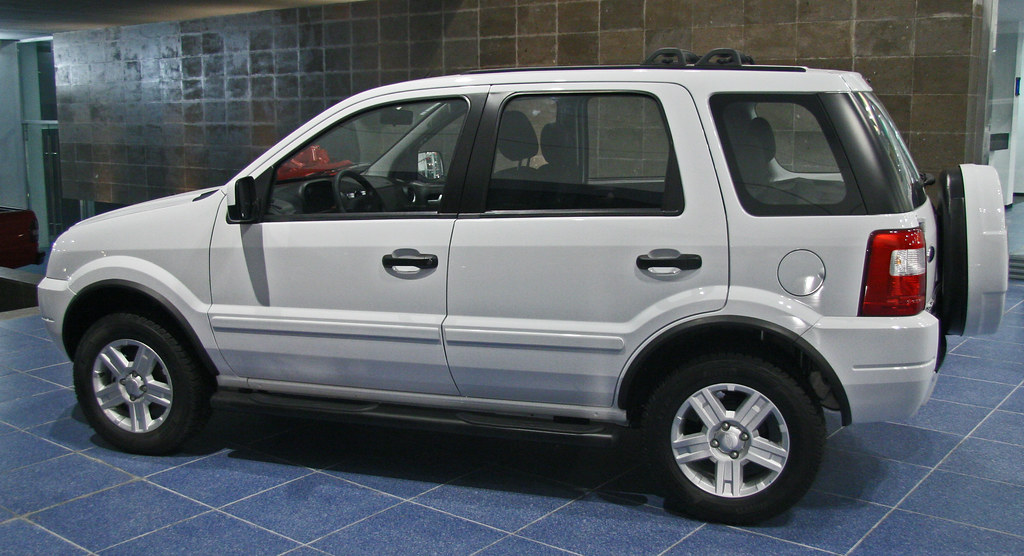
6. **The 2018 Ford EcoSport: The Global Misfit in American Garages**
Ford, in what many observers viewed as a high-stakes gamble, decided to axe a significant portion of its passenger car lineup, even some best-sellers, in favor of a full-throttle commitment to SUVs and crossovers. The underlying assumption was clear: buyers favor these body styles, and they would flock to Ford’s utility offerings. However, this strategy carried inherent risks, glaringly highlighted by the unfortunate debut of the Ford EcoSport in the American market. It was a small SUV that simply ‘wasn’t any good,’ and its subsequent sales numbers brutally reflected that uncomfortable truth.
The EcoSport wasn’t a fresh, purpose-built vehicle for American consumers; it was a globally designed product, already in its second generation, making its belated stateside appearance for the 2018 model year. This inherent mismatch was clear from the outset. ‘Built in India,’ the context states, ‘the EcoSport was never designed with American buyers in mind, and it shows from the underpowered engine to the side-hinged tailgate to the lack of important safety systems.’ It felt like an afterthought, a quick and dirty solution to fill a perceived gap in Ford’s US lineup rather than a thoughtful addition.
The critical reception for the EcoSport was damning. Reviewers, tasked with dissecting its virtues and vices, came to the same, unflattering conclusions. *Car and Driver* unequivocally declared it ‘dead last in its competitive class,’ a scathing indictment for any new vehicle. Across the Atlantic, *Auto Express* lamented the car’s ‘poor interior quality’ and ‘uninspiring road manners,’ effectively sealing its fate as a vehicle offering little in the way of driving pleasure or tactile appeal. Perhaps the most damning verdict came from *Driving Line*, which, shortly before its eventual axing, suggested it ‘might be “the worst new car in America”.’ These aren’t minor quibbles; they are a unanimous chorus of disappointment.
Ford’s motivation was simply that it ‘didn’t want to sit the small crossover SUV craze out.’ An understandable business decision. However, the execution left much to be desired. Rather than developing a bespoke solution, Ford essentially ‘slapped some Band-Aids on the global EcoSport and called it good’ for the US market. This superficial approach was insufficient for a market accustomed to a higher standard of refinement, performance, and safety features. The EcoSport became a prime example of how a rushed, ill-adapted product can severely damage a brand’s credibility, especially when consumers are asked to abandon their preferred body styles for it.
Unsurprisingly, sales figures for the EcoSport remained lackluster throughout its brief American tenure. Ford only managed to move ‘around 60,000 examples in 2020,’ with numbers declining further in 2021, leading to its predictable discontinuation in mid-2022. This vehicle’s failure casts a long shadow over Ford’s SUV-centric strategy. If the EcoSport represents the quality of small utility vehicles buyers can expect after Ford eliminates its remaining global lineup of hatchbacks and superminis, then there’s a ‘risk that buyers simply won’t return to the Blue Oval like the company’s management expects them to.’ The EcoSport stands as a cautionary tale: simply having an SUV in a popular segment isn’t enough; it has to be a *good* SUV.
**The Long Road of Learning: Lessons from Ford’s Stumbles**
And there you have it, a candid journey through some of Ford’s most spectacular, head-scratching, and at times, genuinely tragic missteps in trucks and SUVs. For a company synonymous with American automotive might and innovation, these six vehicles stand as grim reminders that even titans can stumble, sometimes spectacularly. From the bizarre car-truck hybrid nobody wanted, to deadly rollovers born of corporate hubris, and bland, uninspired, or simply misplaced offerings that failed to connect with consumers, each flop tells a unique story of ambition, misjudgment, or outright negligence.
Car Model Information: 2021 Ford EcoSport SES
Name: Ford EcoSport
Manufacturer: Ford Motor Company
Production: 2003–2022
ModelYears: 2014–2022 (Europe) ,2018–2022 (North America)
Class: Subcompact crossover SUV
BodyStyle: Sport utility vehicle
Layout: Front-engine, front-wheel-drive layout
Categories: 2010s cars, 2020s cars, All-wheel-drive vehicles, All articles with bare URLs for citations, All articles with unsourced statements
Summary: The Ford EcoSport ( EK-oh-sport) is a subcompact crossover SUV (B-segment) manufactured by Ford between 2003 and 2022.
The first-generation model was developed and built in Brazil by Ford Brazil since 2003, at the Camaçari plant. The second-generation model was launched in 2012, which was assembled in factories in India, Thailand, Russia and Romania. The vehicle entered the European market in 2014 and the North American market in 2018. It was sold in both until its discontinuation after the 2022 model year. Throughout its existence, the EcoSport shared its platform with the Fiesta.
Get more information about: Ford EcoSport
Buying a high-performing used car >>>
Brand: Ford Model: EcoSport
Price: $14,682 Mileage: 61,146 mi.
Yet, there’s a perverse fascination in these failures. They offer invaluable lessons, not just for automakers, but for anyone who appreciates the complexity and passion involved in bringing a vehicle from concept to road. They remind us that for every F-Series that dominates sales charts, for every Mustang that captures hearts, there’s a Blackwood or an EcoSport that serves as a counterpoint. These vehicles, in their varied forms of failure, are not just footnotes in history; they are case studies in what *not* to do, ensuring future generations of engineers and executives learn from past mistakes. Here’s to hoping the Blue Oval takes these lessons to heart, continuing its legacy of groundbreaking vehicles while keeping a sharper eye on what truly makes a great, and safe, American-made machine.