
The Blue Oval. Ford Motor Company. For over a century, this name has been synonymous with automotive ingenuity, mass production, and some of the most iconic vehicles ever to grace our roads. From the groundbreaking Model T that put America on wheels to the legendary Mustang and the perennially best-selling F-Series trucks, Ford’s legacy is undeniably etched in the annals of motoring history. It’s a tale primarily filled with triumphs, innovation, and an unwavering commitment to the everyday driver.
However, even the most legendary automakers occasionally stumble. In Ford’s long and storied journey, there have been moments when the compass veered wildly off course, leading to creations that were, frankly, less than stellar. We’re not talking about minor mechanical glitches or marketing missteps today, although those often played a supporting role. Instead, we’re zeroing in on a very specific kind of automotive catastrophe: the cars so aesthetically challenged, so baffling in their design choices, that they hit the market with all the grace of a lead balloon and instantly cemented their place in the pantheon of Blue Oval blunders.
Prepare yourselves, because we’re about to take an unflinching, often uncomfortable, look at some of Ford’s most visually perplexing creations. These aren’t just cars that flopped; these are vehicles whose looks were so fundamentally misjudged that they became instant market failures, either through direct sales rejection or by irrevocably tarnishing the brand’s image. Beauty, they say, is in the eye of the beholder, but sometimes, the collective beholding simply screamed “no.” Let’s dive into the visual atrocities that left us scratching our heads and Ford counting its losses.

1. **1958 Ford Edsel (Pacer)**
Ah, the Edsel. The name itself has become a punchline, a universal byword for spectacular failure, and for good reason. Launched in 1958, the Edsel wasn’t just *a* Ford model; it was an entire division, named after Henry Ford’s only son, Edsel Ford. The company poured over $250 million into its research, development, engineering, expansion, and an aggressive marketing campaign, expecting nothing less than a grand success that would fill a perceived gap between Ford’s existing brands. The anticipation was immense, almost palpable.
But as we all know, hype can be a dangerous thing. When the Edsel models finally arrived, they were met with a resounding “huh?” The division’s models shared a distinctive front grille, a design choice that proved to be its undoing. This tall snout, sitting right smack dab in the middle of the front, might have vaguely recalled the elegant BMW 503 from 1956, but it already seemed dated upon its 1958 debut. It looked less like an innovation and more like a permanent scowl, or, as many famously put it, a “horse collar.” The Edsel Pacer, in particular, often finds itself at the top of “worst cars ever” lists, not just for its myriad other problems, but primarily for its face.
It’s almost a shame, because the Edsel brand wasn’t entirely devoid of merit. It boasted an awesome 410 cubic inch V8 engine and the innovative Teletouch Drive automatic transmission, which, one could argue, was a forerunner to today’s push-button shifters. These were genuinely forward-thinking features, a testament to some of the engineering talent at Ford. Yet, the entire brand imploded after just a little over two years on the market, a staggering financial hemorrhage for Ford.
While market trends shifted, a recession hit, and mechanical and quality control issues certainly played their part, there’s simply no escaping the harsh truth. The Edsel’s “bad looks certainly didn’t help,” to quote the context directly. Its polarizing, awkward design was a massive psychological barrier for buyers, who were turned off by its unusual styling. It was a rare, much-maligned vehicle, and its uncomfortable appearance was a major factor in its downfall, a textbook example of how design alone can sink a ship, even one laden with millions of dollars and high hopes.
Car Model Information: 1959 Edsel Ranger
BirthName: Edsel Bryant Ford
Caption: Ford in 1921
BirthDate: [object Object]
BirthPlace: Detroit, Michigan
DeathDate: [object Object]
DeathPlace: Grosse Pointe Shores, Michigan
Occupation: Automobile executive
Title: Ford Motor Company
Spouse: [object Object]
Parents: Henry Ford,Clara Bryant Ford
Relations: Edsel Ford II
Children: Henry Ford II,Benson Ford,Josephine Ford,William Clay Ford Sr.
Categories: 1893 births, 1943 deaths, 20th-century American businesspeople, All Wikipedia articles written in American English, All articles with dead external links
Summary: Edsel Bryant Ford (November 6, 1893 – May 26, 1943) was an American business executive and philanthropist, who was the only child of pioneering industrialist Henry Ford and his wife, Clara Jane Bryant Ford. He was the president of the Ford Motor Company from 1919 until his death in 1943.
He worked closely with his father, as sole heir to the business, but was keen to develop cars more exciting than the Model T (“Tin Lizzie”), in line with his personal tastes. Even as president, he had trouble persuading his father to allow any departure from this formula. Only a change in market conditions enabled him to develop the more fashionable Model A in 1927. Edsel also founded the Mercury division and was responsible for the Lincoln-Zephyr and Lincoln Continental. He introduced important features, such as hydraulic brakes, and greatly strengthened the company’s overseas production.
Ford was a major art benefactor in Detroit and also financed Admiral Richard Byrd’s polar explorations. He died of stomach cancer aged 49. Henry Ford temporarily reassumed the presidency of Ford Motor Company on Edsel’s death, then Edsel’s eldest son, Henry Ford II, succeeded Henry as president of the company in 1945.
He was also a member of the board of directors of American IG, the American subsidiary of the German chemical conglomerate IG Farben.
Get more information about: Edsel Ford
Buying a high-performing used car >>>
Brand: Ford Model: Edsel
Price: $19,000 Mileage: 21,529 mi.

2. **1958 Ford Thunderbird (2nd Generation)**
From one design misstep to another, though perhaps less catastrophic in scope, we arrive at the second-generation Ford Thunderbird. The original, first-generation Thunderbird is a bona fide American icon, a sleek, stylish symbol of 1950s cool. It’s a beautiful piece of art, revered by enthusiasts and collectors alike. So, what happened in 1958? Ford decided to mess with perfection, and the results were… significant.
The second-generation T-bird, sold from 1958 to 1960, veered wildly from its predecessor’s elegant course. While it ironically received MotorTrend’s 1958 Car of the Year Award – a judgment the very same magazine would ironically retract some 65 years later by including it on its list of ugliest cars ever made – its aesthetic transformation was deeply problematic. The biggest issue? It became larger, just about everywhere. Price, payload, and passenger capacity all ballooned, but bafflingly, performance remained anemic, with an engine churning out a mere 144 hp. It was a bloated paradox, offering less driving excitement in a bigger, heavier package.
But it wasn’t just the size; it was the styling that truly lost the plot. The classic, sleek 1950s look of the original Thunderbird was unceremoniously discarded, replaced by an oversized body dripping with excessive chrome trim. The design, as the context vividly describes, made it seem “more like a car lost in time rather than a stylish, luxury vehicle.” The massive chrome grille, blending seamlessly into an equally massive chrome bumper, created an unfortunate visual.
This design choice, with its “overly large, boxy body combined with awkward proportions,” earned it a particularly unflattering comparison: it looked like the car “went to a cosmetic surgeon to give it a plump lip job.” It was a design meant to convey luxury and status, but instead, it conveyed excess and a profound misunderstanding of the original’s appeal. This version never quite regained the charm of its original, forever marking it as a low point in the Thunderbird’s long and otherwise illustrious history.
Car Model Information: 1966 Ford Thunderbird Base
Name: Ford Thunderbird
Caption: 1957 Thunderbird
Manufacturer: Ford Motor Company
Production: unbulleted list
ModelYears: unbulleted list
Class: unbulleted list
Layout: Front-engine, rear-wheel drive layout
Categories: 1960s cars, 1970s cars, 1980s cars, 1990s cars, 2000s cars
Summary: The Ford Thunderbird is a personal luxury car manufactured and marketed by Ford Motor Company for model years 1955 to 2005, with a hiatus from 1998 to 2001.
Ultimately gaining a broadly used colloquial nickname, the T-Bird, the model was introduced as a two-seat convertible, subsequently offered variously in a host of body styles including as a four-seat hardtop coupe, four-seat convertible, five-seat convertible and hardtop, four-door pillared hardtop sedan, six-passenger hardtop coupe, and five-passenger pillared coupe, before returning in its final generation, again as a two-seat convertible.
At its inception, Ford targeted the two-seat Thunderbird as an upscale model. The 1958 model year design introduced a rear seat and arguably marked the expansion of a market segment that came to be known as personal luxury cars, positioned to emphasize comfort and convenience over handling and high-speed performance.
Get more information about: Ford Thunderbird
Buying a high-performing used car >>>
Brand: Ford Model: Thunderbird
Price: $44,999 Mileage: 71,017 mi.

3. **1994 Ford Scorpio Mk II**
Venturing across the Atlantic, we encounter a European Ford model that never graced American showrooms, and perhaps for good reason: the 1994 Ford Scorpio Mk II. This mid-size sedan, primarily sold in Europe, represents a radical, and frankly, bewildering, departure from its first-generation counterpart. The original Scorpio was characterized by straight lines and a sleek, understated look. The Mk II decided to go… oval. Very, very oval.
Launched in 1994, the Scorpio Mk II featured oval headlights flanking a chrome grille, while its rear lights were lowered to the bumper line. The entire body was an exercise in rounded edges and curved surfaces. Individually, none of these elements are necessarily “bad,” but when haphazardly combined, they coalesced into something truly bizarre. The result was a car that, from the front, looked less like a modern sedan and more like a creature of the deep.
The context’s description is perfectly apt: “If you look at the car from the front, it looks like a gelatinous blobfish that has been pulled from the depths, causing its form to collapse like a water balloon.” And the comparison doesn’t stop there; the Scorpio Mk II’s large grille eerily resembled “the giant nose-like feature that appears on the blobfish’s face when it is brought to the surface.” This isn’t just one automotive enthusiast’s opinion, either; “some automotive reporters called this car ugly even before it went on the market.” That’s a brutal, instant condemnation.
The car lacked the sleekness and refinement expected from a Ford sedan, standing out for all the wrong reasons. Despite potentially innovative features and strong performance, its exterior utterly failed to capture the imagination of consumers. It was seen as too bulky, too out of place, and its strange, aquatic look simply didn’t fit into the rest of Ford’s lineup. Unsurprisingly, production numbers were low, and the model quickly faded, becoming one of the brand’s more forgettable (and frankly, visually traumatizing) designs.
Read more about: The 10 Exciting Classic Sports Cars You Can Own Without Breaking the Bank
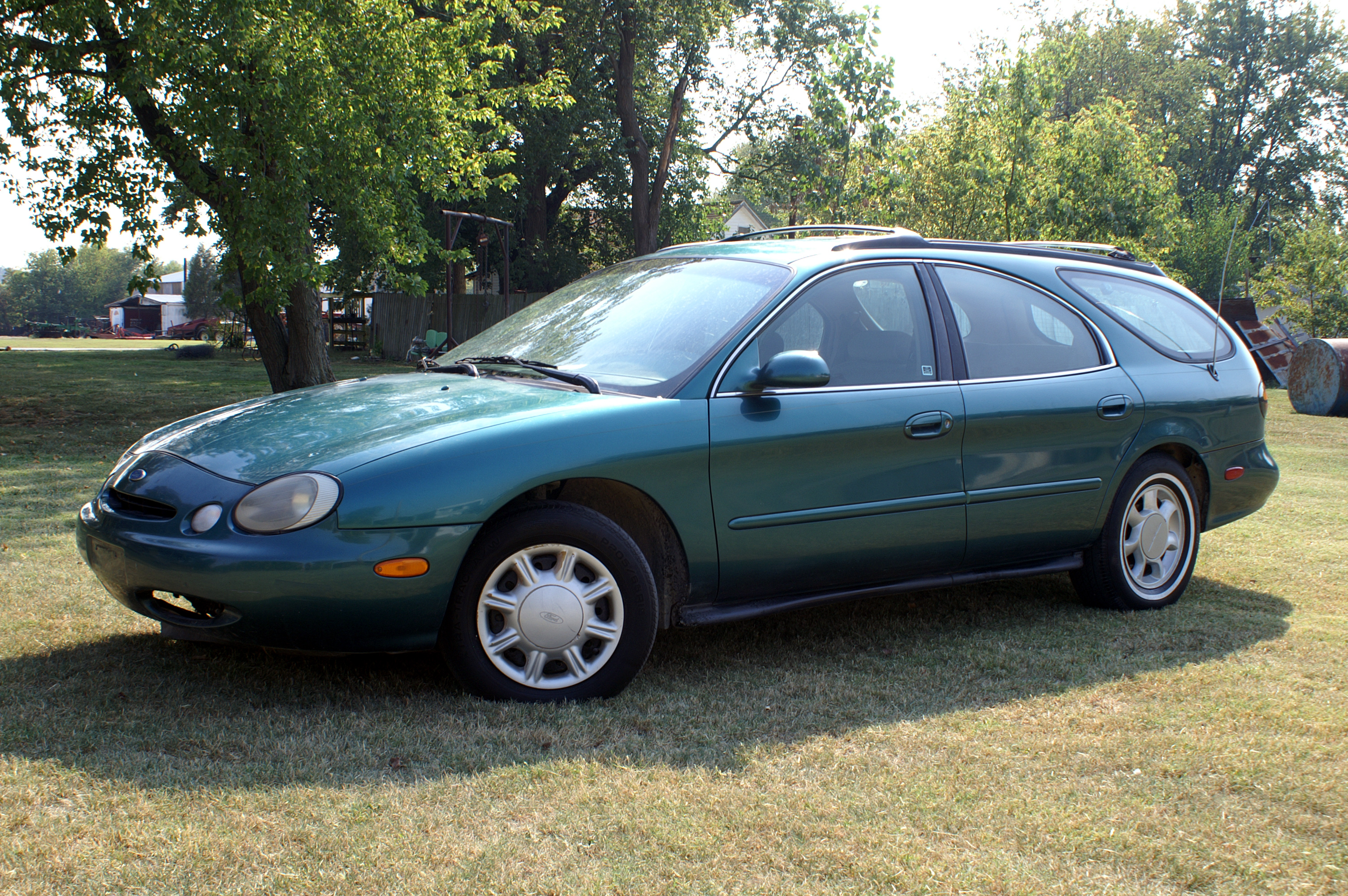
4. **1996 Ford Taurus (3rd Generation)**
It seems the 1990s were a particularly challenging decade for Ford’s design department, especially when it came to embracing rounded shapes. Following the visual “Blobfish” misadventure of the Scorpio Mk II, Ford decided its popular Taurus sedan needed a similar, curvilinear treatment for its third generation in 1996. The previous two generations of the Taurus were sleek, aerodynamic, and wildly successful, earning it the title of America’s best-selling car for several years. This new version, however, was a jarring departure.
Ford’s intention was to emulate the sophisticated designs seen in luxury brands like Jaguar and Infiniti of the era. However, the execution was tragically flawed. The “final output didn’t resonate with its market,” a polite understatement for what was essentially a collective “what were they thinking?” Its design was less aggressively ugly than the Scorpio’s, but it was still fundamentally “not quite a good look.” The oval theme permeated everything, including a particularly divisive oval rear window that seemed to swallow the back end of the car.
The front fascia, with its four distinct headlights, invited immediate and unflattering comparisons. As the context hilariously notes, it made the car “look like Dr. Jumba Jookiba, the four-eyed alien from the Lilo & Stitch animated movie.” The rear lights, meanwhile, bore an unfortunate resemblance to “a fat Mazda RX-7 FD.” This rounded, almost swollen body looked nothing like the beloved, crisp lines of its predecessors, leading to “complete disappointment to many of its fans.”
The market reaction to this design was so unequivocally bad that Ford was forced to update the car within a mere year of its release. Despite this swift intervention and the fact that it still held the best-selling car title in 1996 (largely thanks to fleet sales, which accounted for more than half its total volume), the damage was done. It was the last time the Taurus would claim that coveted spot, losing it to the Toyota Camry the following year. This third-generation Taurus stands as a stark reminder that even a popular nameplate can suffer an “instant market failure” when its design fundamentally alienates its loyal customer base.
Car Model Information: 2016 Ford Taurus Limited
Name: Ford Taurus
Caption: 2010 Ford Taurus Limited
Manufacturer: Ford Motor Company
Production: October 1985 – October 2006,May 2007 – March 2019
ModelYears: 1986–2019 (2007 sold only to fleets)
Class: Mid-size car
Layout: Transverse engine,front-engine, front-wheel drive,Transverse engine,front-engine, all-wheel drive
Predecessor: Ford LTD (North America)
Successor: Ford Taurus X
Categories: 1980s cars, 1990s cars, 2000s cars, 2010s cars, All-wheel-drive vehicles
Summary: The Ford Taurus is an automobile that was manufactured and marketed by the Ford Motor Company in the United States from 1985 to 2019. From 1985 to 2009, Ford marketed the Taurus alongside its rebadged variant, the Mercury Sable. Four generations of the high-performance version (named the Ford Taurus SHO) were also manufactured from 1988-1999 and 2009-2019.
The original Taurus was a milestone for Ford and the American automotive industry, as the first automobile at Ford designed and manufactured using the statistical process control ideas brought to Ford by W. Edwards Deming, a prominent statistician consulted by Ford to bring a “culture of quality” to the enterprise. The Taurus had an influential design that introduced new features and innovations.
In the late 1990s and early 2000s, sales of the Taurus declined as it lost market share to Japanese mid-size sedans and as Ford shifted resources towards developing SUVs. The Taurus was withdrawn after the 2007 model year, with production ending on October 27, 2006. As part of a model line revision, the Taurus and the larger Ford Crown Victoria were to be replaced with the full-size Five Hundred and mid-size Fusion sedans; the Taurus station wagon was replaced with the Ford Freestyle wagon, branded as a crossover SUV. During the 2007 Chicago Auto Show, the nameplates of the Taurus and Sable were revived, intended as 2008 mid-cycle revisions of the Five Hundred. The Freestyle was renamed the Ford Taurus X. For the 2010 model year, Ford introduced the sixth-generation Taurus, marking a more substantial model update, alongside the revival of the Taurus SHO; in 2013, the Ford Police Interceptor Sedan was introduced as a successor for its long-running Crown Victoria counterpart.
From 1985 to 2007, the Taurus was a mid-size car, offering front-wheel drive. Initially built on the DN5 platform (renamed the DN101 platform in 1995 and the D186 platform in 1999), the Taurus became a full-size car in 2007, adopting the Volvo-derived D3 platform, offering front- or all-wheel drive. The Taurus was produced as a four-door sedan through its entire production, with a five-door station wagon offered from 1986 to 2005.
All generations of the Taurus were assembled by Chicago Assembly on Chicago’s South Side. Prior to its 2006 closure, Atlanta Assembly also produced both the Taurus and Sable. From its 1985 launch to its initial withdrawal following the 2007 model year, Ford assembled 7,519,919 examples of the Taurus. The fifth best-selling Ford nameplate in North America, the Taurus has been surpassed only by the F-Series, Escort, Model T, and Mustang. Between 1992 and 1996, the Taurus was the best-selling car nameplate in the United States, overtaken by the current title holder in 1997, the Toyota Camry.
Get more information about: Ford Taurus
Buying a high-performing used car >>>
Brand: Ford Model: Taurus
Price: $13,950 Mileage: 41,489 mi.
Read more about: Gone But Not Forgotten: 14 Beloved Cars That Vanished Unexpectedly from Production
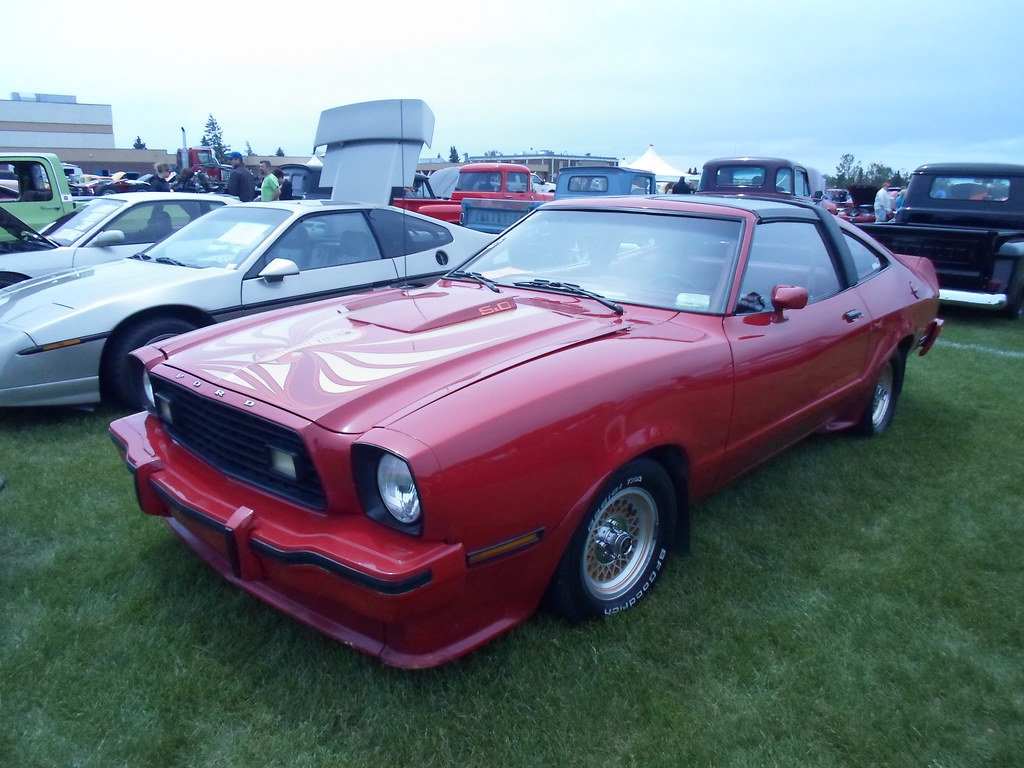
5. **1974 Ford Mustang II**
And now, we come to a chapter that still makes many Mustang purists cringe: the 1974 Ford Mustang II. To understand the sheer magnitude of this visual and conceptual blunder, one must first appreciate what the Mustang *was*. It was the original “Pony Car,” a phenomenon of style, accessible performance, and raw American spirit. It was sleek, muscular, and undeniably cool. Then came the Mustang II, and Ford effectively took its wonderful creation and “ruined it.”
The cardinal sin? Ford decided to use the “woeful Pinto as the base car” for the Mustang II. Yes, you read that right. The very car notorious for its fiery rear-end collisions and its generally bland, mismatched proportions became the foundation for what was supposed to be America’s iconic sports car. Unsurprisingly, this led to a massive shrinking in size and a complete abandonment of the sporty, muscular appearance. The Mustang II adopted a “much more mundane, less aggressive design that left many Mustang fans disappointed.” It was a betrayal of the brand’s very essence.
This model was clearly seen as a compromise, an attempt to appeal to a more economical audience during the oil crisis of 1973. However, in doing so, it utterly “lost the edge that made the original so iconic.” Its “rounded shape and soft lines seemed uncharacteristic of a car that was meant to evoke power and speed.” To add insult to injury, you couldn’t even get one with a V-8 initially, fundamentally “blowing the whole reason for making the cars” in the first place. The performance was laughable, with the 1975 5.0 liter V-8 chugging from 0 to 60 mph in a boring 10.5 seconds, and the base engine’s horsepower plummeting to 83 hp in 1975.
It’s almost unbelievable that this “loser was Motor Trend’s Car of the Year in 1974!” a decision that surely belongs in the hall of automotive infamy. The sheer lack of visual appeal, combined with its anemic performance, profoundly damaged its reputation. The 1974 Mustang II is universally regarded as “one of the low points in the Mustang’s storied history,” a “controversial model” and an “unfortunate blip” that forever stains the otherwise gleaming legacy of the Pony Car. For true enthusiasts, it was a visual and philosophical horror show.
Having just dissected some of Ford’s most notorious aesthetic calamities from the ’50s, ’70s, and ’90s, we’re not quite out of the woods yet. The Blue Oval’s history is dotted with a few more visual head-scratchers that proved looks absolutely *do* matter when it comes to shifting metal. Prepare yourselves, because the journey into the automotive abyss continues, proving that even a titan like Ford isn’t immune to a few truly bizarre design choices that leave a permanent smudge on the brand’s otherwise illustrious canvas.
Car Model Information: 2025 Genesis GV80 2.5T
Name: Second generation
Caption: Ford Mustang II coupe
Aka: Ford Mustang II , Ford T5 (in Germany)
Class: Pony car,Subcompact car
Production: 1973–1978
ModelYears: 1974–1978
Predecessor: Ford Mustang (first generation)
Successor: Ford Mustang (third generation)
Assembly: Unbulleted list
Layout: Front-engine, rear-wheel-drive layout
BodyStyle: coupé,hatchback
Related: Ford Pinto,Ford Pinto
Manufacturer: Ford Motor Company
Engine: ubl
Transmission: ubl
Wheelbase: cvt
Length: cvt
Width: cvt
Height: cvt
Designer: Buck Mook, Dick Nesbitt
Categories: All articles with dead external links, All articles with unsourced statements, Articles with dead external links from April 2024, Articles with permanently dead external links, Articles with short description
Summary: The second-generation Ford Mustang, marketed as the Ford Mustang II, is a two- or three-door, four-passenger, front-engine/rear-drive pony car manufactured and marketed by Ford from 1973 until 1978. Introduced in September 1973 for the 1974 model year, the Mustang II arrived roughly coincident with the oil embargo of 1973 and subsequent fuel shortages. Developed under Lee Iacocca, it was an “entirely new kind of pony car.” Ford “decided to call it Mustang II, since it was a new type of pony car designed for an era of high gas prices and fuel shortages.”
The Mustang II was 490 lb (222 kg) lighter and almost 19 in (483 mm) shorter than the 1973 Mustang, and derived from the subcompact Pinto platform. While sharing a limited number of driveline components with the Pinto, the Mustang II employed an exclusive subframe, isolating its front suspension and engine mount subframe. The steering used a rack-and-pinion design.
Named Motor Trend’s 1974 Car of the Year and reaching over 1.1 million sales over four years of production, the Mustang II is noted simultaneously for both its marketing prescience and strong sales – while criticized as having abandoned essential aspects of the Mustang heritage and described, in a retrospective after 40 years since its introduction, as embodying the Malaise era.
Get more information about: Ford Mustang (second generation)
Buying a high-performing used car >>>
Brand: Ford Model: Mustang II
Price: $54,355 Mileage: 19,781 mi.
Read more about: The Road Less Traveled: Unpacking 13 Automotive Technology Failures That Shaped History
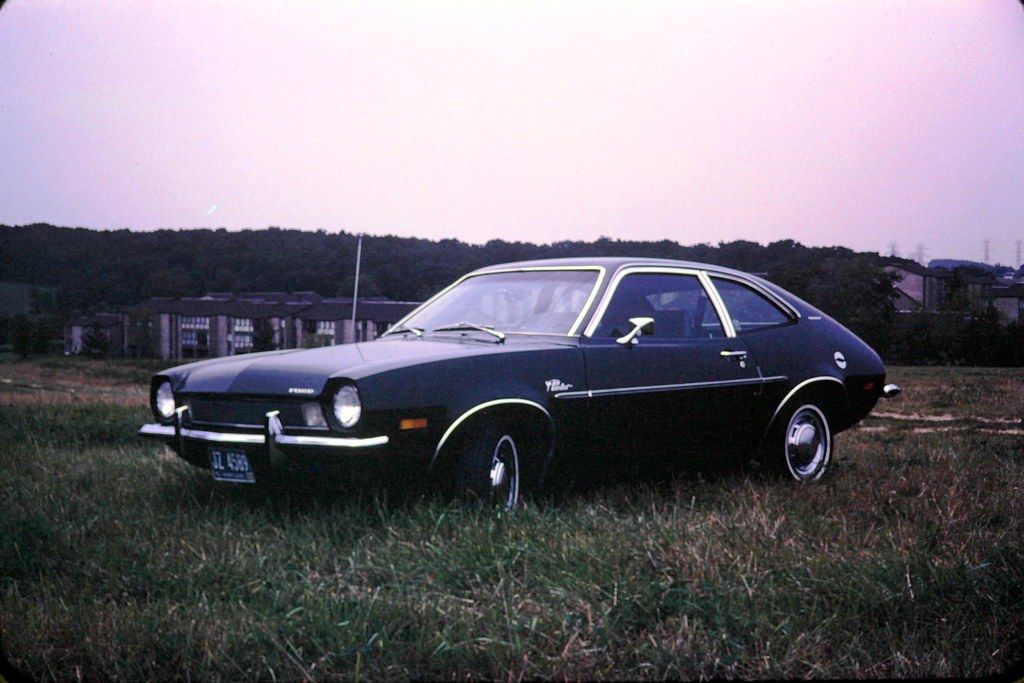
6. **1971 Ford Pinto**
Let’s talk about the Ford Pinto. If the name alone doesn’t trigger a collective shudder, perhaps its infamous reputation for being a rolling fire hazard will. But beyond the well-documented safety concerns – which, let’s be honest, were egregious enough – the Pinto was also just an objectively bland car. It wasn’t just forgettable; its design was a baffling exercise in mismatched proportions that made it stand out for all the wrong reasons.
The problem, as the context points out, was quite literally an engineering shortcut that affected its form: “Ford engineers simply removed the latter half of the car to save weight and development costs, so the Pinto is technically a larger car with its rear shaved off.” This wasn’t some avant-garde stylistic statement; it was a hack job. The result? A vehicle with “bulbous looks” that felt incomplete, as if it had been lopped off before the design team had a chance to properly sculpt a cohesive rear end. It looked exactly like what it was: a budget car designed for maximum cost savings, even if it meant sacrificing any semblance of aesthetic grace.
This commitment to low cost, however, was also its saving grace, at least initially. The Pinto became popular “despite its bland looks and misshapen proportions” largely because it was cheap, with a base price around $1,919, and fuel-efficient, a critical factor during the 1973 oil crisis. Yet, even as it found buyers, its appearance was consistently a mark against it. It cemented its place in history not just for its deadly defects, but also for its uninspired, awkward aesthetic that placed it on “most lists of the worst cars of all time.” A true double whammy of a blunder.
Car Model Information: 1980 Ford Pinto WAGON
Name: Ford Pinto
Caption: Ford Pinto
Manufacturer: Ford Motor Company
Aka: Mercury Bobcat
Production: September 1970 – July 1980
ModelYears: 1971–1980 (Pinto),1974–1980 (Bobcat)
Assembly: Edison, New Jersey,Milpitas, California
Designer: Robert Eidschun (1968)
Class: Subcompact car
BodyStyle: Sedan (automobile),sedan delivery,station wagon,hatchback
Related: #Mercury Bobcat (1974–1980),Ford Mustang (second generation)
Layout: Front-engine, rear-wheel-drive layout
Chassis: Unibody
Engine: unbulleted list
Abbr: on
Disp: Ford Cologne engine
Transmission: unbulleted list
Wheelbase: 94.0 in
Length: 163 in
Width: 69.4 in
Height: 50 in
Weight: convert
Predecessor: Ford Cortina#Mark II (1966–1970)
Successor: Ford Escort (North America)
Categories: 1980s cars, Articles with short description, Cars discontinued in 1980, Cars introduced in 1970, Commons category link from Wikidata
Summary: The Ford Pinto is a subcompact car that was manufactured and marketed by Ford Motor Company in North America from 1970 until 1980. The Pinto was the first subcompact vehicle produced by Ford in North America.
The Pinto was marketed in three body styles throughout its production: a two-door fastback sedan with a trunk, a three-door hatchback, and a two-door station wagon. Mercury offered rebadged versions of the Pinto as the Mercury Bobcat from 1975 until 1980 (1974–1980 in Canada). Over three million Pintos were produced over its ten-year production run, outproducing the combined totals of its domestic rivals, the Chevrolet Vega and the AMC Gremlin. The Pinto and Mercury Bobcat were produced at Edison Assembly in Edison, New Jersey, St. Thomas Assembly in Southwold, Ontario, and San Jose Assembly in Milpitas, California.
Since the 1970s, the safety reputation of the Pinto has generated controversy. Its fuel-tank design attracted both media and government scrutiny after several deadly fires occurred when the tanks ruptured in rear-end collisions. A subsequent analysis of the overall safety of the Pinto suggested it was comparable to other 1970s subcompact cars. The safety issues surrounding the Pinto and the subsequent response by Ford have been cited widely as business ethics and tort reform case studies.
Get more information about: Ford Pinto
Buying a high-performing used car >>>
Brand: Ford Model: Pinto
Price: $5,951 Mileage: 107,000 mi.
Read more about: The Road Less Traveled: Unpacking 13 Automotive Technology Failures That Shaped History

7. **1996 Ford Ka**
Venturing back to Europe, we encounter another compact creation from Ford’s ’90s design lexicon: the 1996 Ford Ka. This was Ford’s attempt at a “cheap city car that could get you from point A to point B with no frills.” Fair enough. But then Ford decided to get “a bit creative with this little vehicle’s design,” and that’s where things went sideways. The result was a car that looked undeniably peculiar, resembling “a small egg on wheels.”
While some might have found its bulbous, almost cartoonish shape “cute” upon its launch, time has not been kind to the Ka. It simply “looked weird” and aged about as gracefully as a forgotten banana. The design was heavily reliant on rounded contours and integrated elements that, rather than adding sophistication, contributed to its oddness. A particularly divisive feature was how “the Ka’s plastic bumpers merged with the wheel arches, especially if they were unpainted,” giving it a distinctly “cheap, unfinished look.” It was less a cohesive design statement and more a collection of blobs trying to coalesce into a car.
Even Ford’s attempt at a roadster version, the 2003 StreetKa, couldn’t fully redeem the fundamental design. While it might have looked “kind of cool” with the top down, evoking “the old Volkswagen Beetle,” the magic quickly evaporated when the roof went back up, and it didn’t look “as elegant.” Despite its polarizing aesthetics, the Ka was a “relative success in the countries where it was available,” fulfilling its role as an affordable city car. Nevertheless, its unconventional styling left an indelible “negative impression on those who preferred more traditional car designs,” ensuring its spot on the list of visually challenged Fords.
Read more about: The Enduring Appeal: Unpacking the Top Reasons Why Hollywood Is Rebooting Iconic ’90s Thrillers
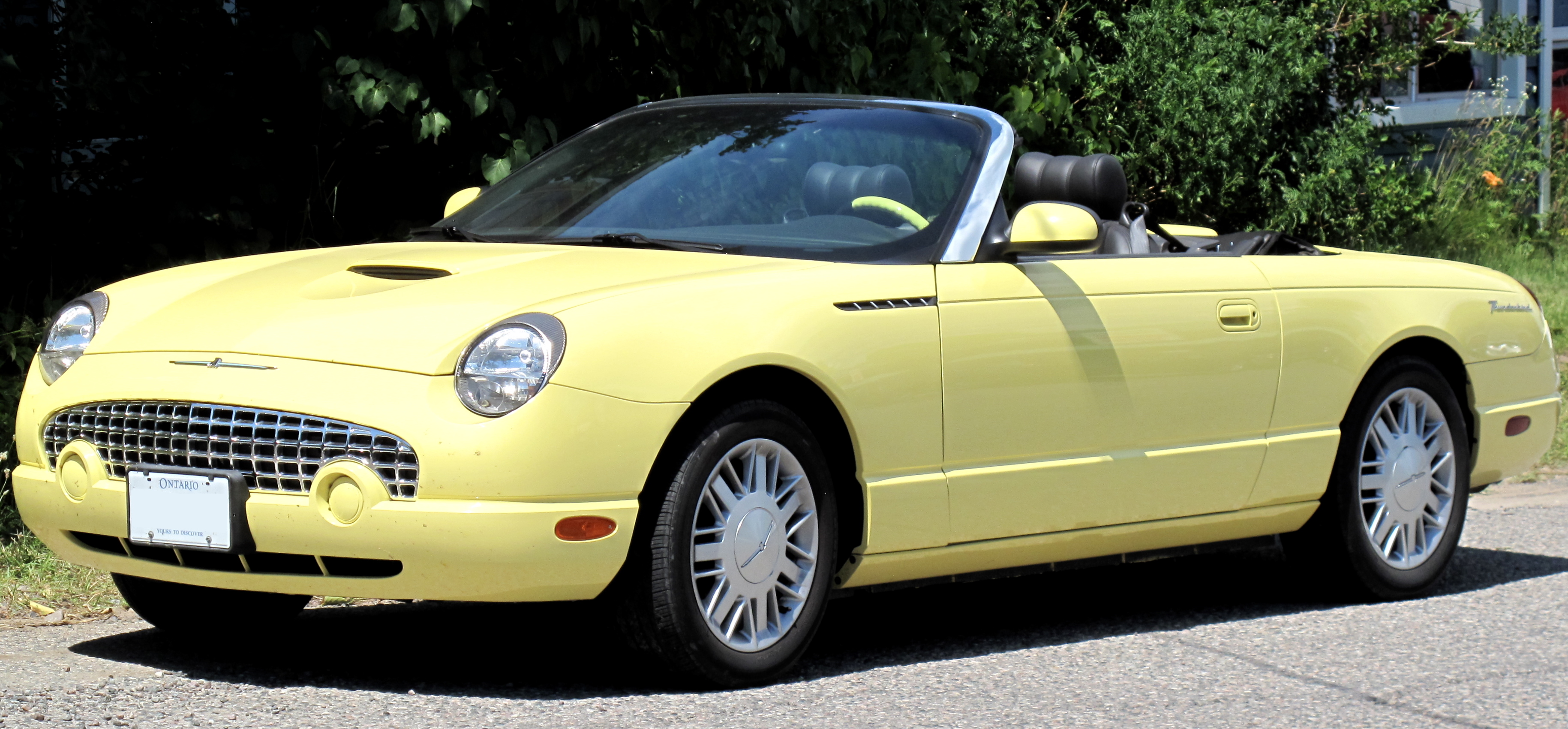
8. **2002 Ford Thunderbird**
Sometimes, it’s best to leave a classic untouched. But in the early 2000s, gripped by a retro craze, Ford decided to resurrect the iconic Thunderbird after a five-year hiatus. The 2002 Ford Thunderbird was meant to evoke the glory days of the original, a sleek symbol of 1950s cool. Instead, it became a prime example of how to “completely miss the mark,” leaving an “underwhelming design” that proved some legends are better left as memories.
While it retained some “Thunderbird’s signature traits,” the overall execution was critically flawed. The context doesn’t pull punches, stating its “proportions were awkward, and the overall design lacked the flair of the original.” Critics universally described it as having an “uninspired, dull appearance that failed to recapture the car’s iconic status.” It was meant to exude luxury and performance, but its “exterior was viewed as too plain” for such aspirations, lacking the visual impact that made its predecessors so beloved.
This 11th-generation T-bird, despite being “equipped with modern technology and features,” utterly “lacked the emotional impact of its predecessors, making it one of the least memorable models.” It wasn’t aggressively ugly in the way some other Fords on this list were; it was worse. It was boring. It was a watered-down homage that diminished the legacy it sought to honor. Unsurprisingly, its “underwhelming design” directly contributed to “poor sales,” leading to its discontinuation after a mere three years. Sometimes, even nostalgia can’t save a bad design.
Car Model Information: 1966 Ford Thunderbird Base
Name: Ford Thunderbird
Caption: 1957 Thunderbird
Manufacturer: Ford Motor Company
Production: unbulleted list
ModelYears: unbulleted list
Class: unbulleted list
Layout: Front-engine, rear-wheel drive layout
Categories: 1960s cars, 1970s cars, 1980s cars, 1990s cars, 2000s cars
Summary: The Ford Thunderbird is a personal luxury car manufactured and marketed by Ford Motor Company for model years 1955 to 2005, with a hiatus from 1998 to 2001.
Ultimately gaining a broadly used colloquial nickname, the T-Bird, the model was introduced as a two-seat convertible, subsequently offered variously in a host of body styles including as a four-seat hardtop coupe, four-seat convertible, five-seat convertible and hardtop, four-door pillared hardtop sedan, six-passenger hardtop coupe, and five-passenger pillared coupe, before returning in its final generation, again as a two-seat convertible.
At its inception, Ford targeted the two-seat Thunderbird as an upscale model. The 1958 model year design introduced a rear seat and arguably marked the expansion of a market segment that came to be known as personal luxury cars, positioned to emphasize comfort and convenience over handling and high-speed performance.
Get more information about: Ford Thunderbird
Buying a high-performing used car >>>
Brand: Ford Model: Thunderbird
Price: $44,999 Mileage: 71,017 mi.
Read more about: Avoid the Auction Shame: How to Master Selling 10 Prized Collector Cars from Hagerty’s Hot List

9. **2009 Ford Flex**
Ah, the Ford Flex. Designed as a “family hauler,” it aimed to combine function with style. What Ford delivered, however, was a visual anomaly that garnered a mixed, often negative, reaction. The 2009 Ford Flex earned its spot in the discussions of unattractive Ford vehicles thanks to its utterly unique, yet ultimately polarizing, aesthetic. It wasn’t sleek, it wasn’t sporty; it was… square.
The Flex’s defining characteristic was its “boxy and oversized proportions.” Its “square shape and large, flat surfaces” made it look like a rolling toaster oven or perhaps a modern take on a hearse, depending on who you asked. The overall impression was a “bulky exterior that many found unappealing,” often being called “clunky.” While some might have appreciated its utilitarian, retro-futuristic vibe, the design failed to resonate with the broader market, making it seem “less refined than other cars in its class.”
Despite the fact that it offered a genuinely “spacious interior” and “oodles of rear seat legroom for adults,” its exterior often “overshadowing the car’s potential.” Ford’s “attempt to create a stylish and practical family car missed the mark for many,” leading to its “unattractive shape becom[ing] one of its defining features.” It’s a testament to its controversial looks that even with functional advantages, the Flex frequently lands on lists of Ford’s “less aesthetically pleasing cars.”
Car Model Information: 2018 Ford F-150 XLT
Name: Ford Flex
Caption: 2010 Ford Flex Limited
Manufacturer: Ford Motor Company
Production: June 3, 2008–2019
ModelYears: 2009–2019
Assembly: Oakville, Ontario
Designer: Peter Horbury
Class: Full size car,crossover SUV
BodyStyle: SUV
Platform: Ford D3 platform#D4
Related: Ford Taurus (fifth generation),Lincoln MKS,Lincoln MKT
Layout: FF layout
Engine: Ford Cyclone engine#3.5 L,V6 engine
Transmission: GM-Ford 6-speed automatic transmission,automatic transmission
Wheelbase: 117.9 in
Abbr: on
Length: 201.8 in
Width: 75.9 in
Height: 68 in
Weight: 4468 lb. (FWD) , 4640 lb. (AWD)
Predecessor: Ford Taurus X,Ford Windstar
Categories: 2010s cars, All-wheel-drive vehicles, All articles with failed verification, Articles with failed verification from October 2010, Articles with short description
Summary: The Ford Flex is a full-size crossover SUV manufactured and marketed by Ford over a single generation from 2009–2019, as the successor to the Ford Taurus X.
The Flex was introduced in 2005 as a concept vehicle based on the Ford D4 chassis architecture, a variant of the Ford D3 platform shared with the 2011-2019 Explorer and the Lincoln MKT; the latter a rebadged variant of the Flex.
From June 2008 until its withdrawal, the Ford Flex was manufactured by Ford Canada at Oakville Assembly (Oakville, Ontario); the Flex and the Lincoln MKT were produced alongside the Ford Edge and Lincoln MKX (today, Lincoln Nautilus). The Flex was marketed in the United States, Canada, Mexico, and the Middle East — with production reaching just over 300,000.
Get more information about: Ford Flex
Buying a high-performing used car >>>
Brand: Ford Model: Flex
Price: $22,345 Mileage: 70,866 mi.
Read more about: Driving into Tomorrow: The 11 Best New SUVs & Crossovers Redefining the Road for 2025-2026
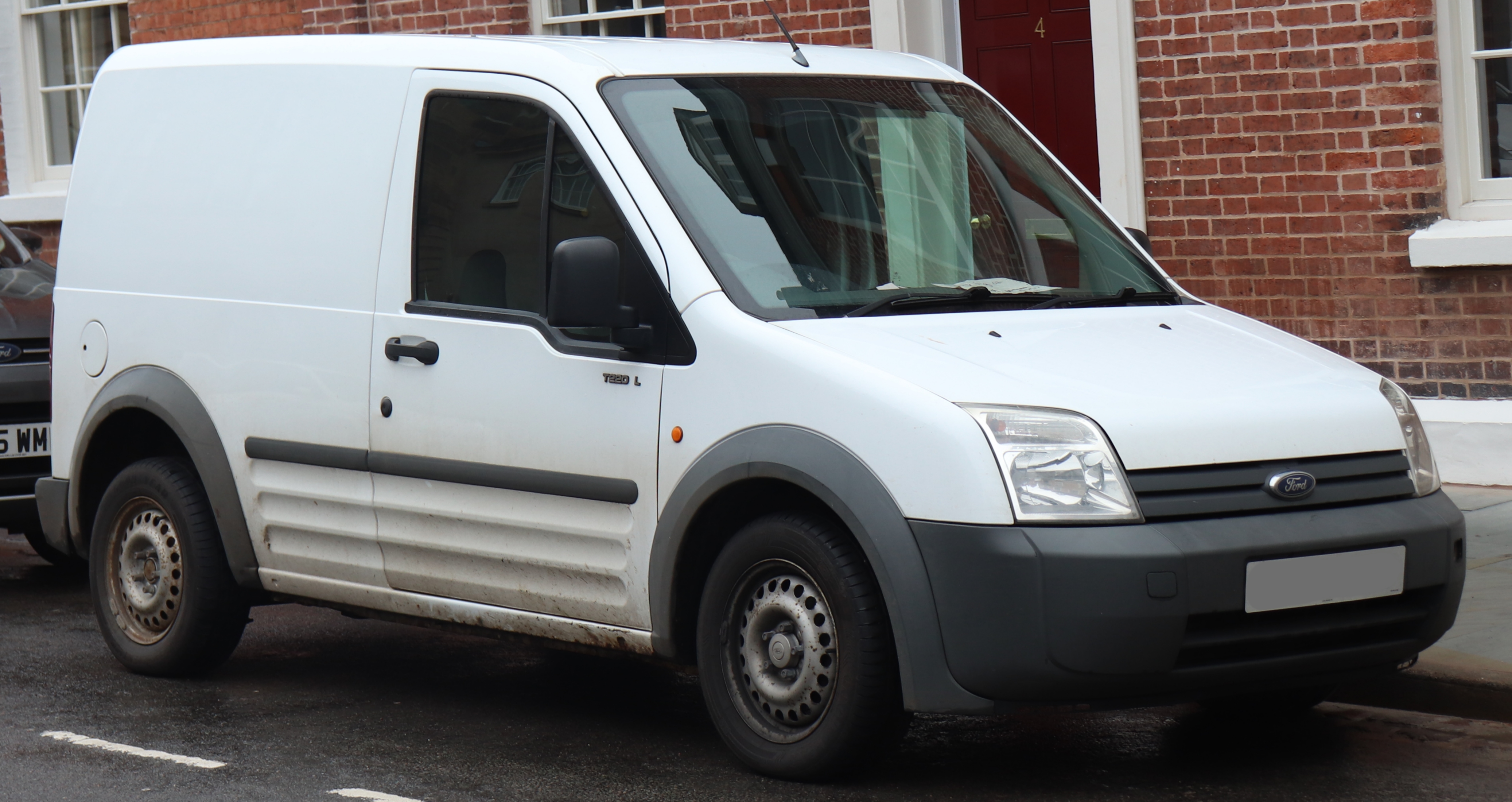
10. **2009 Ford Transit Connect**
Our final entry on this unflinching look at Ford’s aesthetic missteps brings us to a vehicle that, by its very nature, wasn’t designed to be a beauty queen, yet still managed to stand out for its visual shortcomings: the 2009 Ford Transit Connect. Initially “aimed at commercial buyers,” its design choices made it clear it wasn’t trying to win any beauty contests, but it certainly raised eyebrows among potential average consumers.
The Transit Connect’s utilitarian purpose dictated a “boxy shape and small size,” which inevitably made it look “more like a delivery van than a vehicle that could appeal to the average consumer.” The front-end design, in particular, was “especially polarizing.” Many observers found it “too utilitarian and lacking in style,” giving it an almost cartoonish or unfinished appearance that hardly screamed “desirable family vehicle” on American roads.
Despite its inherent practicality and “affordability,” the stark, commercial-first aesthetic meant its “looks didn’t make it an appealing option for most American buyers.” Its “unusual appearance left a lasting impression, but not one that elevated the Ford brand.” While the Transit Connect eventually “found its place in niche markets,” recognizing its functional strengths, it never quite shed its reputation for being visually challenged. It’s a reminder that even when functionality reigns supreme, design can still make or break a vehicle’s broader appeal.
Car Model Information: 2025 Genesis GV80 2.5T
Name: Ford Transit Connect
Manufacturer: Ford of Europe
Aka: Ford Tourneo Connect,Volkswagen Caddy,Azure Transit Connect Electric
Production: 2002–present
Class: unbulleted list
BodyStyle: unbulleted list
Layout: Front-engine, front-wheel-drive
Predecessor: unbulleted list
Sp: us
ModelYears: 2010–2023 (North America)
Categories: 2000s cars, 2010s cars, All Wikipedia articles in need of updating, All articles with unsourced statements, Articles with short description
Summary: The Ford Transit Connect is a compact panel van manufactured and marketed by Ford since 2002. Developed by Ford of Europe, the model line replaced sedan-based vans (Ford Escort and Ford Courier vans) with a dedicated commercial vehicle platform. The model line is the second-smallest vehicle of the Ford Transit range, slotted between the Ford Transit Courier LAV and the Ford Transit Custom LCV/MPV. In line with other Ford Transit variants, passenger-oriented models (in Europe) are marketed as the Ford Tourneo Connect with side windows and rear seats.
The first and second-generation Transit Connect has been imported to North America from the 2010 model year. To circumvent the 25% “chicken tax” on imported light trucks, all examples have been imported as passenger vans, with cargo vans converted to the intended configuration after their importation. In the region, the Transit Connect does not have a direct predecessor; the closest vehicle to its size was the standard-length Ford Aerostar cargo van, which ceased production in 1997.
The first-generation Transit Connect was assembled by Ford Otosan (Kocaeli, Turkey) along with Ford Romania (Craiova, Romania). For the second generation, Ford of Europe shifted production to its Ford Valencia Body and Assembly facility (Almussafes, Valencia, Spain). For 2022, a third generation of the Tourneo Connect was released; based on the Volkswagen Caddy, the model line is assembled by Volkswagen in Poland.
Get more information about: Ford Transit Connect
Buying a high-performing used car >>>
Brand: Ford Model: Transit Connect
Price: $54,355 Mileage: 19,781 mi.
Read more about: Hollywood’s Enduring Legends: 12 Veteran Actors From the 80s and 90s Still Dominating the Screen
There you have it. A raw, unvarnished tour through some of the Blue Oval’s most eyebrow-raising design decisions. From the Edsel’s horse collar to the oddly proportioned Pinto and the retro misfire of the 2002 Thunderbird, these vehicles serve as potent reminders. Even a legendary automaker with over a century of triumphs can occasionally miss the mark spectacularly when it comes to aesthetics. These aren’t just market failures; they’re design blunders so profound they’ve carved out their own infamous niches in automotive history. They might be ugly, but they’re undeniably memorable.